Business 
Research Methods 
William G. Zikmund 
Chapter 16: 
Sample Designs and Sampling 
Procedures
Sampling Terminology 
• Sample 
• Population or universe 
• Population element 
• Census
Sample 
• Subset of a larger population
Population 
• Any complete group 
– People 
– Sales territories 
– Stores
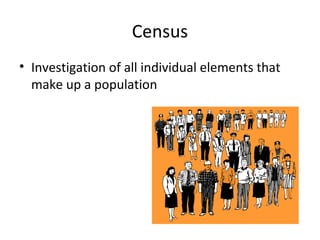
Census 
• Investigation of all individual elements that 
make up a population
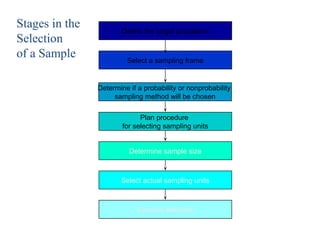
Define the target population 
Select a sampling frame 
Determine if a probability or nonprobability 
sampling method will be chosen 
Plan procedure 
for selecting sampling units 
Determine sample size 
Select actual sampling units 
Conduct fieldwork 
Stages in the 
Selection 
of a Sample
Target Population 
• Relevant population 
• Operationally define 
• Comic book reader?
Sampling Frame 
• A list of elements from which the sample may 
be drawn 
• Working population 
• Mailing lists - data base marketers 
• Sampling frame error
Sampling Units 
• Group selected for the sample 
• Primary Sampling Units (PSU) 
• Secondary Sampling Units 
• Tertiary Sampling Units
Random Sampling Error 
• The difference between the sample results 
and the result of a census conducted using 
identical procedures 
• Statistical fluctuation due to chance variations
Systematic Errors 
• Nonsampling errors 
• Unrepresentative sample results 
• Not due to chance 
• Due to study design or imperfections in 
execution
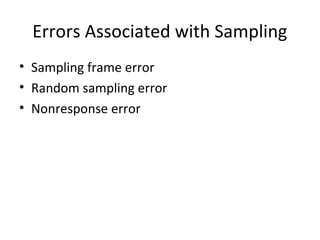
Errors Associated with Sampling 
• Sampling frame error 
• Random sampling error 
• Nonresponse error
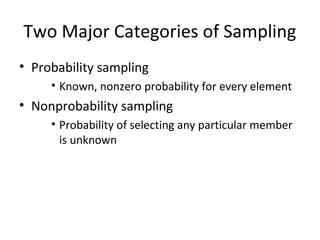
Two Major Categories of Sampling 
• Probability sampling 
• Known, nonzero probability for every element 
• Nonprobability sampling 
• Probability of selecting any particular member 
is unknown
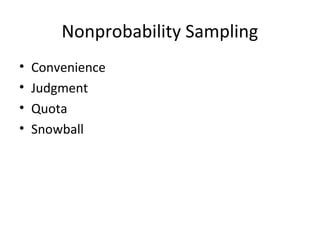
Nonprobability Sampling 
• Convenience 
• Judgment 
• Quota 
• Snowball
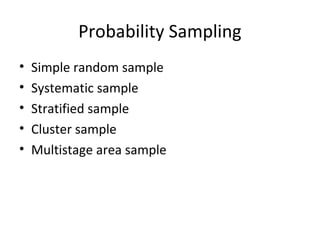
Probability Sampling 
• Simple random sample 
• Systematic sample 
• Stratified sample 
• Cluster sample 
• Multistage area sample
Convenience Sampling 
• Also called haphazard or accidental sampling 
• The sampling procedure of obtaining the 
people or units that are most conveniently 
available
Judgment Sampling 
• Also called purposive sampling 
• An experienced individual selects the sample 
based on his or her judgment about some 
appropriate characteristics required of the 
sample member
Quota Sampling 
• Ensures that the various subgroups in a 
population are represented on pertinent 
sample characteristics 
• To the exact extent that the investigators 
desire 
• It should not be confused with stratified 
sampling.
Snowball Sampling 
• A variety of procedures 
• Initial respondents are selected by probability 
methods 
• Additional respondents are obtained from 
information provided by the initial 
respondents
Simple Random Sampling 
• A sampling procedure that ensures that each 
element in the population will have an equal 
chance of being included in the sample
Systematic Sampling 
• A simple process 
• Every nth name from the list will be drawn
Stratified Sampling 
• Probability sample 
• Subsamples are drawn within different strata 
• Each stratum is more or less equal on some 
characteristic 
• Do not confuse with quota sample
Cluster Sampling 
• The purpose of cluster sampling is to sample 
economically while retaining the 
characteristics of a probability sample. 
• The primary sampling unit is no longer the 
individual element in the population 
• The primary sampling unit is a larger cluster of 
elements located in proximity to one another
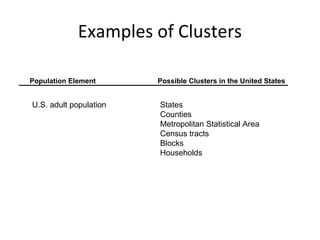
Examples of Clusters 
Population Element Possible Clusters in the United States 
U.S. adult population States 
Counties 
Metropolitan Statistical Area 
Census tracts 
Blocks 
Households
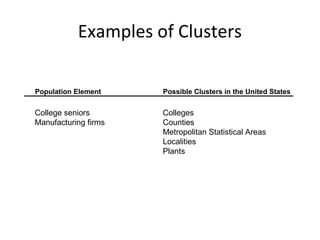
Examples of Clusters 
Population Element Possible Clusters in the United States 
College seniors Colleges 
Manufacturing firms Counties 
Metropolitan Statistical Areas 
Localities 
Plants
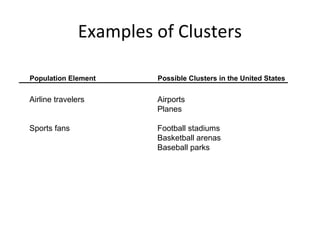
Examples of Clusters 
Population Element Possible Clusters in the United States 
Airline travelers Airports 
Planes 
Sports fans Football stadiums 
Basketball arenas 
Baseball parks
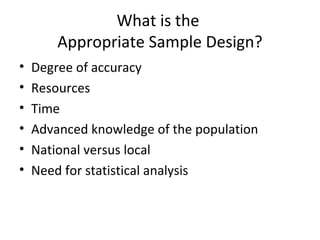
What is the 
Appropriate Sample Design? 
• Degree of accuracy 
• Resources 
• Time 
• Advanced knowledge of the population 
• National versus local 
• Need for statistical analysis
Internet Sampling is Unique 
• Internet surveys allow researchers to rapidly 
reach a large sample. 
• Speed is both an advantage and a 
disadvantage. 
• Sample size requirements can be met 
overnight or almost instantaneously. 
• Survey should be kept open long enough so all 
sample units can participate.
Internet Sampling 
• Major disadvantage 
– lack of computer ownership and Internet access 
among certain segments of the population 
• Yet Internet samples may be representative of 
a target populations. 
– target population - visitors to a particular Web 
site. 
• Hard to reach subjects may participate
Web Site Visitors 
• Unrestricted samples are clearly convenience 
samples 
• Randomly selecting visitors 
• Questionnaire request randomly "pops up" 
• Over- representing the more frequent visitors
Panel Samples 
• Typically yield a high response rate 
– Members may be compensated for their time with 
a sweepstake or a small, cash incentive. 
• Database on members 
– Demographic and other information from 
previous questionnaires 
• Select quota samples based on product 
ownership, lifestyle, or other characteristics. 
• Probability Samples from Large Panels
Internet Samples 
• Recruited Ad Hoc Samples 
• Opt-in Lists

Ch16 sampling design & sampling procedures

  • 1.
    Business Research Methods William G. Zikmund Chapter 16: Sample Designs and Sampling Procedures
  • 2.
    Sampling Terminology •Sample • Population or universe • Population element • Census
  • 3.
    Sample • Subsetof a larger population
  • 4.
    Population • Anycomplete group – People – Sales territories – Stores
  • 5.
    Census • Investigationof all individual elements that make up a population
  • 6.
    Define the targetpopulation Select a sampling frame Determine if a probability or nonprobability sampling method will be chosen Plan procedure for selecting sampling units Determine sample size Select actual sampling units Conduct fieldwork Stages in the Selection of a Sample
  • 7.
    Target Population •Relevant population • Operationally define • Comic book reader?
  • 8.
    Sampling Frame •A list of elements from which the sample may be drawn • Working population • Mailing lists - data base marketers • Sampling frame error
  • 9.
    Sampling Units •Group selected for the sample • Primary Sampling Units (PSU) • Secondary Sampling Units • Tertiary Sampling Units
  • 10.
    Random Sampling Error • The difference between the sample results and the result of a census conducted using identical procedures • Statistical fluctuation due to chance variations
  • 11.
    Systematic Errors •Nonsampling errors • Unrepresentative sample results • Not due to chance • Due to study design or imperfections in execution
  • 12.
    Errors Associated withSampling • Sampling frame error • Random sampling error • Nonresponse error
  • 13.
    Two Major Categoriesof Sampling • Probability sampling • Known, nonzero probability for every element • Nonprobability sampling • Probability of selecting any particular member is unknown
  • 14.
    Nonprobability Sampling •Convenience • Judgment • Quota • Snowball
  • 15.
    Probability Sampling •Simple random sample • Systematic sample • Stratified sample • Cluster sample • Multistage area sample
  • 16.
    Convenience Sampling •Also called haphazard or accidental sampling • The sampling procedure of obtaining the people or units that are most conveniently available
  • 17.
    Judgment Sampling •Also called purposive sampling • An experienced individual selects the sample based on his or her judgment about some appropriate characteristics required of the sample member
  • 18.
    Quota Sampling •Ensures that the various subgroups in a population are represented on pertinent sample characteristics • To the exact extent that the investigators desire • It should not be confused with stratified sampling.
  • 19.
    Snowball Sampling •A variety of procedures • Initial respondents are selected by probability methods • Additional respondents are obtained from information provided by the initial respondents
  • 20.
    Simple Random Sampling • A sampling procedure that ensures that each element in the population will have an equal chance of being included in the sample
  • 21.
    Systematic Sampling •A simple process • Every nth name from the list will be drawn
  • 22.
    Stratified Sampling •Probability sample • Subsamples are drawn within different strata • Each stratum is more or less equal on some characteristic • Do not confuse with quota sample
  • 23.
    Cluster Sampling •The purpose of cluster sampling is to sample economically while retaining the characteristics of a probability sample. • The primary sampling unit is no longer the individual element in the population • The primary sampling unit is a larger cluster of elements located in proximity to one another
  • 24.
    Examples of Clusters Population Element Possible Clusters in the United States U.S. adult population States Counties Metropolitan Statistical Area Census tracts Blocks Households
  • 25.
    Examples of Clusters Population Element Possible Clusters in the United States College seniors Colleges Manufacturing firms Counties Metropolitan Statistical Areas Localities Plants
  • 26.
    Examples of Clusters Population Element Possible Clusters in the United States Airline travelers Airports Planes Sports fans Football stadiums Basketball arenas Baseball parks
  • 27.
    What is the Appropriate Sample Design? • Degree of accuracy • Resources • Time • Advanced knowledge of the population • National versus local • Need for statistical analysis
  • 28.
    Internet Sampling isUnique • Internet surveys allow researchers to rapidly reach a large sample. • Speed is both an advantage and a disadvantage. • Sample size requirements can be met overnight or almost instantaneously. • Survey should be kept open long enough so all sample units can participate.
  • 29.
    Internet Sampling •Major disadvantage – lack of computer ownership and Internet access among certain segments of the population • Yet Internet samples may be representative of a target populations. – target population - visitors to a particular Web site. • Hard to reach subjects may participate
  • 30.
    Web Site Visitors • Unrestricted samples are clearly convenience samples • Randomly selecting visitors • Questionnaire request randomly "pops up" • Over- representing the more frequent visitors
  • 31.
    Panel Samples •Typically yield a high response rate – Members may be compensated for their time with a sweepstake or a small, cash incentive. • Database on members – Demographic and other information from previous questionnaires • Select quota samples based on product ownership, lifestyle, or other characteristics. • Probability Samples from Large Panels
  • 32.
    Internet Samples •Recruited Ad Hoc Samples • Opt-in Lists