BY
Atta-ur-Rahman Arif
 A system by which an auditor obtains
reasonable assurance that:
 his expression of audit opinion
reflects observance of approved
auditing standards
 any statutory or contractual
requirement
 any professional standards set by
him or his firm
 A system of :
 Delegating the responsibilities to
the subordinates
 Directing how to conduct an audit
 Supervision the staff
 Review the work performed by
them
 Control has to bo exercised
through some laid down
procedures for which no hard
and fast rules. It depends upon
the organisational structure of
the audit firm, to which extenet
the audit work has been
delegated.
 Every control should take into
consideration the following elements:
 Audit staff should be equipped with
necessary training, experiance and
profeciancy
 Audit staff should brief with:
 Their responsibilities and objective
 Nature, Extenet and Timing of the
planned procedure
 Accounting and Auditing problems
 Working papers
 Procedures established should ensure
that:
 Work performed by audit staff is
reviewed by a senior
 Audit work was adequately performed
 Work performed confirms the result
obtained
 Result derived fully support the
conclusion forming basis of audit
report
 Delegation
 Directing
 Supervision
 Reviewing
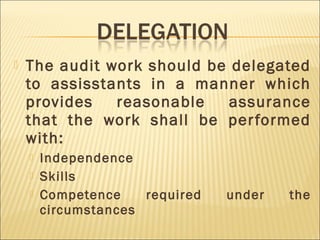
 The audit work should be delegated
to assisstants in a manner which
provides reasonable assurance
that the work shall be performed
with:
 Independence
 Skills
 Competence required under the
circumstances
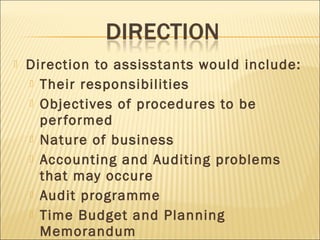
 Direction to assisstants would include:
 Their responsibilities
 Objectives of procedures to be
performed
 Nature of business
 Accounting and Auditing problems
that may occure
 Audit programme
 Time Budget and Planning
Memorandum
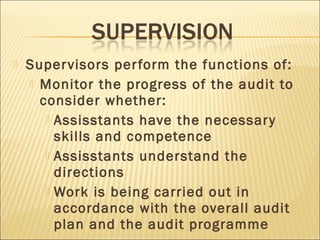
 Supervisors perform the functions of:
 Monitor the progress of the audit to
consider whether:
 Assisstants have the necessary
skills and competence
 Assisstants understand the
directions
 Work is being carried out in
accordance with the overall audit
plan and the audit programme
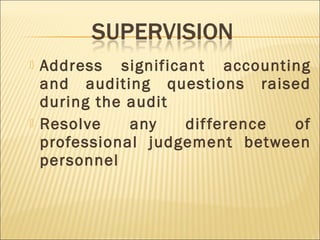
 Address significant accounting
and auditing questions raised
during the audit
 Resolve any difference of
professional judgement between
personnel
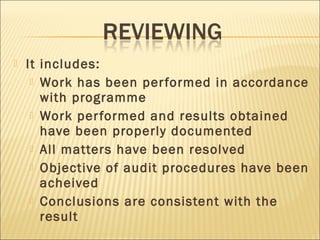
 It includes:
 Work has been performed in accordance
with programme
 Work performed and results obtained
have been properly documented
 All matters have been resolved
 Objective of audit procedures have been
acheived
 Conclusions are consistent with the
result
PRESENTED BY
Atta-ur-Rahman Arif
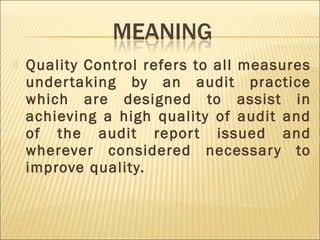
 Quality Control refers to all measures
undertaking by an audit practice
which are designed to assist in
achieving a high quality of audit and
of the audit report issued and
wherever considered necessary to
improve quality.
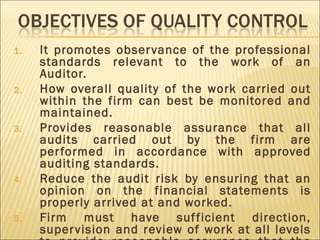
1. It promotes observance of the professional
standards relevant to the work of an
Auditor.
2. How overall quality of the work carried out
within the firm can best be monitored and
maintained.
3. Provides reasonable assurance that all
audits carried out by the firm are
performed in accordance with approved
auditing standards.
4. Reduce the audit risk by ensuring that an
opinion on the financial statements is
properly arrived at and worked.
5. Firm must have sufficient direction,
supervision and review of work at all levels
 Factors affects the nature and
extent of the policies
 Size of firm
 Nature of firm’s practice
 Number of firm’s offices
 Organization of Firm
1. Professional Requirements
2. Skills and Competencies
3. Assignment
4. Delegation
5. Consultation
6. Acceptance and Retention of Clients
7. Monitoring
 Personnel in the firm should adhere to the
principles of independence, objectivity,
confidentiality and professional behaviour
 The firm should be staffed by personnel who
have attained and maintained the technical
standards and professional competence
required to enable to fulfill their responsibilities
with due care.
 Audit work is to be assigned to personnel who
have the degree of technical training and
proficiency required in the circumstances.
 There should be sufficient direction,
supervision and review at all levels to provide
reasonable assurance that the work performed
meets appropriate standards of quality.
 Whenever necessary, consultation within or
outside the firm is to occur with those who
have appropriate expertise.
 An evaluation of prospective clients and a
review, on an on-going basis, of existing clients
is to be conducted. In making a decision accept
or retain a client, the firm’s independence and
ability to serve the client properly and the
integrity of the client’s management are to be
considered.
 The continued adequacy and operational
effectiveness of quality control policies and
procedures should be monitored.

4. cotrolloing

  • 1.
  • 2.
     A systemby which an auditor obtains reasonable assurance that:  his expression of audit opinion reflects observance of approved auditing standards  any statutory or contractual requirement  any professional standards set by him or his firm
  • 3.
     A systemof :  Delegating the responsibilities to the subordinates  Directing how to conduct an audit  Supervision the staff  Review the work performed by them
  • 4.
     Control hasto bo exercised through some laid down procedures for which no hard and fast rules. It depends upon the organisational structure of the audit firm, to which extenet the audit work has been delegated.
  • 5.
     Every controlshould take into consideration the following elements:  Audit staff should be equipped with necessary training, experiance and profeciancy  Audit staff should brief with:  Their responsibilities and objective  Nature, Extenet and Timing of the planned procedure  Accounting and Auditing problems
  • 6.
     Working papers Procedures established should ensure that:  Work performed by audit staff is reviewed by a senior  Audit work was adequately performed  Work performed confirms the result obtained  Result derived fully support the conclusion forming basis of audit report
  • 7.
     Delegation  Directing Supervision  Reviewing
  • 8.
     The auditwork should be delegated to assisstants in a manner which provides reasonable assurance that the work shall be performed with:  Independence  Skills  Competence required under the circumstances
  • 9.
     Direction toassisstants would include:  Their responsibilities  Objectives of procedures to be performed  Nature of business  Accounting and Auditing problems that may occure  Audit programme  Time Budget and Planning Memorandum
  • 10.
     Supervisors performthe functions of:  Monitor the progress of the audit to consider whether:  Assisstants have the necessary skills and competence  Assisstants understand the directions  Work is being carried out in accordance with the overall audit plan and the audit programme
  • 11.
     Address significantaccounting and auditing questions raised during the audit  Resolve any difference of professional judgement between personnel
  • 12.
     It includes: Work has been performed in accordance with programme  Work performed and results obtained have been properly documented  All matters have been resolved  Objective of audit procedures have been acheived  Conclusions are consistent with the result
  • 13.
  • 14.
     Quality Controlrefers to all measures undertaking by an audit practice which are designed to assist in achieving a high quality of audit and of the audit report issued and wherever considered necessary to improve quality.
  • 15.
    1. It promotesobservance of the professional standards relevant to the work of an Auditor. 2. How overall quality of the work carried out within the firm can best be monitored and maintained. 3. Provides reasonable assurance that all audits carried out by the firm are performed in accordance with approved auditing standards. 4. Reduce the audit risk by ensuring that an opinion on the financial statements is properly arrived at and worked. 5. Firm must have sufficient direction, supervision and review of work at all levels
  • 16.
     Factors affectsthe nature and extent of the policies  Size of firm  Nature of firm’s practice  Number of firm’s offices  Organization of Firm
  • 17.
    1. Professional Requirements 2.Skills and Competencies 3. Assignment 4. Delegation 5. Consultation 6. Acceptance and Retention of Clients 7. Monitoring
  • 18.
     Personnel inthe firm should adhere to the principles of independence, objectivity, confidentiality and professional behaviour
  • 19.
     The firmshould be staffed by personnel who have attained and maintained the technical standards and professional competence required to enable to fulfill their responsibilities with due care.
  • 20.
     Audit workis to be assigned to personnel who have the degree of technical training and proficiency required in the circumstances.
  • 21.
     There shouldbe sufficient direction, supervision and review at all levels to provide reasonable assurance that the work performed meets appropriate standards of quality.
  • 22.
     Whenever necessary,consultation within or outside the firm is to occur with those who have appropriate expertise.
  • 23.
     An evaluationof prospective clients and a review, on an on-going basis, of existing clients is to be conducted. In making a decision accept or retain a client, the firm’s independence and ability to serve the client properly and the integrity of the client’s management are to be considered.
  • 24.
     The continuedadequacy and operational effectiveness of quality control policies and procedures should be monitored.