PRESENTED BYMEENAL SANTANI (039)
SWATI LUTHRA (054)
Sampling is the process of selecting observations
(a sample) to provide an adequate description
and inferences of the population.
 Sample
 It

is a unit that is selected from
population
 Represents the whole population
 Purpose to draw the inference



Why Sample???
Sampling Frame
Listing of population from which a sample is chosen
What you
want to
talk about

What you
actually
observe
in the
data

Population

Sampling
Frame

Sampling
Process

Inference

Sample
 All

subsets of the frame are given an equal
probability.
 Random number generators
Advantages:
 Minimal

knowledge of
population needed
 Easy to analyze data

Disadvantages:
 Low

frequency of use
 Does not use researchers’ expertise
 Larger risk of random error
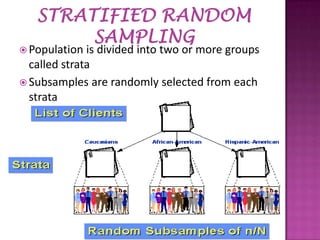
 Population

is divided into two or more groups
called strata
 Subsamples are randomly selected from each
strata
Advantages:
 Assures representation of all groups in
sample population
 Characteristics of each stratum can be
estimated and comparisons made
Disadvantages:
 Requires accurate information on
proportions of each stratum
 Stratified lists costly to prepare
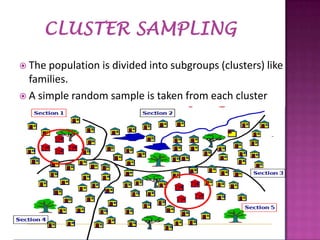
 The population

is divided into subgroups (clusters) like

families.
 A simple random sample is taken from each cluster
Advantages:
 Can estimate characteristics of both cluster
and population
Disadvantages:
 The cost to reach an element to sample is
very high
 Each stage in cluster sampling introduces
sampling error—the more stages there
are, the more error there tends to be
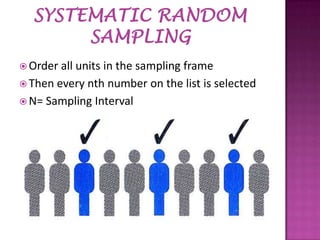
 Order

all units in the sampling frame
 Then every nth number on the list is selected
 N= Sampling Interval
Advantages:
 Moderate cost; moderate usage
 Simple to draw sample
 Easy to verify
Disadvantages:
 Periodic ordering required
 Carried

out in stages
 Using smaller and smaller sampling units at each
stage

Prim a ry

S e co n d a ry

Cl u s te r s

Cl u s te r s

1

1
2

2
3

3
4
5

4
5

6
7
8

6
7

9
10
11

8
9

12
13
14

10

15

Sim p le R an do m

S a m p l i n g w i th i n S e c o n d a r
Advantages:
 More Accurate
 More Effective
Disadvantages:
 Costly
 Each stage in sampling introduces sampling
error—the more stages there are, the more
error there tends to be
 The

probability of each case being selected from the
total population is not known.

 Units

of the sample are chosen on the basis of
personal judgment or convenience.

 There

are NO statistical techniques for measuring
random sampling error in a non-probability sample.
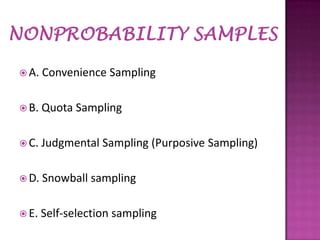
 A.

Convenience Sampling

 B.

Quota Sampling

 C.

Judgmental Sampling (Purposive Sampling)

 D.

Snowball sampling

 E.

Self-selection sampling
 Convenience

sampling involves choosing respondents
at the convenience of the researcher.

Advantages
 Very low cost
 Extensively used/understood
Disadvantages
 Variability and bias cannot be measured or controlled
 Projecting data beyond sample not justified
 Restriction of Generalization.
 The

population is first segmented into mutually
exclusive sub-groups, just as in stratified sampling.

Advantages
 Used when research budget is limited
 Very extensively used/understood
 No need for list of population elements
Disadvantages
 Variability and bias cannot be measured/controlled
 Time Consuming
 Projecting data beyond sample not justified
 Researcher

employs his or her own "expert”
judgment about.

Advantages
 There is a assurance of Quality response
 Meet the specific objective.
Disadvantages
 Bias selection of sample may occur
 Time consuming process.
 The

research starts with a key person and
introduce the next one to become a chain

Advantages
 Low cost
 Useful in specific circumstances & for locating rare
populations
Disadvantages
 Not independent
 Projecting data beyond sample not justified
 It

occurs when you allow each case usually
individuals, to identify their desire to take part in the
research.

Advantages
 More accurate
 Useful in specific circumstances to serve the purpose.
Disadvantages
 More costly due to Advertizing
 Mass are left
SAMPLING ERRORS
 The

errors which arise due to the use of
sampling surveys are known as the sampling
errors.

Two types of sampling errors
 Biased Errors- Due to selection of sampling
techniques; size of the sample.
 Unbiased Errors / Random sampling errorsDifferences between the members of the
population included or not included.
 Specific

problem selection.
 Systematic documentation of related research.
 Effective enumeration.
 Effective pre testing.
 Controlling methodological bias.
 Selection of appropriate sampling techniques.


Non-sampling errors refers to biases and
mistakes in selection of sample.



CAUSES FOR NON-SAMPLING ERRORS
Sampling operations
Inadequate of response
Misunderstanding the concept
Lack of knowledge
Concealment of the truth.
Loaded questions
Processing errors
Sample size










sampling ppt

sampling ppt

  • 1.
    PRESENTED BYMEENAL SANTANI(039) SWATI LUTHRA (054)
  • 2.
    Sampling is theprocess of selecting observations (a sample) to provide an adequate description and inferences of the population.  Sample  It is a unit that is selected from population  Represents the whole population  Purpose to draw the inference   Why Sample??? Sampling Frame Listing of population from which a sample is chosen
  • 3.
    What you want to talkabout What you actually observe in the data Population Sampling Frame Sampling Process Inference Sample
  • 8.
     All subsets ofthe frame are given an equal probability.  Random number generators
  • 9.
    Advantages:  Minimal knowledge of populationneeded  Easy to analyze data Disadvantages:  Low frequency of use  Does not use researchers’ expertise  Larger risk of random error
  • 10.
     Population is dividedinto two or more groups called strata  Subsamples are randomly selected from each strata
  • 11.
    Advantages:  Assures representationof all groups in sample population  Characteristics of each stratum can be estimated and comparisons made Disadvantages:  Requires accurate information on proportions of each stratum  Stratified lists costly to prepare
  • 12.
     The population isdivided into subgroups (clusters) like families.  A simple random sample is taken from each cluster
  • 13.
    Advantages:  Can estimatecharacteristics of both cluster and population Disadvantages:  The cost to reach an element to sample is very high  Each stage in cluster sampling introduces sampling error—the more stages there are, the more error there tends to be
  • 14.
     Order all unitsin the sampling frame  Then every nth number on the list is selected  N= Sampling Interval
  • 15.
    Advantages:  Moderate cost;moderate usage  Simple to draw sample  Easy to verify Disadvantages:  Periodic ordering required
  • 16.
     Carried out instages  Using smaller and smaller sampling units at each stage Prim a ry S e co n d a ry Cl u s te r s Cl u s te r s 1 1 2 2 3 3 4 5 4 5 6 7 8 6 7 9 10 11 8 9 12 13 14 10 15 Sim p le R an do m S a m p l i n g w i th i n S e c o n d a r
  • 17.
    Advantages:  More Accurate More Effective Disadvantages:  Costly  Each stage in sampling introduces sampling error—the more stages there are, the more error there tends to be
  • 19.
     The probability ofeach case being selected from the total population is not known.  Units of the sample are chosen on the basis of personal judgment or convenience.  There are NO statistical techniques for measuring random sampling error in a non-probability sample.
  • 20.
     A. Convenience Sampling B. Quota Sampling  C. Judgmental Sampling (Purposive Sampling)  D. Snowball sampling  E. Self-selection sampling
  • 21.
     Convenience sampling involveschoosing respondents at the convenience of the researcher. Advantages  Very low cost  Extensively used/understood Disadvantages  Variability and bias cannot be measured or controlled  Projecting data beyond sample not justified  Restriction of Generalization.
  • 23.
     The population isfirst segmented into mutually exclusive sub-groups, just as in stratified sampling. Advantages  Used when research budget is limited  Very extensively used/understood  No need for list of population elements Disadvantages  Variability and bias cannot be measured/controlled  Time Consuming  Projecting data beyond sample not justified
  • 24.
     Researcher employs hisor her own "expert” judgment about. Advantages  There is a assurance of Quality response  Meet the specific objective. Disadvantages  Bias selection of sample may occur  Time consuming process.
  • 25.
     The research startswith a key person and introduce the next one to become a chain Advantages  Low cost  Useful in specific circumstances & for locating rare populations Disadvantages  Not independent  Projecting data beyond sample not justified
  • 26.
     It occurs whenyou allow each case usually individuals, to identify their desire to take part in the research. Advantages  More accurate  Useful in specific circumstances to serve the purpose. Disadvantages  More costly due to Advertizing  Mass are left
  • 27.
  • 28.
     The errors whicharise due to the use of sampling surveys are known as the sampling errors. Two types of sampling errors  Biased Errors- Due to selection of sampling techniques; size of the sample.  Unbiased Errors / Random sampling errorsDifferences between the members of the population included or not included.
  • 29.
     Specific problem selection. Systematic documentation of related research.  Effective enumeration.  Effective pre testing.  Controlling methodological bias.  Selection of appropriate sampling techniques.
  • 30.
     Non-sampling errors refersto biases and mistakes in selection of sample.  CAUSES FOR NON-SAMPLING ERRORS Sampling operations Inadequate of response Misunderstanding the concept Lack of knowledge Concealment of the truth. Loaded questions Processing errors Sample size        