
1-10-17 Warm up
Matching
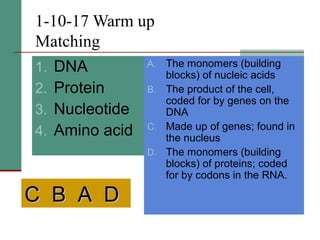
1. DNA
2. Protein
3. Nucleotide
4. Amino acid
A. The monomers (building
blocks) of nucleic acids
B. The product of the cell,
coded for by genes on the
DNA
C. Made up of genes; found in
the nucleus
D. The monomers (building
blocks) of proteins; coded
for by codons in the RNA.
C B A DC B A D
https://www.youtube.com/watch?
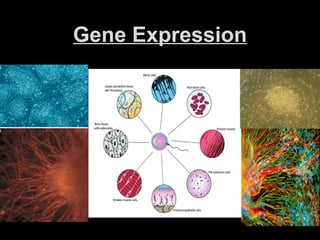
Gene Expression
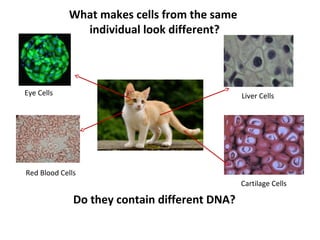
Liver Cells
Cartilage Cells
Red Blood Cells
Eye Cells
What makes cells from the same
individual look different?
Do they contain different DNA?
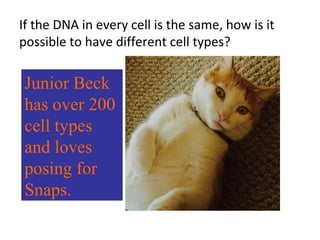
If the DNA in every cell is the same, how is it
possible to have different cell types?
Junior Beck
has over 200
cell types
and loves
posing for
Snaps.
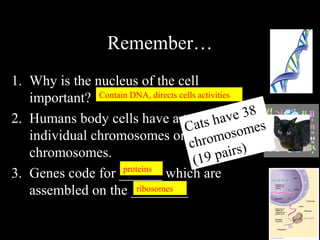
Remember…
1. Why is the nucleus of the cell
important?
2. Humans body cells have a total of ____
individual chromosomes or ___ pairs of
chromosomes.
3. Genes code for ______ which are
assembled on the ________
Contain DNA, directs cells activities
46
23
proteins
ribosomes
Cats have 38
chromosomes
(19 pairs)
Objective
Explain how cells are different due to
differences in gene expression
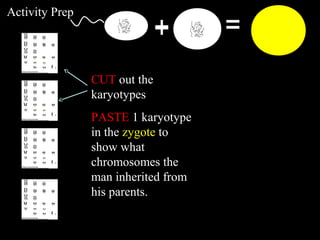
Activity Prep
CUT out the
karyotypes
PASTE 1 karyotype
in the zygote to
show what
chromosomes the
man inherited from
his parents.
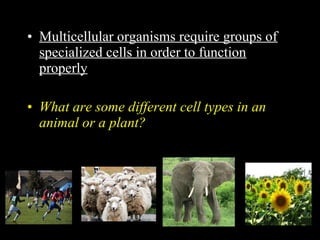
• Multicellular organisms require groups of
specialized cells in order to function
properly
• What are some different cell types in an
animal or a plant?
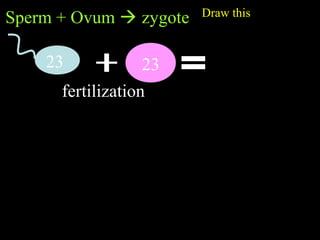
Sperm + Ovum  zygote
fertilization
23 23 46
zygote
46 46
46
46 46
46
46
46 46
46
46
4646
46
4646
46 46
46
46
46
46 4646
46
46
4646
46
46
46
46
46
46
464646
46
46
46 46 46
46
46 46 46
46
46
46
464646
46
46
46
4646
46
46 46
46
46
Draw this
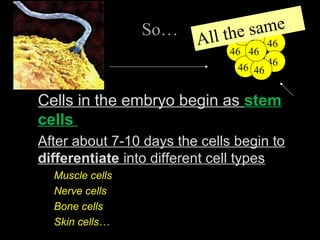
So…
Cells in the embryo begin as stem
cells
After about 7-10 days the cells begin to
differentiate into different cell types
Muscle cells
Nerve cells
Bone cells
Skin cells…
46
46
46 46
46
46
46
46
All the same
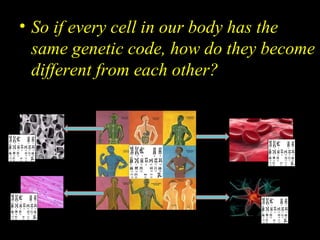
• So if every cell in our body has the
same genetic code, how do they become
different from each other?
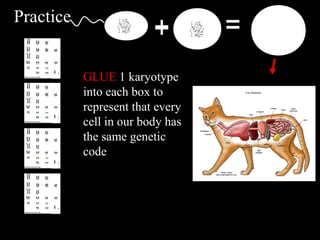
Practice
GLUE 1 karyotype
into each box to
represent that every
cell in our body has
the same genetic
code
CFU: Cell Differentiation Video
random selection/ complete sentence
1. How is it possible to develop great
diversity of different types of cells in
any multi-cellular body?
2. The body has approximately _____
cell types.
3. Stem cells can develop into
______kinds of cells.
4. ____ control the differences among
cells.
5. All of these complicated processes are
a part of the ___ of each organism.
Word bank:
•Different
•Genes
•Genetic code
•260
•Gene regulation
Cell Differentiation: 1:30 Stop at Human Genome
CFU: Cell Differentiation Video
random selection/ complete sentence
1. How is it possible to develop great
diversity of different types of cells in
any multi-cellular body?
2. The body has approximately _____
cell types.
3. Stem cells can develop into
______kinds of cells.
4. ____ control the differences among
cells.
5. All of these complicated processes are
a part of the ___ of each organism.
Word bank:
•Different
•Genes
•Genetic code
•260
•Gene regulation
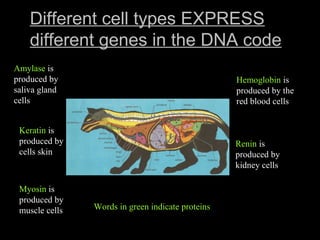
Different cell types EXPRESS
different genes in the DNA code
Renin is
produced by
kidney cells
Keratin is
produced by
cells skin
Myosin is
produced by
muscle cells
Hemoglobin is
produced by the
red blood cells
Amylase is
produced by
saliva gland
cells
Words in green indicate proteins
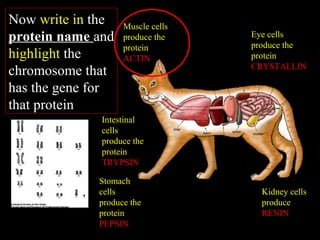
Stomach
cells
produce the
protein
PEPSIN
Kidney cells
produce
RENIN
Eye cells
produce the
protein
CRYSTALLIN
Muscle cells
produce the
protein
ACTIN
Intestinal
cells
produce the
protein
TRYPSIN
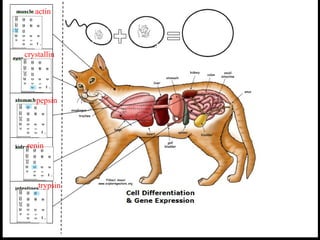
Now write in the
protein name and
highlight the
chromosome that
has the gene for
that protein
actin
crystallin
pepsin
renin
trypsin
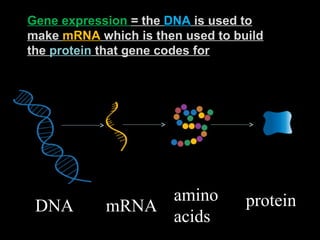
Gene expression = the DNA is used to
make mRNA which is then used to build
the protein that gene codes for
DNA mRNA
amino
acids
protein
Recap
46
46 46
46
46 46
46
46
46 46
46
46
4646
46
4646
46 46
46
46
46
46 4646
46
46
4646
46
46
46
46
46
46
464646
46
46
46 46 46
46
46 46 46
46
46
46
464646
46
46
46
4646
46
46 46
46
46
46
46
46
46
4646
46
46
46
46
46
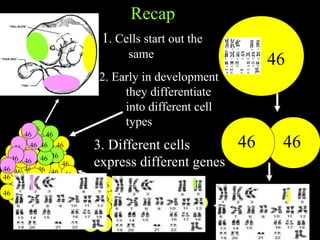
1. Cells start out the
same
2. Early in development
they differentiate
into different cell
types
3. Different cells
express different genes
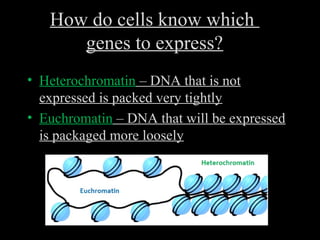
How do cells know which
genes to express?
• Heterochromatin – DNA that is not
expressed is packed very tightly
• Euchromatin – DNA that will be expressed
is packaged more loosely
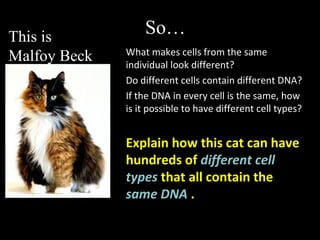
So…
What makes cells from the same
individual look different?
Do different cells contain different DNA?
If the DNA in every cell is the same, how
is it possible to have different cell types?
Explain how this cat can have
hundreds of different cell
types that all contain the
same DNA .
This is
Malfoy Beck
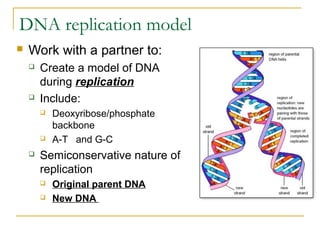
DNA replication model
 Work with a partner to:
 Create a model of DNA
during replication
 Include:
 Deoxyribose/phosphate
backbone
 A-T and G-C
 Semiconservative nature of
replication
 Original parent DNA
 New DNA

Cell differentiation and differential gene expression

  • 1.
    1-10-17 Warm up Matching 1.DNA 2. Protein 3. Nucleotide 4. Amino acid A. The monomers (building blocks) of nucleic acids B. The product of the cell, coded for by genes on the DNA C. Made up of genes; found in the nucleus D. The monomers (building blocks) of proteins; coded for by codons in the RNA. C B A DC B A D
  • 2.
  • 3.
  • 4.
    Liver Cells Cartilage Cells RedBlood Cells Eye Cells What makes cells from the same individual look different? Do they contain different DNA?
  • 5.
    If the DNAin every cell is the same, how is it possible to have different cell types? Junior Beck has over 200 cell types and loves posing for Snaps.
  • 6.
    Remember… 1. Why isthe nucleus of the cell important? 2. Humans body cells have a total of ____ individual chromosomes or ___ pairs of chromosomes. 3. Genes code for ______ which are assembled on the ________ Contain DNA, directs cells activities 46 23 proteins ribosomes Cats have 38 chromosomes (19 pairs)
  • 7.
    Objective Explain how cellsare different due to differences in gene expression
  • 8.
    Activity Prep CUT outthe karyotypes PASTE 1 karyotype in the zygote to show what chromosomes the man inherited from his parents.
  • 9.
    • Multicellular organismsrequire groups of specialized cells in order to function properly • What are some different cell types in an animal or a plant?
  • 10.
    Sperm + Ovum zygote fertilization 23 23 46 zygote 46 46 46 46 46 46 46 46 46 46 46 4646 46 4646 46 46 46 46 46 46 4646 46 46 4646 46 46 46 46 46 46 464646 46 46 46 46 46 46 46 46 46 46 46 46 464646 46 46 46 4646 46 46 46 46 46 Draw this
  • 11.
    So… Cells in theembryo begin as stem cells After about 7-10 days the cells begin to differentiate into different cell types Muscle cells Nerve cells Bone cells Skin cells… 46 46 46 46 46 46 46 46 All the same
  • 12.
    • So ifevery cell in our body has the same genetic code, how do they become different from each other?
  • 13.
    Practice GLUE 1 karyotype intoeach box to represent that every cell in our body has the same genetic code
  • 14.
    CFU: Cell DifferentiationVideo random selection/ complete sentence 1. How is it possible to develop great diversity of different types of cells in any multi-cellular body? 2. The body has approximately _____ cell types. 3. Stem cells can develop into ______kinds of cells. 4. ____ control the differences among cells. 5. All of these complicated processes are a part of the ___ of each organism. Word bank: •Different •Genes •Genetic code •260 •Gene regulation
  • 15.
    Cell Differentiation: 1:30Stop at Human Genome
  • 16.
    CFU: Cell DifferentiationVideo random selection/ complete sentence 1. How is it possible to develop great diversity of different types of cells in any multi-cellular body? 2. The body has approximately _____ cell types. 3. Stem cells can develop into ______kinds of cells. 4. ____ control the differences among cells. 5. All of these complicated processes are a part of the ___ of each organism. Word bank: •Different •Genes •Genetic code •260 •Gene regulation
  • 17.
    Different cell typesEXPRESS different genes in the DNA code Renin is produced by kidney cells Keratin is produced by cells skin Myosin is produced by muscle cells Hemoglobin is produced by the red blood cells Amylase is produced by saliva gland cells Words in green indicate proteins
  • 18.
    Stomach cells produce the protein PEPSIN Kidney cells produce RENIN Eyecells produce the protein CRYSTALLIN Muscle cells produce the protein ACTIN Intestinal cells produce the protein TRYPSIN Now write in the protein name and highlight the chromosome that has the gene for that protein
  • 19.
  • 20.
    Gene expression =the DNA is used to make mRNA which is then used to build the protein that gene codes for DNA mRNA amino acids protein
  • 21.
    Recap 46 46 46 46 46 46 46 46 4646 46 46 4646 46 4646 46 46 46 46 46 46 4646 46 46 4646 46 46 46 46 46 46 464646 46 46 46 46 46 46 46 46 46 46 46 46 464646 46 46 46 4646 46 46 46 46 46 46 46 46 46 4646 46 46 46 46 46 1. Cells start out the same 2. Early in development they differentiate into different cell types 3. Different cells express different genes
  • 22.
    How do cellsknow which genes to express? • Heterochromatin – DNA that is not expressed is packed very tightly • Euchromatin – DNA that will be expressed is packaged more loosely
  • 23.
    So… What makes cellsfrom the same individual look different? Do different cells contain different DNA? If the DNA in every cell is the same, how is it possible to have different cell types? Explain how this cat can have hundreds of different cell types that all contain the same DNA . This is Malfoy Beck
  • 24.
    DNA replication model Work with a partner to:  Create a model of DNA during replication  Include:  Deoxyribose/phosphate backbone  A-T and G-C  Semiconservative nature of replication  Original parent DNA  New DNA

Editor's Notes

  • #19 Teachers will lead by example and will color in ONE. Allow students to use Interwrite/Mobi to draw in remainder of examples