Friday April 7th
, 2017
Today you need
• Notebook
• Something to write with
• Body outline
• Glue
• Scissors
Objective
• Identify the major
organs of each human
body system
• Describe the primary
function of each body
system
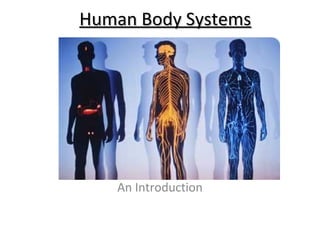
Human Body SystemsHuman Body Systems
An Introduction
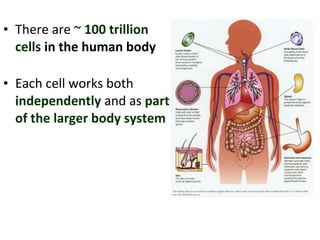
• There are ~ 100 trillion
cells in the human body
• Each cell works both
independently and as part
of the larger body system
How does the body get so many cells
to work together?
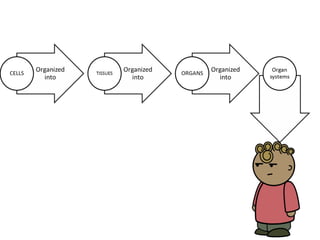
Organization
•Cells  tissues 
organs  organ systems
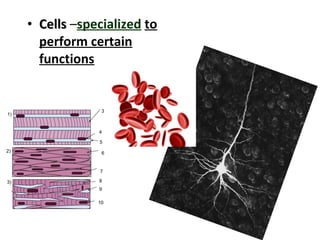
• CellsCells –specialized to
perform certain
functions
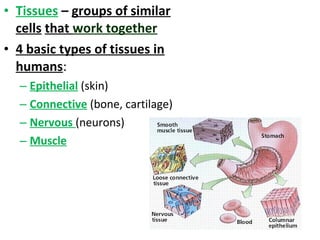
• Tissues – groups of similar
cells that work together
• 4 basic types of tissues in
humans:
– Epithelial (skin)
– Connective (bone, cartilage)
– Nervous (neurons)
– Muscle
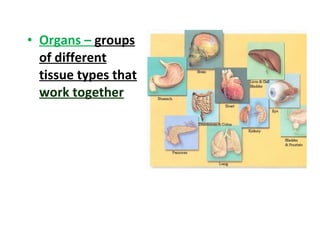
• Organs – groups
of different
tissue types that
work together
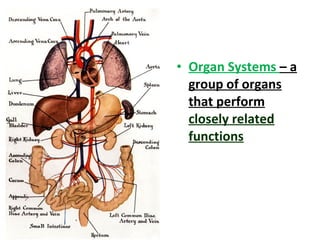
• Organ Systems – a
group of organs
that perform
closely related
functions
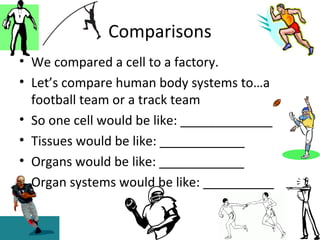
Comparisons
• We compared a cell to a factory.
• Let’s compare human body systems to…a
football team or a track team
• So one cell would be like: _____________
• Tissues would be like: ____________
• Organs would be like: ____________
• Organ systems would be like: __________
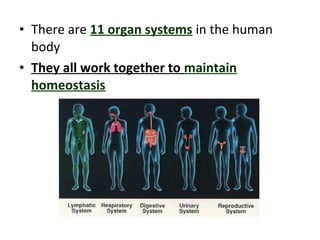
• There are 11 organ systems in the human
body
• They all work together to maintain
homeostasis
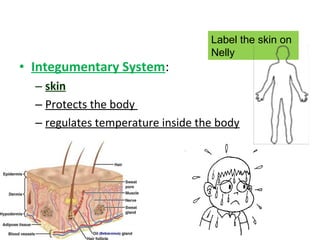
• Integumentary System:
– skin
– Protects the body
– regulates temperature inside the body
Label the skin on
Nelly
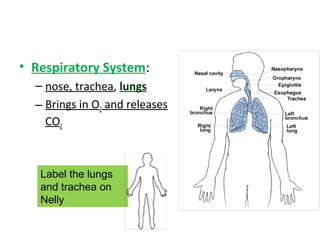
• Respiratory System:
– nose, trachea, lungs
– Brings in O2 and releases
CO2
Label the lungs
and trachea on
Nelly
Human Body Systems
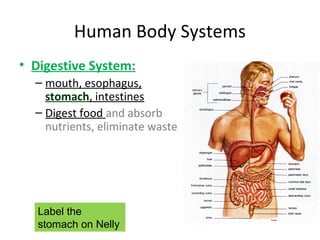
• Digestive System:
– mouth, esophagus,
stomach, intestines
– Digest food and absorb
nutrients, eliminate waste
Label the
stomach on Nelly
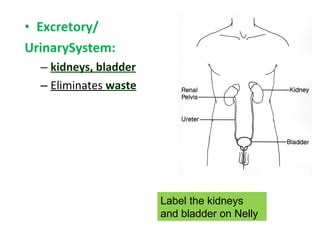
• Excretory/
UrinarySystem:
– kidneys, bladder
– Eliminates waste
Label the kidneys
and bladder on Nelly
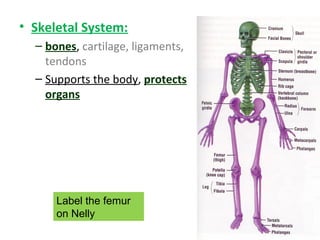
• Skeletal System:
– bones, cartilage, ligaments,
tendons
– Supports the body, protects
organs
Label the femur
on Nelly
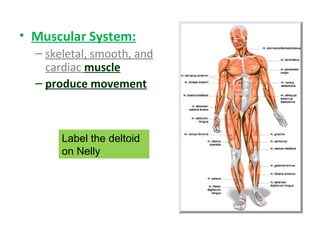
• Muscular System:
– skeletal, smooth, and
cardiac muscle
– produce movement
Label the deltoid
on Nelly
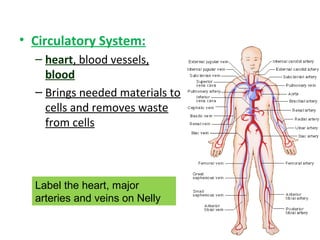
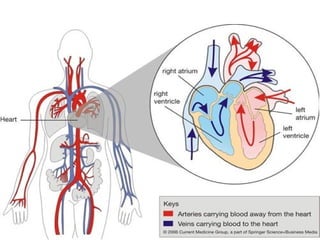
• Circulatory System:
– heart, blood vessels,
blood
– Brings needed materials to
cells and removes waste
from cells
Label the heart, major
arteries and veins on Nelly
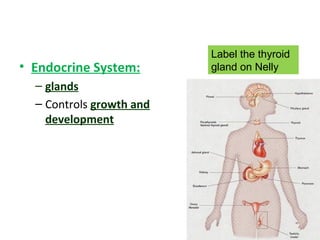
• Endocrine System:
– glands
– Controls growth and
development
Label the thyroid
gland on Nelly
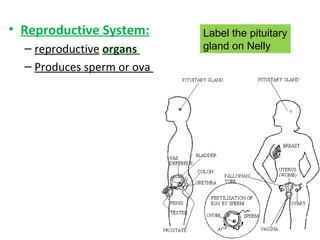
• Reproductive System:
– reproductive organs
– Produces sperm or ova
Label the pituitary
gland on Nelly
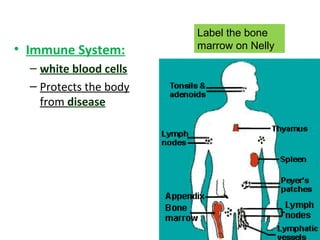
• Immune System:
– white blood cells
– Protects the body
from disease
Label the bone
marrow on Nelly
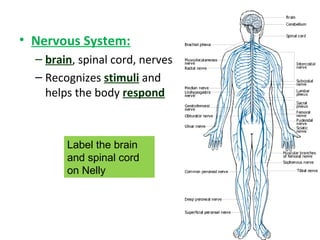
• Nervous System:
– brain, spinal cord, nerves
– Recognizes stimuli and
helps the body respond
Label the brain
and spinal cord
on Nelly
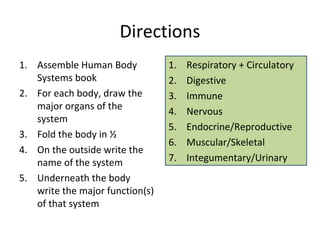
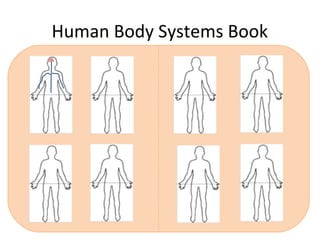
Directions
1. Assemble Human Body
Systems book
2. For each body, draw the
major organs of the
system
3. Fold the body in ½
4. On the outside write the
name of the system
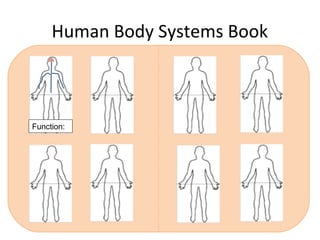
5. Underneath the body
write the major function(s)
of that system
1. Respiratory + Circulatory
2. Digestive
3. Immune
4. Nervous
5. Endocrine/Reproductive
6. Muscular/Skeletal
7. Integumentary/Urinary
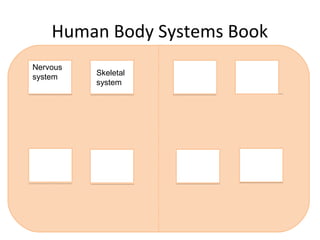
Human Body Systems Book
Nervous
system
Skeletal
system
Human Body Systems Book
Function:

Human body systems general overview

  • 1.
    Friday April 7th ,2017 Today you need • Notebook • Something to write with • Body outline • Glue • Scissors Objective • Identify the major organs of each human body system • Describe the primary function of each body system
  • 2.
    Human Body SystemsHumanBody Systems An Introduction
  • 3.
    • There are~ 100 trillion cells in the human body • Each cell works both independently and as part of the larger body system
  • 4.
    How does thebody get so many cells to work together? Organization •Cells  tissues  organs  organ systems
  • 6.
    • CellsCells –specializedto perform certain functions
  • 7.
    • Tissues –groups of similar cells that work together • 4 basic types of tissues in humans: – Epithelial (skin) – Connective (bone, cartilage) – Nervous (neurons) – Muscle
  • 8.
    • Organs –groups of different tissue types that work together
  • 9.
    • Organ Systems– a group of organs that perform closely related functions
  • 10.
    Comparisons • We compareda cell to a factory. • Let’s compare human body systems to…a football team or a track team • So one cell would be like: _____________ • Tissues would be like: ____________ • Organs would be like: ____________ • Organ systems would be like: __________
  • 11.
    • There are11 organ systems in the human body • They all work together to maintain homeostasis
  • 12.
    • Integumentary System: –skin – Protects the body – regulates temperature inside the body Label the skin on Nelly
  • 13.
    • Respiratory System: –nose, trachea, lungs – Brings in O2 and releases CO2 Label the lungs and trachea on Nelly
  • 14.
    Human Body Systems •Digestive System: – mouth, esophagus, stomach, intestines – Digest food and absorb nutrients, eliminate waste Label the stomach on Nelly
  • 15.
    • Excretory/ UrinarySystem: – kidneys,bladder – Eliminates waste Label the kidneys and bladder on Nelly
  • 16.
    • Skeletal System: –bones, cartilage, ligaments, tendons – Supports the body, protects organs Label the femur on Nelly
  • 17.
    • Muscular System: –skeletal, smooth, and cardiac muscle – produce movement Label the deltoid on Nelly
  • 18.
    • Circulatory System: –heart, blood vessels, blood – Brings needed materials to cells and removes waste from cells Label the heart, major arteries and veins on Nelly
  • 20.
    • Endocrine System: –glands – Controls growth and development Label the thyroid gland on Nelly
  • 21.
    • Reproductive System: –reproductive organs – Produces sperm or ova Label the pituitary gland on Nelly
  • 22.
    • Immune System: –white blood cells – Protects the body from disease Label the bone marrow on Nelly
  • 23.
    • Nervous System: –brain, spinal cord, nerves – Recognizes stimuli and helps the body respond Label the brain and spinal cord on Nelly
  • 24.
    Directions 1. Assemble HumanBody Systems book 2. For each body, draw the major organs of the system 3. Fold the body in ½ 4. On the outside write the name of the system 5. Underneath the body write the major function(s) of that system 1. Respiratory + Circulatory 2. Digestive 3. Immune 4. Nervous 5. Endocrine/Reproductive 6. Muscular/Skeletal 7. Integumentary/Urinary
  • 25.
  • 26.
    Human Body SystemsBook Nervous system Skeletal system
  • 27.
  • 28.
    Human Body SystemsBook Function:

Editor's Notes

  • #4 (it would take you over 3 million years to count this high!)