Pediatric pyogenic meningitis
pyogenic meningitis
Pyogenic meningitis
•Meningitis is defined as inflammation of
membranes surrounding the brain and spinal cord
•Meningoencephalitis is inflammation of meninges
and brain cortex
pyogenic meningitis
pyogenic meningitis
Incidence and etiology
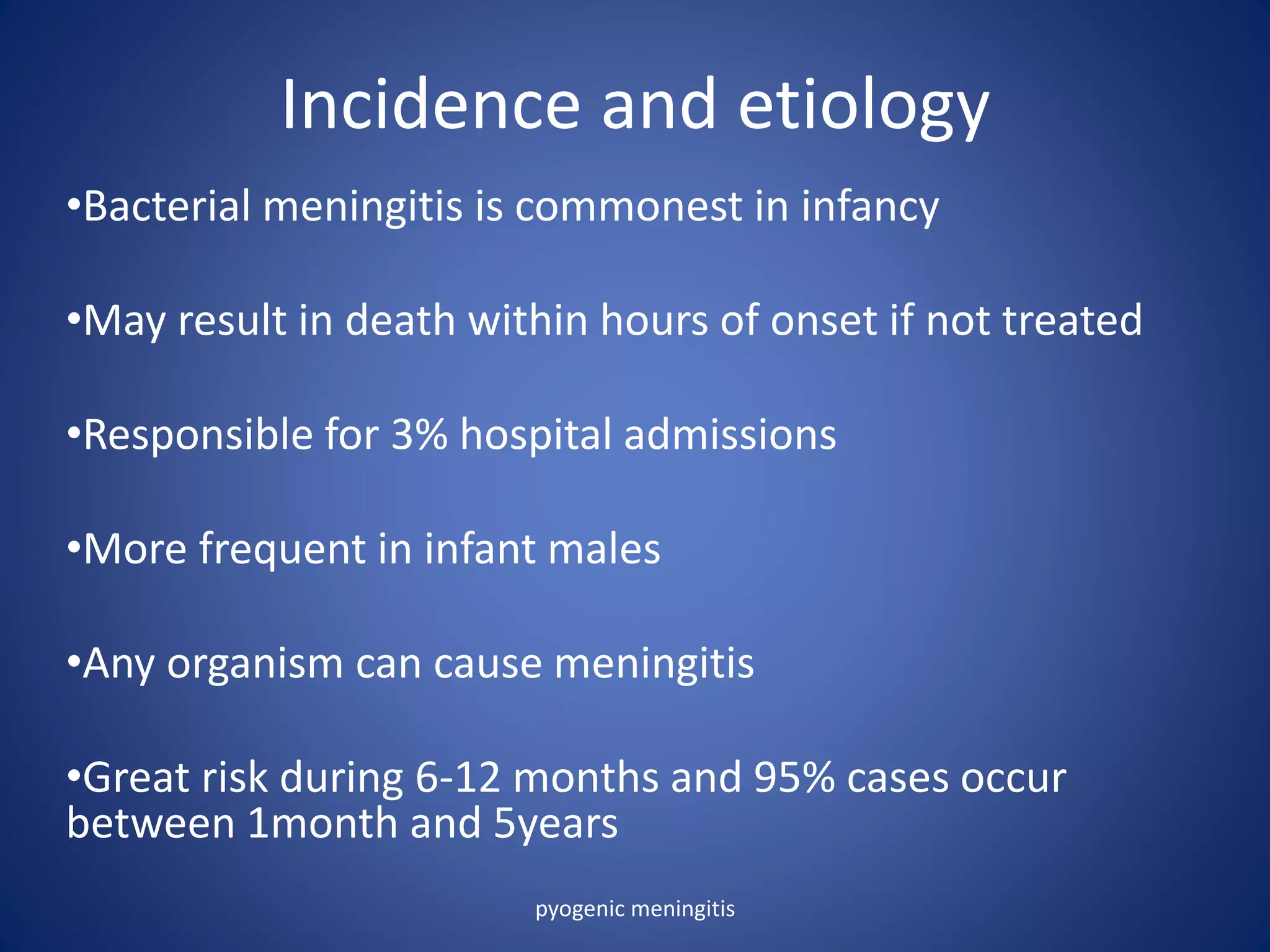
•Bacterial meningitis is commonest in infancy
•May result in death within hours of onset if not treated
•Responsible for 3% hospital admissions
•More frequent in infant males
•Any organism can cause meningitis
•Great risk during 6-12 months and 95% cases occur
between 1month and 5years
pyogenic meningitis
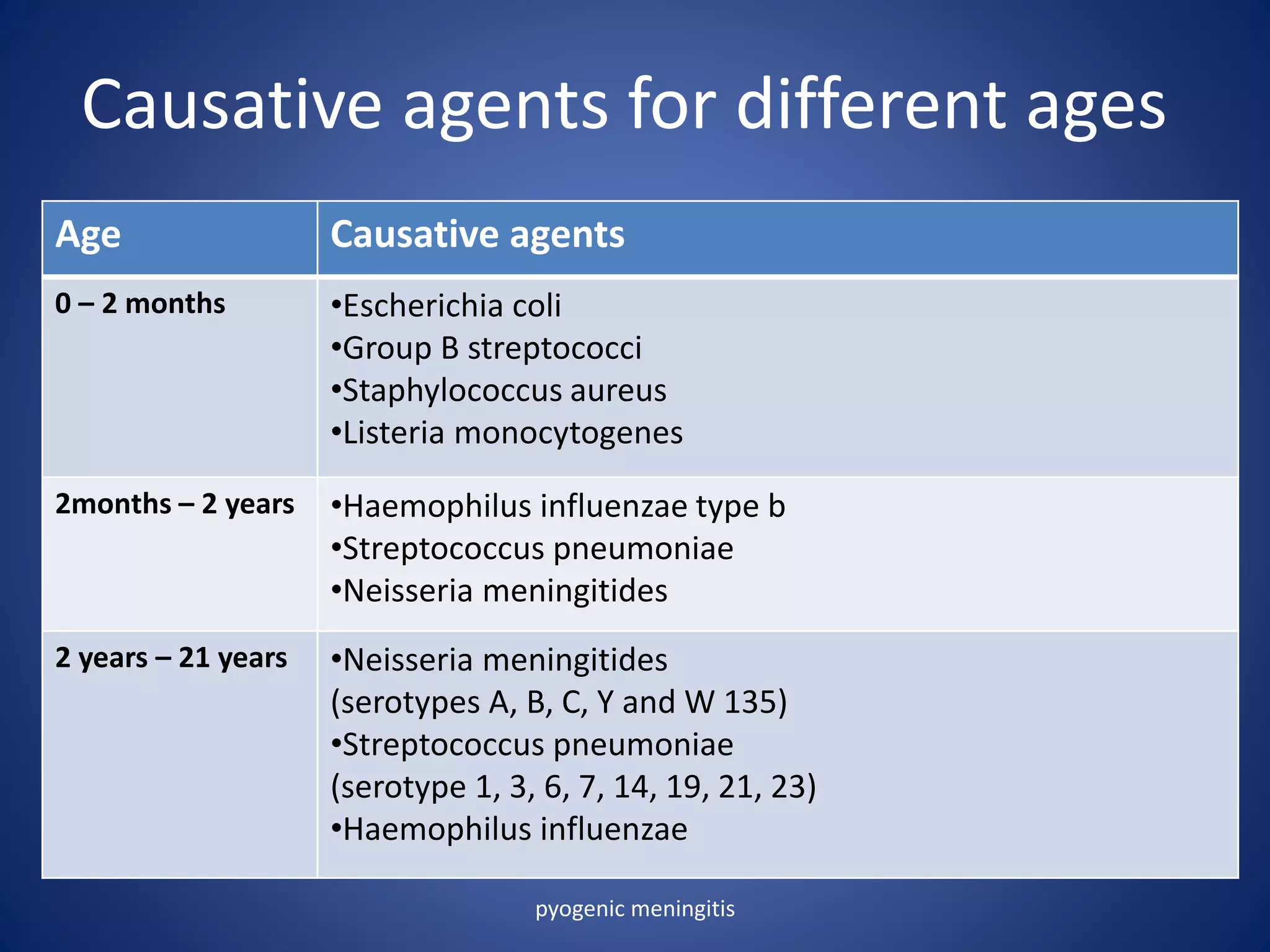
Causative agents for different ages
pyogenic meningitis
Age Causative agents
0 – 2 months •Escherichia coli
•Group B streptococci
•Staphylococcus aureus
•Listeria monocytogenes
2months – 2 years •Haemophilus influenzae type b
•Streptococcus pneumoniae
•Neisseria meningitides
2 years – 21 years •Neisseria meningitides
(serotypes A, B, C, Y and W 135)
•Streptococcus pneumoniae
(serotype 1, 3, 6, 7, 14, 19, 21, 23)
•Haemophilus influenzae
Streptococcus pneumoniae
Pathogenesis
•Causative agent enter CNS via blood or direct
invasion
•Anatomic or congenital defect can also cause
invasion
•Inflammation of meninges initiated when cell
elements of organism disrupt blood brain barrier
•Followed by outpouring of polymorphs and fibrin
pyogenic meningitis
•Release of cytokines and chemokines in CNS
stimulated by bacteria
•Meninges become swollen, inflamed and covered
in exudates
•Early in illness cerebral edema present and
ventricles reduced in size
•Pressure on peripheral nerves may lead to motor or
sensory deficit
•Communicating hydrocephalus due to adhesive
thickening of arachnoid in basal cisterns
pyogenic meningitis pathogenesis
•Obstructive hydrocephalus due to fibrosis
blocking aqueduct of sylvius or foraminas
•Affected cranial nerves cause deafness and
vestibular problem
•Cerebral vessels and cranial nerves can be
involved and may lead to permanent neurologic
damage
•Cerebral atrophy by thrombosis of small cortical
veins
pyogenic meningitis pathogenesis
•Inflammation involving veins crossing subdural
space lead to increase in vascular permeability
and loss of albumin into subdural space
•Hypoglycorhacia by decreased transport of
glucose across the inflamed choroid plexus and
increased use by host
•Seizures by electrolyte imbalance ultimately
depolarization of neuronal membranes
pyogenic meningitis pathogenesis
Clinical features
Meningitis always must be considered in any
young infant whose temperature is greater
than 100.7°F (38.2°C) and who has no obvious
site of infection
pyogenic meningitis
Neonates and infants
•Gram negative organisms are commonly
responsible
•Infective illness in mother, prolonged rupture of
membranes or difficult delivery put the newborn at
risk
•Premature infants have low level of antibodies
•Predisposing factor is spina bifida or dermal sinus
pyogenic meningitis
•Initial signs are subtle
•Fever occurs in 50% of cases
•Infant is ill looking and feeds poorly
•May develop vomiting, hypothermia, lethargy,
convulsions
•Has bulging anterior fontanelle, head retraction
and high pitch cry
pyogenic meningitis neonates and infants
Older children
•Classic signs preceded by upper respiratory or GIT
symptoms
•High grade fever, head ache and projectile vomiting
•Seizures are common
•Increased CSF pressure leads to bulging fontanelle
and diastasis of sutures
pyogenic meningitis
•Neck stiffness, positive kerning's sign and
brudzinski’s sign
•Cranial nerve palsies and papilledema
•Hemiplegia in cases late reported, ataxia may also
be present
•Patient may be semi comatose or comatose
•Meningococcal meningitis is characterized by the
presence features of Waterhouse Friderichsen
syndrome
pyogenic meningitis older children
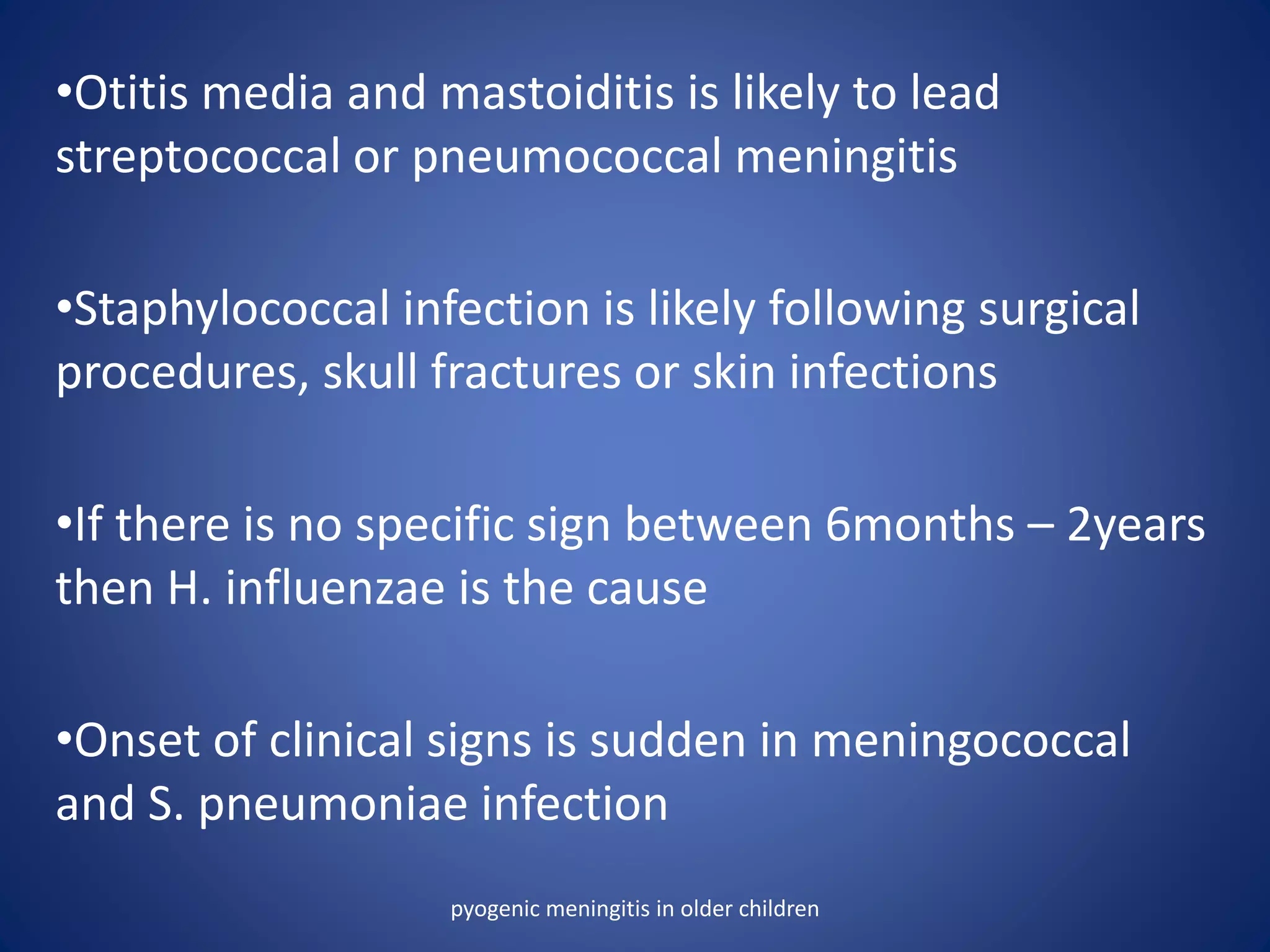
•Otitis media and mastoiditis is likely to lead
streptococcal or pneumococcal meningitis
•Staphylococcal infection is likely following surgical
procedures, skull fractures or skin infections
•If there is no specific sign between 6months – 2years
then H. influenzae is the cause
•Onset of clinical signs is sudden in meningococcal
and S. pneumoniae infection
pyogenic meningitis in older children
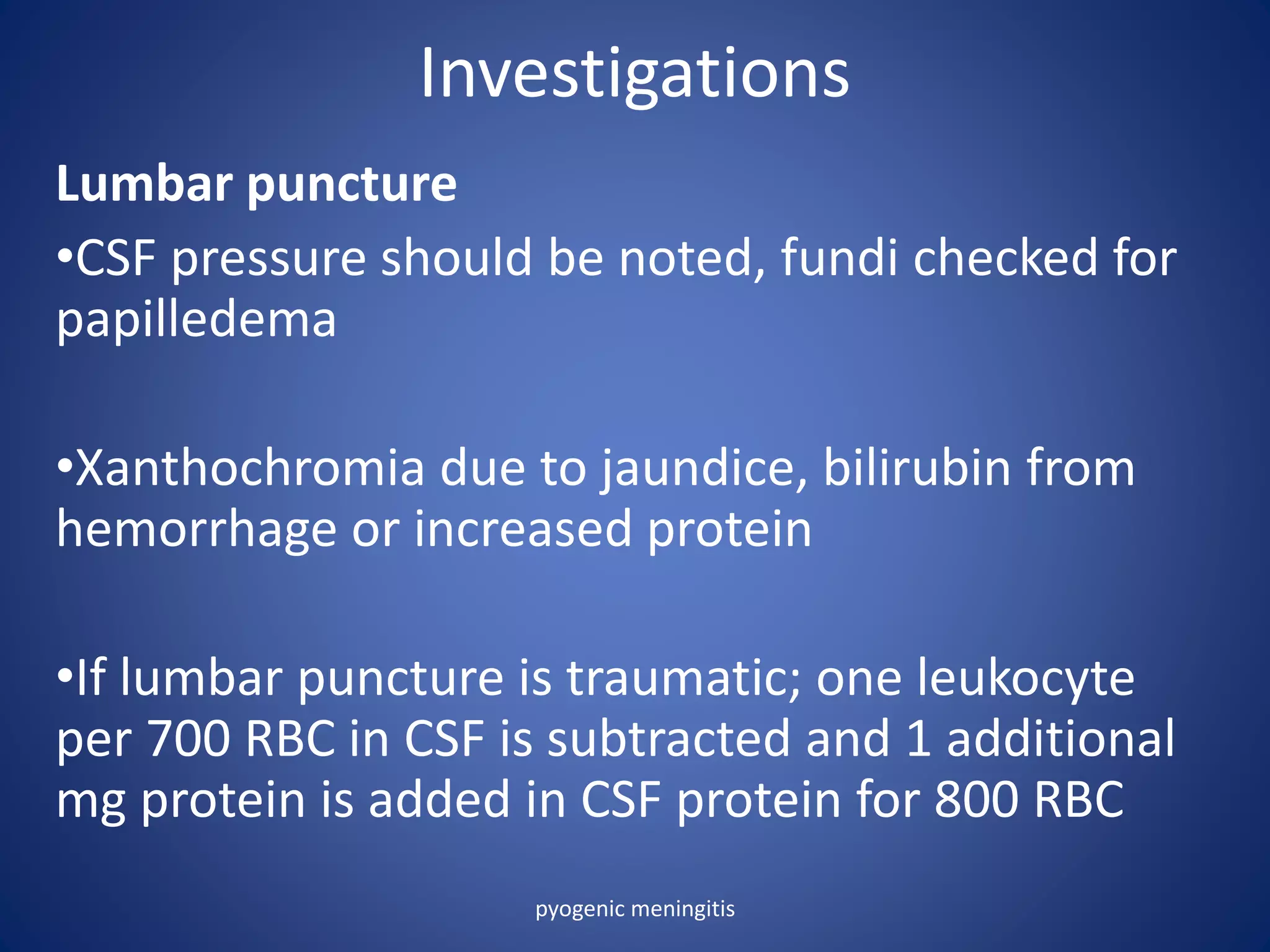
Investigations
Lumbar puncture
•CSF pressure should be noted, fundi checked for
papilledema
•Xanthochromia due to jaundice, bilirubin from
hemorrhage or increased protein
•If lumbar puncture is traumatic; one leukocyte
per 700 RBC in CSF is subtracted and 1 additional
mg protein is added in CSF protein for 800 RBC
pyogenic meningitis
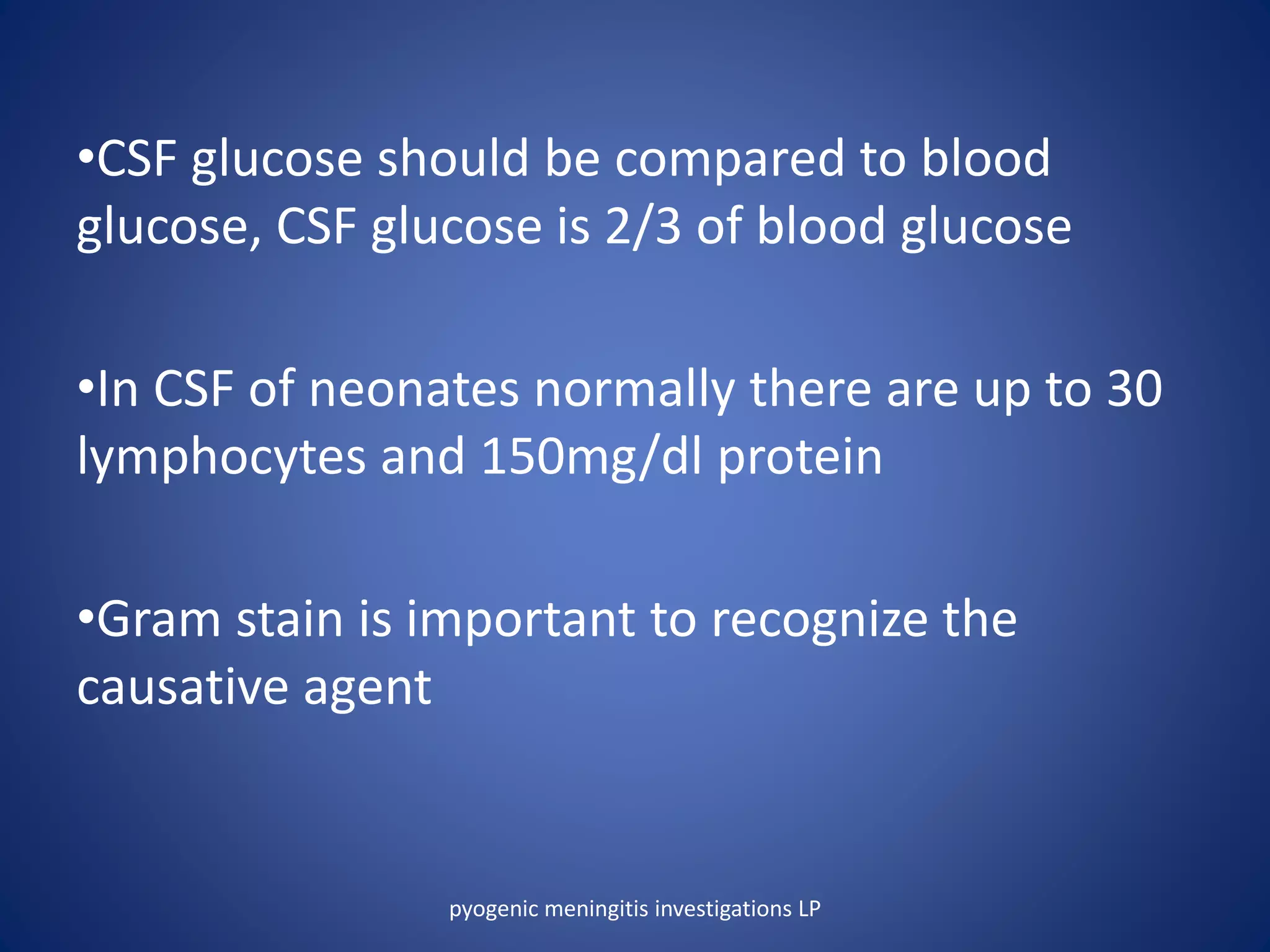
•CSF glucose should be compared to blood
glucose, CSF glucose is 2/3 of blood glucose
•In CSF of neonates normally there are up to 30
lymphocytes and 150mg/dl protein
•Gram stain is important to recognize the
causative agent
pyogenic meningitis investigations LP
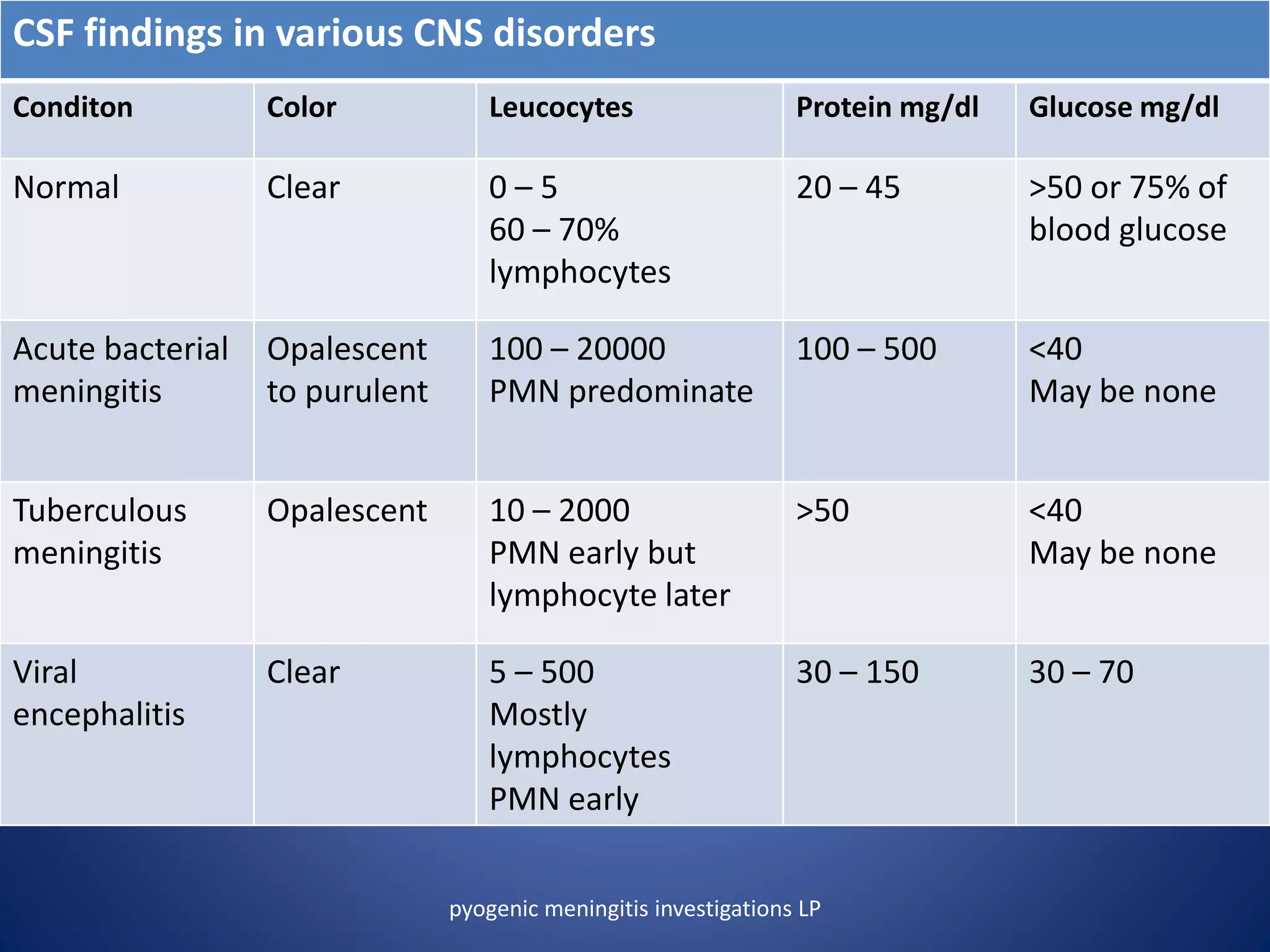
CSF findings in various CNS disorders
Conditon Color Leucocytes Protein mg/dl Glucose mg/dl
Normal Clear 0 – 5
60 – 70%
lymphocytes
20 – 45 >50 or 75% of
blood glucose
Acute bacterial
meningitis
Opalescent
to purulent
100 – 20000
PMN predominate
100 – 500 <40
May be none
Tuberculous
meningitis
Opalescent 10 – 2000
PMN early but
lymphocyte later
>50 <40
May be none
Viral
encephalitis
Clear 5 – 500
Mostly
lymphocytes
PMN early
30 – 150 30 – 70
pyogenic meningitis investigations LP
Gram staining
Meningococci Gram negative intracellular diplococci
Pneumococci Gram positive diplococci
H. Influenzae Gram negative coccobacilli
E. Colli Gram negative bacilli
Contraindications for immediate LP
•Increased ICP especially with focal neurologic
deficits
•Severe cardio pulmonary compromises
•Infection of skin overlying the site of LP
•Bleeding or clotting disorder
pyogenic meningitis investigations LP
Recommendation for repeat LP
at 24 – 36 hours
•All neonates
•Meningitis caused by S. pneumoniae and gram
negative enteric bacilli
•Lack of cranial improvement in 24 – 36hours
after therapy
•Prolonged or second fever
•Recurrent meningitis
•Immunocompromised patients
pyogenic meningitis investigations LP
CSF culture
The yield of CSF culture decreases soon after
antibiotic therapy has been started. More
sensitive technique, polymerase chain reaction
may help to diagnose cases of bacterial
meningitis in patients treated by antibiotics
Blood culture
90% H. influenzae and 80% S. pneumoniae
pyogenic meningitis investigations
Blood counts
Total and differential leukocyte count; generally
there is leucocytosis with predominant
polymorphs
X – ray chest
To rule out TB and pneumonia
CT scan
pyogenic meningitis investigations
Indications for CT scan
•Newborn except for disease caused by listeria
•Prolonged comatose condition
•Seizures 72 hours after start of treatment
•Continued excessive irritability
•Focal neurologic findings
•Persistently abnormal CSF findings
•Relapse or recurrence
pyogenic meningitis investigations
Rapid diagnostic tests
•Concurrent immuno electro phoresis
•Latex particle agglutination
•ELISA to detect bacteria antigen in CSF
•CSF lactate level
•Enzyme radioisotope to detect activity of ß
lactamase in CSF
Gram staining
Smears of petechial or purpuric lesions on skin
pyogenic meningitis investigations
Differential diagnosis
•Tuberculous meningitis
•Aseptic meningitis
•Brain abscess
•Brain tumor
•Cerebral malaria
pyogenic meningitis
Management
Supportive measures
•Vitals recorded every 15 – 30 minutes until patient
is stable
•Neurologic examinations and seizure evaluation
•Measure head circumference in children <18
months
•Intake and output record
pyogenic meningitis
•Body weight, serum electrolytes monitored 12
hourly
•For fever sponge and give antipyretics
•Feeding continued and give tube feeding if necessary
•Fluid restricted to 60%, not indicated in hypotension
•Care of comatose patient
•IV diazepam for seizures, phenobarbitone for
recurrent seizures
pyogenic meningitis management supportive
Specific measures
Antibiotics
•Appropriate antibiotic given by culture report
•Term infants in 1st month given combo of
ampicillin with gentamicin or cefotaxime
•Low birth weight preterm infants presenting late
should be given vancomycin and an
aminoglycoside
pyogenic meningitis management
•1 – 2 month infants given ampicillin ad ceftriaxone
•Resistant strains treated with vancomycin
alternatively meropenem
•Duration of therapy is 7 – 10 days
Steroids
•Dexamethasone for 2 – 4 days
•Given before antibiotic is started for good result
pyogenic meningitis management specific
Treatment of complications
Cerebral edema and raised ICP
•Head elevated about 30°
•Steroids for reducing inflammation and brain water
content
•Mannitol
Subdural effusion
•Symptomatic effusion should be aspirated
pyogenic meningitis management
Subdural effusion
Inappropriate ADH secretion
•Hyponatremia, coma, seizures, weight gain,
puffiness of face, decreased urine output
•Treated with fluid restriction and diuretics
Waterhouse Friderichsen syndrome
•Patient in shock with hypotension petechial rash
•Give normal saline/plasma, steroids and
dopamine infusion
pyogenic meningitis management treatment of complications
Waterhouse Friderichsen syndrome
Complications of meningitis
pyogenic meningitis
Increased ICP Cranial nerve palsies
Seizures Stroke
Ataxia Inappropriate ADH
Prolonged fever >10days Rapidly increasing head
circumference
Subdural effusions Spastic paraparesis
Blindness Cerebral infarcts
Anemia Cerebral herniation
Long term neurologic abnormality Epilepsy
Deafness Spasticity
Visual handicap Repeated episode
Prognosis
•Worse prognosis in young children with higher
bacterial colony counts, intractable seizures,
subdural effusion, bacteremia and prolonged fever,
thrombocytopenia, low ESR, absence of
leukocytosis, DIC, rapidly progressive purpura in
12hours, hypotension or coma
•Mortality rate is 8 – 25%
•35% have permanent deficit
pyogenic meningitis
Prevention
Vaccination
•Vaccines available against S. pneumoniae, N.
meningitides and H. influenza type b
•Pneumococcal polysaccharide vaccine available
•Meningcoccal vaccine for high risk group and
children
•H. influenza vaccine given for all >2months infants
pyogenic meningitis
Antibiotic prophylaxis
Meningococcal
The dose of rifampicin recommended is 10mg/kg
given 12hourly for 2days
H. Influenzae
Rifampicin 20mg/kg/day for 4 days
For all house contacts and patient
Streptococcus pneumoniae
No prophylaxis
pyogenic meningitis
THANKYOU
pyogenic meningitis

pyogenic meningitis

  • 1.
  • 2.
    Pyogenic meningitis •Meningitis isdefined as inflammation of membranes surrounding the brain and spinal cord •Meningoencephalitis is inflammation of meninges and brain cortex pyogenic meningitis
  • 4.
  • 5.
    Incidence and etiology •Bacterialmeningitis is commonest in infancy •May result in death within hours of onset if not treated •Responsible for 3% hospital admissions •More frequent in infant males •Any organism can cause meningitis •Great risk during 6-12 months and 95% cases occur between 1month and 5years pyogenic meningitis
  • 6.
    Causative agents fordifferent ages pyogenic meningitis Age Causative agents 0 – 2 months •Escherichia coli •Group B streptococci •Staphylococcus aureus •Listeria monocytogenes 2months – 2 years •Haemophilus influenzae type b •Streptococcus pneumoniae •Neisseria meningitides 2 years – 21 years •Neisseria meningitides (serotypes A, B, C, Y and W 135) •Streptococcus pneumoniae (serotype 1, 3, 6, 7, 14, 19, 21, 23) •Haemophilus influenzae
  • 7.
  • 8.
    Pathogenesis •Causative agent enterCNS via blood or direct invasion •Anatomic or congenital defect can also cause invasion •Inflammation of meninges initiated when cell elements of organism disrupt blood brain barrier •Followed by outpouring of polymorphs and fibrin pyogenic meningitis
  • 9.
    •Release of cytokinesand chemokines in CNS stimulated by bacteria •Meninges become swollen, inflamed and covered in exudates •Early in illness cerebral edema present and ventricles reduced in size •Pressure on peripheral nerves may lead to motor or sensory deficit •Communicating hydrocephalus due to adhesive thickening of arachnoid in basal cisterns pyogenic meningitis pathogenesis
  • 10.
    •Obstructive hydrocephalus dueto fibrosis blocking aqueduct of sylvius or foraminas •Affected cranial nerves cause deafness and vestibular problem •Cerebral vessels and cranial nerves can be involved and may lead to permanent neurologic damage •Cerebral atrophy by thrombosis of small cortical veins pyogenic meningitis pathogenesis
  • 11.
    •Inflammation involving veinscrossing subdural space lead to increase in vascular permeability and loss of albumin into subdural space •Hypoglycorhacia by decreased transport of glucose across the inflamed choroid plexus and increased use by host •Seizures by electrolyte imbalance ultimately depolarization of neuronal membranes pyogenic meningitis pathogenesis
  • 12.
    Clinical features Meningitis alwaysmust be considered in any young infant whose temperature is greater than 100.7°F (38.2°C) and who has no obvious site of infection pyogenic meningitis
  • 14.
    Neonates and infants •Gramnegative organisms are commonly responsible •Infective illness in mother, prolonged rupture of membranes or difficult delivery put the newborn at risk •Premature infants have low level of antibodies •Predisposing factor is spina bifida or dermal sinus pyogenic meningitis
  • 15.
    •Initial signs aresubtle •Fever occurs in 50% of cases •Infant is ill looking and feeds poorly •May develop vomiting, hypothermia, lethargy, convulsions •Has bulging anterior fontanelle, head retraction and high pitch cry pyogenic meningitis neonates and infants
  • 17.
    Older children •Classic signspreceded by upper respiratory or GIT symptoms •High grade fever, head ache and projectile vomiting •Seizures are common •Increased CSF pressure leads to bulging fontanelle and diastasis of sutures pyogenic meningitis
  • 18.
    •Neck stiffness, positivekerning's sign and brudzinski’s sign •Cranial nerve palsies and papilledema •Hemiplegia in cases late reported, ataxia may also be present •Patient may be semi comatose or comatose •Meningococcal meningitis is characterized by the presence features of Waterhouse Friderichsen syndrome pyogenic meningitis older children
  • 19.
    •Otitis media andmastoiditis is likely to lead streptococcal or pneumococcal meningitis •Staphylococcal infection is likely following surgical procedures, skull fractures or skin infections •If there is no specific sign between 6months – 2years then H. influenzae is the cause •Onset of clinical signs is sudden in meningococcal and S. pneumoniae infection pyogenic meningitis in older children
  • 21.
    Investigations Lumbar puncture •CSF pressureshould be noted, fundi checked for papilledema •Xanthochromia due to jaundice, bilirubin from hemorrhage or increased protein •If lumbar puncture is traumatic; one leukocyte per 700 RBC in CSF is subtracted and 1 additional mg protein is added in CSF protein for 800 RBC pyogenic meningitis
  • 22.
    •CSF glucose shouldbe compared to blood glucose, CSF glucose is 2/3 of blood glucose •In CSF of neonates normally there are up to 30 lymphocytes and 150mg/dl protein •Gram stain is important to recognize the causative agent pyogenic meningitis investigations LP
  • 24.
    pyogenic meningitis investigationsLP CSF findings in various CNS disorders Conditon Color Leucocytes Protein mg/dl Glucose mg/dl Normal Clear 0 – 5 60 – 70% lymphocytes 20 – 45 >50 or 75% of blood glucose Acute bacterial meningitis Opalescent to purulent 100 – 20000 PMN predominate 100 – 500 <40 May be none Tuberculous meningitis Opalescent 10 – 2000 PMN early but lymphocyte later >50 <40 May be none Viral encephalitis Clear 5 – 500 Mostly lymphocytes PMN early 30 – 150 30 – 70
  • 25.
    pyogenic meningitis investigationsLP Gram staining Meningococci Gram negative intracellular diplococci Pneumococci Gram positive diplococci H. Influenzae Gram negative coccobacilli E. Colli Gram negative bacilli
  • 26.
    Contraindications for immediateLP •Increased ICP especially with focal neurologic deficits •Severe cardio pulmonary compromises •Infection of skin overlying the site of LP •Bleeding or clotting disorder pyogenic meningitis investigations LP
  • 27.
    Recommendation for repeatLP at 24 – 36 hours •All neonates •Meningitis caused by S. pneumoniae and gram negative enteric bacilli •Lack of cranial improvement in 24 – 36hours after therapy •Prolonged or second fever •Recurrent meningitis •Immunocompromised patients pyogenic meningitis investigations LP
  • 28.
    CSF culture The yieldof CSF culture decreases soon after antibiotic therapy has been started. More sensitive technique, polymerase chain reaction may help to diagnose cases of bacterial meningitis in patients treated by antibiotics Blood culture 90% H. influenzae and 80% S. pneumoniae pyogenic meningitis investigations
  • 29.
    Blood counts Total anddifferential leukocyte count; generally there is leucocytosis with predominant polymorphs X – ray chest To rule out TB and pneumonia CT scan pyogenic meningitis investigations
  • 30.
    Indications for CTscan •Newborn except for disease caused by listeria •Prolonged comatose condition •Seizures 72 hours after start of treatment •Continued excessive irritability •Focal neurologic findings •Persistently abnormal CSF findings •Relapse or recurrence pyogenic meningitis investigations
  • 31.
    Rapid diagnostic tests •Concurrentimmuno electro phoresis •Latex particle agglutination •ELISA to detect bacteria antigen in CSF •CSF lactate level •Enzyme radioisotope to detect activity of ß lactamase in CSF Gram staining Smears of petechial or purpuric lesions on skin pyogenic meningitis investigations
  • 32.
    Differential diagnosis •Tuberculous meningitis •Asepticmeningitis •Brain abscess •Brain tumor •Cerebral malaria pyogenic meningitis
  • 33.
    Management Supportive measures •Vitals recordedevery 15 – 30 minutes until patient is stable •Neurologic examinations and seizure evaluation •Measure head circumference in children <18 months •Intake and output record pyogenic meningitis
  • 34.
    •Body weight, serumelectrolytes monitored 12 hourly •For fever sponge and give antipyretics •Feeding continued and give tube feeding if necessary •Fluid restricted to 60%, not indicated in hypotension •Care of comatose patient •IV diazepam for seizures, phenobarbitone for recurrent seizures pyogenic meningitis management supportive
  • 35.
    Specific measures Antibiotics •Appropriate antibioticgiven by culture report •Term infants in 1st month given combo of ampicillin with gentamicin or cefotaxime •Low birth weight preterm infants presenting late should be given vancomycin and an aminoglycoside pyogenic meningitis management
  • 36.
    •1 – 2month infants given ampicillin ad ceftriaxone •Resistant strains treated with vancomycin alternatively meropenem •Duration of therapy is 7 – 10 days Steroids •Dexamethasone for 2 – 4 days •Given before antibiotic is started for good result pyogenic meningitis management specific
  • 37.
    Treatment of complications Cerebraledema and raised ICP •Head elevated about 30° •Steroids for reducing inflammation and brain water content •Mannitol Subdural effusion •Symptomatic effusion should be aspirated pyogenic meningitis management
  • 38.
  • 39.
    Inappropriate ADH secretion •Hyponatremia,coma, seizures, weight gain, puffiness of face, decreased urine output •Treated with fluid restriction and diuretics Waterhouse Friderichsen syndrome •Patient in shock with hypotension petechial rash •Give normal saline/plasma, steroids and dopamine infusion pyogenic meningitis management treatment of complications
  • 40.
  • 41.
    Complications of meningitis pyogenicmeningitis Increased ICP Cranial nerve palsies Seizures Stroke Ataxia Inappropriate ADH Prolonged fever >10days Rapidly increasing head circumference Subdural effusions Spastic paraparesis Blindness Cerebral infarcts Anemia Cerebral herniation Long term neurologic abnormality Epilepsy Deafness Spasticity Visual handicap Repeated episode
  • 42.
    Prognosis •Worse prognosis inyoung children with higher bacterial colony counts, intractable seizures, subdural effusion, bacteremia and prolonged fever, thrombocytopenia, low ESR, absence of leukocytosis, DIC, rapidly progressive purpura in 12hours, hypotension or coma •Mortality rate is 8 – 25% •35% have permanent deficit pyogenic meningitis
  • 43.
    Prevention Vaccination •Vaccines available againstS. pneumoniae, N. meningitides and H. influenza type b •Pneumococcal polysaccharide vaccine available •Meningcoccal vaccine for high risk group and children •H. influenza vaccine given for all >2months infants pyogenic meningitis
  • 44.
    Antibiotic prophylaxis Meningococcal The doseof rifampicin recommended is 10mg/kg given 12hourly for 2days H. Influenzae Rifampicin 20mg/kg/day for 4 days For all house contacts and patient Streptococcus pneumoniae No prophylaxis pyogenic meningitis
  • 45.