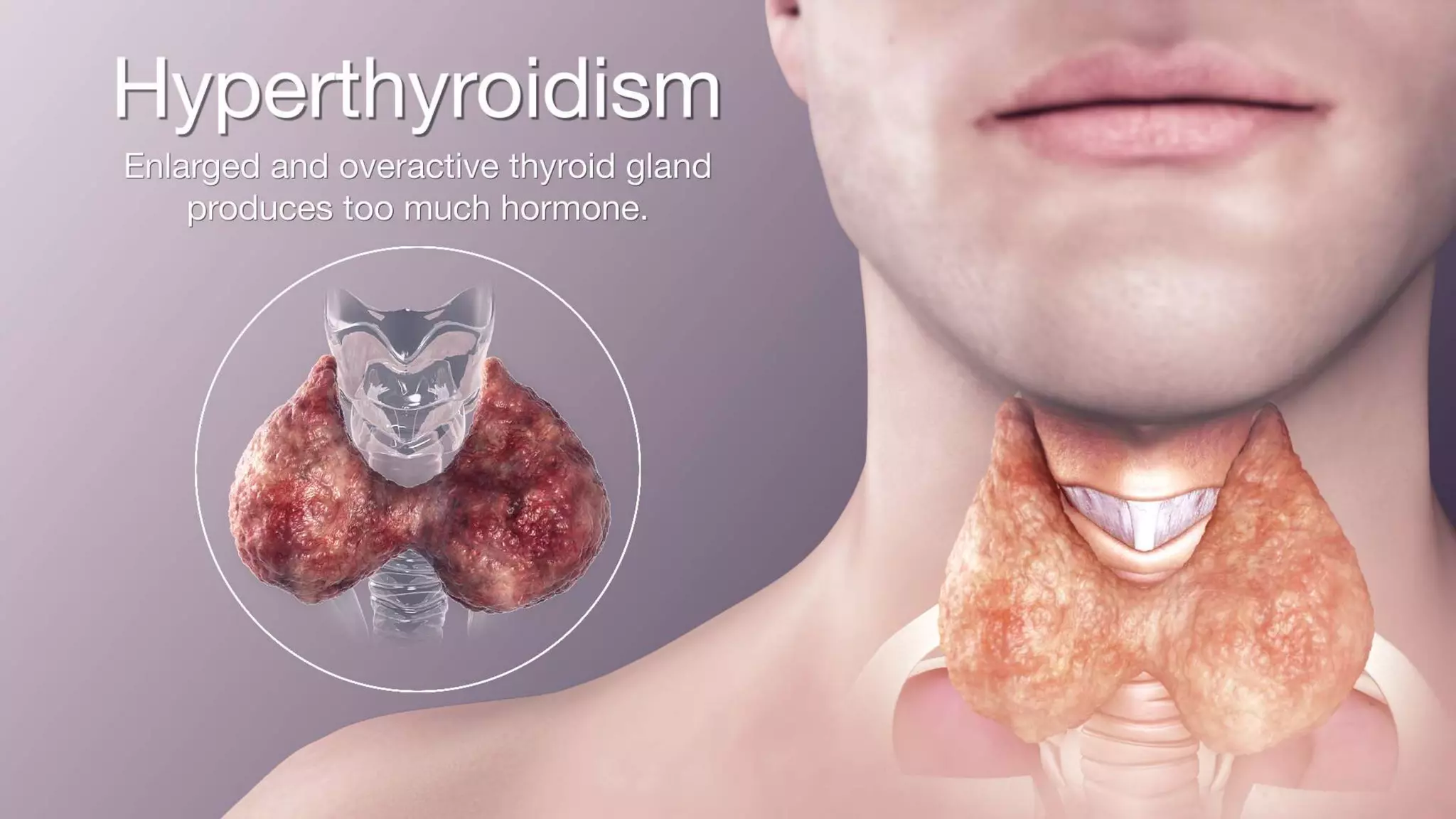
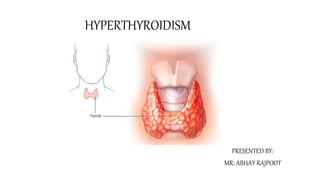

HYPERTHYROIDISM
PRESENTED BY:
MR: ABHAY RAJPOOT
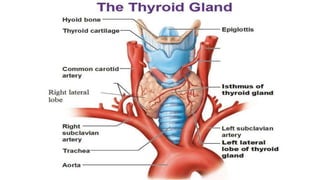
THYROID GLAND
The thyroid gland is a butterfly-shaped endocrine gland that is
normally located in the lower front of the neck. The thyroid’s job is to
make thyroid hormones, which are secreted into the blood and then
carried to every tissue in the body. Thyroid hormone helps the body use
energy, stay warm and keep the brain, heart, muscles, and other organs
working as they should.
THYROID HORMONE
INTRODUCTION
• Hyperthyroidism and thyrotoxicosis are used interchangeably,
however each refers to slightly different conditions. Hyperthyroidism
refers to over activity of the thyroid gland, with resultant excessive
secretion of thyroid hormones and accelerated metabolism in the
periphery.
• Thyrotoxicosis refers to the clinical effects of an unbound thyroid
hormone, regardless of whether or not the thyroid is the primary
source. There are a number of pathologic causes of hyperthyroidism in
children and adults.
DEFINITION
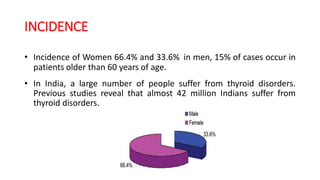
INCIDENCE
• Incidence of Women 66.4% and 33.6% in men, 15% of cases occur in
patients older than 60 years of age.
• In India, a large number of people suffer from thyroid disorders.
Previous studies reveal that almost 42 million Indians suffer from
thyroid disorders.
RISK FACTOR
• A family history, particularly of Graves' disease
• Female
• A personal history of certain chronic illnesses, such as type 1
diabetes, pernicious anemia and primary adrenal insufficiency
CAUSES
• Ectopic thyroid disease
• Grave’s disease
• Multi-nodular disease
• Thyroid adenoma
• Subacute thyroiditis
• Ingestion of thyroid hormone
• Pituitary disease
• Ingestion of food containing thyroid hormone
• High dietary iodine intake or very low dietary intake.
• Genetic factor.
Reasons for too much thyroxine (T4)
Normally, your thyroid releases the right amount of hormones, but
sometimes it produces too much T4. This may occur for a number of
reasons, including:
• Graves' disease. Graves' disease is an autoimmune disorder in which
antibodies produced by your immune system stimulate your thyroid
to produce too much T4. It's the most common cause of
hyperthyroidism.
• Hyperfunctioning thyroid nodules (toxic adenoma, toxic
multinodular goiter or Plummer's disease). This form of
hyperthyroidism occurs when one or more adenomas of the thyroid
produce too much T4. An adenoma is a part of the gland that has
walled itself off from the rest of the gland, forming noncancerous
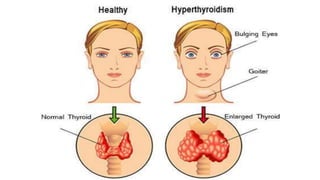
(benign) lumps that may cause an enlargement of the thyroid.
CONT..
• Thyroiditis. Sometimes thyroid gland can become inflamed after
pregnancy, due to an autoimmune condition or for unknown reasons.
The inflammation can cause excess thyroid hormone stored in the
gland to leak into the bloodstream. Some types of thyroiditis may
cause pain, while others are painless.
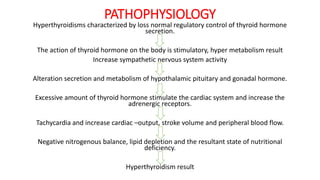
PATHOPHYSIOLOGY
Hyperthyroidisms characterized by loss normal regulatory control of thyroid hormone
secretion.
The action of thyroid hormone on the body is stimulatory, hyper metabolism result
Increase sympathetic nervous system activity
Alteration secretion and metabolism of hypothalamic pituitary and gonadal hormone.
Excessive amount of thyroid hormone stimulate the cardiac system and increase the
adrenergic receptors.
Tachycardia and increase cardiac –output, stroke volume and peripheral blood flow.
Negative nitrogenous balance, lipid depletion and the resultant state of nutritional
deficiency.
Hyperthyroidism result
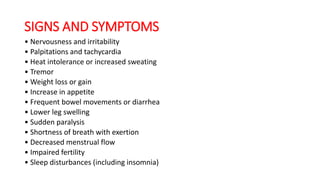
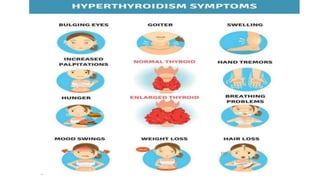
SIGNS AND SYMPTOMS
• Nervousness and irritability
• Palpitations and tachycardia
• Heat intolerance or increased sweating
• Tremor
• Weight loss or gain
• Increase in appetite
• Frequent bowel movements or diarrhea
• Lower leg swelling
• Sudden paralysis
• Shortness of breath with exertion
• Decreased menstrual flow
• Impaired fertility
• Sleep disturbances (including insomnia)
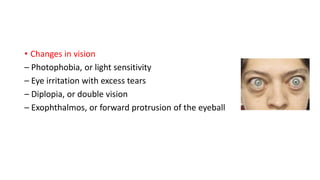
• Changes in vision
– Photophobia, or light sensitivity
– Eye irritation with excess tears
– Diplopia, or double vision
– Exophthalmos, or forward protrusion of the eyeball
DIAGNOSTIC EVALUATION
History and physical examination
Ophthalmic examination
ECG- atrial tachycardia
Thyroid function test: T3 and T4
Thyroid releasing hormone stimulation test
Radioactive iodine uptake (RAIU)
Thyroid scan
COMPLICATION
• Heart problems. Some of the most serious complications of
hyperthyroidism involve the heart. These include a rapid heart rate, a
heart rhythm disorder called atrial fibrillation that increases the risk
of stroke, and congestive heart failure.
• Brittle bones. Untreated hyperthyroidism can also lead to weak,
brittle bones (osteoporosis). The strength of your bones depends, in
part, on the amount of calcium and other minerals they contain. Too
much thyroid hormone interferes with the body's ability to
incorporate calcium into the bones.
• Eye problems. People with Graves' ophthalmopathy develop eye problems,
including bulging, red or swollen eyes, sensitivity to light, and blurring or
double vision. Untreated, severe eye problems can lead to vision loss.
• Red, swollen skin. In rare cases, people with Graves' disease develop
Graves' dermopathy. This affects the skin, causing redness and swelling,
often on the shins and feet.
• Thyrotoxic crisis. Hyperthyroidism also places you at risk of thyrotoxic crisis
— a sudden intensification of your symptoms, leading to a fever, a rapid
pulse and even delirium. If this occurs, seek immediate medical care
MANAGEMENT
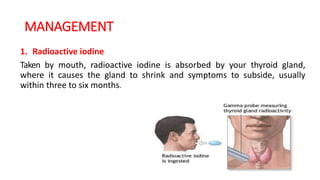
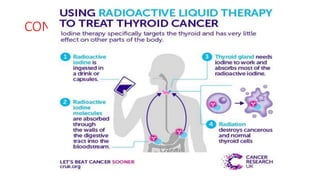
1. Radioactive iodine
Taken by mouth, radioactive iodine is absorbed by your thyroid gland,
where it causes the gland to shrink and symptoms to subside, usually
within three to six months.
CONT….
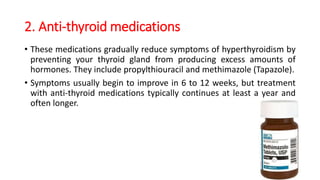
2. Anti-thyroid medications
• These medications gradually reduce symptoms of hyperthyroidism by
preventing your thyroid gland from producing excess amounts of
hormones. They include propylthiouracil and methimazole (Tapazole).
• Symptoms usually begin to improve in 6 to 12 weeks, but treatment
with anti-thyroid medications typically continues at least a year and
often longer.
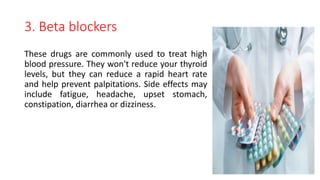
3. Beta blockers
These drugs are commonly used to treat high
blood pressure. They won't reduce your thyroid
levels, but they can reduce a rapid heart rate
and help prevent palpitations. Side effects may
include fatigue, headache, upset stomach,
constipation, diarrhea or dizziness.
SURGICAL MANAGEMENT
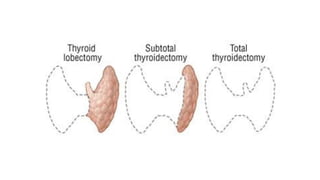
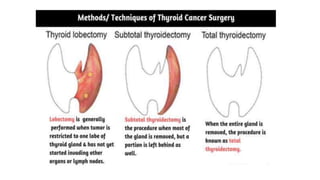
Surgical Treatment of Thyroid Disease General Several surgical
options exist for treating thyroid disease and the choice of procedure
depends on two main factors.
The first is the type and extent of thyroid disease present.
The second is the anatomy of the thyroid gland itself. The most
commonly performed procedures include: lobectomy, lobectomy with
isthmectomy, subtotal thyroidectomy, and total thyroidectomy.
NURSING MANAGEMENT
1. Imbalanced nutrition less than body requirement related to anorexia
and increase metabolic demand is inappropriate.
• Intervention: -
High calorie diet (4000-5000 kcal/day)
High protein diet (1-2 g/kg of ideal body weight)
Frequent meals
2. Activity intolerance related to exhaustion secondary to accelerated
metabolic rate resulting in inability to perform activity without
shortness of breath and significant increased in heart rate
Intervention:
Assist with regular physical activity.
Assist in activities of daily living
Assist the patient to schedule rest periods
3. Risk for injury: corneal ulceration, infection and not possible
blindness related inability to close the eye lids secondary to
exophthalmos.
4. Hyperthermia related to accelerated metabolic rate resulting in fever,
diaphoresis and reported heat intolerance.
5. Impaired social interaction related to extreme agitation,
hyperactivity, and mood swings resulting in inability to relate effectively
with others
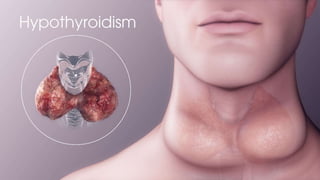
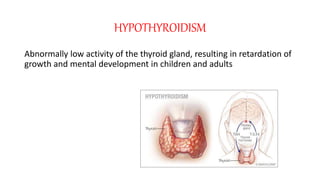
HYPOTHYROIDISM
Abnormally low activity of the thyroid gland, resulting in retardation of
growth and mental development in children and adults
INCIDENCE
Worldwide about one billion people are estimated to be iodine
deficient; however, it is unknown how often this results in
hypothyroidism.
In large population-based studies in Western countries with sufficient
dietary iodine, 0.3– 0.4% of the population have overt
hypothyroidism.
A larger proportion, 4.3–8.5%, have subclinical hypothyroidism.
Women are more likely to develop hypothyroidism than men.
RISK FACTOR
• Are a woman older than age 60
• Have an autoimmune disease
• Have a family history of thyroid disease
• Have other autoimmune diseases, such as rheumatoid arthritis or
lupus, a chronic inflammatory condition
• Have been treated with radioactive iodine or antithyroid medications
• Received radiation to your neck or upper chest
• Have had thyroid surgery (partial thyroidectomy)
• Have been pregnant or delivered a baby within the past six months
CAUSES
Medication: A number of medications can cause Hypothyroidism.
Lithium, which is used to treat certain psychiatric disorders, can also
affect the thyroid gland.
Genetic dysfunction: The thyroid gland may be dysfunctional at birth,
or may fail at some phase in adult life.
Previous thyroid surgery: Removal of a large portion or the entire
thyroid gland may reduce or stop the process of thyroid hormone
production.
Treatment for Hyperthyroidism: Treatment for Hyperthyroidism may
sometimes result in Hypothyroidism.
CONT….
Radiation therapy: Exposure of the thyroid gland to radiation therapy
for the treatment of cancers of the head and neck region may result
in Hypothyroidism.
Damage to the Pituitary Gland: The pituitary gland may be damaged
due to disease or surgery which may result in decreased level of
thyroid hormones.
Autoimmune Thyroid Disease: This is the most common cause of
Hypothyroidism. This happens when the body's immune system
produces certain antibodies that attack its own thyroid gland leading
to a reduced thyroid hormone production.
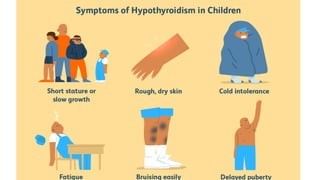
SIGNS AND SYMPTOM
• Fatigue
• Increased sensitivity to cold
• Constipation
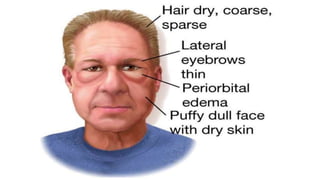
• Dry skin
• Weight gain
• Puffy face
• Hoarseness
• Muscle weakness
CONT…
• Elevated blood cholesterol level
• Muscle aches, tenderness and stiffness
• Pain, stiffness or swelling in your joints
• Heavier than normal or irregular menstrual periods
• Thinning hair
• Slowed heart rate
• Depression
• Impaired memory
DIAGNOSTIC EVALUATION
• History and physical examination
• Serum T3, T4
• Serum TSH.
• Serum cholesterol
• TRH stimulation test
COMPLICATION
• Goiter. Constant stimulation of your thyroid to release more
hormones may cause the gland to become larger a condition known
as a goiter. Although generally not uncomfortable, a large goiter can
affect the appearance and may interfere with swallowing or
breathing.
• Heart problems. Hypothyroidism may also be associated with an
increased risk of heart disease and heart failure, primarily because
high levels of low-density lipoprotein (LDL) cholesterol the "bad"
cholesterol can occur in people with an underactive thyroid.
• Mental health issues. Depression may occur early in hypothyroidism
and may become more severe over time. Hypothyroidism can also
cause slowed mental functioning.
• Peripheral neuropathy. Long-term uncontrolled hypothyroidism can
cause damage to your peripheral nerves. These are the nerves that
carry information from your brain and spinal cord to the rest of your
body for example, your arms and legs. Peripheral neuropathy may
cause pain, numbness and tingling in affected areas.
• Myxedema. This rare, life-threatening condition is the result of long-
term, undiagnosed hypothyroidism. Its signs and symptoms include
intense cold intolerance and drowsiness followed by profound
lethargy and unconsciousness.
MANAGEMENT
• Thyroid hormone replacement e.g: levothyroxine
• Monitor thyroid hormone level and adjusted dosages
• Nutritional therapy to promote weight loss
Hyperthyroidism & hypothyroidism

Hyperthyroidism & hypothyroidism

  • 2.
  • 3.
    THYROID GLAND The thyroidgland is a butterfly-shaped endocrine gland that is normally located in the lower front of the neck. The thyroid’s job is to make thyroid hormones, which are secreted into the blood and then carried to every tissue in the body. Thyroid hormone helps the body use energy, stay warm and keep the brain, heart, muscles, and other organs working as they should.
  • 5.
  • 6.
    INTRODUCTION • Hyperthyroidism andthyrotoxicosis are used interchangeably, however each refers to slightly different conditions. Hyperthyroidism refers to over activity of the thyroid gland, with resultant excessive secretion of thyroid hormones and accelerated metabolism in the periphery. • Thyrotoxicosis refers to the clinical effects of an unbound thyroid hormone, regardless of whether or not the thyroid is the primary source. There are a number of pathologic causes of hyperthyroidism in children and adults.
  • 8.
  • 9.
    INCIDENCE • Incidence ofWomen 66.4% and 33.6% in men, 15% of cases occur in patients older than 60 years of age. • In India, a large number of people suffer from thyroid disorders. Previous studies reveal that almost 42 million Indians suffer from thyroid disorders.
  • 10.
    RISK FACTOR • Afamily history, particularly of Graves' disease • Female • A personal history of certain chronic illnesses, such as type 1 diabetes, pernicious anemia and primary adrenal insufficiency
  • 11.
    CAUSES • Ectopic thyroiddisease • Grave’s disease • Multi-nodular disease • Thyroid adenoma • Subacute thyroiditis • Ingestion of thyroid hormone • Pituitary disease • Ingestion of food containing thyroid hormone • High dietary iodine intake or very low dietary intake. • Genetic factor.
  • 12.
    Reasons for toomuch thyroxine (T4) Normally, your thyroid releases the right amount of hormones, but sometimes it produces too much T4. This may occur for a number of reasons, including: • Graves' disease. Graves' disease is an autoimmune disorder in which antibodies produced by your immune system stimulate your thyroid to produce too much T4. It's the most common cause of hyperthyroidism. • Hyperfunctioning thyroid nodules (toxic adenoma, toxic multinodular goiter or Plummer's disease). This form of hyperthyroidism occurs when one or more adenomas of the thyroid produce too much T4. An adenoma is a part of the gland that has walled itself off from the rest of the gland, forming noncancerous (benign) lumps that may cause an enlargement of the thyroid.
  • 13.
    CONT.. • Thyroiditis. Sometimesthyroid gland can become inflamed after pregnancy, due to an autoimmune condition or for unknown reasons. The inflammation can cause excess thyroid hormone stored in the gland to leak into the bloodstream. Some types of thyroiditis may cause pain, while others are painless.
  • 14.
    PATHOPHYSIOLOGY Hyperthyroidisms characterized byloss normal regulatory control of thyroid hormone secretion. The action of thyroid hormone on the body is stimulatory, hyper metabolism result Increase sympathetic nervous system activity Alteration secretion and metabolism of hypothalamic pituitary and gonadal hormone. Excessive amount of thyroid hormone stimulate the cardiac system and increase the adrenergic receptors. Tachycardia and increase cardiac –output, stroke volume and peripheral blood flow. Negative nitrogenous balance, lipid depletion and the resultant state of nutritional deficiency. Hyperthyroidism result
  • 15.
    SIGNS AND SYMPTOMS •Nervousness and irritability • Palpitations and tachycardia • Heat intolerance or increased sweating • Tremor • Weight loss or gain • Increase in appetite • Frequent bowel movements or diarrhea • Lower leg swelling • Sudden paralysis • Shortness of breath with exertion • Decreased menstrual flow • Impaired fertility • Sleep disturbances (including insomnia)
  • 17.
    • Changes invision – Photophobia, or light sensitivity – Eye irritation with excess tears – Diplopia, or double vision – Exophthalmos, or forward protrusion of the eyeball
  • 19.
    DIAGNOSTIC EVALUATION History andphysical examination Ophthalmic examination ECG- atrial tachycardia Thyroid function test: T3 and T4 Thyroid releasing hormone stimulation test Radioactive iodine uptake (RAIU) Thyroid scan
  • 20.
    COMPLICATION • Heart problems.Some of the most serious complications of hyperthyroidism involve the heart. These include a rapid heart rate, a heart rhythm disorder called atrial fibrillation that increases the risk of stroke, and congestive heart failure. • Brittle bones. Untreated hyperthyroidism can also lead to weak, brittle bones (osteoporosis). The strength of your bones depends, in part, on the amount of calcium and other minerals they contain. Too much thyroid hormone interferes with the body's ability to incorporate calcium into the bones.
  • 21.
    • Eye problems.People with Graves' ophthalmopathy develop eye problems, including bulging, red or swollen eyes, sensitivity to light, and blurring or double vision. Untreated, severe eye problems can lead to vision loss. • Red, swollen skin. In rare cases, people with Graves' disease develop Graves' dermopathy. This affects the skin, causing redness and swelling, often on the shins and feet. • Thyrotoxic crisis. Hyperthyroidism also places you at risk of thyrotoxic crisis — a sudden intensification of your symptoms, leading to a fever, a rapid pulse and even delirium. If this occurs, seek immediate medical care
  • 22.
    MANAGEMENT 1. Radioactive iodine Takenby mouth, radioactive iodine is absorbed by your thyroid gland, where it causes the gland to shrink and symptoms to subside, usually within three to six months.
  • 23.
  • 24.
    2. Anti-thyroid medications •These medications gradually reduce symptoms of hyperthyroidism by preventing your thyroid gland from producing excess amounts of hormones. They include propylthiouracil and methimazole (Tapazole). • Symptoms usually begin to improve in 6 to 12 weeks, but treatment with anti-thyroid medications typically continues at least a year and often longer.
  • 25.
    3. Beta blockers Thesedrugs are commonly used to treat high blood pressure. They won't reduce your thyroid levels, but they can reduce a rapid heart rate and help prevent palpitations. Side effects may include fatigue, headache, upset stomach, constipation, diarrhea or dizziness.
  • 26.
    SURGICAL MANAGEMENT Surgical Treatmentof Thyroid Disease General Several surgical options exist for treating thyroid disease and the choice of procedure depends on two main factors. The first is the type and extent of thyroid disease present. The second is the anatomy of the thyroid gland itself. The most commonly performed procedures include: lobectomy, lobectomy with isthmectomy, subtotal thyroidectomy, and total thyroidectomy.
  • 29.
    NURSING MANAGEMENT 1. Imbalancednutrition less than body requirement related to anorexia and increase metabolic demand is inappropriate. • Intervention: - High calorie diet (4000-5000 kcal/day) High protein diet (1-2 g/kg of ideal body weight) Frequent meals
  • 30.
    2. Activity intolerancerelated to exhaustion secondary to accelerated metabolic rate resulting in inability to perform activity without shortness of breath and significant increased in heart rate Intervention: Assist with regular physical activity. Assist in activities of daily living Assist the patient to schedule rest periods
  • 31.
    3. Risk forinjury: corneal ulceration, infection and not possible blindness related inability to close the eye lids secondary to exophthalmos. 4. Hyperthermia related to accelerated metabolic rate resulting in fever, diaphoresis and reported heat intolerance. 5. Impaired social interaction related to extreme agitation, hyperactivity, and mood swings resulting in inability to relate effectively with others
  • 33.
    HYPOTHYROIDISM Abnormally low activityof the thyroid gland, resulting in retardation of growth and mental development in children and adults
  • 34.
    INCIDENCE Worldwide about onebillion people are estimated to be iodine deficient; however, it is unknown how often this results in hypothyroidism. In large population-based studies in Western countries with sufficient dietary iodine, 0.3– 0.4% of the population have overt hypothyroidism. A larger proportion, 4.3–8.5%, have subclinical hypothyroidism. Women are more likely to develop hypothyroidism than men.
  • 35.
    RISK FACTOR • Area woman older than age 60 • Have an autoimmune disease • Have a family history of thyroid disease • Have other autoimmune diseases, such as rheumatoid arthritis or lupus, a chronic inflammatory condition • Have been treated with radioactive iodine or antithyroid medications • Received radiation to your neck or upper chest • Have had thyroid surgery (partial thyroidectomy) • Have been pregnant or delivered a baby within the past six months
  • 36.
    CAUSES Medication: A numberof medications can cause Hypothyroidism. Lithium, which is used to treat certain psychiatric disorders, can also affect the thyroid gland. Genetic dysfunction: The thyroid gland may be dysfunctional at birth, or may fail at some phase in adult life. Previous thyroid surgery: Removal of a large portion or the entire thyroid gland may reduce or stop the process of thyroid hormone production. Treatment for Hyperthyroidism: Treatment for Hyperthyroidism may sometimes result in Hypothyroidism.
  • 37.
    CONT…. Radiation therapy: Exposureof the thyroid gland to radiation therapy for the treatment of cancers of the head and neck region may result in Hypothyroidism. Damage to the Pituitary Gland: The pituitary gland may be damaged due to disease or surgery which may result in decreased level of thyroid hormones. Autoimmune Thyroid Disease: This is the most common cause of Hypothyroidism. This happens when the body's immune system produces certain antibodies that attack its own thyroid gland leading to a reduced thyroid hormone production.
  • 38.
    SIGNS AND SYMPTOM •Fatigue • Increased sensitivity to cold • Constipation • Dry skin • Weight gain • Puffy face • Hoarseness • Muscle weakness
  • 39.
    CONT… • Elevated bloodcholesterol level • Muscle aches, tenderness and stiffness • Pain, stiffness or swelling in your joints • Heavier than normal or irregular menstrual periods • Thinning hair • Slowed heart rate • Depression • Impaired memory
  • 41.
    DIAGNOSTIC EVALUATION • Historyand physical examination • Serum T3, T4 • Serum TSH. • Serum cholesterol • TRH stimulation test
  • 42.
    COMPLICATION • Goiter. Constantstimulation of your thyroid to release more hormones may cause the gland to become larger a condition known as a goiter. Although generally not uncomfortable, a large goiter can affect the appearance and may interfere with swallowing or breathing. • Heart problems. Hypothyroidism may also be associated with an increased risk of heart disease and heart failure, primarily because high levels of low-density lipoprotein (LDL) cholesterol the "bad" cholesterol can occur in people with an underactive thyroid. • Mental health issues. Depression may occur early in hypothyroidism and may become more severe over time. Hypothyroidism can also cause slowed mental functioning.
  • 43.
    • Peripheral neuropathy.Long-term uncontrolled hypothyroidism can cause damage to your peripheral nerves. These are the nerves that carry information from your brain and spinal cord to the rest of your body for example, your arms and legs. Peripheral neuropathy may cause pain, numbness and tingling in affected areas. • Myxedema. This rare, life-threatening condition is the result of long- term, undiagnosed hypothyroidism. Its signs and symptoms include intense cold intolerance and drowsiness followed by profound lethargy and unconsciousness.
  • 44.
    MANAGEMENT • Thyroid hormonereplacement e.g: levothyroxine • Monitor thyroid hormone level and adjusted dosages • Nutritional therapy to promote weight loss