CHOITHRAM INSTITUTE OF 
HEALTH SCIENCES 
AUSCULTATION
Auscultation is a general term that 
refers to the process of listening to 
sounds within the body. Specifically to 
breath sounds during an examination 
of lungs. 
Auscultation of the chest must be done 
to note the type of breathing and 
presence of any foreign sounds.
AUSCULTATION OF BREATH SOUNDS- 
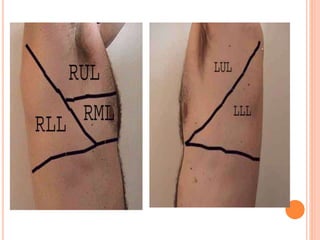
 Procedure- when assessing breath sounds, be sure 
the setting is quiet. Have the patient assume a 
comfortable, relaxed position. 
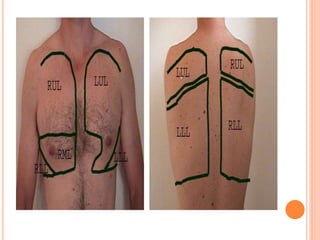
 Place the diaphragm of the stethoscope directly 
against the patients skin along the anterior and 
posterior chest wall. 
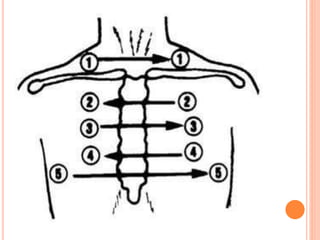
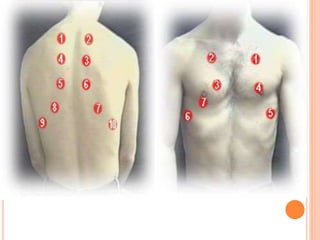
 Follow a systematic pattern and place the 
stethoscope against thoracic landmarks ( T2, T6 
and T10) along the right & left sides of the chest 
wall.
BREATH SOUNDS- 
 Breath sounds are created by turbulent air flow. 
 In inspiration, air moves into progressively smaller 
airways with the alveoli as its final location. As air 
hits the walls of these airways, turbulence is 
created and produces sound. 
 In expiration, air is moving in the opposite 
direction towards progressively larger airways. 
Less turbulence is created, thus normal expiratory 
breath sounds are quieter than inspiratory breath 
sounds.
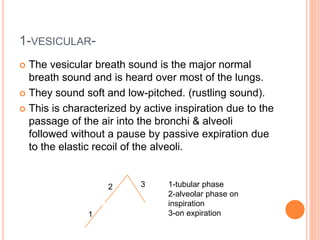
1-VESICULAR- 
 The vesicular breath sound is the major normal 
breath sound and is heard over most of the lungs. 
 They sound soft and low-pitched. (rustling sound). 
 This is characterized by active inspiration due to the 
passage of the air into the bronchi & alveoli 
followed without a pause by passive expiration due 
to the elastic recoil of the alveoli. 
1 
2 3 1-tubular phase 
2-alveolar phase on 
inspiration 
3-on expiration
BRONCHIAL- 
 Loud, tubular high pitched sounds heard over the 
mainstem bronchi & trachea. 
 This is characterized by active inspiration due to the 
passage of the air into the bronchi. The alveolar 
phase is absent (because of consolidation in 
alveoli) & hence expiration is also active. 
1 3
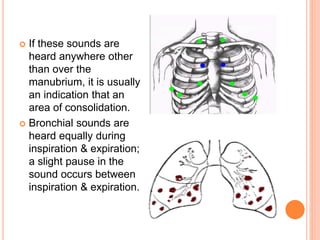
 If these sounds are 
heard anywhere other 
than over the 
manubrium, it is usually 
an indication that an 
area of consolidation. 
 Bronchial sounds are 
heard equally during 
inspiration & expiration; 
a slight pause in the 
sound occurs between 
inspiration & expiration.
BRONCHOVESICULAR- 
 Softer than bronchial sounds. 
1 
2 
3 
 Active inspiration due to passage of air into bronchi 
& alveoli giving vasicular type of inspiratory sound. 
 However during expiration there is increase 
resistance in the airway due to spasm causing 
inspiration to be active & hence equal to or more 
than inspiration. There is no pause between 
inspiration & expiration. 
 They are best heard in the 1st and 2nd ICS 
(anterior chest) and between the scapulae 
(posterior chest) .
ADVENTITIOUS BREATH SOUNDS- 
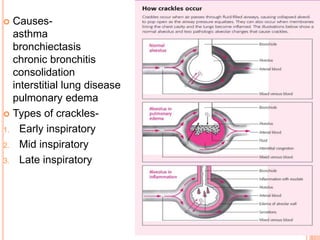
CRACKLES- (rale) -Crackles are 
discontinuous, nonmusical, brief sounds 
heard more commonly on inspiration. They 
can be classified as fine (high pitched, soft, ) 
or coarse (low pitched, louder, ). 
 Crackles are heard primarily during 
inspiration as the result of secretion moving 
in the airways or in closed airways that are 
rapidly reopening.
 Causes-asthma 
bronchiectasis 
chronic bronchitis 
consolidation 
interstitial lung disease 
pulmonary edema 
 Types of crackles- 
1. Early inspiratory 
2. Mid inspiratory 
3. Late inspiratory
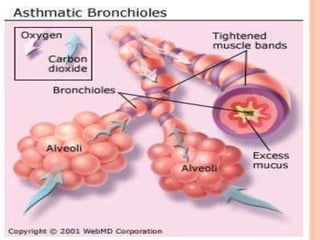
WHEEZE- 
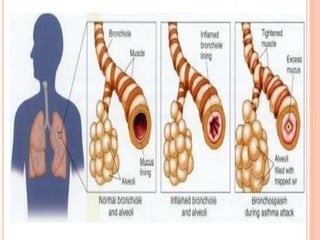
 Wheezes are continuous, high pitched, hissing 
sounds heard normally on expiration but also 
sometimes on inspiration. They are produced when 
air flows through airways narrowed by secretions, 
foreign bodies, or obstructive lesions. 
 Causes:- 
asthma 
chronic bronchitis 
COPD 
pulmonary edema
RHONCHI;- 
 Rhonchi are low pitched, continous, musical sounds 
that are similar to wheezes. They usually imply 
obstruction of a larger airway by secretions. 
 STRIDOR- 
 Stridor is an inspiratory musical wheeze heard 
loudest over the trachea during inspiration. Stridor 
suggests an obstructed trachea or larynx and 
therefore constitutes a medical emergency that 
requires immediate attention
PLEURAL FRICTION RUB- 
 Pleural rubs are creaking or brushing sounds 
produced when the pleural surfaces are inflammed 
or roughened and rub against each other. Sound 
generally at the end of inspiration & in beginning of 
expiration. 
 Conditions: 
pleural effusion 
pneumothorax 
 CAVERNOUS BREATH SOUNDS- deep hollow 
sounds like blowing over a bottle.
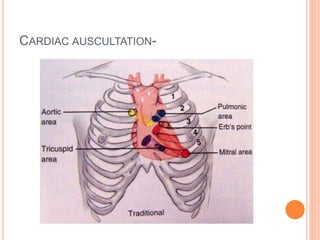
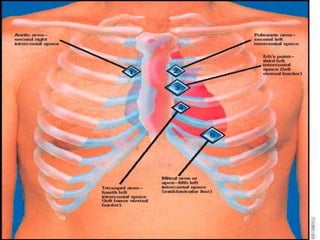
CARDIAC AUSCULTATION-
Auscultation

Auscultation

  • 1.
    CHOITHRAM INSTITUTE OF HEALTH SCIENCES AUSCULTATION
  • 2.
    Auscultation is ageneral term that refers to the process of listening to sounds within the body. Specifically to breath sounds during an examination of lungs. Auscultation of the chest must be done to note the type of breathing and presence of any foreign sounds.
  • 3.
    AUSCULTATION OF BREATHSOUNDS-  Procedure- when assessing breath sounds, be sure the setting is quiet. Have the patient assume a comfortable, relaxed position.  Place the diaphragm of the stethoscope directly against the patients skin along the anterior and posterior chest wall.  Follow a systematic pattern and place the stethoscope against thoracic landmarks ( T2, T6 and T10) along the right & left sides of the chest wall.
  • 8.
    BREATH SOUNDS- Breath sounds are created by turbulent air flow.  In inspiration, air moves into progressively smaller airways with the alveoli as its final location. As air hits the walls of these airways, turbulence is created and produces sound.  In expiration, air is moving in the opposite direction towards progressively larger airways. Less turbulence is created, thus normal expiratory breath sounds are quieter than inspiratory breath sounds.
  • 9.
    1-VESICULAR-  Thevesicular breath sound is the major normal breath sound and is heard over most of the lungs.  They sound soft and low-pitched. (rustling sound).  This is characterized by active inspiration due to the passage of the air into the bronchi & alveoli followed without a pause by passive expiration due to the elastic recoil of the alveoli. 1 2 3 1-tubular phase 2-alveolar phase on inspiration 3-on expiration
  • 10.
    BRONCHIAL-  Loud,tubular high pitched sounds heard over the mainstem bronchi & trachea.  This is characterized by active inspiration due to the passage of the air into the bronchi. The alveolar phase is absent (because of consolidation in alveoli) & hence expiration is also active. 1 3
  • 11.
     If thesesounds are heard anywhere other than over the manubrium, it is usually an indication that an area of consolidation.  Bronchial sounds are heard equally during inspiration & expiration; a slight pause in the sound occurs between inspiration & expiration.
  • 12.
    BRONCHOVESICULAR-  Softerthan bronchial sounds. 1 2 3  Active inspiration due to passage of air into bronchi & alveoli giving vasicular type of inspiratory sound.  However during expiration there is increase resistance in the airway due to spasm causing inspiration to be active & hence equal to or more than inspiration. There is no pause between inspiration & expiration.  They are best heard in the 1st and 2nd ICS (anterior chest) and between the scapulae (posterior chest) .
  • 14.
    ADVENTITIOUS BREATH SOUNDS- CRACKLES- (rale) -Crackles are discontinuous, nonmusical, brief sounds heard more commonly on inspiration. They can be classified as fine (high pitched, soft, ) or coarse (low pitched, louder, ).  Crackles are heard primarily during inspiration as the result of secretion moving in the airways or in closed airways that are rapidly reopening.
  • 15.
     Causes-asthma bronchiectasis chronic bronchitis consolidation interstitial lung disease pulmonary edema  Types of crackles- 1. Early inspiratory 2. Mid inspiratory 3. Late inspiratory
  • 17.
    WHEEZE-  Wheezesare continuous, high pitched, hissing sounds heard normally on expiration but also sometimes on inspiration. They are produced when air flows through airways narrowed by secretions, foreign bodies, or obstructive lesions.  Causes:- asthma chronic bronchitis COPD pulmonary edema
  • 18.
    RHONCHI;-  Rhonchiare low pitched, continous, musical sounds that are similar to wheezes. They usually imply obstruction of a larger airway by secretions.  STRIDOR-  Stridor is an inspiratory musical wheeze heard loudest over the trachea during inspiration. Stridor suggests an obstructed trachea or larynx and therefore constitutes a medical emergency that requires immediate attention
  • 19.
    PLEURAL FRICTION RUB-  Pleural rubs are creaking or brushing sounds produced when the pleural surfaces are inflammed or roughened and rub against each other. Sound generally at the end of inspiration & in beginning of expiration.  Conditions: pleural effusion pneumothorax  CAVERNOUS BREATH SOUNDS- deep hollow sounds like blowing over a bottle.
  • 20.