BRANDING PACKAGING &
LABELING
What is a product?
• A product is any offering by a company to a
market that serves to satisfy customer needs
and wants.
• It can be an object, service, idea,etc.
New Product Development
• Most new product development is an
improvement on existing products
• Less than 10% of new products are totally
new concepts.
Success rate of new products
• The success rate of new products is very
low – less than 5%. ‘You have to kiss a lot
of frogs to find a prince.”
• Product obsolescence is rapid with
improvements in technology
• Shorter PLCs
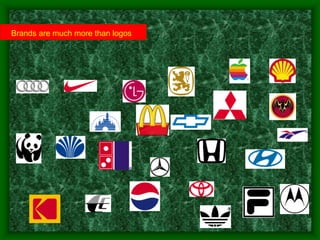
Brands are much more than logos
What is a brand ?
Branding is an effort to give a unique identity to the
company’s products and create emotional
associations with consumers.
It is a form of marketing.
A brand is a set of associations that are linked to a
product range, a division, or company.
These associations reside in the memory of
customers.
These associations help customers understand
what the brand or company is,
why it is potentially relevant to them,
how it is different or similar to other products
made by the company,
and how it is similar or different from
competitor’s products.
What is a brand ?
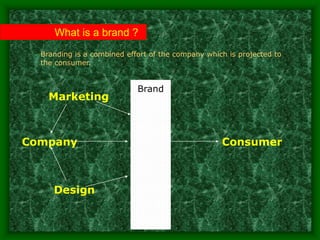
Branding is a combined effort of the company which is projected to
the consumer.
Company
Brand
Consumer
Marketing
Design
What is a brand ?
What a brand means to
common person ?
In 'blind' taste tests,
people prefer the
taste of Pepsi over
the taste of Coke.
However, if the test
is not 'blind' and the
tasters know which
beverage is which,
they prefer the taste
of Coke over Pepsi!
That is the emotional
power of a brand.
The Coca-Cola brand
has the power to
actually change an
individual's taste!
(1) Products and services have become so
alike that they fail to distinguish themselves
by their quality, efficacy, reliability, assurance
and care. Brands add emotion and trust to
these products and services, thus providing
clues that simplify consumers’ choice.
(2) These added emotions and trust help
create a relationship between brands and
consumers, which ensures consumers’ loyalty
to the brands.
(3) Brands create aspirational lifestyles based
on these consumer relationships. Associating
oneself with a brand transfers these lifestyles
onto consumers.
What is a brand ?
(4) The branded lifestyles extol values over
and above the brands’ product or service
category that allow the brands to be
extended into other product and service
categories. Thus saving companies the
trouble and costs of developing new brands,
while entering new lucrative markets.
(5) The combination of emotions,
relationships, lifestyles and values allows
brand owners to charge a price premium for
their products and services, which otherwise
are barely distinguishable from generics.
What is a brand ?
Brand
• A name becomes a brand when
consumers associate it with a set of
tangible and intangible benefits that they
obtain from the product or service
• It is the seller’s promise to deliver the
same bundle of benefits/services
consistently to buyers
Brand Equity
• When a commodity becomes a brand, it is
said to have equity.
• The premium a brand can command in
the market
• The difference between the perceived
value and the intrinsic value
Brand Power
• Customer will change brands for price
reasons
• Customer is satisfied. No reason to
change.
• Customer is satisfied and would take
pains to get the brand
• Customer values the brand and sees it as
a friend
• Customer is devoted to the brand
Advantages of branding
• Easy for the seller to track down problems and
process orders
• Provide legal protection of unique product
features
• Branding gives an opportunity to attract loyal
and profitable set of customers
• It helps to give a product category at different
segments, having separate bundle of benefits
• It helps build corporate image
• It minimises harm to company reputation if the
brand fails
Brand parity
• Consumers buy from a set of acceptable/
preferred brands
Umbrella Brand
• Products from different categories under
one brand
• Dangerous to the brand if the principal
brand fails
• Sometimes the company name is prefixed
to the brand. In such cases the company
name gives it legitimacy. The product
name individualises it.
Naming the Brand
• Product benefits
• Product qualities
• Easy to pronounce
• Should be distinctive
• Should not have poor meanings in other
languages and countries
Brand strategy
• Line extension – existing brand name extended
to new sizes in the existing product category
• Brand extension – brand name extended to new
product categories
• Multibrands – new brands in the same product
category
• New brands – new product in a different
product category
• Cobrands –brands bearing two or more well
known brand names
Brand Repositioning
• This may be required after a few years to
face new competition and changing
customer preferences
20
Packaging and Labeling
Why It's Important
While branding gives a specific
brand personality, packaging puts a
face on a product. Effective
packaging creates a good
impression, helps to sell the
product, and communicates
benefits to customers.
Packaging
21
Packaging and Labeling
A package is the physical container
or wrapping for a product.
10 percent of a product's retail price
is spent on package development
and design and the package itself.
Packaging
22
Packaging and Labeling
Functions of Packaging
A package is a selling tool. Its functions include:
promoting and selling the product
defining product identity
providing information
meeting customer needs
ensuring safe use
protecting the product
23
Packaging and Labeling
Functions of Packaging
Promoting and Selling the Product
Customer reaction to a package and brand
name is an important factor in determining
marketplace success or failure.
Defining Product Identity Packages can
invoke prestige, convenience, status, or
other positive attributes.
Slide 1 of 3
24
Packaging and Labeling
Functions of Packaging
Providing Information Packages give
directions for product use, information about
contents, guarantees, nutritional information,
and potential hazards.
Meeting Customer Needs Various sizes meet
the needs of different market segments:
family packs meet the needs of larger
families; smaller packages are made for
individuals.
Slide 2 of 3
25
Packaging and Labeling
Ensuring Safe Use Plastic packaging,
tamper-resistant packaging, and childproof
containers protect customers.
Protecting the Product Packages protect a
product during shipping, storage, and
display, prevent tampering, and sometimes
help prevent shoplifting of the product.
Functions of Packaging
Slide 3 of 3
Packaging
• Includes the activities of designing and
producing the container for a product
• Packaging is done at three levels
- primary
- secondary
- shipping
Designing packaging
• Packaging concepts
• Technical specifications
• Engineering tests
• Visual tests
• Dealer tests
• Consumer tests
• Packaging innovations
• Environmental considerations
28
Packaging and Labeling
Labeling
A label is an information tag, wrapper, seal, or
imprinted message that is attached to a product or
its package. A label’s purpose is to:
 inform about a product’s contents and
direction for use
 protect companies from legal liability
 contain a brand name, logo, ingredients,
special promotional messages, and other
useful information
Labels
• Identification
• Grade classification
• Description of product
• Manufacturer identity
• Date of mfg., batch no.
• Instructions for use
• Promotion
Labels as a marketing tool
• Labels need to change with time or
packaging changes to give it a
contemporary and fresh look

Branding packaging and_labeling

  • 1.
  • 2.
    What is aproduct? • A product is any offering by a company to a market that serves to satisfy customer needs and wants. • It can be an object, service, idea,etc.
  • 3.
    New Product Development •Most new product development is an improvement on existing products • Less than 10% of new products are totally new concepts.
  • 4.
    Success rate ofnew products • The success rate of new products is very low – less than 5%. ‘You have to kiss a lot of frogs to find a prince.” • Product obsolescence is rapid with improvements in technology • Shorter PLCs
  • 5.
    Brands are muchmore than logos
  • 6.
    What is abrand ? Branding is an effort to give a unique identity to the company’s products and create emotional associations with consumers. It is a form of marketing. A brand is a set of associations that are linked to a product range, a division, or company. These associations reside in the memory of customers. These associations help customers understand what the brand or company is, why it is potentially relevant to them, how it is different or similar to other products made by the company, and how it is similar or different from competitor’s products.
  • 7.
    What is abrand ? Branding is a combined effort of the company which is projected to the consumer. Company Brand Consumer Marketing Design
  • 8.
    What is abrand ? What a brand means to common person ? In 'blind' taste tests, people prefer the taste of Pepsi over the taste of Coke. However, if the test is not 'blind' and the tasters know which beverage is which, they prefer the taste of Coke over Pepsi! That is the emotional power of a brand. The Coca-Cola brand has the power to actually change an individual's taste!
  • 9.
    (1) Products andservices have become so alike that they fail to distinguish themselves by their quality, efficacy, reliability, assurance and care. Brands add emotion and trust to these products and services, thus providing clues that simplify consumers’ choice. (2) These added emotions and trust help create a relationship between brands and consumers, which ensures consumers’ loyalty to the brands. (3) Brands create aspirational lifestyles based on these consumer relationships. Associating oneself with a brand transfers these lifestyles onto consumers. What is a brand ?
  • 10.
    (4) The brandedlifestyles extol values over and above the brands’ product or service category that allow the brands to be extended into other product and service categories. Thus saving companies the trouble and costs of developing new brands, while entering new lucrative markets. (5) The combination of emotions, relationships, lifestyles and values allows brand owners to charge a price premium for their products and services, which otherwise are barely distinguishable from generics. What is a brand ?
  • 11.
    Brand • A namebecomes a brand when consumers associate it with a set of tangible and intangible benefits that they obtain from the product or service • It is the seller’s promise to deliver the same bundle of benefits/services consistently to buyers
  • 12.
    Brand Equity • Whena commodity becomes a brand, it is said to have equity. • The premium a brand can command in the market • The difference between the perceived value and the intrinsic value
  • 13.
    Brand Power • Customerwill change brands for price reasons • Customer is satisfied. No reason to change. • Customer is satisfied and would take pains to get the brand • Customer values the brand and sees it as a friend • Customer is devoted to the brand
  • 14.
    Advantages of branding •Easy for the seller to track down problems and process orders • Provide legal protection of unique product features • Branding gives an opportunity to attract loyal and profitable set of customers • It helps to give a product category at different segments, having separate bundle of benefits • It helps build corporate image • It minimises harm to company reputation if the brand fails
  • 15.
    Brand parity • Consumersbuy from a set of acceptable/ preferred brands
  • 16.
    Umbrella Brand • Productsfrom different categories under one brand • Dangerous to the brand if the principal brand fails • Sometimes the company name is prefixed to the brand. In such cases the company name gives it legitimacy. The product name individualises it.
  • 17.
    Naming the Brand •Product benefits • Product qualities • Easy to pronounce • Should be distinctive • Should not have poor meanings in other languages and countries
  • 18.
    Brand strategy • Lineextension – existing brand name extended to new sizes in the existing product category • Brand extension – brand name extended to new product categories • Multibrands – new brands in the same product category • New brands – new product in a different product category • Cobrands –brands bearing two or more well known brand names
  • 19.
    Brand Repositioning • Thismay be required after a few years to face new competition and changing customer preferences
  • 20.
    20 Packaging and Labeling WhyIt's Important While branding gives a specific brand personality, packaging puts a face on a product. Effective packaging creates a good impression, helps to sell the product, and communicates benefits to customers. Packaging
  • 21.
    21 Packaging and Labeling Apackage is the physical container or wrapping for a product. 10 percent of a product's retail price is spent on package development and design and the package itself. Packaging
  • 22.
    22 Packaging and Labeling Functionsof Packaging A package is a selling tool. Its functions include: promoting and selling the product defining product identity providing information meeting customer needs ensuring safe use protecting the product
  • 23.
    23 Packaging and Labeling Functionsof Packaging Promoting and Selling the Product Customer reaction to a package and brand name is an important factor in determining marketplace success or failure. Defining Product Identity Packages can invoke prestige, convenience, status, or other positive attributes. Slide 1 of 3
  • 24.
    24 Packaging and Labeling Functionsof Packaging Providing Information Packages give directions for product use, information about contents, guarantees, nutritional information, and potential hazards. Meeting Customer Needs Various sizes meet the needs of different market segments: family packs meet the needs of larger families; smaller packages are made for individuals. Slide 2 of 3
  • 25.
    25 Packaging and Labeling EnsuringSafe Use Plastic packaging, tamper-resistant packaging, and childproof containers protect customers. Protecting the Product Packages protect a product during shipping, storage, and display, prevent tampering, and sometimes help prevent shoplifting of the product. Functions of Packaging Slide 3 of 3
  • 26.
    Packaging • Includes theactivities of designing and producing the container for a product • Packaging is done at three levels - primary - secondary - shipping
  • 27.
    Designing packaging • Packagingconcepts • Technical specifications • Engineering tests • Visual tests • Dealer tests • Consumer tests • Packaging innovations • Environmental considerations
  • 28.
    28 Packaging and Labeling Labeling Alabel is an information tag, wrapper, seal, or imprinted message that is attached to a product or its package. A label’s purpose is to:  inform about a product’s contents and direction for use  protect companies from legal liability  contain a brand name, logo, ingredients, special promotional messages, and other useful information
  • 29.
    Labels • Identification • Gradeclassification • Description of product • Manufacturer identity • Date of mfg., batch no. • Instructions for use • Promotion
  • 30.
    Labels as amarketing tool • Labels need to change with time or packaging changes to give it a contemporary and fresh look