


School: Social Sciences
Faculty: Public Relations
Sudent: Ani Asatiani
Professor: Bahman Moghimi
Topic: Brand Equity
A brand is a “name, term, sign, symbol, or
design, or a combination of them intended to
identify the goods and services of one seller
or group of sellers and to differentiate them
from those of competition.”
American Marketing Association
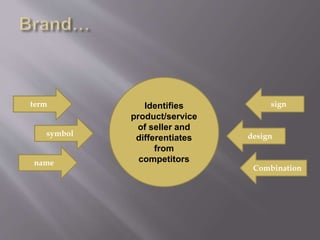
Identifies
product/service
of seller and
differentiates
from
competitors
designsymbol
term sign
name
Combination
 Consumers may evaluate the identical
product differently depending on how
it is branded
 Consumers learn about brands through
past experinces with the product and
find out which brand satisfy their needs
and wants
 Simplify decision making and reduce
risk
Brand equity is the added value that endowed
to products and services. This value may be
reflected in how consumers think, feel, and act
with respect to the brand, as well as the prices,
market share and profitability that the brand
commands for the firm. Brand equity is an
important intangible asset that has
psychological and financial value to the firm.
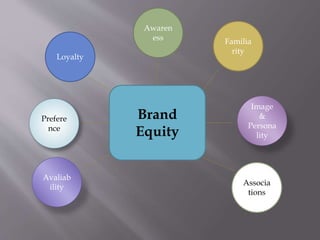
Brand
Equity
Awaren
ess Familia
rity
Image
&
Persona
lity
Loyalty
Prefere
nce
Avaliab
ility
Associa
tions
 The brand is viewed from the perspective of the
customer, an individual or an organization.
 The power of the brand lies in what customers
have seen, read, heard, learned and thought
about the product over time.
 A brand is said to have positive customer brand
equity when consumers react favorably to a
product.
 A brand is said to have negative brand equity if
consumers react less favorably to the product.
Brand Asset Valuator:
Developed by Advertising agency Young and Rubicam(Y&R).
According to BAV there are four
pillars of brand equity:
 Differentiation
 Relevance
 Esteem
 Knowledge
Differentiation and relevance point to the brands future
value and Esteem and acknowledge reflects the past
performance of the firms.
Viewed by UC-Berkeley professor David Aaker.
There are a set of five categories of brand assets
and liabilities which add value to the product.
They are:
 Brand loyalty
 Brand awareness
 Perceived quality
 Brand associations
 Other proprietary assets
Developed by marketing research consultants
Millward and WPP.
As per this model brand building involves series of
steps:
The objectives of each steps are the following:
 Presence
 Relevance
 Performance
 Advantage
 Bonding
• It also views brand building as an ascending,
sequential series of steps
• Ensuring identification of the brand with
customers’ minds with a specific product class or
customer need.
• Firmly establishing the brand into the mind of the
consumer.
• Eliciting proper customer response to in terms of
brand related judgment and feelings.
• Converting brand response to create an intense,
active loyalty relationship between customers and
the brand.
Building brand equity includes:
 The initial choices for the brand elements or the
identities making up the brand
 The product and service and all accompanying
marketing activities and supporting marketing
programs
 Other associations indirectly transferred to the
brand by linking it to some other entity
(person, place, thing etc…)
Brand elements are those trademarkable devices
that serve to identify and differentiate the brand.
Most strong brands employ multiple brand
elements.
Brand elements can be chosen to build as much
brand as possible.
Brand elements have its choice criteria which should be:
 Meaningful
 Memorable
 Likeability
 Transferable
 Adaptable
 Protectable
 Strong brand names simplify the decision process and
reduce risk;
 Brand names are used to maintain higher awareness of
products;
 Company’s use brand equity to gain leverage when
introducing new products;
 The brand name is often interpreted as an indicator of
quality;
 Strong brand equity insures that your products are
considered by most buyers;
 Higher brand name equity leads to greater loyalty from
customers;
 Strong brand equity is the best defenst against new products
and competitors;
 Improvements in brand equity lead to higher rates of
product trial and repeat purchuasing due to buyers’
awareness of your brand, approval of its image/reputation
and trust in its quality.
Brand management ppt

Brand management ppt

  • 1.
    School: Social Sciences Faculty:Public Relations Sudent: Ani Asatiani Professor: Bahman Moghimi Topic: Brand Equity
  • 2.
    A brand isa “name, term, sign, symbol, or design, or a combination of them intended to identify the goods and services of one seller or group of sellers and to differentiate them from those of competition.” American Marketing Association
  • 3.
  • 4.
     Consumers mayevaluate the identical product differently depending on how it is branded  Consumers learn about brands through past experinces with the product and find out which brand satisfy their needs and wants  Simplify decision making and reduce risk
  • 5.
    Brand equity isthe added value that endowed to products and services. This value may be reflected in how consumers think, feel, and act with respect to the brand, as well as the prices, market share and profitability that the brand commands for the firm. Brand equity is an important intangible asset that has psychological and financial value to the firm.
  • 6.
  • 7.
     The brandis viewed from the perspective of the customer, an individual or an organization.  The power of the brand lies in what customers have seen, read, heard, learned and thought about the product over time.  A brand is said to have positive customer brand equity when consumers react favorably to a product.  A brand is said to have negative brand equity if consumers react less favorably to the product.
  • 8.
    Brand Asset Valuator: Developedby Advertising agency Young and Rubicam(Y&R). According to BAV there are four pillars of brand equity:  Differentiation  Relevance  Esteem  Knowledge Differentiation and relevance point to the brands future value and Esteem and acknowledge reflects the past performance of the firms.
  • 9.
    Viewed by UC-Berkeleyprofessor David Aaker. There are a set of five categories of brand assets and liabilities which add value to the product. They are:  Brand loyalty  Brand awareness  Perceived quality  Brand associations  Other proprietary assets
  • 10.
    Developed by marketingresearch consultants Millward and WPP. As per this model brand building involves series of steps: The objectives of each steps are the following:  Presence  Relevance  Performance  Advantage  Bonding
  • 11.
    • It alsoviews brand building as an ascending, sequential series of steps • Ensuring identification of the brand with customers’ minds with a specific product class or customer need. • Firmly establishing the brand into the mind of the consumer. • Eliciting proper customer response to in terms of brand related judgment and feelings. • Converting brand response to create an intense, active loyalty relationship between customers and the brand.
  • 12.
    Building brand equityincludes:  The initial choices for the brand elements or the identities making up the brand  The product and service and all accompanying marketing activities and supporting marketing programs  Other associations indirectly transferred to the brand by linking it to some other entity (person, place, thing etc…)
  • 13.
    Brand elements arethose trademarkable devices that serve to identify and differentiate the brand. Most strong brands employ multiple brand elements. Brand elements can be chosen to build as much brand as possible. Brand elements have its choice criteria which should be:  Meaningful  Memorable  Likeability  Transferable  Adaptable  Protectable
  • 14.
     Strong brandnames simplify the decision process and reduce risk;  Brand names are used to maintain higher awareness of products;  Company’s use brand equity to gain leverage when introducing new products;  The brand name is often interpreted as an indicator of quality;  Strong brand equity insures that your products are considered by most buyers;  Higher brand name equity leads to greater loyalty from customers;  Strong brand equity is the best defenst against new products and competitors;  Improvements in brand equity lead to higher rates of product trial and repeat purchuasing due to buyers’ awareness of your brand, approval of its image/reputation and trust in its quality.