 Packaging .
 Types of packaging.
 Purpose of packaging.
 Labeling.
 Function of labeling.
 Types of labeling.
 Elements of labeling.
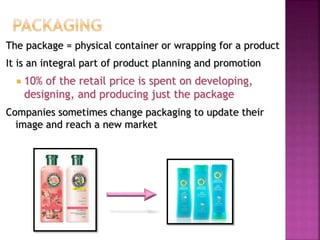
The package = physical container or wrapping for a product
It is an integral part of product planning and promotion
 10% of the retail price is spent on developing,
designing, and producing just the package
Companies sometimes change packaging to update their
image and reach a new market
1) Consumer packaging:
design for consumer
convenience and appeal marketing
consideration and display.
2) Industrial packaging:
focuses on the
handling convenience and protection during
transportation.
1. Promoting and Selling the Product
2. Defining Product Identity
3. Providing Information
4. Expressing Customer Needs
5. Ensure Safe Use
6. Protecting the Product
The Keys to Product Packaging
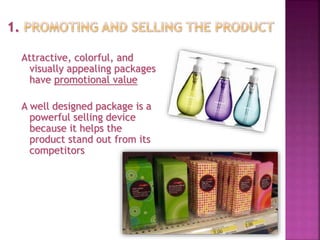
Attractive, colorful, and
visually appealing packages
have promotional value
A well designed package is a
powerful selling device
because it helps the
product stand out from its
competitors
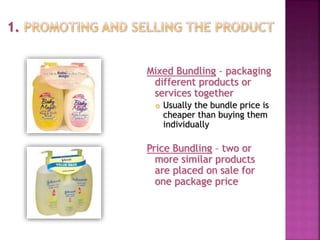
Mixed Bundling – packaging
different products or
services together
 Usually the bundle price is
cheaper than buying them
individually
Price Bundling – two or
more similar products
are placed on sale for
one package price
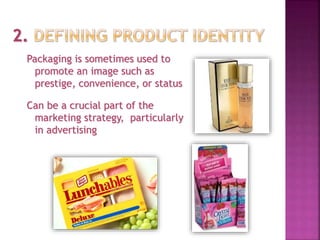
Packaging is sometimes used to
promote an image such as
prestige, convenience, or status
Can be a crucial part of the
marketing strategy, particularly
in advertising
 Gives customer useful
information on:
 directions for using the
product
 its contents
 product guarantees
 nutritional value
 potential hazards
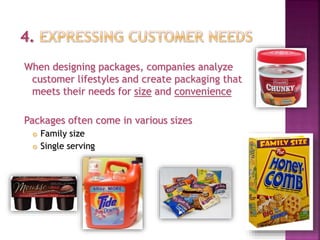
When designing packages, companies analyze
customer lifestyles and create packaging that
meets their needs for size and convenience
Packages often come in various sizes
 Family size
 Single serving
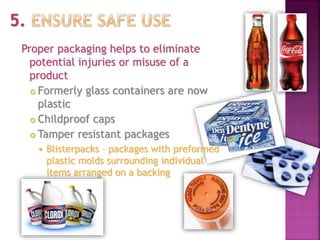
Proper packaging helps to eliminate
potential injuries or misuse of a
product
 Formerly glass containers are now
plastic
 Childproof caps
 Tamper resistant packages
 Blisterpacks – packages with preformed
plastic molds surrounding individual
items arranged on a backing
 Must protect during shipping, storage, and
display
 Prevent or discourage from tampering
 Prevent shoplifting
 Protect against breakage and spoilage
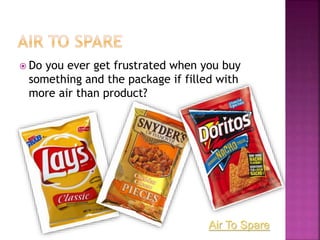
 Do you ever get frustrated when you buy
something and the package if filled with
more air than product?
Air To Spare
Aseptic Packaging –technology that
keeps foods fresh without
refrigeration for extended periods
Usually used to package food products
 canning
 bottling
Environmental Packaging
– recycled material,
less plastic, and safer
for the environment
Sun Chips Ditching New Bag
Cause Packaging – promote social and
political causes
 May be totally unrelated to the product
 Over weight.
 Breakage.
 Moisture and temperature.
 Labels range from simple tag
attachment to products to complex
graphics that are part of package.
OR
 Information related to product on the
Product.
They perform several functions:
1) It identifies the product or brand.
Example: sunkist stamp on oranges.
2) Describe several things about the product.
Example: who made it,where it was
made,when it was made its content,how it is
to be used and how to use it safely.
3) It help to improve the brand,support its
positioning and connect with customers.
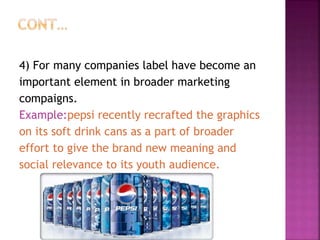
4) For many companies label have become an
important element in broader marketing
compaigns.
Example:pepsi recently recrafted the graphics
on its soft drink cans as a part of broader
effort to give the brand new meaning and
social relevance to its youth audience.
1. Brand Label – gives brand name and made
by or logo.
Example:brand name use on soap such as
LUX,SAFEGUARD etc
1. Descriptive Label/Informative – give
information about product use,
construction, care,precautions,
performance, and other features.
2. Universal product code - a code in a
bar is called universal product code it is
optinal.
4. Grade label:some product have given grade
level.Grade label shows the grade of product
and quality of the product by words,letters or
figures.
Example:A,B,C,D grade can be put on peas
Packed in the cans.
 Similarly grade label can be mentioned as !
2 3 4 grades for packed wheat.
 Following are the elements of labeling:
1.Graphics:
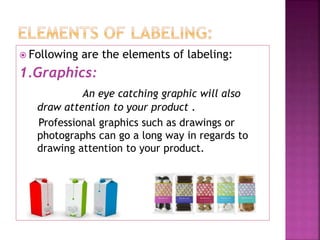
An eye catching graphic will also
draw attention to your product .
Professional graphics such as drawings or
photographs can go a long way in regards to
drawing attention to your product.
 The colour used on your product label are
very important as they can directly influence
the buyer’s purchasing decision.
Example:you should take in the account the
colouring of the container or if the container
is clear you need to consider the colour of
product and so on,as you donot want your
product label to negatively impact these
items.
 Font is important for labeling just as colour
and graphics when designing your product,
chose a font thatwill help the product to
stand out or one that captures the
personality of product.
Example:if the product is ketchup try a font
of product.hat is fun or plays upto spicy
aspect of
 Common label material choices are white,
clear, cream colored, or even gold or silver
foil. Choosing a white or foil material can
help your design to stand out from the
packaging, while choosing a clear label
material may be useful to create a custom
shape or to make the label better blend in
with the product’s container, which can be
handy if the packaging is colored.
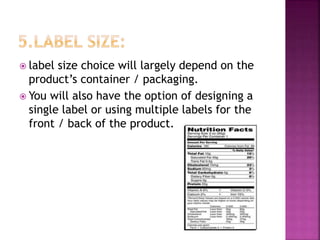
 label size choice will largely depend on the
product’s container / packaging.
 You will also have the option of designing a
single label or using multiple labels for the
front / back of the product.
 The shape of label can certainly help to
draw attention to the product on the shelf.
 There are many label shapes including
rectangles, squares, ovals, circles, seals,
hearts, and others.
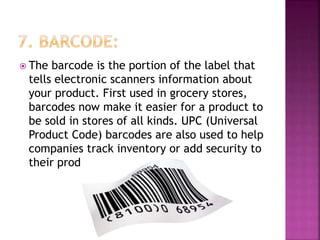
 The barcode is the portion of the label that
tells electronic scanners information about
your product. First used in grocery stores,
barcodes now make it easier for a product to
be sold in stores of all kinds. UPC (Universal
Product Code) barcodes are also used to help
companies track inventory or add security to
their products.
 Aside from creating a product label that
stands out on the shelf, adding the
company’s contact information may be the
single most important aspect of an effective
product label’s design.
 Clearly listing contact information is an
essential step in enhancing a product and
encouraging communication with customers.
The company’s 800 number, website address,
physical address, and social media
information (Twitter, Facebook, etc, etc.)
should all be included on every product label
to ensure they can receive feedback from
their customers.

Packaging and labeling

  • 1.
     Packaging . Types of packaging.  Purpose of packaging.  Labeling.  Function of labeling.  Types of labeling.  Elements of labeling.
  • 2.
    The package =physical container or wrapping for a product It is an integral part of product planning and promotion  10% of the retail price is spent on developing, designing, and producing just the package Companies sometimes change packaging to update their image and reach a new market
  • 3.
    1) Consumer packaging: designfor consumer convenience and appeal marketing consideration and display. 2) Industrial packaging: focuses on the handling convenience and protection during transportation.
  • 4.
    1. Promoting andSelling the Product 2. Defining Product Identity 3. Providing Information 4. Expressing Customer Needs 5. Ensure Safe Use 6. Protecting the Product The Keys to Product Packaging
  • 5.
    Attractive, colorful, and visuallyappealing packages have promotional value A well designed package is a powerful selling device because it helps the product stand out from its competitors
  • 6.
    Mixed Bundling –packaging different products or services together  Usually the bundle price is cheaper than buying them individually Price Bundling – two or more similar products are placed on sale for one package price
  • 7.
    Packaging is sometimesused to promote an image such as prestige, convenience, or status Can be a crucial part of the marketing strategy, particularly in advertising
  • 8.
     Gives customeruseful information on:  directions for using the product  its contents  product guarantees  nutritional value  potential hazards
  • 9.
    When designing packages,companies analyze customer lifestyles and create packaging that meets their needs for size and convenience Packages often come in various sizes  Family size  Single serving
  • 10.
    Proper packaging helpsto eliminate potential injuries or misuse of a product  Formerly glass containers are now plastic  Childproof caps  Tamper resistant packages  Blisterpacks – packages with preformed plastic molds surrounding individual items arranged on a backing
  • 11.
     Must protectduring shipping, storage, and display  Prevent or discourage from tampering  Prevent shoplifting  Protect against breakage and spoilage
  • 12.
     Do youever get frustrated when you buy something and the package if filled with more air than product? Air To Spare
  • 13.
    Aseptic Packaging –technologythat keeps foods fresh without refrigeration for extended periods Usually used to package food products  canning  bottling
  • 14.
    Environmental Packaging – recycledmaterial, less plastic, and safer for the environment Sun Chips Ditching New Bag
  • 15.
    Cause Packaging –promote social and political causes  May be totally unrelated to the product
  • 16.
     Over weight. Breakage.  Moisture and temperature.
  • 17.
     Labels rangefrom simple tag attachment to products to complex graphics that are part of package. OR  Information related to product on the Product.
  • 18.
    They perform severalfunctions: 1) It identifies the product or brand. Example: sunkist stamp on oranges. 2) Describe several things about the product. Example: who made it,where it was made,when it was made its content,how it is to be used and how to use it safely. 3) It help to improve the brand,support its positioning and connect with customers.
  • 19.
    4) For manycompanies label have become an important element in broader marketing compaigns. Example:pepsi recently recrafted the graphics on its soft drink cans as a part of broader effort to give the brand new meaning and social relevance to its youth audience.
  • 20.
    1. Brand Label– gives brand name and made by or logo. Example:brand name use on soap such as LUX,SAFEGUARD etc 1. Descriptive Label/Informative – give information about product use, construction, care,precautions, performance, and other features. 2. Universal product code - a code in a bar is called universal product code it is optinal.
  • 21.
    4. Grade label:someproduct have given grade level.Grade label shows the grade of product and quality of the product by words,letters or figures. Example:A,B,C,D grade can be put on peas Packed in the cans.  Similarly grade label can be mentioned as ! 2 3 4 grades for packed wheat.
  • 22.
     Following arethe elements of labeling: 1.Graphics: An eye catching graphic will also draw attention to your product . Professional graphics such as drawings or photographs can go a long way in regards to drawing attention to your product.
  • 23.
     The colourused on your product label are very important as they can directly influence the buyer’s purchasing decision. Example:you should take in the account the colouring of the container or if the container is clear you need to consider the colour of product and so on,as you donot want your product label to negatively impact these items.
  • 24.
     Font isimportant for labeling just as colour and graphics when designing your product, chose a font thatwill help the product to stand out or one that captures the personality of product. Example:if the product is ketchup try a font of product.hat is fun or plays upto spicy aspect of
  • 25.
     Common labelmaterial choices are white, clear, cream colored, or even gold or silver foil. Choosing a white or foil material can help your design to stand out from the packaging, while choosing a clear label material may be useful to create a custom shape or to make the label better blend in with the product’s container, which can be handy if the packaging is colored.
  • 26.
     label sizechoice will largely depend on the product’s container / packaging.  You will also have the option of designing a single label or using multiple labels for the front / back of the product.
  • 27.
     The shapeof label can certainly help to draw attention to the product on the shelf.  There are many label shapes including rectangles, squares, ovals, circles, seals, hearts, and others.
  • 28.
     The barcodeis the portion of the label that tells electronic scanners information about your product. First used in grocery stores, barcodes now make it easier for a product to be sold in stores of all kinds. UPC (Universal Product Code) barcodes are also used to help companies track inventory or add security to their products.
  • 29.
     Aside fromcreating a product label that stands out on the shelf, adding the company’s contact information may be the single most important aspect of an effective product label’s design.  Clearly listing contact information is an essential step in enhancing a product and encouraging communication with customers. The company’s 800 number, website address, physical address, and social media information (Twitter, Facebook, etc, etc.) should all be included on every product label to ensure they can receive feedback from their customers.