Downloaded 47 times

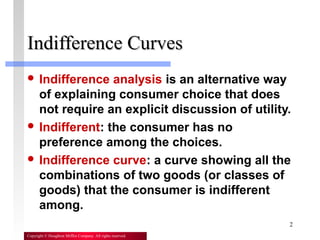
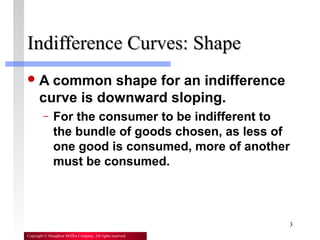
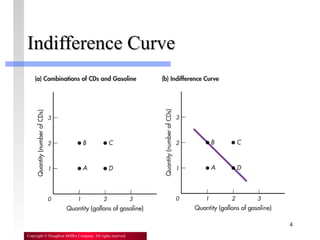
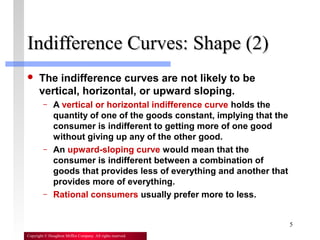
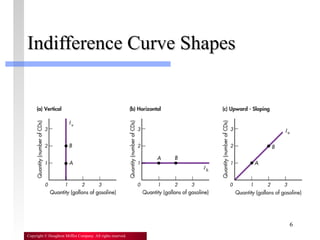
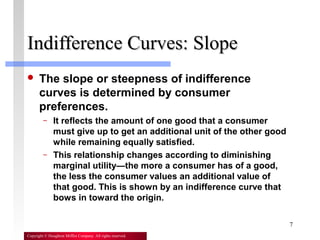

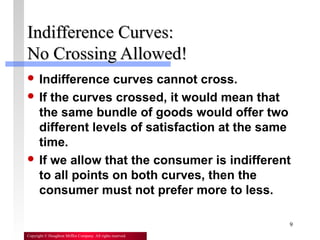
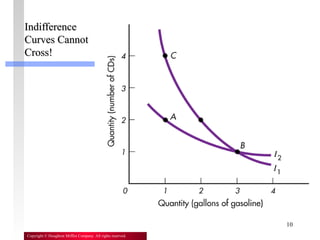
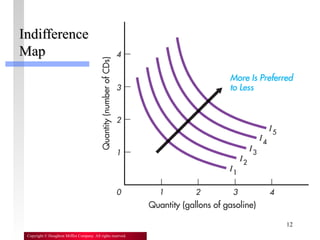
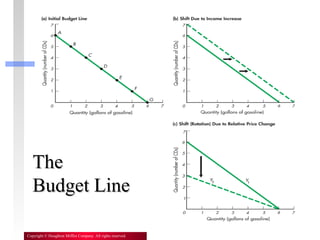
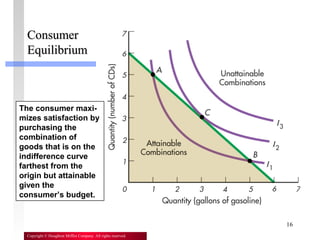

Indifference analysis uses indifference curves to represent a consumer's preferences between combinations of goods without using utility. Indifference curves show combinations of two goods that make a consumer equally satisfied. They are generally downward sloping as less of one good requires more of another to maintain the same level of satisfaction. The slope of indifference curves depends on preferences and diminishing marginal utility. Indifference maps show full sets of non-crossing indifference curves, with higher curves preferred. A budget constraint shows affordable combinations given income. Consumer equilibrium is reached where the highest attainable indifference curve is tangent to the budget constraint.


