MUHAMMAD HASRATH
Brand repositioning
Brand repositioning is when a company changes
the brand's status in the marketplace.
This typically includes changes to the marketing
mix, the product, place, price and promotion.
Repositioning is done to keep up with consumer
wants and needs.
Brand repositioning strategies
The generic repositioning strategies discuss the
following ways by which organizations can
attempt to reposition themselves:
(a) Image repositioning
(b) Product repositioning
(c) Intangible repositioning
(d) Tangible repositioning
Image repositioning
When the same product of an organization is
launched again in the same market it is termed
as repositioning. The idea is to change the image
of the organization, so that it is perceived
favourably by the target audience.
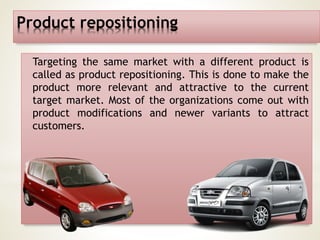
Product repositioning
Targeting the same market with a different product is
called as product repositioning. This is done to make the
product more relevant and attractive to the current
target market. Most of the organizations come out with
product modifications and newer variants to attract
customers.
Intangible repositioning
When the same product is launched for a
different target market, it is called as intangible
repositioning. The company is able to locate a
segment which has requirements similar to the
requirements of the segments it is serving. The
company retains its value proposition and offers
it to new segments.
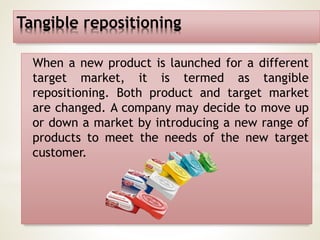
Tangible repositioning
When a new product is launched for a different
target market, it is termed as tangible
repositioning. Both product and target market
are changed. A company may decide to move up
or down a market by introducing a new range of
products to meet the needs of the new target
customer.
Repositioning strategies

Repositioning strategies

  • 1.
  • 2.
    Brand repositioning Brand repositioningis when a company changes the brand's status in the marketplace. This typically includes changes to the marketing mix, the product, place, price and promotion. Repositioning is done to keep up with consumer wants and needs.
  • 3.
    Brand repositioning strategies Thegeneric repositioning strategies discuss the following ways by which organizations can attempt to reposition themselves: (a) Image repositioning (b) Product repositioning (c) Intangible repositioning (d) Tangible repositioning
  • 4.
    Image repositioning When thesame product of an organization is launched again in the same market it is termed as repositioning. The idea is to change the image of the organization, so that it is perceived favourably by the target audience.
  • 5.
    Product repositioning Targeting thesame market with a different product is called as product repositioning. This is done to make the product more relevant and attractive to the current target market. Most of the organizations come out with product modifications and newer variants to attract customers.
  • 6.
    Intangible repositioning When thesame product is launched for a different target market, it is called as intangible repositioning. The company is able to locate a segment which has requirements similar to the requirements of the segments it is serving. The company retains its value proposition and offers it to new segments.
  • 7.
    Tangible repositioning When anew product is launched for a different target market, it is termed as tangible repositioning. Both product and target market are changed. A company may decide to move up or down a market by introducing a new range of products to meet the needs of the new target customer.