
M.Prasad Naidu
MSc Medical Biochemistry,
Ph.D.Research Scholar
The BCAA & protein metabolism in various forms of
hepatic injury & it is suggested that the main
cause of decrease in plasma BCAA conc in liver
cirrhosis is hyperammonemia
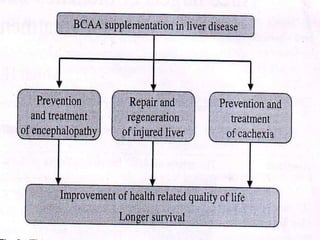
Three possible targets of BCAA supplementation in
liver disease are suggested
1. Hepatic encephalopathy
2.Liver regeneration
3.Hepatic cachexia.
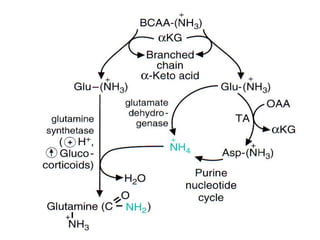
 The BCAA may ameliorate hephatic
encephalopathy by promoting ammonia
detoxification,correction of plasma aminoacid
imbalance and by reduced brain influx of AAA
 The favourable effect of BCAA on liver regeneration
and nutritional state of the body is related to their
stimulatory effect on protein synthesis,secretion of
hepatocyte growth factor ,glutamine production
and inhibitory effect on proteolysis.
 Presumably the beneficial effect of BCAA on
hepatic cachexia is significant in compensated liver
disease with decreased plasma BCAA conc ,where
as it is less pronounced in hepatic diseases with
inflammatory complications and enhanced protein
turn over.
Introduction
 The BCAAs valine,leucine and isoleucine are
indispensible aminoacids of special interest
 Several studies have demonstrated the stimulatory
effect of BCAAs and/or their metabolites on
protein synthesis and/or inhibitory effect on
proteolysis
 They play a major role in muscle and most other
tissues because they are major AAs that can be
oxidised in tissues
Acute liver injury
 Is a clinical condition resulting from damage of
liver cells
 One characteristic feature of acute liver failure
is a marked increase in aminoacidemia
 The main cause of increased AA concentrations is
due to their leaking from the dying
hepatocytes.
 The changes in BCAA conc are less pronounced
(compared to other AA s) because they are
catabolised significantly in extrahepatic tissues
Chronic injury
 Decreased blood conc of BCAA and increased conc
of AAA and methionine are characteristic of
chronic liver disease esp.,cirrhosis
 The abnorm alities in BCAA and AAA levels in
cirrhosis are expressed as molar ratio (BCAA/AAA)
 Physiologically ,the ratio is 3.0 -3.5.,where as in
patients with hepatic cirrhosis it is significantly
lower.
 It is a serious neuropsychiatric abnormality
associated with chronic or acute liver injury
Signs
 Impaired cognition
 A flapping tremor
 Decreased level of consciousness,including
coma, cerebral edema and ultimately death.
Substances contributing to symptoms of hepatic
encephalopathy include
 AMMONIA
 Mercaptans
 Short chain FAs
 Increased conc of AAAs
 GABA
 Endogenous benzodiazepines etc.,
In the pathogenesis of HE ,changes induced by
impaired liver function and portal systemic
shunting interact,resulting in accumulation of
substances that are normally removed by liver.
Presumed mechanism of the direct effect of
hyperammonemia on brain functions include
-Its effect on inhibitory post synaptic potentials by
blocking the chloride pump
-Impairment of brain ATPsynthesis due to depletion
of krebs cycle intermediates
-Cell swelling by ammonia induced blood flow and
synthesis
-Accumulation of glutamine in astrocytes
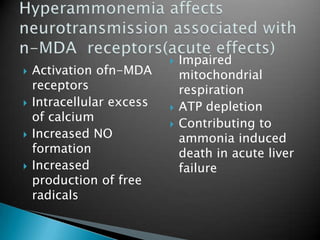
 Activation ofn-MDA
receptors
 Intracellular excess
of calcium
 Increased NO
formation
 Increased
production of free
radicals
 Impaired
mitochondrial
respiration
 ATP depletion
 Contributing to
ammonia induced
death in acute liver
failure
Chronic hyperammonemia
 Seems to induce impaired signal transduction
associated with n-MDA receptors
 Thereby contributing to some neurological
alterations observed in hepatic
encephalopathy
Indirectly , hyper
ammonemia may
contribute to
hepatic encepha
lopathy by
 A decrease in BCAA
levels in the blood
 Alterations in AA
transport across the
BBB.
 AAAs flood the CNS
due to high blood
plasma conc of AAA
and low conc of
BCAAs,which
compete for entry
by the L-
system(system that
serves for transport
of neutral AAs)
across the BBB.
Augmented uptake of AAAs results in
 An imbalance in the synthesis of
dopamine, noradrenaline and serotonin in the
brain.
 Inaddition, increased availability of AAAs may
cause the formation of false neuro
transmitters like octopamine,phenyl
ethanolamine,andtyramine
The rationale of BCAAs in the treatment of
hepatic encephalopathy was based on
assumptions that providing BCAAs
 Would facilitate ammonia detoxification by
supporting glutamine synthesis in skeletal
muscle and brain
 Would normalise plasma AA concentrations
and
 Decrease brain influx of AAAs
 The survival of patients with liver injury of
varying etiology depends on the ability of the
remaining hepatocytes to regenerate
 Nutritional and metabolic support of liver
regeneration seem to be very important
 Carbohydrate source, primarily glucose, is
recommended
 Results of several studies have indicated that
preservation of hepatic glycogen increases
the liver’s tolerance to oxidative and
ischaemic damage
 Perioperative glucose/insulin infusion may
prevent or attenuate hepatic dysfunction after
extensive liver resection
The mechanism of the favourable effect of BCAAs
on hepatic tissue repair is multifactorial
 The well known synergestic effect of glucagon
and insulin on liver regeneration
 The stimulatory effect of leucine on protein
synthesis
 The stimulatory effect of leucine on hepatocyte
growth factor by hepatic stellate cells may be
involved.
 Some effects of BCAAs may be associated with
enhanced production of glutamine
 BCAA treatment promoted recovery of serum
albumin and lowered bilirubin levels after
partial hepatectomy for liver cancer and
improved patient’s prognosis after
livertransplantation
Glucose administation
inhibits
 Inhibition of Hs
lipase by insulin
 Decreased
mobilization of
fattyacids
 Increase in insulin /
glucagon quotient
Infusion of fatty
emulsion stimulates
 Regenerating liver
generates ATP
primarily by FA
oxidation
 The beneficial effect
of carnitine
 FAs act as substrates
for synthesis of
phospholipids and
esterification of
cholesterol.
 Many studies have demonstrated that lipids
are well tolerated ,even in cirrhotic patients
, if administered parenterally
 Clinical trials will have to determine whether
lipid therapy can improve liver regeneration
and function after liver resection and in
hepatic disease.
Cachexia is defined as a complex metabolic
syndrome associated with underlying illness
and characterised by loss of fat mass.
Prevalence
 20% in patients with compensated liver
disease
 100% in patients with acute alcoholic
hepatitis
 50% in patients with liver cirrhosis
Pathogenesis
 Poor dietary intake
 Malabsorption
 Maldigestion
 Metabolic disturbances
 Resulting in changes in
protein synthesis and
proteolysis
Characterised by
 Impaired glucose
tolerance- -DM
 Impaired post prandial
glucose utilization – -
decreased glycogen
contents in the liver
and skeletal muscle
 Enhanced utilization of
lipids and proteins for
energy
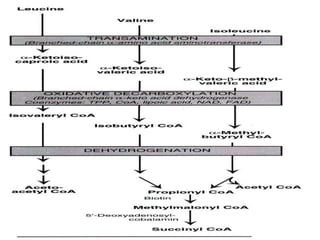
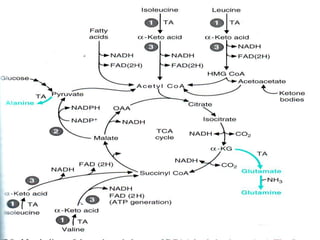
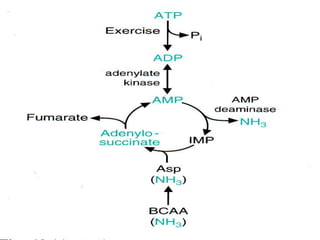
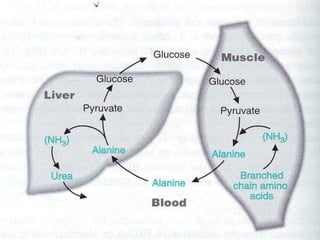
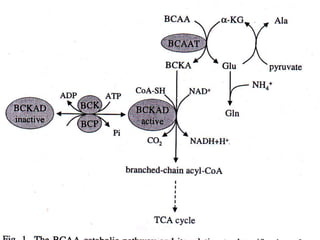
 BCAA taken up from plasma and muscle proteins
are the important energy substrate in liver cirrhosis
 In the first step of their catabolism they are used
for glutamate synthesis in mitochondria to clear
blood ammonia by enhanced production of
glutamine
 In the second step, most BCKAs produced in
BCAAT reaction are oxidised, probably mostly in
skeletal muscle
The mechanism of favourable effect of BCAAs on
protein metabolism and nutritional state of pts
with hepatic disease is related to
 Stimulatory effect on protein synthesis and
inhibitory effect on proteolysis
 Leucine stimulates insulin release from βcells of
pancreas
 Leucine also stimulates protein synthesis
through phosphorylation of translation initiation
factors and ribosomal proteins
 These effects may contribute to the
improvement of insulin resistance and beta cell
function in chronic liver disease.
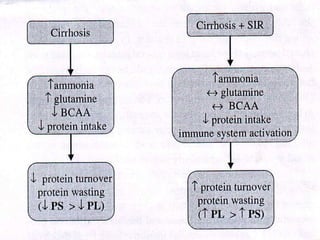
 BCAA supplementation is more effective in
compensated cirrrhosis with decreased
plasma BCAA conc and with out SIR
 The nutritional and immune status of the pt
should be carefully evaluated before BCAA
supplementation to confirm the signs of
inflammation and cachexia.
The assessment of changes in
 body weight
 Apetite
 Muscle strength
 Fat free mass index
 Inflammatory markers(CRP and IL-6)
 Albumin
 Aminoacid concentrations …seems to be
particularly important
Conclusions and suggestions
Most experimental studies have revealed the
favourable effects of BCAAs on nutritional
status, development of liver illness and quality of
life
.
This favourable effect is related to their stimulatory
effect on protein synthesis ,insulinsecretion and
liver regeneration
These favourable effects BCAA supplementation
seem to be more apparent when BCAA
concentration decrease as in liver cirrhosis with
portasystemic shunts and particularly when not
complicated by a systemic inflammatory response.
 Formulas for oral,enteral and parenteral BCAA
supplementation are commercially available and
the appropriate administration should be
considered.
 Oral route is advantageous than parenteral
feeding eg; danger of liver steatosis
impaired gut hormonal and immunological
responses
phlebitis or thrombosis of veins
 An adverse property of BCAAs is their extremely
bitter taste,and the low palatability of nutritive
drinks is a major problem with respect to patient
compliance.
 BCAA enriched mixtures should contain not only
BCAAs but also glucose,lipids, and other nutrients
that should have beneficial effects on the course of
hepatic illness.
 Coadministration of
BCAA s with
carnitine or zinc has
a beneficial effect.
 BCAA with zinc
supplementations
showed greater
ability to metabolise
ammonia and higher
efficacy in correcting
AA alterations
 The aministration of
BCAA with L-acetyl
carnitine revealed
improvement of
neurologic symptoms
and serum ammonia
in cirrhotic patients
 Dietary supplementationwith BCAA improved
the impaired transthyretin turnover in rats
with liver cirrhosis
In conclusion ,although critical objections regarding
the effects of BCAA supplementation can still be
raised..,
 the rationale of BCAA in chronic hepatic illness
 their favourable effect on nutritional state
 Repair and regeneration of hepatic tissue
 Safety of their administration
 Positive results of several randomised trials
conducted in recent years …. Are strong arguments
for BCAA supplementation as a standard nutritional
approach in treating pts with hepatic disease
,particularly cirrhosis.
Branched chain aminoacids

Branched chain aminoacids

  • 1.
    M.Prasad Naidu MSc MedicalBiochemistry, Ph.D.Research Scholar
  • 2.
    The BCAA &protein metabolism in various forms of hepatic injury & it is suggested that the main cause of decrease in plasma BCAA conc in liver cirrhosis is hyperammonemia Three possible targets of BCAA supplementation in liver disease are suggested 1. Hepatic encephalopathy 2.Liver regeneration 3.Hepatic cachexia.
  • 4.
     The BCAAmay ameliorate hephatic encephalopathy by promoting ammonia detoxification,correction of plasma aminoacid imbalance and by reduced brain influx of AAA  The favourable effect of BCAA on liver regeneration and nutritional state of the body is related to their stimulatory effect on protein synthesis,secretion of hepatocyte growth factor ,glutamine production and inhibitory effect on proteolysis.  Presumably the beneficial effect of BCAA on hepatic cachexia is significant in compensated liver disease with decreased plasma BCAA conc ,where as it is less pronounced in hepatic diseases with inflammatory complications and enhanced protein turn over.
  • 5.
    Introduction  The BCAAsvaline,leucine and isoleucine are indispensible aminoacids of special interest  Several studies have demonstrated the stimulatory effect of BCAAs and/or their metabolites on protein synthesis and/or inhibitory effect on proteolysis  They play a major role in muscle and most other tissues because they are major AAs that can be oxidised in tissues
  • 12.
    Acute liver injury Is a clinical condition resulting from damage of liver cells  One characteristic feature of acute liver failure is a marked increase in aminoacidemia  The main cause of increased AA concentrations is due to their leaking from the dying hepatocytes.  The changes in BCAA conc are less pronounced (compared to other AA s) because they are catabolised significantly in extrahepatic tissues
  • 13.
    Chronic injury  Decreasedblood conc of BCAA and increased conc of AAA and methionine are characteristic of chronic liver disease esp.,cirrhosis  The abnorm alities in BCAA and AAA levels in cirrhosis are expressed as molar ratio (BCAA/AAA)  Physiologically ,the ratio is 3.0 -3.5.,where as in patients with hepatic cirrhosis it is significantly lower.
  • 14.
     It isa serious neuropsychiatric abnormality associated with chronic or acute liver injury Signs  Impaired cognition  A flapping tremor  Decreased level of consciousness,including coma, cerebral edema and ultimately death.
  • 15.
    Substances contributing tosymptoms of hepatic encephalopathy include  AMMONIA  Mercaptans  Short chain FAs  Increased conc of AAAs  GABA  Endogenous benzodiazepines etc., In the pathogenesis of HE ,changes induced by impaired liver function and portal systemic shunting interact,resulting in accumulation of substances that are normally removed by liver.
  • 16.
    Presumed mechanism ofthe direct effect of hyperammonemia on brain functions include -Its effect on inhibitory post synaptic potentials by blocking the chloride pump -Impairment of brain ATPsynthesis due to depletion of krebs cycle intermediates -Cell swelling by ammonia induced blood flow and synthesis -Accumulation of glutamine in astrocytes
  • 17.
     Activation ofn-MDA receptors Intracellular excess of calcium  Increased NO formation  Increased production of free radicals  Impaired mitochondrial respiration  ATP depletion  Contributing to ammonia induced death in acute liver failure
  • 18.
    Chronic hyperammonemia  Seemsto induce impaired signal transduction associated with n-MDA receptors  Thereby contributing to some neurological alterations observed in hepatic encephalopathy
  • 19.
    Indirectly , hyper ammonemiamay contribute to hepatic encepha lopathy by  A decrease in BCAA levels in the blood  Alterations in AA transport across the BBB.  AAAs flood the CNS due to high blood plasma conc of AAA and low conc of BCAAs,which compete for entry by the L- system(system that serves for transport of neutral AAs) across the BBB.
  • 20.
    Augmented uptake ofAAAs results in  An imbalance in the synthesis of dopamine, noradrenaline and serotonin in the brain.  Inaddition, increased availability of AAAs may cause the formation of false neuro transmitters like octopamine,phenyl ethanolamine,andtyramine
  • 21.
    The rationale ofBCAAs in the treatment of hepatic encephalopathy was based on assumptions that providing BCAAs  Would facilitate ammonia detoxification by supporting glutamine synthesis in skeletal muscle and brain  Would normalise plasma AA concentrations and  Decrease brain influx of AAAs
  • 22.
     The survivalof patients with liver injury of varying etiology depends on the ability of the remaining hepatocytes to regenerate  Nutritional and metabolic support of liver regeneration seem to be very important  Carbohydrate source, primarily glucose, is recommended
  • 23.
     Results ofseveral studies have indicated that preservation of hepatic glycogen increases the liver’s tolerance to oxidative and ischaemic damage  Perioperative glucose/insulin infusion may prevent or attenuate hepatic dysfunction after extensive liver resection
  • 24.
    The mechanism ofthe favourable effect of BCAAs on hepatic tissue repair is multifactorial  The well known synergestic effect of glucagon and insulin on liver regeneration  The stimulatory effect of leucine on protein synthesis  The stimulatory effect of leucine on hepatocyte growth factor by hepatic stellate cells may be involved.  Some effects of BCAAs may be associated with enhanced production of glutamine
  • 25.
     BCAA treatmentpromoted recovery of serum albumin and lowered bilirubin levels after partial hepatectomy for liver cancer and improved patient’s prognosis after livertransplantation
  • 26.
    Glucose administation inhibits  Inhibitionof Hs lipase by insulin  Decreased mobilization of fattyacids  Increase in insulin / glucagon quotient Infusion of fatty emulsion stimulates  Regenerating liver generates ATP primarily by FA oxidation  The beneficial effect of carnitine  FAs act as substrates for synthesis of phospholipids and esterification of cholesterol.
  • 27.
     Many studieshave demonstrated that lipids are well tolerated ,even in cirrhotic patients , if administered parenterally  Clinical trials will have to determine whether lipid therapy can improve liver regeneration and function after liver resection and in hepatic disease.
  • 28.
    Cachexia is definedas a complex metabolic syndrome associated with underlying illness and characterised by loss of fat mass. Prevalence  20% in patients with compensated liver disease  100% in patients with acute alcoholic hepatitis  50% in patients with liver cirrhosis
  • 29.
    Pathogenesis  Poor dietaryintake  Malabsorption  Maldigestion  Metabolic disturbances  Resulting in changes in protein synthesis and proteolysis Characterised by  Impaired glucose tolerance- -DM  Impaired post prandial glucose utilization – - decreased glycogen contents in the liver and skeletal muscle  Enhanced utilization of lipids and proteins for energy
  • 30.
     BCAA takenup from plasma and muscle proteins are the important energy substrate in liver cirrhosis  In the first step of their catabolism they are used for glutamate synthesis in mitochondria to clear blood ammonia by enhanced production of glutamine  In the second step, most BCKAs produced in BCAAT reaction are oxidised, probably mostly in skeletal muscle
  • 31.
    The mechanism offavourable effect of BCAAs on protein metabolism and nutritional state of pts with hepatic disease is related to  Stimulatory effect on protein synthesis and inhibitory effect on proteolysis  Leucine stimulates insulin release from βcells of pancreas  Leucine also stimulates protein synthesis through phosphorylation of translation initiation factors and ribosomal proteins  These effects may contribute to the improvement of insulin resistance and beta cell function in chronic liver disease.
  • 32.
     BCAA supplementationis more effective in compensated cirrrhosis with decreased plasma BCAA conc and with out SIR  The nutritional and immune status of the pt should be carefully evaluated before BCAA supplementation to confirm the signs of inflammation and cachexia.
  • 33.
    The assessment ofchanges in  body weight  Apetite  Muscle strength  Fat free mass index  Inflammatory markers(CRP and IL-6)  Albumin  Aminoacid concentrations …seems to be particularly important
  • 35.
    Conclusions and suggestions Mostexperimental studies have revealed the favourable effects of BCAAs on nutritional status, development of liver illness and quality of life . This favourable effect is related to their stimulatory effect on protein synthesis ,insulinsecretion and liver regeneration These favourable effects BCAA supplementation seem to be more apparent when BCAA concentration decrease as in liver cirrhosis with portasystemic shunts and particularly when not complicated by a systemic inflammatory response.
  • 36.
     Formulas fororal,enteral and parenteral BCAA supplementation are commercially available and the appropriate administration should be considered.  Oral route is advantageous than parenteral feeding eg; danger of liver steatosis impaired gut hormonal and immunological responses phlebitis or thrombosis of veins
  • 37.
     An adverseproperty of BCAAs is their extremely bitter taste,and the low palatability of nutritive drinks is a major problem with respect to patient compliance.  BCAA enriched mixtures should contain not only BCAAs but also glucose,lipids, and other nutrients that should have beneficial effects on the course of hepatic illness.
  • 38.
     Coadministration of BCAAs with carnitine or zinc has a beneficial effect.  BCAA with zinc supplementations showed greater ability to metabolise ammonia and higher efficacy in correcting AA alterations  The aministration of BCAA with L-acetyl carnitine revealed improvement of neurologic symptoms and serum ammonia in cirrhotic patients
  • 39.
     Dietary supplementationwithBCAA improved the impaired transthyretin turnover in rats with liver cirrhosis
  • 40.
    In conclusion ,althoughcritical objections regarding the effects of BCAA supplementation can still be raised..,  the rationale of BCAA in chronic hepatic illness  their favourable effect on nutritional state  Repair and regeneration of hepatic tissue  Safety of their administration  Positive results of several randomised trials conducted in recent years …. Are strong arguments for BCAA supplementation as a standard nutritional approach in treating pts with hepatic disease ,particularly cirrhosis.