The optimum BCAA for pharmaco-
nutritional solution…”
Hepatic
Encephalopathy
Case
• J.M., 47 year old, known case of Hepatitis B-related
cirrhosis with poorly controlled diabetes with
nephropathy
• CC: decreased sensorium
• 1 day PTA, had sudden episode of massive
hematemesis later associated with confusion and
increased sleeping time.
Few hours PTA, note of passage melena and became
unarousable. He was then brought to hospital and
was subsequently admitted.
Case
• Pertinent PE findings
• BP: 90/60 HR: 98 RR: 22 Temperature: 37.5OC
• Stuporous
• Pupils slowly reactive to light, bilateral
• Icteric
• (+) spider veins
• Globular abdomen with bulging flanks, (+)
prominent superficial veins, (+) fluid wave
• (-) asterixis
• (+) bipedal edema
• (-) Babinski
What is your initial impression?
a. Uremic encephalopathy
b. Hepatic encephalopathy
c. Hemorrhagic stroke
d. all of the above
Continuation
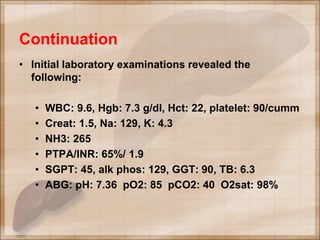
• Initial laboratory examinations revealed the
following:
• WBC: 9.6, Hgb: 7.3 g/dl, Hct: 22, platelet: 90/cumm
• Creat: 1.5, Na: 129, K: 4.3
• NH3: 265
• PTPA/INR: 65%/ 1.9
• SGPT: 45, alk phos: 129, GGT: 90, TB: 6.3
• ABG: pH: 7.36 pO2: 85 pCO2: 40 O2sat: 98%
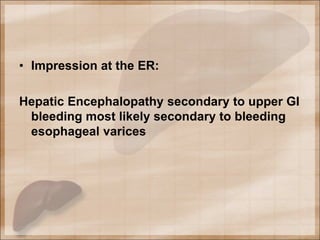
• Impression at the ER:
Hepatic Encephalopathy secondary to upper GI
bleeding most likely secondary to bleeding
esophageal varices
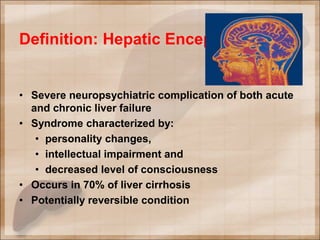
Definition: Hepatic Encephalopathy
• Severe neuropsychiatric complication of both acute
and chronic liver failure
• Syndrome characterized by:
• personality changes,
• intellectual impairment and
• decreased level of consciousness
• Occurs in 70% of liver cirrhosis
• Potentially reversible condition
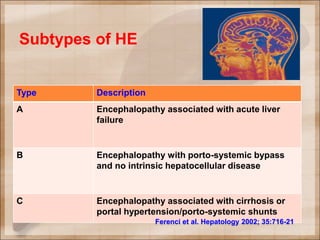
Subtypes of HE
Type Description
A Encephalopathy associated with acute liver
failure
B Encephalopathy with porto-systemic bypass
and no intrinsic hepatocellular disease
C Encephalopathy associated with cirrhosis or
portal hypertension/porto-systemic shunts
Ferenci et al. Hepatology 2002; 35:716-21
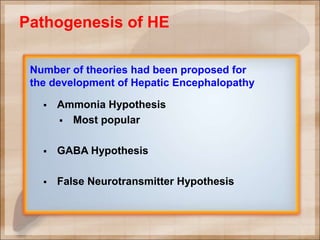
Pathogenesis of HE
Number of theories had been proposed for
the development of Hepatic Encephalopathy
 Ammonia Hypothesis
 Most popular
 GABA Hypothesis
 False Neurotransmitter Hypothesis
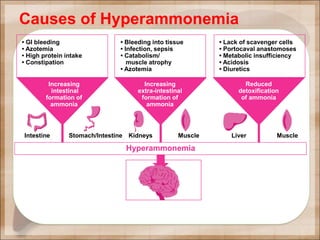
Causes of Hyperammonemia
Hyperammonemia
HE
• GI bleeding
• Azotemia
• High protein intake
• Constipation
• Bleeding into tissue
• Infection, sepsis
• Catabolism/
muscle atrophy
• Azotemia
• Lack of scavenger cells
• Portocaval anastomoses
• Metabolic insufficiency
• Acidosis
• Diuretics
Increasing
intestinal
formation of
ammonia
Increasing
extra-intestinal
formation of
ammonia
Reduced
detoxification
of ammonia
Intestine Stomach/Intestine Kidneys Muscle MuscleLiver
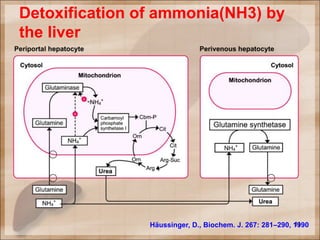
Detoxification of ammonia(NH3) by
the liver
11Häussinger, D., Biochem. J. 267: 281–290, 1990
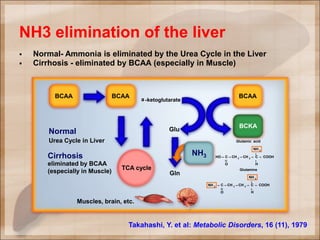
Takahashi, Y. et al: Metabolic Disorders, 16 (11), 1979
Normal
Urea Cycle in Liver
Cirrhosis
eliminated by BCAA
(especially in Muscle)
BCAA
TCA cycle
BCAA
Muscles, brain, etc.
a -ketoglutarate
NH3
BCAA
BCKA
CH 2C
O
HO COOH
H
CH 2 C
NH 2
Glutamic acid
Glutamine
CH 2C
O
NH 2
COOH
H
CH 2 C
NH 2
Gln
Glu
 Normal- Ammonia is eliminated by the Urea Cycle in the Liver
 Cirrhosis - eliminated by BCAA (especially in Muscle)
NH3 elimination of the liver
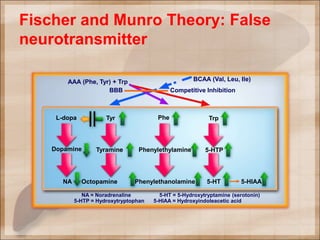
AAA (Phe, Tyr) + Trp
BBB Competitive Inhibition
BCAA (Val, Leu, Ile)
L-dopa Tyr
NA Octopamine Phenylethanolamine 5-HT 5-HIAA
Dopamine Tyramine Phenylethylamine 5-HTP
Phe Trp
NA = Noradrenaline 5-HT = 5-Hydroxytryptamine (serotonin)
5-HTP = Hydroxytryptophan 5-HIAA = Hydroxyindoleacetic acid
Fischer and Munro Theory: False
neurotransmitter
What is the grade of hepatic
encephalopathy?
a. Grade 1
b. Grade 2
c. Grade 3
d. Grade 4
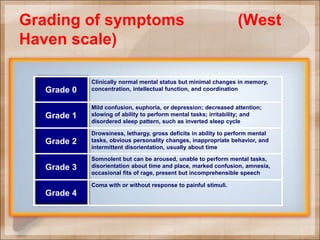
Grade 0
Clinically normal mental status but minimal changes in memory,
concentration, intellectual function, and coordination
Grade 1
Mild confusion, euphoria, or depression; decreased attention;
slowing of ability to perform mental tasks; irritability; and
disordered sleep pattern, such as inverted sleep cycle
Grade 2
Drowsiness, lethargy, gross deficits in ability to perform mental
tasks, obvious personality changes, inappropriate behavior, and
intermittent disorientation, usually about time
Grade 3
Somnolent but can be aroused, unable to perform mental tasks,
disorientation about time and place, marked confusion, amnesia,
occasional fits of rage, present but incomprehensible speech
Grade 4
Coma with or without response to painful stimuli.
Grading of symptoms (West
Haven scale)
What is the initial step in the
management of hepatic encephalopathy?
a. empty bowels of nitrogen-containing substances by
giving lactulose
b. Administer non-absorbable antibiotics e.g.
metronidazole or rifaximin
c. Administer intravenous BCAAs
d. Identify precipitating factor
e. all of the above
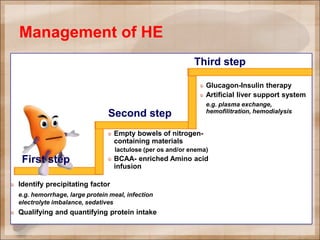
Glucagon-Insulin therapy
Artificial liver support system
e.g. plasma exchange,
hemofilitration, hemodialysis
Identify precipitating factor
e.g. hemorrhage, large protein meal, infection
electrolyte imbalance, sedatives
Qualifying and quantifying protein intake
First step
Second step
Third step
Empty bowels of nitrogen-
containing materials
lactulose (per os and/or enema)
BCAA- enriched Amino acid
infusion
Management of HE
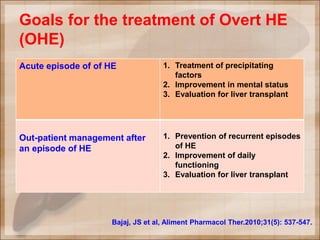
Goals for the treatment of Overt HE
(OHE)
Acute episode of of HE 1. Treatment of precipitating
factors
2. Improvement in mental status
3. Evaluation for liver transplant
Out-patient management after
an episode of HE
1. Prevention of recurrent episodes
of HE
2. Improvement of daily
functioning
3. Evaluation for liver transplant
Bajaj, JS et al, Aliment Pharmacol Ther.2010;31(5): 537-547.
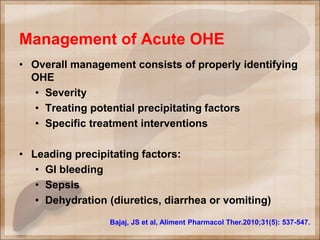
Management of Acute OHE
• Overall management consists of properly identifying
OHE
• Severity
• Treating potential precipitating factors
• Specific treatment interventions
• Leading precipitating factors:
• GI bleeding
• Sepsis
• Dehydration (diuretics, diarrhea or vomiting)
Bajaj, JS et al, Aliment Pharmacol Ther.2010;31(5): 537-547.
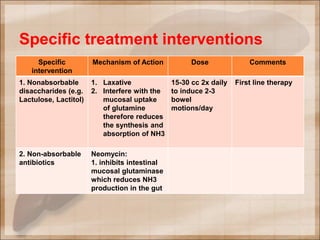
Specific treatment interventions
Specific
intervention
Mechanism of Action Dose Comments
1. Nonabsorbable
disaccharides (e.g.
Lactulose, Lactitol)
1. Laxative
2. Interfere with the
mucosal uptake
of glutamine
therefore reduces
the synthesis and
absorption of NH3
15-30 cc 2x daily
to induce 2-3
bowel
motions/day
First line therapy
2. Non-absorbable
antibiotics
Neomycin:
1. inhibits intestinal
mucosal glutaminase
which reduces NH3
production in the gut
Specific treatment interventions
Specific
intervention
Mechanism of Action Dose Comments
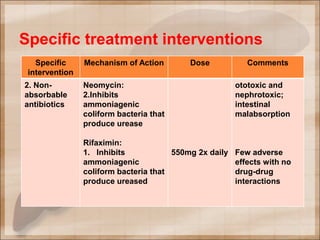
2. Non-
absorbable
antibiotics
Neomycin:
2.Inhibits
ammoniagenic
coliform bacteria that
produce urease
Rifaximin:
1. Inhibits
ammoniagenic
coliform bacteria that
produce ureased
550mg 2x daily
ototoxic and
nephrotoxic;
intestinal
malabsorption
Few adverse
effects with no
drug-drug
interactions
Insert Forrest plot from
metaanalysis
Out-patient treatment after an
episode of HE
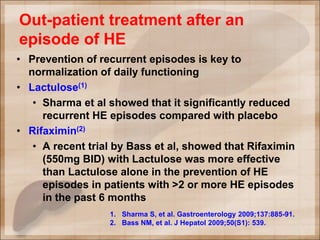
• Prevention of recurrent episodes is key to
normalization of daily functioning
• Lactulose(1)
• Sharma et al showed that it significantly reduced
recurrent HE episodes compared with placebo
• Rifaximin(2)
• A recent trial by Bass et al, showed that Rifaximin
(550mg BID) with Lactulose was more effective
than Lactulose alone in the prevention of HE
episodes in patients with >2 or more HE episodes
in the past 6 months
1. Sharma S, et al. Gastroenterology 2009;137:885-91.
2. Bass NM, et al. J Hepatol 2009;50(S1): 539.
Other Out-patient treatment options
after an episode of HE
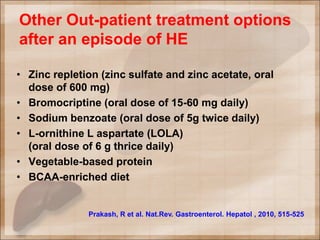
• Zinc repletion (zinc sulfate and zinc acetate, oral
dose of 600 mg)
• Bromocriptine (oral dose of 15-60 mg daily)
• Sodium benzoate (oral dose of 5g twice daily)
• L-ornithine L aspartate (LOLA)
(oral dose of 6 g thrice daily)
• Vegetable-based protein
• BCAA-enriched diet
Prakash, R et al. Nat.Rev. Gastroenterol. Hepatol , 2010, 515-525
BCAAs supplementation after an
episode of HE
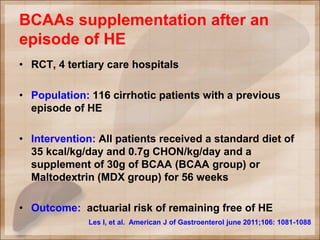
• RCT, 4 tertiary care hospitals
• Population: 116 cirrhotic patients with a previous
episode of HE
• Intervention: All patients received a standard diet of
35 kcal/kg/day and 0.7g CHON/kg/day and a
supplement of 30g of BCAA (BCAA group) or
Maltodextrin (MDX group) for 56 weeks
• Outcome: actuarial risk of remaining free of HE
Les I, et al. American J of Gastroenterol june 2011;106: 1081-1088
BCAAs supplementation after an
episode of HE
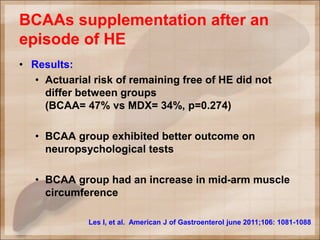
• Results:
• Actuarial risk of remaining free of HE did not
differ between groups
(BCAA= 47% vs MDX= 34%, p=0.274)
• BCAA group exhibited better outcome on
neuropsychological tests
• BCAA group had an increase in mid-arm muscle
circumference
Les I, et al. American J of Gastroenterol june 2011;106: 1081-1088
Going back to the case…
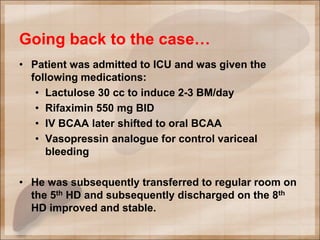
• Patient was admitted to ICU and was given the
following medications:
• Lactulose 30 cc to induce 2-3 BM/day
• Rifaximin 550 mg BID
• IV BCAA later shifted to oral BCAA
• Vasopressin analogue for control variceal
bleeding
• He was subsequently transferred to regular room on
the 5th HD and subsequently discharged on the 8th
HD improved and stable.
In the interim …
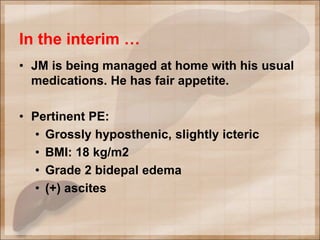
• JM is being managed at home with his usual
medications. He has fair appetite.
• Pertinent PE:
• Grossly hyposthenic, slightly icteric
• BMI: 18 kg/m2
• Grade 2 bidepal edema
• (+) ascites
In the interim …
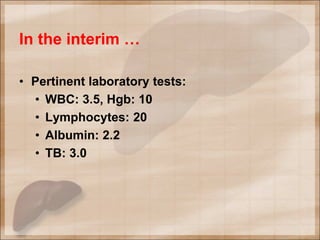
• Pertinent laboratory tests:
• WBC: 3.5, Hgb: 10
• Lymphocytes: 20
• Albumin: 2.2
• TB: 3.0
Do you think he has protein-calorie
malnutrition?
• a. Yes
• b. No
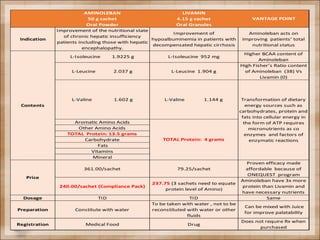
AMINOLEBAN LIVAMIN
50 g sachet 4.15 g sachet
Oral Powder Oral Granules
Indication
Improvement of the nutritional state
of chronic hepatic insufficiency
patients including those with hepatic
encephalopathy.
Improvement of
hypoalbuminemia in patients with
decompensated hepatic cirrhosis
Aminoleban acts on
improving patients’ total
nutritional status
L-Isoleucine 1.9225 g L-Isoleucine 952 mg
Higher BCAA content of
Aminoleban
L-Leucine 2.037 g L-Leucine 1.904 g
High Fisher’s Ratio content
of Aminoleban (38) Vs
Livamin (0)
L-Valine 1.602 g L-Valine 1.144 g
Aromatic Amino Acids
Other Amino Acids
TOTAL Protein: 13.5 grams
Carbohydrate
Fats
Vitamins
Mineral
361.00/sachet 79.25/sachet
Proven efficacy made
affordable because of
ONEQUEST program
240.00/sachet (Compliance Pack)
237.75 (3 sachets need to equate
protein level of Amino)
Aminoleban have 3x more
protein than Livamin and
have necessary nutrients
Dosage TID TID Same
Preparation Constitute with water
To be taken with water , not to be
reconstituted with water or other
fluids
Can be mixed with Juice
for improve palatability
Registration Medical Food Drug
Does not require Rx when
purchased
VANTAGE POINT
Price
Contents
TOTAL Protein: 4 grams
Transformation of dietary
energy sources such as
carbohydrates, protein and
fats into cellular energy in
the form of ATP requires
micronutrients as co
enzymes and factors of
enzymatic reactions
THANK YOU!

Hepatic encephalopathy

  • 1.
    The optimum BCAAfor pharmaco- nutritional solution…” Hepatic Encephalopathy
  • 2.
    Case • J.M., 47year old, known case of Hepatitis B-related cirrhosis with poorly controlled diabetes with nephropathy • CC: decreased sensorium • 1 day PTA, had sudden episode of massive hematemesis later associated with confusion and increased sleeping time. Few hours PTA, note of passage melena and became unarousable. He was then brought to hospital and was subsequently admitted.
  • 3.
    Case • Pertinent PEfindings • BP: 90/60 HR: 98 RR: 22 Temperature: 37.5OC • Stuporous • Pupils slowly reactive to light, bilateral • Icteric • (+) spider veins • Globular abdomen with bulging flanks, (+) prominent superficial veins, (+) fluid wave • (-) asterixis • (+) bipedal edema • (-) Babinski
  • 4.
    What is yourinitial impression? a. Uremic encephalopathy b. Hepatic encephalopathy c. Hemorrhagic stroke d. all of the above
  • 5.
    Continuation • Initial laboratoryexaminations revealed the following: • WBC: 9.6, Hgb: 7.3 g/dl, Hct: 22, platelet: 90/cumm • Creat: 1.5, Na: 129, K: 4.3 • NH3: 265 • PTPA/INR: 65%/ 1.9 • SGPT: 45, alk phos: 129, GGT: 90, TB: 6.3 • ABG: pH: 7.36 pO2: 85 pCO2: 40 O2sat: 98%
  • 6.
    • Impression atthe ER: Hepatic Encephalopathy secondary to upper GI bleeding most likely secondary to bleeding esophageal varices
  • 7.
    Definition: Hepatic Encephalopathy •Severe neuropsychiatric complication of both acute and chronic liver failure • Syndrome characterized by: • personality changes, • intellectual impairment and • decreased level of consciousness • Occurs in 70% of liver cirrhosis • Potentially reversible condition
  • 8.
    Subtypes of HE TypeDescription A Encephalopathy associated with acute liver failure B Encephalopathy with porto-systemic bypass and no intrinsic hepatocellular disease C Encephalopathy associated with cirrhosis or portal hypertension/porto-systemic shunts Ferenci et al. Hepatology 2002; 35:716-21
  • 9.
    Pathogenesis of HE Numberof theories had been proposed for the development of Hepatic Encephalopathy  Ammonia Hypothesis  Most popular  GABA Hypothesis  False Neurotransmitter Hypothesis
  • 10.
    Causes of Hyperammonemia Hyperammonemia HE •GI bleeding • Azotemia • High protein intake • Constipation • Bleeding into tissue • Infection, sepsis • Catabolism/ muscle atrophy • Azotemia • Lack of scavenger cells • Portocaval anastomoses • Metabolic insufficiency • Acidosis • Diuretics Increasing intestinal formation of ammonia Increasing extra-intestinal formation of ammonia Reduced detoxification of ammonia Intestine Stomach/Intestine Kidneys Muscle MuscleLiver
  • 11.
    Detoxification of ammonia(NH3)by the liver 11Häussinger, D., Biochem. J. 267: 281–290, 1990
  • 12.
    Takahashi, Y. etal: Metabolic Disorders, 16 (11), 1979 Normal Urea Cycle in Liver Cirrhosis eliminated by BCAA (especially in Muscle) BCAA TCA cycle BCAA Muscles, brain, etc. a -ketoglutarate NH3 BCAA BCKA CH 2C O HO COOH H CH 2 C NH 2 Glutamic acid Glutamine CH 2C O NH 2 COOH H CH 2 C NH 2 Gln Glu  Normal- Ammonia is eliminated by the Urea Cycle in the Liver  Cirrhosis - eliminated by BCAA (especially in Muscle) NH3 elimination of the liver
  • 13.
    AAA (Phe, Tyr)+ Trp BBB Competitive Inhibition BCAA (Val, Leu, Ile) L-dopa Tyr NA Octopamine Phenylethanolamine 5-HT 5-HIAA Dopamine Tyramine Phenylethylamine 5-HTP Phe Trp NA = Noradrenaline 5-HT = 5-Hydroxytryptamine (serotonin) 5-HTP = Hydroxytryptophan 5-HIAA = Hydroxyindoleacetic acid Fischer and Munro Theory: False neurotransmitter
  • 14.
    What is thegrade of hepatic encephalopathy? a. Grade 1 b. Grade 2 c. Grade 3 d. Grade 4
  • 15.
    Grade 0 Clinically normalmental status but minimal changes in memory, concentration, intellectual function, and coordination Grade 1 Mild confusion, euphoria, or depression; decreased attention; slowing of ability to perform mental tasks; irritability; and disordered sleep pattern, such as inverted sleep cycle Grade 2 Drowsiness, lethargy, gross deficits in ability to perform mental tasks, obvious personality changes, inappropriate behavior, and intermittent disorientation, usually about time Grade 3 Somnolent but can be aroused, unable to perform mental tasks, disorientation about time and place, marked confusion, amnesia, occasional fits of rage, present but incomprehensible speech Grade 4 Coma with or without response to painful stimuli. Grading of symptoms (West Haven scale)
  • 16.
    What is theinitial step in the management of hepatic encephalopathy? a. empty bowels of nitrogen-containing substances by giving lactulose b. Administer non-absorbable antibiotics e.g. metronidazole or rifaximin c. Administer intravenous BCAAs d. Identify precipitating factor e. all of the above
  • 17.
    Glucagon-Insulin therapy Artificial liversupport system e.g. plasma exchange, hemofilitration, hemodialysis Identify precipitating factor e.g. hemorrhage, large protein meal, infection electrolyte imbalance, sedatives Qualifying and quantifying protein intake First step Second step Third step Empty bowels of nitrogen- containing materials lactulose (per os and/or enema) BCAA- enriched Amino acid infusion Management of HE
  • 18.
    Goals for thetreatment of Overt HE (OHE) Acute episode of of HE 1. Treatment of precipitating factors 2. Improvement in mental status 3. Evaluation for liver transplant Out-patient management after an episode of HE 1. Prevention of recurrent episodes of HE 2. Improvement of daily functioning 3. Evaluation for liver transplant Bajaj, JS et al, Aliment Pharmacol Ther.2010;31(5): 537-547.
  • 19.
    Management of AcuteOHE • Overall management consists of properly identifying OHE • Severity • Treating potential precipitating factors • Specific treatment interventions • Leading precipitating factors: • GI bleeding • Sepsis • Dehydration (diuretics, diarrhea or vomiting) Bajaj, JS et al, Aliment Pharmacol Ther.2010;31(5): 537-547.
  • 20.
    Specific treatment interventions Specific intervention Mechanismof Action Dose Comments 1. Nonabsorbable disaccharides (e.g. Lactulose, Lactitol) 1. Laxative 2. Interfere with the mucosal uptake of glutamine therefore reduces the synthesis and absorption of NH3 15-30 cc 2x daily to induce 2-3 bowel motions/day First line therapy 2. Non-absorbable antibiotics Neomycin: 1. inhibits intestinal mucosal glutaminase which reduces NH3 production in the gut
  • 21.
    Specific treatment interventions Specific intervention Mechanismof Action Dose Comments 2. Non- absorbable antibiotics Neomycin: 2.Inhibits ammoniagenic coliform bacteria that produce urease Rifaximin: 1. Inhibits ammoniagenic coliform bacteria that produce ureased 550mg 2x daily ototoxic and nephrotoxic; intestinal malabsorption Few adverse effects with no drug-drug interactions
  • 22.
    Insert Forrest plotfrom metaanalysis
  • 23.
    Out-patient treatment afteran episode of HE • Prevention of recurrent episodes is key to normalization of daily functioning • Lactulose(1) • Sharma et al showed that it significantly reduced recurrent HE episodes compared with placebo • Rifaximin(2) • A recent trial by Bass et al, showed that Rifaximin (550mg BID) with Lactulose was more effective than Lactulose alone in the prevention of HE episodes in patients with >2 or more HE episodes in the past 6 months 1. Sharma S, et al. Gastroenterology 2009;137:885-91. 2. Bass NM, et al. J Hepatol 2009;50(S1): 539.
  • 24.
    Other Out-patient treatmentoptions after an episode of HE • Zinc repletion (zinc sulfate and zinc acetate, oral dose of 600 mg) • Bromocriptine (oral dose of 15-60 mg daily) • Sodium benzoate (oral dose of 5g twice daily) • L-ornithine L aspartate (LOLA) (oral dose of 6 g thrice daily) • Vegetable-based protein • BCAA-enriched diet Prakash, R et al. Nat.Rev. Gastroenterol. Hepatol , 2010, 515-525
  • 25.
    BCAAs supplementation afteran episode of HE • RCT, 4 tertiary care hospitals • Population: 116 cirrhotic patients with a previous episode of HE • Intervention: All patients received a standard diet of 35 kcal/kg/day and 0.7g CHON/kg/day and a supplement of 30g of BCAA (BCAA group) or Maltodextrin (MDX group) for 56 weeks • Outcome: actuarial risk of remaining free of HE Les I, et al. American J of Gastroenterol june 2011;106: 1081-1088
  • 26.
    BCAAs supplementation afteran episode of HE • Results: • Actuarial risk of remaining free of HE did not differ between groups (BCAA= 47% vs MDX= 34%, p=0.274) • BCAA group exhibited better outcome on neuropsychological tests • BCAA group had an increase in mid-arm muscle circumference Les I, et al. American J of Gastroenterol june 2011;106: 1081-1088
  • 27.
    Going back tothe case… • Patient was admitted to ICU and was given the following medications: • Lactulose 30 cc to induce 2-3 BM/day • Rifaximin 550 mg BID • IV BCAA later shifted to oral BCAA • Vasopressin analogue for control variceal bleeding • He was subsequently transferred to regular room on the 5th HD and subsequently discharged on the 8th HD improved and stable.
  • 28.
    In the interim… • JM is being managed at home with his usual medications. He has fair appetite. • Pertinent PE: • Grossly hyposthenic, slightly icteric • BMI: 18 kg/m2 • Grade 2 bidepal edema • (+) ascites
  • 29.
    In the interim… • Pertinent laboratory tests: • WBC: 3.5, Hgb: 10 • Lymphocytes: 20 • Albumin: 2.2 • TB: 3.0
  • 30.
    Do you thinkhe has protein-calorie malnutrition? • a. Yes • b. No
  • 32.
    AMINOLEBAN LIVAMIN 50 gsachet 4.15 g sachet Oral Powder Oral Granules Indication Improvement of the nutritional state of chronic hepatic insufficiency patients including those with hepatic encephalopathy. Improvement of hypoalbuminemia in patients with decompensated hepatic cirrhosis Aminoleban acts on improving patients’ total nutritional status L-Isoleucine 1.9225 g L-Isoleucine 952 mg Higher BCAA content of Aminoleban L-Leucine 2.037 g L-Leucine 1.904 g High Fisher’s Ratio content of Aminoleban (38) Vs Livamin (0) L-Valine 1.602 g L-Valine 1.144 g Aromatic Amino Acids Other Amino Acids TOTAL Protein: 13.5 grams Carbohydrate Fats Vitamins Mineral 361.00/sachet 79.25/sachet Proven efficacy made affordable because of ONEQUEST program 240.00/sachet (Compliance Pack) 237.75 (3 sachets need to equate protein level of Amino) Aminoleban have 3x more protein than Livamin and have necessary nutrients Dosage TID TID Same Preparation Constitute with water To be taken with water , not to be reconstituted with water or other fluids Can be mixed with Juice for improve palatability Registration Medical Food Drug Does not require Rx when purchased VANTAGE POINT Price Contents TOTAL Protein: 4 grams Transformation of dietary energy sources such as carbohydrates, protein and fats into cellular energy in the form of ATP requires micronutrients as co enzymes and factors of enzymatic reactions
  • 33.