DR. VIBHA KHANNA
Asso. Prof. (Botany)
SPC GOVERNMENT COLLEGE
AJMER (Rajasthan)
PLANT PHYSIOLOGY
PLANT GROWTH REGULATORS
PRESENTATION :
BIOASSAYS FOR:
AUXINS
GIBBERELLINS
CYTOKININS
ETHYLENE
ABCISSIC ACID
PLANT GROWTH REGULATORS
[“In the early 1900 s F. W. Went made the
profound statement :-without growth substances,
no growth.”]
• CHARACTERISTICS
1. Organic Molecules
2. Required in Very Less Quantity
3. Regulate Various Metabolic Processes
4. Generally Translocated From Site Of Synthesis To
Site Of Action (Except Ethylene)
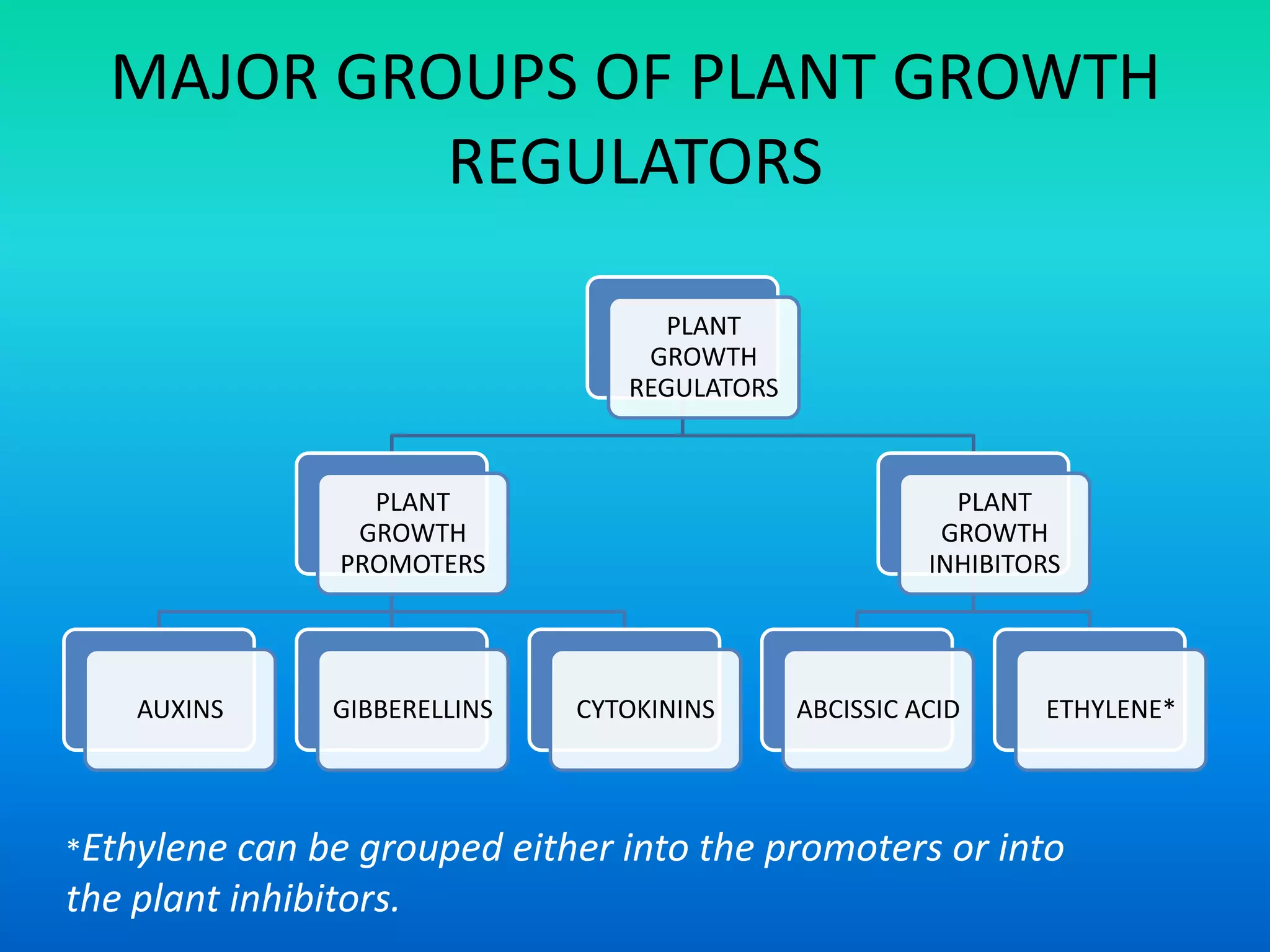
MAJOR GROUPS OF PLANT GROWTH
REGULATORS
PLANT
GROWTH
REGULATORS
PLANT
GROWTH
PROMOTERS
AUXINS GIBBERELLINS CYTOKININS
PLANT
GROWTH
INHIBITORS
ABCISSIC ACID ETHYLENE*
*Ethylene can be grouped either into the promoters or into
the plant inhibitors.
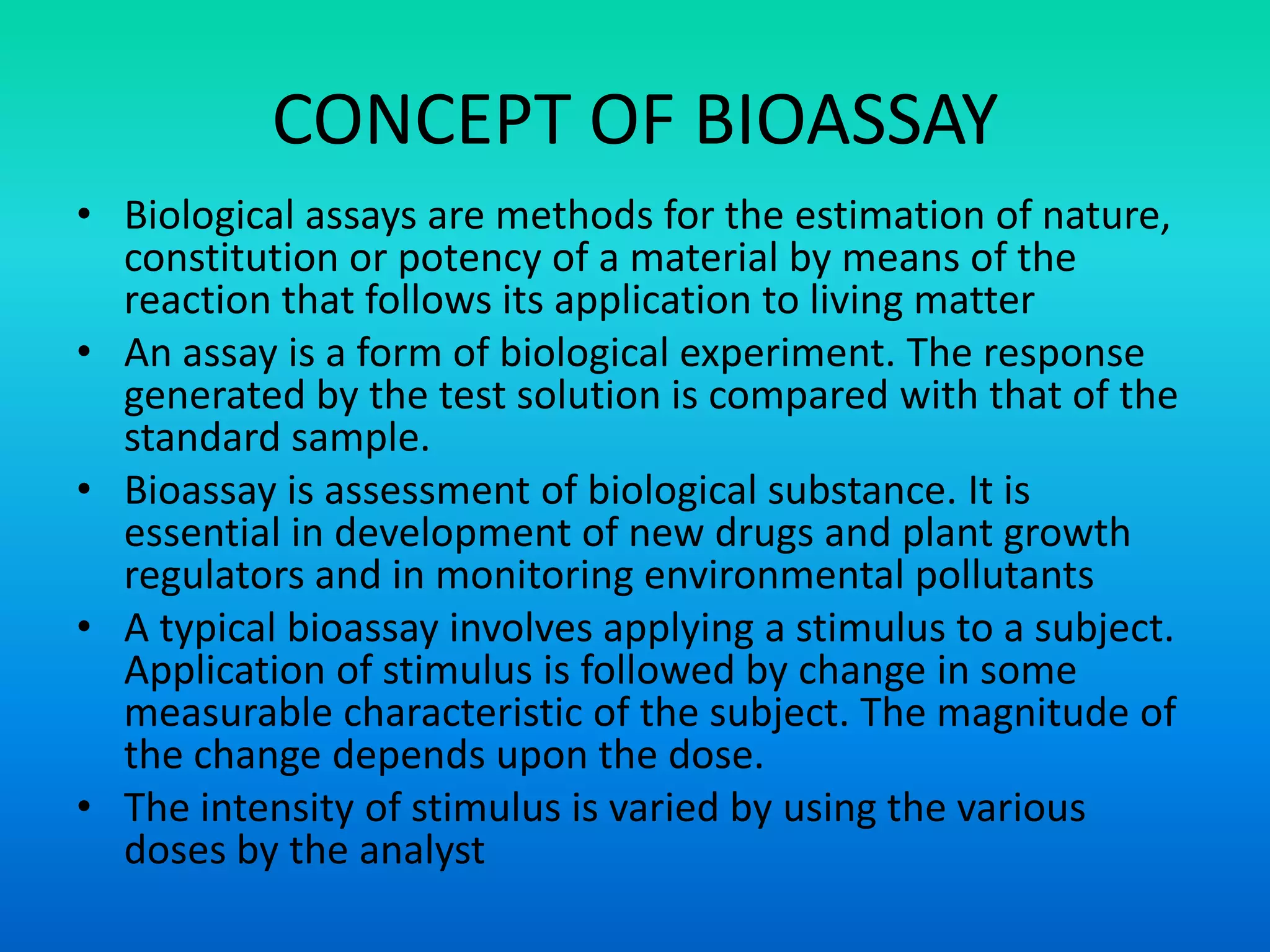
CONCEPT OF BIOASSAY
• Biological assays are methods for the estimation of nature,
constitution or potency of a material by means of the
reaction that follows its application to living matter
• An assay is a form of biological experiment. The response
generated by the test solution is compared with that of the
standard sample.
• Bioassay is assessment of biological substance. It is
essential in development of new drugs and plant growth
regulators and in monitoring environmental pollutants
• A typical bioassay involves applying a stimulus to a subject.
Application of stimulus is followed by change in some
measurable characteristic of the subject. The magnitude of
the change depends upon the dose.
• The intensity of stimulus is varied by using the various
doses by the analyst
BIO ASSAY/ BIOLOGICAL ASSAY
• DEFINITION
– Bio assay is defined as the estimation or
determination of concentration or potency of physical
chemical or biological agents by means of measuring
and comparing the magnitude of response of the test
with that of standard, over a suitable biological system
under standard set of conditions.
– Bioassay/Biological assay are extremely sensitive and
specific test that can determine the biological activity
of a particular hormone by showing its
measurable/detectable effect on a specific part of
plant material.
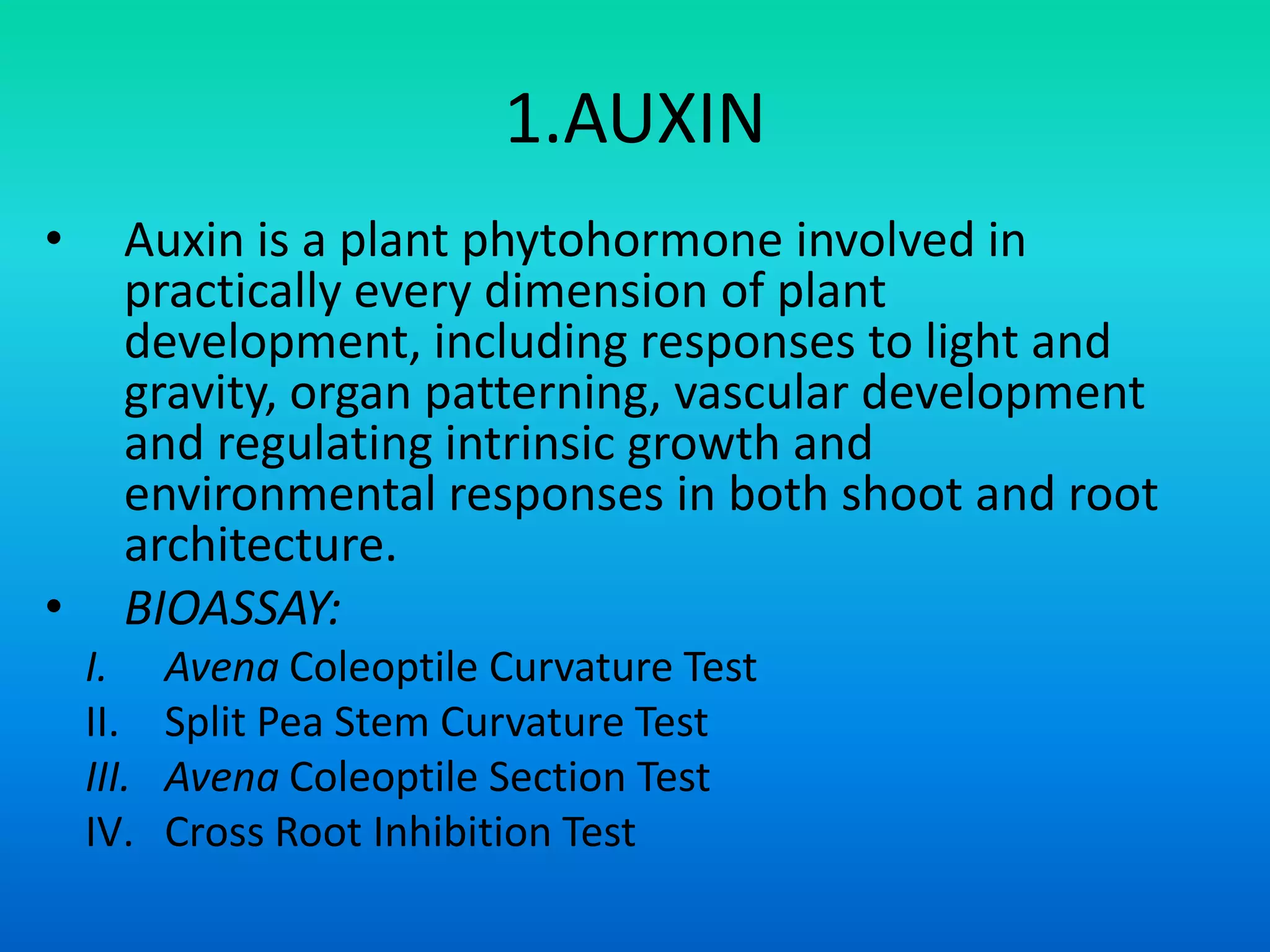
1.AUXIN
• Auxin is a plant phytohormone involved in
practically every dimension of plant
development, including responses to light and
gravity, organ patterning, vascular development
and regulating intrinsic growth and
environmental responses in both shoot and root
architecture.
• BIOASSAY:
I. Avena Coleoptile Curvature Test
II. Split Pea Stem Curvature Test
III. Avena Coleoptile Section Test
IV. Cross Root Inhibition Test
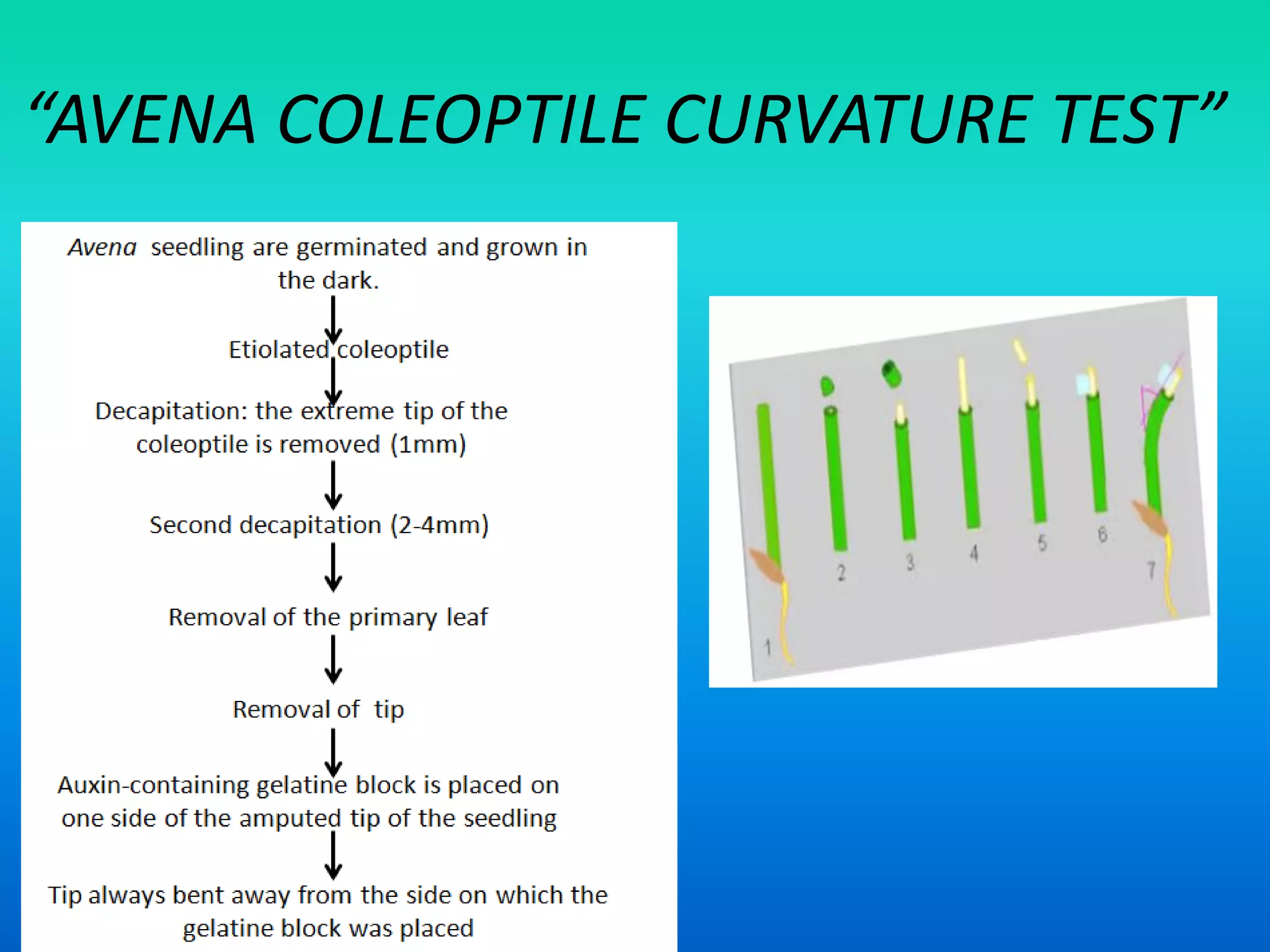
“AVENA COLEOPTILE CURVATURE TEST”
• Principle:
• This test is based on the polar transport of
the auxin in Avena coleoptile.
• The auxin applied on one side of the cut
coleoptile stump will diffuse down that side
only and will cause that side to grow more
resulting in curvature of the coleoptiles.
• Within limits this curvature is directly
proportional to the amount of auxin applied
“AVENA COLEOPTILE CURVATURE TEST”
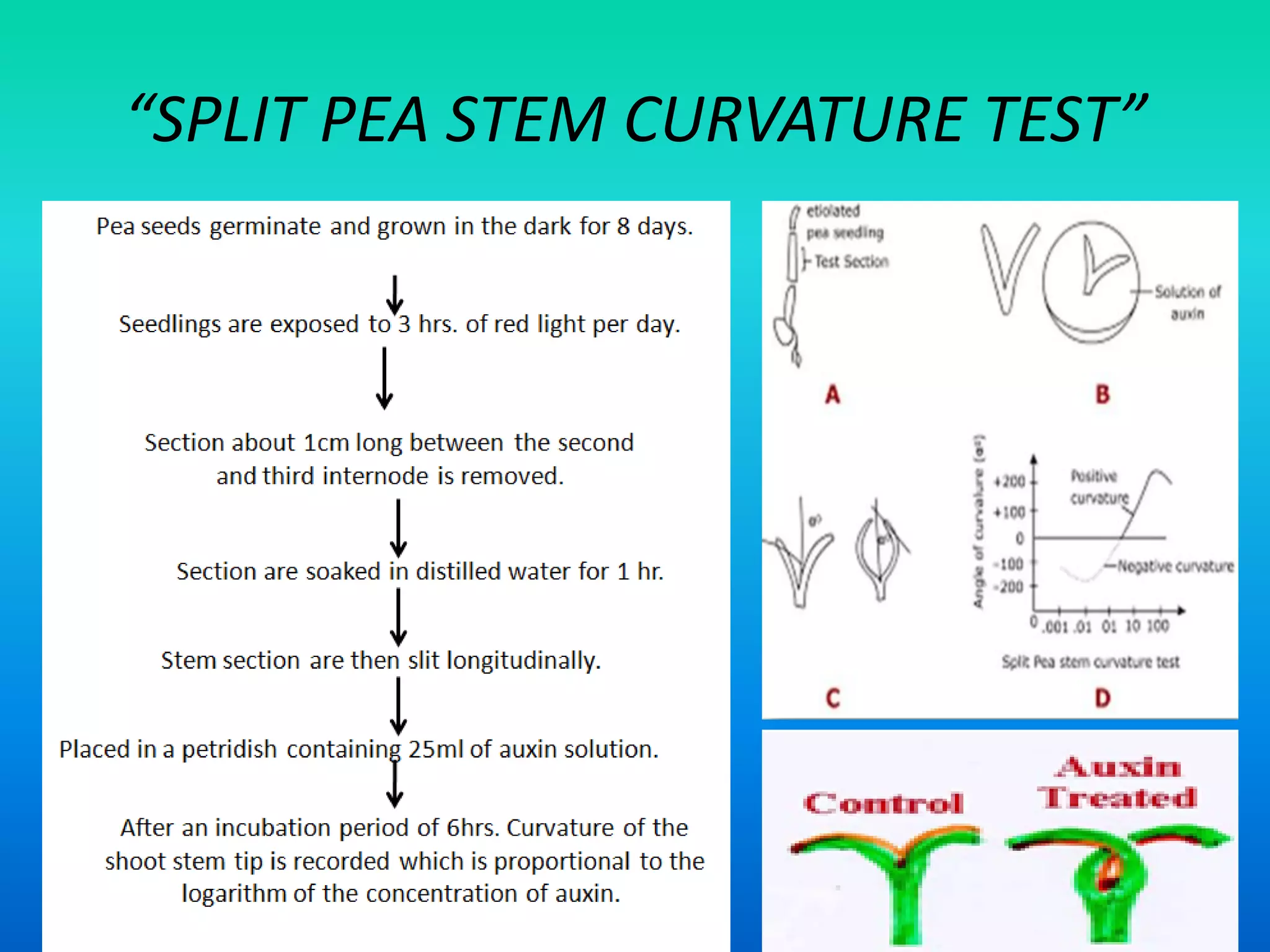
“SPLIT PEA STEM CURVATURE TEST”
• Principle: This test is based on the differential
growth response of the epidermal cells and
the cortical cells of the stem sections, to
Auxins.
• The curvature occurs mainly due to more
growth of epidermal cells as compared to the
cortical cells.
“SPLIT PEA STEM CURVATURE TEST”
2. GIBBERELLINS
• The gibberellins (GAs) which is a large family of tetracyclic
diterpinoid plant growth substances, are associated with various
growth and development processes such as
– seed germination,
– stem and hypocotyls elongation,
– leaf expansion,
– floral initiation,
– floral organ development,
– fruit development, and
– induction of some hydrolytic enzymes in the aleurone of cereal grains
• BIOASSAY
I. Barley endosperm bioassay
II. Dwarf pea bioassay
III. Lettuce hypocotyl
IV. Dwarf corn
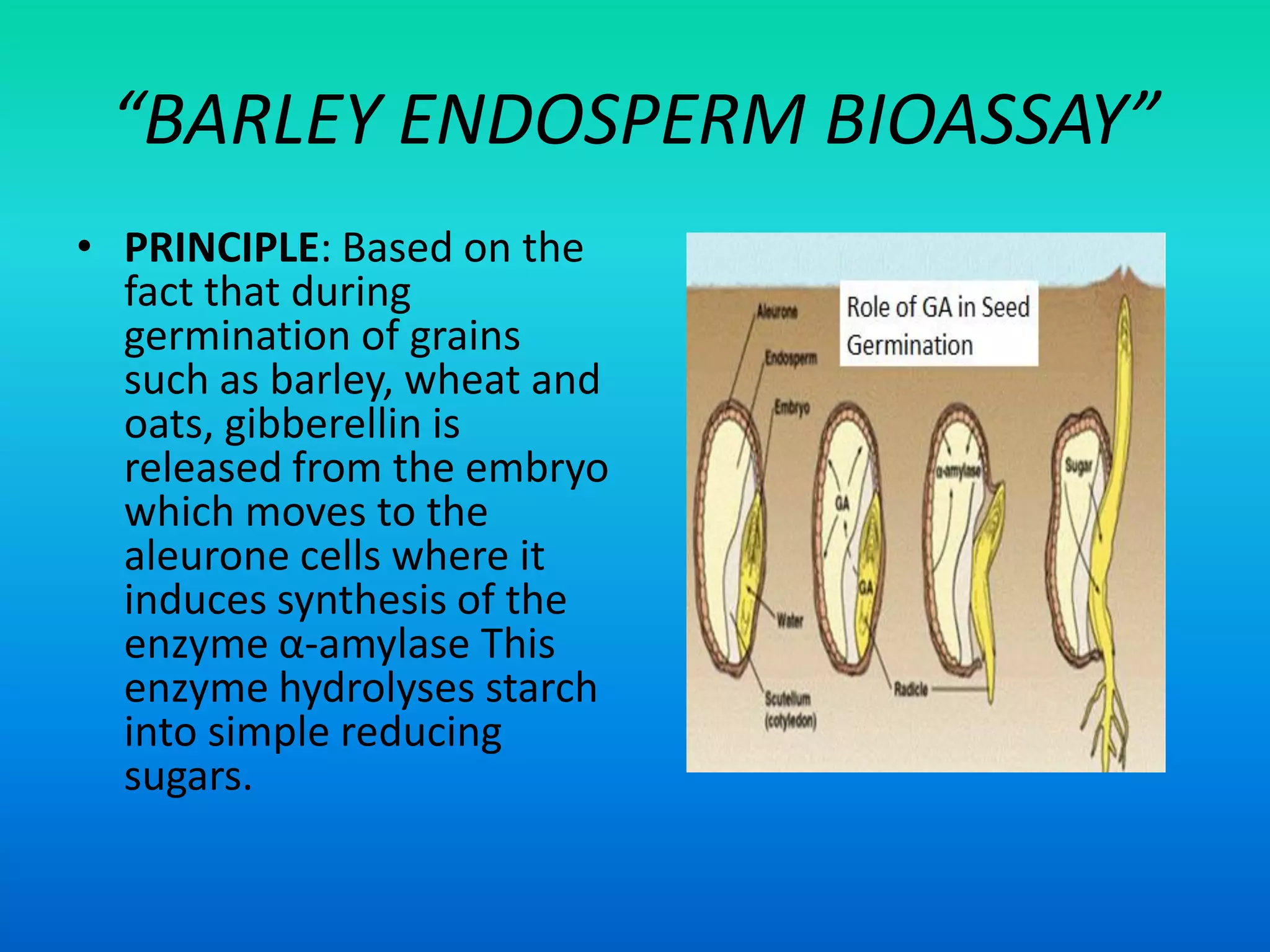
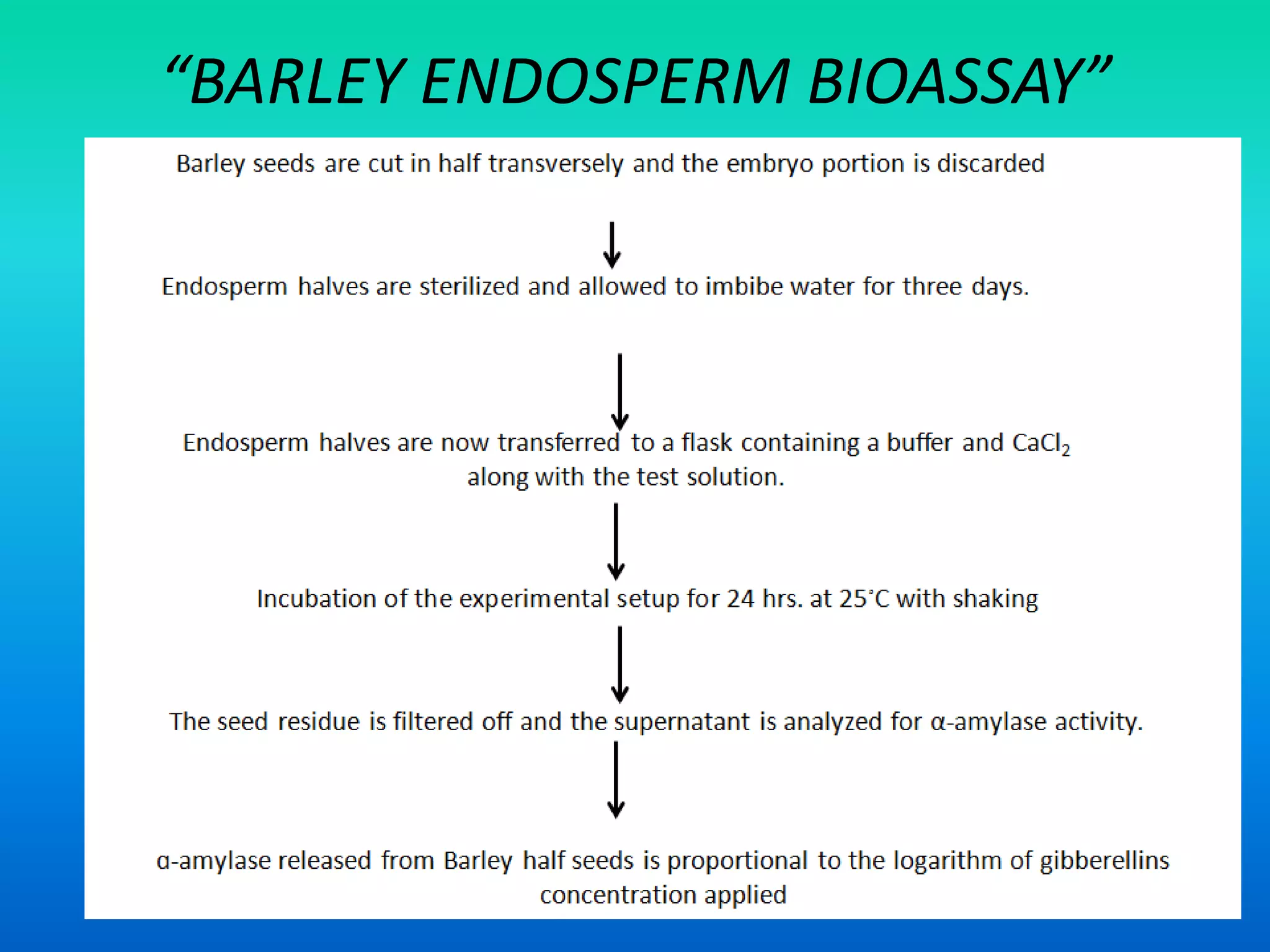
“BARLEY ENDOSPERM BIOASSAY”
• PRINCIPLE: Based on the
fact that during
germination of grains
such as barley, wheat and
oats, gibberellin is
released from the embryo
which moves to the
aleurone cells where it
induces synthesis of the
enzyme α-amylase This
enzyme hydrolyses starch
into simple reducing
sugars.
“BARLEY ENDOSPERM BIOASSAY”
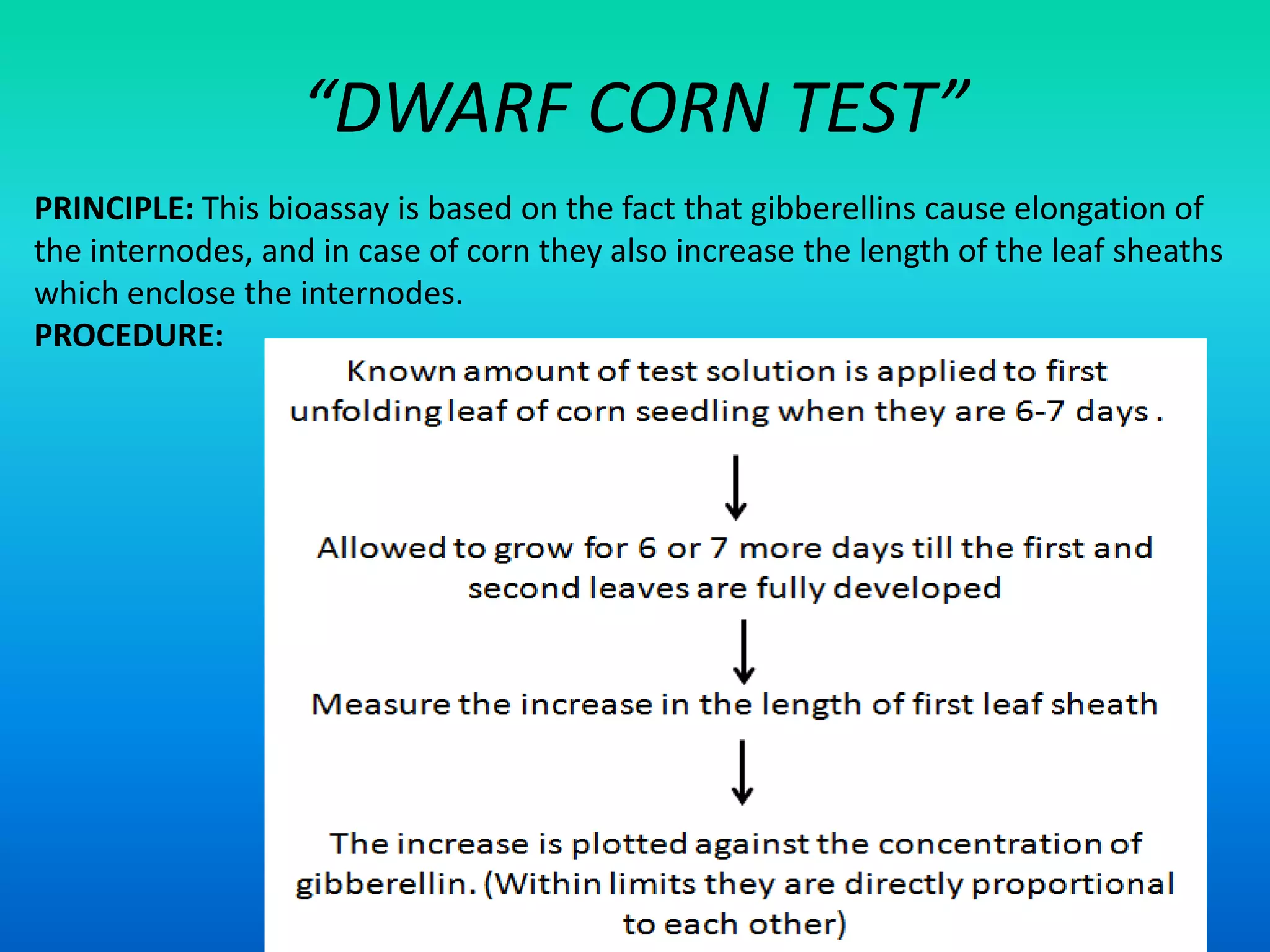
“DWARF CORN TEST”
PRINCIPLE: This bioassay is based on the fact that gibberellins cause elongation of
the internodes, and in case of corn they also increase the length of the leaf sheaths
which enclose the internodes.
PROCEDURE:
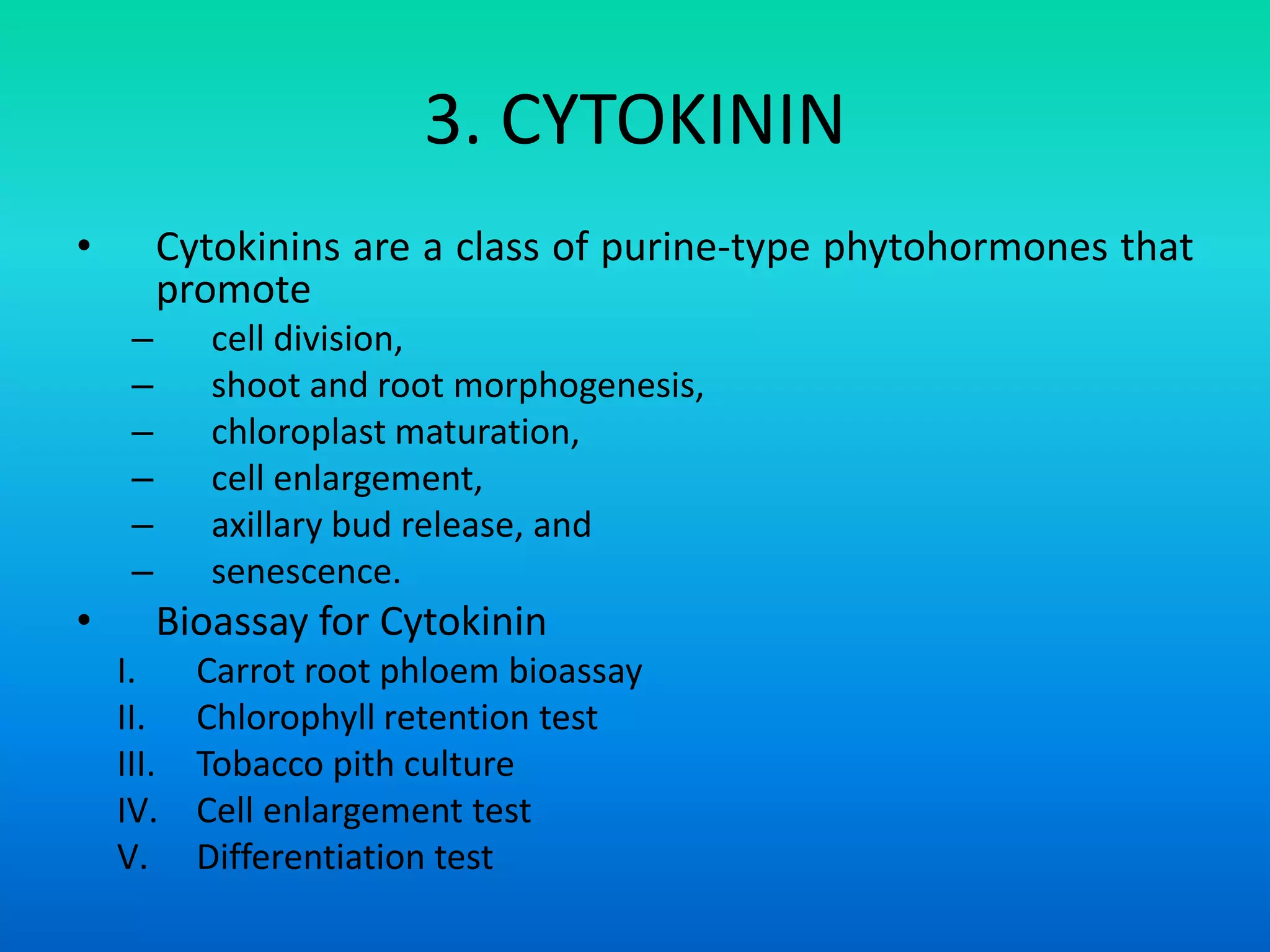
3. CYTOKININ
• Cytokinins are a class of purine-type phytohormones that
promote
– cell division,
– shoot and root morphogenesis,
– chloroplast maturation,
– cell enlargement,
– axillary bud release, and
– senescence.
• Bioassay for Cytokinin
I. Carrot root phloem bioassay
II. Chlorophyll retention test
III. Tobacco pith culture
IV. Cell enlargement test
V. Differentiation test
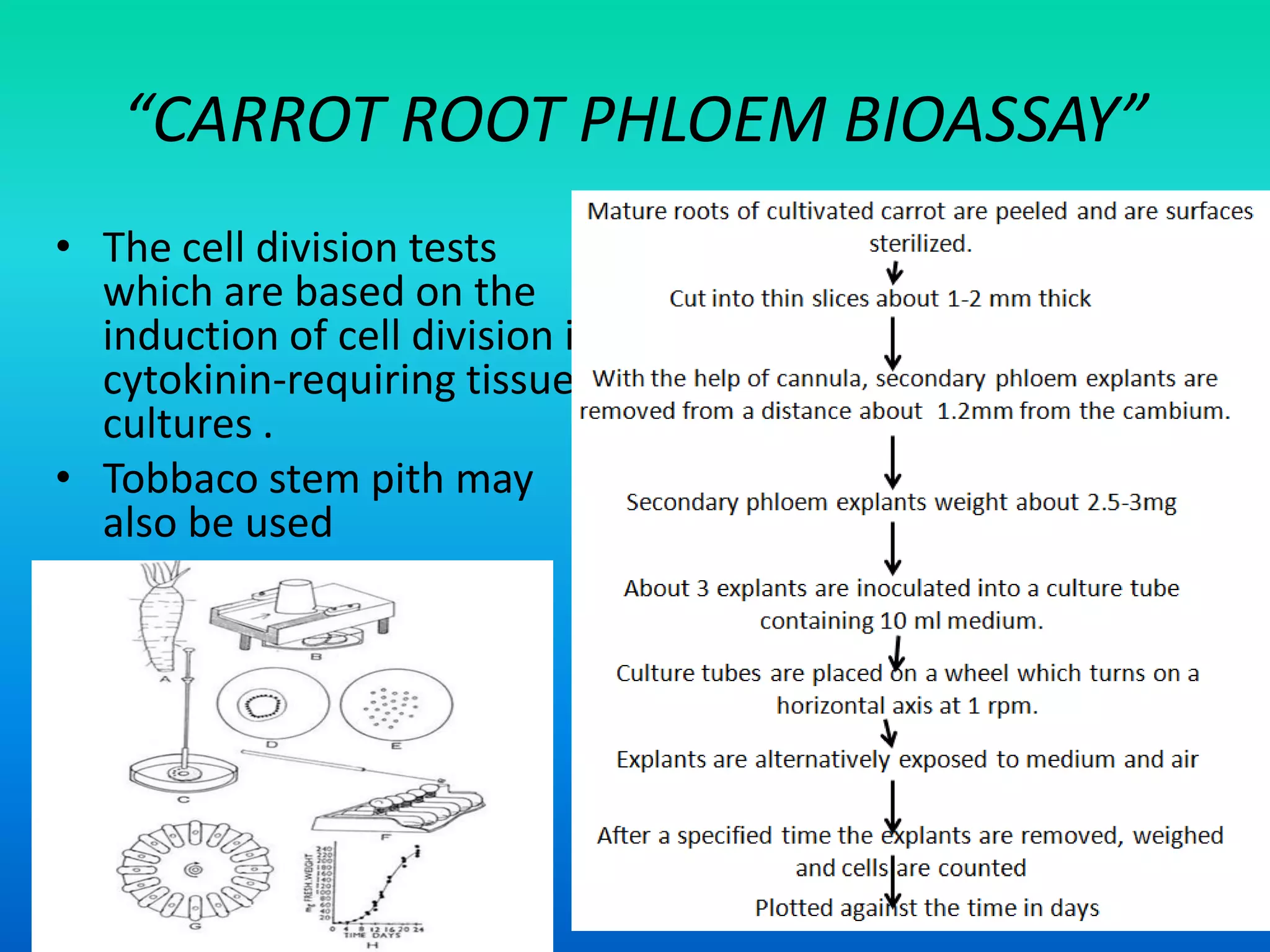
“CARROT ROOT PHLOEM BIOASSAY”
• The cell division tests
which are based on the
induction of cell division in
cytokinin-requiring tissue
cultures .
• Tobbaco stem pith may
also be used
“CHLOROPHYLL RETENTION TEST”
• Principle: The
senescence delaying
effect of cytokinin is
expressed as
chlorophyll retention
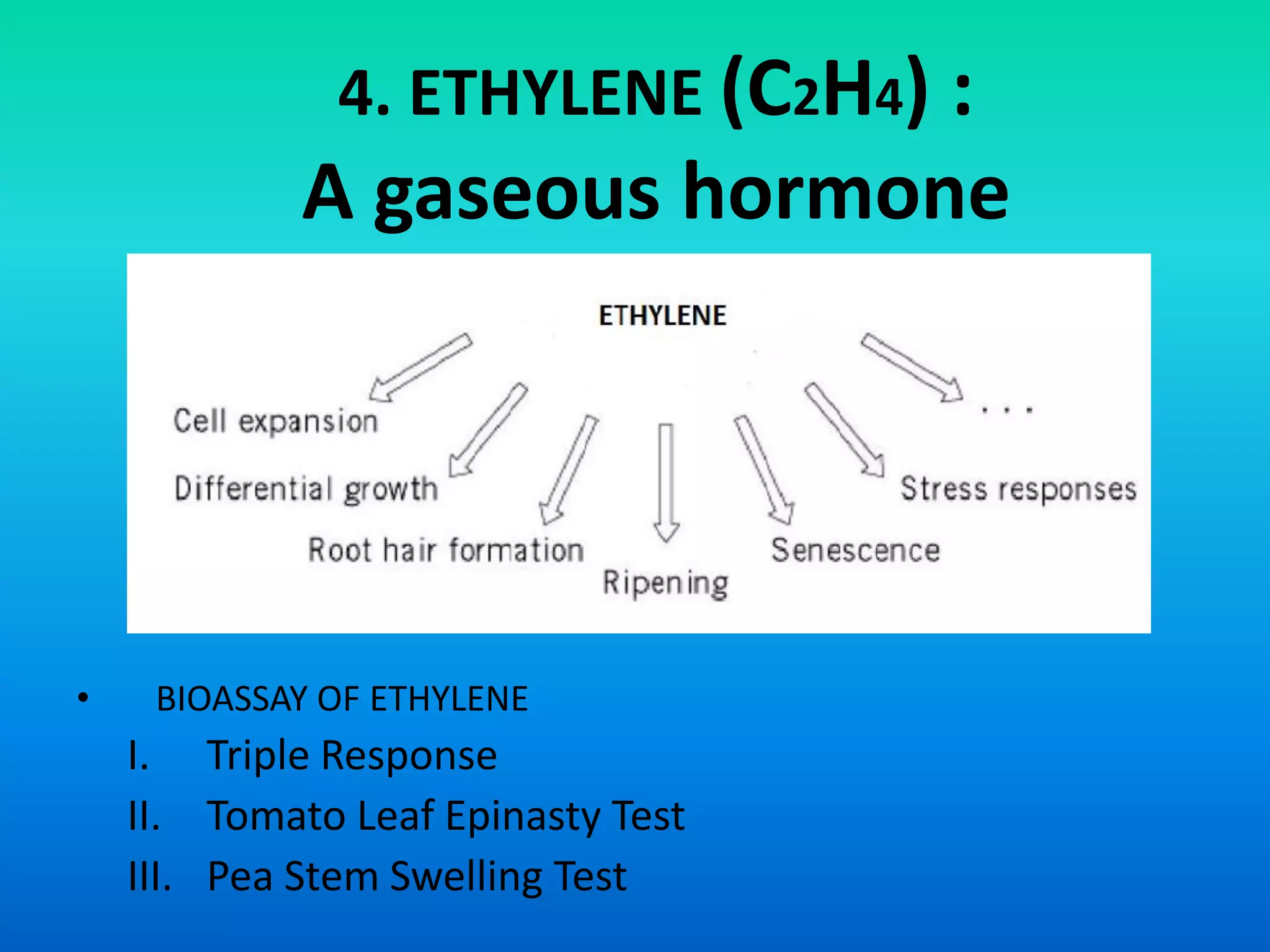
4. ETHYLENE (C2H4) :
A gaseous hormone
• BIOASSAY OF ETHYLENE
I. Triple Response
II. Tomato Leaf Epinasty Test
III. Pea Stem Swelling Test
“TRIPLE RESPONSE” ASSAY
• Pratt and Biale (1944) developed this method for
bioassay of ethylene
• Principle: it is based on the physiological effect of
ethylene to cause
– Subapical thickening of stem.
– Reduction in the rate of elongation.
– Horizontal nutation (transverse geotropism) of stem in
etiolated seedlings.
“TRIPLE RESPONSE” ASSAY
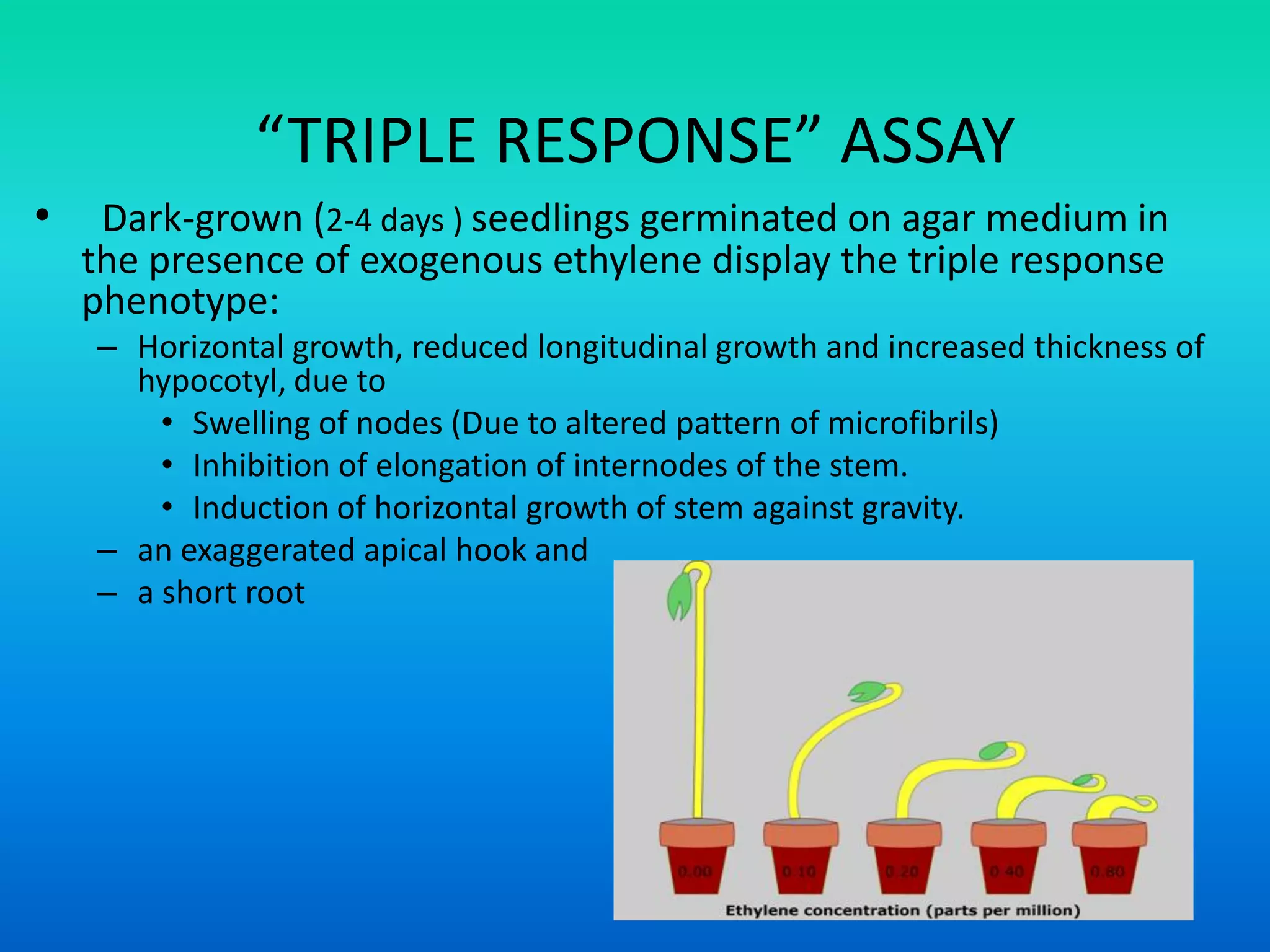
• Dark-grown (2-4 days ) seedlings germinated on agar medium in
the presence of exogenous ethylene display the triple response
phenotype:
– Horizontal growth, reduced longitudinal growth and increased thickness of
hypocotyl, due to
• Swelling of nodes (Due to altered pattern of microfibrils)
• Inhibition of elongation of internodes of the stem.
• Induction of horizontal growth of stem against gravity.
– an exaggerated apical hook and
– a short root
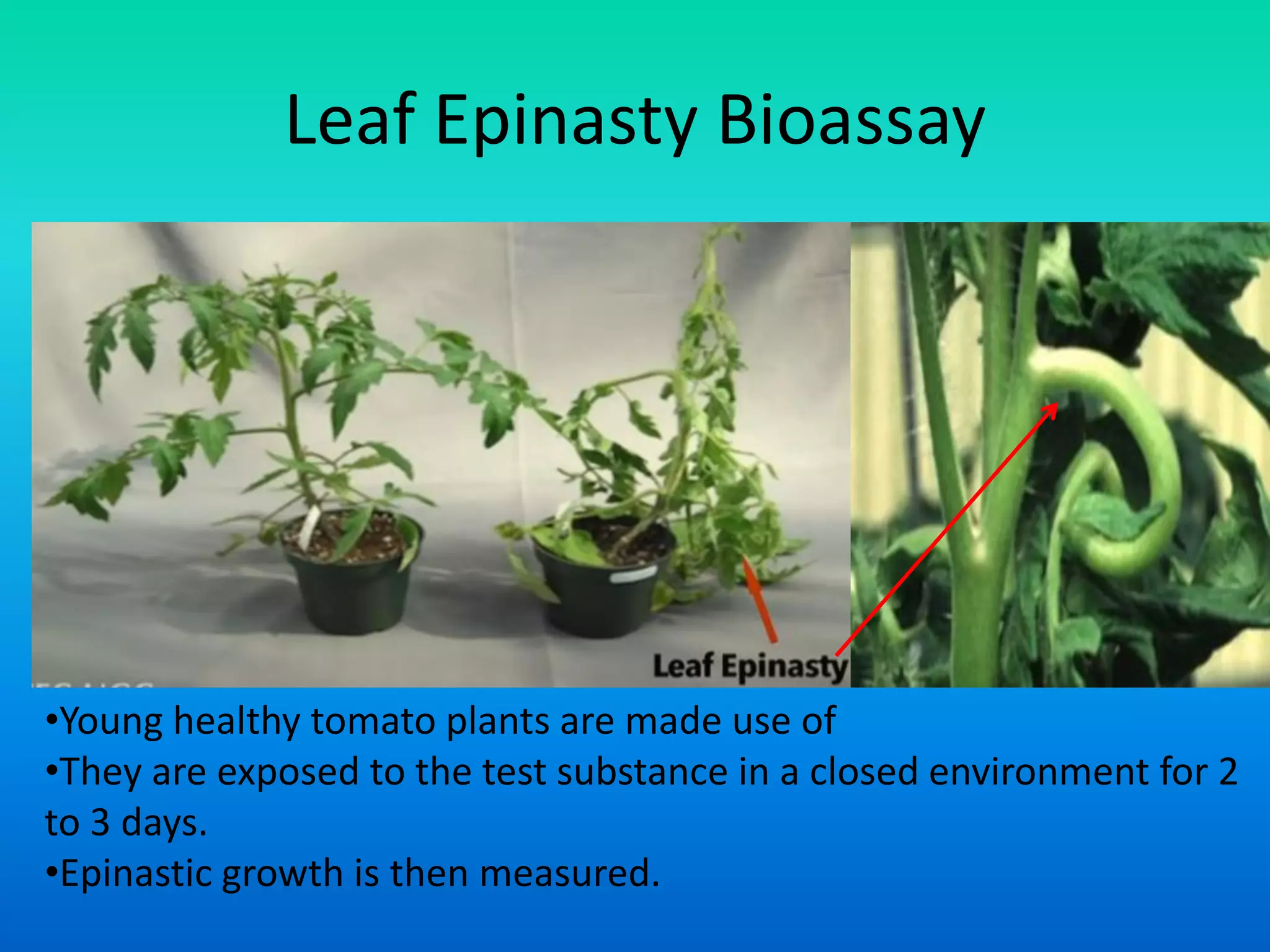
“Epinastic Response Of Tomato Petioles”
• Epinasty is observed as a response to the
flooding of roots of plants (Stress condition).
• Leaf epinasty is the downward bending of
leaves as a result of disturbance in their
growth. More growth on adaxial surface as
compared to that at abaxial surface.
Leaf Epinasty Bioassay
•Young healthy tomato plants are made use of
•They are exposed to the test substance in a closed environment for 2
to 3 days.
•Epinastic growth is then measured.
“PEA STEM SWELLING TEST”
• Cherry (1973) used pea seedlings to measure
ethylene concentration by marked increase of
stem swelling expressed as a ratio of weight to
length.
• In one ppm of ethylene the ratio is about 4.0.
5. ABSCISIC ACID
• Abscisic acid (ABA) is a stress hormone and helps a
plant adapt to stress by regulating the stomatal
movements, bud development and seed dormancy.
• It exhibits antagonistic effect. ABA can decrease,
overcome, reverse, counteract and inhibit the
responses of various growth-promoting hormones,
particularly Gibberellins
• BIOASSAY OF ABA:
I. Inhibition of Cucumber hypocotyl elongation
II. Rice Seedling Growth Inhibition Test
III. Inhibition of α-amylase Synthesis in Barley Endosperm Test
IV. Stomatal closure of mung bean hypocotyls
V. Acceleration of abscission in petiole explants
“INHIBITION OF CUCUMBER HYPOCOTYL
ELONGATION TEST” (Lin et al., 1988)
The test is based on studying or measuring the
inhibition of elongation of cucumber
hypocotyls.
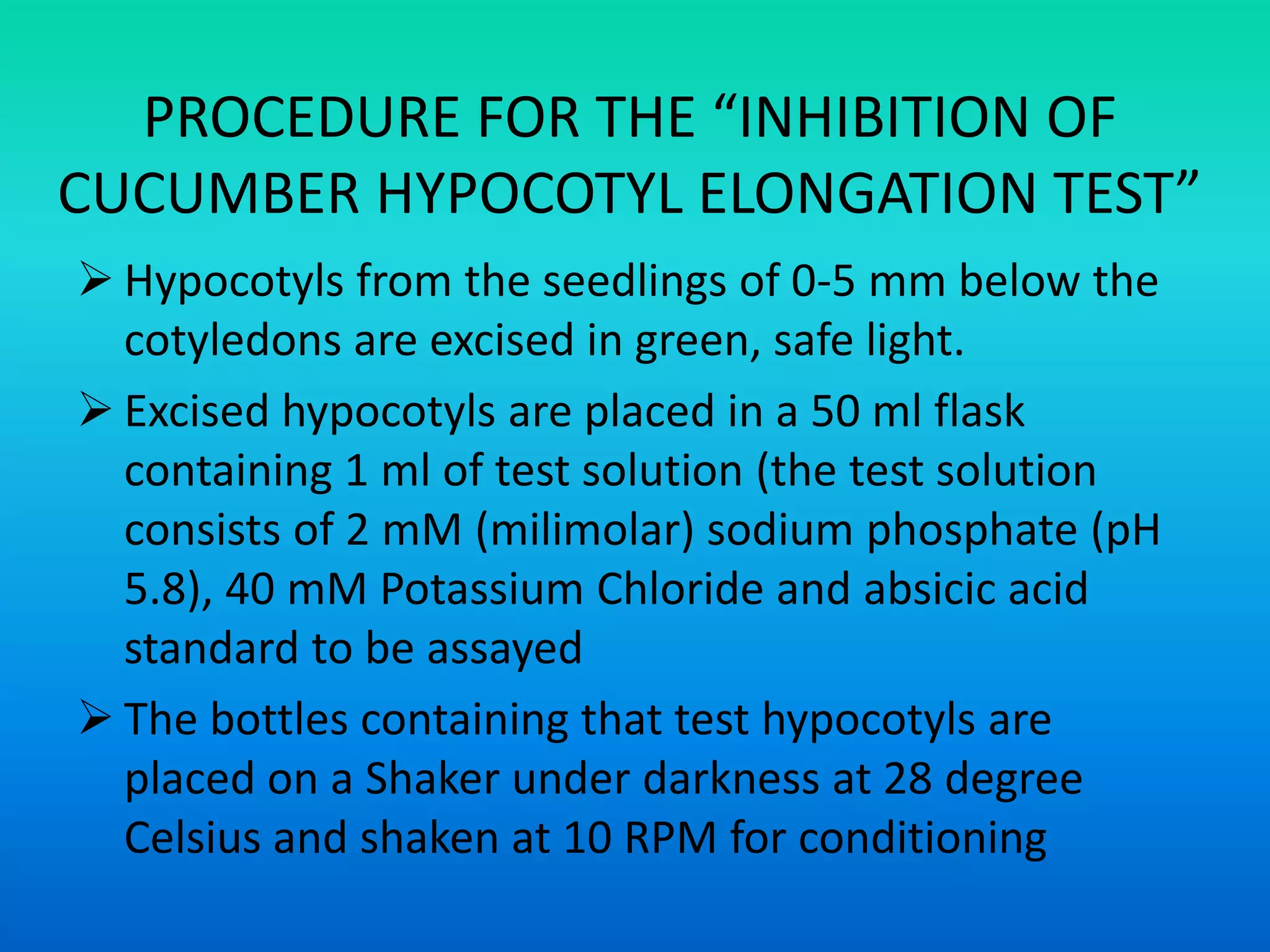
PROCEDURE FOR THE “INHIBITION OF
CUCUMBER HYPOCOTYL ELONGATION TEST”
 Hypocotyls from the seedlings of 0-5 mm below the
cotyledons are excised in green, safe light.
 Excised hypocotyls are placed in a 50 ml flask
containing 1 ml of test solution (the test solution
consists of 2 mM (milimolar) sodium phosphate (pH
5.8), 40 mM Potassium Chloride and absicic acid
standard to be assayed
 The bottles containing that test hypocotyls are
placed on a Shaker under darkness at 28 degree
Celsius and shaken at 10 RPM for conditioning
PROCEDURE FOR THE “INHIBITION OF
CUCUMBER HYPOCOTYL ELONGATION TEST”
(Contd.)
After 20 hours of incubation the samples are
exposed to continuous rotation on a roller
wheel up set at 1 RPM
The length of hypocotyl is measured on a
dissecting microscope using a micrometre
after 24 hours of exposure to light.
Under these conditions the inhibition of
hypocotyl elongation is proportional to the
concentration of the basic acid applied
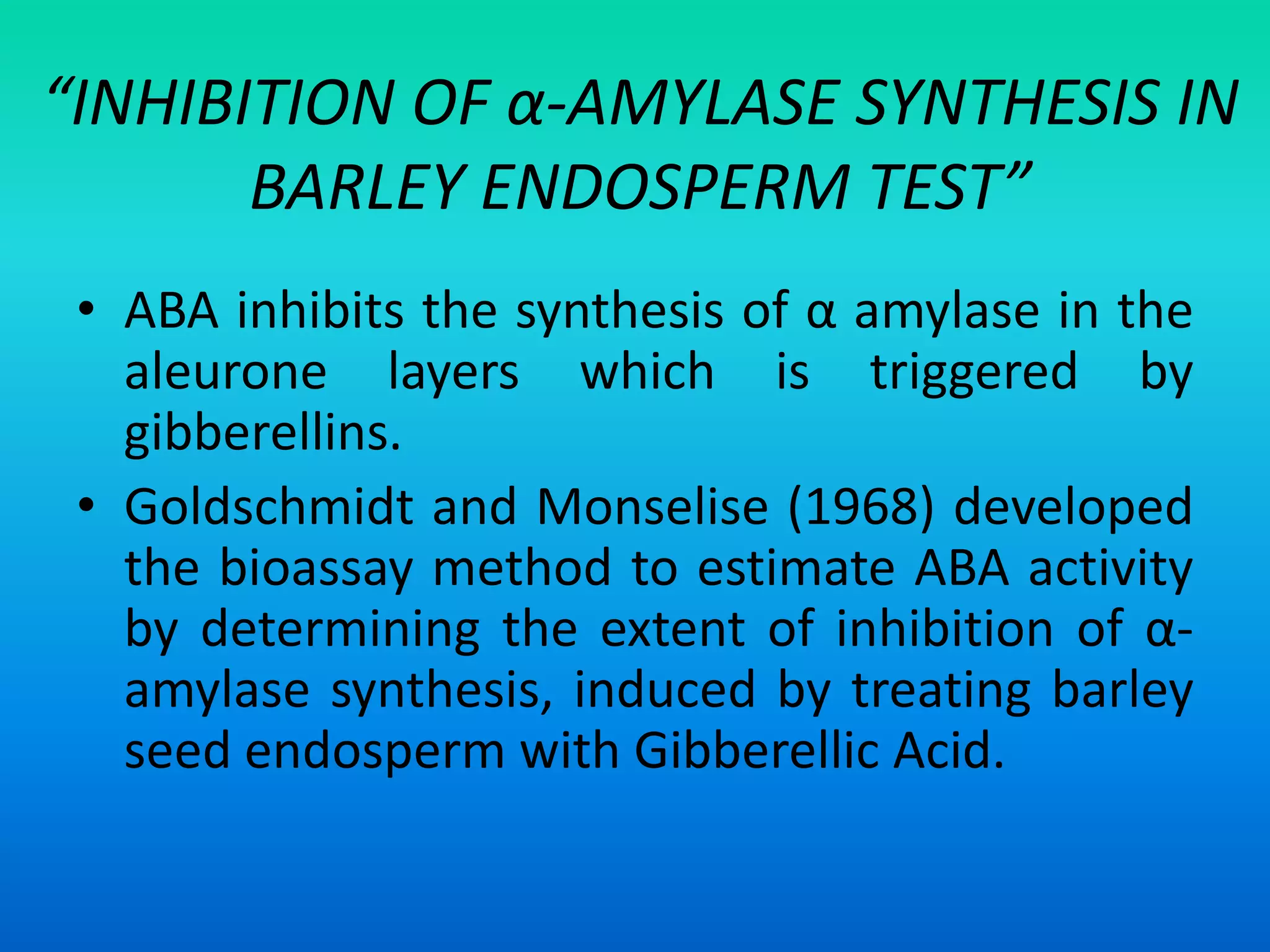
“INHIBITION OF α-AMYLASE SYNTHESIS IN
BARLEY ENDOSPERM TEST”
• ABA inhibits the synthesis of α amylase in the
aleurone layers which is triggered by
gibberellins.
• Goldschmidt and Monselise (1968) developed
the bioassay method to estimate ABA activity
by determining the extent of inhibition of α-
amylase synthesis, induced by treating barley
seed endosperm with Gibberellic Acid.
“RICE SEEDLING GROWTH INHIBITION
TEST”
• Mohanty, Anjaneyulu and Sridhar (1979)
used rice growth inhibition method to
measure ABA like activity.
• The length of second leaf sheath after six
days growth is measured.
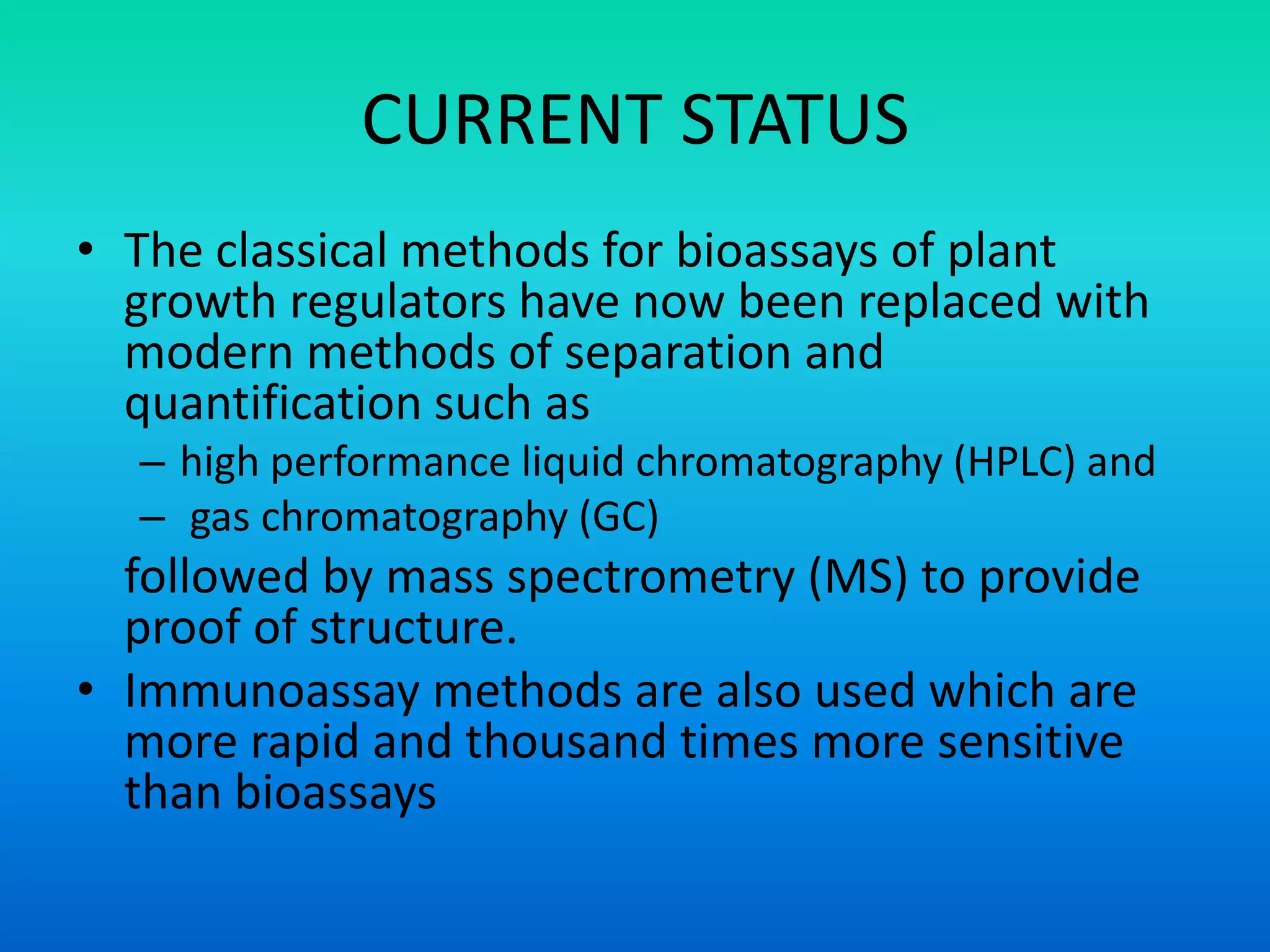
CURRENT STATUS
• The classical methods for bioassays of plant
growth regulators have now been replaced with
modern methods of separation and
quantification such as
– high performance liquid chromatography (HPLC) and
– gas chromatography (GC)
followed by mass spectrometry (MS) to provide
proof of structure.
• Immunoassay methods are also used which are
more rapid and thousand times more sensitive
than bioassays
REFERENCES:
• Plant Growth Substances : Principles and
Applications. By Arteca
• Fundamentals of Plant Physiology By V.K.Jain
• Growth and Development By Lalit Srivastava

Bioassay for plant growth regulators

  • 1.
    DR. VIBHA KHANNA Asso.Prof. (Botany) SPC GOVERNMENT COLLEGE AJMER (Rajasthan)
  • 2.
    PLANT PHYSIOLOGY PLANT GROWTHREGULATORS PRESENTATION : BIOASSAYS FOR: AUXINS GIBBERELLINS CYTOKININS ETHYLENE ABCISSIC ACID
  • 3.
    PLANT GROWTH REGULATORS [“Inthe early 1900 s F. W. Went made the profound statement :-without growth substances, no growth.”] • CHARACTERISTICS 1. Organic Molecules 2. Required in Very Less Quantity 3. Regulate Various Metabolic Processes 4. Generally Translocated From Site Of Synthesis To Site Of Action (Except Ethylene)
  • 4.
    MAJOR GROUPS OFPLANT GROWTH REGULATORS PLANT GROWTH REGULATORS PLANT GROWTH PROMOTERS AUXINS GIBBERELLINS CYTOKININS PLANT GROWTH INHIBITORS ABCISSIC ACID ETHYLENE* *Ethylene can be grouped either into the promoters or into the plant inhibitors.
  • 5.
    CONCEPT OF BIOASSAY •Biological assays are methods for the estimation of nature, constitution or potency of a material by means of the reaction that follows its application to living matter • An assay is a form of biological experiment. The response generated by the test solution is compared with that of the standard sample. • Bioassay is assessment of biological substance. It is essential in development of new drugs and plant growth regulators and in monitoring environmental pollutants • A typical bioassay involves applying a stimulus to a subject. Application of stimulus is followed by change in some measurable characteristic of the subject. The magnitude of the change depends upon the dose. • The intensity of stimulus is varied by using the various doses by the analyst
  • 6.
    BIO ASSAY/ BIOLOGICALASSAY • DEFINITION – Bio assay is defined as the estimation or determination of concentration or potency of physical chemical or biological agents by means of measuring and comparing the magnitude of response of the test with that of standard, over a suitable biological system under standard set of conditions. – Bioassay/Biological assay are extremely sensitive and specific test that can determine the biological activity of a particular hormone by showing its measurable/detectable effect on a specific part of plant material.
  • 7.
    1.AUXIN • Auxin isa plant phytohormone involved in practically every dimension of plant development, including responses to light and gravity, organ patterning, vascular development and regulating intrinsic growth and environmental responses in both shoot and root architecture. • BIOASSAY: I. Avena Coleoptile Curvature Test II. Split Pea Stem Curvature Test III. Avena Coleoptile Section Test IV. Cross Root Inhibition Test
  • 8.
    “AVENA COLEOPTILE CURVATURETEST” • Principle: • This test is based on the polar transport of the auxin in Avena coleoptile. • The auxin applied on one side of the cut coleoptile stump will diffuse down that side only and will cause that side to grow more resulting in curvature of the coleoptiles. • Within limits this curvature is directly proportional to the amount of auxin applied
  • 9.
  • 10.
    “SPLIT PEA STEMCURVATURE TEST” • Principle: This test is based on the differential growth response of the epidermal cells and the cortical cells of the stem sections, to Auxins. • The curvature occurs mainly due to more growth of epidermal cells as compared to the cortical cells.
  • 11.
    “SPLIT PEA STEMCURVATURE TEST”
  • 12.
    2. GIBBERELLINS • Thegibberellins (GAs) which is a large family of tetracyclic diterpinoid plant growth substances, are associated with various growth and development processes such as – seed germination, – stem and hypocotyls elongation, – leaf expansion, – floral initiation, – floral organ development, – fruit development, and – induction of some hydrolytic enzymes in the aleurone of cereal grains • BIOASSAY I. Barley endosperm bioassay II. Dwarf pea bioassay III. Lettuce hypocotyl IV. Dwarf corn
  • 13.
    “BARLEY ENDOSPERM BIOASSAY” •PRINCIPLE: Based on the fact that during germination of grains such as barley, wheat and oats, gibberellin is released from the embryo which moves to the aleurone cells where it induces synthesis of the enzyme α-amylase This enzyme hydrolyses starch into simple reducing sugars.
  • 14.
  • 15.
    “DWARF CORN TEST” PRINCIPLE:This bioassay is based on the fact that gibberellins cause elongation of the internodes, and in case of corn they also increase the length of the leaf sheaths which enclose the internodes. PROCEDURE:
  • 16.
    3. CYTOKININ • Cytokininsare a class of purine-type phytohormones that promote – cell division, – shoot and root morphogenesis, – chloroplast maturation, – cell enlargement, – axillary bud release, and – senescence. • Bioassay for Cytokinin I. Carrot root phloem bioassay II. Chlorophyll retention test III. Tobacco pith culture IV. Cell enlargement test V. Differentiation test
  • 17.
    “CARROT ROOT PHLOEMBIOASSAY” • The cell division tests which are based on the induction of cell division in cytokinin-requiring tissue cultures . • Tobbaco stem pith may also be used
  • 18.
    “CHLOROPHYLL RETENTION TEST” •Principle: The senescence delaying effect of cytokinin is expressed as chlorophyll retention
  • 19.
    4. ETHYLENE (C2H4): A gaseous hormone • BIOASSAY OF ETHYLENE I. Triple Response II. Tomato Leaf Epinasty Test III. Pea Stem Swelling Test
  • 20.
    “TRIPLE RESPONSE” ASSAY •Pratt and Biale (1944) developed this method for bioassay of ethylene • Principle: it is based on the physiological effect of ethylene to cause – Subapical thickening of stem. – Reduction in the rate of elongation. – Horizontal nutation (transverse geotropism) of stem in etiolated seedlings.
  • 21.
    “TRIPLE RESPONSE” ASSAY •Dark-grown (2-4 days ) seedlings germinated on agar medium in the presence of exogenous ethylene display the triple response phenotype: – Horizontal growth, reduced longitudinal growth and increased thickness of hypocotyl, due to • Swelling of nodes (Due to altered pattern of microfibrils) • Inhibition of elongation of internodes of the stem. • Induction of horizontal growth of stem against gravity. – an exaggerated apical hook and – a short root
  • 22.
    “Epinastic Response OfTomato Petioles” • Epinasty is observed as a response to the flooding of roots of plants (Stress condition). • Leaf epinasty is the downward bending of leaves as a result of disturbance in their growth. More growth on adaxial surface as compared to that at abaxial surface.
  • 23.
    Leaf Epinasty Bioassay •Younghealthy tomato plants are made use of •They are exposed to the test substance in a closed environment for 2 to 3 days. •Epinastic growth is then measured.
  • 24.
    “PEA STEM SWELLINGTEST” • Cherry (1973) used pea seedlings to measure ethylene concentration by marked increase of stem swelling expressed as a ratio of weight to length. • In one ppm of ethylene the ratio is about 4.0.
  • 25.
    5. ABSCISIC ACID •Abscisic acid (ABA) is a stress hormone and helps a plant adapt to stress by regulating the stomatal movements, bud development and seed dormancy. • It exhibits antagonistic effect. ABA can decrease, overcome, reverse, counteract and inhibit the responses of various growth-promoting hormones, particularly Gibberellins • BIOASSAY OF ABA: I. Inhibition of Cucumber hypocotyl elongation II. Rice Seedling Growth Inhibition Test III. Inhibition of α-amylase Synthesis in Barley Endosperm Test IV. Stomatal closure of mung bean hypocotyls V. Acceleration of abscission in petiole explants
  • 26.
    “INHIBITION OF CUCUMBERHYPOCOTYL ELONGATION TEST” (Lin et al., 1988) The test is based on studying or measuring the inhibition of elongation of cucumber hypocotyls.
  • 27.
    PROCEDURE FOR THE“INHIBITION OF CUCUMBER HYPOCOTYL ELONGATION TEST”  Hypocotyls from the seedlings of 0-5 mm below the cotyledons are excised in green, safe light.  Excised hypocotyls are placed in a 50 ml flask containing 1 ml of test solution (the test solution consists of 2 mM (milimolar) sodium phosphate (pH 5.8), 40 mM Potassium Chloride and absicic acid standard to be assayed  The bottles containing that test hypocotyls are placed on a Shaker under darkness at 28 degree Celsius and shaken at 10 RPM for conditioning
  • 28.
    PROCEDURE FOR THE“INHIBITION OF CUCUMBER HYPOCOTYL ELONGATION TEST” (Contd.) After 20 hours of incubation the samples are exposed to continuous rotation on a roller wheel up set at 1 RPM The length of hypocotyl is measured on a dissecting microscope using a micrometre after 24 hours of exposure to light. Under these conditions the inhibition of hypocotyl elongation is proportional to the concentration of the basic acid applied
  • 29.
    “INHIBITION OF α-AMYLASESYNTHESIS IN BARLEY ENDOSPERM TEST” • ABA inhibits the synthesis of α amylase in the aleurone layers which is triggered by gibberellins. • Goldschmidt and Monselise (1968) developed the bioassay method to estimate ABA activity by determining the extent of inhibition of α- amylase synthesis, induced by treating barley seed endosperm with Gibberellic Acid.
  • 30.
    “RICE SEEDLING GROWTHINHIBITION TEST” • Mohanty, Anjaneyulu and Sridhar (1979) used rice growth inhibition method to measure ABA like activity. • The length of second leaf sheath after six days growth is measured.
  • 31.
    CURRENT STATUS • Theclassical methods for bioassays of plant growth regulators have now been replaced with modern methods of separation and quantification such as – high performance liquid chromatography (HPLC) and – gas chromatography (GC) followed by mass spectrometry (MS) to provide proof of structure. • Immunoassay methods are also used which are more rapid and thousand times more sensitive than bioassays
  • 32.
    REFERENCES: • Plant GrowthSubstances : Principles and Applications. By Arteca • Fundamentals of Plant Physiology By V.K.Jain • Growth and Development By Lalit Srivastava