DR. VIBHA KHANNA
Asso. Prof. (Botany)
SPC GOVERNMENT COLLEGE
AJMER (Rajasthan)
PLANT BIOCHEMISTRY
• BLOCK 3. : Nitrogen Metabolism
– PRESENTATION 5:
Ammonium Assimilation
{Ammonium assimilation is defined as the
incorporation of ammonium ions into organic
compounds}
Nitrogen Assimilation in Plants
• N assimilation is energetically expensive: 2 to
15% of plant’s energy production
• Most plants can assimilate either nitrate or
ammonia
• NH4
+ formed as a result of nitrate reduction or
N2 fixation is first incorporated into amino
acids
• In the case of ammonium as N‐source, an
immediate incorporation into amino acids
occurs in the root, and no significant amounts
of ammonium have ever been discovered in
the xylem sap.
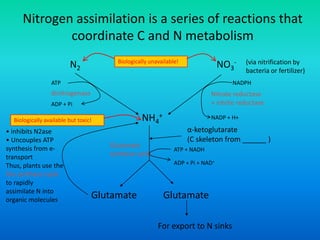
Nitrogen assimilation is a series of reactions that
coordinate C and N metabolism
N2 NO3
-Biologically unavailable! (via nitrification by
bacteria or fertilizer)
NH4
+
Biologically available but toxic!
ATP
ADP + Pi
NADPH
NADP + H+
dinitrogenase Nitrate reductase
+ nitrite reductase
Glutamate
α-ketoglutarate
(C skeleton from ______ )
Glutamate
Glutamate
synthase cycle
For export to N sinks
ATP + NADH
ADP + Pi + NAD+
• inhibits N2ase
• Uncouples ATP
synthesis from e-
transport
Thus, plants use the
Glu synthase cycle
to rapidly
assimilate N into
organic molecules
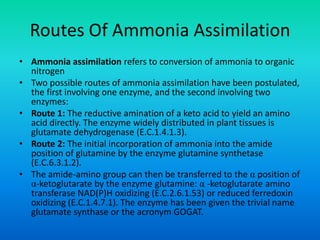
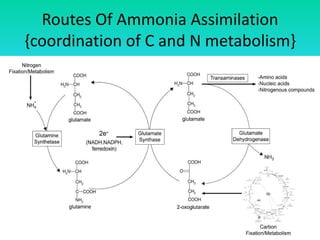
Routes Of Ammonia Assimilation
• Ammonia assimilation refers to conversion of ammonia to organic
nitrogen
• Two possible routes of ammonia assimilation have been postulated,
the first involving one enzyme, and the second involving two
enzymes:
• Route 1: The reductive amination of a keto acid to yield an amino
acid directly. The enzyme widely distributed in plant tissues is
glutamate dehydrogenase (E.C.1.4.1.3).
• Route 2: The initial incorporation of ammonia into the amide
position of glutamine by the enzyme glutamine synthetase
(E.C.6.3.1.2).
• The amide-amino group can then be transferred to the α position of
α-ketoglutarate by the enzyme glutamine: α -ketoglutarate amino
transferase NAD(P)H oxidizing (E.C.2.6.1.53) or reduced ferredoxin
oxidizing (E.C.1.4.7.1). The enzyme has been given the trivial name
glutamate synthase or the acronym GOGAT.
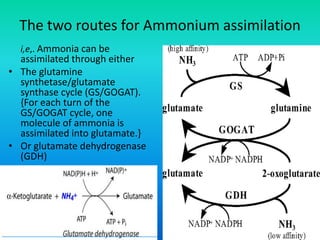
The two routes for Ammonium assimilation
i,e,. Ammonia can be
assimilated through either
• The glutamine
synthetase/glutamate
synthase cycle (GS/GOGAT).
{For each turn of the
GS/GOGAT cycle, one
molecule of ammonia is
assimilated into glutamate.}
• Or glutamate dehydrogenase
(GDH)
Routes Of Ammonia Assimilation
{coordination of C and N metabolism}
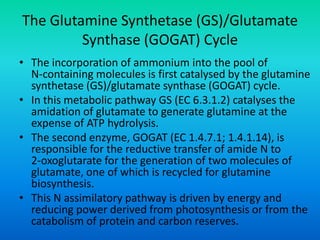
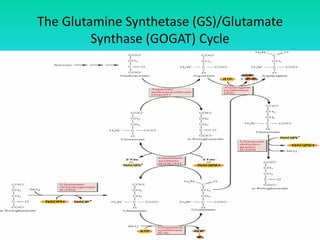
The Glutamine Synthetase (GS)/Glutamate
Synthase (GOGAT) Cycle
• The incorporation of ammonium into the pool of
N‐containing molecules is first catalysed by the glutamine
synthetase (GS)/glutamate synthase (GOGAT) cycle.
• In this metabolic pathway GS (EC 6.3.1.2) catalyses the
amidation of glutamate to generate glutamine at the
expense of ATP hydrolysis.
• The second enzyme, GOGAT (EC 1.4.7.1; 1.4.1.14), is
responsible for the reductive transfer of amide N to
2‐oxoglutarate for the generation of two molecules of
glutamate, one of which is recycled for glutamine
biosynthesis.
• This N assimilatory pathway is driven by energy and
reducing power derived from photosynthesis or from the
catabolism of protein and carbon reserves.
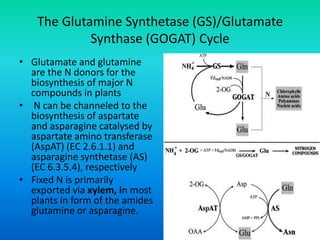
The Glutamine Synthetase (GS)/Glutamate
Synthase (GOGAT) Cycle
• Glutamate and glutamine
are the N donors for the
biosynthesis of major N
compounds in plants
• N can be channeled to the
biosynthesis of aspartate
and asparagine catalysed by
aspartate amino transferase
(AspAT) (EC 2.6.1.1) and
asparagine synthetase (AS)
(EC 6.3.5.4), respectively
• Fixed N is primarily
exported via xylem, in most
plants in form of the amides
glutamine or asparagine.
The Glutamine Synthetase (GS)/Glutamate
Synthase (GOGAT) Cycle
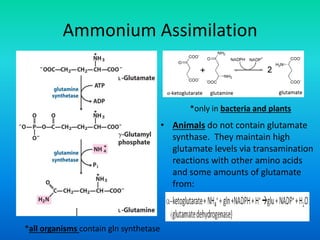
Ammonium Assimilation
*all organisms contain gln synthetase
*only in bacteria and plants
• Animals do not contain glutamate
synthase. They maintain high
glutamate levels via transamination
reactions with other amino acids
and some amounts of glutamate
from:
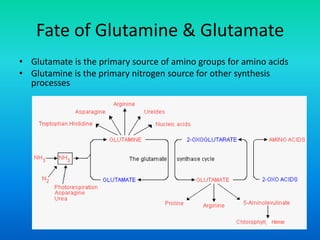
Fate of Glutamine & Glutamate
• Glutamate is the primary source of amino groups for amino acids
• Glutamine is the primary nitrogen source for other synthesis
processes
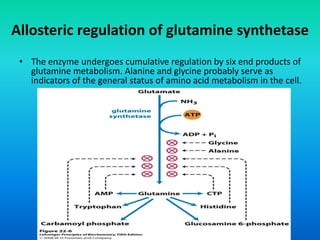
Allosteric regulation of glutamine synthetase
• The enzyme undergoes cumulative regulation by six end products of
glutamine metabolism. Alanine and glycine probably serve as
indicators of the general status of amino acid metabolism in the cell.
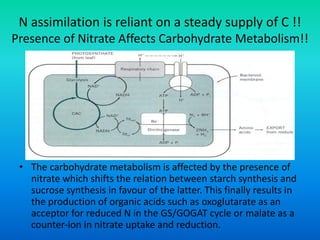
N assimilation is reliant on a steady supply of C !!
Presence of Nitrate Affects Carbohydrate Metabolism!!
• The carbohydrate metabolism is affected by the presence of
nitrate which shifts the relation between starch synthesis and
sucrose synthesis in favour of the latter. This finally results in
the production of organic acids such as oxoglutarate as an
acceptor for reduced N in the GS/GOGAT cycle or malate as a
counter‐ion in nitrate uptake and reduction.

Ammonium assimilation

  • 1.
    DR. VIBHA KHANNA Asso.Prof. (Botany) SPC GOVERNMENT COLLEGE AJMER (Rajasthan)
  • 2.
    PLANT BIOCHEMISTRY • BLOCK3. : Nitrogen Metabolism – PRESENTATION 5: Ammonium Assimilation {Ammonium assimilation is defined as the incorporation of ammonium ions into organic compounds}
  • 3.
    Nitrogen Assimilation inPlants • N assimilation is energetically expensive: 2 to 15% of plant’s energy production • Most plants can assimilate either nitrate or ammonia • NH4 + formed as a result of nitrate reduction or N2 fixation is first incorporated into amino acids • In the case of ammonium as N‐source, an immediate incorporation into amino acids occurs in the root, and no significant amounts of ammonium have ever been discovered in the xylem sap.
  • 4.
    Nitrogen assimilation isa series of reactions that coordinate C and N metabolism N2 NO3 -Biologically unavailable! (via nitrification by bacteria or fertilizer) NH4 + Biologically available but toxic! ATP ADP + Pi NADPH NADP + H+ dinitrogenase Nitrate reductase + nitrite reductase Glutamate α-ketoglutarate (C skeleton from ______ ) Glutamate Glutamate synthase cycle For export to N sinks ATP + NADH ADP + Pi + NAD+ • inhibits N2ase • Uncouples ATP synthesis from e- transport Thus, plants use the Glu synthase cycle to rapidly assimilate N into organic molecules
  • 5.
    Routes Of AmmoniaAssimilation • Ammonia assimilation refers to conversion of ammonia to organic nitrogen • Two possible routes of ammonia assimilation have been postulated, the first involving one enzyme, and the second involving two enzymes: • Route 1: The reductive amination of a keto acid to yield an amino acid directly. The enzyme widely distributed in plant tissues is glutamate dehydrogenase (E.C.1.4.1.3). • Route 2: The initial incorporation of ammonia into the amide position of glutamine by the enzyme glutamine synthetase (E.C.6.3.1.2). • The amide-amino group can then be transferred to the α position of α-ketoglutarate by the enzyme glutamine: α -ketoglutarate amino transferase NAD(P)H oxidizing (E.C.2.6.1.53) or reduced ferredoxin oxidizing (E.C.1.4.7.1). The enzyme has been given the trivial name glutamate synthase or the acronym GOGAT.
  • 6.
    The two routesfor Ammonium assimilation i,e,. Ammonia can be assimilated through either • The glutamine synthetase/glutamate synthase cycle (GS/GOGAT). {For each turn of the GS/GOGAT cycle, one molecule of ammonia is assimilated into glutamate.} • Or glutamate dehydrogenase (GDH)
  • 7.
    Routes Of AmmoniaAssimilation {coordination of C and N metabolism}
  • 8.
    The Glutamine Synthetase(GS)/Glutamate Synthase (GOGAT) Cycle • The incorporation of ammonium into the pool of N‐containing molecules is first catalysed by the glutamine synthetase (GS)/glutamate synthase (GOGAT) cycle. • In this metabolic pathway GS (EC 6.3.1.2) catalyses the amidation of glutamate to generate glutamine at the expense of ATP hydrolysis. • The second enzyme, GOGAT (EC 1.4.7.1; 1.4.1.14), is responsible for the reductive transfer of amide N to 2‐oxoglutarate for the generation of two molecules of glutamate, one of which is recycled for glutamine biosynthesis. • This N assimilatory pathway is driven by energy and reducing power derived from photosynthesis or from the catabolism of protein and carbon reserves.
  • 9.
    The Glutamine Synthetase(GS)/Glutamate Synthase (GOGAT) Cycle • Glutamate and glutamine are the N donors for the biosynthesis of major N compounds in plants • N can be channeled to the biosynthesis of aspartate and asparagine catalysed by aspartate amino transferase (AspAT) (EC 2.6.1.1) and asparagine synthetase (AS) (EC 6.3.5.4), respectively • Fixed N is primarily exported via xylem, in most plants in form of the amides glutamine or asparagine.
  • 10.
    The Glutamine Synthetase(GS)/Glutamate Synthase (GOGAT) Cycle
  • 11.
    Ammonium Assimilation *all organismscontain gln synthetase *only in bacteria and plants • Animals do not contain glutamate synthase. They maintain high glutamate levels via transamination reactions with other amino acids and some amounts of glutamate from:
  • 12.
    Fate of Glutamine& Glutamate • Glutamate is the primary source of amino groups for amino acids • Glutamine is the primary nitrogen source for other synthesis processes
  • 13.
    Allosteric regulation ofglutamine synthetase • The enzyme undergoes cumulative regulation by six end products of glutamine metabolism. Alanine and glycine probably serve as indicators of the general status of amino acid metabolism in the cell.
  • 14.
    N assimilation isreliant on a steady supply of C !! Presence of Nitrate Affects Carbohydrate Metabolism!! • The carbohydrate metabolism is affected by the presence of nitrate which shifts the relation between starch synthesis and sucrose synthesis in favour of the latter. This finally results in the production of organic acids such as oxoglutarate as an acceptor for reduced N in the GS/GOGAT cycle or malate as a counter‐ion in nitrate uptake and reduction.