Submitted to:
Dr. Ajay Kumar Banyal
Submitted by:
Dheeraj Sharma
NH-2018-16-M
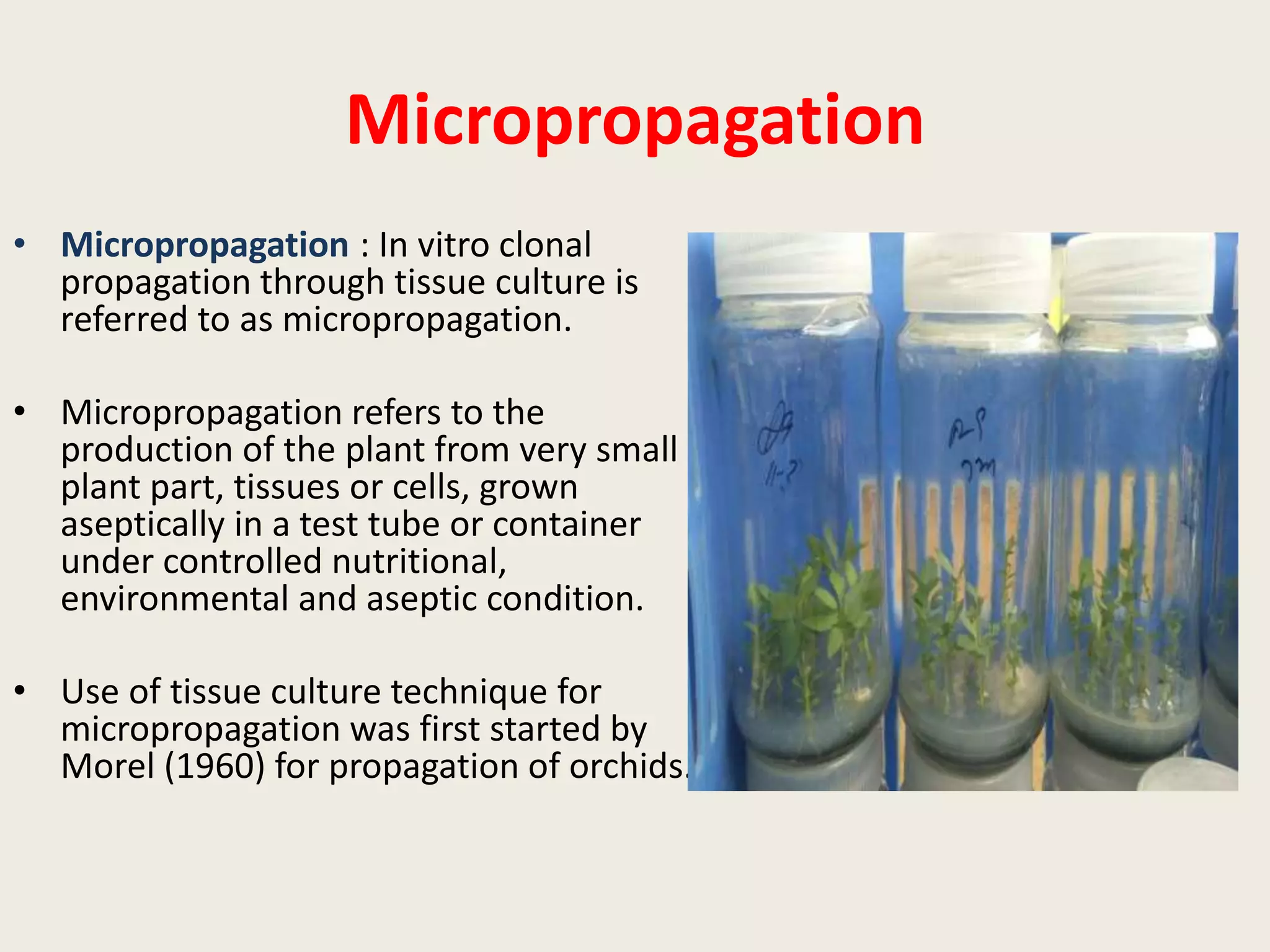
Micropropagation
• Micropropagation : In vitro clonal
propagation through tissue culture is
referred to as micropropagation.
• Micropropagation refers to the
production of the plant from very small
plant part, tissues or cells, grown
aseptically in a test tube or container
under controlled nutritional,
environmental and aseptic condition.
• Use of tissue culture technique for
micropropagation was first started by
Morel (1960) for propagation of orchids.
Term used in tissue culture:
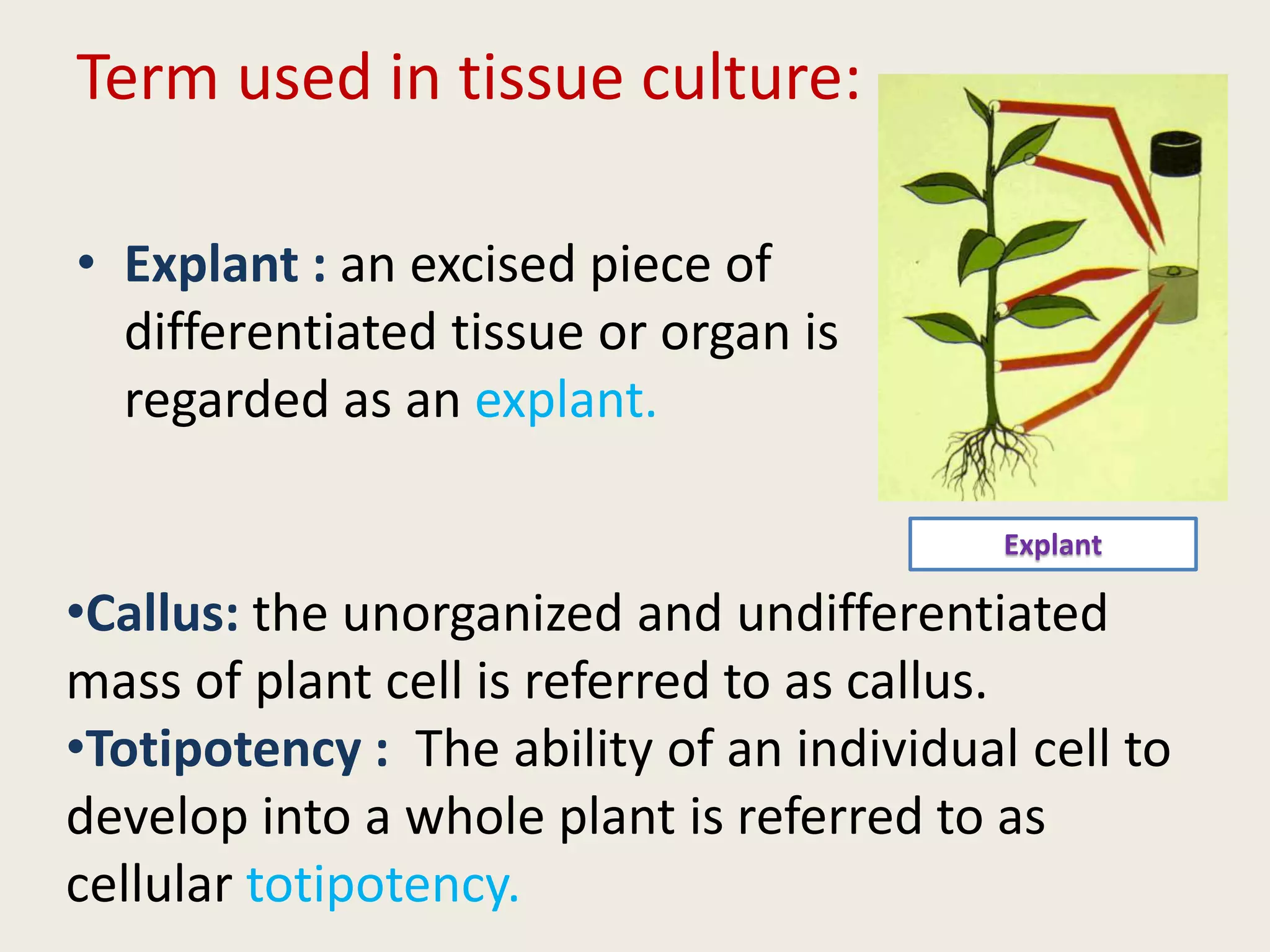
• Explant : an excised piece of
differentiated tissue or organ is
regarded as an explant.
•Callus: the unorganized and undifferentiated
mass of plant cell is referred to as callus.
•Totipotency : The ability of an individual cell to
develop into a whole plant is referred to as
cellular totipotency.
Explant
Principle of micropropagation:
• All the biological principles of
micropropagation technique are based on the
phenomenon or totipotency of cell, which
implies that a plant cell has a capacity to
generate into a full-fledged plant having
different organs.
 Micro propagation mostly involves in vitro clonal propagation by
following approaches:
1. Multiplication by axillary buds and apical shoots.
2. Multiplication by adventitious shoots
3. Organogenesis
4. Somatic emryogenesis
 Multiplication by axillary buds and apical shoots
For good result of micropropagation, explant should be taken from
the actively growing shoot tips, and the ideal time is at the end of
plant dormancy period.
The most widely used media for meristem culture are MS medium
and white’s medium.
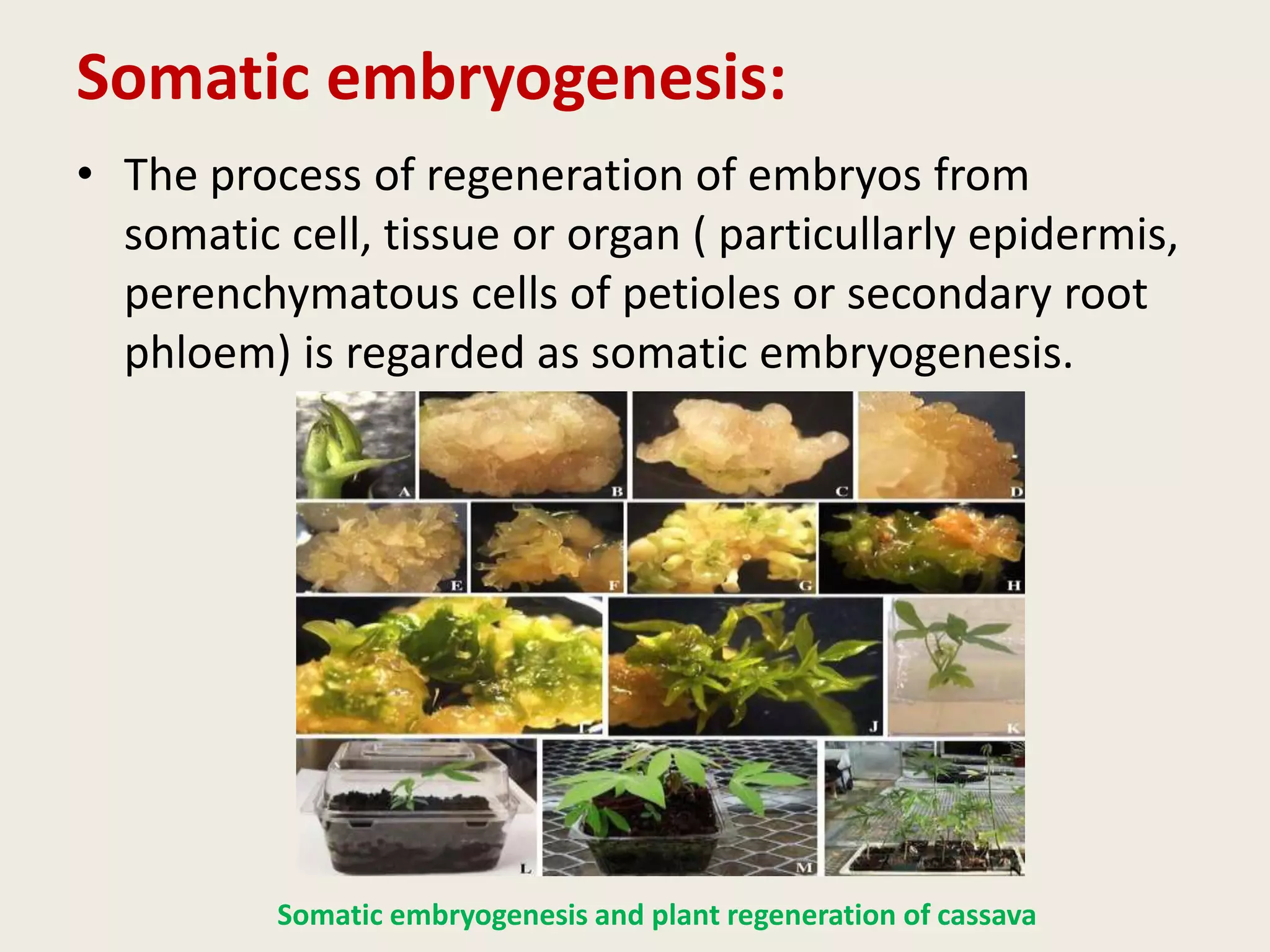
Somatic embryogenesis:
• The process of regeneration of embryos from
somatic cell, tissue or organ ( particullarly epidermis,
perenchymatous cells of petioles or secondary root
phloem) is regarded as somatic embryogenesis.
Somatic embryogenesis and plant regeneration of cassava
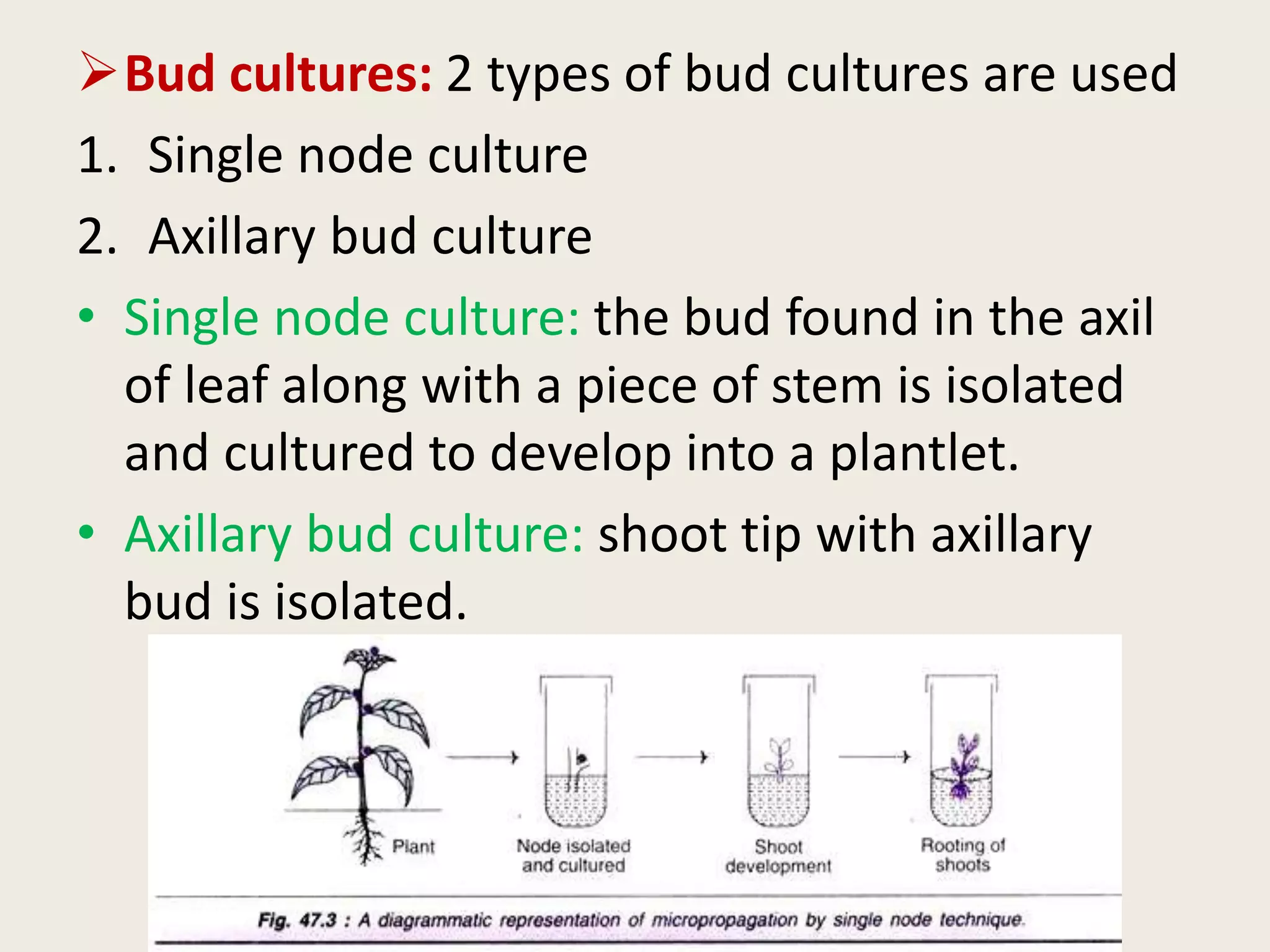
Bud cultures: 2 types of bud cultures are used
1. Single node culture
2. Axillary bud culture
• Single node culture: the bud found in the axil
of leaf along with a piece of stem is isolated
and cultured to develop into a plantlet.
• Axillary bud culture: shoot tip with axillary
bud is isolated.
 Multiplication by adventitious shoots:
• It involves stem, bulbs, tubers and rhizomes.
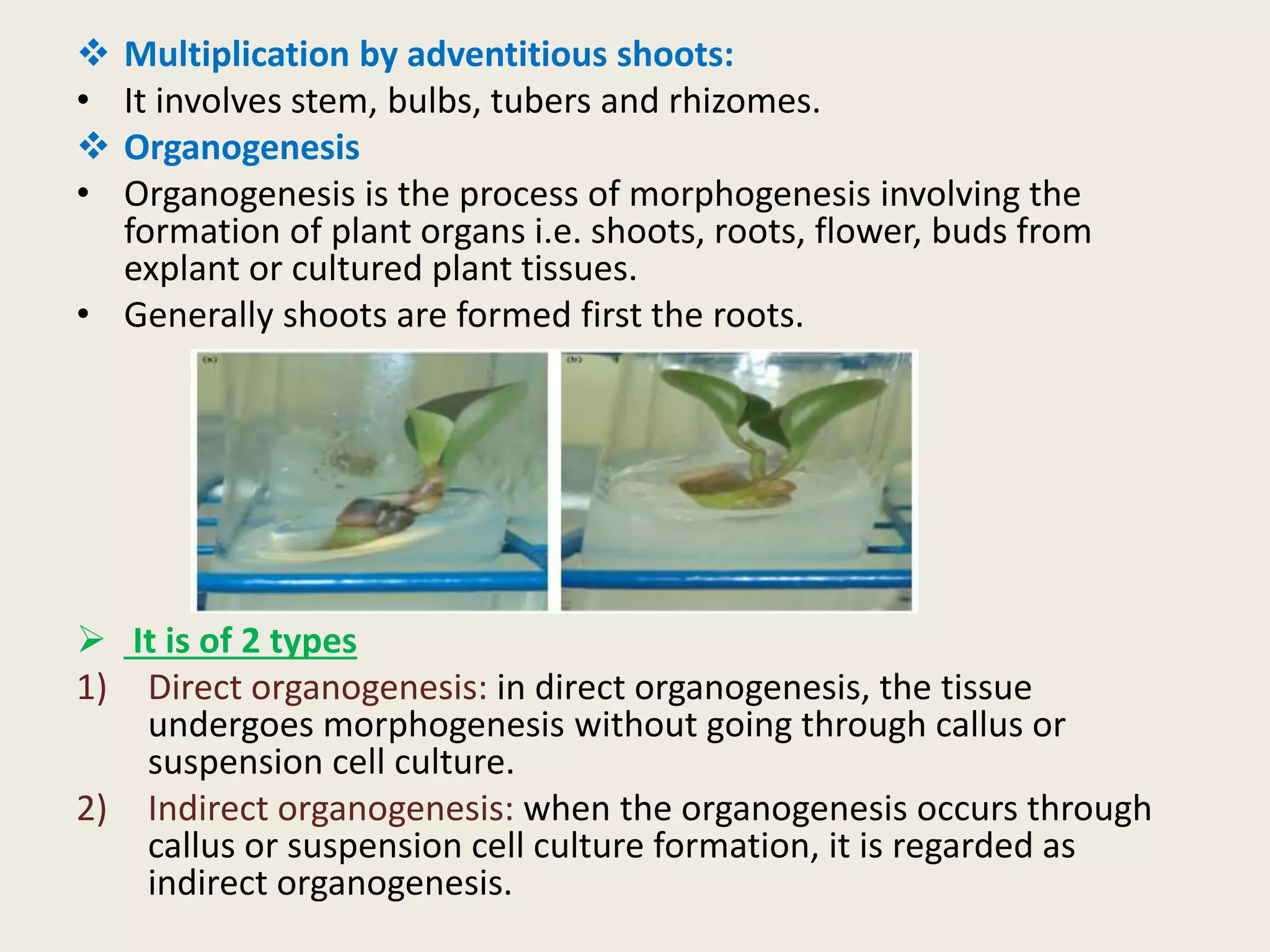
 Organogenesis
• Organogenesis is the process of morphogenesis involving the
formation of plant organs i.e. shoots, roots, flower, buds from
explant or cultured plant tissues.
• Generally shoots are formed first the roots.
 It is of 2 types
1) Direct organogenesis: in direct organogenesis, the tissue
undergoes morphogenesis without going through callus or
suspension cell culture.
2) Indirect organogenesis: when the organogenesis occurs through
callus or suspension cell culture formation, it is regarded as
indirect organogenesis.
1. direct somatic embryogenesis: embryo
develops from somatic cell without callus
formation.
2. indirect somatic embryogenesis: embryo
develops from somatic cell with the formation
of callus.
Application of micropropagation:
1. Rapid rate of multiplication of plant clonally
2. production of disease-free and disease resistant plants
3. induction of mutants and selection of mutants.
4. production of haploids through anther culture
5. wide hybridization through excised embryo and ovule
culture.
6. somatic hybrids and cybrids through protoplast fusion.
7. transformation through uptake of foreign genome.
8. cryopreservation of germplasm types.
Culture techniques:
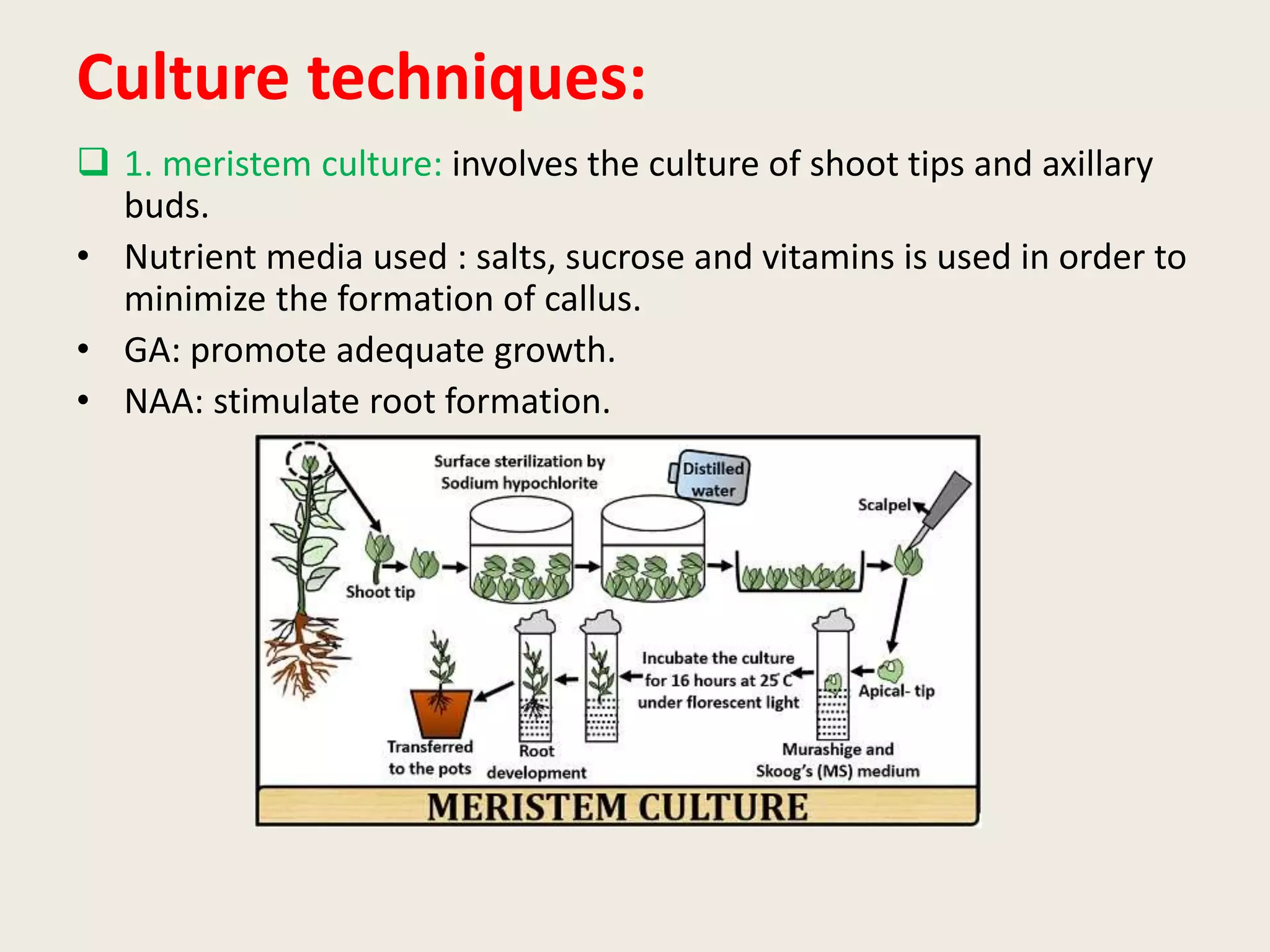
 1. meristem culture: involves the culture of shoot tips and axillary
buds.
• Nutrient media used : salts, sucrose and vitamins is used in order to
minimize the formation of callus.
• GA: promote adequate growth.
• NAA: stimulate root formation.
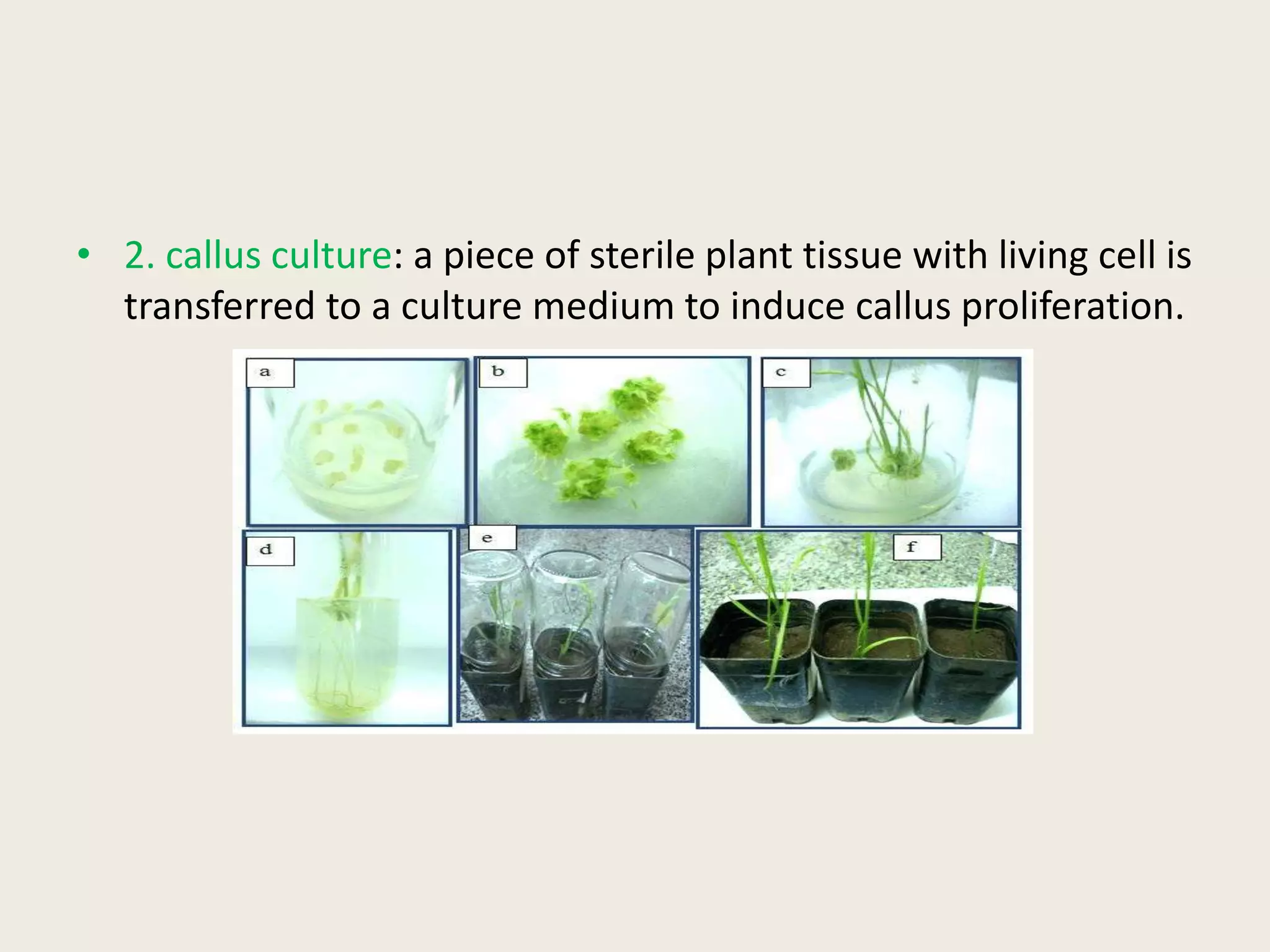
• 2. callus culture: a piece of sterile plant tissue with living cell is
transferred to a culture medium to induce callus proliferation.
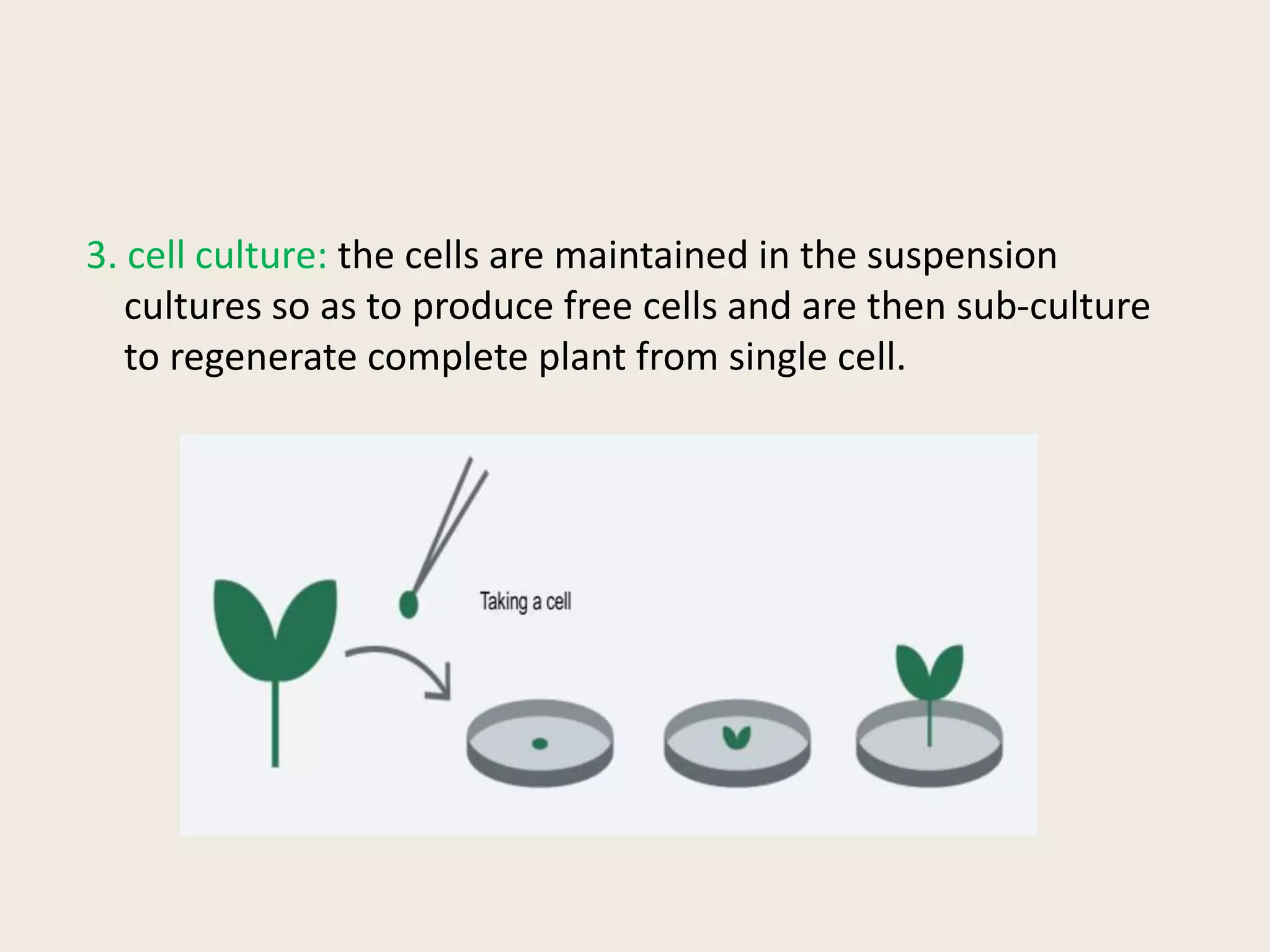
3. cell culture: the cells are maintained in the suspension
cultures so as to produce free cells and are then sub-culture
to regenerate complete plant from single cell.
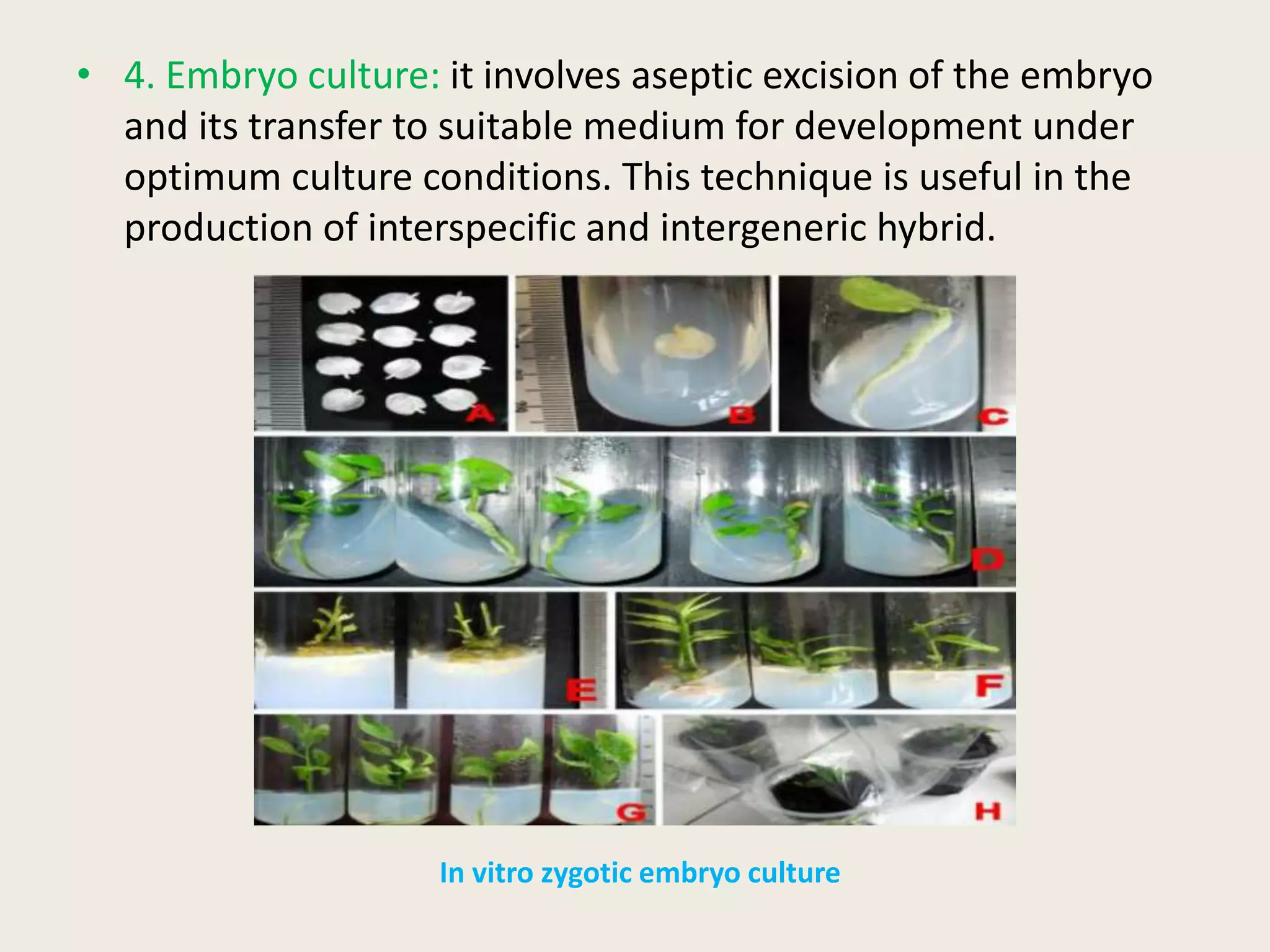
• 4. Embryo culture: it involves aseptic excision of the embryo
and its transfer to suitable medium for development under
optimum culture conditions. This technique is useful in the
production of interspecific and intergeneric hybrid.
In vitro zygotic embryo culture
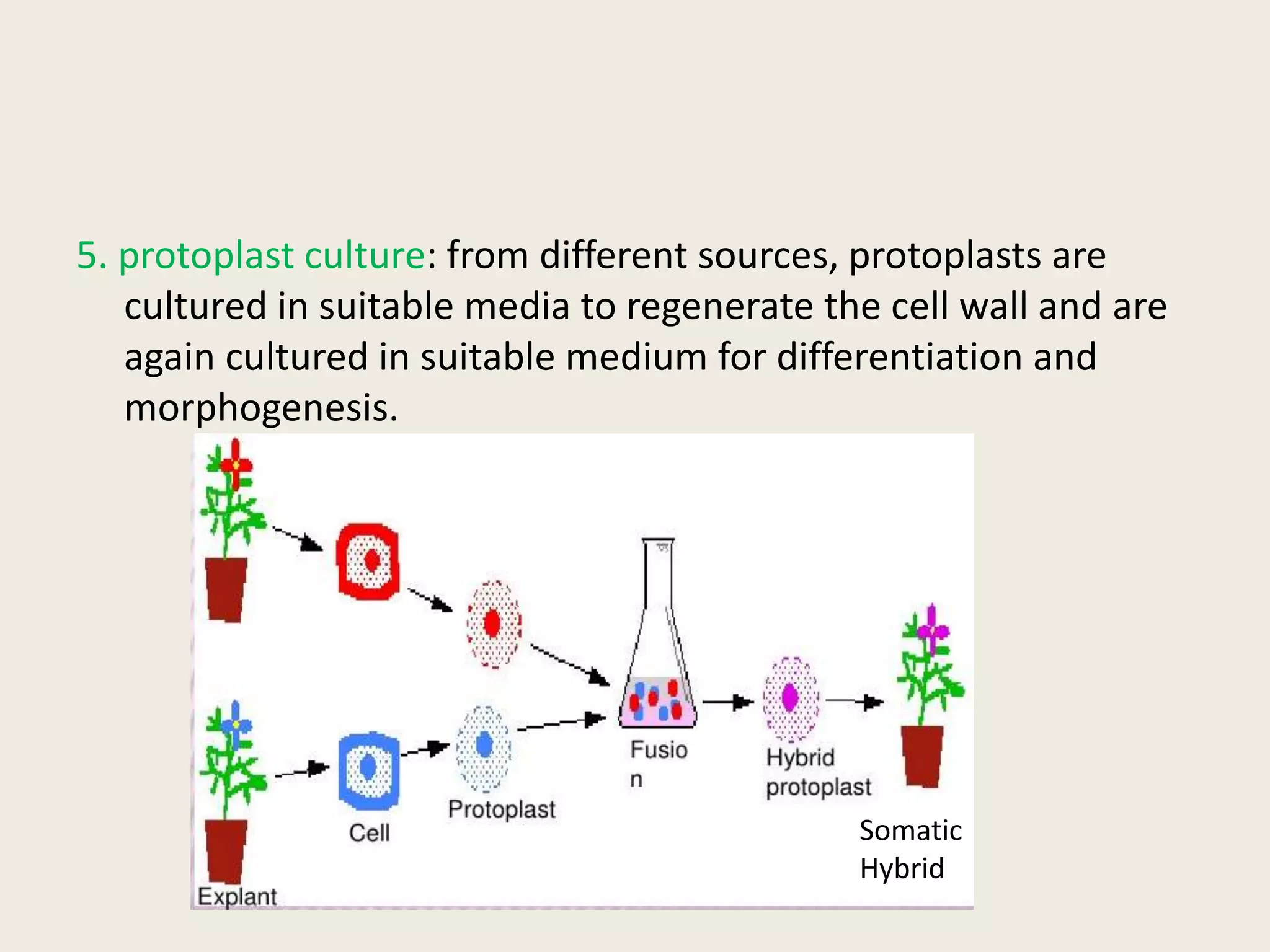
5. protoplast culture: from different sources, protoplasts are
cultured in suitable media to regenerate the cell wall and are
again cultured in suitable medium for differentiation and
morphogenesis.
Somatic
Hybrid
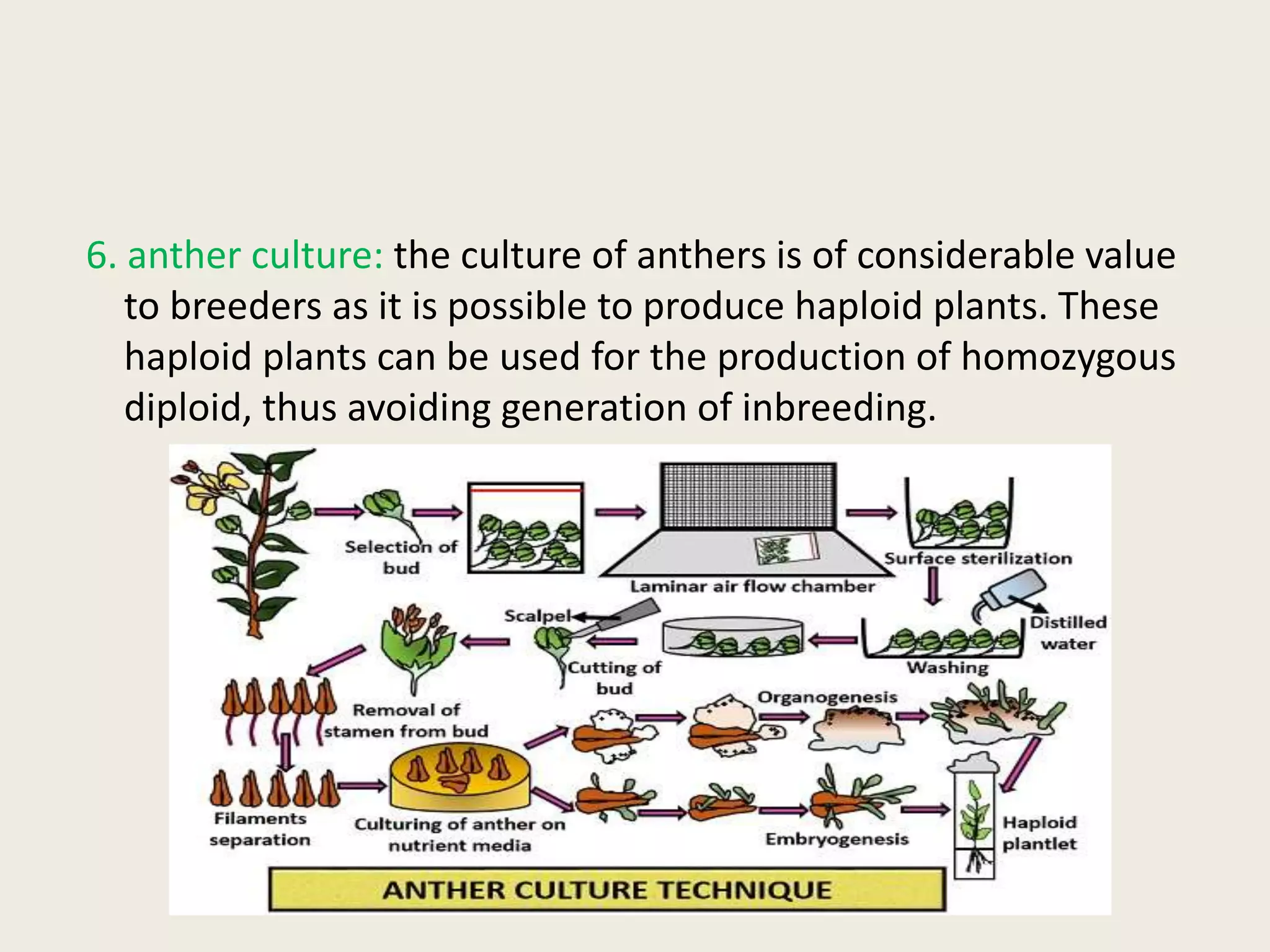
6. anther culture: the culture of anthers is of considerable value
to breeders as it is possible to produce haploid plants. These
haploid plants can be used for the production of homozygous
diploid, thus avoiding generation of inbreeding.
Micrografting
• In vitro shoot tip grafting (STG) is the aseptic grafting
of a small shoot tip onto an in vitro rootstock
produced by seeds or by asexual propagation
• Widely used for producing virus-free plants
• Alternative option to exchange prunus genetic
material among countries
• Efforts needed to determine the genetic and
physiological barriers at the tissue and/or cell level,
so that this technique may be optimized and
exploited to its full potential
In vitro micro-grafting of Citrus
Media preparation:
• The culture media usually contain the following constituent:
1. Inorganic nutrients:
• macronutrients( concentration > 0.5 m mol/liter): N, P, K, Ca, Mg, and S
• Micronutrients: Fe, Zn, B, Cu, Mo
2. carbon and energy source:
• Sucrose, glucose, maltose, lactose, galactose raffinose. Among these
sucrose is most preferred.
3. organic supplements: it includes
vitamins: thiamine, riboflavin, niacin.
Organic acids: addition of kreb cycle intermediate citrate, malate,
succinate and fumarate.
organic extract : yeast extract, casein hydrolysate, coconut milk,
organic juice and potato extract.
Activated charcoal : It involves the adsorption of inhibitory compound
such as phenol.
Antibiotics : streptomycin or kanomycin are used to prevent the
growth of microorganism.
4. growth regulators:
• Auxins: at low concentration promote root formation. At high
concentration callus formation occurs. 2,4-D is mostly used.
• Cytokinin: involves in cell divison, shoot differentiation and somatic
embryo formation. Kinetin and benzylaminopurins re mostly used
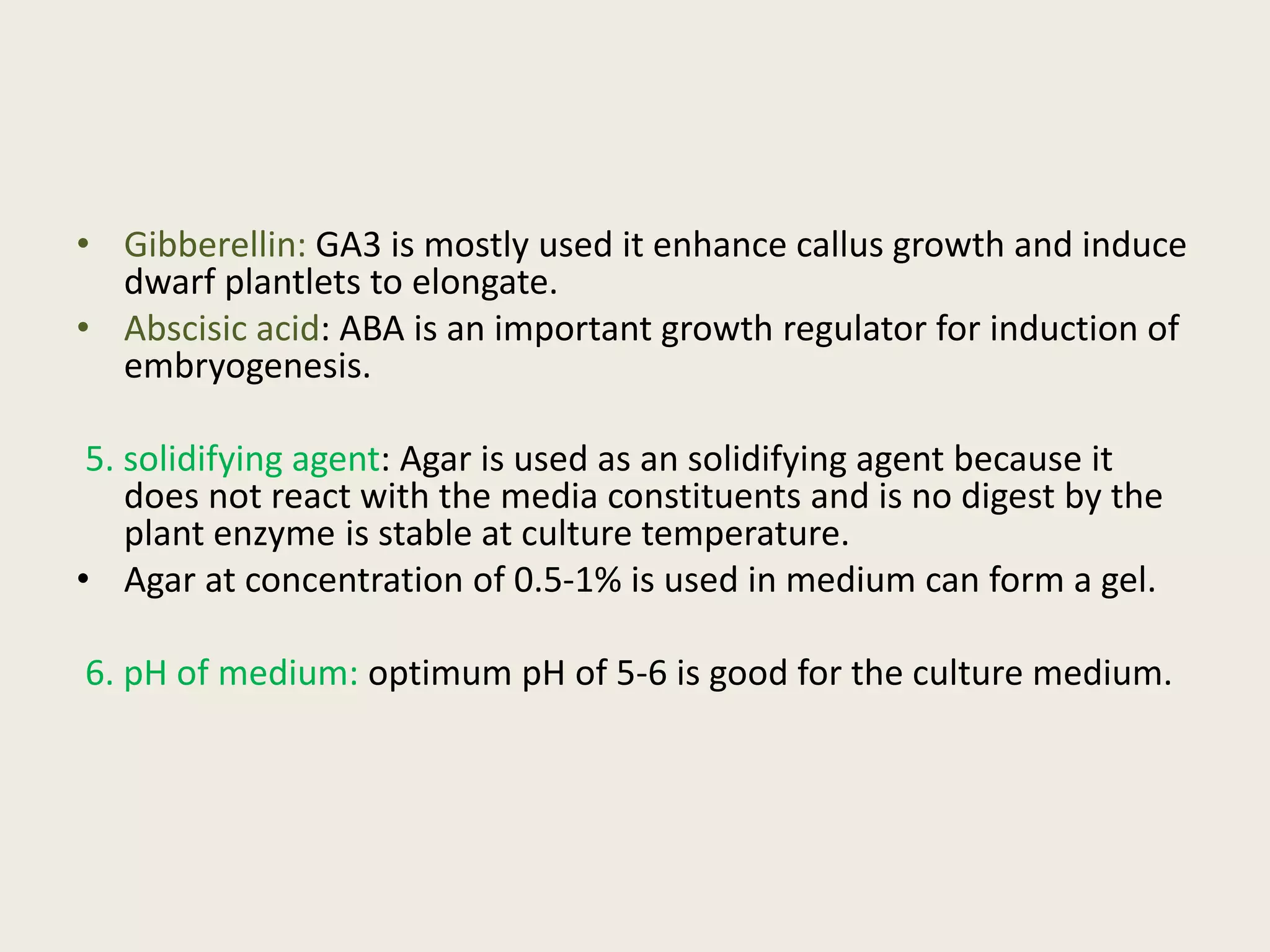
• Gibberellin: GA3 is mostly used it enhance callus growth and induce
dwarf plantlets to elongate.
• Abscisic acid: ABA is an important growth regulator for induction of
embryogenesis.
5. solidifying agent: Agar is used as an solidifying agent because it
does not react with the media constituents and is no digest by the
plant enzyme is stable at culture temperature.
• Agar at concentration of 0.5-1% is used in medium can form a gel.
6. pH of medium: optimum pH of 5-6 is good for the culture medium.
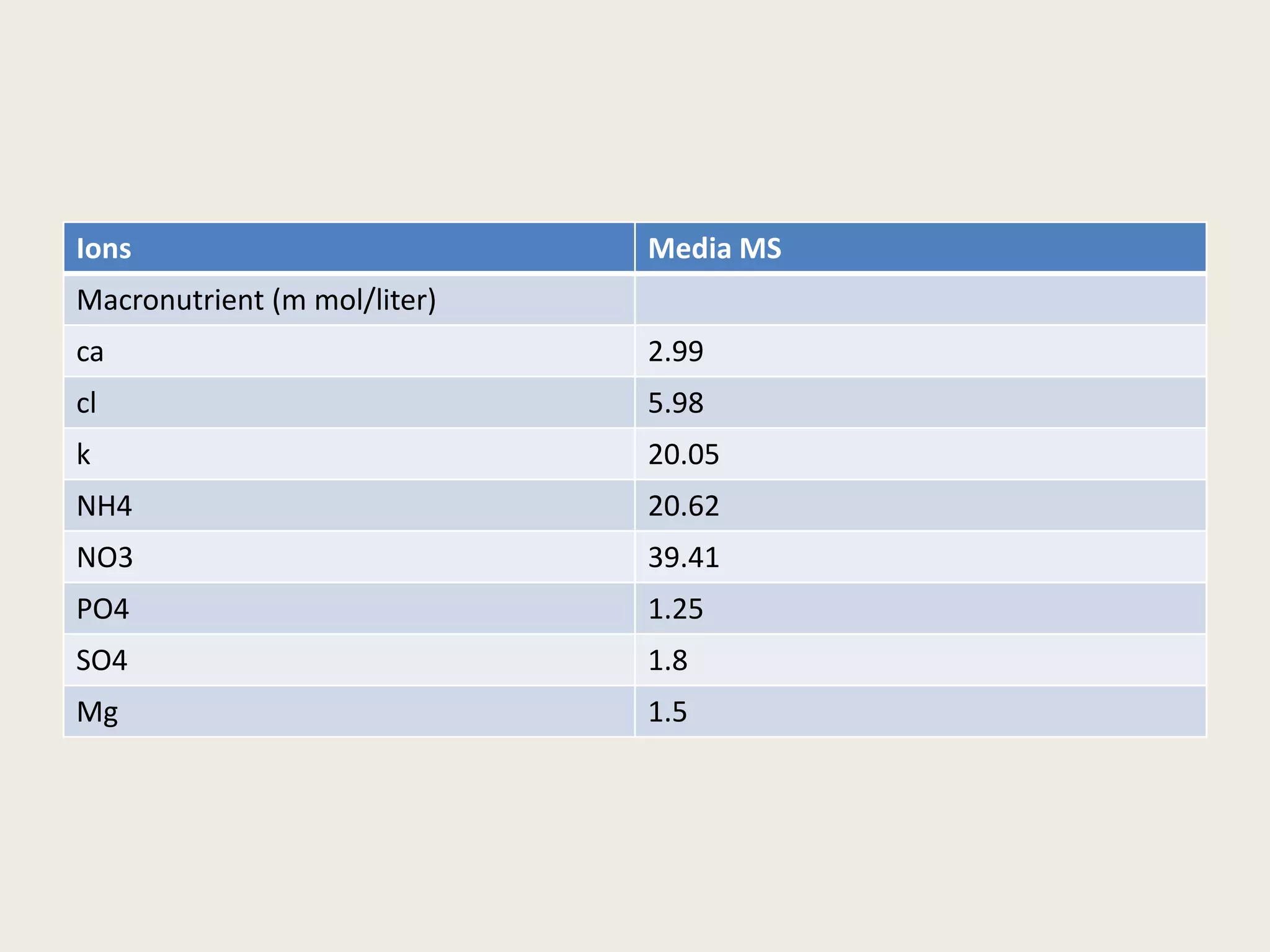
Ions Media MS
Macronutrient (m mol/liter)
ca 2.99
cl 5.98
k 20.05
NH4 20.62
NO3 39.41
PO4 1.25
SO4 1.8
Mg 1.5
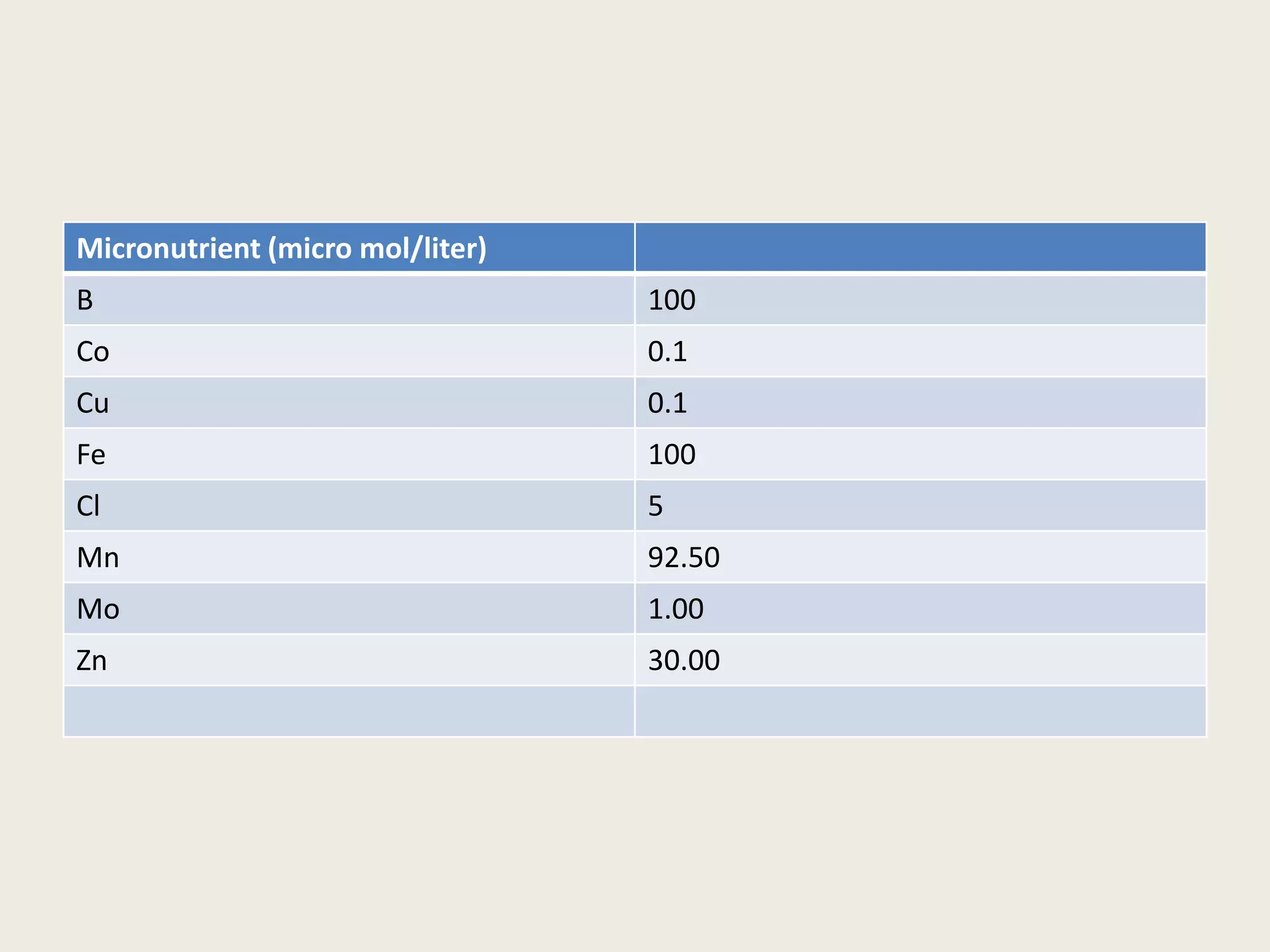
Micronutrient (micro mol/liter)
B 100
Co 0.1
Cu 0.1
Fe 100
Cl 5
Mn 92.50
Mo 1.00
Zn 30.00
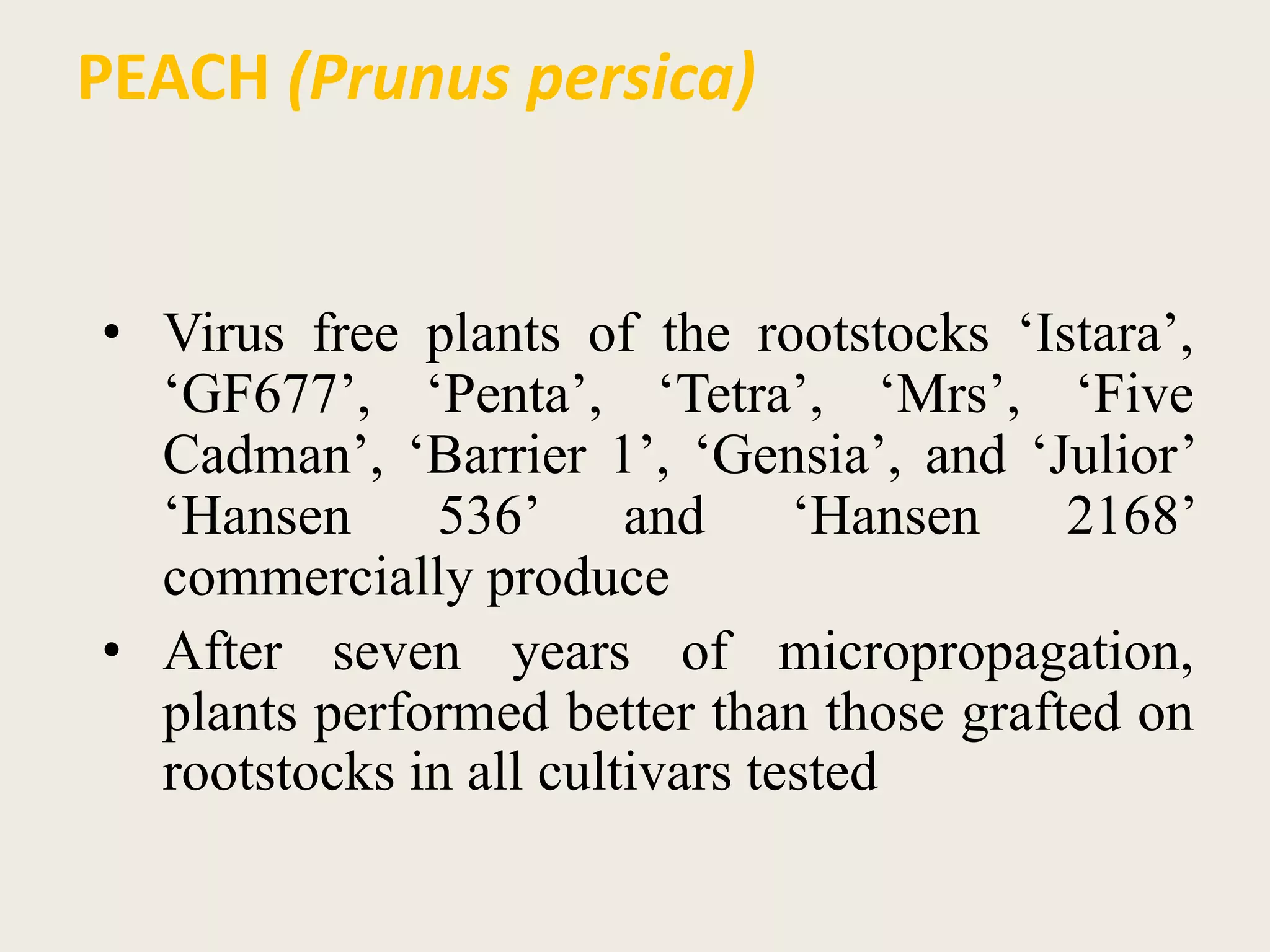
PEACH (Prunus persica)
• Virus free plants of the rootstocks ‘Istara’,
‘GF677’, ‘Penta’, ‘Tetra’, ‘Mrs’, ‘Five
Cadman’, ‘Barrier 1’, ‘Gensia’, and ‘Julior’
‘Hansen 536’ and ‘Hansen 2168’
commercially produce
• After seven years of micropropagation,
plants performed better than those grafted on
rootstocks in all cultivars tested
Plum
• Plant survival of Japanese plum (cv. "America“,
"Gulf ruby") under greenhouse conditions
obtained with a very high success rate
• Some consider it a useful method for
producing planting stock.
Apricot
• In vitro establishment, proliferation and
rooting of two Apricot X plum inter specific
hybrid rootstocks HS 405 and HS 706 were
recently evaluated.
PEAR (Pyrus communis)
• Difficult to root root stocks and low chilling
varieties micropagated with varying degrees.
• Own rooted micropropagation of ‘Bartlett’
• More vigorous than grafted on quince but
yield lower.
• Used to free the germplasm of the viruses and
to augment the initial supplies of newly
released varieties.
CHERRY (Prunus avium)
• Colt and F-12/1 rootstocks high in demand-
extensively micropropagation.
• More yield efficient and lighter in colour.
• Rapid propagation of new genotypes
KIWI FRUIT (Actinidia deliciosa)
• Micropropagation for commercial planting routinely
followed.
• Highest cummulative fruit yields in seven years as
compared to plants either grafted or obtained through
cuttings.
• High resistance to frost conditions.
• Some report the lower yield and no consistency in
performance.
• Trials made only for limited periods of time and long
term effects still unknown.
• More extensive traits will decide about
micropropagation to become a commercial
proposition.
WALNUT (Juglans regia)
• Extensive attempts made to develop reproducible protocol.
• Acclimatization of tissue culture plants poses the worst type of problem.
• Refinement of protocols for high rate of shoot multiplication, rooting and
development of cost effective methods.
• Success in ex vitro rooting of pest and disease resistant/ tolerant
genotypes(about 23), useful for california walnut industry
• Use of endomycorihizae at the waening of micropropagated walnut and
pear had benefical effect on establishment and survival of plants.
STRAWBERRY (Fragaria annanasa)
• Easy material to micropropagate. Voluminous literature and workable
protocols standardized in 1980s.
• Old material gets infected with viral diseases and needs to be
replaced. Demand very high.
• Meristem culture is the only way and a number of genotypes
produced which are virus/ fungal free.
• Several cultivars propagated in vitro and grown in open.
• Pronounced differences in the field performance of in vitro and
runner propagated plants like early flowering, lower fruit yield etc.
• With low level multiplication cycles and low concentration of
cytokinins, pathogen free plants with high yield can be obtained (1 :
28, 800)
• Routine task in many commercial laboratoriess
RASPBERRY (Rubus ideus)
• In vitro multiplication + heat therapy to
produce virus free plants.
• Epigenetic changes observed after a few sub
cultures. Cultures need to be reestablished
from tested and true to type mother plants.
• Yield higher, better root system, freedom from
pathogen and availability in large quantity
make micropropagation a better alternative.
Commercial exploitation in
horticulture crops
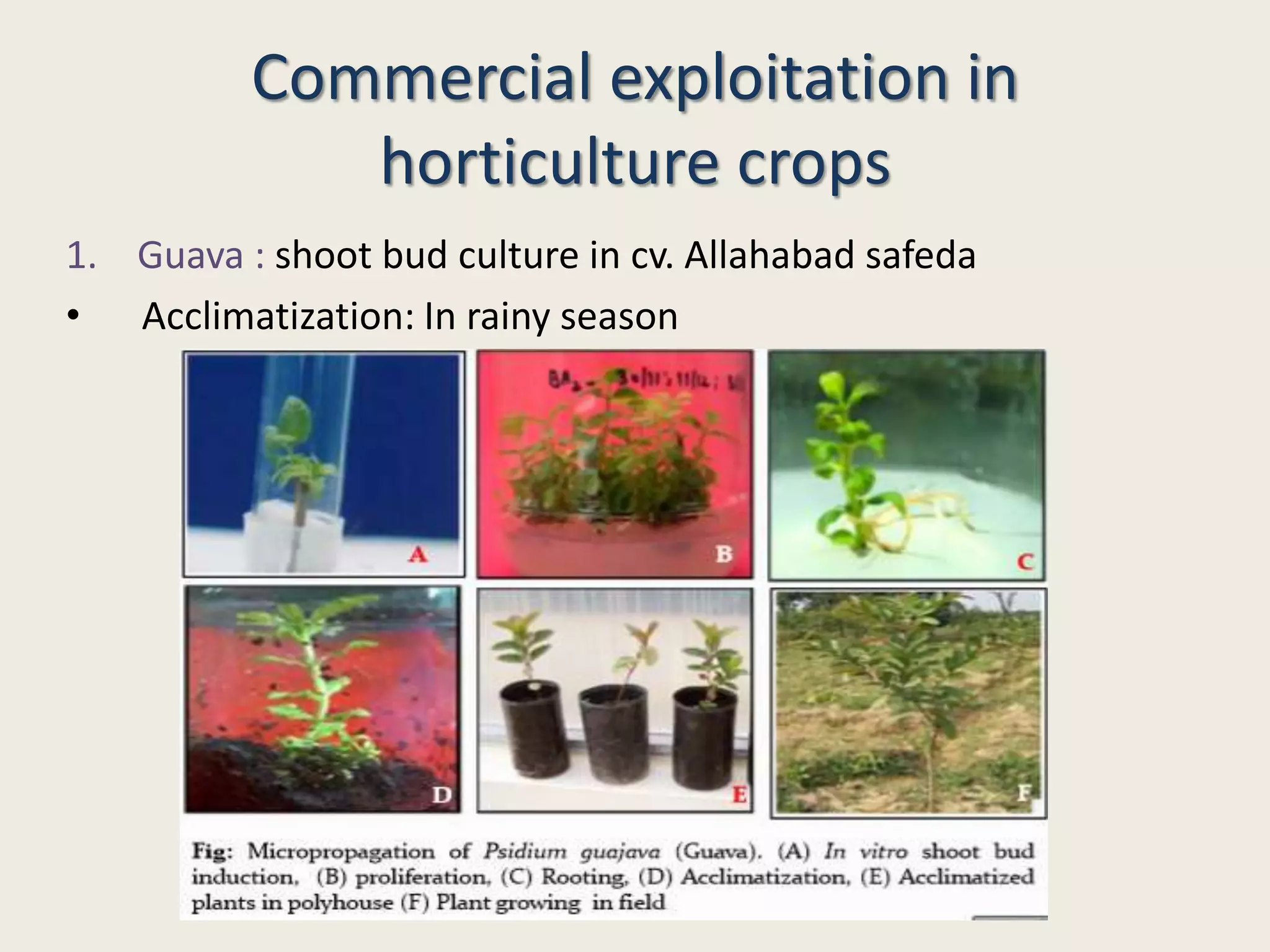
1. Guava : shoot bud culture in cv. Allahabad safeda
• Acclimatization: In rainy season
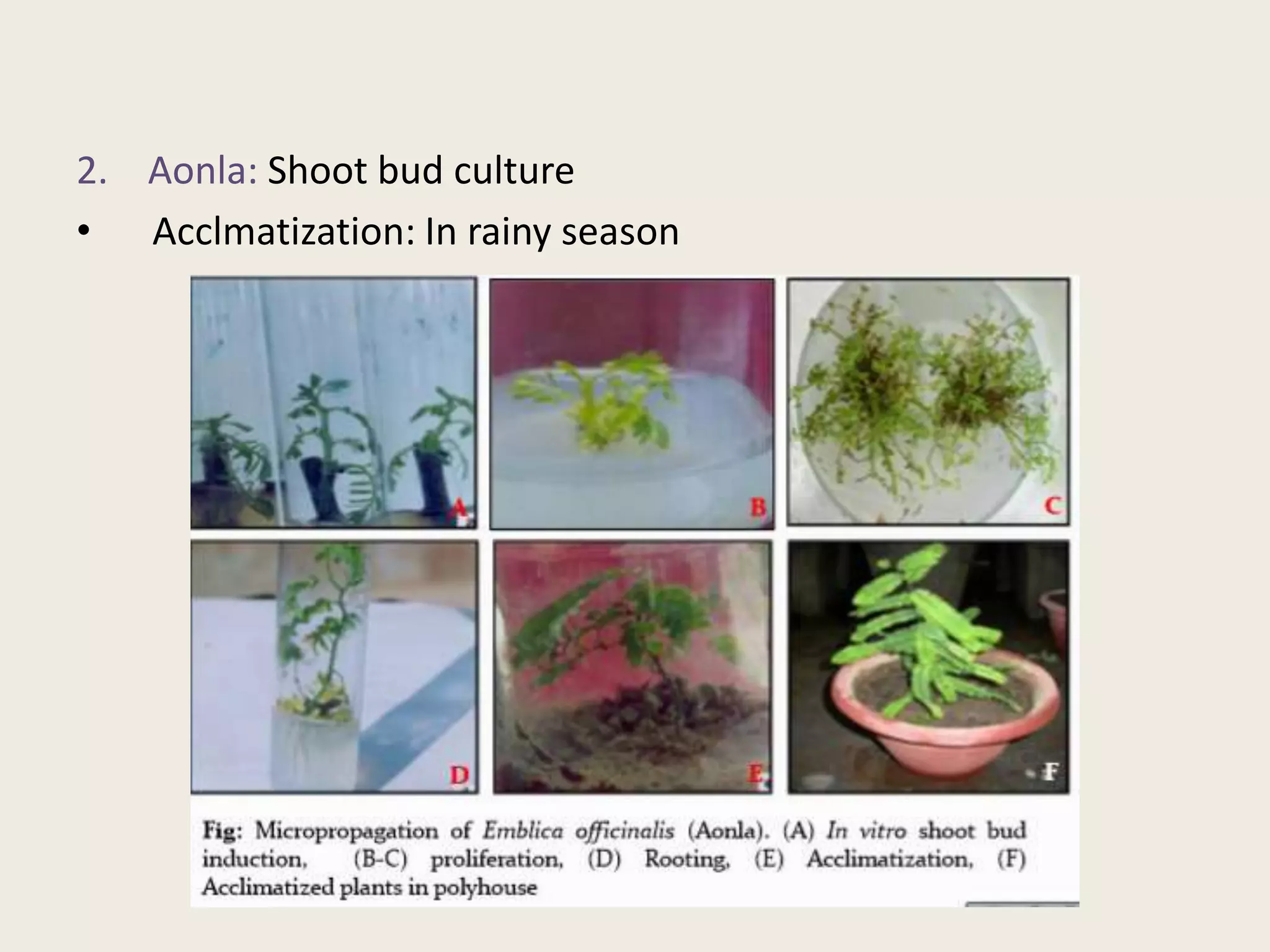
2. Aonla: Shoot bud culture
• Acclmatization: In rainy season
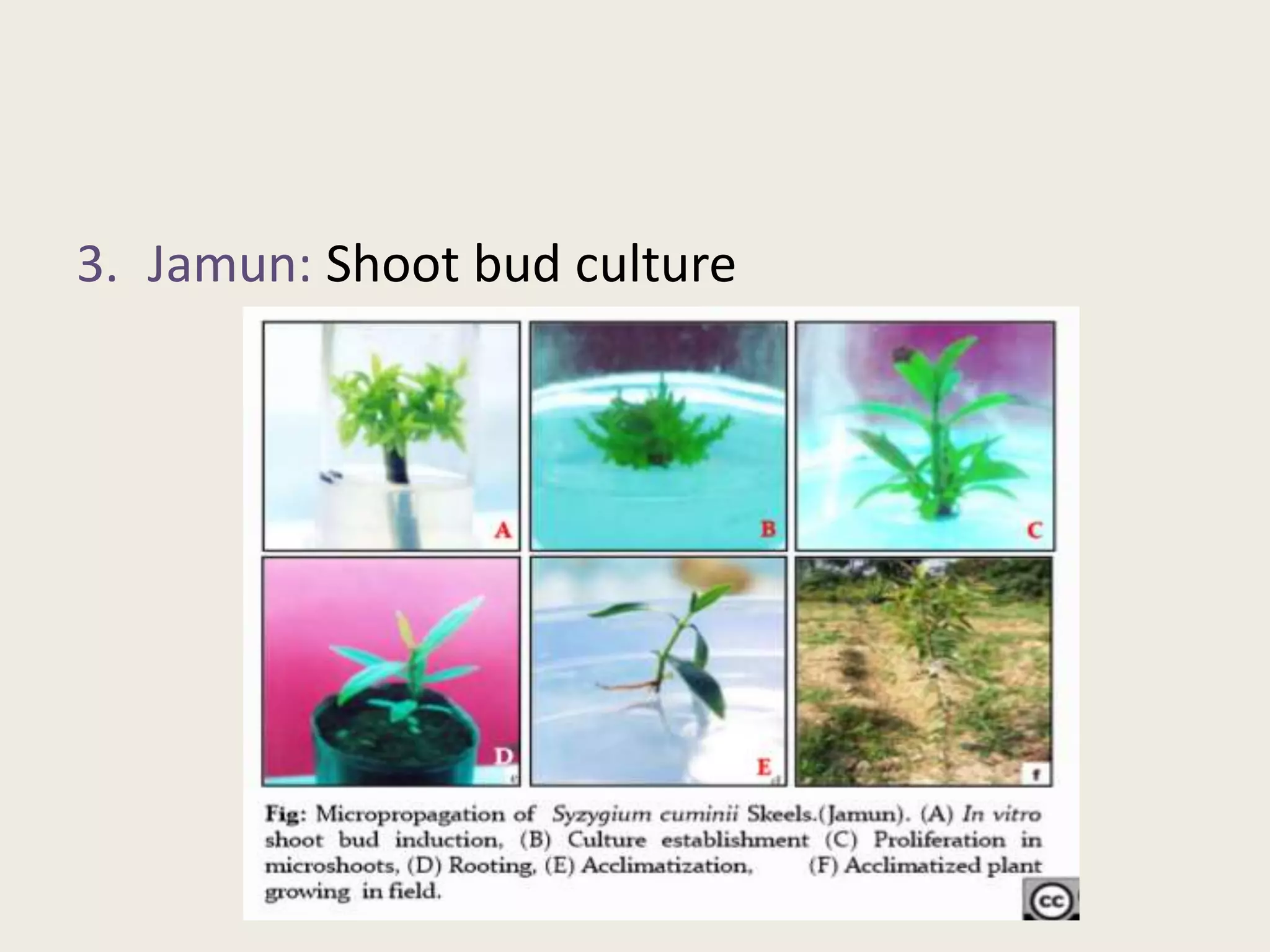
3. Jamun: Shoot bud culture
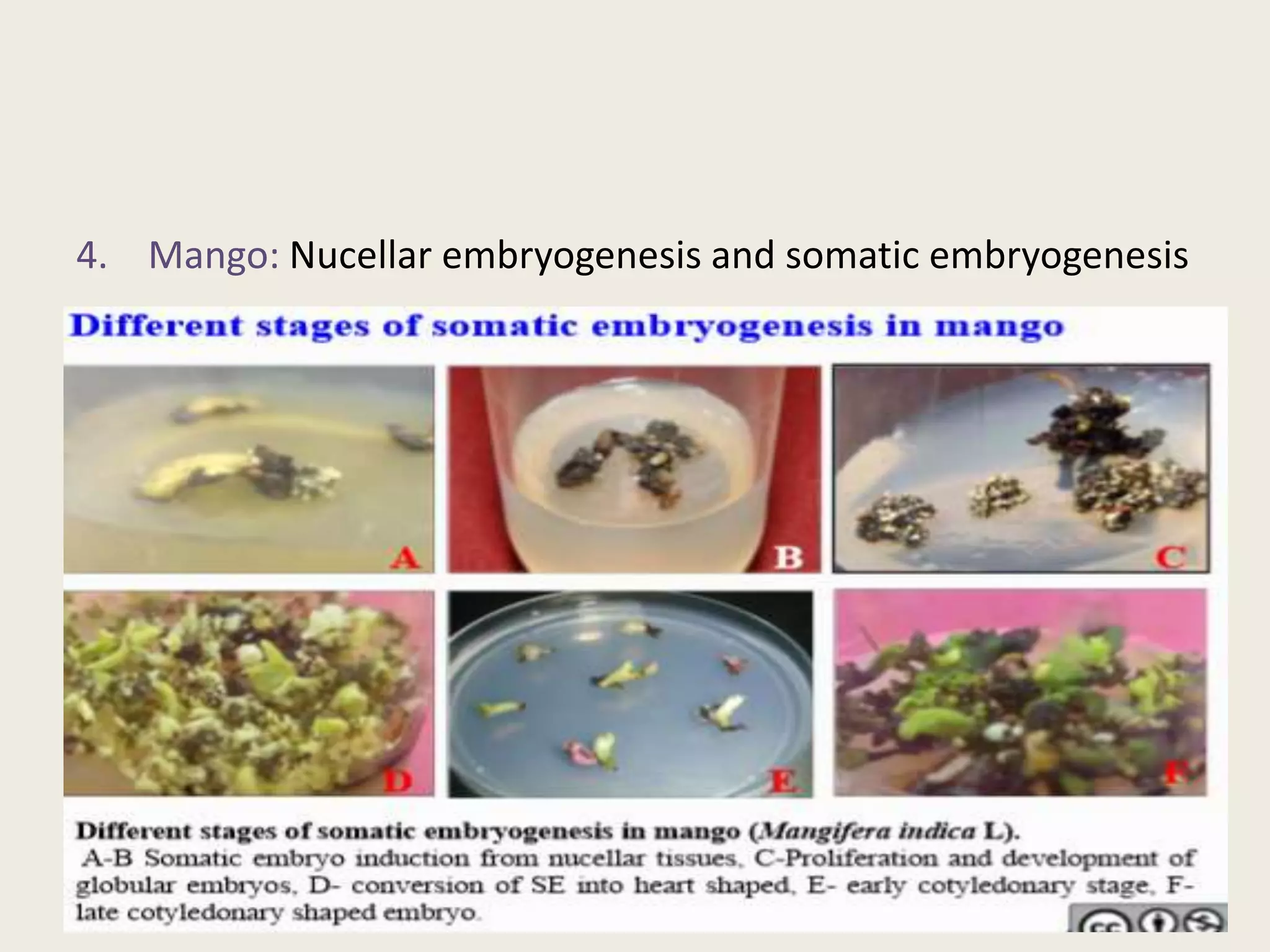
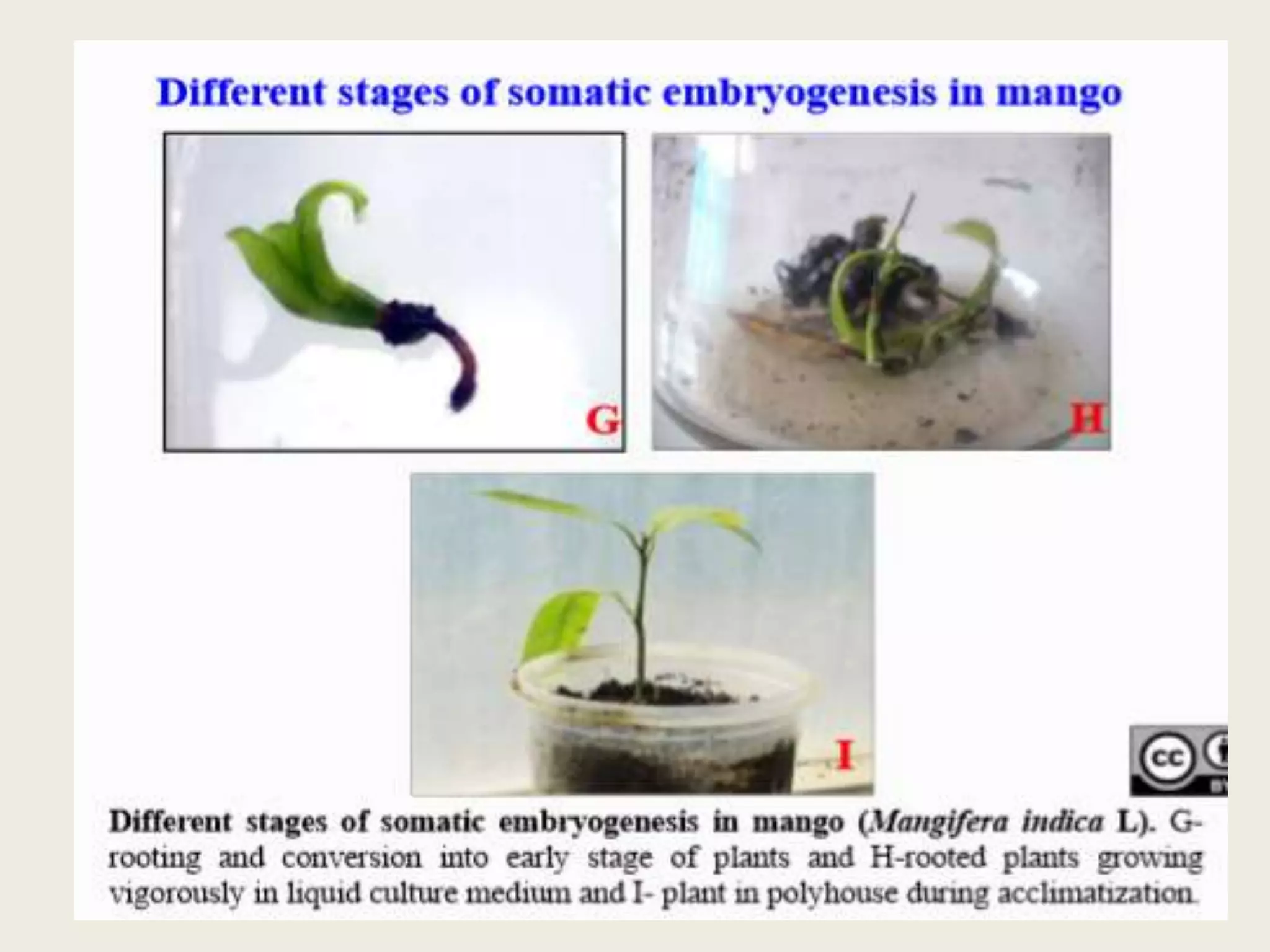
4. Mango: Nucellar embryogenesis and somatic embryogenesis
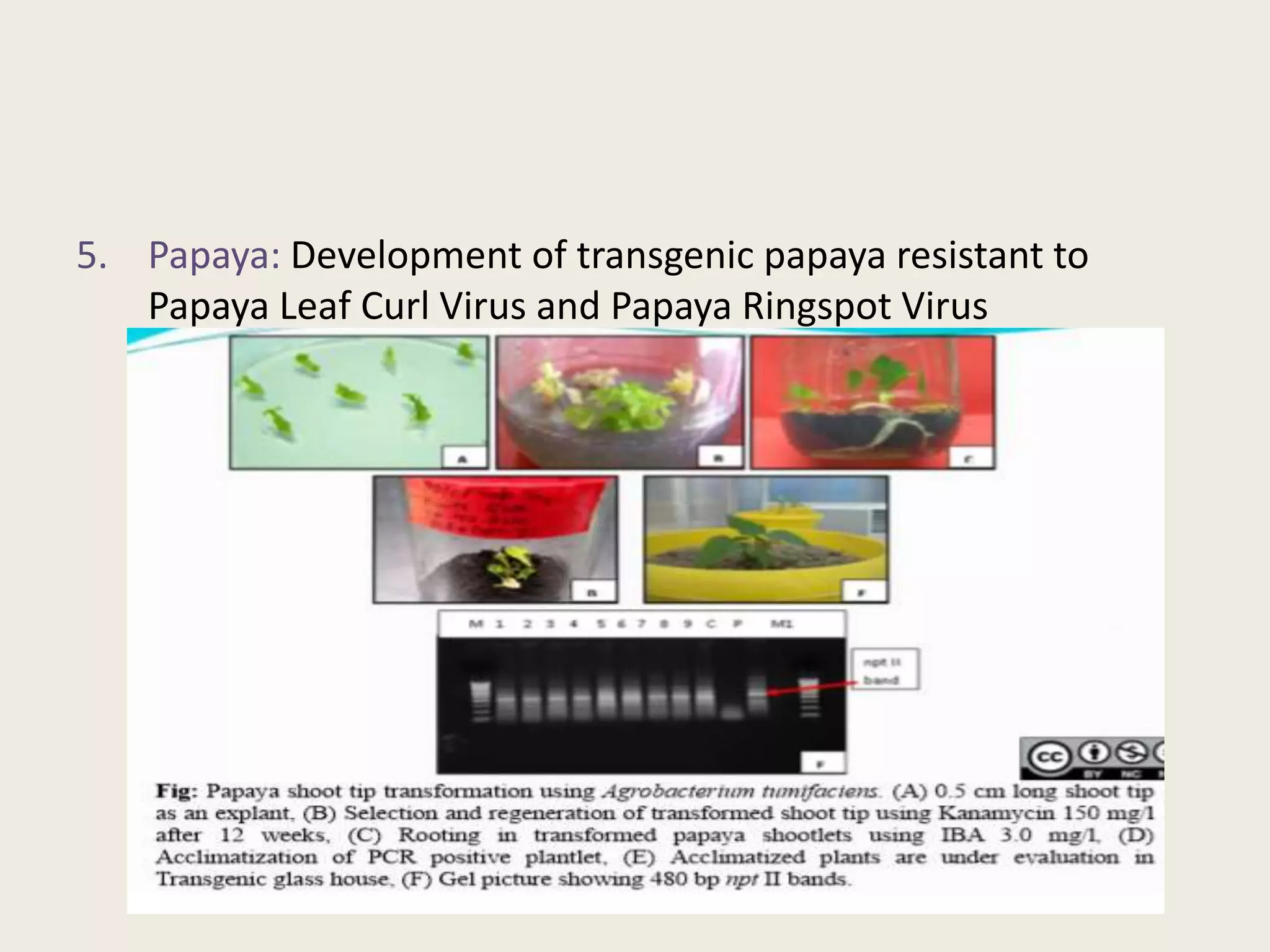
5. Papaya: Development of transgenic papaya resistant to
Papaya Leaf Curl Virus and Papaya Ringspot Virus
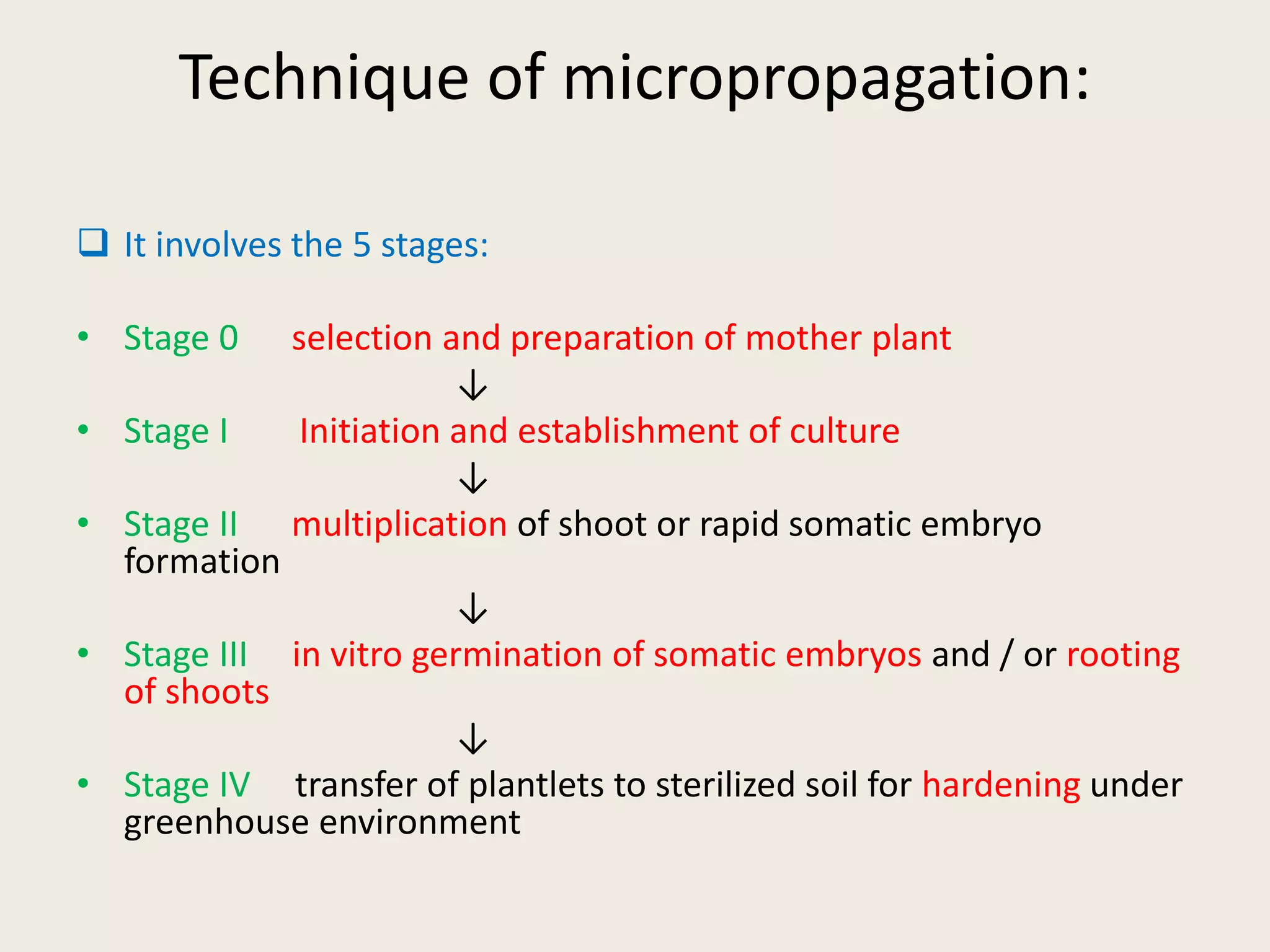
Technique of micropropagation:
 It involves the 5 stages:
• Stage 0 selection and preparation of mother plant
↓
• Stage I Initiation and establishment of culture
↓
• Stage II multiplication of shoot or rapid somatic embryo
formation
↓
• Stage III in vitro germination of somatic embryos and / or rooting
of shoots
↓
• Stage IV transfer of plantlets to sterilized soil for hardening under
greenhouse environment
Stages of micropropagation
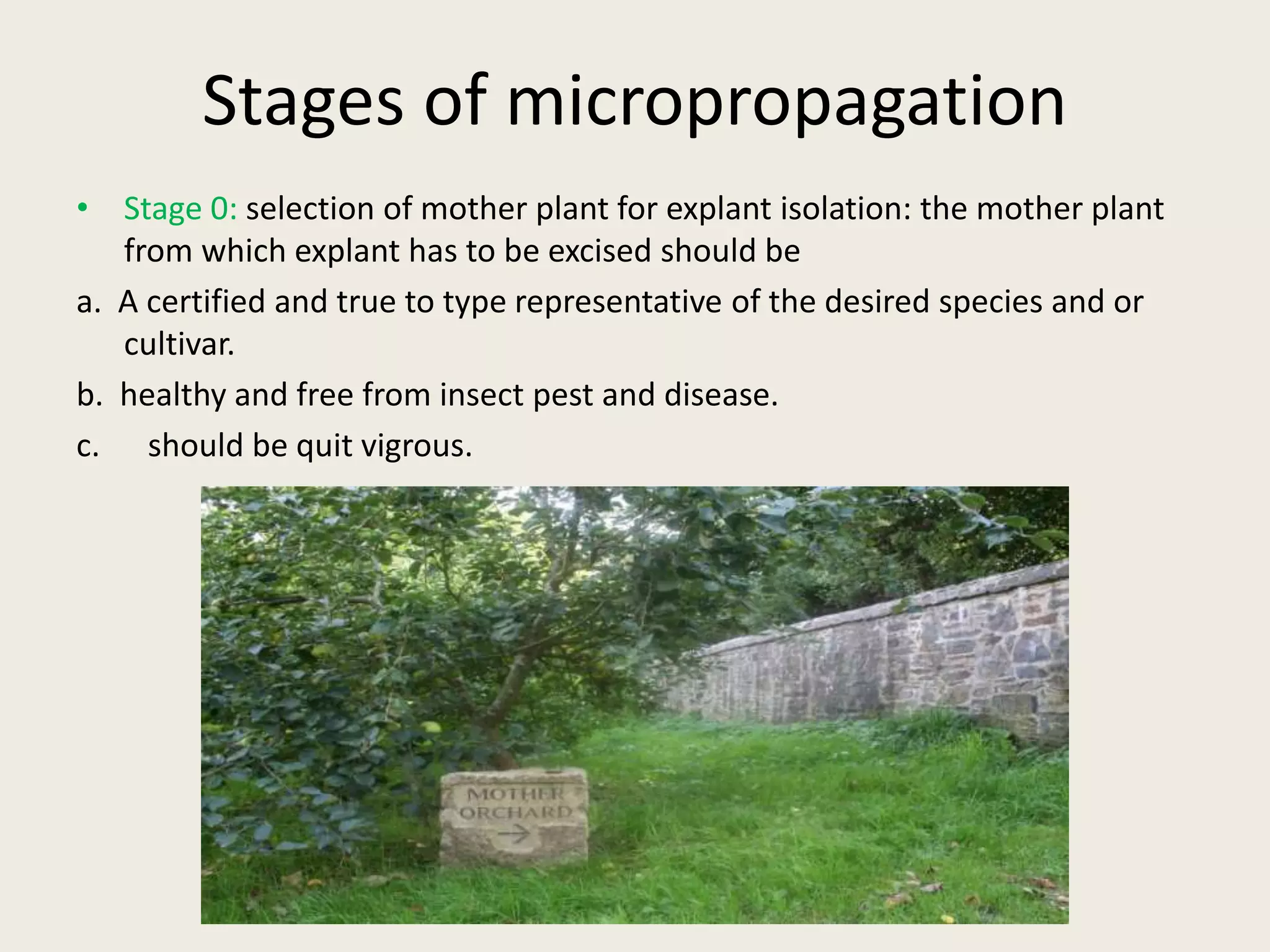
• Stage 0: selection of mother plant for explant isolation: the mother plant
from which explant has to be excised should be
a. A certified and true to type representative of the desired species and or
cultivar.
b. healthy and free from insect pest and disease.
c. should be quit vigrous.
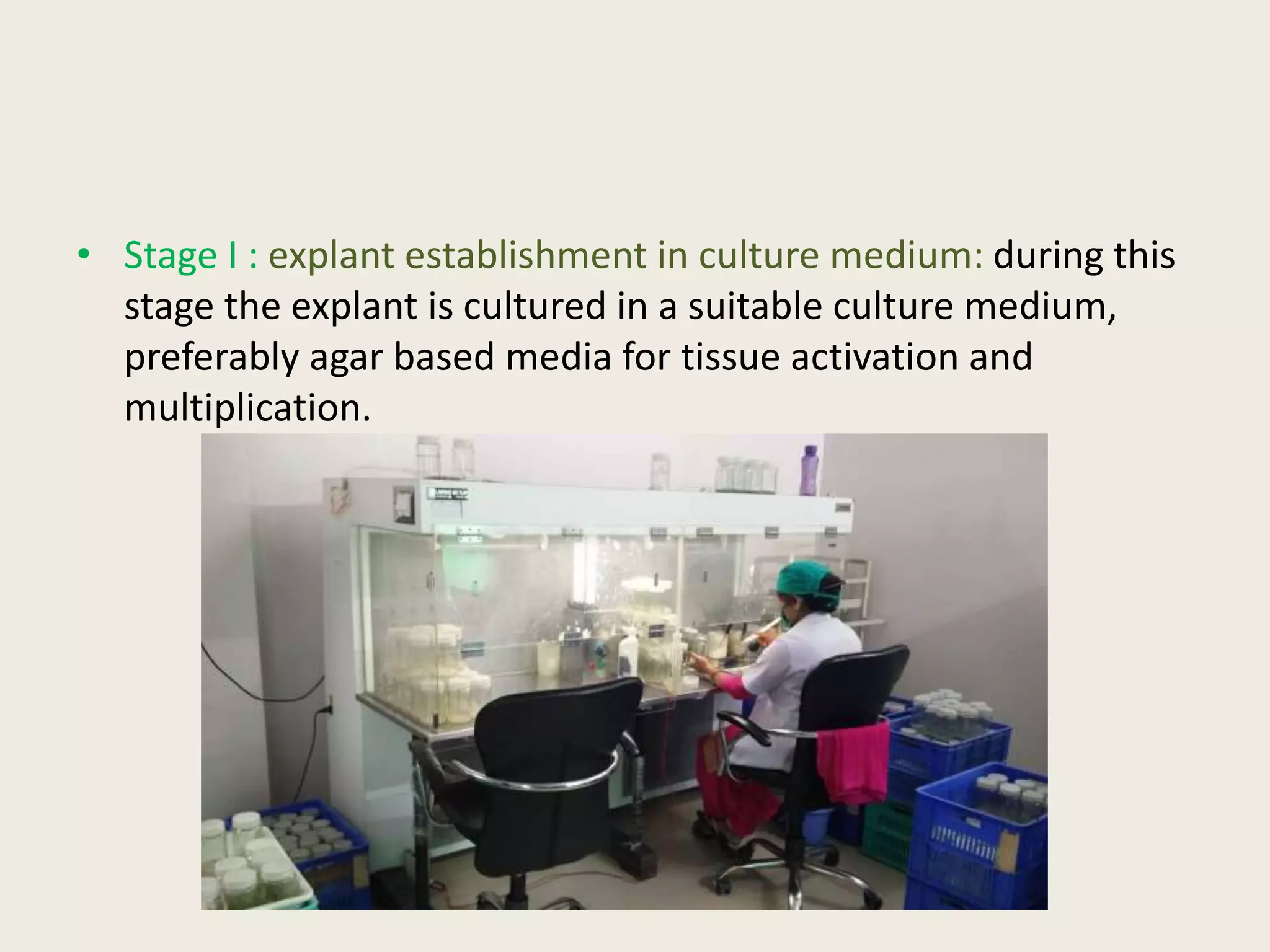
• Stage I : explant establishment in culture medium: during this
stage the explant is cultured in a suitable culture medium,
preferably agar based media for tissue activation and
multiplication.
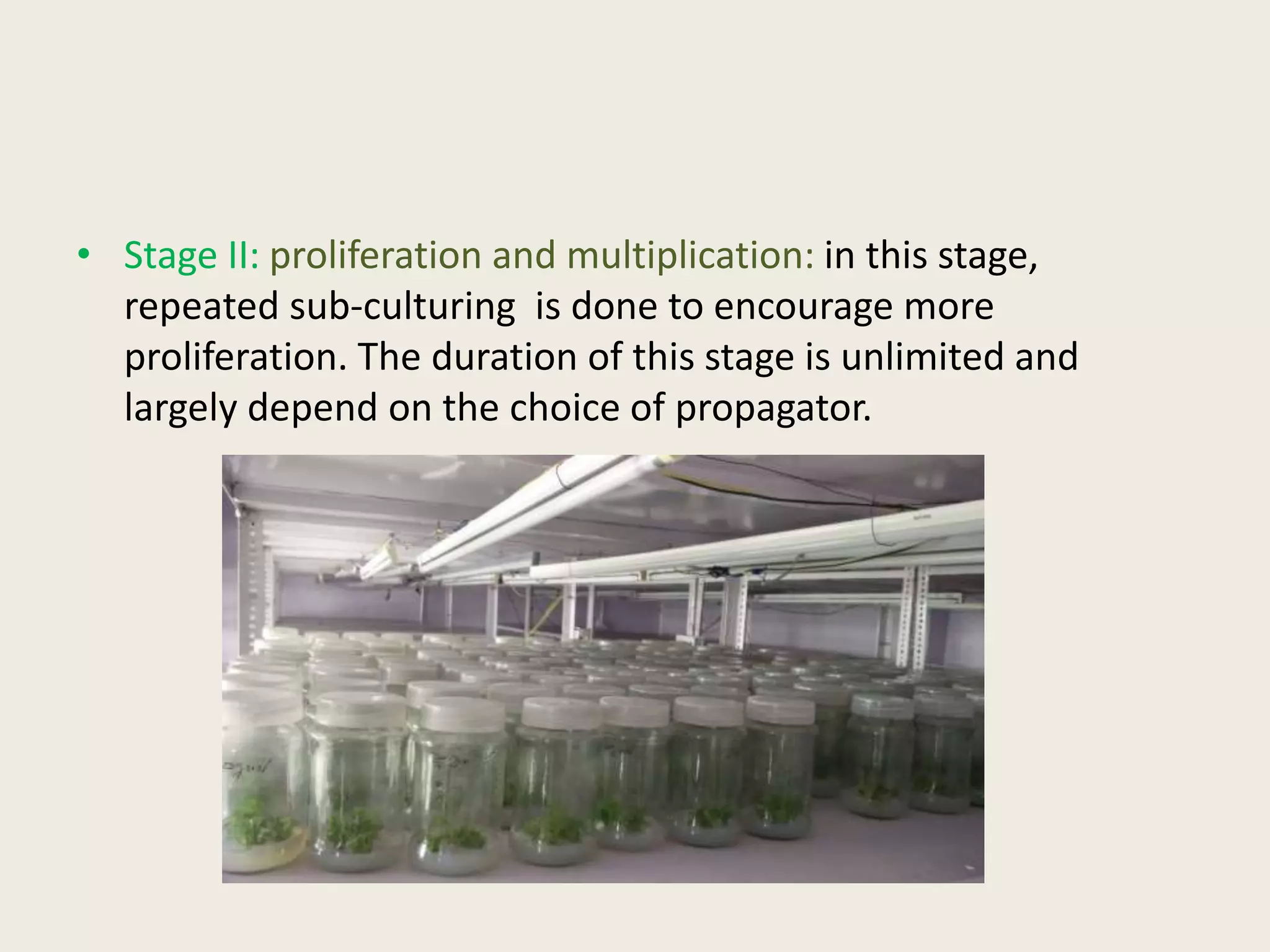
• Stage II: proliferation and multiplication: in this stage,
repeated sub-culturing is done to encourage more
proliferation. The duration of this stage is unlimited and
largely depend on the choice of propagator.
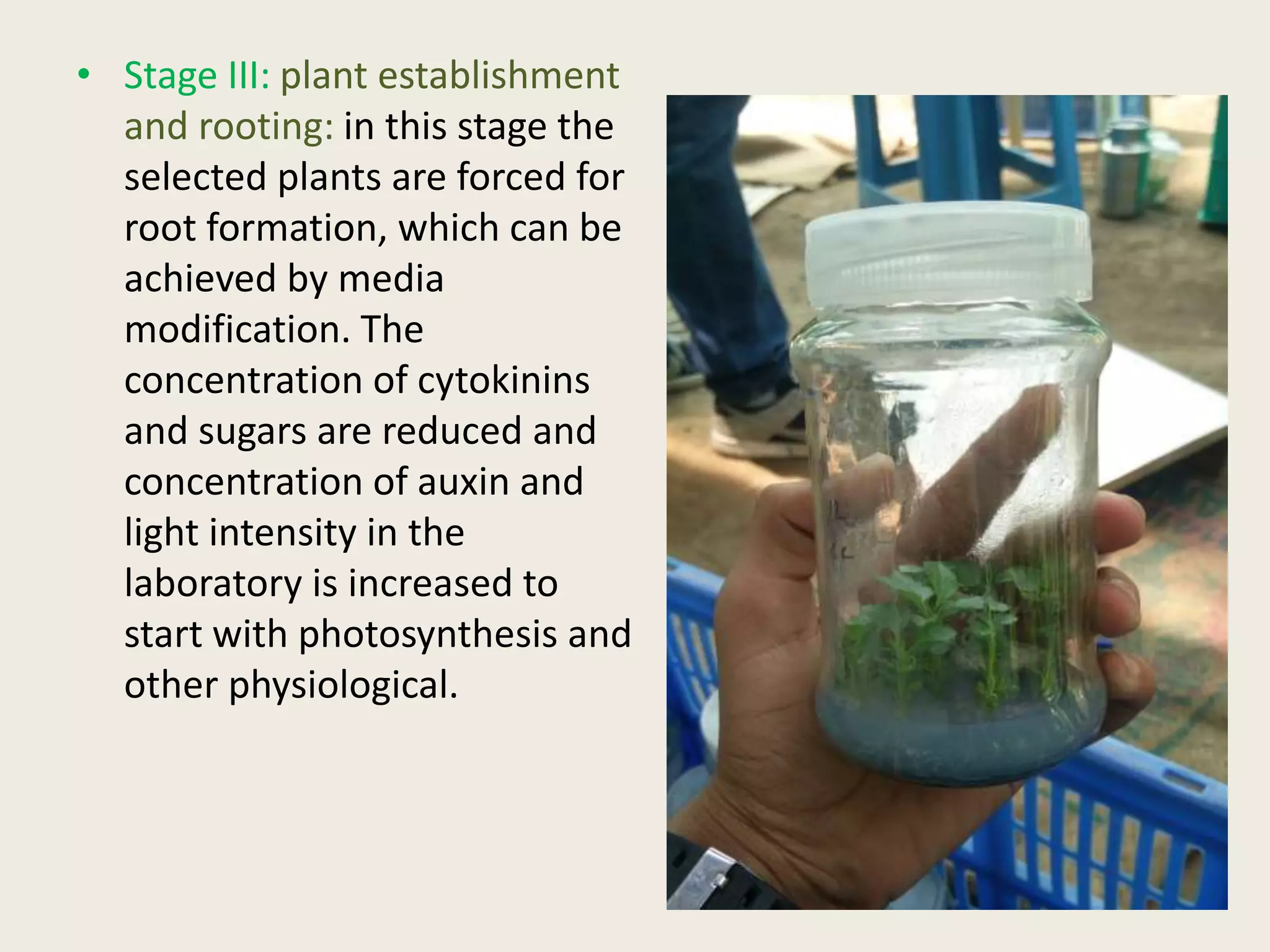
• Stage III: plant establishment
and rooting: in this stage the
selected plants are forced for
root formation, which can be
achieved by media
modification. The
concentration of cytokinins
and sugars are reduced and
concentration of auxin and
light intensity in the
laboratory is increased to
start with photosynthesis and
other physiological.
• Stage IV
• Ex vitro adaptation or plant acclimatization:
o Where in vitro plants are adapted to the environment outside the laboratory
conditions by managing the interaction of the plants and the "new"
environmental conditions.
• Acclimatization –
• Survival and establishment of plants after transfer to soil (ex vitro)
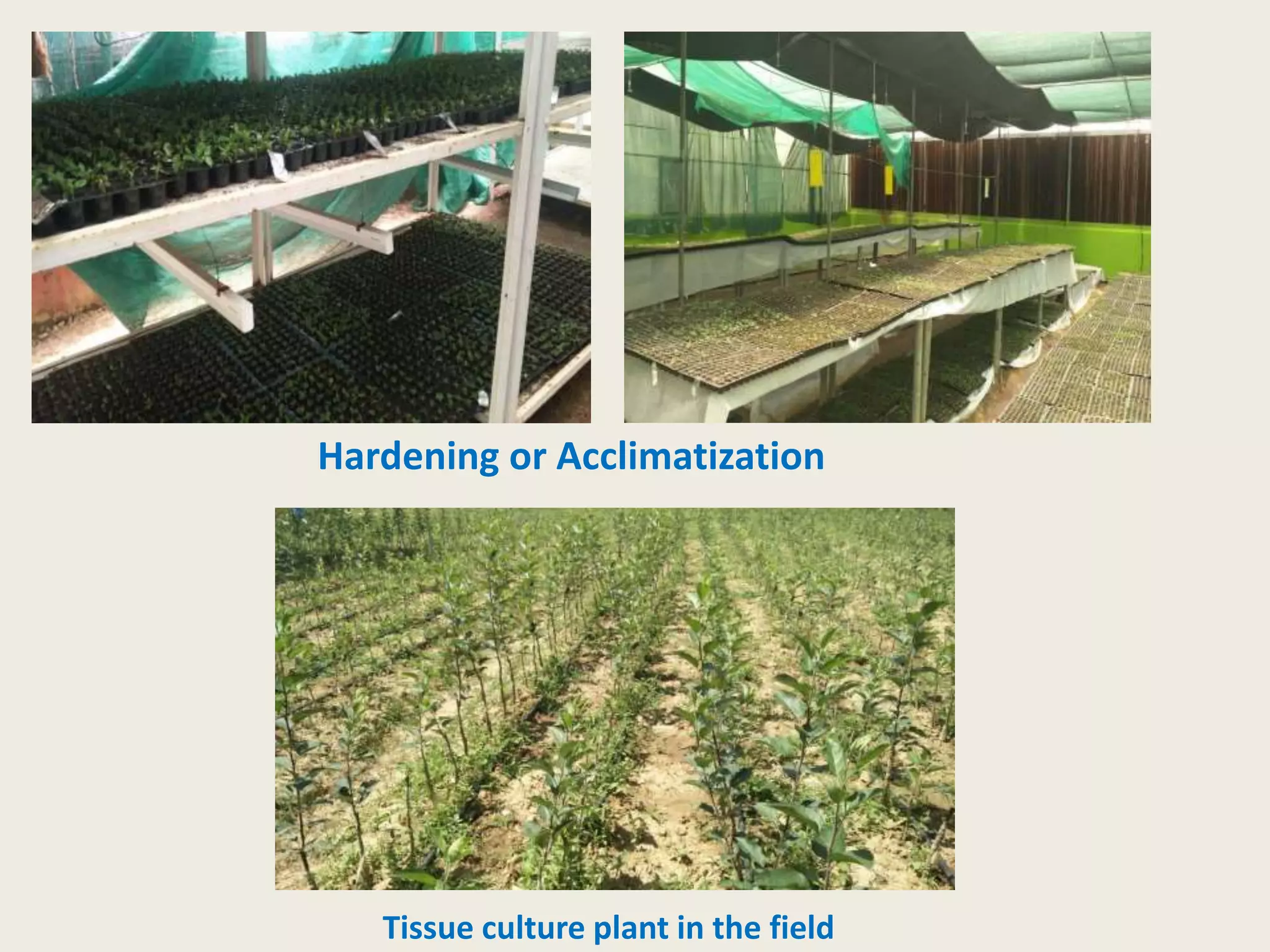
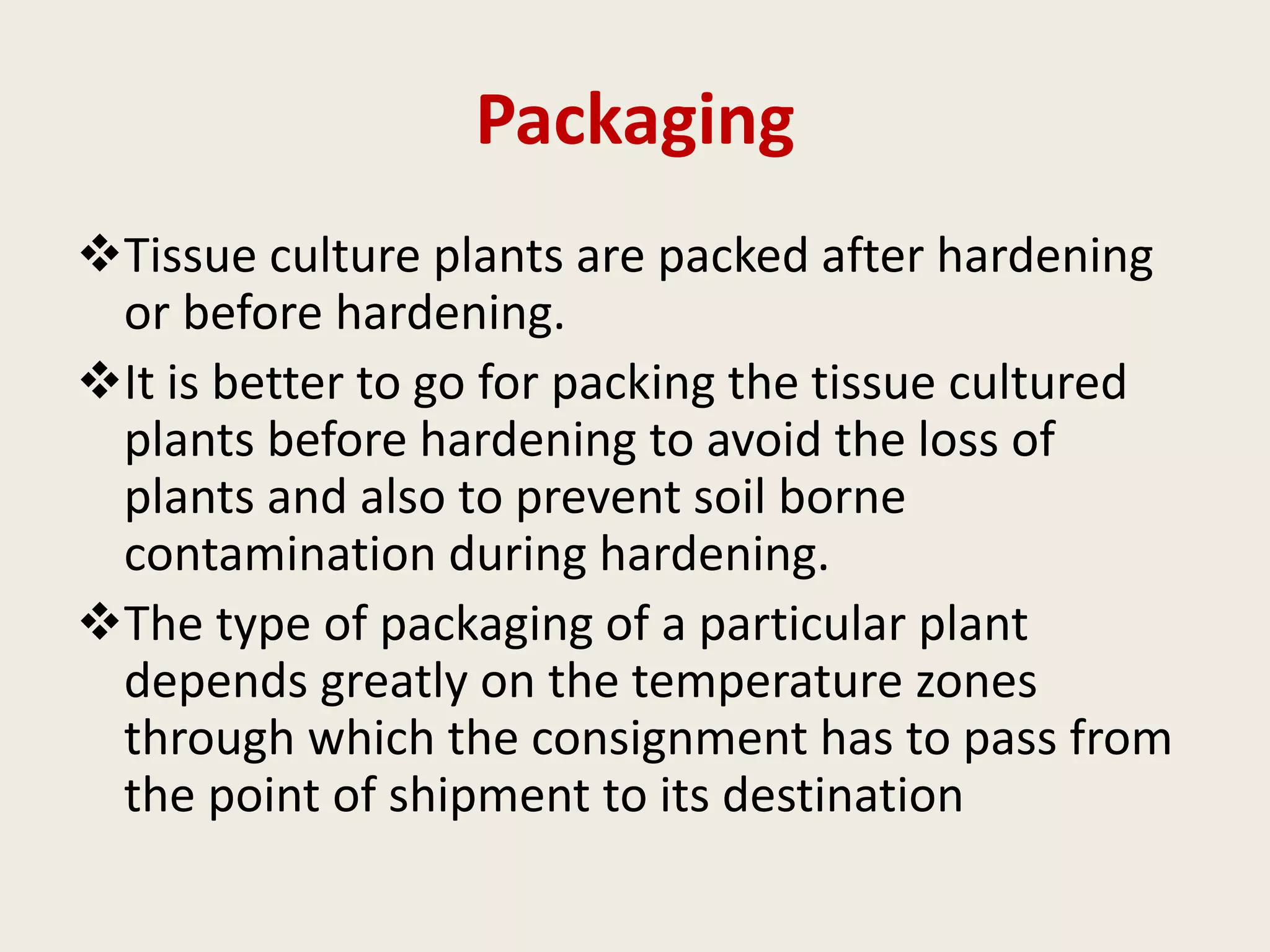
 Transplantation usually done in greenhouse
 Keep RH high (relative humidity)
 Gradually increase light intensity and lower RH after rooting occurs.
 Allows plants to harden and helps plants form cuticle.
 These conditions help the plantlets in getting acclimatized to the natural
conditions in field
Hardening or Acclimatization
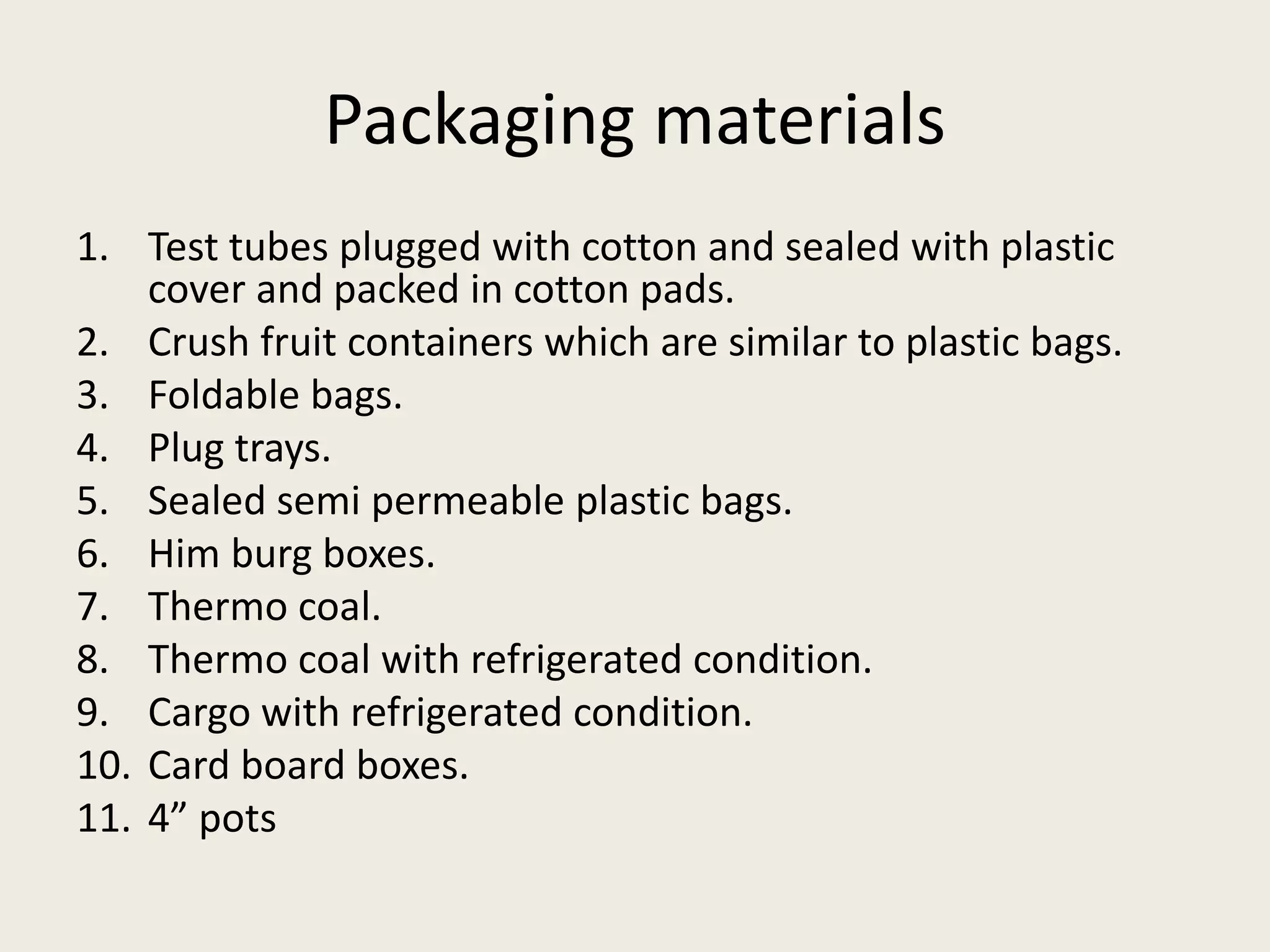
Tissue culture plant in the field
Packaging
Tissue culture plants are packed after hardening
or before hardening.
It is better to go for packing the tissue cultured
plants before hardening to avoid the loss of
plants and also to prevent soil borne
contamination during hardening.
The type of packaging of a particular plant
depends greatly on the temperature zones
through which the consignment has to pass from
the point of shipment to its destination
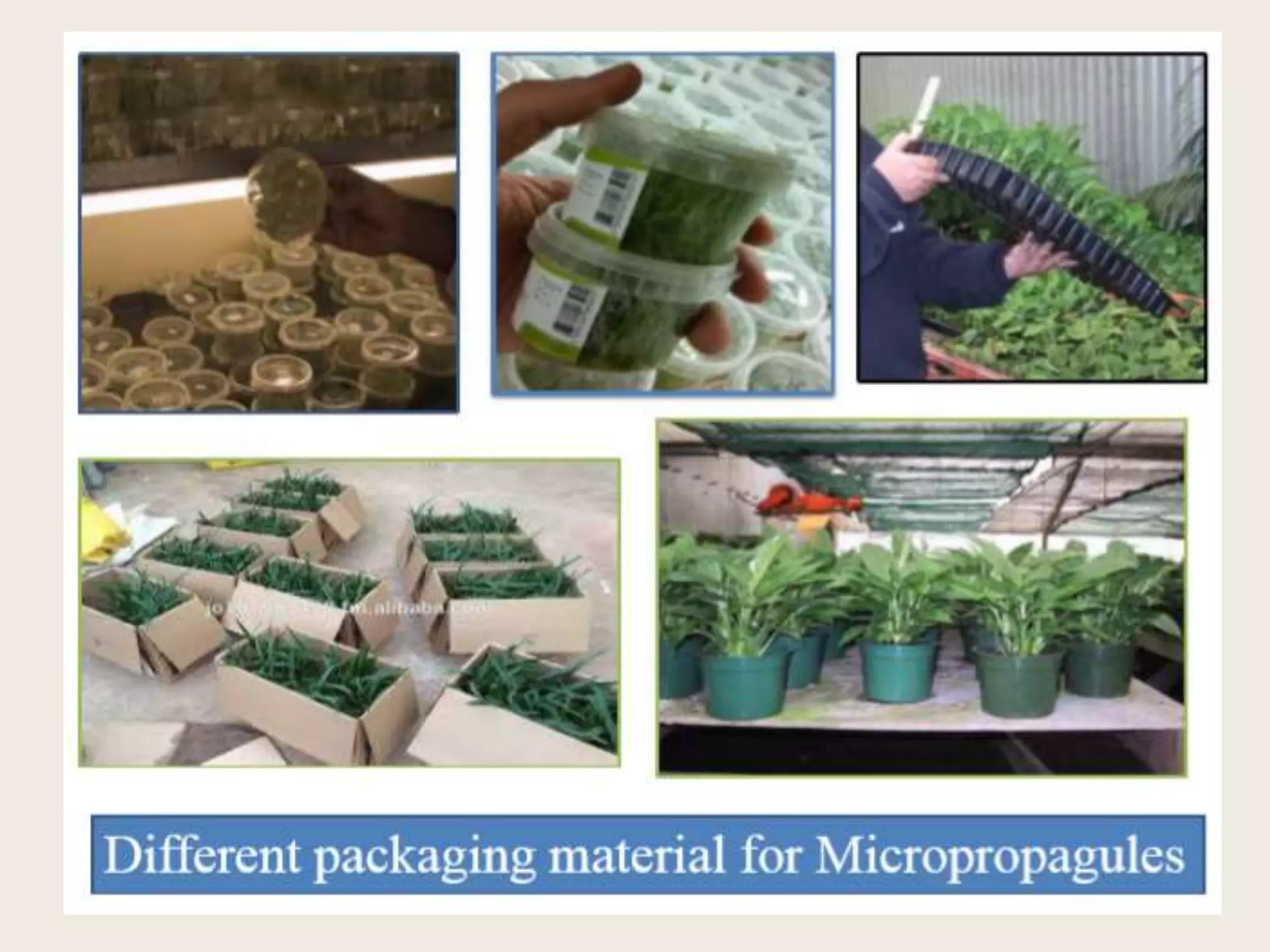
Packaging materials
1. Test tubes plugged with cotton and sealed with plastic
cover and packed in cotton pads.
2. Crush fruit containers which are similar to plastic bags.
3. Foldable bags.
4. Plug trays.
5. Sealed semi permeable plastic bags.
6. Him burg boxes.
7. Thermo coal.
8. Thermo coal with refrigerated condition.
9. Cargo with refrigerated condition.
10. Card board boxes.
11. 4” pots
Transportation
 Tissue culture plants are packed using the packaging
materials mentioned above and they are transported.
 Tissue cultures plants are packed in cargo in
refrigerated condition and them coal sheets provided
with refrigerated condition.
 The tissue culture plants are placed in solidified
medium since it does not get liguidified during
transport.
 It essential to provide optimum temperature and
relative humidity for the survival of plants till it reaches
the desired destination.
 The export of tissue culture plants needs phytosanitary
certificate.
Micropropagation and commercial exploitation in horticulture crops

Micropropagation and commercial exploitation in horticulture crops

  • 1.
    Submitted to: Dr. AjayKumar Banyal Submitted by: Dheeraj Sharma NH-2018-16-M
  • 2.
    Micropropagation • Micropropagation :In vitro clonal propagation through tissue culture is referred to as micropropagation. • Micropropagation refers to the production of the plant from very small plant part, tissues or cells, grown aseptically in a test tube or container under controlled nutritional, environmental and aseptic condition. • Use of tissue culture technique for micropropagation was first started by Morel (1960) for propagation of orchids.
  • 3.
    Term used intissue culture: • Explant : an excised piece of differentiated tissue or organ is regarded as an explant. •Callus: the unorganized and undifferentiated mass of plant cell is referred to as callus. •Totipotency : The ability of an individual cell to develop into a whole plant is referred to as cellular totipotency. Explant
  • 4.
    Principle of micropropagation: •All the biological principles of micropropagation technique are based on the phenomenon or totipotency of cell, which implies that a plant cell has a capacity to generate into a full-fledged plant having different organs.
  • 5.
     Micro propagationmostly involves in vitro clonal propagation by following approaches: 1. Multiplication by axillary buds and apical shoots. 2. Multiplication by adventitious shoots 3. Organogenesis 4. Somatic emryogenesis  Multiplication by axillary buds and apical shoots For good result of micropropagation, explant should be taken from the actively growing shoot tips, and the ideal time is at the end of plant dormancy period. The most widely used media for meristem culture are MS medium and white’s medium.
  • 6.
    Somatic embryogenesis: • Theprocess of regeneration of embryos from somatic cell, tissue or organ ( particullarly epidermis, perenchymatous cells of petioles or secondary root phloem) is regarded as somatic embryogenesis. Somatic embryogenesis and plant regeneration of cassava
  • 7.
    Bud cultures: 2types of bud cultures are used 1. Single node culture 2. Axillary bud culture • Single node culture: the bud found in the axil of leaf along with a piece of stem is isolated and cultured to develop into a plantlet. • Axillary bud culture: shoot tip with axillary bud is isolated.
  • 8.
     Multiplication byadventitious shoots: • It involves stem, bulbs, tubers and rhizomes.  Organogenesis • Organogenesis is the process of morphogenesis involving the formation of plant organs i.e. shoots, roots, flower, buds from explant or cultured plant tissues. • Generally shoots are formed first the roots.  It is of 2 types 1) Direct organogenesis: in direct organogenesis, the tissue undergoes morphogenesis without going through callus or suspension cell culture. 2) Indirect organogenesis: when the organogenesis occurs through callus or suspension cell culture formation, it is regarded as indirect organogenesis.
  • 9.
    1. direct somaticembryogenesis: embryo develops from somatic cell without callus formation. 2. indirect somatic embryogenesis: embryo develops from somatic cell with the formation of callus.
  • 10.
    Application of micropropagation: 1.Rapid rate of multiplication of plant clonally 2. production of disease-free and disease resistant plants 3. induction of mutants and selection of mutants. 4. production of haploids through anther culture 5. wide hybridization through excised embryo and ovule culture. 6. somatic hybrids and cybrids through protoplast fusion. 7. transformation through uptake of foreign genome. 8. cryopreservation of germplasm types.
  • 11.
    Culture techniques:  1.meristem culture: involves the culture of shoot tips and axillary buds. • Nutrient media used : salts, sucrose and vitamins is used in order to minimize the formation of callus. • GA: promote adequate growth. • NAA: stimulate root formation.
  • 12.
    • 2. callusculture: a piece of sterile plant tissue with living cell is transferred to a culture medium to induce callus proliferation.
  • 13.
    3. cell culture:the cells are maintained in the suspension cultures so as to produce free cells and are then sub-culture to regenerate complete plant from single cell.
  • 14.
    • 4. Embryoculture: it involves aseptic excision of the embryo and its transfer to suitable medium for development under optimum culture conditions. This technique is useful in the production of interspecific and intergeneric hybrid. In vitro zygotic embryo culture
  • 15.
    5. protoplast culture:from different sources, protoplasts are cultured in suitable media to regenerate the cell wall and are again cultured in suitable medium for differentiation and morphogenesis. Somatic Hybrid
  • 16.
    6. anther culture:the culture of anthers is of considerable value to breeders as it is possible to produce haploid plants. These haploid plants can be used for the production of homozygous diploid, thus avoiding generation of inbreeding.
  • 17.
    Micrografting • In vitroshoot tip grafting (STG) is the aseptic grafting of a small shoot tip onto an in vitro rootstock produced by seeds or by asexual propagation • Widely used for producing virus-free plants • Alternative option to exchange prunus genetic material among countries • Efforts needed to determine the genetic and physiological barriers at the tissue and/or cell level, so that this technique may be optimized and exploited to its full potential
  • 18.
  • 19.
    Media preparation: • Theculture media usually contain the following constituent: 1. Inorganic nutrients: • macronutrients( concentration > 0.5 m mol/liter): N, P, K, Ca, Mg, and S • Micronutrients: Fe, Zn, B, Cu, Mo 2. carbon and energy source: • Sucrose, glucose, maltose, lactose, galactose raffinose. Among these sucrose is most preferred. 3. organic supplements: it includes vitamins: thiamine, riboflavin, niacin. Organic acids: addition of kreb cycle intermediate citrate, malate, succinate and fumarate.
  • 20.
    organic extract :yeast extract, casein hydrolysate, coconut milk, organic juice and potato extract. Activated charcoal : It involves the adsorption of inhibitory compound such as phenol. Antibiotics : streptomycin or kanomycin are used to prevent the growth of microorganism. 4. growth regulators: • Auxins: at low concentration promote root formation. At high concentration callus formation occurs. 2,4-D is mostly used. • Cytokinin: involves in cell divison, shoot differentiation and somatic embryo formation. Kinetin and benzylaminopurins re mostly used
  • 21.
    • Gibberellin: GA3is mostly used it enhance callus growth and induce dwarf plantlets to elongate. • Abscisic acid: ABA is an important growth regulator for induction of embryogenesis. 5. solidifying agent: Agar is used as an solidifying agent because it does not react with the media constituents and is no digest by the plant enzyme is stable at culture temperature. • Agar at concentration of 0.5-1% is used in medium can form a gel. 6. pH of medium: optimum pH of 5-6 is good for the culture medium.
  • 22.
    Ions Media MS Macronutrient(m mol/liter) ca 2.99 cl 5.98 k 20.05 NH4 20.62 NO3 39.41 PO4 1.25 SO4 1.8 Mg 1.5
  • 23.
    Micronutrient (micro mol/liter) B100 Co 0.1 Cu 0.1 Fe 100 Cl 5 Mn 92.50 Mo 1.00 Zn 30.00
  • 24.
    PEACH (Prunus persica) •Virus free plants of the rootstocks ‘Istara’, ‘GF677’, ‘Penta’, ‘Tetra’, ‘Mrs’, ‘Five Cadman’, ‘Barrier 1’, ‘Gensia’, and ‘Julior’ ‘Hansen 536’ and ‘Hansen 2168’ commercially produce • After seven years of micropropagation, plants performed better than those grafted on rootstocks in all cultivars tested
  • 25.
    Plum • Plant survivalof Japanese plum (cv. "America“, "Gulf ruby") under greenhouse conditions obtained with a very high success rate • Some consider it a useful method for producing planting stock.
  • 26.
    Apricot • In vitroestablishment, proliferation and rooting of two Apricot X plum inter specific hybrid rootstocks HS 405 and HS 706 were recently evaluated.
  • 27.
    PEAR (Pyrus communis) •Difficult to root root stocks and low chilling varieties micropagated with varying degrees. • Own rooted micropropagation of ‘Bartlett’ • More vigorous than grafted on quince but yield lower. • Used to free the germplasm of the viruses and to augment the initial supplies of newly released varieties.
  • 28.
    CHERRY (Prunus avium) •Colt and F-12/1 rootstocks high in demand- extensively micropropagation. • More yield efficient and lighter in colour. • Rapid propagation of new genotypes
  • 29.
    KIWI FRUIT (Actinidiadeliciosa) • Micropropagation for commercial planting routinely followed. • Highest cummulative fruit yields in seven years as compared to plants either grafted or obtained through cuttings. • High resistance to frost conditions. • Some report the lower yield and no consistency in performance. • Trials made only for limited periods of time and long term effects still unknown. • More extensive traits will decide about micropropagation to become a commercial proposition.
  • 30.
    WALNUT (Juglans regia) •Extensive attempts made to develop reproducible protocol. • Acclimatization of tissue culture plants poses the worst type of problem. • Refinement of protocols for high rate of shoot multiplication, rooting and development of cost effective methods. • Success in ex vitro rooting of pest and disease resistant/ tolerant genotypes(about 23), useful for california walnut industry • Use of endomycorihizae at the waening of micropropagated walnut and pear had benefical effect on establishment and survival of plants.
  • 31.
    STRAWBERRY (Fragaria annanasa) •Easy material to micropropagate. Voluminous literature and workable protocols standardized in 1980s. • Old material gets infected with viral diseases and needs to be replaced. Demand very high. • Meristem culture is the only way and a number of genotypes produced which are virus/ fungal free. • Several cultivars propagated in vitro and grown in open. • Pronounced differences in the field performance of in vitro and runner propagated plants like early flowering, lower fruit yield etc. • With low level multiplication cycles and low concentration of cytokinins, pathogen free plants with high yield can be obtained (1 : 28, 800) • Routine task in many commercial laboratoriess
  • 32.
    RASPBERRY (Rubus ideus) •In vitro multiplication + heat therapy to produce virus free plants. • Epigenetic changes observed after a few sub cultures. Cultures need to be reestablished from tested and true to type mother plants. • Yield higher, better root system, freedom from pathogen and availability in large quantity make micropropagation a better alternative.
  • 33.
    Commercial exploitation in horticulturecrops 1. Guava : shoot bud culture in cv. Allahabad safeda • Acclimatization: In rainy season
  • 34.
    2. Aonla: Shootbud culture • Acclmatization: In rainy season
  • 35.
    3. Jamun: Shootbud culture
  • 36.
    4. Mango: Nucellarembryogenesis and somatic embryogenesis
  • 38.
    5. Papaya: Developmentof transgenic papaya resistant to Papaya Leaf Curl Virus and Papaya Ringspot Virus
  • 39.
    Technique of micropropagation: It involves the 5 stages: • Stage 0 selection and preparation of mother plant ↓ • Stage I Initiation and establishment of culture ↓ • Stage II multiplication of shoot or rapid somatic embryo formation ↓ • Stage III in vitro germination of somatic embryos and / or rooting of shoots ↓ • Stage IV transfer of plantlets to sterilized soil for hardening under greenhouse environment
  • 40.
    Stages of micropropagation •Stage 0: selection of mother plant for explant isolation: the mother plant from which explant has to be excised should be a. A certified and true to type representative of the desired species and or cultivar. b. healthy and free from insect pest and disease. c. should be quit vigrous.
  • 41.
    • Stage I: explant establishment in culture medium: during this stage the explant is cultured in a suitable culture medium, preferably agar based media for tissue activation and multiplication.
  • 42.
    • Stage II:proliferation and multiplication: in this stage, repeated sub-culturing is done to encourage more proliferation. The duration of this stage is unlimited and largely depend on the choice of propagator.
  • 43.
    • Stage III:plant establishment and rooting: in this stage the selected plants are forced for root formation, which can be achieved by media modification. The concentration of cytokinins and sugars are reduced and concentration of auxin and light intensity in the laboratory is increased to start with photosynthesis and other physiological.
  • 44.
    • Stage IV •Ex vitro adaptation or plant acclimatization: o Where in vitro plants are adapted to the environment outside the laboratory conditions by managing the interaction of the plants and the "new" environmental conditions. • Acclimatization – • Survival and establishment of plants after transfer to soil (ex vitro)  Transplantation usually done in greenhouse  Keep RH high (relative humidity)  Gradually increase light intensity and lower RH after rooting occurs.  Allows plants to harden and helps plants form cuticle.  These conditions help the plantlets in getting acclimatized to the natural conditions in field
  • 45.
    Hardening or Acclimatization Tissueculture plant in the field
  • 46.
    Packaging Tissue culture plantsare packed after hardening or before hardening. It is better to go for packing the tissue cultured plants before hardening to avoid the loss of plants and also to prevent soil borne contamination during hardening. The type of packaging of a particular plant depends greatly on the temperature zones through which the consignment has to pass from the point of shipment to its destination
  • 47.
    Packaging materials 1. Testtubes plugged with cotton and sealed with plastic cover and packed in cotton pads. 2. Crush fruit containers which are similar to plastic bags. 3. Foldable bags. 4. Plug trays. 5. Sealed semi permeable plastic bags. 6. Him burg boxes. 7. Thermo coal. 8. Thermo coal with refrigerated condition. 9. Cargo with refrigerated condition. 10. Card board boxes. 11. 4” pots
  • 49.
    Transportation  Tissue cultureplants are packed using the packaging materials mentioned above and they are transported.  Tissue cultures plants are packed in cargo in refrigerated condition and them coal sheets provided with refrigerated condition.  The tissue culture plants are placed in solidified medium since it does not get liguidified during transport.  It essential to provide optimum temperature and relative humidity for the survival of plants till it reaches the desired destination.  The export of tissue culture plants needs phytosanitary certificate.