DR. VIBHA KHANNA
Asso. Prof. (Botany)
SPC GOVERNMENT COLLEGE
AJMER (Rajasthan)
PLANT BIOCHEMISTRY
• BLOCK 3. : Nitrogen Metabolism
– PRESENTATION 4:
Mechanism Of Nitrate Uptake And Reduction
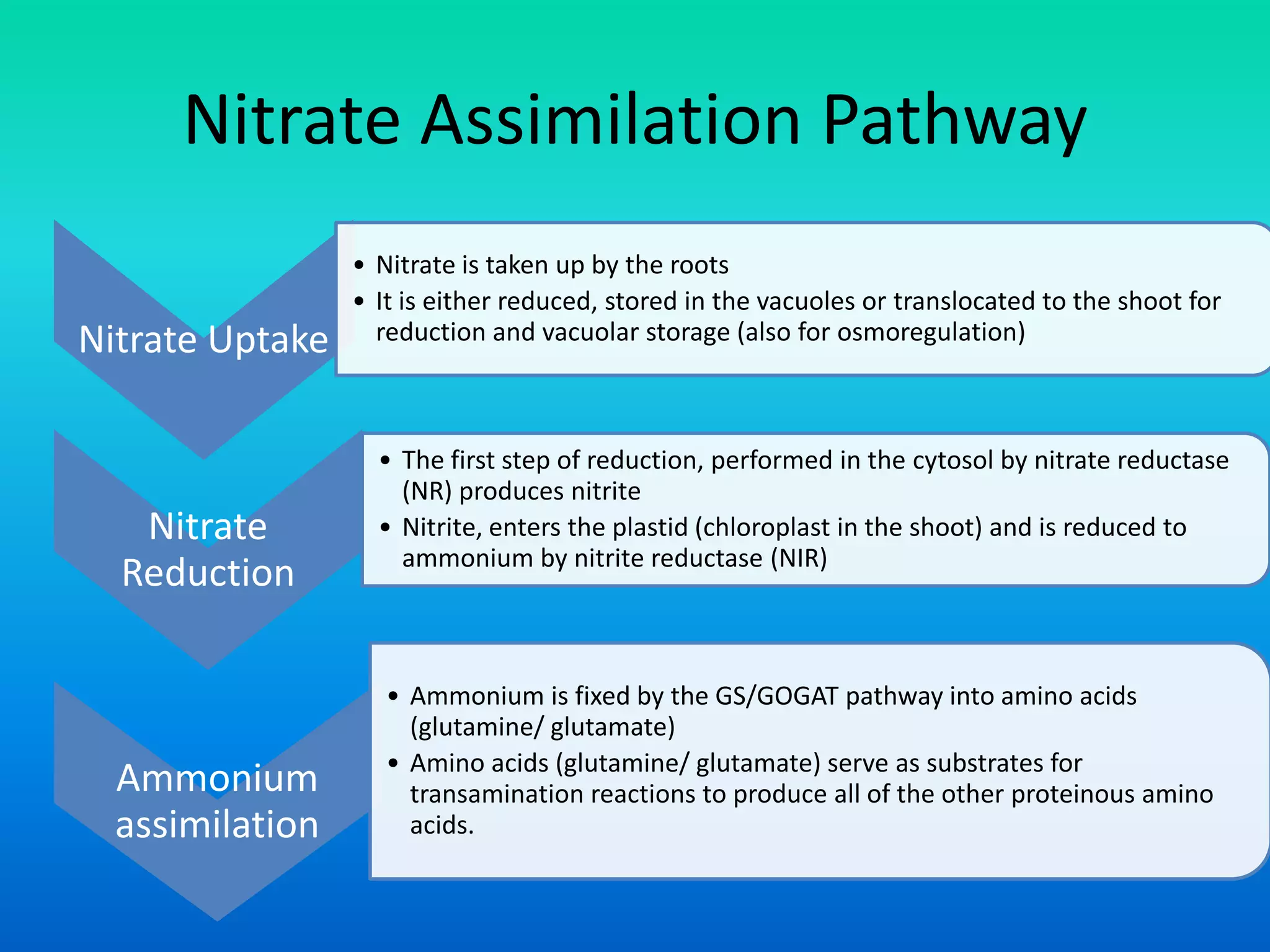
Nitrate Assimilation Pathway
Nitrate Uptake
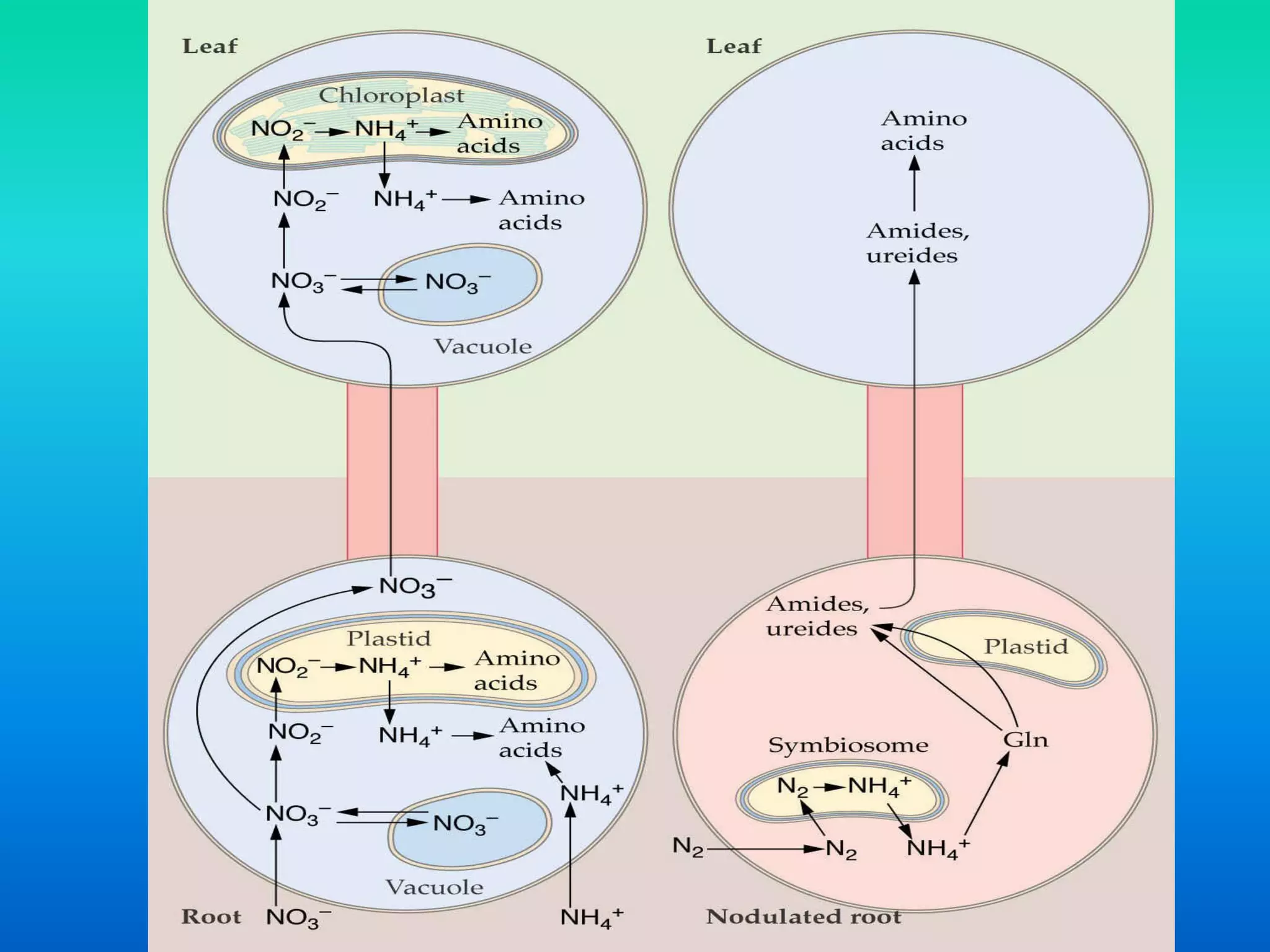
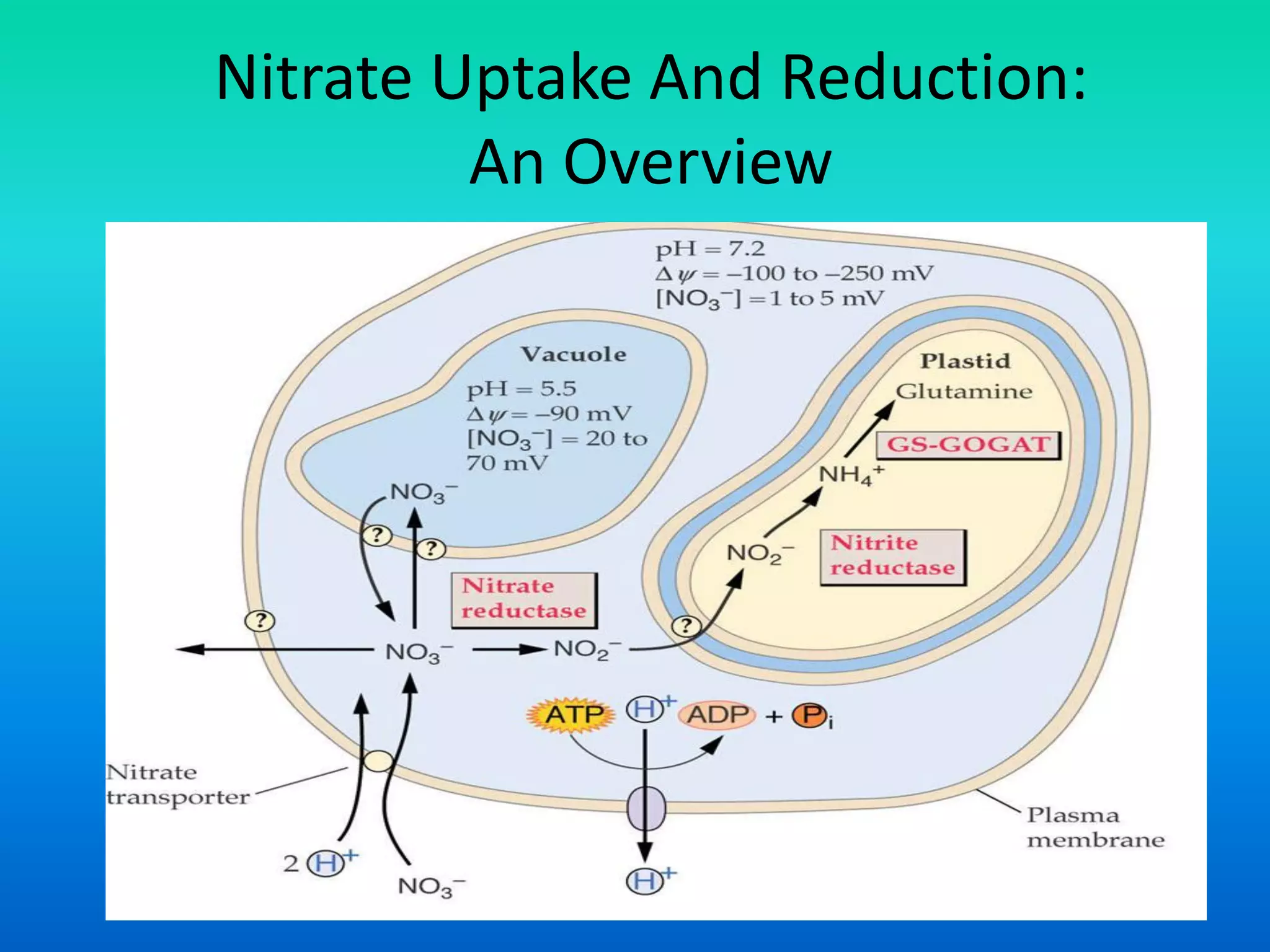
• Nitrate is taken up by the roots
• It is either reduced, stored in the vacuoles or translocated to the shoot for
reduction and vacuolar storage (also for osmoregulation)
Nitrate
Reduction
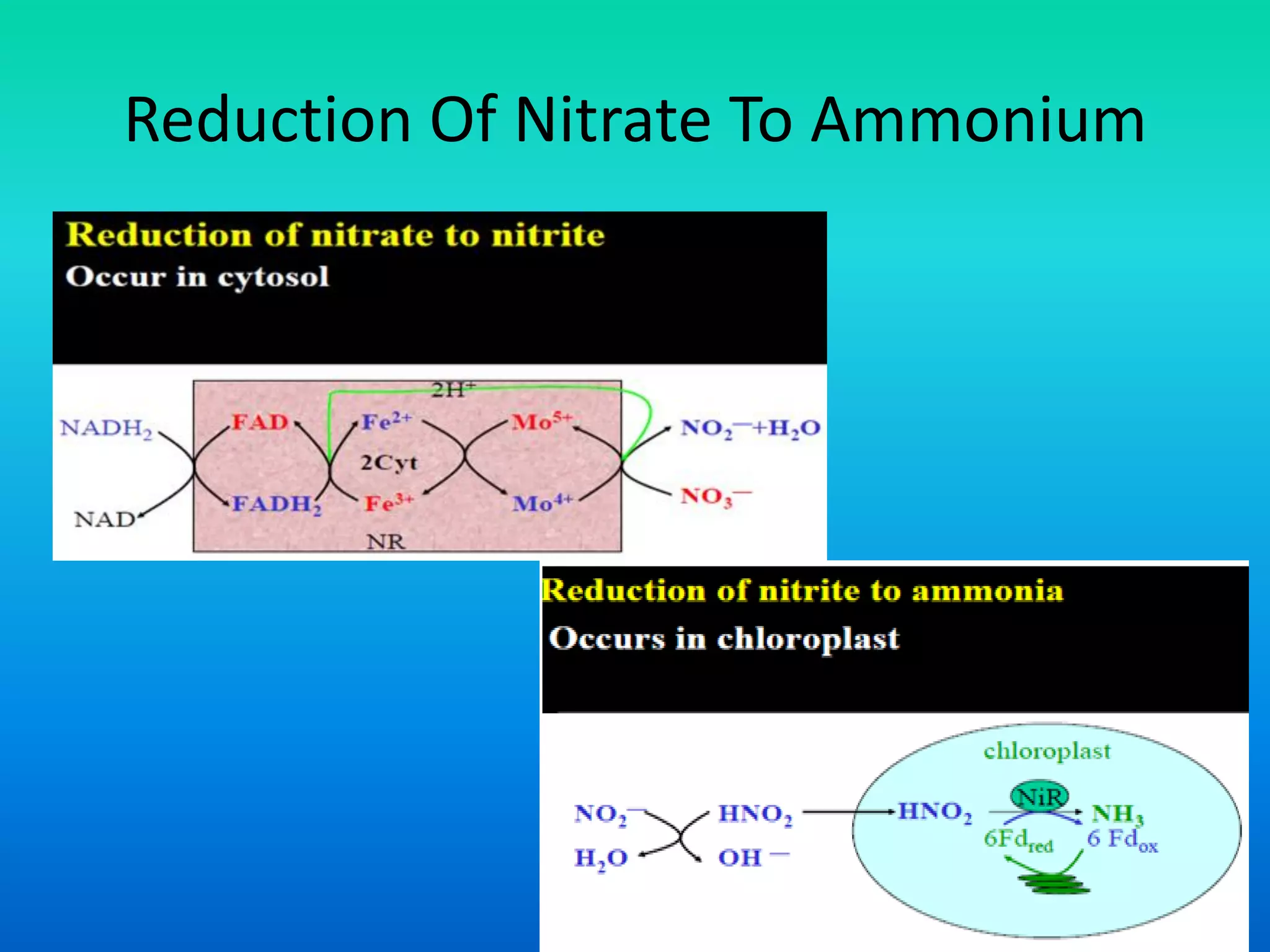
• The first step of reduction, performed in the cytosol by nitrate reductase
(NR) produces nitrite
• Nitrite, enters the plastid (chloroplast in the shoot) and is reduced to
ammonium by nitrite reductase (NIR)
Ammonium
assimilation
• Ammonium is fixed by the GS/GOGAT pathway into amino acids
(glutamine/ glutamate)
• Amino acids (glutamine/ glutamate) serve as substrates for
transamination reactions to produce all of the other proteinous amino
acids.
PHYSIOLOGY OF NITRATE UPTAKE
• The carbohydrate metabolism is affected by
the presence of nitrate which shifts the
relation between starch synthesis and sucrose
synthesis in favour of the latter.
• This finally results in the production of organic
acids such as oxoglutarate as an acceptor for
reduced N in the GS/GOGAT cycle or malate as
a counter‐ion in nitrate uptake and reduction.
Nitrate uptake: Induction
• Induction is the process initiated by exposure
of plants to nitrate, leading to a continuous
increase of nitrate uptake rate.
• This includes an increase in the concentration
of nitrate carriers in the plasma membrane.
• Complete induction i.e., when nitrate uptake
rate reaches a maximum, may take several
hours or may occur immediately
The Nitrate Uptake System
• A low affinity system (LATS)
– operates at high external nitrate concentrations that
appears to be constitutive and unregulated.
– LATS possibly is a carrier system or an anion channel.
– The uptake via LATS has been suggested to be diffusion.
– Its contribution to the overall uptake rate was very low.
• At low external concentrations, two high-affinity
systems appear to operate.
– Constitutive high affinity transport system (cHATS)
(Km for nitrate, 7 μM) is constitutive and
– Inducible high affinity transport system (iHATS) (Km for
nitrate, 15–34 μM) is induced by nitrate
The Nitrate Uptake System
• High affinity transport system (HATS)
– Is regulated by cellular energy supply, and by
intracellular nitrate consumption, its activity
depends on the proton electrochemical gradient.
– HATS is regarded as an H+/anion co-transport
carrier mechanism that produces transient plasma
membrane depolarization upon addition of
nitrate.
– The depolarization is counteracted by the plasma
membrane H+-ATPase which is induced by nitrate.
Nitrate uptake and the Root System
• After induction uptake rate and nitrate reductase activity in the root
tip is high.
• Older root parts were more active in nitrate uptake but nitrate
reductase activity was low. This low nitrate reductase activity was
considered to be an indication for the higher nitrate translocation
from these root parts to the shoot
• In general, nitrate translocation from the root to the shoot depends
on the neighbouring nitrate concentration. At low nitrate
concentrations reduction occurs mainly in roots, at higher
concentrations storage and then transport are adjusted to establish
the N‐status.
• The uptake into the root symplast from the outer medium depends
on the concentration outside the root, whereas the xylem loading
process depends on the shoot demand and the content of reduced
N‐compounds in the phloem
• It has been suggested that HATS is located close to the root tip
whereas LATS is present in older root parts
Regulation of Nitrate uptake
• Nitrate uptake is subject to feedback
regulation mainly by glutamine
• Other amino acids have also been considered
as feed‐back inhibitors of nitrate uptake with
aspartate and glutamate being the most
potent
• Feed‐back control by reduced N‐compounds
triggers nitrate uptake.
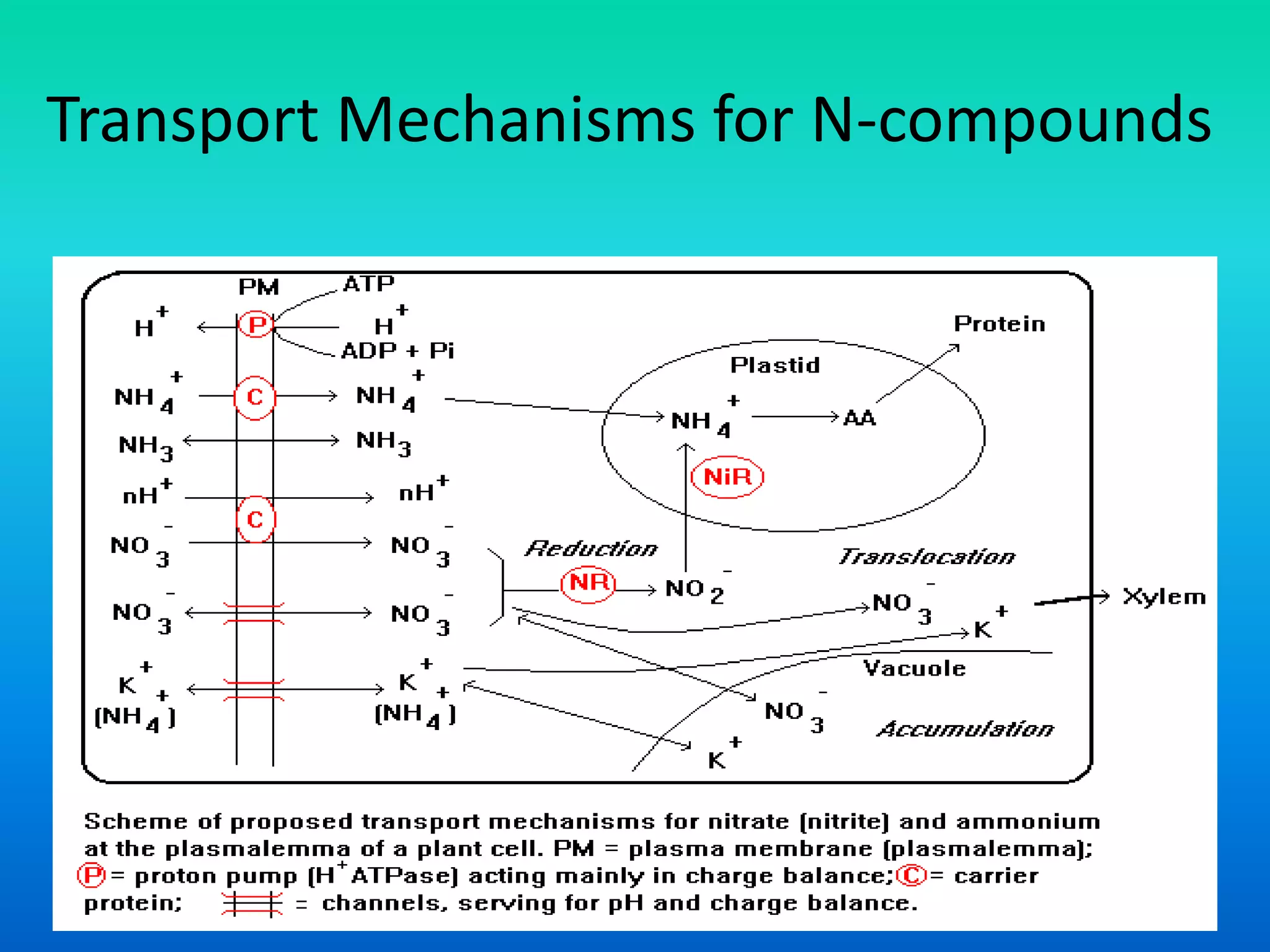
Transport Mechanisms for N-compounds
Nitrate Uptake Mechanism
• The mechanism of nitrate uptake is suggested as
a H+/nitrate co‐transport
• Nitrate transport proteins belong to three
different transporter superfamilies:
– the MFS (major facilitator superfamily),
– the ATP‐binding cassette superfamily and
– the POT (proton‐dependent oligopeptide transporter)
superfamily.
• Further research is required on the vacuolar
nitrate transporter and on the nitrate transporter
involved in xylem loading.
PHYSIOLOGY OF NITRATE REDUCTASE
• Nitrate Reductase enzyme catalyses the first
step in the nitrate‐reducing pathway
• It is localized in the cytosol. It can also be
located at the outside of the plasma
membrane.
• The reduction catalysis leads to the
production of nitrite and needs NADH/NADPH
or both (bispecific) as an electron donor.
Structure Of Nitrate Reductase
• The native enzyme is a dimer in higher plants
• Each subunit (about 100 kDa) contains three
domains from the N‐terminus to the C‐terminus:
– molybdenum cofactor (binding and reduction site for
nitrate),
– heme (cytochrome b) and
– flavine (cytochrome b reductase, binding NAD(P)H).
• MoCo is a molybdenum ion complexed with an
organic molecule pterin, which acts as a metal
chelator.
PM-Nitrate Reductase
• A nitrate reductase located in the plasmalemma
function as both a trans‐membrane proton pump
and a nitrate reductase reducing extracellular
electron acceptors.
• PM‐NR is tightly bound to the plasma membrane .
The attachment to the membrane seems to be a
Glycosylphosphatidylinositol (GPI) ‐anchor, the
protein is therefore located at the outside of the
membrane.
• The suggested functions of PM‐NR includes:
– a blue‐light sensor,
– a nitrate sensor and
– a nitrate protection.
Nitrate Reductase Activity
• NRA (nitrate reductase activity) is assumed to be the
rate‐limiting step of the nitrate assimilating pathway
• The NRA is inducible
– by nitrate,
– depletion of N‐sources such as ammonium or organic
N‐compounds.
• Post‐transcriptional regulation of NR is important for
the short‐term coupling between photosynthesis and
nitrate reduction,
• In plants a post‐transcriptional regulation (gene
silencing) exists leading to RNA degradation after
transcription.
Nitrate reductase and interactions
between C‐ and N‐metabolism
• Both C‐ and N‐metabolism, depend on each other and both
pathways are regulated by each other.
• The phosphoenolpyruvate carboxylase (PEPCo) is
considered to be an important cross point between these
pathways by delivering oxalacetate to the citric cycle (which
might be limited by the removal of oxo‐glutarate for amino
acid synthesis) or to aspartate synthesis.
• The flow of carbon has to be directed in either sugar or
starch synthesis or that of organic acids for amino acid
formation.
• Enhanced carbon dioxide has a stimulatory effect on nitrate
assimilation
Nitrate Reductase: Activity
• A nitrate reductase (NR) dimerhas binding sites for
NAD (P) H and for nitrate.
• Three cofactors —FAD, heme-Fe and molybdenum
cofactor (MoCo) — form the redox centers that
facilitate the chain of electron transfer reactions as
follows:
Nitrate Reductase: Activity
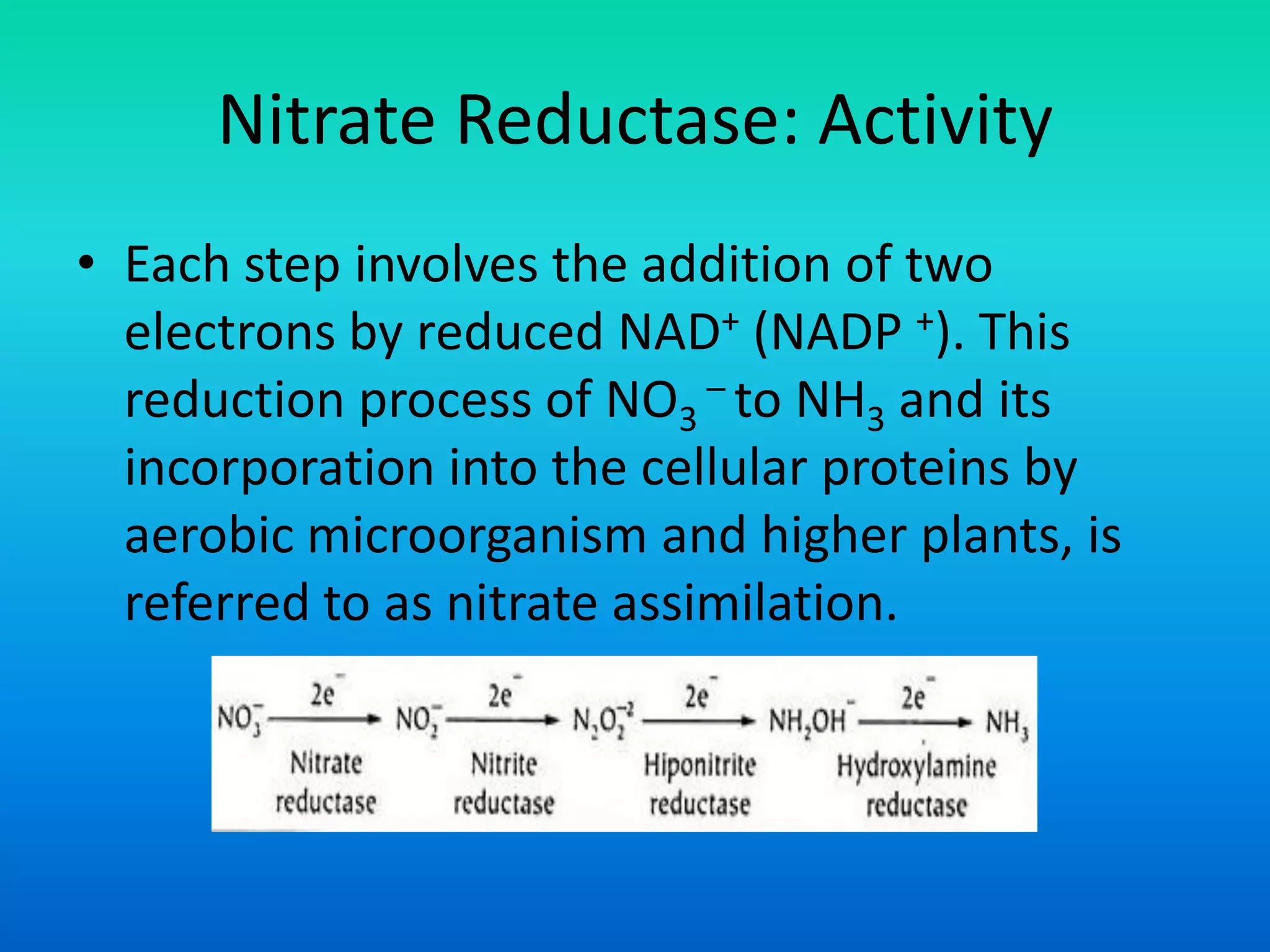
• Each step involves the addition of two
electrons by reduced NAD+ (NADP +). This
reduction process of NO3
– to NH3 and its
incorporation into the cellular proteins by
aerobic microorganism and higher plants, is
referred to as nitrate assimilation.
Reduction Of Nitrate To Ammonium
Nitrite Reductase
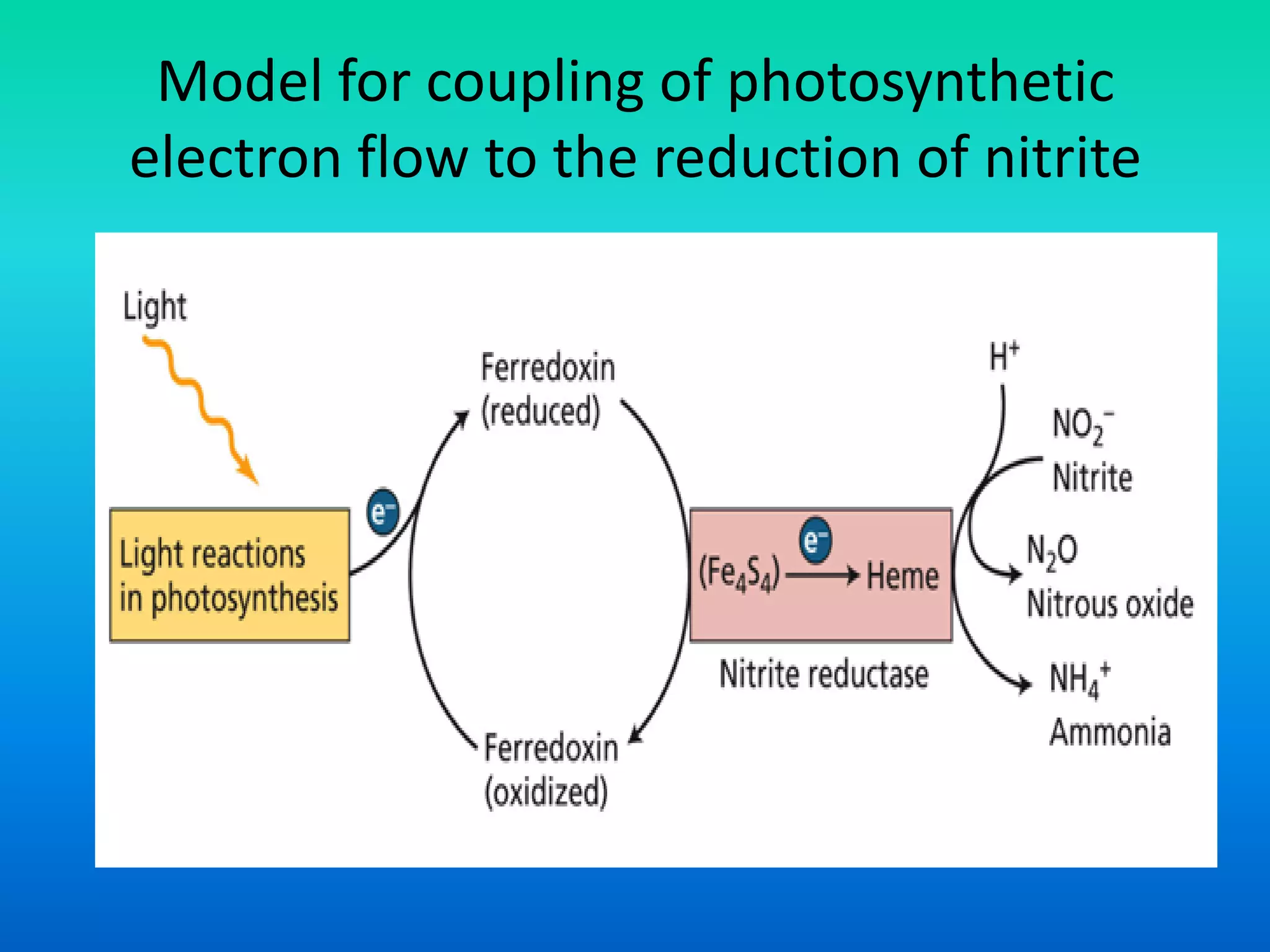
• Nitrite reductase (NiR) transfers electrons from
ferredoxin to nitrite as follows:
NO2 + 6Fdred + 8H+ + 6e → NH4 + 6Fdox + 2H2O
• The source of electrons is reduced ferredoxin (Fdred),
produced in chloroplasts by photosynthetic noncyclic
electron transfer. In non-photosynthetic tissues nitrite
reduction also utilizes Fdred in plastids.
• The NADPH produced from oxidative pentose
phosphate pathway reduces ferredoxin by an enzyme
Fd-NADP+ reductase.
Structure of Nitrite Reductase
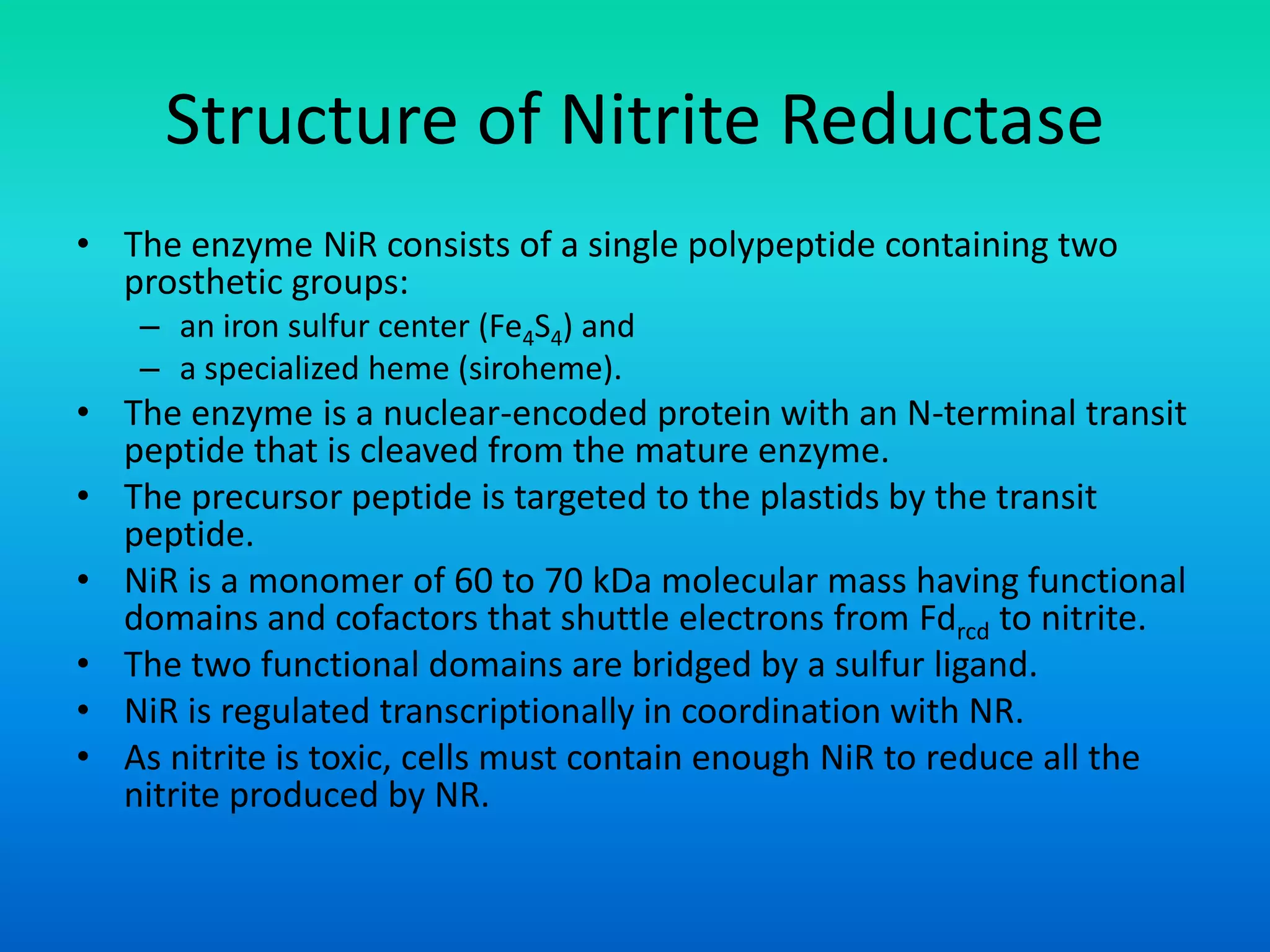
• The enzyme NiR consists of a single polypeptide containing two
prosthetic groups:
– an iron sulfur center (Fe4S4) and
– a specialized heme (siroheme).
• The enzyme is a nuclear-encoded protein with an N-terminal transit
peptide that is cleaved from the mature enzyme.
• The precursor peptide is targeted to the plastids by the transit
peptide.
• NiR is a monomer of 60 to 70 kDa molecular mass having functional
domains and cofactors that shuttle electrons from Fdrcd to nitrite.
• The two functional domains are bridged by a sulfur ligand.
• NiR is regulated transcriptionally in coordination with NR.
• As nitrite is toxic, cells must contain enough NiR to reduce all the
nitrite produced by NR.
Model for coupling of photosynthetic
electron flow to the reduction of nitrite
Nitrate Uptake And Reduction:
An Overview

Nitrate uptake and reduction

  • 1.
    DR. VIBHA KHANNA Asso.Prof. (Botany) SPC GOVERNMENT COLLEGE AJMER (Rajasthan)
  • 2.
    PLANT BIOCHEMISTRY • BLOCK3. : Nitrogen Metabolism – PRESENTATION 4: Mechanism Of Nitrate Uptake And Reduction
  • 3.
    Nitrate Assimilation Pathway NitrateUptake • Nitrate is taken up by the roots • It is either reduced, stored in the vacuoles or translocated to the shoot for reduction and vacuolar storage (also for osmoregulation) Nitrate Reduction • The first step of reduction, performed in the cytosol by nitrate reductase (NR) produces nitrite • Nitrite, enters the plastid (chloroplast in the shoot) and is reduced to ammonium by nitrite reductase (NIR) Ammonium assimilation • Ammonium is fixed by the GS/GOGAT pathway into amino acids (glutamine/ glutamate) • Amino acids (glutamine/ glutamate) serve as substrates for transamination reactions to produce all of the other proteinous amino acids.
  • 5.
    PHYSIOLOGY OF NITRATEUPTAKE • The carbohydrate metabolism is affected by the presence of nitrate which shifts the relation between starch synthesis and sucrose synthesis in favour of the latter. • This finally results in the production of organic acids such as oxoglutarate as an acceptor for reduced N in the GS/GOGAT cycle or malate as a counter‐ion in nitrate uptake and reduction.
  • 6.
    Nitrate uptake: Induction •Induction is the process initiated by exposure of plants to nitrate, leading to a continuous increase of nitrate uptake rate. • This includes an increase in the concentration of nitrate carriers in the plasma membrane. • Complete induction i.e., when nitrate uptake rate reaches a maximum, may take several hours or may occur immediately
  • 7.
    The Nitrate UptakeSystem • A low affinity system (LATS) – operates at high external nitrate concentrations that appears to be constitutive and unregulated. – LATS possibly is a carrier system or an anion channel. – The uptake via LATS has been suggested to be diffusion. – Its contribution to the overall uptake rate was very low. • At low external concentrations, two high-affinity systems appear to operate. – Constitutive high affinity transport system (cHATS) (Km for nitrate, 7 μM) is constitutive and – Inducible high affinity transport system (iHATS) (Km for nitrate, 15–34 μM) is induced by nitrate
  • 8.
    The Nitrate UptakeSystem • High affinity transport system (HATS) – Is regulated by cellular energy supply, and by intracellular nitrate consumption, its activity depends on the proton electrochemical gradient. – HATS is regarded as an H+/anion co-transport carrier mechanism that produces transient plasma membrane depolarization upon addition of nitrate. – The depolarization is counteracted by the plasma membrane H+-ATPase which is induced by nitrate.
  • 9.
    Nitrate uptake andthe Root System • After induction uptake rate and nitrate reductase activity in the root tip is high. • Older root parts were more active in nitrate uptake but nitrate reductase activity was low. This low nitrate reductase activity was considered to be an indication for the higher nitrate translocation from these root parts to the shoot • In general, nitrate translocation from the root to the shoot depends on the neighbouring nitrate concentration. At low nitrate concentrations reduction occurs mainly in roots, at higher concentrations storage and then transport are adjusted to establish the N‐status. • The uptake into the root symplast from the outer medium depends on the concentration outside the root, whereas the xylem loading process depends on the shoot demand and the content of reduced N‐compounds in the phloem • It has been suggested that HATS is located close to the root tip whereas LATS is present in older root parts
  • 10.
    Regulation of Nitrateuptake • Nitrate uptake is subject to feedback regulation mainly by glutamine • Other amino acids have also been considered as feed‐back inhibitors of nitrate uptake with aspartate and glutamate being the most potent • Feed‐back control by reduced N‐compounds triggers nitrate uptake.
  • 11.
  • 12.
    Nitrate Uptake Mechanism •The mechanism of nitrate uptake is suggested as a H+/nitrate co‐transport • Nitrate transport proteins belong to three different transporter superfamilies: – the MFS (major facilitator superfamily), – the ATP‐binding cassette superfamily and – the POT (proton‐dependent oligopeptide transporter) superfamily. • Further research is required on the vacuolar nitrate transporter and on the nitrate transporter involved in xylem loading.
  • 13.
    PHYSIOLOGY OF NITRATEREDUCTASE • Nitrate Reductase enzyme catalyses the first step in the nitrate‐reducing pathway • It is localized in the cytosol. It can also be located at the outside of the plasma membrane. • The reduction catalysis leads to the production of nitrite and needs NADH/NADPH or both (bispecific) as an electron donor.
  • 14.
    Structure Of NitrateReductase • The native enzyme is a dimer in higher plants • Each subunit (about 100 kDa) contains three domains from the N‐terminus to the C‐terminus: – molybdenum cofactor (binding and reduction site for nitrate), – heme (cytochrome b) and – flavine (cytochrome b reductase, binding NAD(P)H). • MoCo is a molybdenum ion complexed with an organic molecule pterin, which acts as a metal chelator.
  • 15.
    PM-Nitrate Reductase • Anitrate reductase located in the plasmalemma function as both a trans‐membrane proton pump and a nitrate reductase reducing extracellular electron acceptors. • PM‐NR is tightly bound to the plasma membrane . The attachment to the membrane seems to be a Glycosylphosphatidylinositol (GPI) ‐anchor, the protein is therefore located at the outside of the membrane. • The suggested functions of PM‐NR includes: – a blue‐light sensor, – a nitrate sensor and – a nitrate protection.
  • 16.
    Nitrate Reductase Activity •NRA (nitrate reductase activity) is assumed to be the rate‐limiting step of the nitrate assimilating pathway • The NRA is inducible – by nitrate, – depletion of N‐sources such as ammonium or organic N‐compounds. • Post‐transcriptional regulation of NR is important for the short‐term coupling between photosynthesis and nitrate reduction, • In plants a post‐transcriptional regulation (gene silencing) exists leading to RNA degradation after transcription.
  • 17.
    Nitrate reductase andinteractions between C‐ and N‐metabolism • Both C‐ and N‐metabolism, depend on each other and both pathways are regulated by each other. • The phosphoenolpyruvate carboxylase (PEPCo) is considered to be an important cross point between these pathways by delivering oxalacetate to the citric cycle (which might be limited by the removal of oxo‐glutarate for amino acid synthesis) or to aspartate synthesis. • The flow of carbon has to be directed in either sugar or starch synthesis or that of organic acids for amino acid formation. • Enhanced carbon dioxide has a stimulatory effect on nitrate assimilation
  • 18.
    Nitrate Reductase: Activity •A nitrate reductase (NR) dimerhas binding sites for NAD (P) H and for nitrate. • Three cofactors —FAD, heme-Fe and molybdenum cofactor (MoCo) — form the redox centers that facilitate the chain of electron transfer reactions as follows:
  • 19.
    Nitrate Reductase: Activity •Each step involves the addition of two electrons by reduced NAD+ (NADP +). This reduction process of NO3 – to NH3 and its incorporation into the cellular proteins by aerobic microorganism and higher plants, is referred to as nitrate assimilation.
  • 20.
  • 21.
    Nitrite Reductase • Nitritereductase (NiR) transfers electrons from ferredoxin to nitrite as follows: NO2 + 6Fdred + 8H+ + 6e → NH4 + 6Fdox + 2H2O • The source of electrons is reduced ferredoxin (Fdred), produced in chloroplasts by photosynthetic noncyclic electron transfer. In non-photosynthetic tissues nitrite reduction also utilizes Fdred in plastids. • The NADPH produced from oxidative pentose phosphate pathway reduces ferredoxin by an enzyme Fd-NADP+ reductase.
  • 22.
    Structure of NitriteReductase • The enzyme NiR consists of a single polypeptide containing two prosthetic groups: – an iron sulfur center (Fe4S4) and – a specialized heme (siroheme). • The enzyme is a nuclear-encoded protein with an N-terminal transit peptide that is cleaved from the mature enzyme. • The precursor peptide is targeted to the plastids by the transit peptide. • NiR is a monomer of 60 to 70 kDa molecular mass having functional domains and cofactors that shuttle electrons from Fdrcd to nitrite. • The two functional domains are bridged by a sulfur ligand. • NiR is regulated transcriptionally in coordination with NR. • As nitrite is toxic, cells must contain enough NiR to reduce all the nitrite produced by NR.
  • 23.
    Model for couplingof photosynthetic electron flow to the reduction of nitrite
  • 24.
    Nitrate Uptake AndReduction: An Overview