POL 252 
Fall 2014
 Who Rules? 
 Answer: Single Individual or Small Elite 
 Political Participation: Players and Rules 
 No Democratic Accountability 
 Court System 
 Constitutional Guarantees
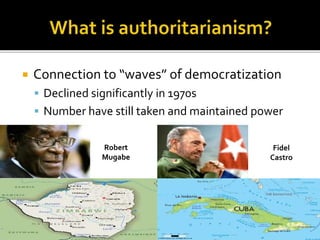
 Connection to “waves” of democratization 
 Declined significantly in 1970s 
 Number have still taken and maintained power 
Robert 
Mugabe 
Fidel 
Castro
 Socialist economy + Authoritarian Politics 
 Common Features: 
 Encompassing Ideology 
 Single Political Party led by Dominant Leader 
 Mobilization of Support for Party and Leader 
 State Ownership of Media 
 Use of Terror and Violence
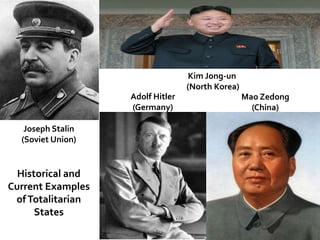
Joseph Stalin 
(Soviet Union) 
Historical and 
Current Examples 
of Totalitarian 
States 
Adolf Hitler 
(Germany) 
Mao Zedong 
(China) 
Kim Jong-un 
(North Korea)
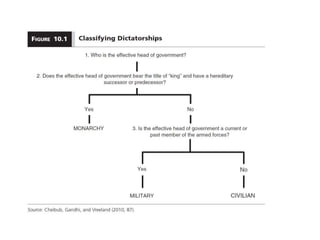
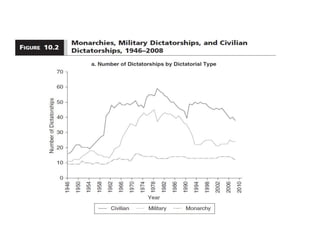
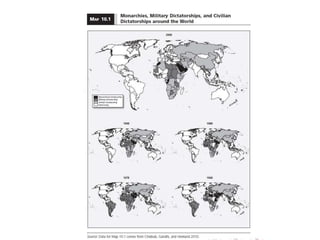
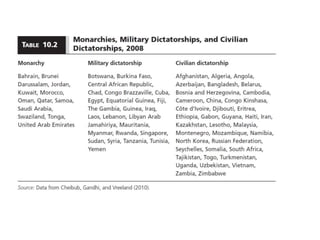
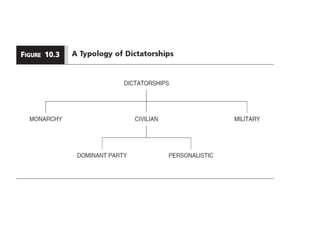
 Monarchies 
 Military Dictatorships 
 Civilian Dictatorships
 Who Rules? 
 Emphasis on Royal Descent 
 Political power and authority is variable 
 Ceremonial duties to major policy decisions 
 Challenge is asserting political legitimacy 
 Without election, how do you make citizens happy?
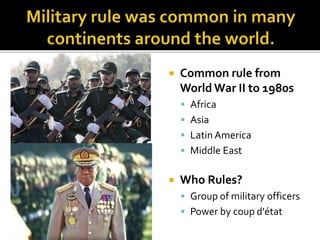
 Common rule from 
World War II to 1980s 
 Africa 
 Asia 
 Latin America 
 Middle East 
 Who Rules? 
 Group of military officers 
 Power by coup d'état
 How does military consolidate power? 
 Cannot use violence 
 Must convince citizens of right to rule 
 Three Responses: 
 Return to Democratic Rule…eventually… 
 Hold Elections…but military party has advantages 
 Defend Nation Against Internal/External Threats
 Martial Law 
 Curfews, Banning Protests/Demonstrations 
 Use of Spies/Informants 
 Mission: Find and Kill Dissidents 
 Ban Opposition Media Outlets
 Dominant Party 
 Personalistic
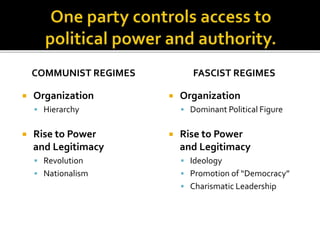
COMMUNIST REGIMES 
 Organization 
 Hierarchy 
 Rise to Power 
and Legitimacy 
 Revolution 
 Nationalism 
FASCIST REGIMES 
 Organization 
 Dominant Political Figure 
 Rise to Power 
and Legitimacy 
 Ideology 
 Promotion of “Democracy” 
 Charismatic Leadership
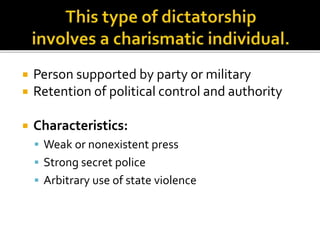
 Person supported by party or military 
 Retention of political control and authority 
 Characteristics: 
 Weak or nonexistent press 
 Strong secret police 
 Arbitrary use of state violence
 Contests are not “free” and fair,” heavily 
favoring the ruling party
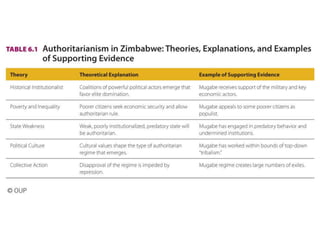
 Historical Institutionalism 
 Poverty and Inequality 
 State Weakness and Failure 
 Political Culture 
 Barriers to Collective Action
Authoritarian Regimes and Democratic Breakdown

Authoritarian Regimes and Democratic Breakdown

  • 1.
  • 4.
     Who Rules?  Answer: Single Individual or Small Elite  Political Participation: Players and Rules  No Democratic Accountability  Court System  Constitutional Guarantees
  • 5.
     Connection to“waves” of democratization  Declined significantly in 1970s  Number have still taken and maintained power Robert Mugabe Fidel Castro
  • 8.
     Socialist economy+ Authoritarian Politics  Common Features:  Encompassing Ideology  Single Political Party led by Dominant Leader  Mobilization of Support for Party and Leader  State Ownership of Media  Use of Terror and Violence
  • 9.
    Joseph Stalin (SovietUnion) Historical and Current Examples of Totalitarian States Adolf Hitler (Germany) Mao Zedong (China) Kim Jong-un (North Korea)
  • 11.
     Monarchies Military Dictatorships  Civilian Dictatorships
  • 17.
     Who Rules?  Emphasis on Royal Descent  Political power and authority is variable  Ceremonial duties to major policy decisions  Challenge is asserting political legitimacy  Without election, how do you make citizens happy?
  • 19.
     Common rulefrom World War II to 1980s  Africa  Asia  Latin America  Middle East  Who Rules?  Group of military officers  Power by coup d'état
  • 21.
     How doesmilitary consolidate power?  Cannot use violence  Must convince citizens of right to rule  Three Responses:  Return to Democratic Rule…eventually…  Hold Elections…but military party has advantages  Defend Nation Against Internal/External Threats
  • 22.
     Martial Law  Curfews, Banning Protests/Demonstrations  Use of Spies/Informants  Mission: Find and Kill Dissidents  Ban Opposition Media Outlets
  • 24.
     Dominant Party  Personalistic
  • 26.
    COMMUNIST REGIMES Organization  Hierarchy  Rise to Power and Legitimacy  Revolution  Nationalism FASCIST REGIMES  Organization  Dominant Political Figure  Rise to Power and Legitimacy  Ideology  Promotion of “Democracy”  Charismatic Leadership
  • 28.
     Person supportedby party or military  Retention of political control and authority  Characteristics:  Weak or nonexistent press  Strong secret police  Arbitrary use of state violence
  • 31.
     Contests arenot “free” and fair,” heavily favoring the ruling party
  • 33.
     Historical Institutionalism  Poverty and Inequality  State Weakness and Failure  Political Culture  Barriers to Collective Action