POL 205
Spring 2020
Article I of the Constitution
establishes the legislative branch.
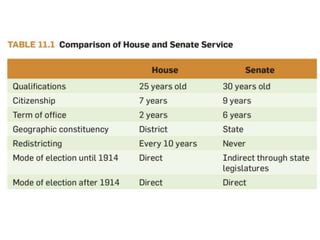
 Larger chamber
 Representation by
state population
 Mode of Election
 People
 Smaller chamber
 Representation
through equality
 Mode of Election
 State Legislatures
 People
FORMALISTIC
REPRESENTATION
 Accountability and
responsiveness
 Includes:
 Policy Representation
 Allocative Representation
 Casework
Casework includes helping constituents
with an array of services.
SYMBOLIC
REPRESENTATION
 Represents positive values
about politics and govt.
DESCRIPTIVE
REPRESENTATION
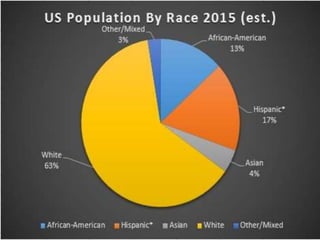
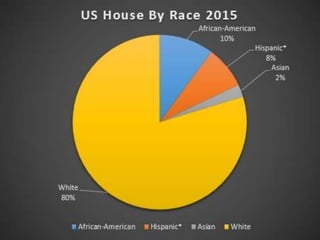
 Representation includes
race, ethnicity, gender
 Congress looks like America
Former President Obama speaks
to students in Arlington, VA
SUBSTANTIVE
REPRESENTATION
SEN.TAMMY BALDWIN (D-WI)
 Legislators advocate for
particular groups in society
Sen. Baldwin could advocate
for pro-LGBT policies
for all homosexuals in America.
 #1: Lawmaking
 Enumerated Powers (Article I, Section 8)
 “Necessary and Proper Clause”, Implied Powers
 #2:War and Foreign Policy
 Formal Declarations and Military Operations
 #3: Regulation of Commerce
 Monopolies, Labor Unions, Wages, Discrimination
 #4: Appropriations
 “Power of the Purse”
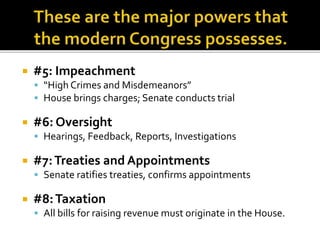
 #5: Impeachment
 “High Crimes and Misdemeanors”
 House brings charges; Senate conducts trial
 #6: Oversight
 Hearings, Feedback, Reports, Investigations
 #7:Treaties and Appointments
 Senate ratifies treaties, confirms appointments
 #8:Taxation
 All bills for raising revenue must originate in the House.
 Is this a district or state I can win?
 Can I beat my opponent?
 Issue of Incumbency Advantage
 Can I get money to run winning campaign?
 How are the national trends running?
 Speaker of the House: Nancy Pelosi (D-CA)
 Presiding officer of the House
 Leader and chief spokesperson for majority party
 House Majority Leader: Steny Hoyer (D-MD)
 Works with Speaker on party agenda
 Coordinates with committees on legislation
 House Minority Leader: Kevin McCarthy (R-CA)
 Highest-ranking minority party member
 Spokesman for minority and crafts agenda
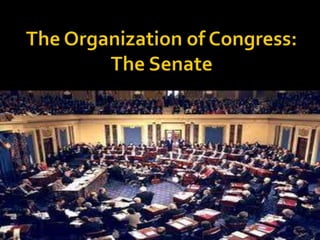
 President of the Senate: VP Mike Pence
 Presides over Senate and votes in case of a tie
 Rarely performs this job today
 President ProTempore: Chuck Grassley (R-KS)
 Majority party senator with longest tenure
 Largely ceremonial position
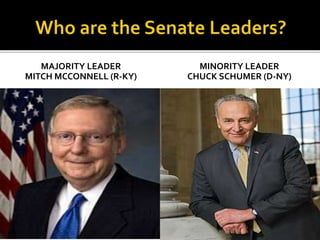
MAJORITY LEADER
MITCH MCCONNELL (R-KY)
MINORITY LEADER
CHUCK SCHUMER (D-NY)
 Managing party membership
 Scheduling Senate business for members
 Monitoring deliberations on Senate floor
 Intermediary for Congress andWhite House
 Representing party/Senate to media
 Congress is organized into committees.
 Majority party has majority of seats on cmte.
 Democrats in House
 Republicans in Senate
 Committee Chair from majority party
 Ranking Member from minority party
 Standing Committees
 Permanent Committees
 Major Policy Areas (e.g. Budget, Judiciary)
 Select or Special Committees
 Temporary Committees (e.g. investigations)
 Focused on narrow issues
 Joint Committees
 Both House and Senate membership
 Conference Committees
 Resolve House and Senate versions of passed legislation
 Ideas can come from anywhere:
 President, Constituents, fellow Congressmen, etc.
 Member introduces idea in form of a bill
 They are the bill’s sponsor
 After bill is introduced, cosponsors can
support the legislation
 Importance of Jurisdiction
 Most bills DIE in committee
 Bill assigned to a subcommittee
 Smaller group of legislators who focuses on one
part of committee’s issues
 Testimony on content and impact of a bill
 Main Purposes of Hearings:
 Draw attention to problem or issue
 Advantages and disadvantages to bill
 Express constituents’ questions and concerns
 Subcommittee drafts (marks up) the bill
 Bill goes back to full committee
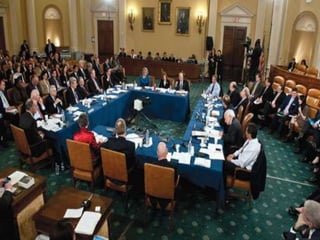
 Committee conducts more hearings and
debate on bill
 If accepted, bill reported out of committee
 To proceed to the House floor, all bills must
pass through the House Rules Committee
 What is a rule?
 Influence of the majority on Rules Cmte.
HOLD
 Prevents bill from being
voted on for 24 hours
 Hold provides:
 Information on issue
 Concession from leadership or
White House
FILIBUSTER
 Endless speeches on topic
 Eliminated for executive
and judicial branch
nominees, including
Supreme Court
 Personal Opinion / Judgment
 Constituent Opinion
 Interest Groups
 Political Parties
 The President
 Logrolling
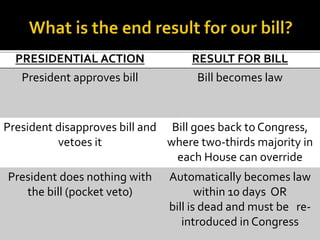
PRESIDENTIAL ACTION RESULT FOR BILL
President approves bill Bill becomes law
President disapproves bill and
vetoes it
Bill goes back to Congress,
where two-thirds majority in
each House can override
President does nothing with
the bill (pocket veto)
Automatically becomes law
within 10 days OR
bill is dead and must be re-
introduced in Congress

Congress

  • 1.
  • 5.
    Article I ofthe Constitution establishes the legislative branch.
  • 6.
     Larger chamber Representation by state population  Mode of Election  People
  • 7.
     Smaller chamber Representation through equality  Mode of Election  State Legislatures  People
  • 11.
    FORMALISTIC REPRESENTATION  Accountability and responsiveness Includes:  Policy Representation  Allocative Representation  Casework Casework includes helping constituents with an array of services.
  • 12.
    SYMBOLIC REPRESENTATION  Represents positivevalues about politics and govt. DESCRIPTIVE REPRESENTATION  Representation includes race, ethnicity, gender  Congress looks like America Former President Obama speaks to students in Arlington, VA
  • 15.
    SUBSTANTIVE REPRESENTATION SEN.TAMMY BALDWIN (D-WI) Legislators advocate for particular groups in society Sen. Baldwin could advocate for pro-LGBT policies for all homosexuals in America.
  • 17.
     #1: Lawmaking Enumerated Powers (Article I, Section 8)  “Necessary and Proper Clause”, Implied Powers  #2:War and Foreign Policy  Formal Declarations and Military Operations  #3: Regulation of Commerce  Monopolies, Labor Unions, Wages, Discrimination  #4: Appropriations  “Power of the Purse”
  • 18.
     #5: Impeachment “High Crimes and Misdemeanors”  House brings charges; Senate conducts trial  #6: Oversight  Hearings, Feedback, Reports, Investigations  #7:Treaties and Appointments  Senate ratifies treaties, confirms appointments  #8:Taxation  All bills for raising revenue must originate in the House.
  • 20.
     Is thisa district or state I can win?  Can I beat my opponent?  Issue of Incumbency Advantage  Can I get money to run winning campaign?  How are the national trends running?
  • 25.
     Speaker ofthe House: Nancy Pelosi (D-CA)  Presiding officer of the House  Leader and chief spokesperson for majority party  House Majority Leader: Steny Hoyer (D-MD)  Works with Speaker on party agenda  Coordinates with committees on legislation  House Minority Leader: Kevin McCarthy (R-CA)  Highest-ranking minority party member  Spokesman for minority and crafts agenda
  • 27.
     President ofthe Senate: VP Mike Pence  Presides over Senate and votes in case of a tie  Rarely performs this job today  President ProTempore: Chuck Grassley (R-KS)  Majority party senator with longest tenure  Largely ceremonial position
  • 28.
    MAJORITY LEADER MITCH MCCONNELL(R-KY) MINORITY LEADER CHUCK SCHUMER (D-NY)
  • 29.
     Managing partymembership  Scheduling Senate business for members  Monitoring deliberations on Senate floor  Intermediary for Congress andWhite House  Representing party/Senate to media
  • 31.
     Congress isorganized into committees.  Majority party has majority of seats on cmte.  Democrats in House  Republicans in Senate  Committee Chair from majority party  Ranking Member from minority party
  • 32.
     Standing Committees Permanent Committees  Major Policy Areas (e.g. Budget, Judiciary)  Select or Special Committees  Temporary Committees (e.g. investigations)  Focused on narrow issues  Joint Committees  Both House and Senate membership  Conference Committees  Resolve House and Senate versions of passed legislation
  • 36.
     Ideas cancome from anywhere:  President, Constituents, fellow Congressmen, etc.  Member introduces idea in form of a bill  They are the bill’s sponsor  After bill is introduced, cosponsors can support the legislation
  • 38.
     Importance ofJurisdiction  Most bills DIE in committee  Bill assigned to a subcommittee  Smaller group of legislators who focuses on one part of committee’s issues
  • 39.
     Testimony oncontent and impact of a bill  Main Purposes of Hearings:  Draw attention to problem or issue  Advantages and disadvantages to bill  Express constituents’ questions and concerns
  • 40.
     Subcommittee drafts(marks up) the bill  Bill goes back to full committee  Committee conducts more hearings and debate on bill  If accepted, bill reported out of committee
  • 42.
     To proceedto the House floor, all bills must pass through the House Rules Committee  What is a rule?  Influence of the majority on Rules Cmte.
  • 43.
    HOLD  Prevents billfrom being voted on for 24 hours  Hold provides:  Information on issue  Concession from leadership or White House FILIBUSTER  Endless speeches on topic  Eliminated for executive and judicial branch nominees, including Supreme Court
  • 45.
     Personal Opinion/ Judgment  Constituent Opinion  Interest Groups
  • 46.
     Political Parties The President  Logrolling
  • 50.
    PRESIDENTIAL ACTION RESULTFOR BILL President approves bill Bill becomes law President disapproves bill and vetoes it Bill goes back to Congress, where two-thirds majority in each House can override President does nothing with the bill (pocket veto) Automatically becomes law within 10 days OR bill is dead and must be re- introduced in Congress