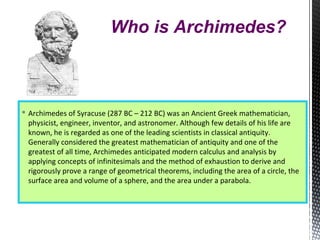
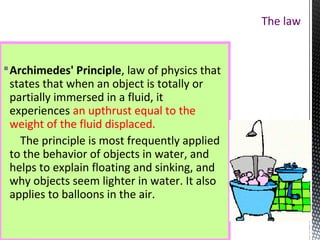
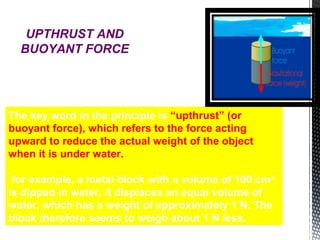
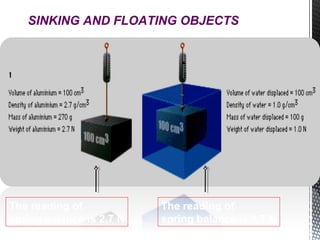
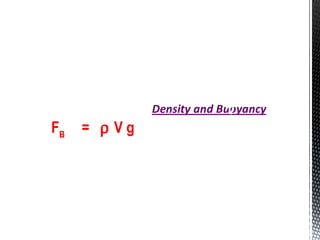
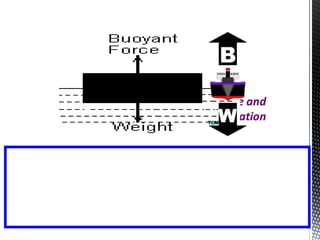
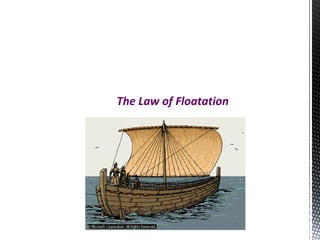
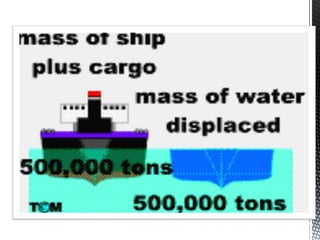
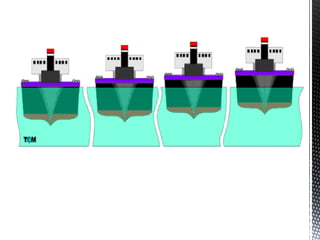
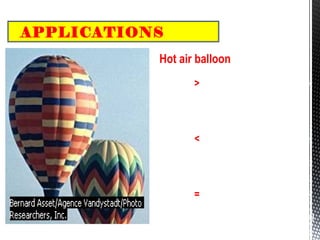
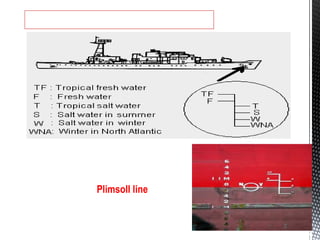
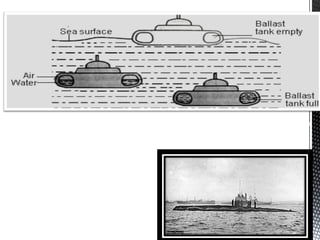
Archimedes' Principle states that the buoyant force on an object immersed in a fluid is equal to the weight of the fluid displaced by the object. This principle explains why objects float or sink based on an object's density compared to the fluid. It also explains why objects seem lighter when submerged. Applications of Archimedes' Principle include determining the depth ships sit in water based on water temperature and density, how hot air balloons rise and fall, and how submarines control their buoyancy using ballast tanks.




![Polymer [ बहुलक ] Chemistry Notes PDF - Irfanullah Mehar - JJ Sir Chemistry.pdf](https://cdn.slidesharecdn.com/ss_thumbnails/polymerchemistrynotespdf-irfanullahmehar-jjsirchemistry-260210172118-3f9b37f7-thumbnail.jpg?width=640&height=640&fit=bounds)


