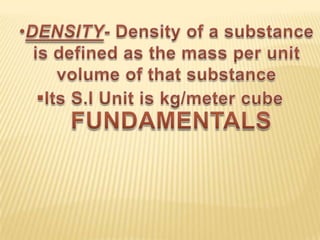
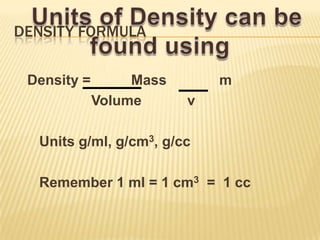
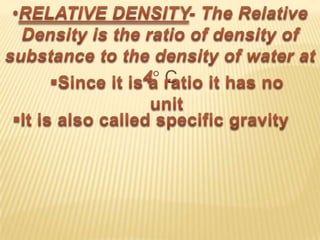
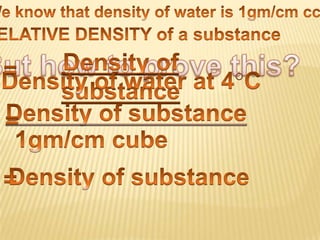
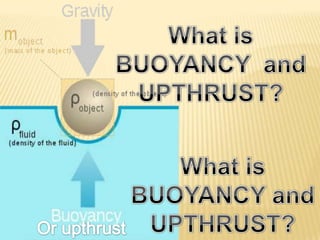
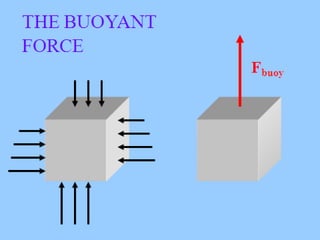
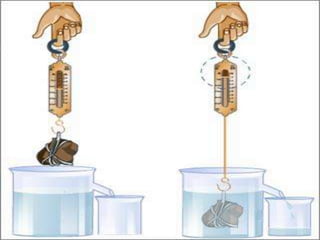
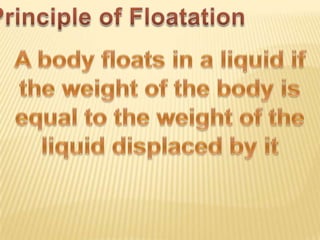
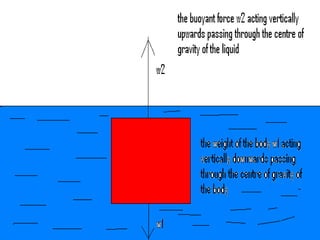
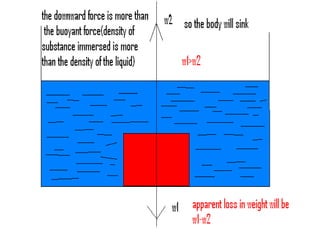
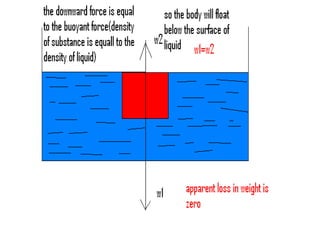
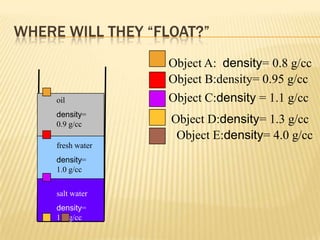
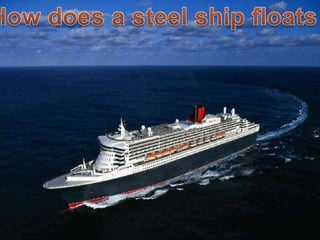
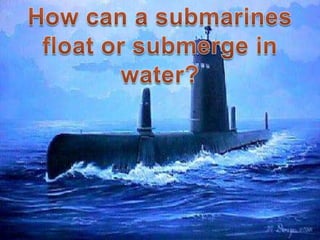
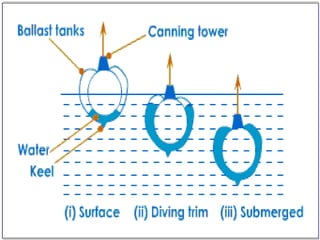
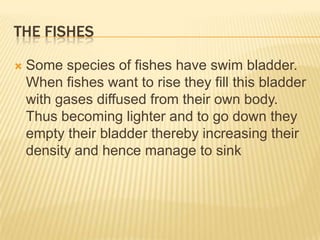
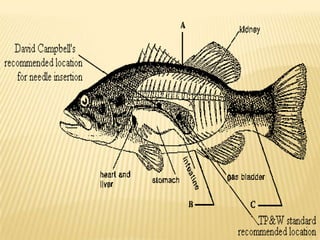
Archimedes' principle states that the buoyant force on an object submerged or partially submerged in a fluid is equal to the weight of the fluid the object displaces. This principle can be used to calculate density and relative density. It also explains why ships and submarines float or sink depending on whether the object's density is greater than, equal to, or less than the fluid it is placed in. Applications of Archimedes' principle include ship building, submarine operations, and how certain aquatic animals and balloons are able to achieve buoyancy.