Pressure in fluids
Liquids and gases also exert pressure…..
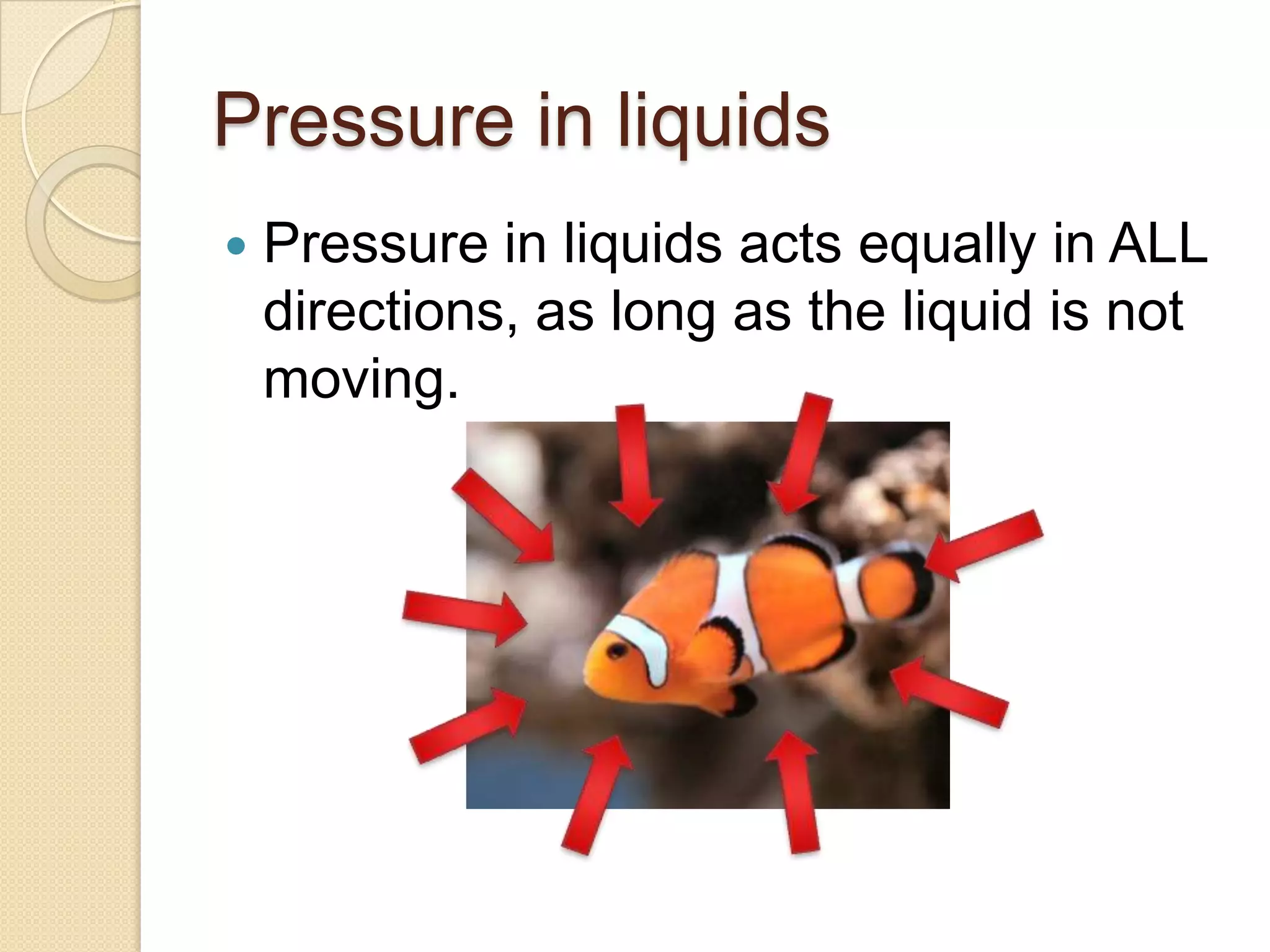
Pressure in liquids
   Pressure in liquids acts equally in ALL
    directions, as long as the liquid is not
    moving.
Pressure in gases
 Gases also exert pressure on things
  around them.
 The atmosphere exerts about 100 000
  Pa on your body!
 Like liquids, pressure in gases acts
  equally in all directions, so long as the
  gas is not moving.
Magdeburg hemispheres
 Magdeburg
  hemispheres
  demonstrate air
  pressure very well.
 When the air is
  sucked out, the air
  pressure acting on
  the outside will
  keep the spheres
  stuck together.
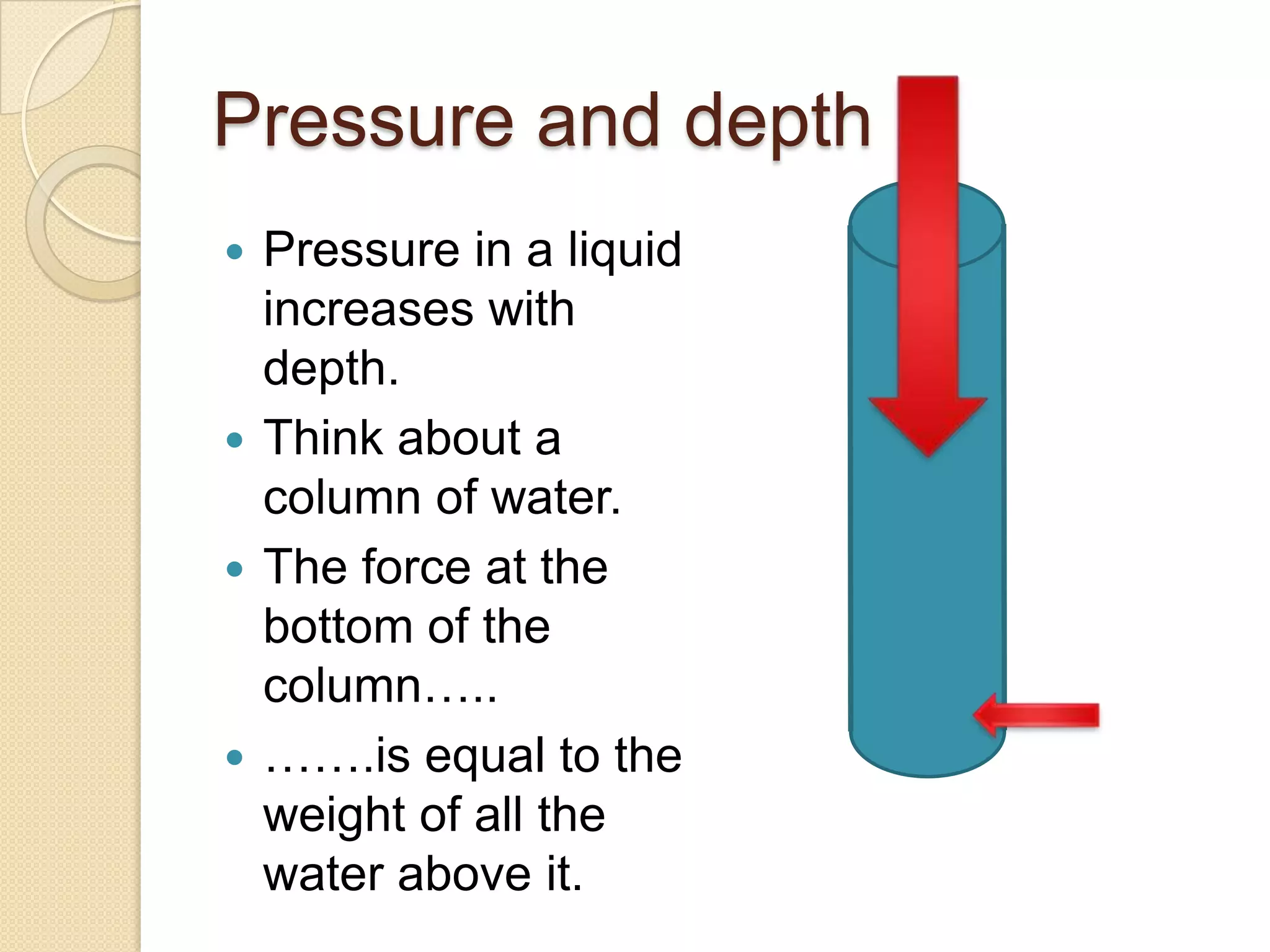
Pressure and depth
 Pressure in a liquid
  increases with
  depth.
 Think about a
  column of water.
 The force at the
  bottom of the
  column…..
 …….is equal to the
  weight of all the
  water above it.
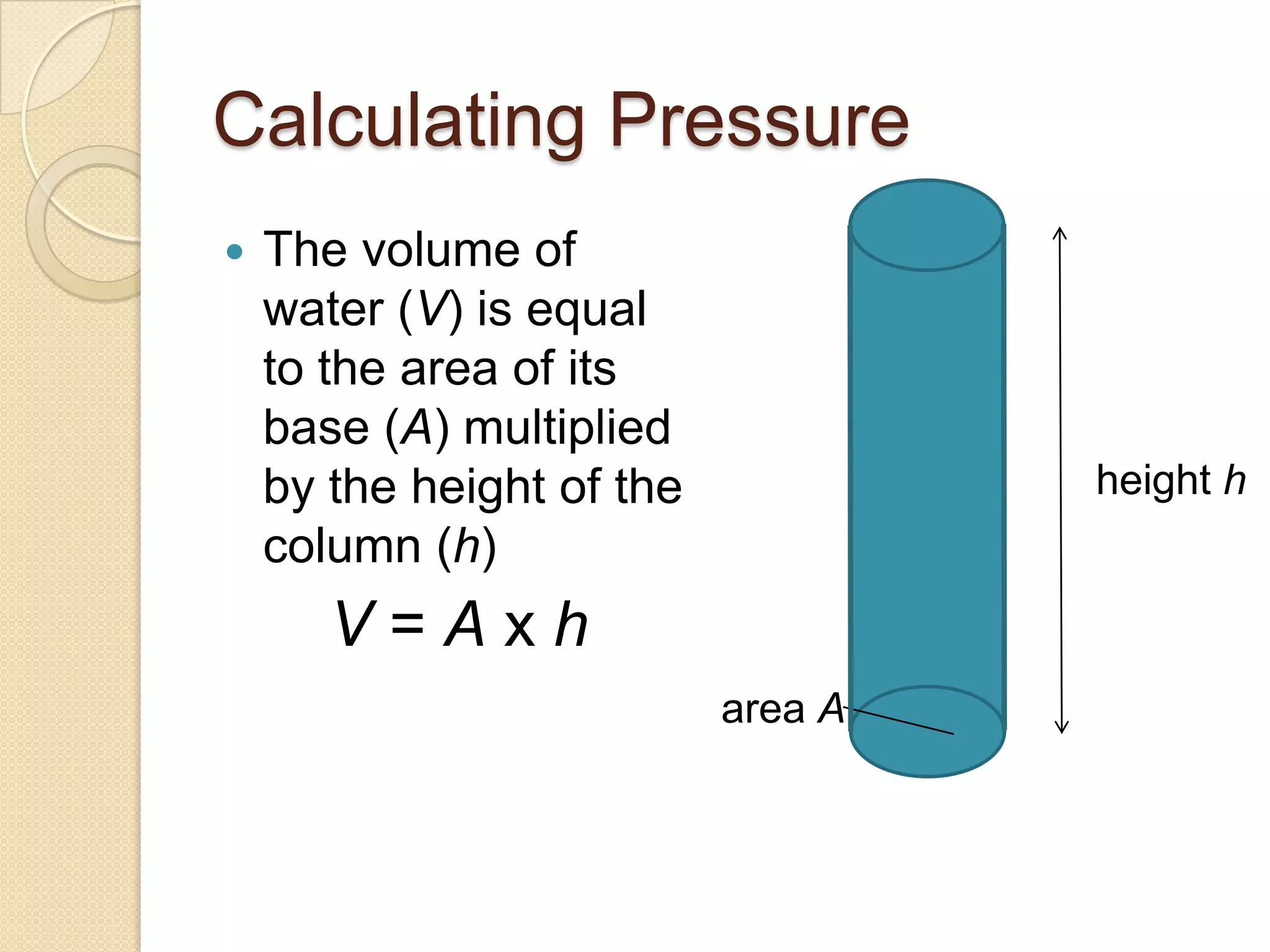
Calculating Pressure
   The volume of
    water (V) is equal
    to the area of its
    base (A) multiplied
    by the height of the            height h
    column (h)
       V=Axh
                           area A
Calculating Pressure
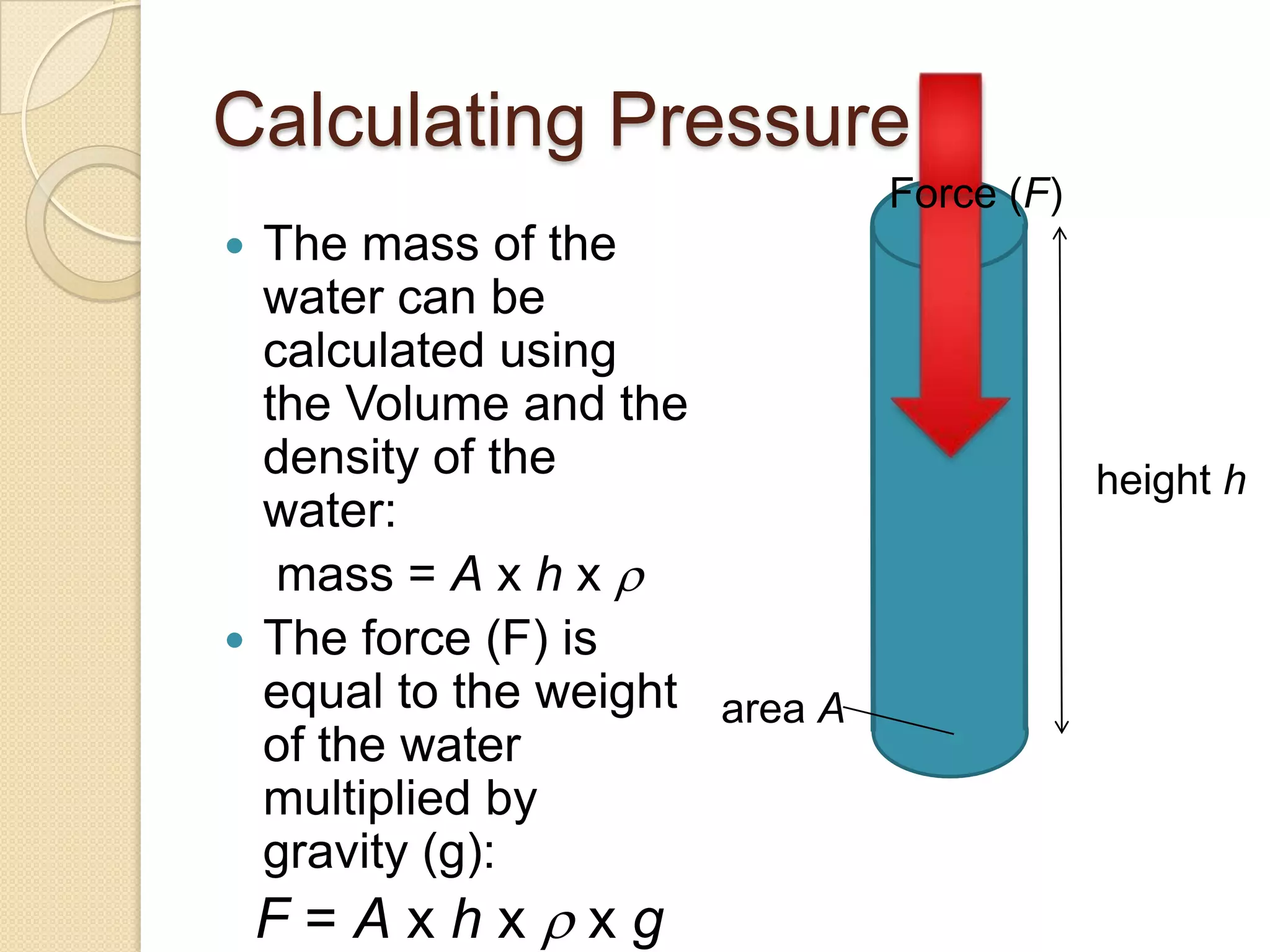
                               Force (F)
 The mass of the
  water can be
  calculated using
  the Volume and the
  density of the                           height h
  water:
   mass = A x h x r
 The force (F) is
  equal to the weight area A
  of the water
  multiplied by
  gravity (g):
    F=Axhxrxg
Calculating Pressure
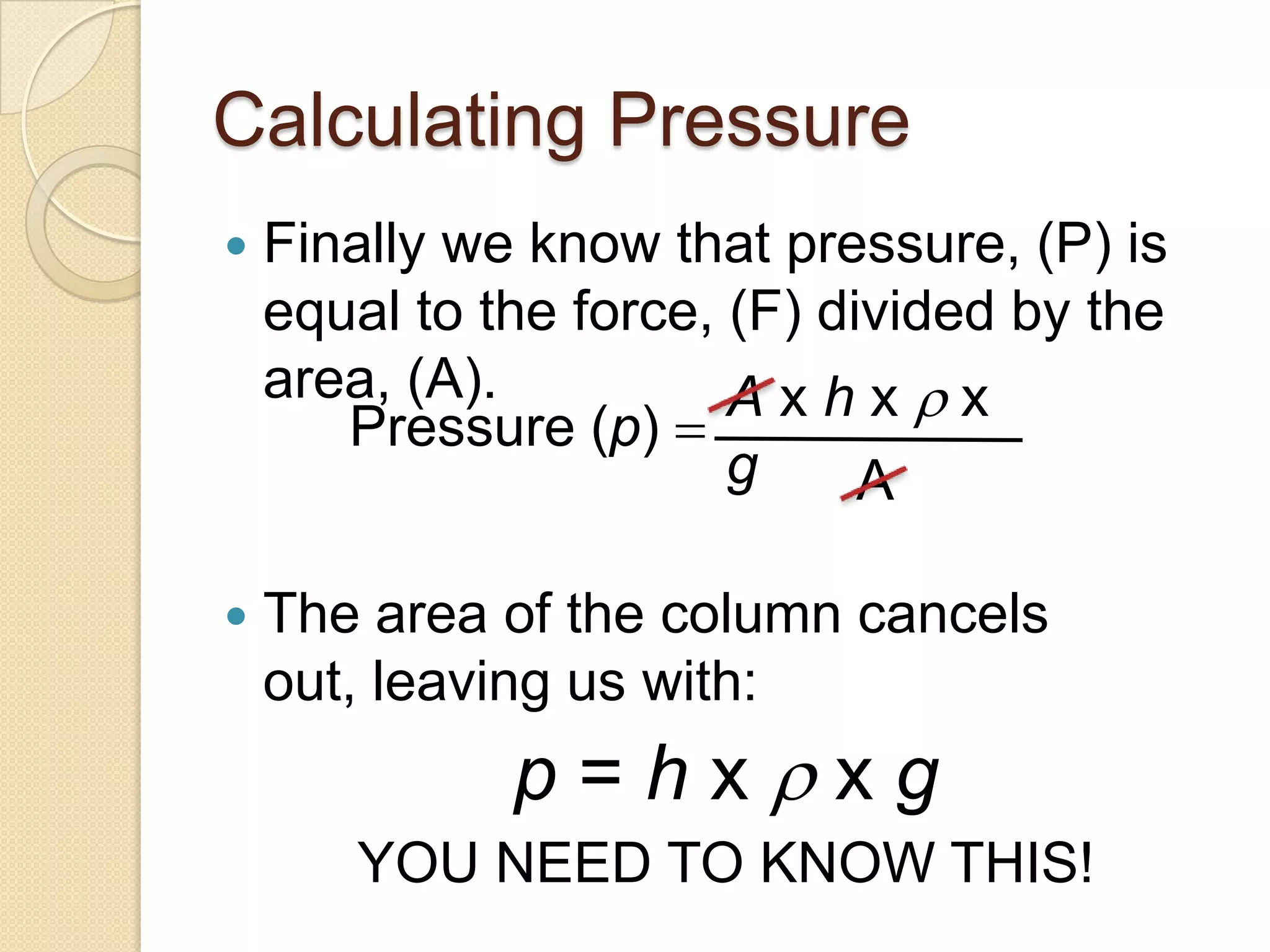
   Finally we know that pressure, (P) is
    equal to the force, (F) divided by the
    area, (A).          Axhxrx
       Pressure (p) =
                        g     A

   The area of the column cancels
    out, leaving us with:
              p=hxrxg
       YOU NEED TO KNOW THIS!
Calculating pressure
 We can use this equation for
  calculating pressure differences in
  other liquids and gases, as long as we
  know the density.
 Turn to page 168 in your text books
  for some example questions on
  pressure, (there is a worked example
  on page 167 to help you).

Pressure in fluids

  • 1.
    Pressure in fluids Liquidsand gases also exert pressure…..
  • 2.
    Pressure in liquids  Pressure in liquids acts equally in ALL directions, as long as the liquid is not moving.
  • 3.
    Pressure in gases Gases also exert pressure on things around them.  The atmosphere exerts about 100 000 Pa on your body!  Like liquids, pressure in gases acts equally in all directions, so long as the gas is not moving.
  • 4.
    Magdeburg hemispheres  Magdeburg hemispheres demonstrate air pressure very well.  When the air is sucked out, the air pressure acting on the outside will keep the spheres stuck together.
  • 5.
    Pressure and depth Pressure in a liquid increases with depth.  Think about a column of water.  The force at the bottom of the column…..  …….is equal to the weight of all the water above it.
  • 6.
    Calculating Pressure  The volume of water (V) is equal to the area of its base (A) multiplied by the height of the height h column (h) V=Axh area A
  • 7.
    Calculating Pressure Force (F)  The mass of the water can be calculated using the Volume and the density of the height h water: mass = A x h x r  The force (F) is equal to the weight area A of the water multiplied by gravity (g): F=Axhxrxg
  • 8.
    Calculating Pressure  Finally we know that pressure, (P) is equal to the force, (F) divided by the area, (A). Axhxrx Pressure (p) = g A  The area of the column cancels out, leaving us with: p=hxrxg YOU NEED TO KNOW THIS!
  • 9.
    Calculating pressure  Wecan use this equation for calculating pressure differences in other liquids and gases, as long as we know the density.  Turn to page 168 in your text books for some example questions on pressure, (there is a worked example on page 167 to help you).