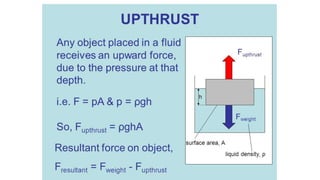
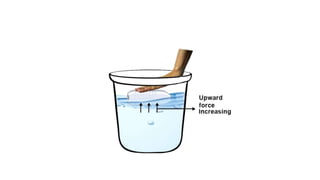
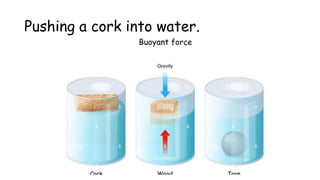
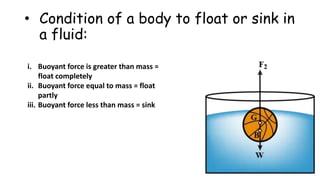
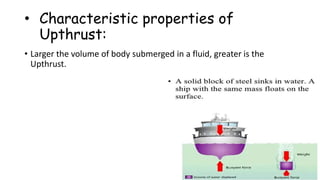
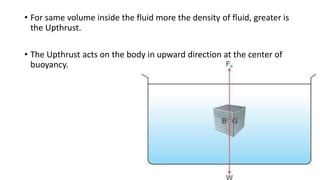
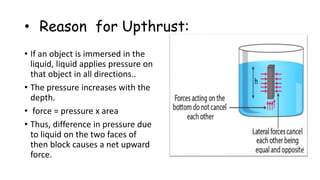
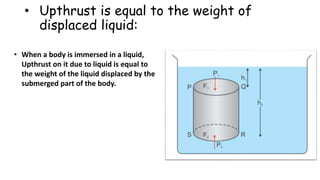
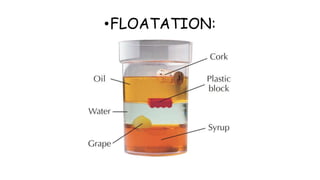
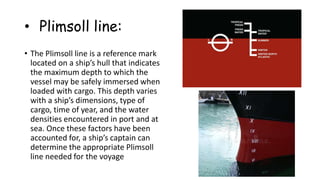
This document discusses upthrust, Archimedes' principle, and floatation. It defines upthrust as the upward force exerted on a body submerged in a fluid. According to Archimedes' principle, the upthrust on a body is equal to the weight of the fluid it displaces. The principle of floatation states that an object floats when the upthrust equals its weight, and sinks when the upthrust is less than its weight. Applications of these principles include why ships and nails float or sink, and the purpose of the Plimsoll line marked on ship hulls.