Laboratory diagnosis in infections
produced by anaerobic bacteria
*Definition of terms:
bacterial growth in relation with respiratory
processes (use of O2, CO2)
• Obligate aerobes need oxygen because they cannot
ferment or respire anaerobically (e.g. Mycobacterium
tuberculosis)
• Obligate anaerobes are poisoned by oxygen
• Facultative anaerobes can grow with or without oxygen
(e.g. Staphylococcus, Streptococcus, E.coli)
• Microaerophiles need some amount of oxygen but are
poisoned by high concentrations of oxygen (e.g.
Campylobacter, Helicobacter, Neisseria gonorrhoeae)
(Obligate) Anaerobic bacteria
- general aspects & definition of terms -
• Energy generated exclusively by anaerobic fermentation
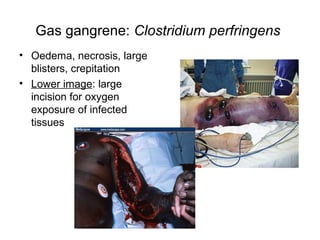
(does not generate superoxide radicals = O2 anions)
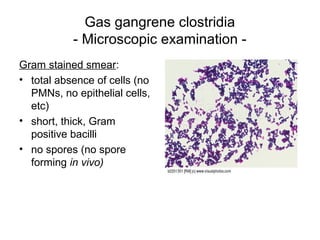
• Can only grow in the total absence of O2;
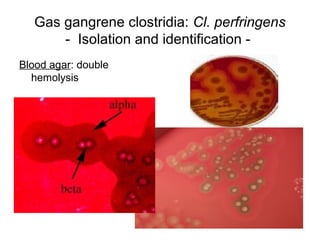
• WHY?: Anaerobic bacteria lack the enzymes:
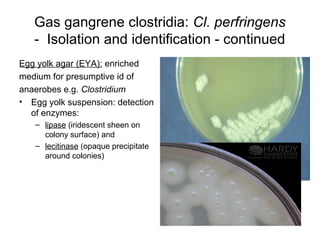
– Superoxide dismutase (SOD)
– Catalase
(Obligate) Anaerobic bacteria
- general aspects & definition of terms - continued
• Superoxide dismutases - antioxidant factors; enzymes
which catalyze the dismutation (partitioning) of the
superoxide radical (O2 anion) into:
– Molecular O2 or
– Hydrogen peroxide (H2O2)
• Superoxide = by-product of O2 metabolism; high cellular
toxicity
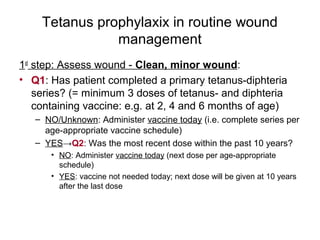
• Hydrogen peroxide = less toxic; degraded by catalase
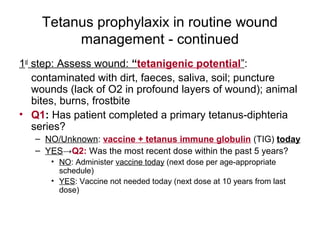
(Obligate) Anaerobic bacteria
- general aspects & definition of terms - continued
CONCLUSIONS:
• fermentation in the presence of O2 → superoxide
radicals – toxic if not dismuted (partitioned) by superoxid
dismutase into O2 / H2O2;
• furthermore H2O2 – toxic if not decomposed by catalase
• Anaerobic bacteria lack both enzymes (superoxid
dismutase and catalase) → mandatory absence of O2 in
order for anaerobic bacteria to avoid toxic effects of
superoxide radicals and/or H2O2
(Obligate) Anaerobic bacteria
- general aspects & definition of terms -
”Friends or Foes?”
• Colonize the human body
• involved in the balance of the normal microbial flora:
skin, oropharynx, gastro-intestinal tract, uro-genital tract
(urethra, vagina)
• Cause severe infections (endogenous and exogenous)
Obligate Anaerobic Bacteria
- Collection and transport of specimens -
• Inoculation asap (within 10 minutes) due to toxicity of
atmospheric O2
• Transport: anaerobic tubes with transportation media
e.g. modified Cary Blair, Stuart
– minimal nutrients to increase survival of organisms without
multiplication
– sodium thioglycollate - to provide low oxidation-reduction
potential
– alkaline pH – to minimize bacterial destruction by acid
production
– phenol red indicator (red at alkaline pH, yellow at acidic pH)
– Redox indicator: resazurin – turns pink in the presence of O2
Obligate Anaerobic Bacteria
- Collection and transport of specimens -
continued
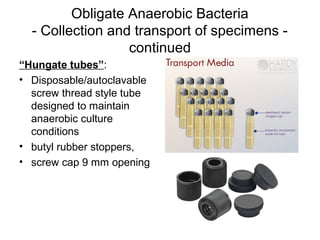
“Hungate tubes”:
• Disposable/autoclavable
screw thread style tube
designed to maintain
anaerobic culture
conditions
• butyl rubber stoppers,
• screw cap 9 mm opening
Obligate Anaerobic Bacteria
- Macroscopic and microscopic exam -
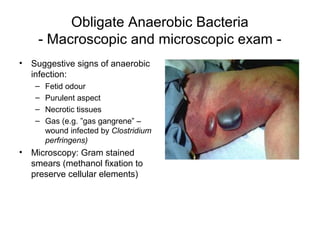
• Suggestive signs of anaerobic
infection:
– Fetid odour
– Purulent aspect
– Necrotic tissues
– Gas (e.g. ”gas gangrene” –
wound infected by Clostridium
perfringens)
• Microscopy: Gram stained
smears (methanol fixation to
preserve cellular elements)
Obligate Anaerobic Bacteria
- Isolation -
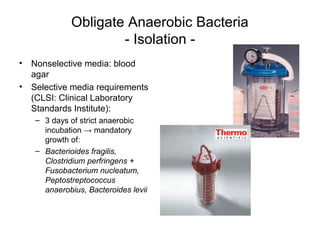
• Nonselective media: blood
agar
• Selective media requirements
(CLSI: Clinical Laboratory
Standards Institute):
– 3 days of strict anaerobic
incubation → mandatory
growth of:
– Bacterioides fragilis,
Clostridium perfringens +
Fusobacterium nucleatum,
Peptostreptococcus
anaerobius, Bacteroides levii
Obligate Anaerobic Bacteria
- Identification -
• API 20 A
Identification of anaerobes in 24-48 hours
• Fermentation tests, which are the reference tests for the
identification of anaerobes
• Easy-to-use: suspension prepared directly in the API 20
A medium.
• Polyvalent system for all anaerobes, both Gram (+) and
Gram (-)
Obligate Anaerobic Bacteria
- Human infections -
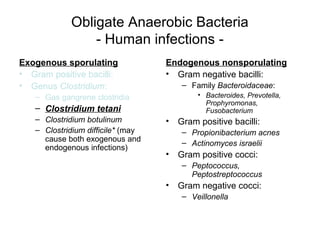
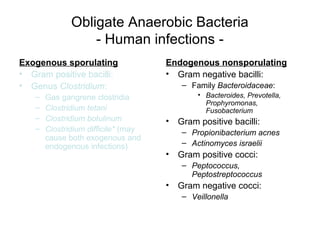
Exogenous sporulating
• Gram positive bacilli:
• Genus Clostridium:
– Gas gangrene clostridia
– Clostridium tetani
– Clostridium botulinum
– Clostridium difficile* (may
cause both exogenous and
endogenous infections)
Endogenous nonsporulating
• Gram negative bacilli:
– Family Bacteroidaceae:
• Bacteroides, Prevotella,
Prophyromonas,
Fusobacterium
• Gram positive bacilli:
– Propionibacterium acnes
– Actinomyces israelii
• Gram positive cocci:
– Peptococcus,
Peptostreptococcus
• Gram negative cocci:
– Veillonella
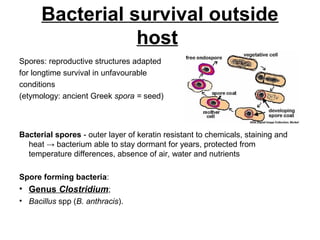
Bacterial survival outside
host
Spores: reproductive structures adapted
for longtime survival in unfavourable
conditions
(etymology: ancient Greek spora = seed)
Bacterial spores - outer layer of keratin resistant to chemicals, staining and
heat → bacterium able to stay dormant for years, protected from
temperature differences, absence of air, water and nutrients
Spore forming bacteria:
• Genus Clostridium;
• Bacillus spp (B. anthracis).
Genus Clostridium
- Clinical significance -
• Exogenous infections:
– Gas gangrene
– Tetanus
– Botulism
– Food poisoning
• Endogenous infections:
• Clostridium difficile
Definition of terms: Gangrene
• tisular death (necrosis) caused by lack of blood supply
(= absence of O2 and nutrients in the respective area of the
organism)
• potentially life-threatening condition
• may occur by:
– injuries, trauma (compression of blood vessels)
– frostbite (freezing of exposed extremities)
– infection
– chronic diseases affecting blood circulation e.g. diabetes
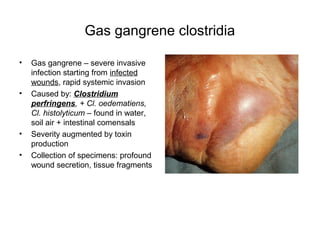
Gas gangrene clostridia
• Gas gangrene – severe invasive
infection starting from infected
wounds, rapid systemic invasion
• Caused by: Clostridium
perfringens, + Cl. oedematiens,
Cl. histolyticum – found in water,
soil air + intestinal comensals
• Severity augmented by toxin
production
• Collection of specimens: profound
wound secretion, tissue fragments
Gas gangrene: Clostridium perfringens
• Oedema, necrosis, large
blisters, crepitation
• Lower image: large
incision for oxygen
exposure of infected
tissues
Gas gangrene clostridia
- Microscopic examination -
Gram stained smear:
• total absence of cells (no
PMNs, no epithelial cells,
etc)
• short, thick, Gram
positive bacilli
• no spores (no spore
forming in vivo)
Gas gangrene clostridia: Cl. perfringens
- Isolation and identification -
Blood agar: double
hemolysis
Gas gangrene clostridia: Cl. perfringens
- Isolation and identification - continued
Egg yolk agar (EYA): enriched
medium for presumptive id of
anaerobes e.g. Clostridium
• Egg yolk suspension: detection
of enzymes:
– lipase (iridescent sheen on
colony surface) and
– lecitinase (opaque precipitate
around colonies)
Gas gangrene clostridia: Cl. perfringens
- Isolation and identification - continued
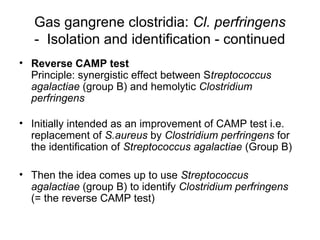
• Reverse CAMP test
Principle: synergistic effect between Streptococcus
agalactiae (group B) and hemolytic Clostridium
perfringens
• Initially intended as an improvement of CAMP test i.e.
replacement of S.aureus by Clostridium perfringens for
the identification of Streptococcus agalactiae (Group B)
• Then the idea comes up to use Streptococcus
agalactiae (group B) to identify Clostridium perfringens
(= the reverse CAMP test)
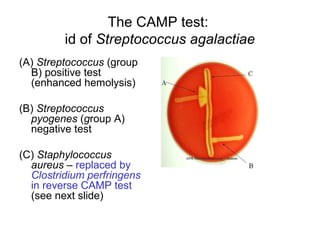
The CAMP test:
id of Streptococcus agalactiae
(A) Streptococcus (group
B) positive test
(enhanced hemolysis)
(B) Streptococcus
pyogenes (group A)
negative test
(C) Staphylococcus
aureus – replaced by
Clostridium perfringens
in reverse CAMP test
(see next slide)
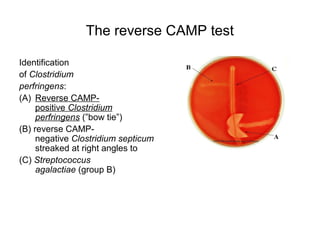
The reverse CAMP test
Identification
of Clostridium
perfringens:
(A) Reverse CAMP-
positive Clostridium
perfringens (”bow tie”)
(B) reverse CAMP-
negative Clostridium septicum
streaked at right angles to
(C) Streptococcus
agalactiae (group B)
Clostridium perfringens
- Antimicrobial susceptibility -
• Sensitivity to: penicillin G, erythromycin, ampicillin,
metronidazole
• Natural resistance to tetracyclines
Obligate Anaerobic Bacteria
- Human infections -
Exogenous sporulating
• Gram positive bacilli:
• Genus Clostridium:
– Gas gangrene clostridia
– Clostridium tetani
– Clostridium botulinum
– Clostridium difficile* (may
cause both exogenous and
endogenous infections)
Endogenous nonsporulating
• Gram negative bacilli:
– Family Bacteroidaceae:
• Bacteroides, Prevotella,
Prophyromonas,
Fusobacterium
• Gram positive bacilli:
– Propionibacterium acnes
– Actinomyces israelii
• Gram positive cocci:
– Peptococcus,
Peptostreptococcus
• Gram negative cocci:
– Veillonella
Clostridium tetani
• Habitat: intestinal tract of animals (sheep, cattle);
vegetative bacteria eliminated with faceces;
contamination of soil (spore formation)
• Infection occurs via:
– Skin lesions contaminated with spores e.g. wound highly
contaminated with dirt, dust; extensive wounds with crushed
tissues and foreign bodies (accidents);
– spores germinate into vegetative bacteria which multiply at the
entry and produce tetanic toxin (disseminated) – 2 components:
• Tetanospasmin – muscle spasms
• Tetanolysin – cardiotoxic
Clostridium tetani
Clinical significance:
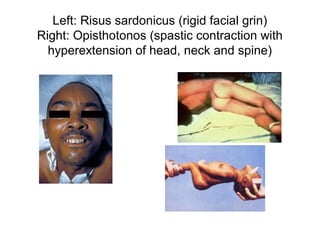
• Tetanus = Generalized tetanus (most comon form):
– onset with trismus (spasms of the face and chewing muscles
popularly called “lockjaw”→ characteristic facial expression risus
sardonicus or sardonic grin);
– further evolution: swallowing becomes increasingly difficult;
severe spastic hyperextension of head, neck and spine
(opisthotonos)
(effects of the tetanus exotoxin: tetanospasmin)
• Lethal outcome ~ 1 in 10 cases - spastic paralysis of
respiratory muscles
Left: Risus sardonicus (rigid facial grin)
Right: Opisthotonos (spastic contraction with
hyperextension of head, neck and spine)
Tetanus
• Vaccine preventable disease: several vaccines used to
prevent tetanus among children, adolescents, and
adults; e.g. combined vaccines against diphteria,
pertusis and tetanus (e.g. DTaP) or tetanus and diphteria
(e.g.TD) – Immunization schedules
• In Romania: tetanus containing vaccines given at the
ages of:
– 2, 4, 6, 13 months, 4 years (DTP) + 14 years (dT) +
– (recommended) dT every 10 years
Definition of terms: Immunization schedule
• series of vaccinations, including the timing of all doses,
which may be either recommended or compulsory,
depending on the country of residence
• Examples:
• http://www.cdc.gov/vaccines/schedules/hcp/child-adolescent.h
• http://www.nhs.uk/Conditions/vaccinations/Pages/vaccination-
• http://en.pediatricblog.info/2011/02/romanian-mandatory-vacc
Tetanus prophylaxix in routine wound
management
1st
step: Assess wound - Clean, minor wound:
• Q1: Has patient completed a primary tetanus-diphteria
series? (= minimum 3 doses of tetanus- and diphteria
containing vaccine: e.g. at 2, 4 and 6 months of age)
– NO/Unknown: Administer vaccine today (i.e. complete series per
age-appropriate vaccine schedule)
– YES→Q2: Was the most recent dose within the past 10 years?
• NO: Administer vaccine today (next dose per age-appropriate
schedule)
• YES: vaccine not needed today; next dose will be given at 10 years
after the last dose
Tetanus prophylaxix in routine wound
management - continued
1st
step: Assess wound: “tetanigenic potential”:
contaminated with dirt, faeces, saliva, soil; puncture
wounds (lack of O2 in profound layers of wound); animal
bites, burns, frostbite
• Q1: Has patient completed a primary tetanus-diphteria
series?
– NO/Unknown: vaccine + tetanus immune globulin (TIG) today
– YES→Q2: Was the most recent dose within the past 5 years?
• NO: Administer vaccine today (next dose per age-appropriate
schedule)
• YES: Vaccine not needed today (next dose at 10 years from last
dose)
Clostridium tetani
• Laboratory diagnosis only required in suspicion of
iatrogenic infections e.g. infection of umbilical cord
stump, post-partum infections, etc
• In most cases diagnosis relies on clinical aspect and
history (tetanigenic circumstances e.g. wounds
contaminated with dirt, faeces, saliva, soil; puncture
wounds; animal bites, burns, frostbite)
• IMPORTANT FACTS:
– no human to human transmission
– Vaccine preventable
Obligate Anaerobic Bacteria
- Human infections -
Exogenous sporulating
• Gram positive bacilli:
• Genus Clostridium:
– Gas gangrene clostridia
– Clostridium tetani
– Clostridium botulinum
– Clostridium difficile* (may
cause both exogenous and
endogenous infections)
Endogenous nonsporulating
• Gram negative bacilli:
– Family Bacteroidaceae:
• Bacteroides, Prevotella,
Prophyromonas,
Fusobacterium
• Gram positive bacilli:
– Propionibacterium acnes
– Actinomyces israelii
• Gram positive cocci:
– Peptococcus,
Peptostreptococcus
• Gram negative cocci:
– Veillonella
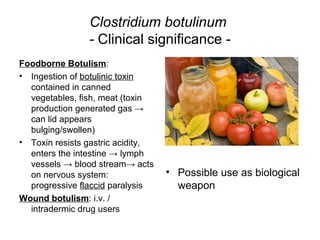
Clostridium botulinum
- Clinical significance -
Foodborne Botulism:
• Ingestion of botulinic toxin
contained in canned
vegetables, fish, meat (toxin
production generated gas →
can lid appears
bulging/swollen)
• Toxin resists gastric acidity,
enters the intestine → lymph
vessels → blood stream→ acts
on nervous system:
progressive flaccid paralysis
Wound botulism: i.v. /
intradermic drug users
• Possible use as biological
weapon
Clostridium botulinum
- Clinical significance - continued
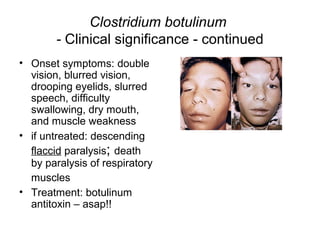
• Onset symptoms: double
vision, blurred vision,
drooping eyelids, slurred
speech, difficulty
swallowing, dry mouth,
and muscle weakness
• if untreated: descending
flaccid paralysis; death
by paralysis of respiratory
muscles
• Treatment: botulinum
antitoxin – asap!!
Clostridium botulinum
- Laboratory diagnosis -
• Performed in reference
laboratories
• Specimens: blood for
serology, vomit, faeces,
suspected food
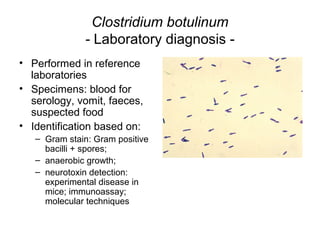
• Identification based on:
– Gram stain: Gram positive
bacilli + spores;
– anaerobic growth;
– neurotoxin detection:
experimental disease in
mice; immunoassay;
molecular techniques
Obligate Anaerobic Bacteria
- Human infections -
Exogenous sporulating
• Gram positive bacilli:
• Genus Clostridium:
– Gas gangrene clostridia
– Clostridium tetani
– Clostridium botulinum
– Clostridium difficile* (may
cause both exogenous and
endogenous infections)
Endogenous nonsporulating
• Gram negative bacilli:
– Family Bacteroidaceae:
• Bacteroides, Prevotella,
Prophyromonas,
Fusobacterium
• Gram positive bacilli:
– Propionibacterium acnes
– Actinomyces israelii
• Gram positive cocci:
– Peptococcus,
Peptostreptococcus
• Gram negative cocci:
– Veillonella
Clostridium difficile
- Clinical significance -
• Pseudomembranous colitis: bloating and severe diarrhoea
• Endogenous: bacteria replaces normal intestinal flora that has
been compromised, usually following antibiotic treatment for an
unrelated infection; C. difficile gains a growth advantage (positive
selection) and overruns the intestinal microbiome; “antibiotic-
associated diarrhoea”
• Exogenous: accidental ingestion of spores e.g.
incomplete/incorrect hospital management of infected patient
(isolation, disinfection, etc) leads to spore contamination of objects
→ spore ingested by another patient (when prevention guidelines
are not strictly followed e.g. hand washing, cleaning, PPE,
disinfection)
Clostridium difficile
- Prevention guidelines in clinical settings -
Examples:
• http
://www.documents.hps.scot.nhs.uk/about-hps/hpn/clostridium
f
• http://www.idsociety.org/uploadedFiles/IDSA/Guidelines-Patie
• http://d2j7fjepcxuj0a.cloudfront.net/wp-content/uploads/2013/0
Obligate Anaerobic Bacteria
- Human infections -
Exogenous sporulating
• Gram positive bacilli:
• Genus Clostridium:
– Gas gangrene clostridia
– Clostridium tetani
– Clostridium botulinum
– Clostridium difficile* (may
cause both exogenous and
endogenous infections)
Endogenous nonsporulating
• Gram negative bacilli:
– Family Bacteroidaceae:
• Bacteroides, Prevotella,
Prophyromonas,
Fusobacterium
• Gram positive bacilli:
– Propionibacterium acnes
– Actinomyces israelii
• Gram positive cocci:
– Peptococcus,
Peptostreptococcus
• Gram negative cocci:
– Veillonella
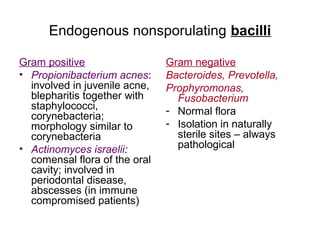
Endogenous nonsporulating bacilli
Gram positive
• Propionibacterium acnes:
involved in juvenile acne,
blepharitis together with
staphylococci,
corynebacteria;
morphology similar to
corynebacteria
• Actinomyces israelii:
comensal flora of the oral
cavity; involved in
periodontal disease,
abscesses (in immune
compromised patients)
Gram negative
Bacteroides, Prevotella,
Prophyromonas,
Fusobacterium
- Normal flora
- Isolation in naturally
sterile sites – always
pathological
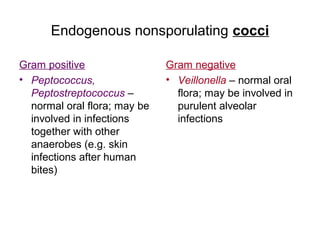
Endogenous nonsporulating cocci
Gram positive
• Peptococcus,
Peptostreptococcus –
normal oral flora; may be
involved in infections
together with other
anaerobes (e.g. skin
infections after human
bites)
Gram negative
• Veillonella – normal oral
flora; may be involved in
purulent alveolar
infections

Anaerobic bacteria

  • 1.
    Laboratory diagnosis ininfections produced by anaerobic bacteria
  • 2.
    *Definition of terms: bacterialgrowth in relation with respiratory processes (use of O2, CO2) • Obligate aerobes need oxygen because they cannot ferment or respire anaerobically (e.g. Mycobacterium tuberculosis) • Obligate anaerobes are poisoned by oxygen • Facultative anaerobes can grow with or without oxygen (e.g. Staphylococcus, Streptococcus, E.coli) • Microaerophiles need some amount of oxygen but are poisoned by high concentrations of oxygen (e.g. Campylobacter, Helicobacter, Neisseria gonorrhoeae)
  • 3.
    (Obligate) Anaerobic bacteria -general aspects & definition of terms - • Energy generated exclusively by anaerobic fermentation (does not generate superoxide radicals = O2 anions) • Can only grow in the total absence of O2; • WHY?: Anaerobic bacteria lack the enzymes: – Superoxide dismutase (SOD) – Catalase
  • 4.
    (Obligate) Anaerobic bacteria -general aspects & definition of terms - continued • Superoxide dismutases - antioxidant factors; enzymes which catalyze the dismutation (partitioning) of the superoxide radical (O2 anion) into: – Molecular O2 or – Hydrogen peroxide (H2O2) • Superoxide = by-product of O2 metabolism; high cellular toxicity • Hydrogen peroxide = less toxic; degraded by catalase
  • 5.
    (Obligate) Anaerobic bacteria -general aspects & definition of terms - continued CONCLUSIONS: • fermentation in the presence of O2 → superoxide radicals – toxic if not dismuted (partitioned) by superoxid dismutase into O2 / H2O2; • furthermore H2O2 – toxic if not decomposed by catalase • Anaerobic bacteria lack both enzymes (superoxid dismutase and catalase) → mandatory absence of O2 in order for anaerobic bacteria to avoid toxic effects of superoxide radicals and/or H2O2
  • 6.
    (Obligate) Anaerobic bacteria -general aspects & definition of terms - ”Friends or Foes?” • Colonize the human body • involved in the balance of the normal microbial flora: skin, oropharynx, gastro-intestinal tract, uro-genital tract (urethra, vagina) • Cause severe infections (endogenous and exogenous)
  • 7.
    Obligate Anaerobic Bacteria -Collection and transport of specimens - • Inoculation asap (within 10 minutes) due to toxicity of atmospheric O2 • Transport: anaerobic tubes with transportation media e.g. modified Cary Blair, Stuart – minimal nutrients to increase survival of organisms without multiplication – sodium thioglycollate - to provide low oxidation-reduction potential – alkaline pH – to minimize bacterial destruction by acid production – phenol red indicator (red at alkaline pH, yellow at acidic pH) – Redox indicator: resazurin – turns pink in the presence of O2
  • 8.
    Obligate Anaerobic Bacteria -Collection and transport of specimens - continued “Hungate tubes”: • Disposable/autoclavable screw thread style tube designed to maintain anaerobic culture conditions • butyl rubber stoppers, • screw cap 9 mm opening
  • 9.
    Obligate Anaerobic Bacteria -Macroscopic and microscopic exam - • Suggestive signs of anaerobic infection: – Fetid odour – Purulent aspect – Necrotic tissues – Gas (e.g. ”gas gangrene” – wound infected by Clostridium perfringens) • Microscopy: Gram stained smears (methanol fixation to preserve cellular elements)
  • 10.
    Obligate Anaerobic Bacteria -Isolation - • Nonselective media: blood agar • Selective media requirements (CLSI: Clinical Laboratory Standards Institute): – 3 days of strict anaerobic incubation → mandatory growth of: – Bacterioides fragilis, Clostridium perfringens + Fusobacterium nucleatum, Peptostreptococcus anaerobius, Bacteroides levii
  • 11.
    Obligate Anaerobic Bacteria -Identification - • API 20 A Identification of anaerobes in 24-48 hours • Fermentation tests, which are the reference tests for the identification of anaerobes • Easy-to-use: suspension prepared directly in the API 20 A medium. • Polyvalent system for all anaerobes, both Gram (+) and Gram (-)
  • 12.
    Obligate Anaerobic Bacteria -Human infections - Exogenous sporulating • Gram positive bacilli: • Genus Clostridium: – Gas gangrene clostridia – Clostridium tetani – Clostridium botulinum – Clostridium difficile* (may cause both exogenous and endogenous infections) Endogenous nonsporulating • Gram negative bacilli: – Family Bacteroidaceae: • Bacteroides, Prevotella, Prophyromonas, Fusobacterium • Gram positive bacilli: – Propionibacterium acnes – Actinomyces israelii • Gram positive cocci: – Peptococcus, Peptostreptococcus • Gram negative cocci: – Veillonella
  • 13.
    Bacterial survival outside host Spores:reproductive structures adapted for longtime survival in unfavourable conditions (etymology: ancient Greek spora = seed) Bacterial spores - outer layer of keratin resistant to chemicals, staining and heat → bacterium able to stay dormant for years, protected from temperature differences, absence of air, water and nutrients Spore forming bacteria: • Genus Clostridium; • Bacillus spp (B. anthracis).
  • 14.
    Genus Clostridium - Clinicalsignificance - • Exogenous infections: – Gas gangrene – Tetanus – Botulism – Food poisoning • Endogenous infections: • Clostridium difficile
  • 15.
    Definition of terms:Gangrene • tisular death (necrosis) caused by lack of blood supply (= absence of O2 and nutrients in the respective area of the organism) • potentially life-threatening condition • may occur by: – injuries, trauma (compression of blood vessels) – frostbite (freezing of exposed extremities) – infection – chronic diseases affecting blood circulation e.g. diabetes
  • 16.
    Gas gangrene clostridia •Gas gangrene – severe invasive infection starting from infected wounds, rapid systemic invasion • Caused by: Clostridium perfringens, + Cl. oedematiens, Cl. histolyticum – found in water, soil air + intestinal comensals • Severity augmented by toxin production • Collection of specimens: profound wound secretion, tissue fragments
  • 17.
    Gas gangrene: Clostridiumperfringens • Oedema, necrosis, large blisters, crepitation • Lower image: large incision for oxygen exposure of infected tissues
  • 18.
    Gas gangrene clostridia -Microscopic examination - Gram stained smear: • total absence of cells (no PMNs, no epithelial cells, etc) • short, thick, Gram positive bacilli • no spores (no spore forming in vivo)
  • 19.
    Gas gangrene clostridia:Cl. perfringens - Isolation and identification - Blood agar: double hemolysis
  • 20.
    Gas gangrene clostridia:Cl. perfringens - Isolation and identification - continued Egg yolk agar (EYA): enriched medium for presumptive id of anaerobes e.g. Clostridium • Egg yolk suspension: detection of enzymes: – lipase (iridescent sheen on colony surface) and – lecitinase (opaque precipitate around colonies)
  • 21.
    Gas gangrene clostridia:Cl. perfringens - Isolation and identification - continued • Reverse CAMP test Principle: synergistic effect between Streptococcus agalactiae (group B) and hemolytic Clostridium perfringens • Initially intended as an improvement of CAMP test i.e. replacement of S.aureus by Clostridium perfringens for the identification of Streptococcus agalactiae (Group B) • Then the idea comes up to use Streptococcus agalactiae (group B) to identify Clostridium perfringens (= the reverse CAMP test)
  • 22.
    The CAMP test: idof Streptococcus agalactiae (A) Streptococcus (group B) positive test (enhanced hemolysis) (B) Streptococcus pyogenes (group A) negative test (C) Staphylococcus aureus – replaced by Clostridium perfringens in reverse CAMP test (see next slide)
  • 23.
    The reverse CAMPtest Identification of Clostridium perfringens: (A) Reverse CAMP- positive Clostridium perfringens (”bow tie”) (B) reverse CAMP- negative Clostridium septicum streaked at right angles to (C) Streptococcus agalactiae (group B)
  • 24.
    Clostridium perfringens - Antimicrobialsusceptibility - • Sensitivity to: penicillin G, erythromycin, ampicillin, metronidazole • Natural resistance to tetracyclines
  • 25.
    Obligate Anaerobic Bacteria -Human infections - Exogenous sporulating • Gram positive bacilli: • Genus Clostridium: – Gas gangrene clostridia – Clostridium tetani – Clostridium botulinum – Clostridium difficile* (may cause both exogenous and endogenous infections) Endogenous nonsporulating • Gram negative bacilli: – Family Bacteroidaceae: • Bacteroides, Prevotella, Prophyromonas, Fusobacterium • Gram positive bacilli: – Propionibacterium acnes – Actinomyces israelii • Gram positive cocci: – Peptococcus, Peptostreptococcus • Gram negative cocci: – Veillonella
  • 26.
    Clostridium tetani • Habitat:intestinal tract of animals (sheep, cattle); vegetative bacteria eliminated with faceces; contamination of soil (spore formation) • Infection occurs via: – Skin lesions contaminated with spores e.g. wound highly contaminated with dirt, dust; extensive wounds with crushed tissues and foreign bodies (accidents); – spores germinate into vegetative bacteria which multiply at the entry and produce tetanic toxin (disseminated) – 2 components: • Tetanospasmin – muscle spasms • Tetanolysin – cardiotoxic
  • 27.
    Clostridium tetani Clinical significance: •Tetanus = Generalized tetanus (most comon form): – onset with trismus (spasms of the face and chewing muscles popularly called “lockjaw”→ characteristic facial expression risus sardonicus or sardonic grin); – further evolution: swallowing becomes increasingly difficult; severe spastic hyperextension of head, neck and spine (opisthotonos) (effects of the tetanus exotoxin: tetanospasmin) • Lethal outcome ~ 1 in 10 cases - spastic paralysis of respiratory muscles
  • 28.
    Left: Risus sardonicus(rigid facial grin) Right: Opisthotonos (spastic contraction with hyperextension of head, neck and spine)
  • 29.
    Tetanus • Vaccine preventabledisease: several vaccines used to prevent tetanus among children, adolescents, and adults; e.g. combined vaccines against diphteria, pertusis and tetanus (e.g. DTaP) or tetanus and diphteria (e.g.TD) – Immunization schedules • In Romania: tetanus containing vaccines given at the ages of: – 2, 4, 6, 13 months, 4 years (DTP) + 14 years (dT) + – (recommended) dT every 10 years
  • 30.
    Definition of terms:Immunization schedule • series of vaccinations, including the timing of all doses, which may be either recommended or compulsory, depending on the country of residence • Examples: • http://www.cdc.gov/vaccines/schedules/hcp/child-adolescent.h • http://www.nhs.uk/Conditions/vaccinations/Pages/vaccination- • http://en.pediatricblog.info/2011/02/romanian-mandatory-vacc
  • 31.
    Tetanus prophylaxix inroutine wound management 1st step: Assess wound - Clean, minor wound: • Q1: Has patient completed a primary tetanus-diphteria series? (= minimum 3 doses of tetanus- and diphteria containing vaccine: e.g. at 2, 4 and 6 months of age) – NO/Unknown: Administer vaccine today (i.e. complete series per age-appropriate vaccine schedule) – YES→Q2: Was the most recent dose within the past 10 years? • NO: Administer vaccine today (next dose per age-appropriate schedule) • YES: vaccine not needed today; next dose will be given at 10 years after the last dose
  • 32.
    Tetanus prophylaxix inroutine wound management - continued 1st step: Assess wound: “tetanigenic potential”: contaminated with dirt, faeces, saliva, soil; puncture wounds (lack of O2 in profound layers of wound); animal bites, burns, frostbite • Q1: Has patient completed a primary tetanus-diphteria series? – NO/Unknown: vaccine + tetanus immune globulin (TIG) today – YES→Q2: Was the most recent dose within the past 5 years? • NO: Administer vaccine today (next dose per age-appropriate schedule) • YES: Vaccine not needed today (next dose at 10 years from last dose)
  • 33.
    Clostridium tetani • Laboratorydiagnosis only required in suspicion of iatrogenic infections e.g. infection of umbilical cord stump, post-partum infections, etc • In most cases diagnosis relies on clinical aspect and history (tetanigenic circumstances e.g. wounds contaminated with dirt, faeces, saliva, soil; puncture wounds; animal bites, burns, frostbite) • IMPORTANT FACTS: – no human to human transmission – Vaccine preventable
  • 34.
    Obligate Anaerobic Bacteria -Human infections - Exogenous sporulating • Gram positive bacilli: • Genus Clostridium: – Gas gangrene clostridia – Clostridium tetani – Clostridium botulinum – Clostridium difficile* (may cause both exogenous and endogenous infections) Endogenous nonsporulating • Gram negative bacilli: – Family Bacteroidaceae: • Bacteroides, Prevotella, Prophyromonas, Fusobacterium • Gram positive bacilli: – Propionibacterium acnes – Actinomyces israelii • Gram positive cocci: – Peptococcus, Peptostreptococcus • Gram negative cocci: – Veillonella
  • 35.
    Clostridium botulinum - Clinicalsignificance - Foodborne Botulism: • Ingestion of botulinic toxin contained in canned vegetables, fish, meat (toxin production generated gas → can lid appears bulging/swollen) • Toxin resists gastric acidity, enters the intestine → lymph vessels → blood stream→ acts on nervous system: progressive flaccid paralysis Wound botulism: i.v. / intradermic drug users • Possible use as biological weapon
  • 36.
    Clostridium botulinum - Clinicalsignificance - continued • Onset symptoms: double vision, blurred vision, drooping eyelids, slurred speech, difficulty swallowing, dry mouth, and muscle weakness • if untreated: descending flaccid paralysis; death by paralysis of respiratory muscles • Treatment: botulinum antitoxin – asap!!
  • 37.
    Clostridium botulinum - Laboratorydiagnosis - • Performed in reference laboratories • Specimens: blood for serology, vomit, faeces, suspected food • Identification based on: – Gram stain: Gram positive bacilli + spores; – anaerobic growth; – neurotoxin detection: experimental disease in mice; immunoassay; molecular techniques
  • 38.
    Obligate Anaerobic Bacteria -Human infections - Exogenous sporulating • Gram positive bacilli: • Genus Clostridium: – Gas gangrene clostridia – Clostridium tetani – Clostridium botulinum – Clostridium difficile* (may cause both exogenous and endogenous infections) Endogenous nonsporulating • Gram negative bacilli: – Family Bacteroidaceae: • Bacteroides, Prevotella, Prophyromonas, Fusobacterium • Gram positive bacilli: – Propionibacterium acnes – Actinomyces israelii • Gram positive cocci: – Peptococcus, Peptostreptococcus • Gram negative cocci: – Veillonella
  • 39.
    Clostridium difficile - Clinicalsignificance - • Pseudomembranous colitis: bloating and severe diarrhoea • Endogenous: bacteria replaces normal intestinal flora that has been compromised, usually following antibiotic treatment for an unrelated infection; C. difficile gains a growth advantage (positive selection) and overruns the intestinal microbiome; “antibiotic- associated diarrhoea” • Exogenous: accidental ingestion of spores e.g. incomplete/incorrect hospital management of infected patient (isolation, disinfection, etc) leads to spore contamination of objects → spore ingested by another patient (when prevention guidelines are not strictly followed e.g. hand washing, cleaning, PPE, disinfection)
  • 40.
    Clostridium difficile - Preventionguidelines in clinical settings - Examples: • http ://www.documents.hps.scot.nhs.uk/about-hps/hpn/clostridium f • http://www.idsociety.org/uploadedFiles/IDSA/Guidelines-Patie • http://d2j7fjepcxuj0a.cloudfront.net/wp-content/uploads/2013/0
  • 41.
    Obligate Anaerobic Bacteria -Human infections - Exogenous sporulating • Gram positive bacilli: • Genus Clostridium: – Gas gangrene clostridia – Clostridium tetani – Clostridium botulinum – Clostridium difficile* (may cause both exogenous and endogenous infections) Endogenous nonsporulating • Gram negative bacilli: – Family Bacteroidaceae: • Bacteroides, Prevotella, Prophyromonas, Fusobacterium • Gram positive bacilli: – Propionibacterium acnes – Actinomyces israelii • Gram positive cocci: – Peptococcus, Peptostreptococcus • Gram negative cocci: – Veillonella
  • 42.
    Endogenous nonsporulating bacilli Grampositive • Propionibacterium acnes: involved in juvenile acne, blepharitis together with staphylococci, corynebacteria; morphology similar to corynebacteria • Actinomyces israelii: comensal flora of the oral cavity; involved in periodontal disease, abscesses (in immune compromised patients) Gram negative Bacteroides, Prevotella, Prophyromonas, Fusobacterium - Normal flora - Isolation in naturally sterile sites – always pathological
  • 43.
    Endogenous nonsporulating cocci Grampositive • Peptococcus, Peptostreptococcus – normal oral flora; may be involved in infections together with other anaerobes (e.g. skin infections after human bites) Gram negative • Veillonella – normal oral flora; may be involved in purulent alveolar infections