Enterobacteriaceae Coliforms-proteus Shigella Salmonella
Aerobic  Non- sporing, Non-acid fast, G-ve bacilli Intestinal flora
Old classification Salmonella, Shigeela Non lactose fermenters Shigella sonnei/Paracolons Late lactose fermenters Escheria,Klebsiella Lactose fermenters
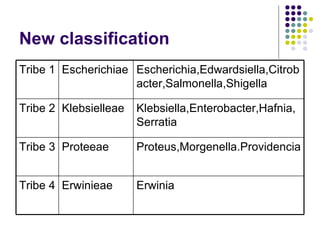
New classification Erwinia Erwinieae Tribe 4 Proteus,Morgenella.Providencia Proteeae Tribe 3 Klebsiella,Enterobacter,Hafnia,Serratia Klebsielleae Tribe 2 Escherichia,Edwardsiella,Citrobacter,Salmonella,Shigella Escherichiae Tribe 1
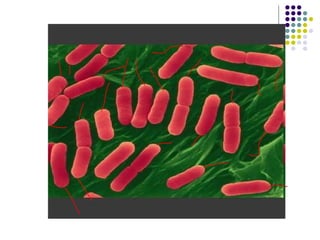
E.coli Motile-peritrichate flagella,aerobe & facultative anerobe Good growth in ordinary media Culture-fresh isolation-S/smooth form-easily emulsifiable in saline Rough forms-/R forms-irregular,dull surface-autoagglutinable in saline S-R variation occurs due to subculture-loss of surface antigens and virulence
 
MacConkey’s agar- bright pink- IMViC  ++--(Indole ,Methyl red,Voges-Proskauer and citrate utilisation tests
 
Antigenic structure
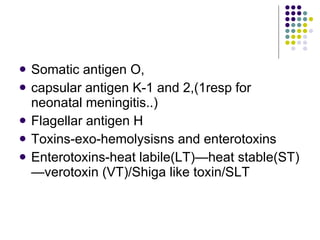
Somatic antigen O,  capsular antigen K-1 and 2,(1resp for neonatal meningitis..) Flagellar antigen H Toxins-exo-hemolysisns and enterotoxins Enterotoxins-heat labile(LT)—heat stable(ST)—verotoxin (VT)/Shiga like toxin/SLT
 
ST- two types –A &B- A-activate cGMP---fluid accumilation B-activate cGMP/cAMP VT-similar to Shigella dysenertae Type 1 toxin- VT A & B subunits-phge encoded Fimbrae-imp in UTI-P fimbriae binds specifically to the P blood group substance on RBC and uroepithelial cells
Clinical infections UTI Diarrhea Pyogenic infections Septicemia
Urinary Tract infection Majority of naturally occuring UTI By those found in feces-O grops-1,2,4,6,7. Infection may be precipitated by obstruction,prostatic enlargement,calculi,pregnancy Asyymptomatic bacteriuria-5-7% of pregnant-UTI without no symptoms----can lead to pyelonephritis,hypertension,premature births,death of fetus
Significant bacteriuria-collect mid tream sample of urine—sterile wide mouthed container---lab without delay In presence of Active infection->= 1 lakh bacteria /ml----significant bacteriuria Less than 10’000-not sig Between equivocal Semi quantitative-one loopful of urine in non-inhibitery medium & other in indicator medium Former gives quantitative measurement of bacteriuria-later presumptive diagnosis
Antibiotics sensitivity is very imp-done using urine sample as inocula Screening tests for presmptive d/g of significant bacteriuria Griess Nitrate test-+ve –Nitrate reducing b. Catalase test-+-bacteriuria and hematuria Triphenyl Tetrazolium chloride test/TTC – Microscopic demo Glucose test paper Dip slide culture methods The antibody coated bacteria test-to find site of infection-specific antibodies are present in urine only whn the kidnes are affected,otherwise inf. In bladder
Diarrheagenic E coli EP-pathogenic ET-toxigenic EH-haemorrhagic EA-aggregative EI-invasive Diarrhea
EPEC Infants Do not produce enterotoxin,not invasive Ininfantile enteritis-bacilli are seen adherent to the mucosa of SI,to cup like projections of enterocyte membrane---disruption of brush border microvilli
ETEC Endemic diarrhoea Mild watery to fatal d/s Traveller’s diarrhoea- Entero toxins produced-LT/ST/both First adhesion by fimbrial / Colonisation factor antigens(1,2,3,4,) D/g- ligated rabbit ilial loop,LT(invitro methods-tissue culture)
EIEC Resembles shigella-nonmotile,O antigen cross reactivity Enter invasive-capacity to invade interstitial epithelial cellsinvivo, penetrate HeLa cells C/f-mild diarrhoea to frank dysentery(resmble shigellosis) Children and adults Lab dig- Sereny test-instillation of a suspension of freshly isolated EIEC /shigella—g.pig eyes-mucopurulent conjuntivitis Cell penetration of HeLa/HEP2-d/gtic Ability to penetrate-plasmid- Plasmid codes for OM antigens called VMA(Virulence Marker Antigens) which can be detected by ELISA
EHEC/Shigatoxigenic/Verotoxigenic Producing VT—mild diarrhoea to fatal hemorrhagic colitis and hemorrhagic uraemic syndrome/HUS-young children and yelderly Primary target of VT is vascular endothelial cells In HUS_ch. Renal lesion-capillary micro angiopathy Source –contaminated human/animal feces Food poisoning in veg-salad vegetables Lab d/g-demo.,VT—DNA probes for VT1 and VT2 genes –more sensitive-
EAEC Appear aggregated in stacked brick formaation on hep 2 cells Persisitant diarr.
Septicaemia Blood stream invasion-shock Systemic Inflammatory Response Syndrome(SIRS)
Shigella
Imp species  Shigella dysenteriae---Mannitol non fermenting Shigella sonnei-mannitol fermenting Shigella boydii---mannitol fermenting Shigella flexneri---mannitol fermenting
Dysentery-frequent passage of blood stained mucopurulent stools Bacillary and amoebic MacConkey agar colourless-except shigella sonnei-pink Deoxycholate citrate agar-selective medium Growth is inhibited in Wilson –Blair Bismuth sulphite medium Fermentation of mannitol is imp. In classification-by SH.flexneri,boydii,sonnei Not by Sh.dysenteriae
Antigens-O,K, Classification Sh.dysenteriae-mannitol non fermenting-indole –ve,only member that is always catalase +ve Toxin –Shiga toxin  by Sh.dysenteriae type 1-earliest eg. Of an exotoxin produced by Gram –ve bacillus Neuro,entero,cyto toxicity Shiga toxin has A and B units A-A1 & A2-A1 inactivates host cell 60S ribosomes
Sh.sonnei-catalase –ve,late lactose fermenters Mildest of the bacillary dysentery MC shigellosis in developed countries
Pathogenicity Shigella causes bacillary dysentery-infestion occurs by ingestion Low minimal infective dose-10-100 bacilli only-as they survive gastric acidity than other enterobacteria Pathogenic mech. Similar to EIEC
 
Invasive property of bacillus can be demonstrated by its ability to penetrate cultured HeLa/Hep2 cells Invasive property is related to the presence in the bacillus of large plasmids coding OMP responsible for cell penrtration—these proteins are called VMAL(Virulence Marker Antigens) Detection of VMA by ELISA serves as a virulence test for Shigella,as for EIEC
Bacillary dysentery Ingestion----IP-1-7days,usually 48hrs Frequent passage of loose,scanty feces containing blood and mucus,along with abdominal cramps and tenesmus Cx-Sh.dysenteriae-type 1-arthritis,toxic neuritis,conjunctivitis,parotitis,intussusception HUS T/t- based on sensitivity

Enterobacteriaceae

  • 1.
  • 2.
    Aerobic Non-sporing, Non-acid fast, G-ve bacilli Intestinal flora
  • 3.
    Old classification Salmonella,Shigeela Non lactose fermenters Shigella sonnei/Paracolons Late lactose fermenters Escheria,Klebsiella Lactose fermenters
  • 4.
    New classification ErwiniaErwinieae Tribe 4 Proteus,Morgenella.Providencia Proteeae Tribe 3 Klebsiella,Enterobacter,Hafnia,Serratia Klebsielleae Tribe 2 Escherichia,Edwardsiella,Citrobacter,Salmonella,Shigella Escherichiae Tribe 1
  • 5.
    E.coli Motile-peritrichate flagella,aerobe& facultative anerobe Good growth in ordinary media Culture-fresh isolation-S/smooth form-easily emulsifiable in saline Rough forms-/R forms-irregular,dull surface-autoagglutinable in saline S-R variation occurs due to subculture-loss of surface antigens and virulence
  • 6.
  • 7.
    MacConkey’s agar- brightpink- IMViC ++--(Indole ,Methyl red,Voges-Proskauer and citrate utilisation tests
  • 8.
  • 9.
  • 10.
    Somatic antigen O, capsular antigen K-1 and 2,(1resp for neonatal meningitis..) Flagellar antigen H Toxins-exo-hemolysisns and enterotoxins Enterotoxins-heat labile(LT)—heat stable(ST)—verotoxin (VT)/Shiga like toxin/SLT
  • 11.
  • 12.
    ST- two types–A &B- A-activate cGMP---fluid accumilation B-activate cGMP/cAMP VT-similar to Shigella dysenertae Type 1 toxin- VT A & B subunits-phge encoded Fimbrae-imp in UTI-P fimbriae binds specifically to the P blood group substance on RBC and uroepithelial cells
  • 13.
    Clinical infections UTIDiarrhea Pyogenic infections Septicemia
  • 14.
    Urinary Tract infectionMajority of naturally occuring UTI By those found in feces-O grops-1,2,4,6,7. Infection may be precipitated by obstruction,prostatic enlargement,calculi,pregnancy Asyymptomatic bacteriuria-5-7% of pregnant-UTI without no symptoms----can lead to pyelonephritis,hypertension,premature births,death of fetus
  • 15.
    Significant bacteriuria-collect midtream sample of urine—sterile wide mouthed container---lab without delay In presence of Active infection->= 1 lakh bacteria /ml----significant bacteriuria Less than 10’000-not sig Between equivocal Semi quantitative-one loopful of urine in non-inhibitery medium & other in indicator medium Former gives quantitative measurement of bacteriuria-later presumptive diagnosis
  • 16.
    Antibiotics sensitivity isvery imp-done using urine sample as inocula Screening tests for presmptive d/g of significant bacteriuria Griess Nitrate test-+ve –Nitrate reducing b. Catalase test-+-bacteriuria and hematuria Triphenyl Tetrazolium chloride test/TTC – Microscopic demo Glucose test paper Dip slide culture methods The antibody coated bacteria test-to find site of infection-specific antibodies are present in urine only whn the kidnes are affected,otherwise inf. In bladder
  • 17.
    Diarrheagenic E coliEP-pathogenic ET-toxigenic EH-haemorrhagic EA-aggregative EI-invasive Diarrhea
  • 18.
    EPEC Infants Donot produce enterotoxin,not invasive Ininfantile enteritis-bacilli are seen adherent to the mucosa of SI,to cup like projections of enterocyte membrane---disruption of brush border microvilli
  • 19.
    ETEC Endemic diarrhoeaMild watery to fatal d/s Traveller’s diarrhoea- Entero toxins produced-LT/ST/both First adhesion by fimbrial / Colonisation factor antigens(1,2,3,4,) D/g- ligated rabbit ilial loop,LT(invitro methods-tissue culture)
  • 20.
    EIEC Resembles shigella-nonmotile,Oantigen cross reactivity Enter invasive-capacity to invade interstitial epithelial cellsinvivo, penetrate HeLa cells C/f-mild diarrhoea to frank dysentery(resmble shigellosis) Children and adults Lab dig- Sereny test-instillation of a suspension of freshly isolated EIEC /shigella—g.pig eyes-mucopurulent conjuntivitis Cell penetration of HeLa/HEP2-d/gtic Ability to penetrate-plasmid- Plasmid codes for OM antigens called VMA(Virulence Marker Antigens) which can be detected by ELISA
  • 21.
    EHEC/Shigatoxigenic/Verotoxigenic Producing VT—milddiarrhoea to fatal hemorrhagic colitis and hemorrhagic uraemic syndrome/HUS-young children and yelderly Primary target of VT is vascular endothelial cells In HUS_ch. Renal lesion-capillary micro angiopathy Source –contaminated human/animal feces Food poisoning in veg-salad vegetables Lab d/g-demo.,VT—DNA probes for VT1 and VT2 genes –more sensitive-
  • 22.
    EAEC Appear aggregatedin stacked brick formaation on hep 2 cells Persisitant diarr.
  • 23.
    Septicaemia Blood streaminvasion-shock Systemic Inflammatory Response Syndrome(SIRS)
  • 24.
  • 25.
    Imp species Shigella dysenteriae---Mannitol non fermenting Shigella sonnei-mannitol fermenting Shigella boydii---mannitol fermenting Shigella flexneri---mannitol fermenting
  • 26.
    Dysentery-frequent passage ofblood stained mucopurulent stools Bacillary and amoebic MacConkey agar colourless-except shigella sonnei-pink Deoxycholate citrate agar-selective medium Growth is inhibited in Wilson –Blair Bismuth sulphite medium Fermentation of mannitol is imp. In classification-by SH.flexneri,boydii,sonnei Not by Sh.dysenteriae
  • 27.
    Antigens-O,K, Classification Sh.dysenteriae-mannitolnon fermenting-indole –ve,only member that is always catalase +ve Toxin –Shiga toxin by Sh.dysenteriae type 1-earliest eg. Of an exotoxin produced by Gram –ve bacillus Neuro,entero,cyto toxicity Shiga toxin has A and B units A-A1 & A2-A1 inactivates host cell 60S ribosomes
  • 28.
    Sh.sonnei-catalase –ve,late lactosefermenters Mildest of the bacillary dysentery MC shigellosis in developed countries
  • 29.
    Pathogenicity Shigella causesbacillary dysentery-infestion occurs by ingestion Low minimal infective dose-10-100 bacilli only-as they survive gastric acidity than other enterobacteria Pathogenic mech. Similar to EIEC
  • 30.
  • 31.
    Invasive property ofbacillus can be demonstrated by its ability to penetrate cultured HeLa/Hep2 cells Invasive property is related to the presence in the bacillus of large plasmids coding OMP responsible for cell penrtration—these proteins are called VMAL(Virulence Marker Antigens) Detection of VMA by ELISA serves as a virulence test for Shigella,as for EIEC
  • 32.
    Bacillary dysentery Ingestion----IP-1-7days,usually48hrs Frequent passage of loose,scanty feces containing blood and mucus,along with abdominal cramps and tenesmus Cx-Sh.dysenteriae-type 1-arthritis,toxic neuritis,conjunctivitis,parotitis,intussusception HUS T/t- based on sensitivity