Presentation by-
      Deepak Rawal
    Assistant Professor
Mohanlal Sukhadia University
       Udaipur India
AMPHIBIA
CLASSIFICATION
General characters
•   Amphi- double; bios- life; living on land and breeding in water
•   Respiration by lungs, skin and buccopharynx
•   Larval forms with lateral line system
•   Exclusively fresh-water; no marine forms
•   Poikilothermic(cold-blooded)
•   Exoskeleton absent
•   Soft, moist and glandular skin without scales
•   Homodont teeth
•   Skull is dicondylic
•   Protrusible tongue
•   Cloaca present
•   3-chambered heart(2atrium+1ventricle)
•   R.B.C. large oval and nucleated
•   Mesonephric kidneys
•   Amphibians are ureotelic
•   Middle ear with single rod like bone collumella auris
•   Cranial nerves 10 pairs
•   Sexual dimorphism found
•   Oviparous and external fertilization
•   Indirect development through tadpole larva mostly
•   Anamniotes(extra-embryonic membrane amnion absent)
•   Batrachology-study of amphibian
•   Evolved from crossopterygian fishes
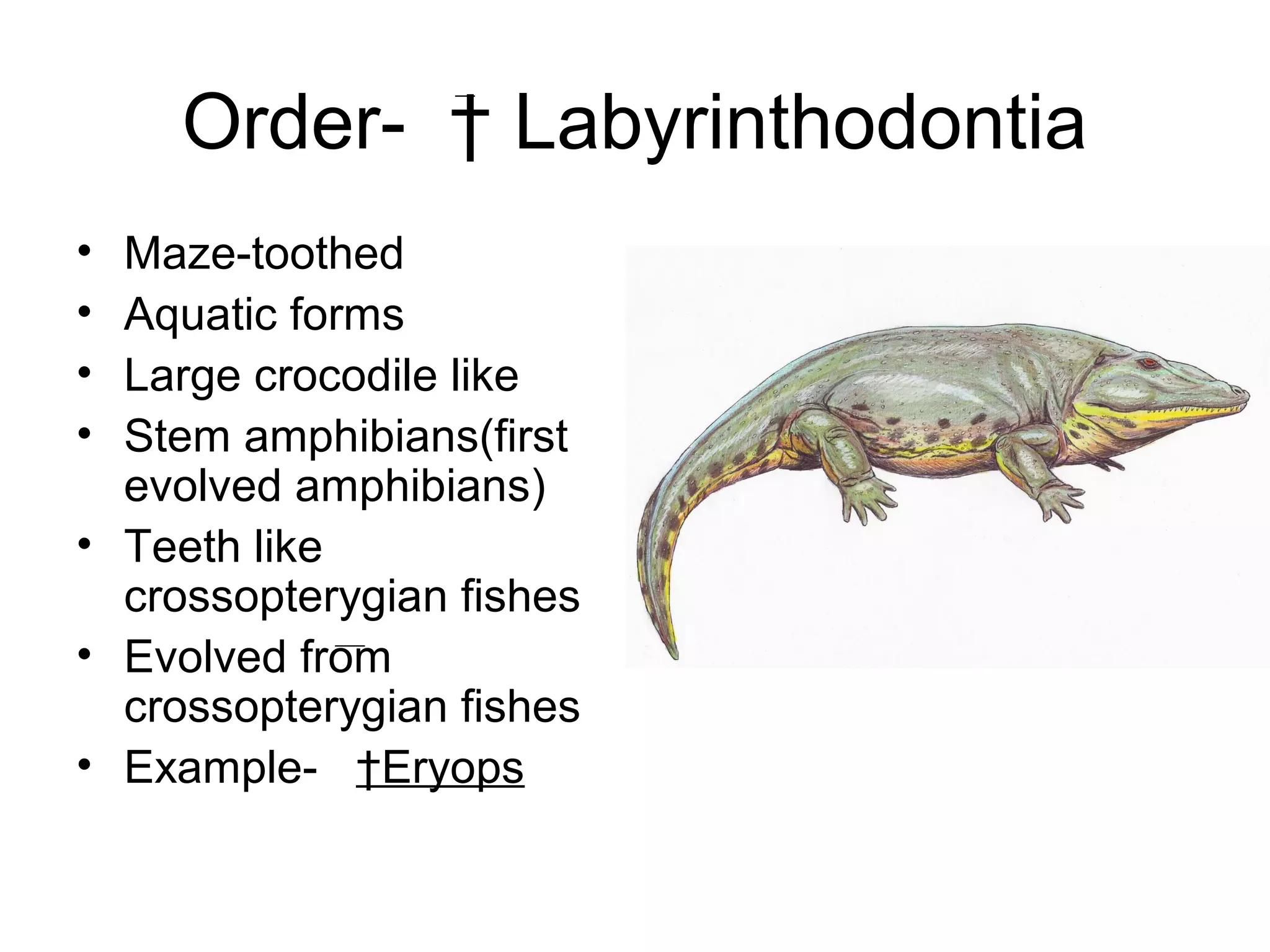
Order- † Labyrinthodontia
• Maze-toothed
• Aquatic forms
• Large crocodile like
• Stem amphibians(first
  evolved amphibians)
• Teeth like
  crossopterygian fishes
• Evolved from
  crossopterygian fishes
• Example- †Eryops
T.S. OF TOOTH
Order- † Phyllospondyli
• Leaf like thin
  vertebrae
• Small salamander like
• Ancestors of modern
  anuran and urodels
• Example-
  †Ichthyostega
Order- † Lepospondyli
• Ring like vertebrae
• Ancestor of modern
  caecilians
• Example-
  †Diplocaulus
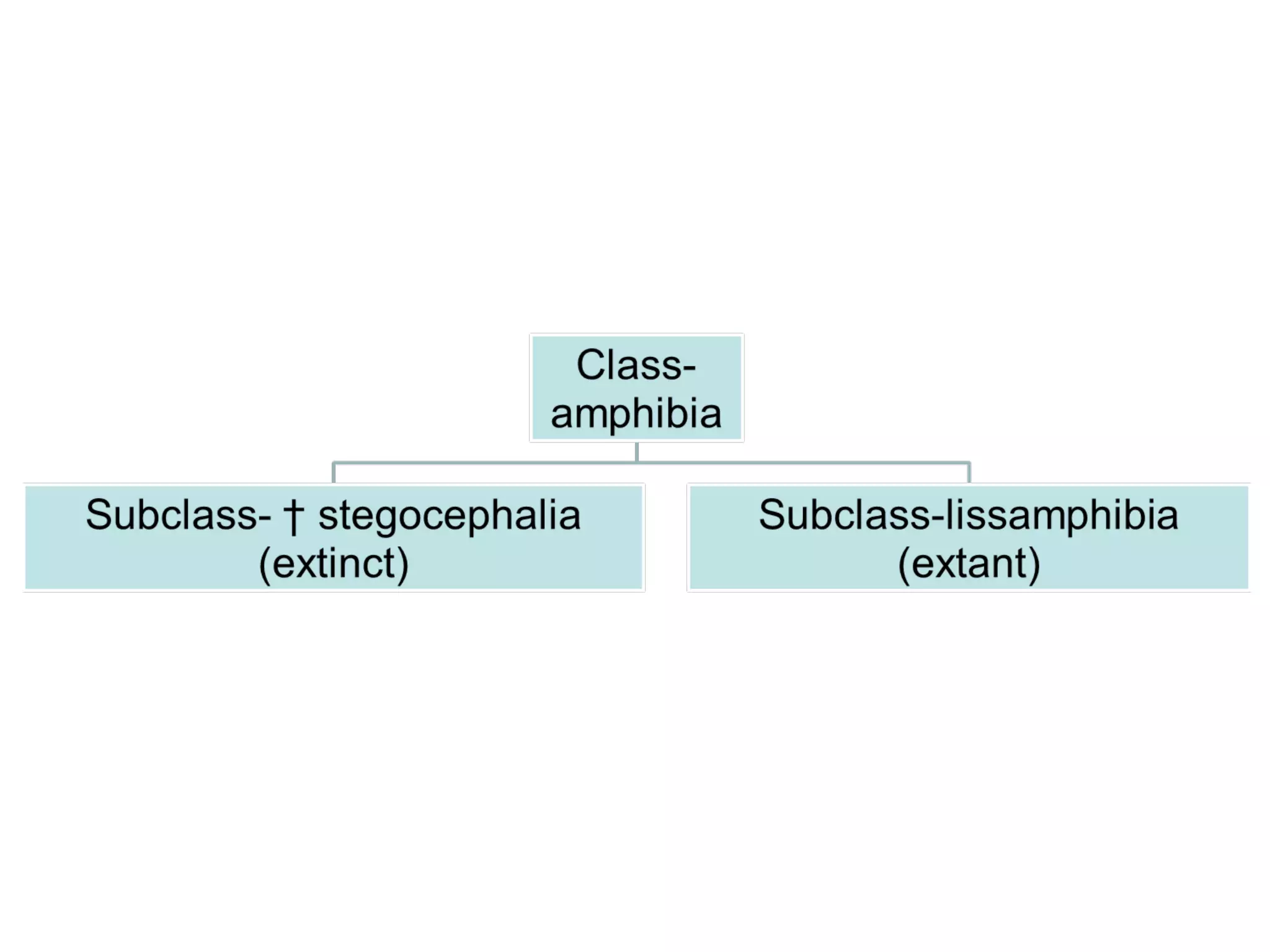
Subclass-lissamphibia


Order-apoda      Order-urodela        Order-anura
Order-Apoda
• Also called
  gymnophiona or
  caecilians
• Burrowing forms
• Snake like
• Without limbs
• Blind
• Tail absent
• Limb girdles present
• Example- Ichthyophis
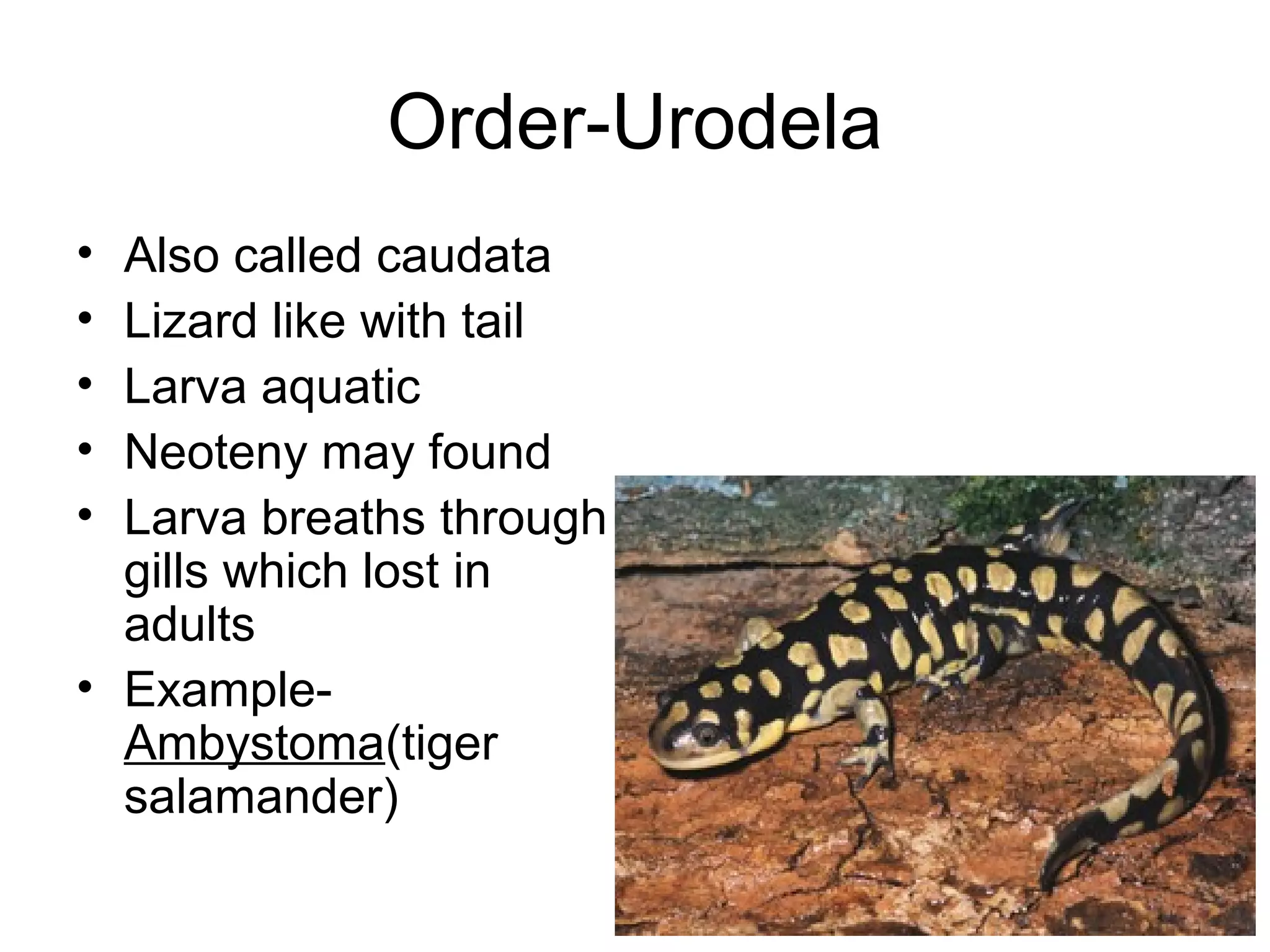
Order-Urodela
• Also called caudata
• Lizard like with tail
• Larva aquatic
• Neoteny may found
• Larva breaths through
  gills which lost in
  adults
• Example-
  Ambystoma(tiger
  salamander)
Axolotl larva of salamander
Order-Anura
•   Also called salientia
•   Frogs and toads
•   Tail absent in adults
•   Vocal sacs present in males
•   Leaping locomotion
•   5 to 9 vertebrae with urostyle
•   Mandible toothless
•   Vomer teeth present
•   Metamorphosis found in most
•   Tadpole larva
•   Example- Hoplobatrachus
    (Rana)
Metamorphosis of frog shown in
        time interval
PARENTAL CARE IN
   AMPHIBIAN
• Parents give food shelter and protection to
  their eggs or offspring is called parental care.
• Parental care increase the rate of survival of
  offspring.


• MATERNAL CARE- caring by mother.
• PATERNAL CARE-caring by father.
•INDIRECT CARING
Tree nests
• Eggs laid on overhanging leaves which
  protect them from predator
• Example- Rhacophorus (flying frog)
Mud nests
• Dig a hole in mud and lay eggs in it
• example- Hyla faber
Defending eggs
• Many species of amphibians guard eggs
  and attack the invading intruders
• Example- Autodax
Foam nests
• Many species of amphibians convert their
  mucus secretion to foam nests.
• Example- Leptodactylus
Gelatinous bags
• Some make transparent gelatinous bag by
  their mucus secretion
• Example- Salamandra keyserlingi
Direct development
• No metamorphosis occurs in some
  species
• Eggs hatch directly into little frogs
• Example- Hylodes
DIRECT CARING
Coiling around eggs
• Some dig a hole in mud and lay their eggs
  in that and coiled around them to protect
  them.
• Example- Ichthyophis
Eggs glued to body
• Many species glued their eggs to neck,
  thigh and other parts of body
• Example- Desmognathus glued their eggs
  to neck
• Example- Alytes glued their eggs to thigh
Eggs in back pouches
• In breeding season skin become thick vascular
  glandular
• Male presses eggs on female back
• Amphibian with this characteristic is called
  marsupials
• Example- Pipa (surinam toad)
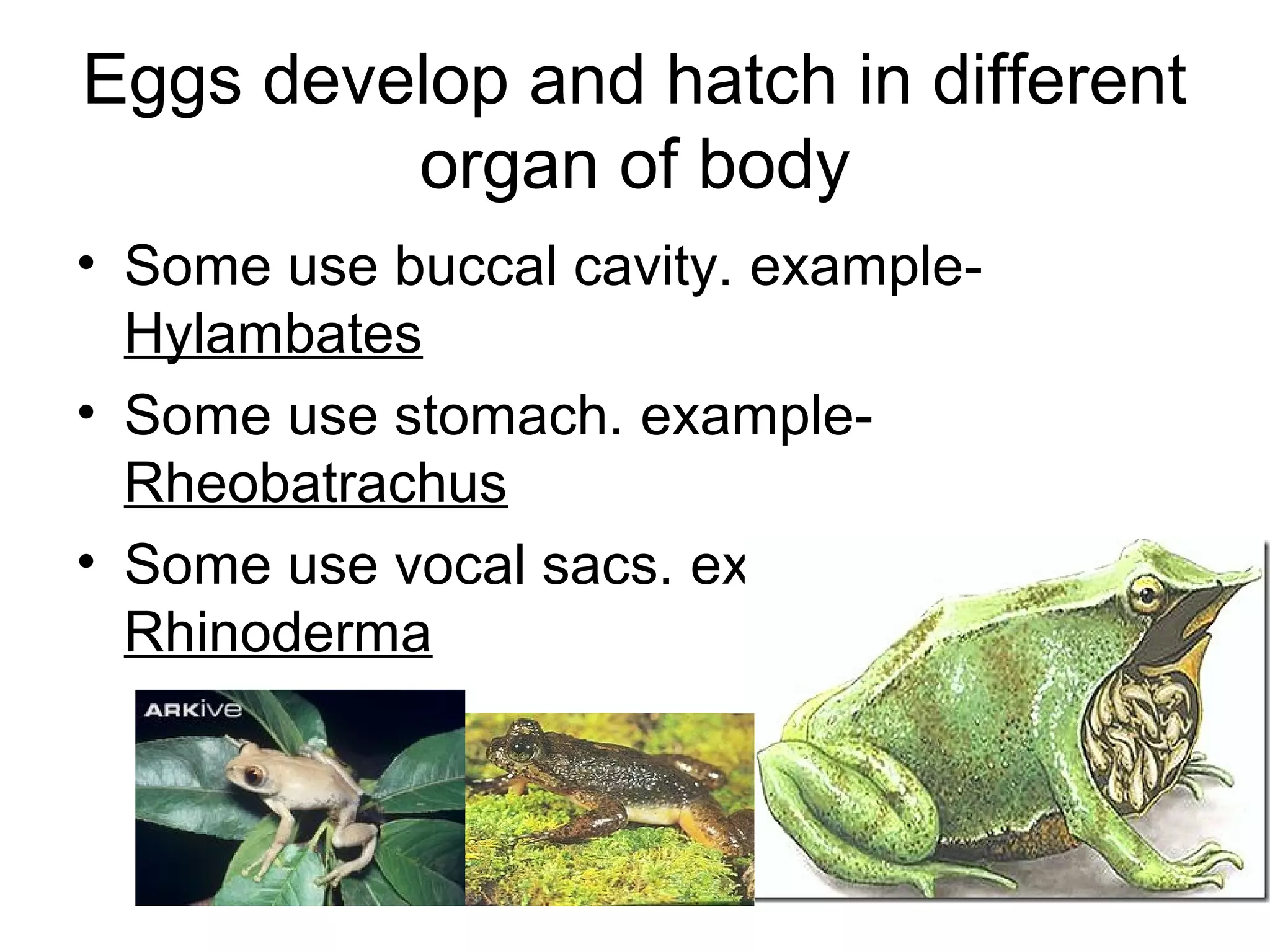
Eggs develop and hatch in different
         organ of body
• Some use buccal cavity. example-
  Hylambates
• Some use stomach. example-
  Rheobatrachus
• Some use vocal sacs. example-
  Rhinoderma
ovoviviparity
• Eggs laid but retain in oviduct and give
  birth to young ones.
• Exampke- Dermophis
Amphibia classification by deepak rawal

Amphibia classification by deepak rawal

  • 1.
    Presentation by- Deepak Rawal Assistant Professor Mohanlal Sukhadia University Udaipur India
  • 2.
  • 3.
    General characters • Amphi- double; bios- life; living on land and breeding in water • Respiration by lungs, skin and buccopharynx • Larval forms with lateral line system • Exclusively fresh-water; no marine forms • Poikilothermic(cold-blooded) • Exoskeleton absent • Soft, moist and glandular skin without scales • Homodont teeth • Skull is dicondylic • Protrusible tongue • Cloaca present • 3-chambered heart(2atrium+1ventricle) • R.B.C. large oval and nucleated • Mesonephric kidneys • Amphibians are ureotelic • Middle ear with single rod like bone collumella auris • Cranial nerves 10 pairs • Sexual dimorphism found • Oviparous and external fertilization • Indirect development through tadpole larva mostly • Anamniotes(extra-embryonic membrane amnion absent) • Batrachology-study of amphibian • Evolved from crossopterygian fishes
  • 6.
    Order- † Labyrinthodontia •Maze-toothed • Aquatic forms • Large crocodile like • Stem amphibians(first evolved amphibians) • Teeth like crossopterygian fishes • Evolved from crossopterygian fishes • Example- †Eryops
  • 8.
  • 9.
    Order- † Phyllospondyli •Leaf like thin vertebrae • Small salamander like • Ancestors of modern anuran and urodels • Example- †Ichthyostega
  • 10.
    Order- † Lepospondyli •Ring like vertebrae • Ancestor of modern caecilians • Example- †Diplocaulus
  • 11.
    Subclass-lissamphibia Order-apoda Order-urodela Order-anura
  • 12.
    Order-Apoda • Also called gymnophiona or caecilians • Burrowing forms • Snake like • Without limbs • Blind • Tail absent • Limb girdles present • Example- Ichthyophis
  • 13.
    Order-Urodela • Also calledcaudata • Lizard like with tail • Larva aquatic • Neoteny may found • Larva breaths through gills which lost in adults • Example- Ambystoma(tiger salamander)
  • 14.
    Axolotl larva ofsalamander
  • 15.
    Order-Anura • Also called salientia • Frogs and toads • Tail absent in adults • Vocal sacs present in males • Leaping locomotion • 5 to 9 vertebrae with urostyle • Mandible toothless • Vomer teeth present • Metamorphosis found in most • Tadpole larva • Example- Hoplobatrachus (Rana)
  • 18.
    Metamorphosis of frogshown in time interval
  • 19.
  • 20.
    • Parents givefood shelter and protection to their eggs or offspring is called parental care. • Parental care increase the rate of survival of offspring. • MATERNAL CARE- caring by mother. • PATERNAL CARE-caring by father.
  • 22.
  • 23.
    Tree nests • Eggslaid on overhanging leaves which protect them from predator • Example- Rhacophorus (flying frog)
  • 24.
    Mud nests • Diga hole in mud and lay eggs in it • example- Hyla faber
  • 25.
    Defending eggs • Manyspecies of amphibians guard eggs and attack the invading intruders • Example- Autodax
  • 26.
    Foam nests • Manyspecies of amphibians convert their mucus secretion to foam nests. • Example- Leptodactylus
  • 27.
    Gelatinous bags • Somemake transparent gelatinous bag by their mucus secretion • Example- Salamandra keyserlingi
  • 28.
    Direct development • Nometamorphosis occurs in some species • Eggs hatch directly into little frogs • Example- Hylodes
  • 29.
  • 30.
    Coiling around eggs •Some dig a hole in mud and lay their eggs in that and coiled around them to protect them. • Example- Ichthyophis
  • 31.
    Eggs glued tobody • Many species glued their eggs to neck, thigh and other parts of body • Example- Desmognathus glued their eggs to neck • Example- Alytes glued their eggs to thigh
  • 32.
    Eggs in backpouches • In breeding season skin become thick vascular glandular • Male presses eggs on female back • Amphibian with this characteristic is called marsupials • Example- Pipa (surinam toad)
  • 33.
    Eggs develop andhatch in different organ of body • Some use buccal cavity. example- Hylambates • Some use stomach. example- Rheobatrachus • Some use vocal sacs. example- Rhinoderma
  • 34.
    ovoviviparity • Eggs laidbut retain in oviduct and give birth to young ones. • Exampke- Dermophis