Acute pyelonephritis
&
Hydronephrosis
PBL -06
15 Oct 2017
Kidney Diseases
• Glomerular diseases
• Vascular diseases
• Tubular and interstitial diseases
# Acute tubular injury
# pyelonephritis and UTI
- Acute Pyelonephritis
- Chronic pyelonephritis
• Urinary tract obstruction
# Hydronephrosis
Objectives
• Acute pyelonephritis
- Pathogenesis,
- Morphology
• Hydronephrosis
- Pathogenesis
- Morphology
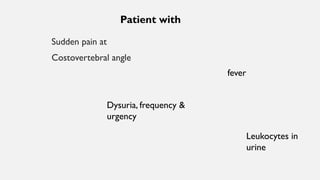
Sudden pain at
Costovertebral angle
fever
Dysuria, frequency &
urgency
Leukocytes in
urine
Patient with
Acute pyelonephritis
• It is a suppurative inflammation of the kidney caused by bacterial
(and sometimes viral) infection.
Associated with
• UTI
• Vesicoureteral reflex
• Preexisting renal lesions
• DM (neurogenic bladder dysfunction)
• Immunosuppression (polyomavirus)
Common agents
E. Coli
Proteus
Klebseilla
Enterobacter
Fungal organism
Morphology
Hallmarks of acute pyelonephritis
• Patchy interstitial suppurative inflammation
• Intratubular aggregates of neutrophils
• Neutrophilic tubulitis and tubular necrosis
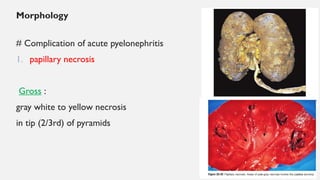
Morphology
# Complication of acute pyelonephritis
1. papillary necrosis
Gross :
gray white to yellow necrosis
in tip (2/3rd) of pyramids
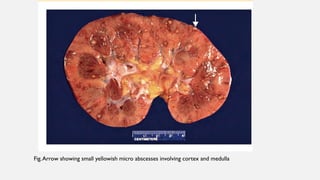
Fig.Arrow showing small yellowish micro abscesses involving cortex and medulla
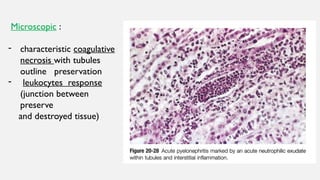
Microscopic :
- characteristic coagulative
necrosis with tubules
outline preservation
- leukocytes response
(junction between
preserve
and destroyed tissue)
2. pyonephrosis
- seen in almost complete obstruction
Suppurative exudate – unable to drain – fill the renal pelvis, calyces, and
ureter with pus
3. perinephric abscess
- extension of suppurative inflammation through renal pelvis into
perinephric tissue
After acute phase of pyelonephritis
Healing process start
• neutrophilic infiltrate replaced by – macrophages, plasma cells and lymphocytes
• Inflammatory foci replaced by – irregular scars/cortical surface as fibrous -
depression.
tubular atrophy, interstitial fibrosis
and lymphatic infiltration
Hydronephrosis
Hydronephrosis is the dilation of renal pelvis and calyces
associated with progressive atrophy of the kidney due to
obstruction to the outflow
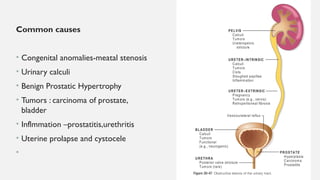
Common causes
• Congenital anomalies-meatal stenosis
• Urinary calculi
• Benign Prostatic Hypertrophy
• Tumors : carcinoma of prostate,
bladder
• Inflmmation –prostatitis,urethritis
• Uterine prolapse and cystocele
•
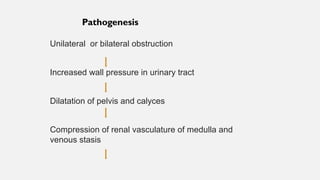
Unilateral or bilateral obstruction
Increased wall pressure in urinary tract
Dilatation of pelvis and calyces
Compression of renal vasculature of medulla and
venous stasis
Pathogenesis
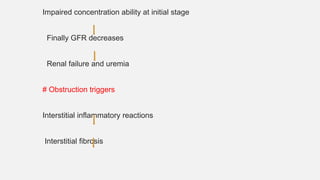
Impaired concentration ability at initial stage
Finally GFR decreases
Renal failure and uremia
# Obstruction triggers
Interstitial inflammatory reactions
Interstitial fibrosis
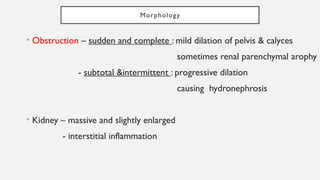
Morphology
• Obstruction – sudden and complete : mild dilation of pelvis & calyces
sometimes renal parenchymal arophy
- subtotal &intermittent : progressive dilation
causing hydronephrosis
• Kidney – massive and slightly enlarged
- interstitial inflammation
• In Chronic case
- cortical tubular atrophy with diffuse interstitial fibrosis
- progressive blunting of apices of pyramids (cup shaped)
• In far advanced case –
- kidney transformed into thin walled cystic
structure with parenchymal atrophy, total obliteration
of pyramids , & thinning of cortex
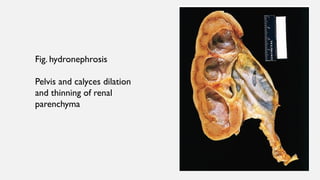
Fig. hydronephrosis
Pelvis and calyces dilation
and thinning of renal
parenchyma
Clinical features
1. unilateral complete or partial hydronephrosis
- silent for long period
- Diagnosed by USG
2. Bilateral partial obstruction
- inability to concentrate urine (earliest manifestation)- polyuria, nocturia
- distal tubular acidosis , renal salt wasting, secondary renal calculi
- Scarring and atrophy of papilla & medulla
3. Complete bilateral obstruction
- Oliguria or anuria
- Life threatening
References
• Robbins and Cotran Pathologic basis of
disease,9e,vol2
• Robbins and Cotran atlas of pathology, 3e
Thank you

acute pyelonephritis ab. d

  • 1.
  • 2.
    Kidney Diseases • Glomerulardiseases • Vascular diseases • Tubular and interstitial diseases # Acute tubular injury # pyelonephritis and UTI - Acute Pyelonephritis - Chronic pyelonephritis • Urinary tract obstruction # Hydronephrosis
  • 3.
    Objectives • Acute pyelonephritis -Pathogenesis, - Morphology • Hydronephrosis - Pathogenesis - Morphology
  • 4.
    Sudden pain at Costovertebralangle fever Dysuria, frequency & urgency Leukocytes in urine Patient with
  • 5.
    Acute pyelonephritis • Itis a suppurative inflammation of the kidney caused by bacterial (and sometimes viral) infection. Associated with • UTI • Vesicoureteral reflex • Preexisting renal lesions • DM (neurogenic bladder dysfunction) • Immunosuppression (polyomavirus) Common agents E. Coli Proteus Klebseilla Enterobacter Fungal organism
  • 6.
    Morphology Hallmarks of acutepyelonephritis • Patchy interstitial suppurative inflammation • Intratubular aggregates of neutrophils • Neutrophilic tubulitis and tubular necrosis
  • 7.
    Morphology # Complication ofacute pyelonephritis 1. papillary necrosis Gross : gray white to yellow necrosis in tip (2/3rd) of pyramids
  • 8.
    Fig.Arrow showing smallyellowish micro abscesses involving cortex and medulla
  • 9.
    Microscopic : - characteristiccoagulative necrosis with tubules outline preservation - leukocytes response (junction between preserve and destroyed tissue)
  • 10.
    2. pyonephrosis - seenin almost complete obstruction Suppurative exudate – unable to drain – fill the renal pelvis, calyces, and ureter with pus 3. perinephric abscess - extension of suppurative inflammation through renal pelvis into perinephric tissue
  • 11.
    After acute phaseof pyelonephritis Healing process start • neutrophilic infiltrate replaced by – macrophages, plasma cells and lymphocytes • Inflammatory foci replaced by – irregular scars/cortical surface as fibrous - depression. tubular atrophy, interstitial fibrosis and lymphatic infiltration
  • 12.
  • 13.
    Hydronephrosis is thedilation of renal pelvis and calyces associated with progressive atrophy of the kidney due to obstruction to the outflow
  • 14.
    Common causes • Congenitalanomalies-meatal stenosis • Urinary calculi • Benign Prostatic Hypertrophy • Tumors : carcinoma of prostate, bladder • Inflmmation –prostatitis,urethritis • Uterine prolapse and cystocele •
  • 15.
    Unilateral or bilateralobstruction Increased wall pressure in urinary tract Dilatation of pelvis and calyces Compression of renal vasculature of medulla and venous stasis Pathogenesis
  • 16.
    Impaired concentration abilityat initial stage Finally GFR decreases Renal failure and uremia # Obstruction triggers Interstitial inflammatory reactions Interstitial fibrosis
  • 17.
    Morphology • Obstruction –sudden and complete : mild dilation of pelvis & calyces sometimes renal parenchymal arophy - subtotal &intermittent : progressive dilation causing hydronephrosis • Kidney – massive and slightly enlarged - interstitial inflammation
  • 18.
    • In Chroniccase - cortical tubular atrophy with diffuse interstitial fibrosis - progressive blunting of apices of pyramids (cup shaped) • In far advanced case – - kidney transformed into thin walled cystic structure with parenchymal atrophy, total obliteration of pyramids , & thinning of cortex
  • 19.
    Fig. hydronephrosis Pelvis andcalyces dilation and thinning of renal parenchyma
  • 20.
    Clinical features 1. unilateralcomplete or partial hydronephrosis - silent for long period - Diagnosed by USG 2. Bilateral partial obstruction - inability to concentrate urine (earliest manifestation)- polyuria, nocturia - distal tubular acidosis , renal salt wasting, secondary renal calculi - Scarring and atrophy of papilla & medulla 3. Complete bilateral obstruction - Oliguria or anuria - Life threatening
  • 21.
    References • Robbins andCotran Pathologic basis of disease,9e,vol2 • Robbins and Cotran atlas of pathology, 3e
  • 22.