Renal Failure
Management
Dr. Sameh Ahmad Muhamad abdelghany
Lecturer Of Clinical Pharmacology
Mansura Faculty of medicine
2
INTRODUCTION
CLASSIFICATION
ACUTE RENAL
FAILURE
CHRONIC RENAL
Failure
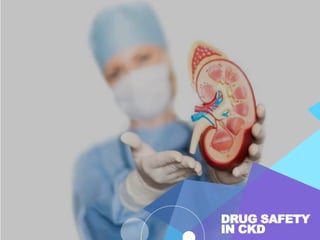
DRUG SAFETY
IN CKD
CONTENTS
INTRODUCTION
4
Introduction
 Results when the kidneys cannot
remove the body’s metabolic wastes or
perform their regulatory functions.
 It is a systemic disease and is a final
common pathway of many different
kidney and urinary tract diseases.
5
Introduction
 Chronic kidney disease affected 753
million people globally in 2016,
including 417 million females and 336
million males.
 In 2015 it resulted in 1.2 million deaths,
up from 409,000 in 1990.
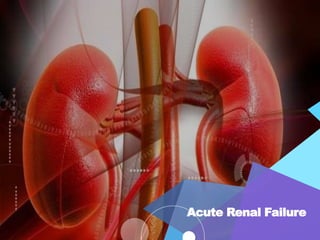
Acute Renal Failure
7
Acute Renal Failure
 Definition:
 is an acute and potentially reversible irritability
of the kidneys to perform their normal functions
to maintain homeostasis
 There is a sudden and almost complete loss of
kidney function (decreased GFR) over a period
of hours to days with failure to excrete
nitrogenous waste products and to maintain
fluid and electrolyte homeostasis
8
Acute Renal Failure
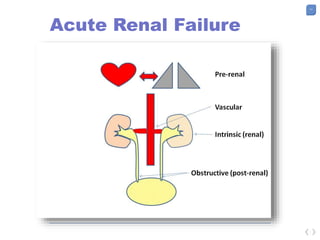
 Causes:
I. Pre-renal(Functiona)
 Volume Depletion
 Cardiac
 Hepatorenal syndrome
 Drugs: NSAIDs - ACEIs
9
Acute Renal Failure
 Causes:
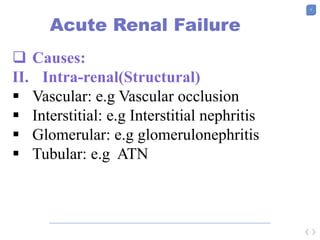
II. Intra-renal(Structural)
 Vascular: e.g Vascular occlusion
 Interstitial: e.g Interstitial nephritis
 Glomerular: e.g glomerulonephritis
 Tubular: e.g ATN
10
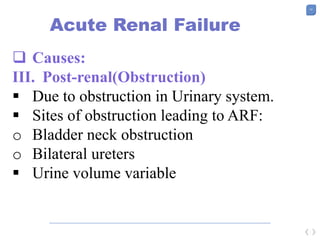
Acute Renal Failure
 Causes:
III. Post-renal(Obstruction)
 Due to obstruction in Urinary system.
 Sites of obstruction leading to ARF:
o Bladder neck obstruction
o Bilateral ureters
 Urine volume variable
11
Acute Renal Failure
12
Acute Renal Failure
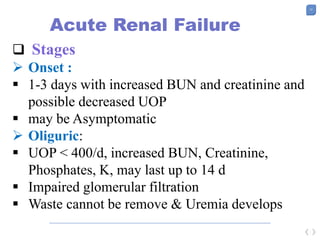
 Stages
 Onset :
 1-3 days with increased BUN and creatinine and
possible decreased UOP
 may be Asymptomatic
 Oliguric:
 UOP < 400/d, increased BUN, Creatinine,
Phosphates, K, may last up to 14 d
 Impaired glomerular filtration
 Waste cannot be remove & Uremia develops
13
Acute Renal Failure
 Stages
 Diuretic :
 UOP increased up to as much as 4000 mL/d but
no waste products
 at end of this stage may begin to see
improvement
 dehydration and electrolyte imbalance due to
excess urination
 Recovery :
 things go back to normal or may remain
insufficient and become chronic(takes months)
14
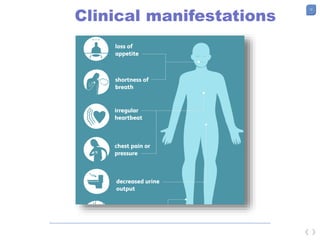
Clinical manifestations
 Severe oliguria/ Anuria
 Nausea / Vomiting
 Lethargy
 Dehydration
 Acidotic breathing
 Altered consciousness
 Irregular cardiac rate, rhythm
 Edema
 Hypertension
15
Clinical manifestations
16
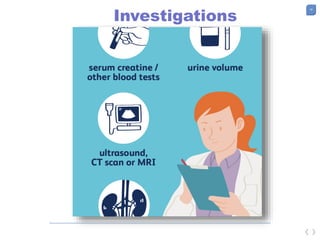
Investigations
 LAB
 Blood examination:
 Anemia
 Raised serum creatinine level, blood urea
 Electrolytes: K , Na , Ca
 PH: Acidosis
 Complete blood count
 Urine examination:
 Protienuria, Hematuria, presence of casts
17
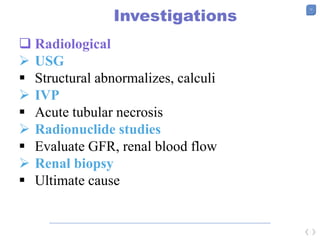
Investigations
 Radiological
 USG
 Structural abnormalizes, calculi
 IVP
 Acute tubular necrosis
 Radionuclide studies
 Evaluate GFR, renal blood flow
 Renal biopsy
 Ultimate cause
18
Investigations
19
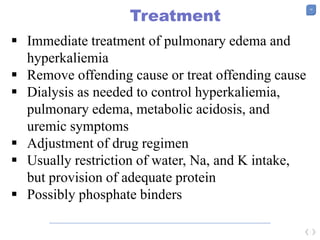
Treatment
 Immediate treatment of pulmonary edema and
hyperkaliemia
 Remove offending cause or treat offending cause
 Dialysis as needed to control hyperkaliemia,
pulmonary edema, metabolic acidosis, and
uremic symptoms
 Adjustment of drug regimen
 Usually restriction of water, Na, and K intake,
but provision of adequate protein
 Possibly phosphate binders
20
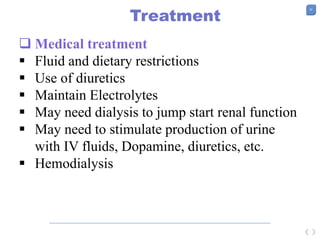
Treatment
 Medical treatment
 Fluid and dietary restrictions
 Use of diuretics
 Maintain Electrolytes
 May need dialysis to jump start renal function
 May need to stimulate production of urine
with IV fluids, Dopamine, diuretics, etc.
 Hemodialysis
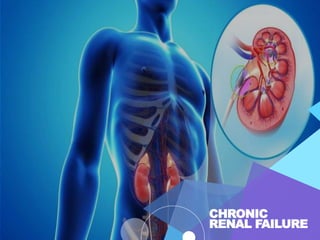
CHRONIC
RENAL FAILURE
22
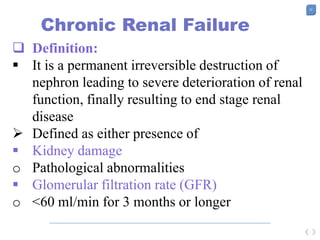
Chronic Renal Failure
 Definition:
 It is a permanent irreversible destruction of
nephron leading to severe deterioration of renal
function, finally resulting to end stage renal
disease
 Defined as either presence of
 Kidney damage
o Pathological abnormalities
 Glomerular filtration rate (GFR)
o <60 ml/min for 3 months or longer
23
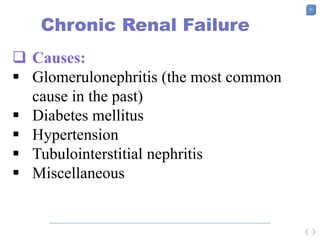
Chronic Renal Failure
 Causes:
 Glomerulonephritis (the most common
cause in the past)
 Diabetes mellitus
 Hypertension
 Tubulointerstitial nephritis
 Miscellaneous
24
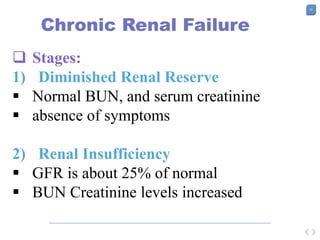
Chronic Renal Failure
 Stages:
1) Diminished Renal Reserve
 Normal BUN, and serum creatinine
 absence of symptoms
2) Renal Insufficiency
 GFR is about 25% of normal
 BUN Creatinine levels increased
25
Chronic Renal Failure
 Stages:
3) Renal Failure
 GFR <25% of normal
 increasing symptoms
4) ESRD or Uremia
 GFR < 5-10% normal
 creatinine clearance <5-10ml/min resulting
in a cumulative effect
26
Chronic Renal Failure
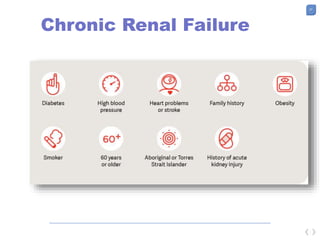
 Risk factors:
 Old age
 Family history
 Diabetes
 Obesity
 HTN
 Cardiac diseases
 Previous acute kidney injury
 Smoking
27
Chronic Renal Failure
28
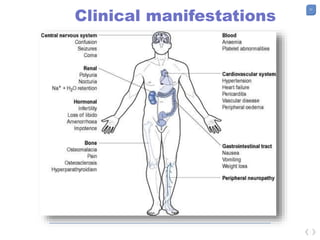
Clinical manifestations
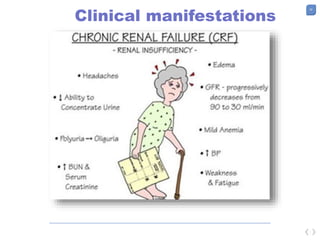
 Early symptoms
 Weakness
 Anorexia
 Nausea
 Failure to thrive
 Unexplained anemia
 Late symptoms
 Pericarditis
 Congestive cardiac failure
 Altered sensorium
29
Complications
 Azotemia
 Metabolic acidosis
 Electrolyte imbalance
 Chronic cardiac failure
 HTN
 Severe anemia
30
Clinical manifestations
31
Clinical manifestations
32
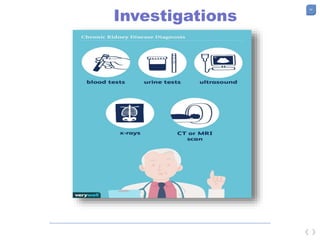
Investigations
LAB
 Blood examination:
 Decreased hematocrit, Hb%, Na+, Ca++,
HCO-3, increased K+ & phosphorus
 Renal function test
 Gradual increase in BUN, uric acid &
creatinine
 Urine examination:
 Variation in specific gravity, increased urine
creatinine, change in total urine output
33
Investigations
Radiological
 X-Ray
 Chest, hands, knees, pelvis, spine to detect
bony defect
 ECG, IVP, MCU, radio nuclide imaging
 Extent of complications
34
Investigations
35
Treatment
 Conservative management
 Correction of reversible component of renal
dysfunction
 Preservation of renal function
 Treatment of metabolic problems
 Optimization of growth
 Preparation for treatment of ESRD
 Treat for infection, accelerated hypertension,
CCF, obstruction of urine flow to improve
renal function
36
Treatment
Medical treatment
 IV glucose and insulin
 Na bicarb, Ca, Vit D, phosphate binders
 Fluid restriction, diuretics
 Iron supplements, blood, erythropoietin
37
Treatment
Dietary therapy
 Low protein diet
 Severe protein restriction may produce
protein calorie malnutrition
 Salt restriction in patients with
hypertension and fluid overload
38
Treatment
Dietary therapy
 Patients with salt losing nephropathy
should take a liberal amount of salt and
water
 If the GFR falls <10 ml/min/1.73m2,
potassium intake should be restricted.
(hyperkalemia may develop)
 Vit D is essential to raise the serum
calcium and suppress parathormone
secretion
39
Treatment
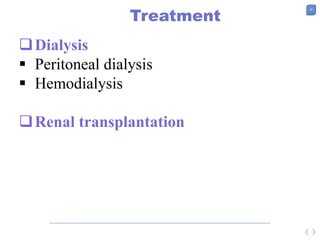
Dialysis
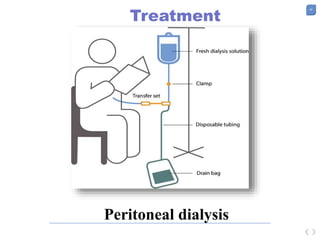
 Peritoneal dialysis
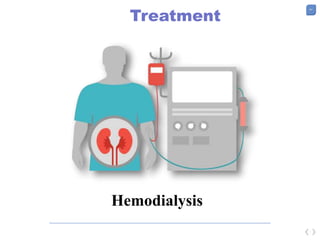
 Hemodialysis
Renal transplantation
40
Treatment
Peritoneal dialysis
41
Treatment
Hemodialysis
42
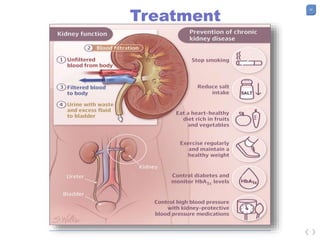
Treatment
DRUG SAFETY
IN CKD
44
Drug-Related adverse
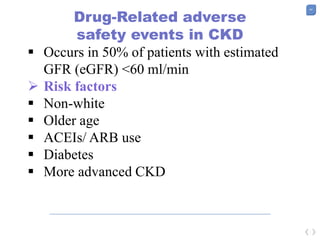
safety events in CKD
 Occurs in 50% of patients with estimated
GFR (eGFR) <60 ml/min
 Risk factors
 Non-white
 Older age
 ACEIs/ ARB use
 Diabetes
 More advanced CKD
45
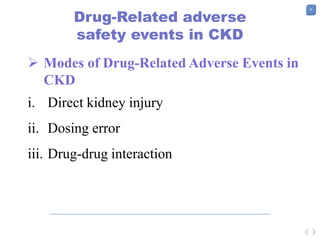
Drug-Related adverse
safety events in CKD
 Modes of Drug-Related Adverse Events in
CKD
i. Direct kidney injury
ii. Dosing error
iii. Drug-drug interaction
46
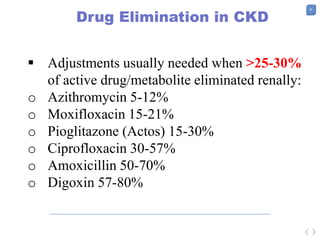
Drug Elimination in CKD
 Adjustments usually needed when >25-30%
of active drug/metabolite eliminated renally:
o Azithromycin 5-12%
o Moxifloxacin 15-21%
o Pioglitazone (Actos) 15-30%
o Ciprofloxacin 30-57%
o Amoxicillin 50-70%
o Digoxin 57-80%
47
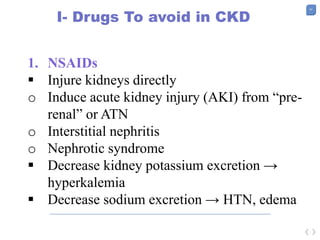
I- Drugs To avoid in CKD
1. NSAIDs
 Injure kidneys directly
o Induce acute kidney injury (AKI) from “pre-
renal” or ATN
o Interstitial nephritis
o Nephrotic syndrome
 Decrease kidney potassium excretion →
hyperkalemia
 Decrease sodium excretion → HTN, edema
48
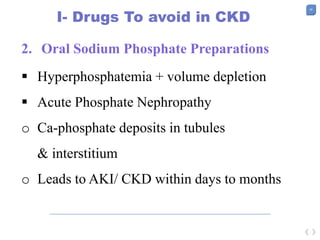
I- Drugs To avoid in CKD
2. Oral Sodium Phosphate Preparations
 Hyperphosphatemia + volume depletion
 Acute Phosphate Nephropathy
o Ca-phosphate deposits in tubules
& interstitium
o Leads to AKI/ CKD within days to months
49
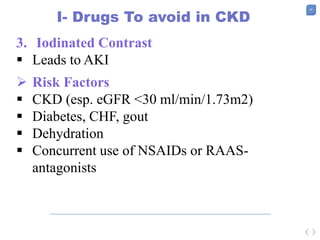
I- Drugs To avoid in CKD
3. Iodinated Contrast
 Leads to AKI
 Risk Factors
 CKD (esp. eGFR <30 ml/min/1.73m2)
 Diabetes, CHF, gout
 Dehydration
 Concurrent use of NSAIDs or RAAS-
antagonists
50
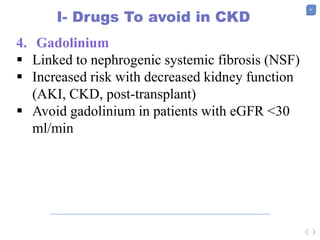
I- Drugs To avoid in CKD
4. Gadolinium
 Linked to nephrogenic systemic fibrosis (NSF)
 Increased risk with decreased kidney function
(AKI, CKD, post-transplant)
 Avoid gadolinium in patients with eGFR <30
ml/min
51
II- Drugs require cautions in CKD
1. Antihypertensives: RAAS antagonists
 Can lead to AKI, hyperkalemia
 Risk management
 Avoid in patients with renal artery stenosis
 Assess eGFR and serum K+ 1 week after initiation
or ↑dose
 Prior to contrast, major surgery, conditions that
predispose to dehydration - consider temporarily
decrease
 Stop or reduce if SCr increase > 30% or serum K+
> 5.5 mEq/L
52
II- Drugs require cautions in CKD
2. Gabapentin
 Many cases with GFR < 90 ml/min
developed side effects
 Mostly ESRD patients had side effects
53
II- Drugs require cautions in CKD
3. Antimicrobials
 Most require renal dose adjustments:
o Common exceptions: Ceftriaxone,
moxifloxacin, macrolides, doxycycline,
clindamycin, linezolid
 Careful monitoring of drug levels needed
for:
o Vancomycin. Aminoglycosides
54
II- Drugs require cautions in CKD
3. Antimicrobials
 Trimethoprim/ sulfamethoxazole
 May ↑SCr slightly due to ↓renal tubular
creatinine excretion
 no change in GFR.
 Distinguish from AKI due to drug allergic
interstitial nephritis
 Hyperkalemia
 Imipenem/ cilastatin
 High seizure risk in CKD patients, use
carbapenem in CKD
55
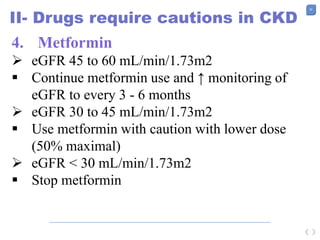
II- Drugs require cautions in CKD
4. Metformin
 eGFR 45 to 60 mL/min/1.73m2
 Continue metformin use and ↑ monitoring of
eGFR to every 3 - 6 months
 eGFR 30 to 45 mL/min/1.73m2
 Use metformin with caution with lower dose
(50% maximal)
 eGFR < 30 mL/min/1.73m2
 Stop metformin
56
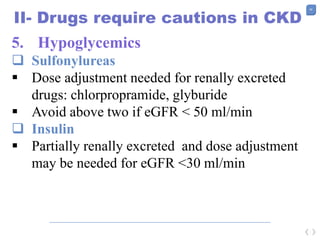
II- Drugs require cautions in CKD
5. Hypoglycemics
 Sulfonylureas
 Dose adjustment needed for renally excreted
drugs: chlorpropramide, glyburide
 Avoid above two if eGFR < 50 ml/min
 Insulin
 Partially renally excreted and dose adjustment
may be needed for eGFR <30 ml/min
57
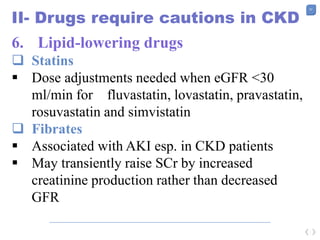
II- Drugs require cautions in CKD
6. Lipid-lowering drugs
 Statins
 Dose adjustments needed when eGFR <30
ml/min for fluvastatin, lovastatin, pravastatin,
rosuvastatin and simvistatin
 Fibrates
 Associated with AKI esp. in CKD patients
 May transiently raise SCr by increased
creatinine production rather than decreased
GFR
58
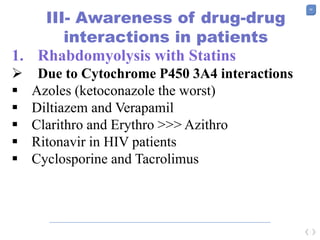
III- Awareness of drug-drug
interactions in patients
1. Rhabdomyolysis with Statins
 Due to Cytochrome P450 3A4 interactions
 Azoles (ketoconazole the worst)
 Diltiazem and Verapamil
 Clarithro and Erythro >>> Azithro
 Ritonavir in HIV patients
 Cyclosporine and Tacrolimus
59
III- Awareness of drug-drug
interactions in patients
2. Bisphosphonates
 Bisphosphonates for eGFR > 30 mL/min/ 1.73
m2 with normal Ca, phosphoate, intact PTH
showing osteoporosis .
 Long term treatment with bisphosphonates may
cause or exacerbate adynamic bone disease.
60
Avoiding drug toxicity in CKD
 Minimizing Risk of Adverse Drug
Events
 Minimize pill burden as possible
 Review medications carefully for
o Dosing
o Potential interactions
 Educate patient on:
o OTC meds to avoid (mainly NSAIDs)
o Signs/symptoms of potential drug adverse
effects
61
Avoiding drug toxicity in CKD
 Dosing Adjustments
 Don’t rely on SCr alone – calculate eGFR or Cr
clearance
 Cannot rely on eGFR in AKI
 When in doubt, look up dosing adjustment/
potential interactions
6
2CONTACT
 Email: dr.samghany@gmail.com
 Facebook: Sameh abdelghany
(https://www.facebook.com/samghany)
 SlideShare: Sameh abdelghany
(https://www.slideshare.net/samghany)
 Tel: 01003798288
63
Here is your custom footer
thanksF o r W a t c h i n g

Renal failure management

  • 1.
    Renal Failure Management Dr. SamehAhmad Muhamad abdelghany Lecturer Of Clinical Pharmacology Mansura Faculty of medicine
  • 2.
  • 3.
  • 4.
    4 Introduction  Results whenthe kidneys cannot remove the body’s metabolic wastes or perform their regulatory functions.  It is a systemic disease and is a final common pathway of many different kidney and urinary tract diseases.
  • 5.
    5 Introduction  Chronic kidneydisease affected 753 million people globally in 2016, including 417 million females and 336 million males.  In 2015 it resulted in 1.2 million deaths, up from 409,000 in 1990.
  • 6.
  • 7.
    7 Acute Renal Failure Definition:  is an acute and potentially reversible irritability of the kidneys to perform their normal functions to maintain homeostasis  There is a sudden and almost complete loss of kidney function (decreased GFR) over a period of hours to days with failure to excrete nitrogenous waste products and to maintain fluid and electrolyte homeostasis
  • 8.
    8 Acute Renal Failure Causes: I. Pre-renal(Functiona)  Volume Depletion  Cardiac  Hepatorenal syndrome  Drugs: NSAIDs - ACEIs
  • 9.
    9 Acute Renal Failure Causes: II. Intra-renal(Structural)  Vascular: e.g Vascular occlusion  Interstitial: e.g Interstitial nephritis  Glomerular: e.g glomerulonephritis  Tubular: e.g ATN
  • 10.
    10 Acute Renal Failure Causes: III. Post-renal(Obstruction)  Due to obstruction in Urinary system.  Sites of obstruction leading to ARF: o Bladder neck obstruction o Bilateral ureters  Urine volume variable
  • 11.
  • 12.
    12 Acute Renal Failure Stages  Onset :  1-3 days with increased BUN and creatinine and possible decreased UOP  may be Asymptomatic  Oliguric:  UOP < 400/d, increased BUN, Creatinine, Phosphates, K, may last up to 14 d  Impaired glomerular filtration  Waste cannot be remove & Uremia develops
  • 13.
    13 Acute Renal Failure Stages  Diuretic :  UOP increased up to as much as 4000 mL/d but no waste products  at end of this stage may begin to see improvement  dehydration and electrolyte imbalance due to excess urination  Recovery :  things go back to normal or may remain insufficient and become chronic(takes months)
  • 14.
    14 Clinical manifestations  Severeoliguria/ Anuria  Nausea / Vomiting  Lethargy  Dehydration  Acidotic breathing  Altered consciousness  Irregular cardiac rate, rhythm  Edema  Hypertension
  • 15.
  • 16.
    16 Investigations  LAB  Bloodexamination:  Anemia  Raised serum creatinine level, blood urea  Electrolytes: K , Na , Ca  PH: Acidosis  Complete blood count  Urine examination:  Protienuria, Hematuria, presence of casts
  • 17.
    17 Investigations  Radiological  USG Structural abnormalizes, calculi  IVP  Acute tubular necrosis  Radionuclide studies  Evaluate GFR, renal blood flow  Renal biopsy  Ultimate cause
  • 18.
  • 19.
    19 Treatment  Immediate treatmentof pulmonary edema and hyperkaliemia  Remove offending cause or treat offending cause  Dialysis as needed to control hyperkaliemia, pulmonary edema, metabolic acidosis, and uremic symptoms  Adjustment of drug regimen  Usually restriction of water, Na, and K intake, but provision of adequate protein  Possibly phosphate binders
  • 20.
    20 Treatment  Medical treatment Fluid and dietary restrictions  Use of diuretics  Maintain Electrolytes  May need dialysis to jump start renal function  May need to stimulate production of urine with IV fluids, Dopamine, diuretics, etc.  Hemodialysis
  • 21.
  • 22.
    22 Chronic Renal Failure Definition:  It is a permanent irreversible destruction of nephron leading to severe deterioration of renal function, finally resulting to end stage renal disease  Defined as either presence of  Kidney damage o Pathological abnormalities  Glomerular filtration rate (GFR) o <60 ml/min for 3 months or longer
  • 23.
    23 Chronic Renal Failure Causes:  Glomerulonephritis (the most common cause in the past)  Diabetes mellitus  Hypertension  Tubulointerstitial nephritis  Miscellaneous
  • 24.
    24 Chronic Renal Failure Stages: 1) Diminished Renal Reserve  Normal BUN, and serum creatinine  absence of symptoms 2) Renal Insufficiency  GFR is about 25% of normal  BUN Creatinine levels increased
  • 25.
    25 Chronic Renal Failure Stages: 3) Renal Failure  GFR <25% of normal  increasing symptoms 4) ESRD or Uremia  GFR < 5-10% normal  creatinine clearance <5-10ml/min resulting in a cumulative effect
  • 26.
    26 Chronic Renal Failure Risk factors:  Old age  Family history  Diabetes  Obesity  HTN  Cardiac diseases  Previous acute kidney injury  Smoking
  • 27.
  • 28.
    28 Clinical manifestations  Earlysymptoms  Weakness  Anorexia  Nausea  Failure to thrive  Unexplained anemia  Late symptoms  Pericarditis  Congestive cardiac failure  Altered sensorium
  • 29.
    29 Complications  Azotemia  Metabolicacidosis  Electrolyte imbalance  Chronic cardiac failure  HTN  Severe anemia
  • 30.
  • 31.
  • 32.
    32 Investigations LAB  Blood examination: Decreased hematocrit, Hb%, Na+, Ca++, HCO-3, increased K+ & phosphorus  Renal function test  Gradual increase in BUN, uric acid & creatinine  Urine examination:  Variation in specific gravity, increased urine creatinine, change in total urine output
  • 33.
    33 Investigations Radiological  X-Ray  Chest,hands, knees, pelvis, spine to detect bony defect  ECG, IVP, MCU, radio nuclide imaging  Extent of complications
  • 34.
  • 35.
    35 Treatment  Conservative management Correction of reversible component of renal dysfunction  Preservation of renal function  Treatment of metabolic problems  Optimization of growth  Preparation for treatment of ESRD  Treat for infection, accelerated hypertension, CCF, obstruction of urine flow to improve renal function
  • 36.
    36 Treatment Medical treatment  IVglucose and insulin  Na bicarb, Ca, Vit D, phosphate binders  Fluid restriction, diuretics  Iron supplements, blood, erythropoietin
  • 37.
    37 Treatment Dietary therapy  Lowprotein diet  Severe protein restriction may produce protein calorie malnutrition  Salt restriction in patients with hypertension and fluid overload
  • 38.
    38 Treatment Dietary therapy  Patientswith salt losing nephropathy should take a liberal amount of salt and water  If the GFR falls <10 ml/min/1.73m2, potassium intake should be restricted. (hyperkalemia may develop)  Vit D is essential to raise the serum calcium and suppress parathormone secretion
  • 39.
    39 Treatment Dialysis  Peritoneal dialysis Hemodialysis Renal transplantation
  • 40.
  • 41.
  • 42.
  • 43.
  • 44.
    44 Drug-Related adverse safety eventsin CKD  Occurs in 50% of patients with estimated GFR (eGFR) <60 ml/min  Risk factors  Non-white  Older age  ACEIs/ ARB use  Diabetes  More advanced CKD
  • 45.
    45 Drug-Related adverse safety eventsin CKD  Modes of Drug-Related Adverse Events in CKD i. Direct kidney injury ii. Dosing error iii. Drug-drug interaction
  • 46.
    46 Drug Elimination inCKD  Adjustments usually needed when >25-30% of active drug/metabolite eliminated renally: o Azithromycin 5-12% o Moxifloxacin 15-21% o Pioglitazone (Actos) 15-30% o Ciprofloxacin 30-57% o Amoxicillin 50-70% o Digoxin 57-80%
  • 47.
    47 I- Drugs Toavoid in CKD 1. NSAIDs  Injure kidneys directly o Induce acute kidney injury (AKI) from “pre- renal” or ATN o Interstitial nephritis o Nephrotic syndrome  Decrease kidney potassium excretion → hyperkalemia  Decrease sodium excretion → HTN, edema
  • 48.
    48 I- Drugs Toavoid in CKD 2. Oral Sodium Phosphate Preparations  Hyperphosphatemia + volume depletion  Acute Phosphate Nephropathy o Ca-phosphate deposits in tubules & interstitium o Leads to AKI/ CKD within days to months
  • 49.
    49 I- Drugs Toavoid in CKD 3. Iodinated Contrast  Leads to AKI  Risk Factors  CKD (esp. eGFR <30 ml/min/1.73m2)  Diabetes, CHF, gout  Dehydration  Concurrent use of NSAIDs or RAAS- antagonists
  • 50.
    50 I- Drugs Toavoid in CKD 4. Gadolinium  Linked to nephrogenic systemic fibrosis (NSF)  Increased risk with decreased kidney function (AKI, CKD, post-transplant)  Avoid gadolinium in patients with eGFR <30 ml/min
  • 51.
    51 II- Drugs requirecautions in CKD 1. Antihypertensives: RAAS antagonists  Can lead to AKI, hyperkalemia  Risk management  Avoid in patients with renal artery stenosis  Assess eGFR and serum K+ 1 week after initiation or ↑dose  Prior to contrast, major surgery, conditions that predispose to dehydration - consider temporarily decrease  Stop or reduce if SCr increase > 30% or serum K+ > 5.5 mEq/L
  • 52.
    52 II- Drugs requirecautions in CKD 2. Gabapentin  Many cases with GFR < 90 ml/min developed side effects  Mostly ESRD patients had side effects
  • 53.
    53 II- Drugs requirecautions in CKD 3. Antimicrobials  Most require renal dose adjustments: o Common exceptions: Ceftriaxone, moxifloxacin, macrolides, doxycycline, clindamycin, linezolid  Careful monitoring of drug levels needed for: o Vancomycin. Aminoglycosides
  • 54.
    54 II- Drugs requirecautions in CKD 3. Antimicrobials  Trimethoprim/ sulfamethoxazole  May ↑SCr slightly due to ↓renal tubular creatinine excretion  no change in GFR.  Distinguish from AKI due to drug allergic interstitial nephritis  Hyperkalemia  Imipenem/ cilastatin  High seizure risk in CKD patients, use carbapenem in CKD
  • 55.
    55 II- Drugs requirecautions in CKD 4. Metformin  eGFR 45 to 60 mL/min/1.73m2  Continue metformin use and ↑ monitoring of eGFR to every 3 - 6 months  eGFR 30 to 45 mL/min/1.73m2  Use metformin with caution with lower dose (50% maximal)  eGFR < 30 mL/min/1.73m2  Stop metformin
  • 56.
    56 II- Drugs requirecautions in CKD 5. Hypoglycemics  Sulfonylureas  Dose adjustment needed for renally excreted drugs: chlorpropramide, glyburide  Avoid above two if eGFR < 50 ml/min  Insulin  Partially renally excreted and dose adjustment may be needed for eGFR <30 ml/min
  • 57.
    57 II- Drugs requirecautions in CKD 6. Lipid-lowering drugs  Statins  Dose adjustments needed when eGFR <30 ml/min for fluvastatin, lovastatin, pravastatin, rosuvastatin and simvistatin  Fibrates  Associated with AKI esp. in CKD patients  May transiently raise SCr by increased creatinine production rather than decreased GFR
  • 58.
    58 III- Awareness ofdrug-drug interactions in patients 1. Rhabdomyolysis with Statins  Due to Cytochrome P450 3A4 interactions  Azoles (ketoconazole the worst)  Diltiazem and Verapamil  Clarithro and Erythro >>> Azithro  Ritonavir in HIV patients  Cyclosporine and Tacrolimus
  • 59.
    59 III- Awareness ofdrug-drug interactions in patients 2. Bisphosphonates  Bisphosphonates for eGFR > 30 mL/min/ 1.73 m2 with normal Ca, phosphoate, intact PTH showing osteoporosis .  Long term treatment with bisphosphonates may cause or exacerbate adynamic bone disease.
  • 60.
    60 Avoiding drug toxicityin CKD  Minimizing Risk of Adverse Drug Events  Minimize pill burden as possible  Review medications carefully for o Dosing o Potential interactions  Educate patient on: o OTC meds to avoid (mainly NSAIDs) o Signs/symptoms of potential drug adverse effects
  • 61.
    61 Avoiding drug toxicityin CKD  Dosing Adjustments  Don’t rely on SCr alone – calculate eGFR or Cr clearance  Cannot rely on eGFR in AKI  When in doubt, look up dosing adjustment/ potential interactions
  • 62.
    6 2CONTACT  Email: dr.samghany@gmail.com Facebook: Sameh abdelghany (https://www.facebook.com/samghany)  SlideShare: Sameh abdelghany (https://www.slideshare.net/samghany)  Tel: 01003798288
  • 63.
    63 Here is yourcustom footer thanksF o r W a t c h i n g