Presenter
Muhammad ‘Uzair
Nik Ahmad Indera
Supervisor
Dr Hilda
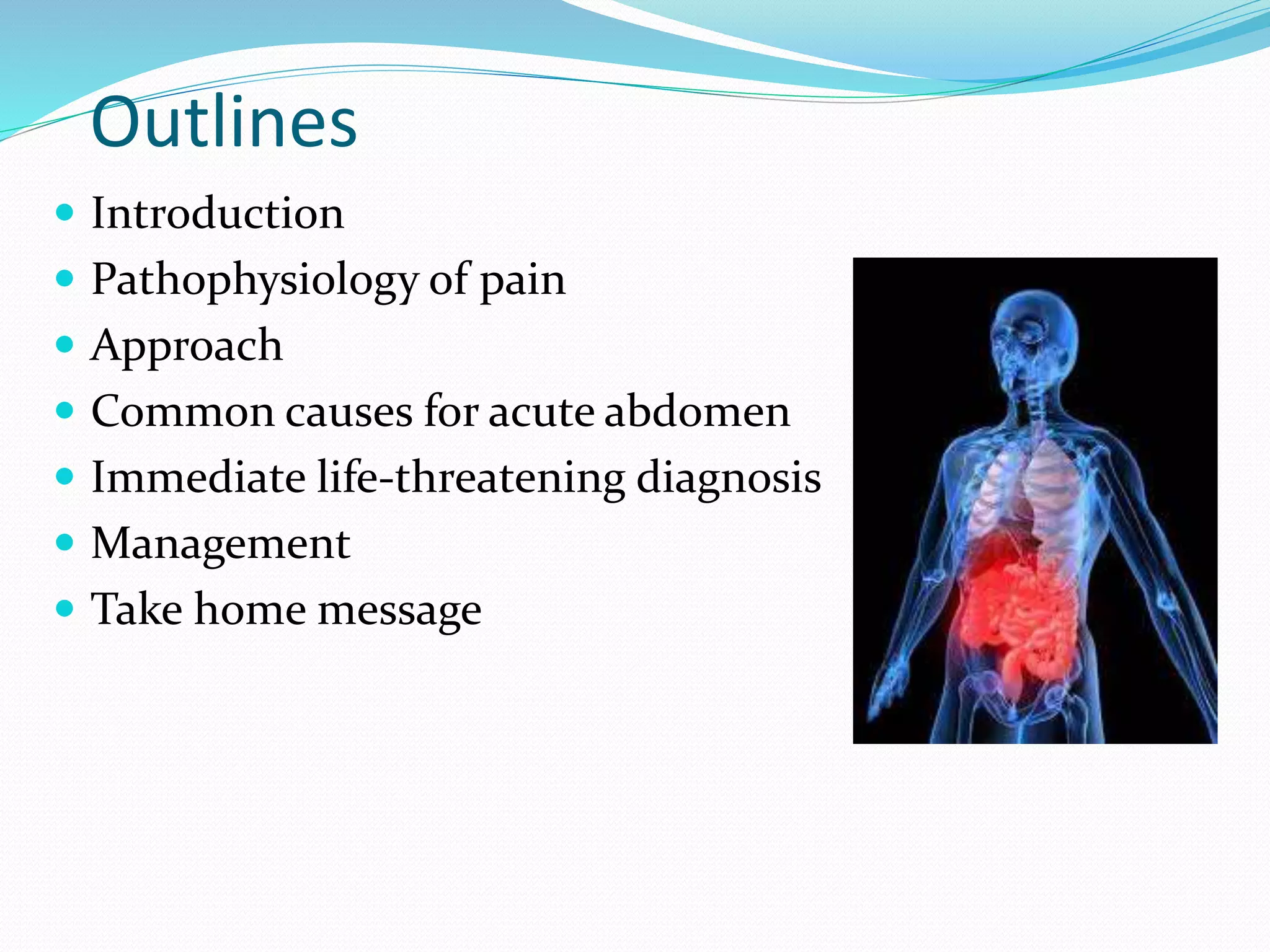
Outlines
 Introduction
 Pathophysiology of pain
 Approach
 Common causes for acute abdomen
 Immediate life-threatening diagnosis
 Management
 Take home message
Introduction repair
 Definition acute abdomen (Stedman's Medical
Dictionary, 27th Edition) –
 Any serious acute intra-abdominal condition
 Attended by
 Pain
 Tenderness
 muscular rigidity
 Emergency surgery must be considered
Visceral Pain Somatic Pain Referred pain
Comes from abd visceral Comes from parietal
peritoneum
Perceived distant from its
source
Autonomic nerve fibers Somatic nerve fiber Convergence of nerve fibers at
spinal cord
Respond mainly to distension
and muscle contraction
Respond to cutting, infectious,
chemical or inflammatory
processes
Examples:
-Scapular pain – biliary colic
-Groin pain – renal colic
-Shoulder pain – blood or
infection irritating diaphragm
Usually vague, dull and
nauseating
Usually sharp and localized
Pathophysiology
1. Luminal obstruction (luminal, mural and
extramural) with features of
 Abdominal colic. Related to rate of peristalsis.
 Vomiting. Common in high obstruction.
 Constipation. Common in distal obstruction.
 Abd distention. Prominent in large bowel obstruction.
 BO should not rule out obstruction
 Worsening symptoms may indicate adynamic
ileus, strangulation and perforation
2. Inflammation
 Many visceral organs are potential source for
inflammation within abdomen. Patient usually present
with
 Pain
 Vomiting (vagal response to pain)
 Can be self limiting (spontaneously resolved or treated
with antibiotics)
 May progress to gangrene and perforation causing
peritonitis.
3. Peritonitis
 Can be caused by bowel contents, bile, urine, pus or
blood from perforated viscus.
 Classical signs of guarding, board like rigidity,
rebound tenderness, abdominal distension and
absent bowel.
 Patients are often septic with/without shock
4. Ischemia and infarction
 Classification:
 Arterial or venous
 Intra/extraluminal
 Usually presented with abdominal pain out of
proportion to physical finding a/w anorexia,
vomiting, diarrhea or GIT bleed.
 Should be suspected in pt with vascular disease or
atrial fibrillation
5. Non specific abdominal pain
 Diagnosis of exclusion
 In 40% of cases causes is unknown
 Causes can be viral/parasitic infection, gastroenteritis,
mesenteric adenitis, ovulatory pain, IBS
 Most cases require admission for observation and
investigation
 HISTORY: The main presenting complaint and the
characteristics of the abdominal pain.
 Site , Time and mode onset , Severity , Nature, Progression,
Duration , Exacerbating and relieving factors, Radiation
 Any associated symptoms
 distension nausea, vomiting, fever, diarrhoea, constipation, PR
bleeding, anorexia, jaundice, gastrointestinal bleeding, dysuria,
oliguria
Other important Hx
 Similar problems before? Underlying medical illness? H/O
surgical intervention before?Gynaecological hx – LMP,
pregnant?
 Family Hx of malignancy?
Clinical Assessment
 INSPECTION
 Any abdominal swellings or distended due to enlargement of
the liver, kidneys or spleen, tumors of bowel. Scars from
previous surgery
 PALPATION
 Tenderness area, rebound tenderness, voluntary guarding,
involuntary guarding. Palpable mass, lymphadenopathy,
hernial orifices.
 PERCUSSION
 To determine presence of fluid within the peritoneal cavity.
 ASCULTATION
 Bowel sound, The absence of bowel sound over 30-s suggest
peristalsis has ceased (ileus)
Examination
Investigation
• Baseline: FBC BUSE RBS
• Other investigation: serum amylase, LFT, UPT, GSH/GXM,
UFEME
 Abdominal x ray, CXR
 Ultrasound abdomen
 Endoscopy
 Colonoscopy
 OGDS
 ERCP
 Laparoscopy / laparotomy
 In cases where diagnosis in unclear
 May be the ultimate diagnostic investigation, in addition to being
therapeutic
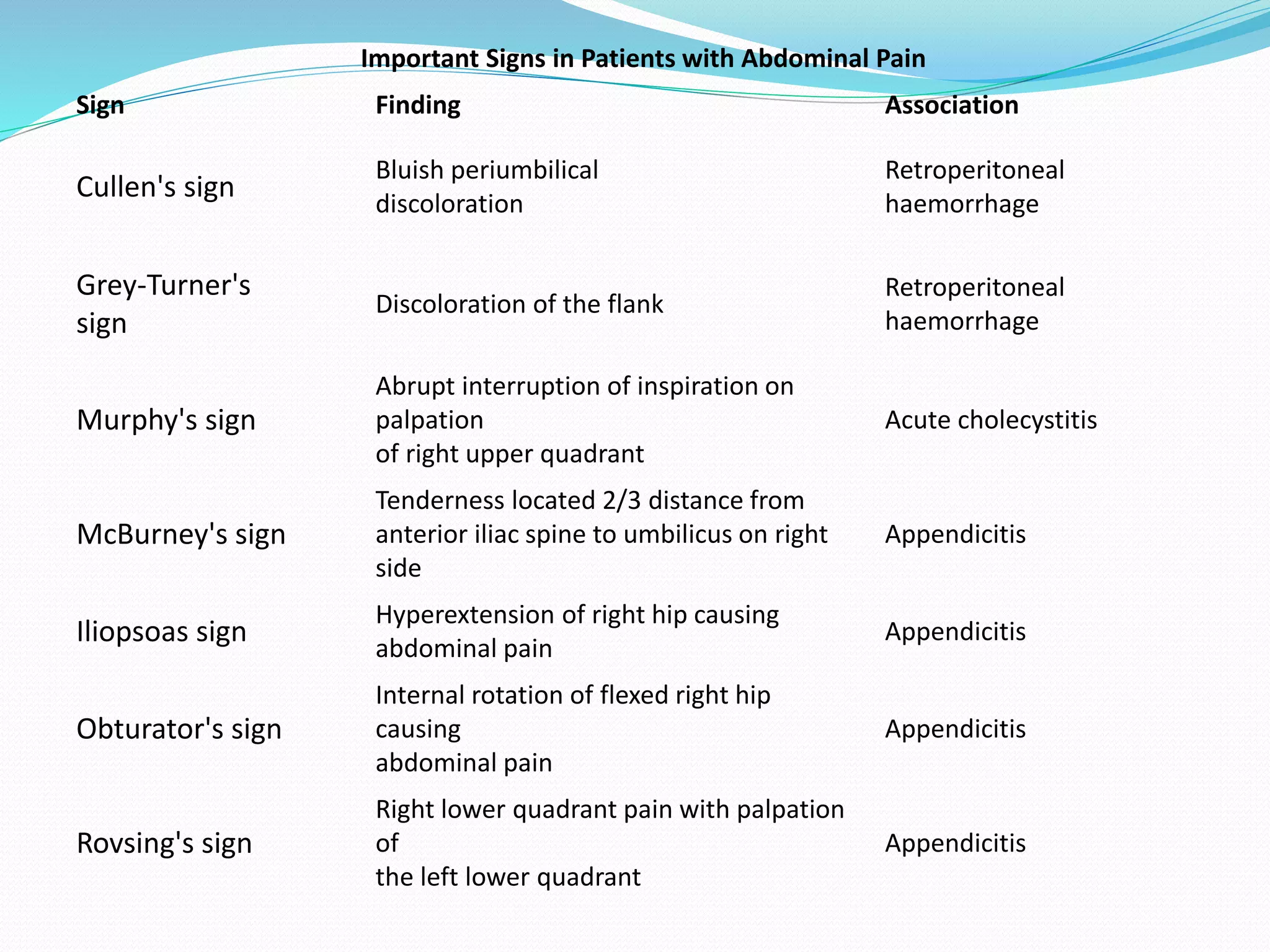
Important Signs in Patients with Abdominal Pain
Sign Finding Association
Cullen's sign
Bluish periumbilical
discoloration
Retroperitoneal
haemorrhage
Grey-Turner's
sign
Discoloration of the flank
Retroperitoneal
haemorrhage
Murphy's sign
Abrupt interruption of inspiration on
palpation
of right upper quadrant
Acute cholecystitis
McBurney's sign
Tenderness located 2/3 distance from
anterior iliac spine to umbilicus on right
side
Appendicitis
Iliopsoas sign
Hyperextension of right hip causing
abdominal pain
Appendicitis
Obturator's sign
Internal rotation of flexed right hip
causing
abdominal pain
Appendicitis
Rovsing's sign
Right lower quadrant pain with palpation
of
the left lower quadrant
Appendicitis
Common causes for acute
abdomen
 Non-specific abdominal pain (40%)
 Acute appendicitis (28%)
 Acute cholecystitis (10%)
 Bowel obstruction (4%)
 Perforated PU (3%)
 Pancreatitis (3%)
 Diverticular disease (2%)
 Others (13%)
Appendicitis
- Definition Inflammation of the appendix
 Pathophysiology 
 Obstruction of the appendiceal lumen
 Lymphoid hyperplasia
 Fecolith
 Sign and symtoms
 RIF pain
 Fever
 Anorexia
 Nausea and Vomiting
 Rebound tenderness
 Alvarado score
 Lab & radiology : TWBC & neutrofil high, Ultrasound
 Treatment
 Appendicectomy
These images reveal a typical tubular structure with blind end, showing total diameter more than
6mm.(12 x 15 mm.). These sonographic images reveal hypoechoic content (purulent material)
distending the appendix with an echogenic focus floating within it
Biliary colic / acute cholecystitis
 C/O
 RHC pain + nausea and vomiting
 Difference between biliary colic and acute cholecystitis:
 fever, usually lasted > 24 hrs, Murphy’s sign, leukocytosis (in later)
 Charcoat triad
 fever, RHC pain and jaundiceascending cholangitis
 Diagnostic Ix - ultrasound HBS and ERCP
 Treatment
 Fluid resuscitation
 Antibiotics – broad spectrum (penicillin+aminoglycosides/
3rd generation cephalosporin+metronidazole)
 Decompression of biliary tree – by ERCP, drain stone in
common bile duct by stenting
Ultrasound with thickened gallbladder wall and
pericholecystic collection
Acute pancreatitis
H/O
Sudden epigastric pain
Radiates to the back, exacerbated by movement
Frequent vomiting
Signs
 Hypovolemia, Jaundice, severe abdominal tenderness, Grey
Turner’s sign, Cullen’s sign
 Lab and Ix
Serum amylase - > 1000 units
AST/ALT deranged  ? obstruction
 Plain abdominal x-ray
 Colon ‘cut-off’ sign
U/S of the pancreas
 Swollen pancreas, hypoechoic (d/t edema), peripancreatic fluid collections &
edema
Treatment conservative – analgesic, bed rest and bowel rest
Surgery is indicated if :
 Patient fails to improve on conservative management or deteriorates
 Gallstones are present - ERCP + sphincterostomy
 When complications develop
 pseudocyst > 6 cm (wait for 3 weeks to mature)
 Pancreatic abscess ?
Glasgow (Imrie) prognostic score (Mnemonic:
PANCREAS)
PO2<60mmHg
Age>55y
TWBC>15 x109/L
Calcium<2mmol/L
Raised urea>16mmol/L
Enzymes AST>200U/L, LDH >600U/L
Albumin<32g/L
Sugar, glucose>10mmol/L
Immediate life-threatening
diagnosis
 Perforated viscus
 Bowel ischemia
 Ruptured abdominal aortic aneurysm
 Ruptured ectopic pregnancy
Perforated Viscus
Pt Might c/o  generalized abdominal pain
O/e
 tachycardic, profused sweating, abdominal guarding/rigidity,
tenderness aggravated by coughing
Investigation
 Erect chest xray must be done if perforated viscus is suspected – to
look for air under diaphragm
Treatment
 Definite treatment still surgical intervention  Exploratory
laparotomy and proper lavage of peritoneum is needed if the cause
is unknown.
 Hydration
 correction of electrolyte imbalance
 analgesic and
 If infection is suspected  antibiotics
Bowel Ischemia
 Caused by inadequate blood flow through the
mesenteric vessels, resulting in ischemia and eventual
gangrene of the bowel wall.
 The vascular supply of the small and large bowel is
provided by three arteries:
1. celiac trunk
2. superior mesenteric artery (60%–70% cases)
3. inferior mesenteric artery
 c/0 :
 generalized abd pain and some have bloody stool
 Bowel motility reduces abdominal bloating.
 o/e :
 Fever, hypotension, tachycardia, tachypnea, and altered mental
status,Tenderness becomes severe.
 Bowel sounds range from hyperactive to absent. Voluntary and involuntary
guarding appears.
 Lab : Leukocytosis, metabolic acidosis
 Abd xray : ileus, small bowel obstruction, edematous or thickened bowel
walls, and paucity of gas in the intestines.
 Small bowel : >4cm
 Colon : > 6cm
 Caecum : > 8cm
 Ultrasonography is highly specific (92-100%), but its sensitivity
(70-89%)
 CT angiography has a sensitivity of 71-96% and a specificity of 92-
94%
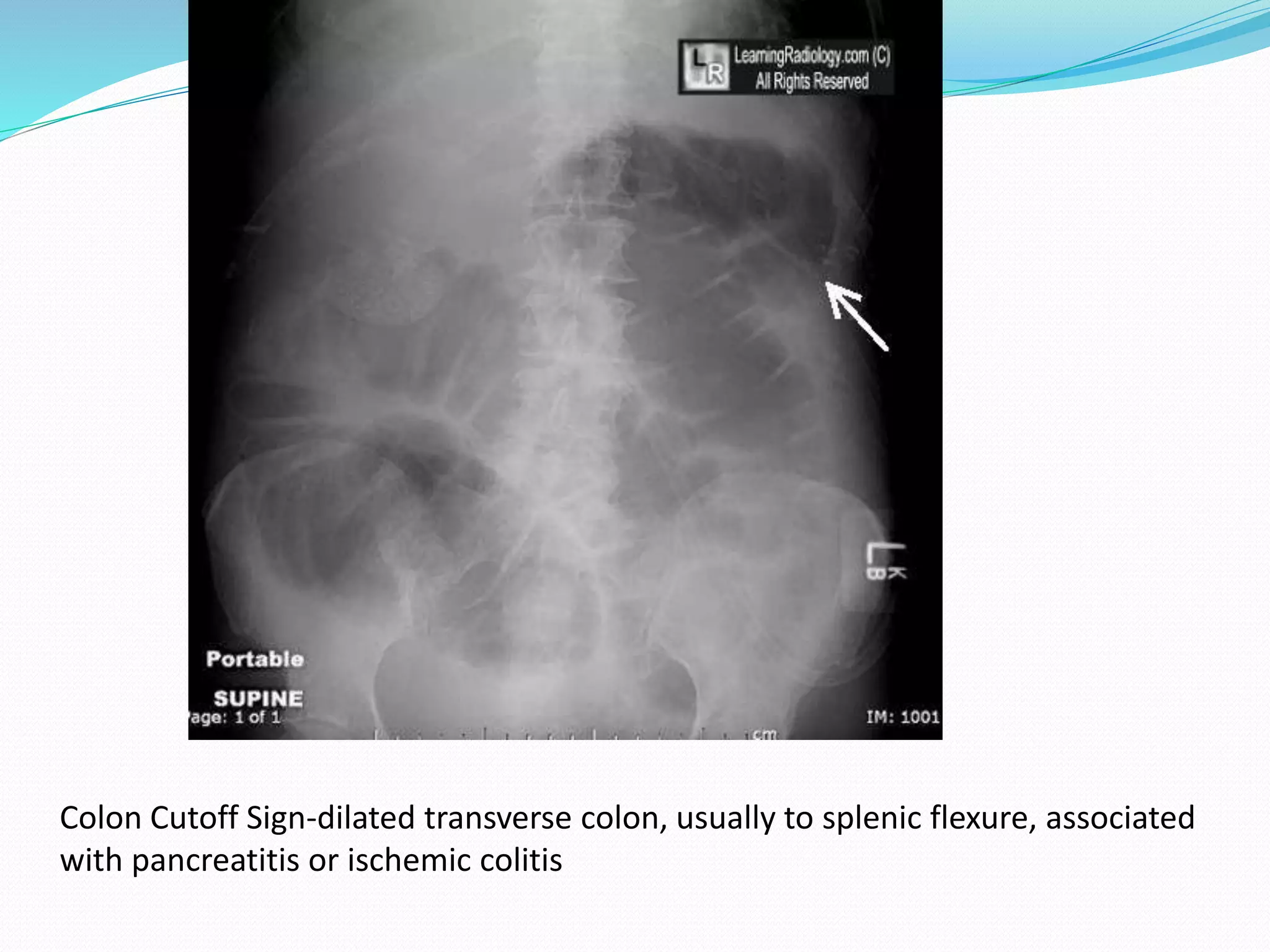
Colon Cutoff Sign-dilated transverse colon, usually to splenic flexure, associated
with pancreatitis or ischemic colitis
 Treatment :
Exploratory Laparotomy kiv proceed
Thrombolytics
Anticoagulant
Resuscitation and Stabilization
Abdominal aortic anerysm
■ Male: female ratio is 4 : 1
■ 5–10% of males over 65 years of age have AAA
■ High incidence in patients with peripheral arterial
aneurysm (popliteal, femoral)
■ Ruptured AAA – clinical suspicion
➣ Severe back or abdominal pain
➣ may radiate to groin.
➣ sudden, together with sign and symptoms of shock
Sn & Sx:
■ Pulsatile abdominal massin less than 30 % of patients
with significant AAA
■ Tender abdominal mass is suggestive of symptomatic
aneurysm
■ Sudden onset of lower limb numbness
■ Ruptured AAA
➣ Pulsatile mass + hypotension
➣ abdominal/back/groin pain + hypotension
Ultrasound
Helpful only if aorta is clearly seen and completely normal
often not helpful due to bowel gas and patient discomfort
cannot rule out a leak from AAA
CT scan
Best test when diagnosis of AAA is unclear
Sensitivity nearly 100%
Size aneurysm (diameter), location, potential ruptured,
Determining surgical repair or endovascular repair (EVAR)
Treatment for ruptured AAA – emergency surgery (but
most of the time patient passed away before surgical
intervention)
Ectopic Pregnancy
 Early embryo (fertilized egg) that has implanted outside of
the uterus (womb), the normal site for implantation.
 C/o
 Pain (abdominal or pelvic)
 Amenorrhea with abnormal uterine bleeding
 Gastrointestinal symptoms
 Anaemic symptoms
 may have a pelvic mass.
 beta-hCG level > 6000 mIU/mL, the gestational sac should be visible
in the uterus with an abdominal probe.
 beta-hCG level : 1000-2000 mIU/mL, a gestational sac should be
seen in the uterus with a vaginal probe.
 UPT positive
 Ultrasound scans ultrasound does not show a
pregnancy inside the uterus in the first 3 to 5 weeks
after conception .
 show fluid or blood in the abdominal cavity,
suggesting bleeding from an ectopic pregnancy.
 Laparoscopy
 Treatment:
 methotrexate treatment
 salpingectomy
Management
 Generally
 Secure airway and breathing – put on oxygen depends
on oxygen status of the patient
 Circulation
 2 large bore branula both upper limb
 Run fluid
 Insert catheter to monitor urine output
 Insert central venous line
 Ryle’s tube for decompression
 Monitor BP, PR, urine output, CVP
 Keep patient nil by mouth with IV drip maintenance
 Analgesia –either intravenous or subcutaneous
Take home message
 Knowing anatomy of abdomen is most important to make
diagnosis.
 Acute appendicitis is the commonest cause for acute abdomen
 4 life threatening condition – ruptured ectopic pregnancy,
perforated viscus, leaking/ruptured AAA, bowel ischemia.
 Air under diaphragm in erect CXR suspect perforated viscus.
 Do UPT to rule out ectopic pregnancy in woman of childbearing
age
 Fluid resuscitation is important in acute abdomen
 Always perform ABC, Resuscitate before Dx – even of patient is
toxic and urgent surgery is required resusitation is essential
References
 Janette KS, Dileep NL. Investigation of acute abdomen;
Elsevier 2008; Surgery 26:3
 O. James Garden, John Forsythe, Andrew W. Bradbury,
Principles and Practice of Surgery; 4th edition; 2007
 Oxford textbook of Surgery 2nd edition
 Browse’s Introduction to the Symptoms and Signs of the
Surgical Disease; 4th edition.
THANK YOU

Acute abdomen

  • 1.
    Presenter Muhammad ‘Uzair Nik AhmadIndera Supervisor Dr Hilda
  • 2.
    Outlines  Introduction  Pathophysiologyof pain  Approach  Common causes for acute abdomen  Immediate life-threatening diagnosis  Management  Take home message
  • 3.
    Introduction repair  Definitionacute abdomen (Stedman's Medical Dictionary, 27th Edition) –  Any serious acute intra-abdominal condition  Attended by  Pain  Tenderness  muscular rigidity  Emergency surgery must be considered
  • 5.
    Visceral Pain SomaticPain Referred pain Comes from abd visceral Comes from parietal peritoneum Perceived distant from its source Autonomic nerve fibers Somatic nerve fiber Convergence of nerve fibers at spinal cord Respond mainly to distension and muscle contraction Respond to cutting, infectious, chemical or inflammatory processes Examples: -Scapular pain – biliary colic -Groin pain – renal colic -Shoulder pain – blood or infection irritating diaphragm Usually vague, dull and nauseating Usually sharp and localized Pathophysiology
  • 6.
    1. Luminal obstruction(luminal, mural and extramural) with features of  Abdominal colic. Related to rate of peristalsis.  Vomiting. Common in high obstruction.  Constipation. Common in distal obstruction.  Abd distention. Prominent in large bowel obstruction.  BO should not rule out obstruction  Worsening symptoms may indicate adynamic ileus, strangulation and perforation
  • 7.
    2. Inflammation  Manyvisceral organs are potential source for inflammation within abdomen. Patient usually present with  Pain  Vomiting (vagal response to pain)  Can be self limiting (spontaneously resolved or treated with antibiotics)  May progress to gangrene and perforation causing peritonitis.
  • 8.
    3. Peritonitis  Canbe caused by bowel contents, bile, urine, pus or blood from perforated viscus.  Classical signs of guarding, board like rigidity, rebound tenderness, abdominal distension and absent bowel.  Patients are often septic with/without shock
  • 9.
    4. Ischemia andinfarction  Classification:  Arterial or venous  Intra/extraluminal  Usually presented with abdominal pain out of proportion to physical finding a/w anorexia, vomiting, diarrhea or GIT bleed.  Should be suspected in pt with vascular disease or atrial fibrillation
  • 10.
    5. Non specificabdominal pain  Diagnosis of exclusion  In 40% of cases causes is unknown  Causes can be viral/parasitic infection, gastroenteritis, mesenteric adenitis, ovulatory pain, IBS  Most cases require admission for observation and investigation
  • 12.
     HISTORY: Themain presenting complaint and the characteristics of the abdominal pain.  Site , Time and mode onset , Severity , Nature, Progression, Duration , Exacerbating and relieving factors, Radiation  Any associated symptoms  distension nausea, vomiting, fever, diarrhoea, constipation, PR bleeding, anorexia, jaundice, gastrointestinal bleeding, dysuria, oliguria Other important Hx  Similar problems before? Underlying medical illness? H/O surgical intervention before?Gynaecological hx – LMP, pregnant?  Family Hx of malignancy? Clinical Assessment
  • 13.
     INSPECTION  Anyabdominal swellings or distended due to enlargement of the liver, kidneys or spleen, tumors of bowel. Scars from previous surgery  PALPATION  Tenderness area, rebound tenderness, voluntary guarding, involuntary guarding. Palpable mass, lymphadenopathy, hernial orifices.  PERCUSSION  To determine presence of fluid within the peritoneal cavity.  ASCULTATION  Bowel sound, The absence of bowel sound over 30-s suggest peristalsis has ceased (ileus) Examination
  • 14.
    Investigation • Baseline: FBCBUSE RBS • Other investigation: serum amylase, LFT, UPT, GSH/GXM, UFEME  Abdominal x ray, CXR  Ultrasound abdomen  Endoscopy  Colonoscopy  OGDS  ERCP  Laparoscopy / laparotomy  In cases where diagnosis in unclear  May be the ultimate diagnostic investigation, in addition to being therapeutic
  • 15.
    Important Signs inPatients with Abdominal Pain Sign Finding Association Cullen's sign Bluish periumbilical discoloration Retroperitoneal haemorrhage Grey-Turner's sign Discoloration of the flank Retroperitoneal haemorrhage Murphy's sign Abrupt interruption of inspiration on palpation of right upper quadrant Acute cholecystitis McBurney's sign Tenderness located 2/3 distance from anterior iliac spine to umbilicus on right side Appendicitis Iliopsoas sign Hyperextension of right hip causing abdominal pain Appendicitis Obturator's sign Internal rotation of flexed right hip causing abdominal pain Appendicitis Rovsing's sign Right lower quadrant pain with palpation of the left lower quadrant Appendicitis
  • 16.
    Common causes foracute abdomen  Non-specific abdominal pain (40%)  Acute appendicitis (28%)  Acute cholecystitis (10%)  Bowel obstruction (4%)  Perforated PU (3%)  Pancreatitis (3%)  Diverticular disease (2%)  Others (13%)
  • 17.
    Appendicitis - Definition Inflammationof the appendix  Pathophysiology   Obstruction of the appendiceal lumen  Lymphoid hyperplasia  Fecolith  Sign and symtoms  RIF pain  Fever  Anorexia  Nausea and Vomiting  Rebound tenderness  Alvarado score  Lab & radiology : TWBC & neutrofil high, Ultrasound  Treatment  Appendicectomy
  • 18.
    These images reveala typical tubular structure with blind end, showing total diameter more than 6mm.(12 x 15 mm.). These sonographic images reveal hypoechoic content (purulent material) distending the appendix with an echogenic focus floating within it
  • 19.
    Biliary colic /acute cholecystitis  C/O  RHC pain + nausea and vomiting  Difference between biliary colic and acute cholecystitis:  fever, usually lasted > 24 hrs, Murphy’s sign, leukocytosis (in later)  Charcoat triad  fever, RHC pain and jaundiceascending cholangitis  Diagnostic Ix - ultrasound HBS and ERCP  Treatment  Fluid resuscitation  Antibiotics – broad spectrum (penicillin+aminoglycosides/ 3rd generation cephalosporin+metronidazole)  Decompression of biliary tree – by ERCP, drain stone in common bile duct by stenting
  • 20.
    Ultrasound with thickenedgallbladder wall and pericholecystic collection
  • 21.
    Acute pancreatitis H/O Sudden epigastricpain Radiates to the back, exacerbated by movement Frequent vomiting Signs  Hypovolemia, Jaundice, severe abdominal tenderness, Grey Turner’s sign, Cullen’s sign  Lab and Ix Serum amylase - > 1000 units AST/ALT deranged  ? obstruction  Plain abdominal x-ray  Colon ‘cut-off’ sign
  • 22.
    U/S of thepancreas  Swollen pancreas, hypoechoic (d/t edema), peripancreatic fluid collections & edema Treatment conservative – analgesic, bed rest and bowel rest Surgery is indicated if :  Patient fails to improve on conservative management or deteriorates  Gallstones are present - ERCP + sphincterostomy  When complications develop  pseudocyst > 6 cm (wait for 3 weeks to mature)  Pancreatic abscess ? Glasgow (Imrie) prognostic score (Mnemonic: PANCREAS) PO2<60mmHg Age>55y TWBC>15 x109/L Calcium<2mmol/L Raised urea>16mmol/L Enzymes AST>200U/L, LDH >600U/L Albumin<32g/L Sugar, glucose>10mmol/L
  • 23.
    Immediate life-threatening diagnosis  Perforatedviscus  Bowel ischemia  Ruptured abdominal aortic aneurysm  Ruptured ectopic pregnancy
  • 24.
    Perforated Viscus Pt Mightc/o  generalized abdominal pain O/e  tachycardic, profused sweating, abdominal guarding/rigidity, tenderness aggravated by coughing Investigation  Erect chest xray must be done if perforated viscus is suspected – to look for air under diaphragm Treatment  Definite treatment still surgical intervention  Exploratory laparotomy and proper lavage of peritoneum is needed if the cause is unknown.  Hydration  correction of electrolyte imbalance  analgesic and  If infection is suspected  antibiotics
  • 26.
    Bowel Ischemia  Causedby inadequate blood flow through the mesenteric vessels, resulting in ischemia and eventual gangrene of the bowel wall.  The vascular supply of the small and large bowel is provided by three arteries: 1. celiac trunk 2. superior mesenteric artery (60%–70% cases) 3. inferior mesenteric artery
  • 28.
     c/0 : generalized abd pain and some have bloody stool  Bowel motility reduces abdominal bloating.  o/e :  Fever, hypotension, tachycardia, tachypnea, and altered mental status,Tenderness becomes severe.  Bowel sounds range from hyperactive to absent. Voluntary and involuntary guarding appears.  Lab : Leukocytosis, metabolic acidosis  Abd xray : ileus, small bowel obstruction, edematous or thickened bowel walls, and paucity of gas in the intestines.  Small bowel : >4cm  Colon : > 6cm  Caecum : > 8cm  Ultrasonography is highly specific (92-100%), but its sensitivity (70-89%)  CT angiography has a sensitivity of 71-96% and a specificity of 92- 94%
  • 29.
    Colon Cutoff Sign-dilatedtransverse colon, usually to splenic flexure, associated with pancreatitis or ischemic colitis
  • 30.
     Treatment : ExploratoryLaparotomy kiv proceed Thrombolytics Anticoagulant Resuscitation and Stabilization
  • 31.
    Abdominal aortic anerysm ■Male: female ratio is 4 : 1 ■ 5–10% of males over 65 years of age have AAA ■ High incidence in patients with peripheral arterial aneurysm (popliteal, femoral) ■ Ruptured AAA – clinical suspicion ➣ Severe back or abdominal pain ➣ may radiate to groin. ➣ sudden, together with sign and symptoms of shock
  • 33.
    Sn & Sx: ■Pulsatile abdominal massin less than 30 % of patients with significant AAA ■ Tender abdominal mass is suggestive of symptomatic aneurysm ■ Sudden onset of lower limb numbness ■ Ruptured AAA ➣ Pulsatile mass + hypotension ➣ abdominal/back/groin pain + hypotension
  • 35.
    Ultrasound Helpful only ifaorta is clearly seen and completely normal often not helpful due to bowel gas and patient discomfort cannot rule out a leak from AAA CT scan Best test when diagnosis of AAA is unclear Sensitivity nearly 100% Size aneurysm (diameter), location, potential ruptured, Determining surgical repair or endovascular repair (EVAR) Treatment for ruptured AAA – emergency surgery (but most of the time patient passed away before surgical intervention)
  • 37.
    Ectopic Pregnancy  Earlyembryo (fertilized egg) that has implanted outside of the uterus (womb), the normal site for implantation.  C/o  Pain (abdominal or pelvic)  Amenorrhea with abnormal uterine bleeding  Gastrointestinal symptoms  Anaemic symptoms  may have a pelvic mass.  beta-hCG level > 6000 mIU/mL, the gestational sac should be visible in the uterus with an abdominal probe.  beta-hCG level : 1000-2000 mIU/mL, a gestational sac should be seen in the uterus with a vaginal probe.  UPT positive
  • 39.
     Ultrasound scansultrasound does not show a pregnancy inside the uterus in the first 3 to 5 weeks after conception .  show fluid or blood in the abdominal cavity, suggesting bleeding from an ectopic pregnancy.  Laparoscopy  Treatment:  methotrexate treatment  salpingectomy
  • 40.
    Management  Generally  Secureairway and breathing – put on oxygen depends on oxygen status of the patient  Circulation  2 large bore branula both upper limb  Run fluid  Insert catheter to monitor urine output  Insert central venous line  Ryle’s tube for decompression  Monitor BP, PR, urine output, CVP  Keep patient nil by mouth with IV drip maintenance  Analgesia –either intravenous or subcutaneous
  • 41.
    Take home message Knowing anatomy of abdomen is most important to make diagnosis.  Acute appendicitis is the commonest cause for acute abdomen  4 life threatening condition – ruptured ectopic pregnancy, perforated viscus, leaking/ruptured AAA, bowel ischemia.  Air under diaphragm in erect CXR suspect perforated viscus.  Do UPT to rule out ectopic pregnancy in woman of childbearing age  Fluid resuscitation is important in acute abdomen  Always perform ABC, Resuscitate before Dx – even of patient is toxic and urgent surgery is required resusitation is essential
  • 42.
    References  Janette KS,Dileep NL. Investigation of acute abdomen; Elsevier 2008; Surgery 26:3  O. James Garden, John Forsythe, Andrew W. Bradbury, Principles and Practice of Surgery; 4th edition; 2007  Oxford textbook of Surgery 2nd edition  Browse’s Introduction to the Symptoms and Signs of the Surgical Disease; 4th edition.
  • 43.