Acute abdomen Dr. Alaa Osman, MD Surgeon
The term ‘ acute abdomen’ designates symptoms and signs of intra-abdominal disease usually treated best by surgical operation.
Acute Abdomen If I operate and the problem is not surgical, patient exposed to unnecessary risk, anesthetic, etc. Risks greater with concomitant illness, older age If I do not operate and problem is surgical, patient at risk because of wrong therapy. Again the older patient is under greater burden. Continue
 
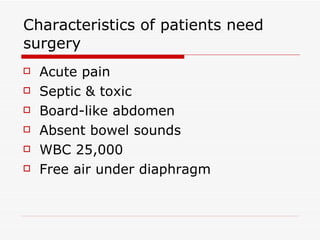
Characteristics of patients need surgery Acute pain Septic & toxic Board-like abdomen Absent bowel sounds WBC 25,000 Free air under diaphragm
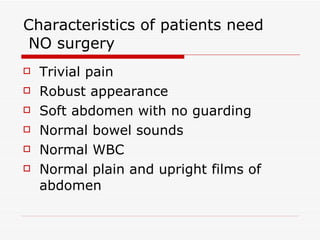
Characteristics of patients need  NO surgery Trivial pain Robust appearance Soft abdomen with no guarding Normal bowel sounds Normal WBC Normal plain and upright films of abdomen
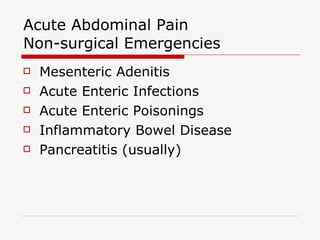
Acute Abdominal Pain Non-surgical Emergencies Mesenteric Adenitis Acute Enteric Infections Acute Enteric Poisonings Inflammatory Bowel Disease Pancreatitis (usually)
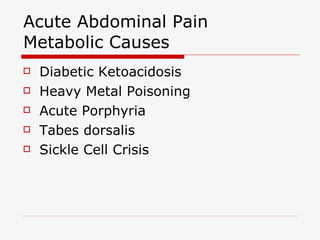
Acute Abdominal Pain Metabolic Causes Diabetic Ketoacidosis Heavy Metal Poisoning Acute Porphyria Tabes dorsalis Sickle Cell Crisis
 
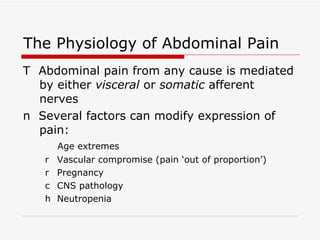
The Physiology of Abdominal Pain 􀂉  Abdominal pain from any cause is mediated by either  visceral  or  somatic  afferent nerves 􀂉  Several factors can modify expression of pain: 􀂄  Age extremes 􀂄  Vascular compromise (pain ‘out of proportion’) 􀂄  Pregnancy 􀂄  CNS pathology 􀂄  Neutropenia
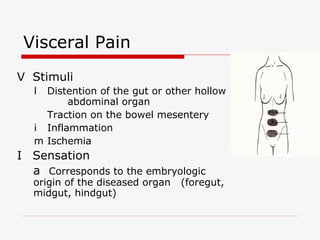
Visceral Pain 􀂉  Stimuli 􀂄  Distention of the gut or other hollow  abdominal organ 􀂄  Traction on the bowel mesentery 􀂄  Inflammation 􀂄  Ischemia 􀂉  Sensation 􀂄  Corresponds to the embryologic  origin of the diseased organ  (foregut, midgut, hindgut)
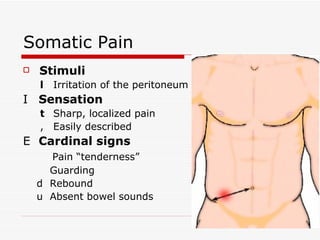
Somatic Pain Stimuli 􀂄  Irritation of the peritoneum 􀂉  Sensation 􀂄  Sharp, localized pain 􀂄  Easily described 􀂉  Cardinal signs 􀂄  Pain “tenderness” 􀂄  Guarding 􀂄  Rebound 􀂄  Absent bowel sounds
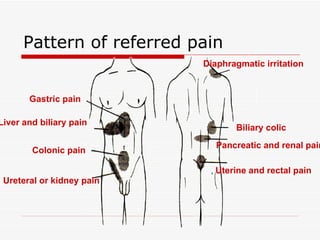
Pattern of referred pain Gastric pain Liver and biliary pain Colonic pain Ureteral or kidney pain Diaphragmatic irritation Biliary colic Pancreatic and renal pain ,  Uterine and rectal pain
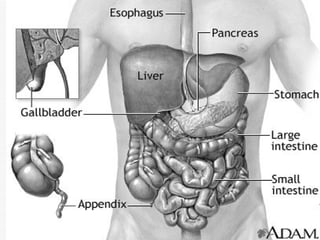
History Where does it hurt? Know locations of major organs But realize abdominal pain locations do not correlate well with source
History What does pain feel like? Steady pain - inflammatory process Crampy pain - obstructive process
History Was onset of pain gradual or sudden? Sudden = perforation, hemorrhage, infarct Gradual = peritoneal irrigation, hollow organ distension
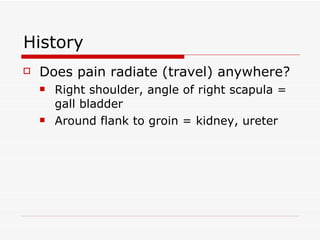
History Does pain radiate (travel) anywhere? Right shoulder, angle of right scapula = gall bladder Around flank to groin = kidney, ureter
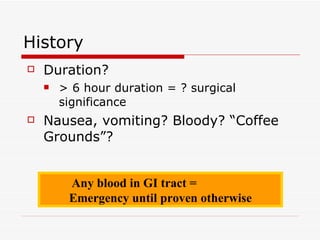
History Duration? > 6 hour duration = ? surgical significance Nausea, vomiting? Bloody? “Coffee Grounds”? Any blood in GI tract =  Emergency until proven otherwise
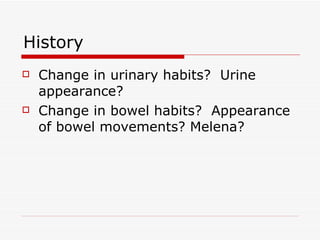
History Change in urinary habits?  Urine appearance? Change in bowel habits?  Appearance of bowel movements? Melena?
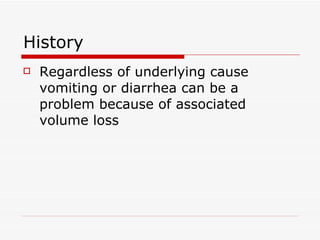
History Regardless of underlying cause vomiting or diarrhea can be a problem because of associated volume loss
History Females Last menstrual period?  Abnormal bleeding?  In females, abdominal pain = Gyn problem  until proven otherwise
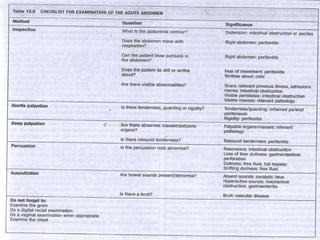
Physical Exam General Appearance Lies perfectly still    inflammation, peritonitis Restless, writhing    obstruction Abdominal distension? Ecchymosis around umbilicus, flanks?
Physical Exam Vital signs Tachycardia   ? Early shock (more important than BP) Rapid shallow breathing   peritonitis
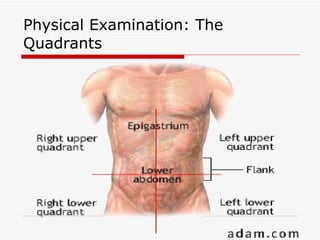
Physical Examination: The Quadrants
 
 
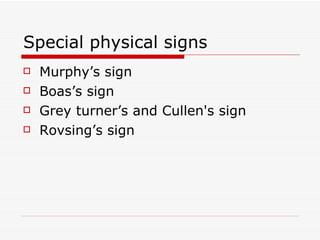
Special physical signs Murphy’s sign Boas’s sign Grey turner’s and Cullen's sign Rovsing’s sign
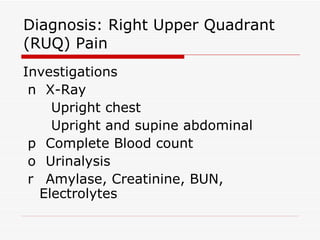
Diagnosis: Right Upper Quadrant (RUQ) Pain Investigations 􀂉  X-Ray Upright chest Upright and supine abdominal 􀂉  Complete Blood count 􀂉  Urinalysis 􀂉  Amylase, Creatinine, BUN, Electrolytes
 
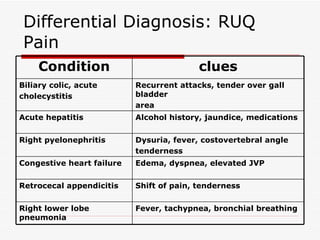
Differential Diagnosis: RUQ Pain Fever, tachypnea, bronchial breathing Right lower lobe pneumonia Shift of pain, tenderness Retrocecal appendicitis Edema, dyspnea, elevated JVP Congestive heart failure Dysuria, fever, costovertebral angle tenderness Right pyelonephritis Alcohol history, jaundice, medications Acute hepatitis Recurrent attacks, tender over gall bladder area Biliary colic, acute cholecystitis clues Condition
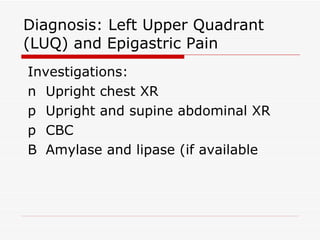
Diagnosis: Left Upper Quadrant (LUQ) and Epigastric Pain Investigations: 􀂉  Upright chest XR 􀂉  Upright and supine abdominal XR 􀂉  CBC 􀂉  Amylase and lipase (if available
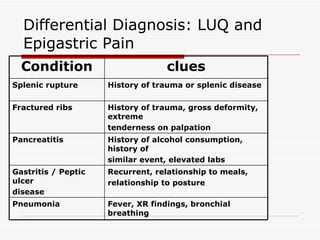
Differential Diagnosis: LUQ and Epigastric Pain Fever, XR findings, bronchial breathing Pneumonia Recurrent, relationship to meals, relationship to posture Gastritis / Peptic ulcer disease History of alcohol consumption, history of similar event, elevated labs Pancreatitis History of trauma, gross deformity, extreme tenderness on palpation Fractured ribs History of trauma or splenic disease Splenic rupture clues Condition
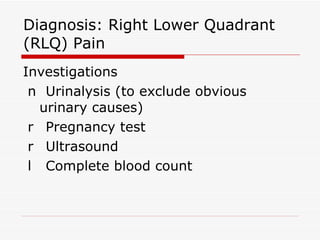
Diagnosis: Right Lower Quadrant (RLQ) Pain Investigations 􀂉  Urinalysis (to exclude obvious urinary causes) 􀂉  Pregnancy test 􀂉  Ultrasound 􀂉  Complete blood count
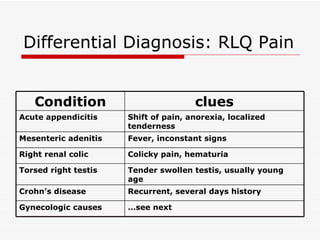
Differential Diagnosis: RLQ Pain … see next Gynecologic causes Recurrent, several days history Crohn’s disease Tender swollen testis, usually young age Torsed right testis Colicky pain, hematuria Right renal colic Fever, inconstant signs Mesenteric adenitis Shift of pain, anorexia, localized tenderness Acute appendicitis clues Condition
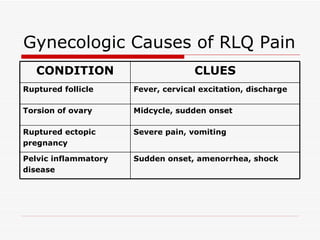
Gynecologic Causes of RLQ Pain Sudden onset, amenorrhea, shock Pelvic inflammatory disease Severe pain, vomiting Ruptured ectopic pregnancy Midcycle, sudden onset Torsion of ovary Fever, cervical excitation, discharge Ruptured follicle CLUES CONDITION
Diagnosis: Left Lower Quadrant (LLQ) Pain 􀂄  Pregnancy test 􀂄  Urinalysis to exclude unsuspected urinary source 􀂄  Ultrasound 􀂄  Complete blood count 􀂄  Upright and supine abdominal XR 􀂄  CT scan if diverticular disease is suspected
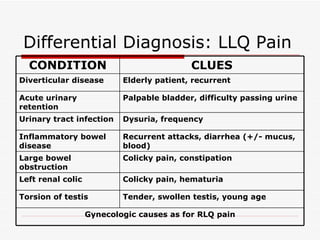
Differential Diagnosis: LLQ Pain Gynecologic causes as for RLQ pain Tender, swollen testis, young age Torsion of testis Colicky pain, hematuria Left renal colic Colicky pain, constipation  Large bowel obstruction Recurrent attacks, diarrhea (+/- mucus, blood) Inflammatory bowel disease Dysuria, frequency Urinary tract infection Palpable bladder, difficulty passing urine Acute urinary retention Elderly patient, recurrent Diverticular disease CLUES CONDITION
Immediate Treatment of the Acute Abdomen 1-Start large bore IV with either saline or lactated Ringer’s solution 2-IV pain medication 3-Nasogastric tube if vomiting or concerned about obstruction 4-Foley catheter to follow hydration status and to obtain urinalysis 5-Antibiotic administration if suspicious of inflammation or perforation 6-Definitive therapy or procedure will vary with diagnosis Remember to reassess patient on a regular basis.
clinical course" Acute abdomen "

  • 1.
    Acute abdomen Dr.Alaa Osman, MD Surgeon
  • 2.
    The term ‘acute abdomen’ designates symptoms and signs of intra-abdominal disease usually treated best by surgical operation.
  • 3.
    Acute Abdomen IfI operate and the problem is not surgical, patient exposed to unnecessary risk, anesthetic, etc. Risks greater with concomitant illness, older age If I do not operate and problem is surgical, patient at risk because of wrong therapy. Again the older patient is under greater burden. Continue
  • 4.
  • 5.
    Characteristics of patientsneed surgery Acute pain Septic & toxic Board-like abdomen Absent bowel sounds WBC 25,000 Free air under diaphragm
  • 6.
    Characteristics of patientsneed NO surgery Trivial pain Robust appearance Soft abdomen with no guarding Normal bowel sounds Normal WBC Normal plain and upright films of abdomen
  • 7.
    Acute Abdominal PainNon-surgical Emergencies Mesenteric Adenitis Acute Enteric Infections Acute Enteric Poisonings Inflammatory Bowel Disease Pancreatitis (usually)
  • 8.
    Acute Abdominal PainMetabolic Causes Diabetic Ketoacidosis Heavy Metal Poisoning Acute Porphyria Tabes dorsalis Sickle Cell Crisis
  • 9.
  • 10.
    The Physiology ofAbdominal Pain 􀂉 Abdominal pain from any cause is mediated by either visceral or somatic afferent nerves 􀂉 Several factors can modify expression of pain: 􀂄 Age extremes 􀂄 Vascular compromise (pain ‘out of proportion’) 􀂄 Pregnancy 􀂄 CNS pathology 􀂄 Neutropenia
  • 11.
    Visceral Pain 􀂉 Stimuli 􀂄 Distention of the gut or other hollow abdominal organ 􀂄 Traction on the bowel mesentery 􀂄 Inflammation 􀂄 Ischemia 􀂉 Sensation 􀂄 Corresponds to the embryologic origin of the diseased organ (foregut, midgut, hindgut)
  • 12.
    Somatic Pain Stimuli􀂄 Irritation of the peritoneum 􀂉 Sensation 􀂄 Sharp, localized pain 􀂄 Easily described 􀂉 Cardinal signs 􀂄 Pain “tenderness” 􀂄 Guarding 􀂄 Rebound 􀂄 Absent bowel sounds
  • 13.
    Pattern of referredpain Gastric pain Liver and biliary pain Colonic pain Ureteral or kidney pain Diaphragmatic irritation Biliary colic Pancreatic and renal pain , Uterine and rectal pain
  • 14.
    History Where doesit hurt? Know locations of major organs But realize abdominal pain locations do not correlate well with source
  • 15.
    History What doespain feel like? Steady pain - inflammatory process Crampy pain - obstructive process
  • 16.
    History Was onsetof pain gradual or sudden? Sudden = perforation, hemorrhage, infarct Gradual = peritoneal irrigation, hollow organ distension
  • 17.
    History Does painradiate (travel) anywhere? Right shoulder, angle of right scapula = gall bladder Around flank to groin = kidney, ureter
  • 18.
    History Duration? >6 hour duration = ? surgical significance Nausea, vomiting? Bloody? “Coffee Grounds”? Any blood in GI tract = Emergency until proven otherwise
  • 19.
    History Change inurinary habits? Urine appearance? Change in bowel habits? Appearance of bowel movements? Melena?
  • 20.
    History Regardless ofunderlying cause vomiting or diarrhea can be a problem because of associated volume loss
  • 21.
    History Females Lastmenstrual period? Abnormal bleeding? In females, abdominal pain = Gyn problem until proven otherwise
  • 22.
    Physical Exam GeneralAppearance Lies perfectly still  inflammation, peritonitis Restless, writhing  obstruction Abdominal distension? Ecchymosis around umbilicus, flanks?
  • 23.
    Physical Exam Vitalsigns Tachycardia  ? Early shock (more important than BP) Rapid shallow breathing  peritonitis
  • 24.
  • 25.
  • 26.
  • 27.
    Special physical signsMurphy’s sign Boas’s sign Grey turner’s and Cullen's sign Rovsing’s sign
  • 28.
    Diagnosis: Right UpperQuadrant (RUQ) Pain Investigations 􀂉 X-Ray Upright chest Upright and supine abdominal 􀂉 Complete Blood count 􀂉 Urinalysis 􀂉 Amylase, Creatinine, BUN, Electrolytes
  • 29.
  • 30.
    Differential Diagnosis: RUQPain Fever, tachypnea, bronchial breathing Right lower lobe pneumonia Shift of pain, tenderness Retrocecal appendicitis Edema, dyspnea, elevated JVP Congestive heart failure Dysuria, fever, costovertebral angle tenderness Right pyelonephritis Alcohol history, jaundice, medications Acute hepatitis Recurrent attacks, tender over gall bladder area Biliary colic, acute cholecystitis clues Condition
  • 31.
    Diagnosis: Left UpperQuadrant (LUQ) and Epigastric Pain Investigations: 􀂉 Upright chest XR 􀂉 Upright and supine abdominal XR 􀂉 CBC 􀂉 Amylase and lipase (if available
  • 32.
    Differential Diagnosis: LUQand Epigastric Pain Fever, XR findings, bronchial breathing Pneumonia Recurrent, relationship to meals, relationship to posture Gastritis / Peptic ulcer disease History of alcohol consumption, history of similar event, elevated labs Pancreatitis History of trauma, gross deformity, extreme tenderness on palpation Fractured ribs History of trauma or splenic disease Splenic rupture clues Condition
  • 33.
    Diagnosis: Right LowerQuadrant (RLQ) Pain Investigations 􀂉 Urinalysis (to exclude obvious urinary causes) 􀂉 Pregnancy test 􀂉 Ultrasound 􀂉 Complete blood count
  • 34.
    Differential Diagnosis: RLQPain … see next Gynecologic causes Recurrent, several days history Crohn’s disease Tender swollen testis, usually young age Torsed right testis Colicky pain, hematuria Right renal colic Fever, inconstant signs Mesenteric adenitis Shift of pain, anorexia, localized tenderness Acute appendicitis clues Condition
  • 35.
    Gynecologic Causes ofRLQ Pain Sudden onset, amenorrhea, shock Pelvic inflammatory disease Severe pain, vomiting Ruptured ectopic pregnancy Midcycle, sudden onset Torsion of ovary Fever, cervical excitation, discharge Ruptured follicle CLUES CONDITION
  • 36.
    Diagnosis: Left LowerQuadrant (LLQ) Pain 􀂄 Pregnancy test 􀂄 Urinalysis to exclude unsuspected urinary source 􀂄 Ultrasound 􀂄 Complete blood count 􀂄 Upright and supine abdominal XR 􀂄 CT scan if diverticular disease is suspected
  • 37.
    Differential Diagnosis: LLQPain Gynecologic causes as for RLQ pain Tender, swollen testis, young age Torsion of testis Colicky pain, hematuria Left renal colic Colicky pain, constipation Large bowel obstruction Recurrent attacks, diarrhea (+/- mucus, blood) Inflammatory bowel disease Dysuria, frequency Urinary tract infection Palpable bladder, difficulty passing urine Acute urinary retention Elderly patient, recurrent Diverticular disease CLUES CONDITION
  • 38.
    Immediate Treatment ofthe Acute Abdomen 1-Start large bore IV with either saline or lactated Ringer’s solution 2-IV pain medication 3-Nasogastric tube if vomiting or concerned about obstruction 4-Foley catheter to follow hydration status and to obtain urinalysis 5-Antibiotic administration if suspicious of inflammation or perforation 6-Definitive therapy or procedure will vary with diagnosis Remember to reassess patient on a regular basis.