Downloaded 322 times







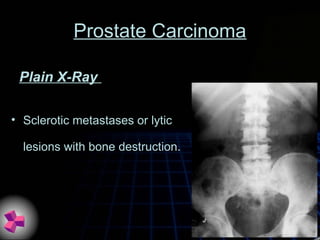
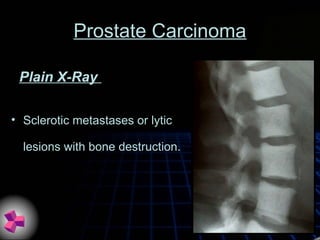
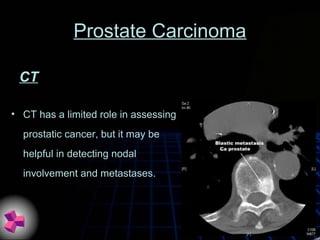
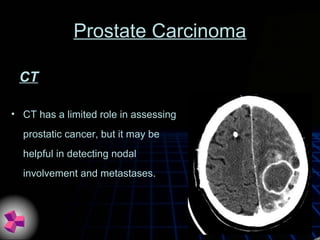
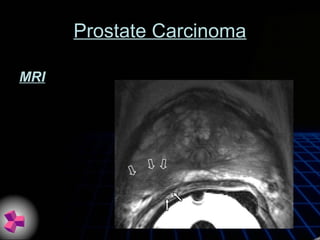
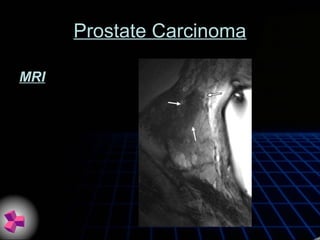
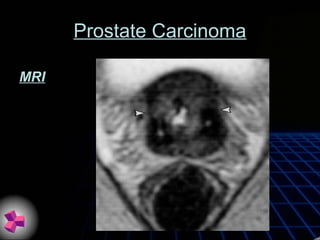

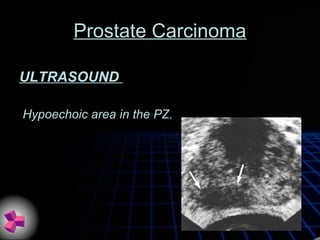
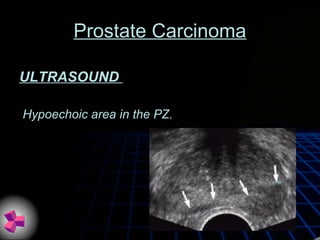

Most prostate cancers are slow growing and do not manifest during a man's lifetime. While many men are found to have microscopic prostate cancer at autopsy, most die with rather than from prostate cancer. Prostate cancer most commonly presents as adenocarcinoma in the peripheral zone of the prostate and has local spread through the prostate capsule or seminal vesicles and distant spread via lymph nodes or hematogenously to bones and lungs. Imaging like ultrasound, CT, MRI, and bone scans are used to diagnose and stage prostate cancer.


