Principle of Antibiotic
Prophylaxis
Short Note 2014
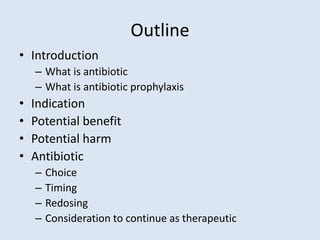
Outline
• Introduction
– What is antibiotic
– What is antibiotic prophylaxis
• Indication
• Potential benefit
• Potential harm
• Antibiotic
– Choice
– Timing
– Redosing
– Consideration to continue as therapeutic
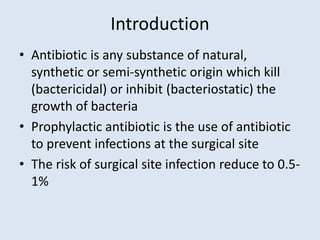
Introduction
• Antibiotic is any substance of natural,
synthetic or semi-synthetic origin which kill
(bactericidal) or inhibit (bacteriostatic) the
growth of bacteria
• Prophylactic antibiotic is the use of antibiotic
to prevent infections at the surgical site
• The risk of surgical site infection reduce to 0.5-
1%
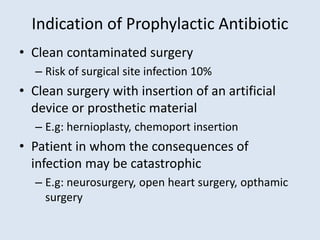
Indication of Prophylactic Antibiotic
• Clean contaminated surgery
– Risk of surgical site infection 10%
• Clean surgery with insertion of an artificial
device or prosthetic material
– E.g: hernioplasty, chemoport insertion
• Patient in whom the consequences of
infection may be catastrophic
– E.g: neurosurgery, open heart surgery, opthamic
surgery
• Impaired immune status
– Poor nutrition state
– Morbid Obesity
– Poor control diabetes mellitus
– Taking immunosuppression drug
Potential Benefit
• Prevent surgical site infection (SSI)
• Prevent SSI-related morbidity and mortality
• Reduce the duration and cost of health care
Potential Harm
• Risk of allergic reaction
• Risk of contributing to antimicrobial resistance
• Specific risk related to antibiotic
– E.g: aminoglycoside - renal toxicity, erythromycin –
GI upset
Choice of Antibiotic
• Avoid antibiotic that can cause allergy
• Active against pathogen most likely to
contaminate the surgical site
• Narrow spectrum antibiotic
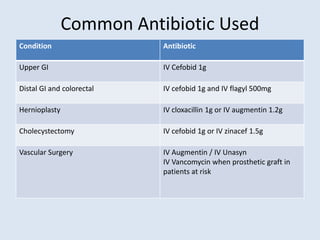
Common Antibiotic Used
Condition Antibiotic
Upper GI IV Cefobid 1g
Distal GI and colorectal IV cefobid 1g and IV flagyl 500mg
Hernioplasty IV cloxacillin 1g or IV augmentin 1.2g
Cholecystectomy IV cefobid 1g or IV zinacef 1.5g
Vascular Surgery IV Augmentin / IV Unasyn
IV Vancomycin when prosthetic graft in
patients at risk
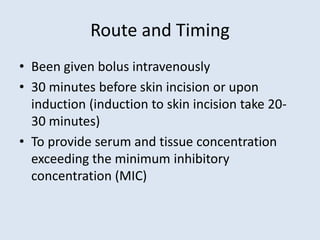
Route and Timing
• Been given bolus intravenously
• 30 minutes before skin incision or upon
induction (induction to skin incision take 20-
30 minutes)
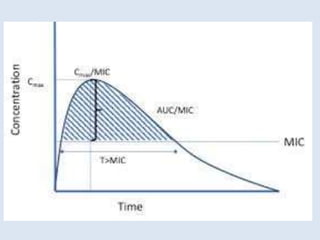
• To provide serum and tissue concentration
exceeding the minimum inhibitory
concentration (MIC)
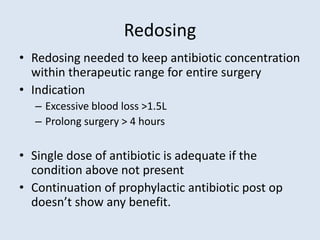
Redosing
• Redosing needed to keep antibiotic concentration
within therapeutic range for entire surgery
• Indication
– Excessive blood loss >1.5L
– Prolong surgery > 4 hours
• Single dose of antibiotic is adequate if the
condition above not present
• Continuation of prophylactic antibiotic post op
doesn’t show any benefit.
Consideration to Continue as
Therapeutic
• Breach of sterility during surgery
• Extensive contamination during surgery
Thank You
References
• Antibiotic for Surgical Prophylaxis, Australian
prescriber, 2005
• SIGN antibiotic prophylaxis in Surgery, 2014
• ASHP Therapeutic Guideline

Principle of antibiotic prophylaxis

  • 1.
  • 2.
    Outline • Introduction – Whatis antibiotic – What is antibiotic prophylaxis • Indication • Potential benefit • Potential harm • Antibiotic – Choice – Timing – Redosing – Consideration to continue as therapeutic
  • 3.
    Introduction • Antibiotic isany substance of natural, synthetic or semi-synthetic origin which kill (bactericidal) or inhibit (bacteriostatic) the growth of bacteria • Prophylactic antibiotic is the use of antibiotic to prevent infections at the surgical site • The risk of surgical site infection reduce to 0.5- 1%
  • 4.
    Indication of ProphylacticAntibiotic • Clean contaminated surgery – Risk of surgical site infection 10% • Clean surgery with insertion of an artificial device or prosthetic material – E.g: hernioplasty, chemoport insertion • Patient in whom the consequences of infection may be catastrophic – E.g: neurosurgery, open heart surgery, opthamic surgery
  • 5.
    • Impaired immunestatus – Poor nutrition state – Morbid Obesity – Poor control diabetes mellitus – Taking immunosuppression drug
  • 6.
    Potential Benefit • Preventsurgical site infection (SSI) • Prevent SSI-related morbidity and mortality • Reduce the duration and cost of health care
  • 7.
    Potential Harm • Riskof allergic reaction • Risk of contributing to antimicrobial resistance • Specific risk related to antibiotic – E.g: aminoglycoside - renal toxicity, erythromycin – GI upset
  • 8.
    Choice of Antibiotic •Avoid antibiotic that can cause allergy • Active against pathogen most likely to contaminate the surgical site • Narrow spectrum antibiotic
  • 9.
    Common Antibiotic Used ConditionAntibiotic Upper GI IV Cefobid 1g Distal GI and colorectal IV cefobid 1g and IV flagyl 500mg Hernioplasty IV cloxacillin 1g or IV augmentin 1.2g Cholecystectomy IV cefobid 1g or IV zinacef 1.5g Vascular Surgery IV Augmentin / IV Unasyn IV Vancomycin when prosthetic graft in patients at risk
  • 10.
    Route and Timing •Been given bolus intravenously • 30 minutes before skin incision or upon induction (induction to skin incision take 20- 30 minutes) • To provide serum and tissue concentration exceeding the minimum inhibitory concentration (MIC)
  • 12.
    Redosing • Redosing neededto keep antibiotic concentration within therapeutic range for entire surgery • Indication – Excessive blood loss >1.5L – Prolong surgery > 4 hours • Single dose of antibiotic is adequate if the condition above not present • Continuation of prophylactic antibiotic post op doesn’t show any benefit.
  • 13.
    Consideration to Continueas Therapeutic • Breach of sterility during surgery • Extensive contamination during surgery
  • 14.
  • 15.
    References • Antibiotic forSurgical Prophylaxis, Australian prescriber, 2005 • SIGN antibiotic prophylaxis in Surgery, 2014 • ASHP Therapeutic Guideline