Name: Muskan
Class: IX-A
Acids, Bases,&
Salts
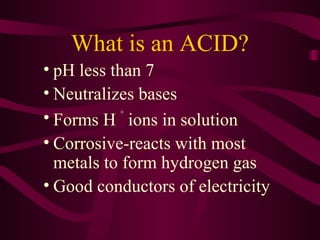
What is an ACID?
• pH less than 7
• Neutralizes bases
• Forms H
+
ions in solution
• Corrosive-reacts with most
metals to form hydrogen gas
• Good conductors of electricity
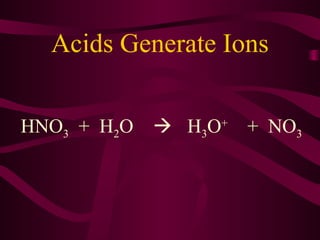
Acids Generate Ions
HNO3 + H2O  H3O+
+ NO3
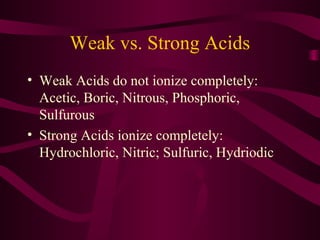
Weak vs. Strong Acids
• Weak Acids do not ionize completely:
Acetic, Boric, Nitrous, Phosphoric,
Sulfurous
• Strong Acids ionize completely:
Hydrochloric, Nitric; Sulfuric, Hydriodic
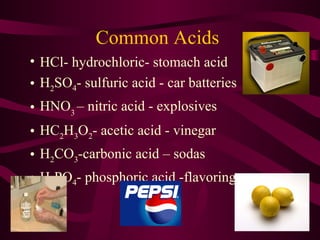
Common Acids
• HCl- hydrochloric- stomach acid
• H2SO4- sulfuric acid - car batteries
• HNO3
– nitric acid - explosives
• HC2H3O2- acetic acid - vinegar
• H2CO3-carbonic acid – sodas
• H3PO4- phosphoric acid -flavorings
What is a BASE?
• pH greater than 7
• Feels slippery
• Dissolves fats and oils
• Usually forms OH
-
ions in
solution
• Neutralizes acids
Weak vs. Strong Bases
• Weak Bases: ammonia; potassium
carbonate, sodium carbonate
• Strong Bases: sodium hydroxide; sodium
phosphate; barium hydroxide; calcium
hydroxide
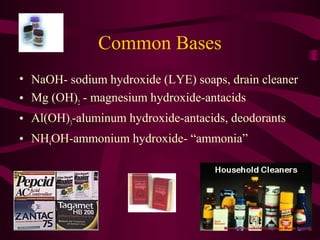
Common Bases
• NaOH- sodium hydroxide (LYE) soaps, drain cleaner
• Mg (OH)2 - magnesium hydroxide-antacids
• Al(OH)3-aluminum hydroxide-antacids, deodorants
• NH4OH-ammonium hydroxide- “ammonia”
Types of Acids and Bases
• In the 1800’s chemical concepts were based on the
reactions of aqueous solutions.
• Svante Arrhenius developed a concept of acids
and bases relevant to reactions in H2O.
• Arrhenius acid – produces hydrogen ions in water.
• Arrhenius base – produce hydroxide ions in water.
A broader ,more modern concept of acids and
bases was developed later.
Bronsted-Lowry acid- donates a hydrogen ion
in a reaction.
Bronsted – Lowry base – accepts a hydrogen
in a reaction.
• Conjugate acid- compound formed when an
base gains a hydrogen ion.
• Conjugate base – compound formed when
an acid loses a hydrogen ion.
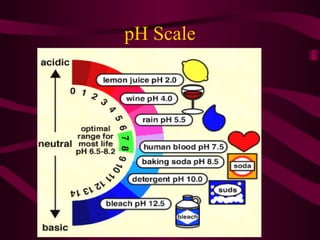
pH Scale
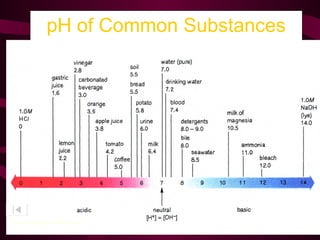
pH of Common Substances
Timberlake, Chemistry 7th
Edition, page 335
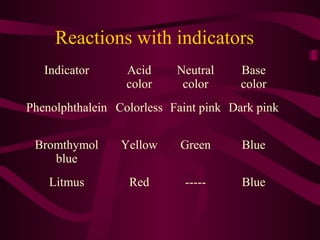
Reactions with indicators
Indicator Acid
color
Neutral
color
Base
color
Phenolphthalein Colorless Faint pink Dark pink
Bromthymol
blue
Yellow Green Blue
Litmus Red ----- Blue
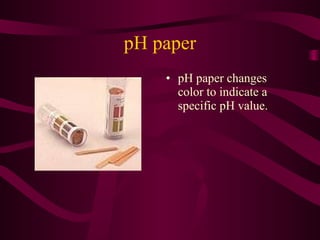
pH paper
• pH paper changes
color to indicate a
specific pH value.
Buffers
• A buffer is a solution that resists changes in
pH when small amounts of acids and bases
are added.
Situations in which pH is controlled
• “Heartburn”
• Planting vegetables and flowers
• Fish Tanks and Ponds
• Blood
• Swimming pools
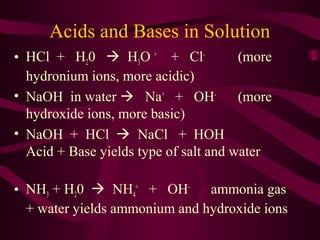
Acids and Bases in Solution
• HCl + H20  H3O +
+ Cl-
(more
hydronium ions, more acidic)
• NaOH in water  Na+
+ OH-
(more
hydroxide ions, more basic)
• NaOH + HCl  NaCl + HOH
Acid + Base yields type of salt and water
• NH3 + H20  NH4
+
+ OH-
ammonia gas
+ water yields ammonium and hydroxide ions
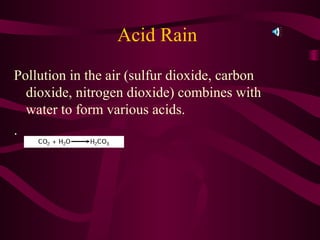
Acid Rain
Pollution in the air (sulfur dioxide, carbon
dioxide, nitrogen dioxide) combines with
water to form various acids.
.
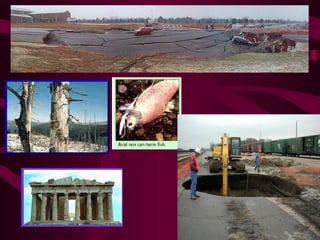
Rapid changes in pH can kill fish
and other organisms in lakes and
streams.
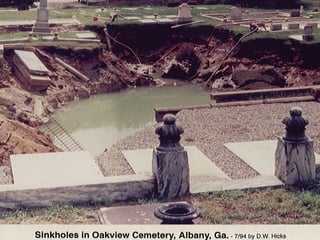
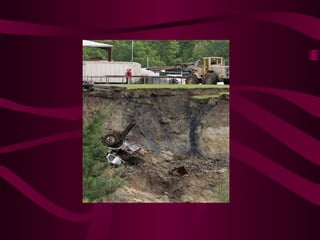
Soil pH is affected and can kill
plants and create sinkholes
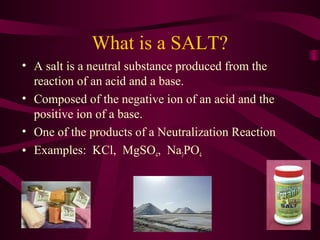
What is a SALT?
• A salt is a neutral substance produced from the
reaction of an acid and a base.
• Composed of the negative ion of an acid and the
positive ion of a base.
• One of the products of a Neutralization Reaction
• Examples: KCl, MgSO4, Na3PO4
Neutralization Reaction
• A neutralization reaction is the reaction of
an acid with a base to produce salt and
water.
• Example
H2SO4 + NaOH  NaHSO4 + H2O
Digestion and pH
• Digestion-process by which foods are broken down
into simpler substances.
• Mechanical digestion-physical process in which food
is torn apart (mouth)
• Chemical digestion- chemical reactions in which large
molecules are broken down into smaller molecules.
(stomach and small intestines)
pH in the Digestive System
• Mouth-pH around 7. Saliva contains amylase, an
enzyme which begins to break carbohydrates into
sugars.
• Stomach- pH around 2. Proteins are broken down
into amino acids by the enzyme pepsin.
• Small intestine-pH around 8. Most digestion ends.
Small molecules move to bloodstream toward
cells that use them
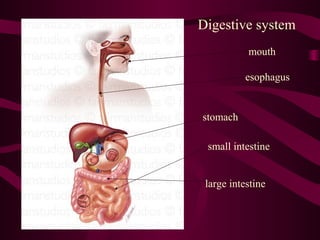
mouth
esophagus
stomach
small intestine
large intestine
Digestive system
Acids, Bases, and Salts
The End

Acids, bases, & salts

  • 1.
  • 2.
    What is anACID? • pH less than 7 • Neutralizes bases • Forms H + ions in solution • Corrosive-reacts with most metals to form hydrogen gas • Good conductors of electricity
  • 3.
    Acids Generate Ions HNO3+ H2O  H3O+ + NO3
  • 4.
    Weak vs. StrongAcids • Weak Acids do not ionize completely: Acetic, Boric, Nitrous, Phosphoric, Sulfurous • Strong Acids ionize completely: Hydrochloric, Nitric; Sulfuric, Hydriodic
  • 5.
    Common Acids • HCl-hydrochloric- stomach acid • H2SO4- sulfuric acid - car batteries • HNO3 – nitric acid - explosives • HC2H3O2- acetic acid - vinegar • H2CO3-carbonic acid – sodas • H3PO4- phosphoric acid -flavorings
  • 7.
    What is aBASE? • pH greater than 7 • Feels slippery • Dissolves fats and oils • Usually forms OH - ions in solution • Neutralizes acids
  • 8.
    Weak vs. StrongBases • Weak Bases: ammonia; potassium carbonate, sodium carbonate • Strong Bases: sodium hydroxide; sodium phosphate; barium hydroxide; calcium hydroxide
  • 9.
    Common Bases • NaOH-sodium hydroxide (LYE) soaps, drain cleaner • Mg (OH)2 - magnesium hydroxide-antacids • Al(OH)3-aluminum hydroxide-antacids, deodorants • NH4OH-ammonium hydroxide- “ammonia”
  • 10.
    Types of Acidsand Bases • In the 1800’s chemical concepts were based on the reactions of aqueous solutions. • Svante Arrhenius developed a concept of acids and bases relevant to reactions in H2O. • Arrhenius acid – produces hydrogen ions in water. • Arrhenius base – produce hydroxide ions in water.
  • 11.
    A broader ,moremodern concept of acids and bases was developed later. Bronsted-Lowry acid- donates a hydrogen ion in a reaction. Bronsted – Lowry base – accepts a hydrogen in a reaction.
  • 12.
    • Conjugate acid-compound formed when an base gains a hydrogen ion. • Conjugate base – compound formed when an acid loses a hydrogen ion.
  • 13.
  • 14.
    pH of CommonSubstances Timberlake, Chemistry 7th Edition, page 335
  • 15.
    Reactions with indicators IndicatorAcid color Neutral color Base color Phenolphthalein Colorless Faint pink Dark pink Bromthymol blue Yellow Green Blue Litmus Red ----- Blue
  • 16.
    pH paper • pHpaper changes color to indicate a specific pH value.
  • 17.
    Buffers • A bufferis a solution that resists changes in pH when small amounts of acids and bases are added.
  • 18.
    Situations in whichpH is controlled • “Heartburn” • Planting vegetables and flowers • Fish Tanks and Ponds • Blood • Swimming pools
  • 19.
    Acids and Basesin Solution • HCl + H20  H3O + + Cl- (more hydronium ions, more acidic) • NaOH in water  Na+ + OH- (more hydroxide ions, more basic) • NaOH + HCl  NaCl + HOH Acid + Base yields type of salt and water • NH3 + H20  NH4 + + OH- ammonia gas + water yields ammonium and hydroxide ions
  • 20.
    Acid Rain Pollution inthe air (sulfur dioxide, carbon dioxide, nitrogen dioxide) combines with water to form various acids. .
  • 21.
    Rapid changes inpH can kill fish and other organisms in lakes and streams. Soil pH is affected and can kill plants and create sinkholes
  • 25.
    What is aSALT? • A salt is a neutral substance produced from the reaction of an acid and a base. • Composed of the negative ion of an acid and the positive ion of a base. • One of the products of a Neutralization Reaction • Examples: KCl, MgSO4, Na3PO4
  • 26.
    Neutralization Reaction • Aneutralization reaction is the reaction of an acid with a base to produce salt and water. • Example H2SO4 + NaOH  NaHSO4 + H2O
  • 27.
    Digestion and pH •Digestion-process by which foods are broken down into simpler substances. • Mechanical digestion-physical process in which food is torn apart (mouth) • Chemical digestion- chemical reactions in which large molecules are broken down into smaller molecules. (stomach and small intestines)
  • 28.
    pH in theDigestive System • Mouth-pH around 7. Saliva contains amylase, an enzyme which begins to break carbohydrates into sugars. • Stomach- pH around 2. Proteins are broken down into amino acids by the enzyme pepsin. • Small intestine-pH around 8. Most digestion ends. Small molecules move to bloodstream toward cells that use them
  • 29.
  • 30.
    Acids, Bases, andSalts The End