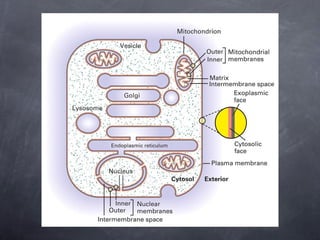

Molecular Cell Biology Fifth Edition Chapter 5: Biomembranes and Cell Architecture Copyright © 2004 by W. H. Freeman & Company Harvey Lodish • Arnold Berk • Paul Matsudaira • Chris A. Kaiser • Monty Krieger • Matthew P. Scott • Lawrence Zipursky • James Darnell
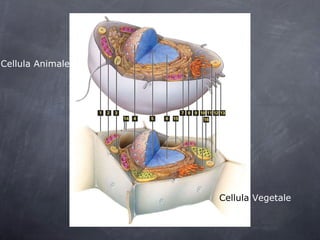
Cellula Animale Cellula  Vegetale
 
 
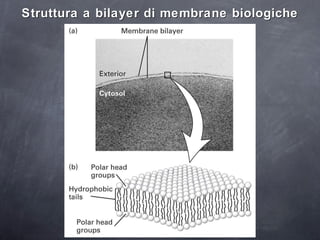
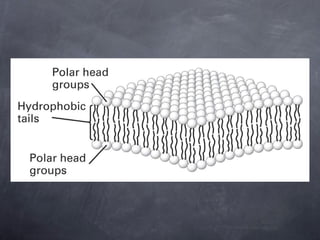
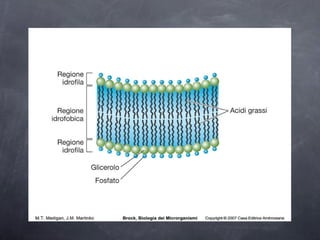
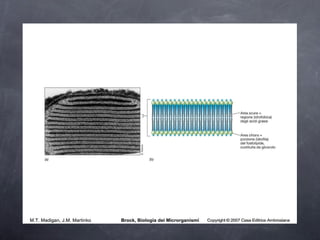
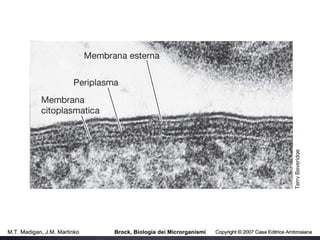
Struttura a bilayer di membrane biologiche
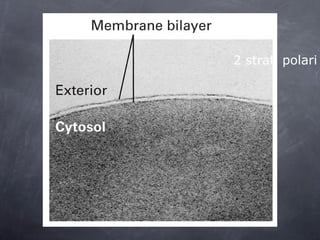
2 strati  polari


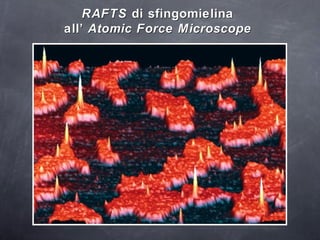
RAFTS  di sfingomielina  all’  Atomic Force Microscope
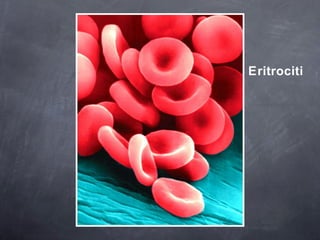
Eritrociti
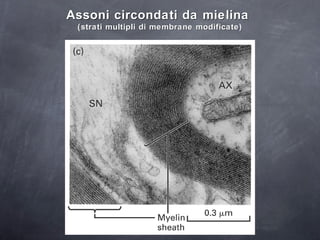
Assoni circondati da mielina  (strati multipli di membrane modificate)
 
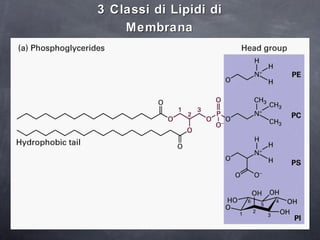
3 Classi di Lipidi di Membrana
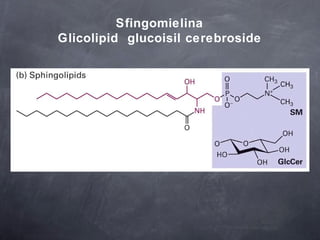
Sfingomielina Glicolipid  glucoisil cerebroside


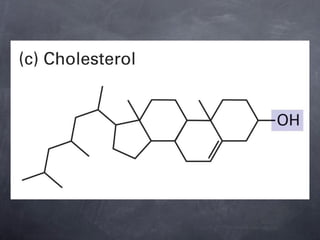
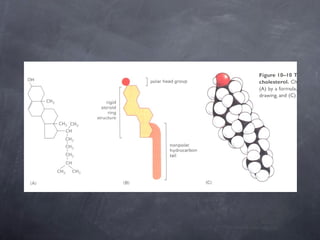
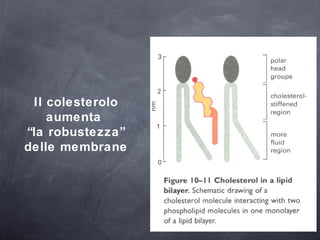
Il colesterolo aumenta  “ la robustezza” delle membrane
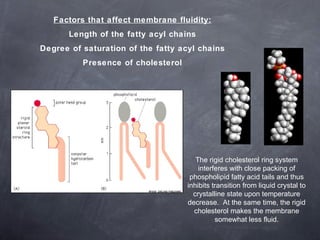
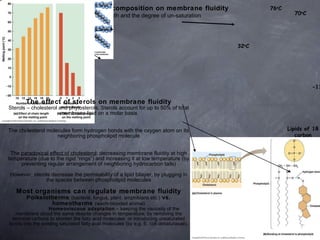
Factors that affect membrane fluidity: Length of the fatty acyl chains Degree of saturation of the fatty acyl chains Presence of cholesterol The rigid cholesterol ring system interferes with close packing of phospholipid fatty acid tails and thus inhibits transition from liquid crystal to crystalline state upon temperature decrease.  At the same time, the rigid cholesterol makes the membrane somewhat less fluid.
The effect of fatty acid composition on membrane fluidity Two aspects: the length and the degree of un-saturation Membrane lipids often contain one saturated and on unsaturated fatty acids The effect of sterols on membrane fluidity Sterols – cholesterol and phytosterols. Sterols account for up to 50% of total membrane lipid on a molar basis The cholesterol molecules form hydrogen bonds with the oxygen atom on its neighboring phospholipid molecule The  paradoxical effect of cholesterol : decreasing membrane fluidity at high temperature (due to the rigid “rings”) and increasing it at low temperature (by preventing regular arrangement of neighboring hydrocarbon tails) However, sterols decrease the permeability of a lipid bilayer, by plugging in the spaces between phospholipid molecules Most organisms can regulate membrane fluidity Poikelotherms  (bacteria, fungus, plant, amphibians etc.)  vs. homeotherms  (warm-blooded animal) Homeoviscous adaptation  – keeping the viscosity of the membrane about the same despite changes in temperature, by removing the terminal carbons to shorten the fatty acid molecules  or introducing unsaturated bonds into the existing saturated fatty acid molecules (by e.g. E. coli desaturasae). Lipids of 18 carbon 70 o C -11 o C 76 o C 32 o C
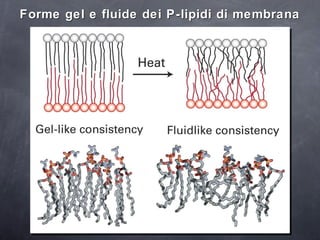
Forme gel e fluide dei P-lipidi di membrana
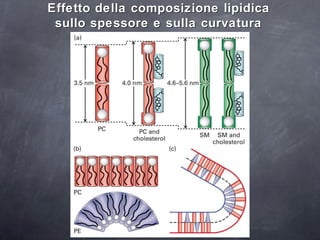
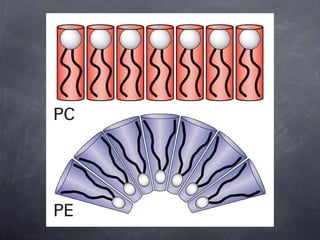
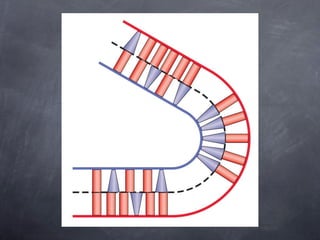
Effetto della composizione lipidica  sullo spessore e sulla curvatura
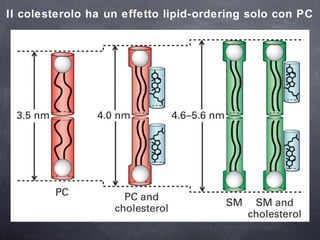
Il colesterolo ha un effetto lipid-ordering solo con PC
 
 
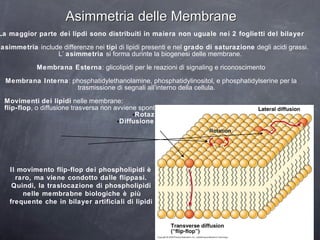
Asimmetria delle Membrane La maggior parte dei lipdi sono distribuiti in maiera non uguale nei 2 foglietti del bilayer L’  asimmetria  include differenze nei  tipi  di lipidi presenti e nel  grado di saturazione  degli acidi grassi. L’  asimmetria  si forma durinte la biogenesi delle membrane.  Membrana Esterna : glicolipidi per le reazioni di signaling e riconoscimento Membrana Interna : phosphatidylethanolamine, phosphatidylinositol, e phosphatidylserine per la trasmissione di segnali all’interno della cellula.  Movimenti   dei lipidi  nelle membrane: flip-flop , o diffusione trasversa non avviene spontane amente Rotaz ione Diffusione  Laterale Il movimento flip-flop dei phospholipidi è raro, ma viene condotto dalle flippasi. Quindi, la traslocazione di phospholipidi nelle membrabne biologiche è più frequente che in bilayer artificiali di lipidi
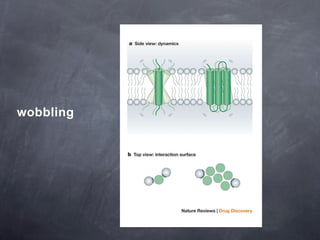
wobbling
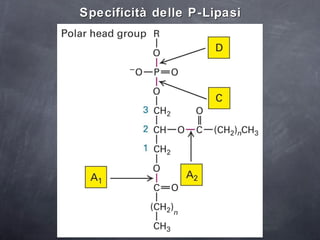
Specificità delle P-Lipasi
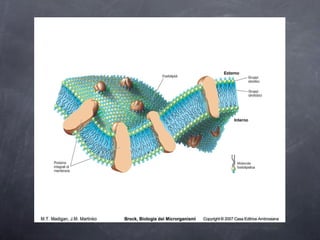
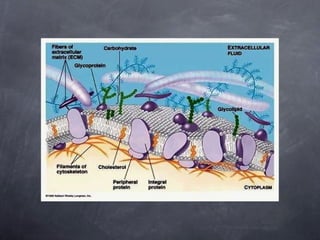
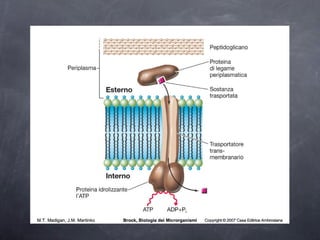
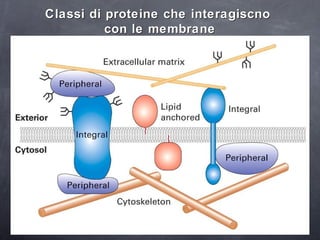
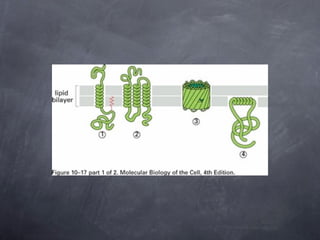
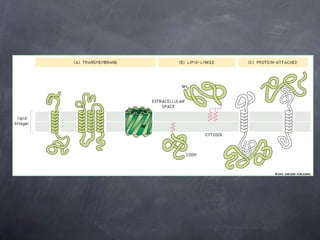
Classi di proteine che interagiscno  con le membrane
 
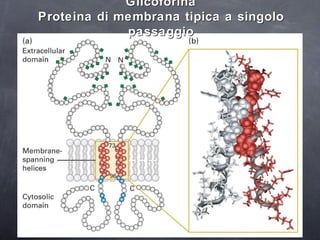
Glicoforina Proteina di membrana tipica a singolo passaggio
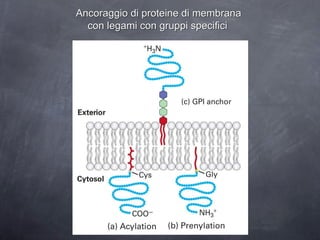
Ancoraggio di proteine di membrana  con legami con gruppi specifici
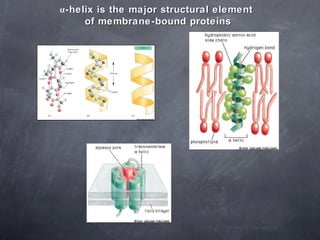
α-helix is the major structural element  of membrane-bound proteins
 
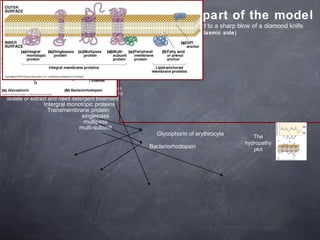
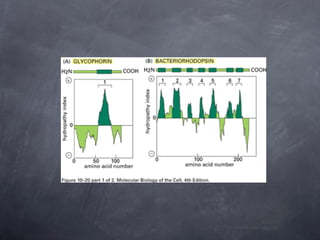
Membrane lipids: the “mosaic” part of the model Freezing fracturing: quick frozen (in liquid nitrogen) and then subjected to a sharp blow of a diamond knife. E face (exoplasmic sicde) and P face (protoplasmic side) Membrane contain integral, peripheral, and lipid-anchored proteins Integral membrane proteins:  contain ~20 aa hydrophobic transmembrane segment and hard to isolate or extract and need detergent treatment. Intergral monotopic proteins Transmembrane protein:  singlepass multipass multi-subunit Glycophorin of erythrocyte Bacteriorhodopsin The hydropathy plot
 
 
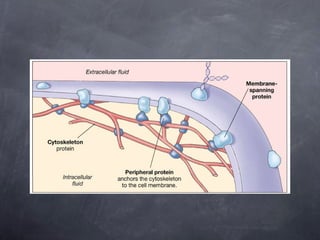
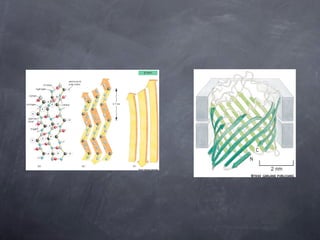
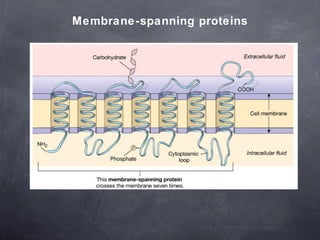
Membrane-spanning proteins
 
 
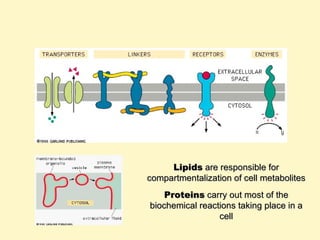
Lipids  are responsible for compartmentalization of cell metabolites Proteins  carry out most of the biochemical   reactions taking place in a cell

2.memb

  • 1.
    Molecular Cell BiologyFifth Edition Chapter 5: Biomembranes and Cell Architecture Copyright © 2004 by W. H. Freeman & Company Harvey Lodish • Arnold Berk • Paul Matsudaira • Chris A. Kaiser • Monty Krieger • Matthew P. Scott • Lawrence Zipursky • James Darnell
  • 2.
  • 3.
  • 4.
  • 5.
    Struttura a bilayerdi membrane biologiche
  • 6.
    2 strati polari
  • 7.
  • 8.
  • 9.
  • 10.
  • 11.
  • 12.
  • 13.
  • 14.
  • 15.
  • 16.
  • 17.
    RAFTS disfingomielina all’ Atomic Force Microscope
  • 18.
  • 19.
    Assoni circondati damielina (strati multipli di membrane modificate)
  • 20.
  • 21.
    3 Classi diLipidi di Membrana
  • 22.
    Sfingomielina Glicolipid glucoisil cerebroside
  • 23.
  • 24.
  • 25.
  • 26.
    Il colesterolo aumenta “ la robustezza” delle membrane
  • 27.
    Factors that affectmembrane fluidity: Length of the fatty acyl chains Degree of saturation of the fatty acyl chains Presence of cholesterol The rigid cholesterol ring system interferes with close packing of phospholipid fatty acid tails and thus inhibits transition from liquid crystal to crystalline state upon temperature decrease. At the same time, the rigid cholesterol makes the membrane somewhat less fluid.
  • 28.
    The effect offatty acid composition on membrane fluidity Two aspects: the length and the degree of un-saturation Membrane lipids often contain one saturated and on unsaturated fatty acids The effect of sterols on membrane fluidity Sterols – cholesterol and phytosterols. Sterols account for up to 50% of total membrane lipid on a molar basis The cholesterol molecules form hydrogen bonds with the oxygen atom on its neighboring phospholipid molecule The paradoxical effect of cholesterol : decreasing membrane fluidity at high temperature (due to the rigid “rings”) and increasing it at low temperature (by preventing regular arrangement of neighboring hydrocarbon tails) However, sterols decrease the permeability of a lipid bilayer, by plugging in the spaces between phospholipid molecules Most organisms can regulate membrane fluidity Poikelotherms (bacteria, fungus, plant, amphibians etc.) vs. homeotherms (warm-blooded animal) Homeoviscous adaptation – keeping the viscosity of the membrane about the same despite changes in temperature, by removing the terminal carbons to shorten the fatty acid molecules or introducing unsaturated bonds into the existing saturated fatty acid molecules (by e.g. E. coli desaturasae). Lipids of 18 carbon 70 o C -11 o C 76 o C 32 o C
  • 29.
    Forme gel efluide dei P-lipidi di membrana
  • 30.
    Effetto della composizionelipidica sullo spessore e sulla curvatura
  • 31.
    Il colesterolo haun effetto lipid-ordering solo con PC
  • 32.
  • 33.
  • 34.
    Asimmetria delle MembraneLa maggior parte dei lipdi sono distribuiti in maiera non uguale nei 2 foglietti del bilayer L’ asimmetria include differenze nei tipi di lipidi presenti e nel grado di saturazione degli acidi grassi. L’ asimmetria si forma durinte la biogenesi delle membrane. Membrana Esterna : glicolipidi per le reazioni di signaling e riconoscimento Membrana Interna : phosphatidylethanolamine, phosphatidylinositol, e phosphatidylserine per la trasmissione di segnali all’interno della cellula. Movimenti dei lipidi nelle membrane: flip-flop , o diffusione trasversa non avviene spontane amente Rotaz ione Diffusione Laterale Il movimento flip-flop dei phospholipidi è raro, ma viene condotto dalle flippasi. Quindi, la traslocazione di phospholipidi nelle membrabne biologiche è più frequente che in bilayer artificiali di lipidi
  • 35.
  • 36.
  • 37.
    Classi di proteineche interagiscno con le membrane
  • 38.
  • 39.
    Glicoforina Proteina dimembrana tipica a singolo passaggio
  • 40.
    Ancoraggio di proteinedi membrana con legami con gruppi specifici
  • 41.
    α-helix is themajor structural element of membrane-bound proteins
  • 42.
  • 43.
    Membrane lipids: the“mosaic” part of the model Freezing fracturing: quick frozen (in liquid nitrogen) and then subjected to a sharp blow of a diamond knife. E face (exoplasmic sicde) and P face (protoplasmic side) Membrane contain integral, peripheral, and lipid-anchored proteins Integral membrane proteins: contain ~20 aa hydrophobic transmembrane segment and hard to isolate or extract and need detergent treatment. Intergral monotopic proteins Transmembrane protein: singlepass multipass multi-subunit Glycophorin of erythrocyte Bacteriorhodopsin The hydropathy plot
  • 44.
  • 45.
  • 46.
  • 47.
  • 48.
  • 49.
    Lipids areresponsible for compartmentalization of cell metabolites Proteins carry out most of the biochemical reactions taking place in a cell