Transcription, Translation and
Mutation
•

From DNA to Protein (11.2)
• Genetic Changes (11.3)
Answer these questions:


What is coded for in DNA? How is it coded?





What is the primary structure of a protein?




Proteins
The sequence of A, T, G, C

Sequence of amino acids

What are proteins used for?




Structure
Controlling the biochemistry of an organism


Enzymes, antibodies
From DNA to Protein


DNA cannot leave the nucleus



Protein is made at the ribosomes in the cytoplasm and
attached to the rough endoplasmic reticulum



Therefore, a message must be sent from the DNA to the
ribosome
From DNA to Protein


The messenger is RNA (mRNA)



DNA  Protein: occurs in 2 steps


Transcription




Making the coded message (mRNA)

Translation


Reading the coded message
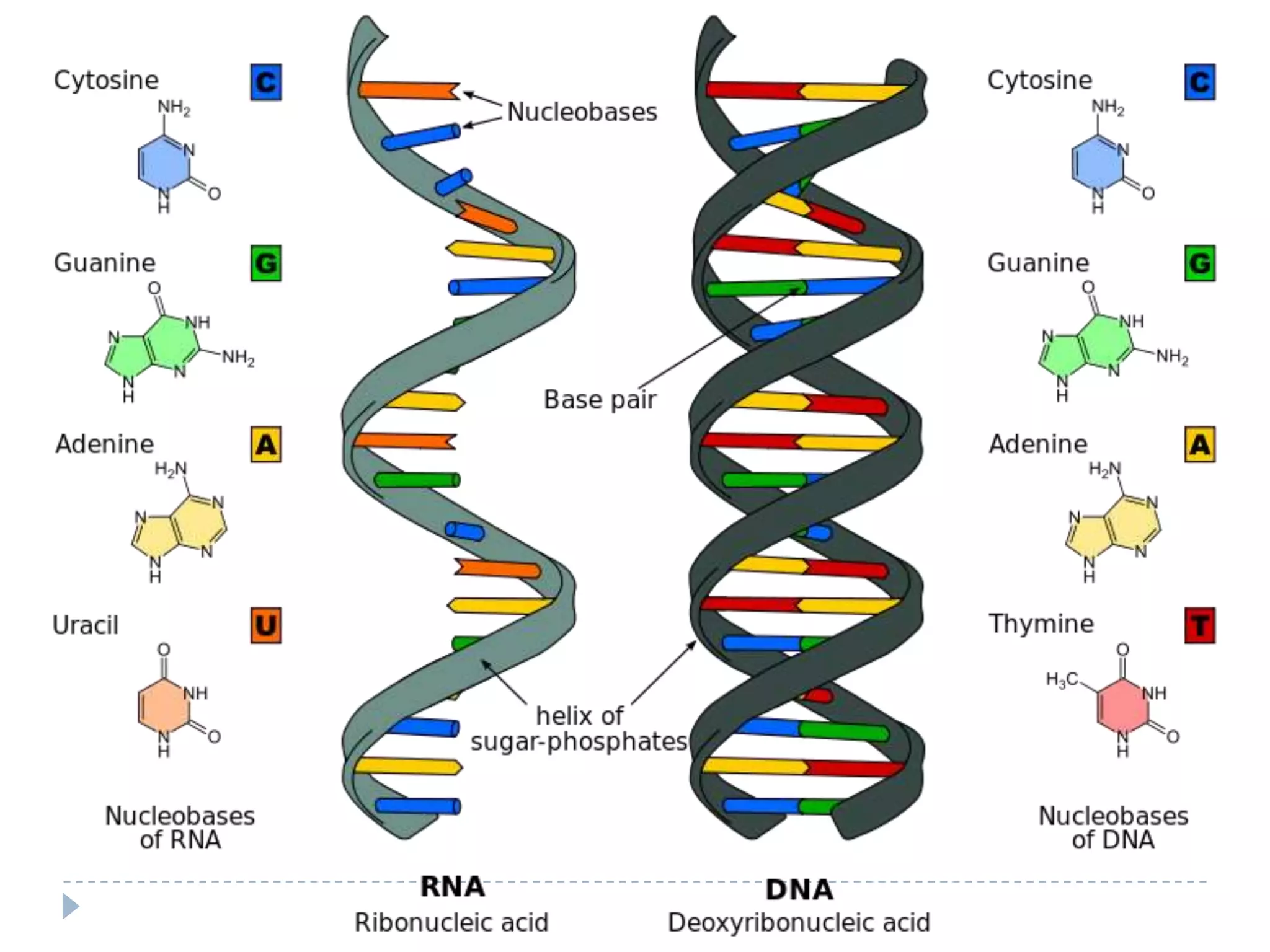
How is RNA different from DNA?
RNA

DNA



Single-stranded



Double-stranded



Sugar = ribose



Sugar = deoxyribose



A, U, G, C



A, T, G C
3 types of Ribonucleic Acid (RNA)


mRNA





rRNA






Messenger RNA
Brings instructions from DNA in the nucleus to the cytoplasm
(where ribosomes are found)
Ribosomal RNA
Part of the ribosome that binds to the mRNA and uses the
instructions to assemble the amino acids in the correct order

tRNA




Transfer RNA
Delivers the amino acids to the ribosome to be assembled
into a protein
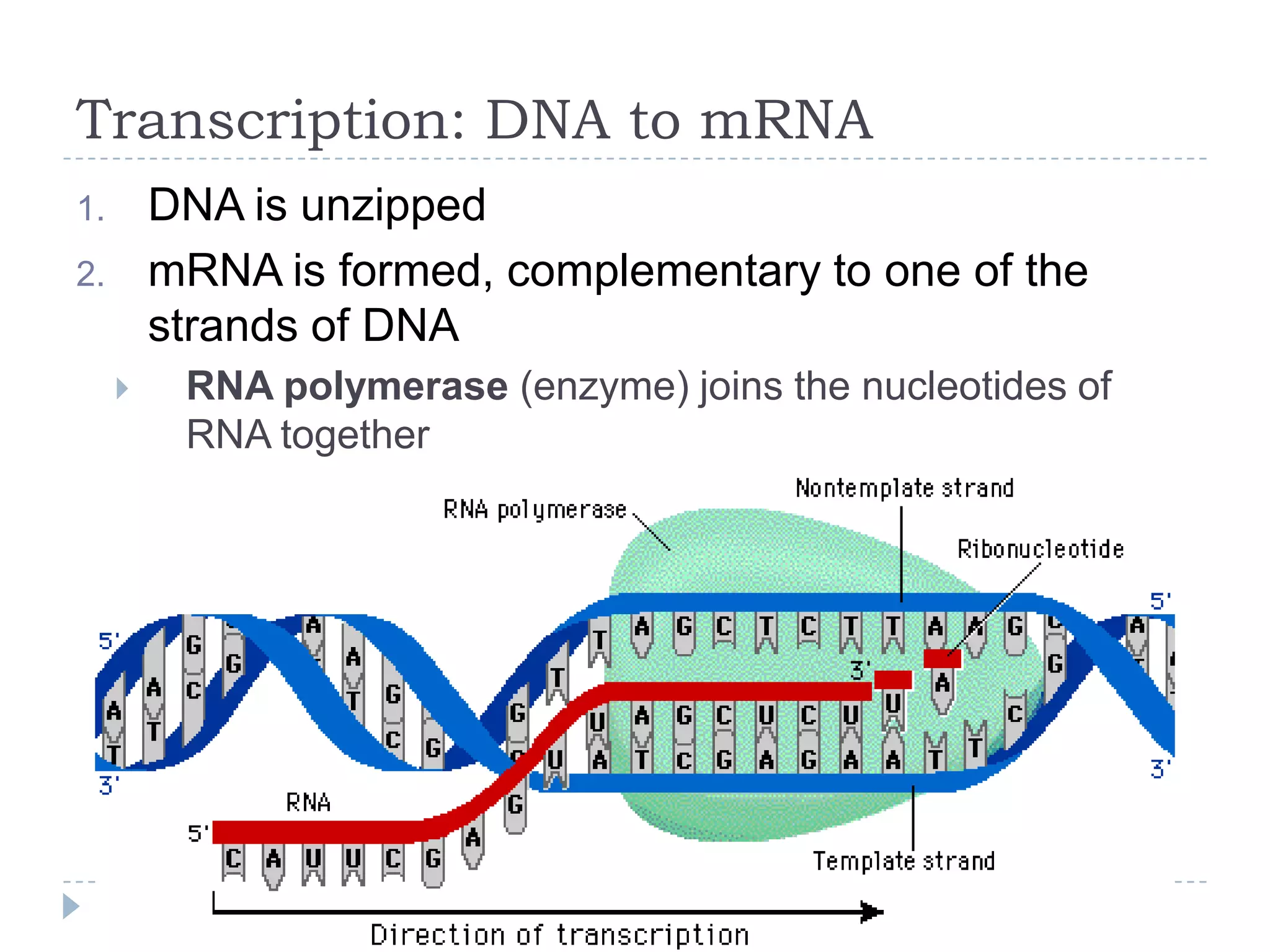
Transcription: DNA to mRNA
DNA is unzipped
mRNA is formed, complementary to one of the
strands of DNA

1.
2.


RNA polymerase (enzyme) joins the nucleotides of
RNA together
Transcription
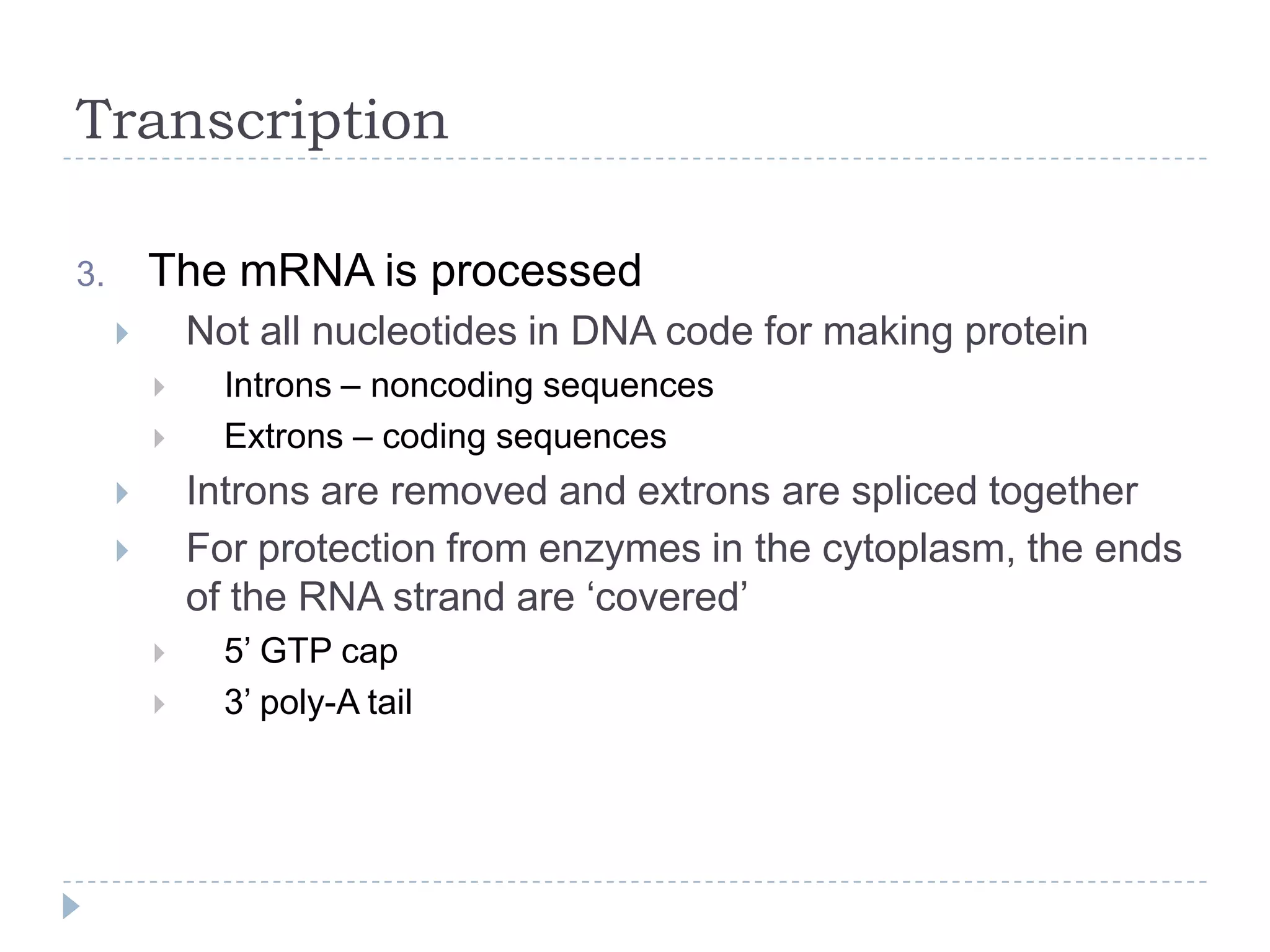
The mRNA is processed

3.

Not all nucleotides in DNA code for making protein





Introns – noncoding sequences
Exons– coding sequences

Introns are removed and exonsare spliced together
For protection from enzymes in the cytoplasm, the ends
of the RNA strand are ‘covered’







5’ GTP cap
3’ poly-A tail
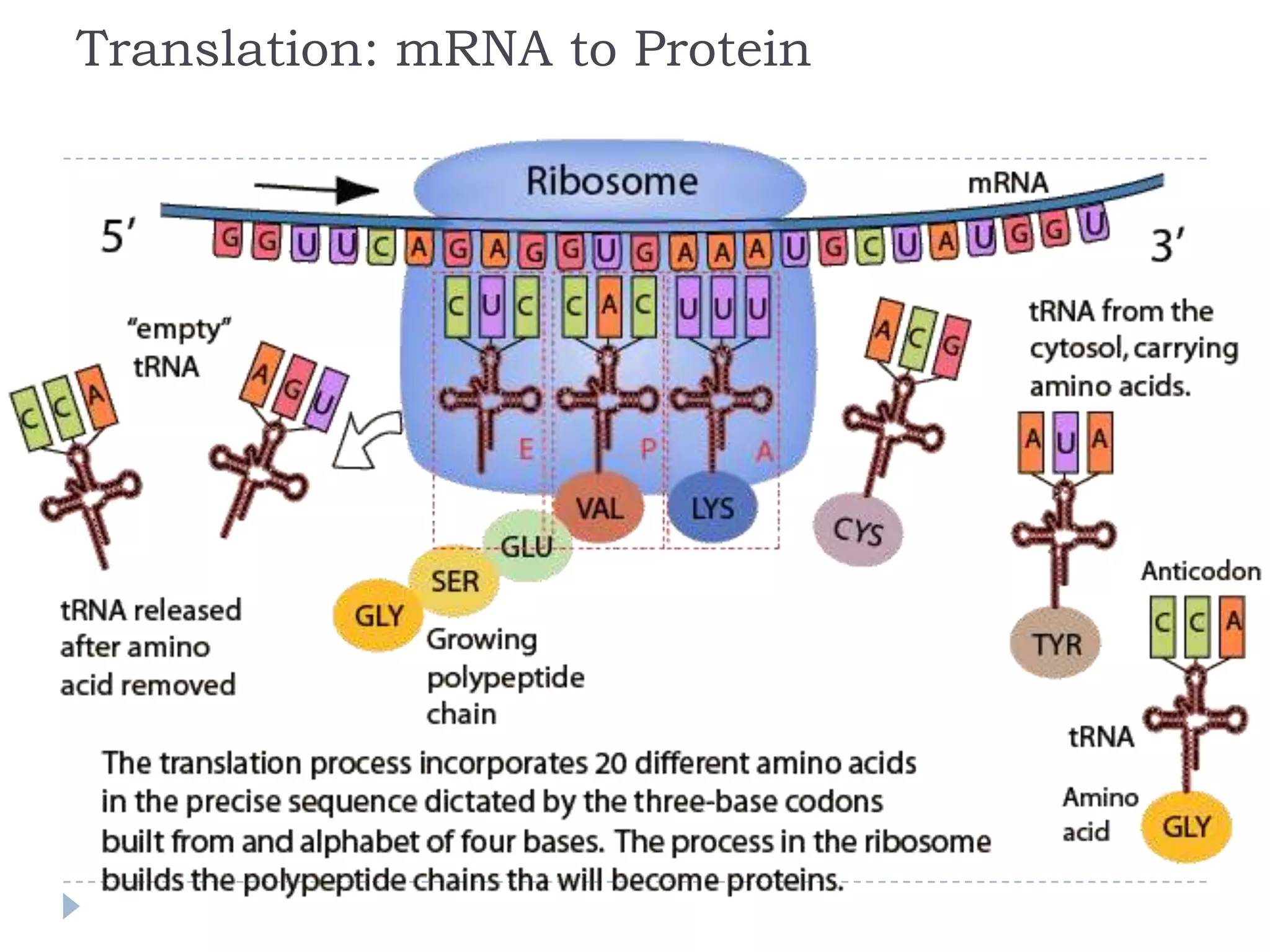
Translation: mRNA to Protein


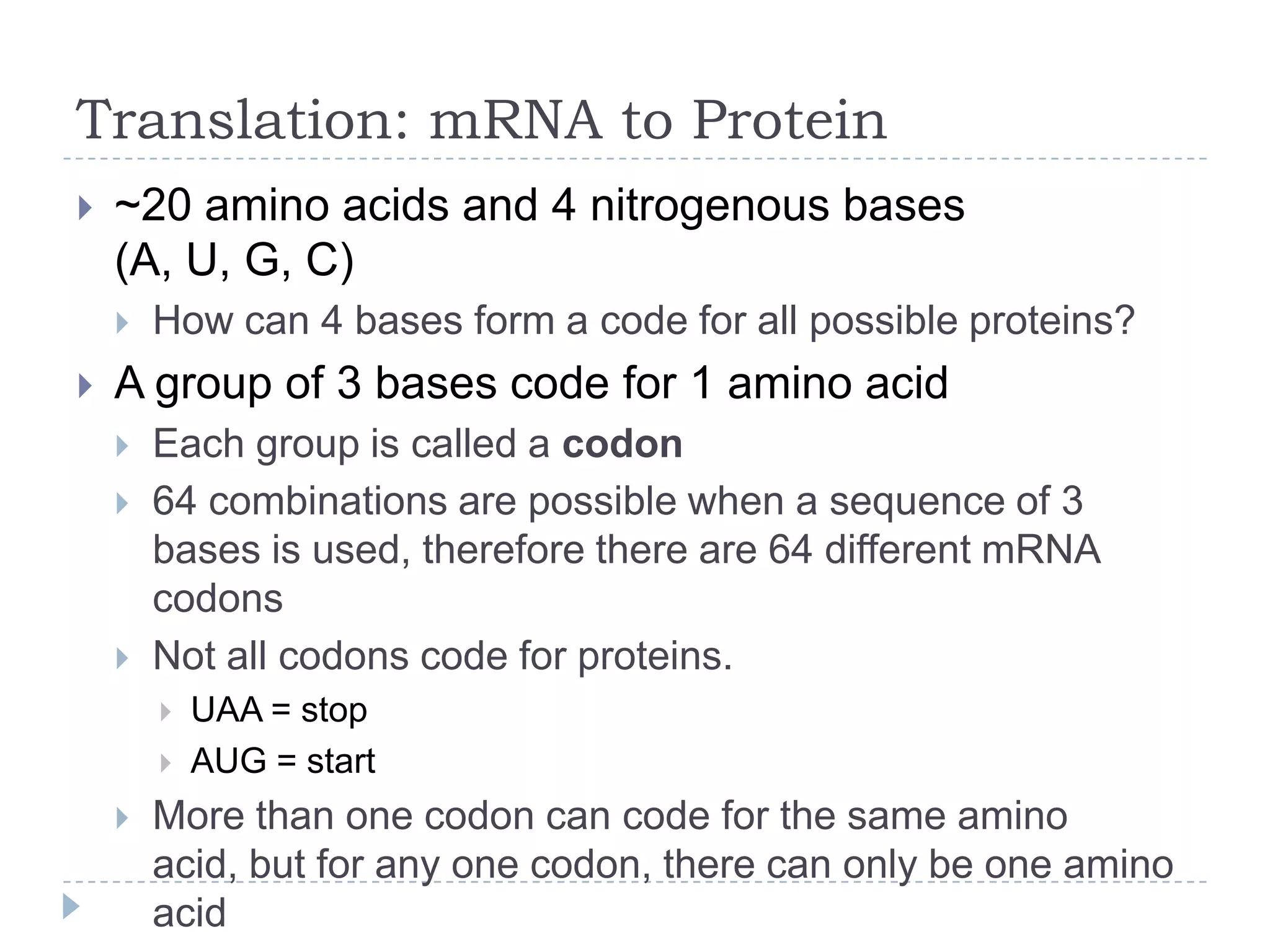
~20 amino acids and 4 nitrogenous bases
(A, U, G, C)




How can 4 bases form a code for all possible proteins?

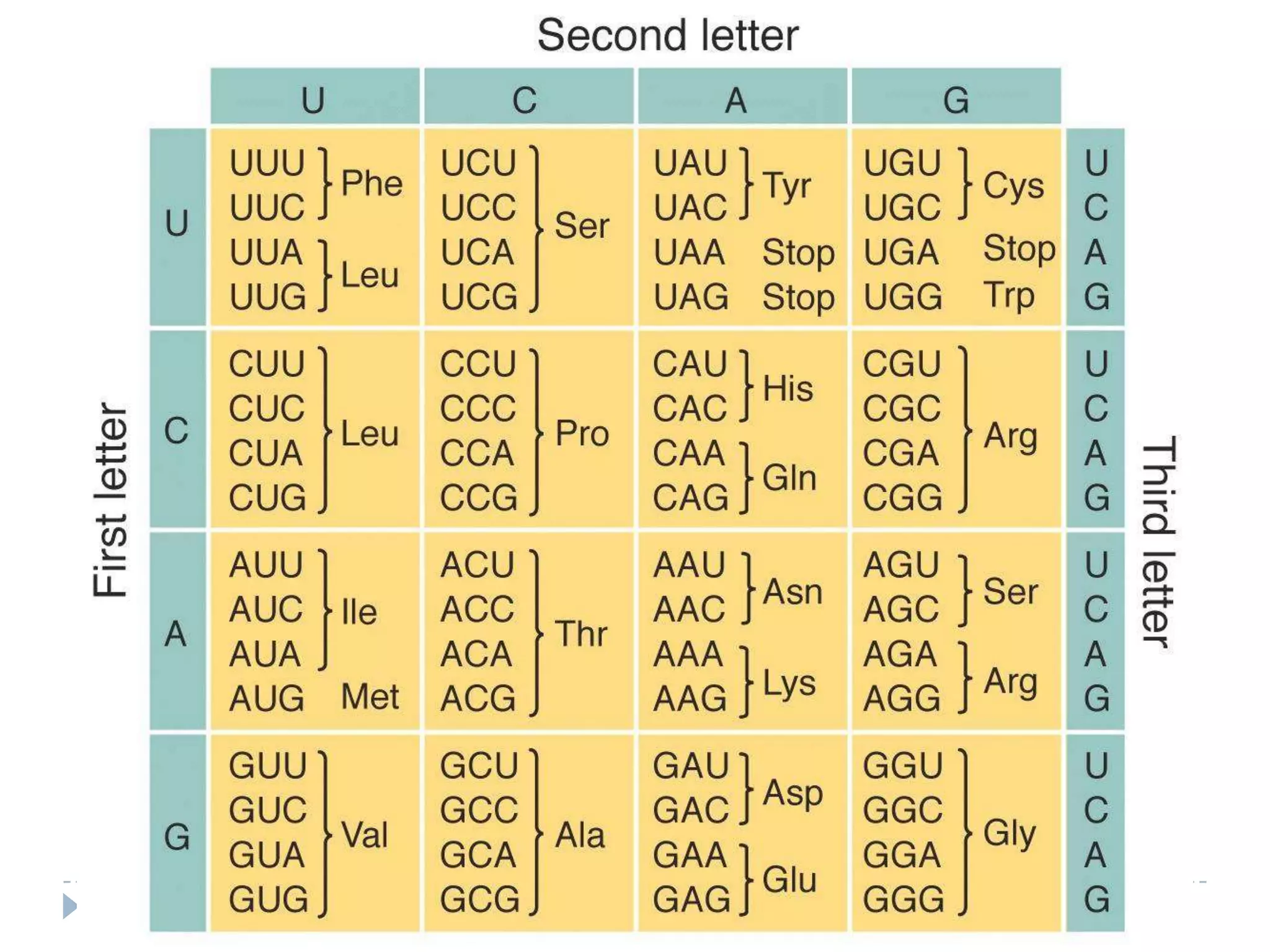
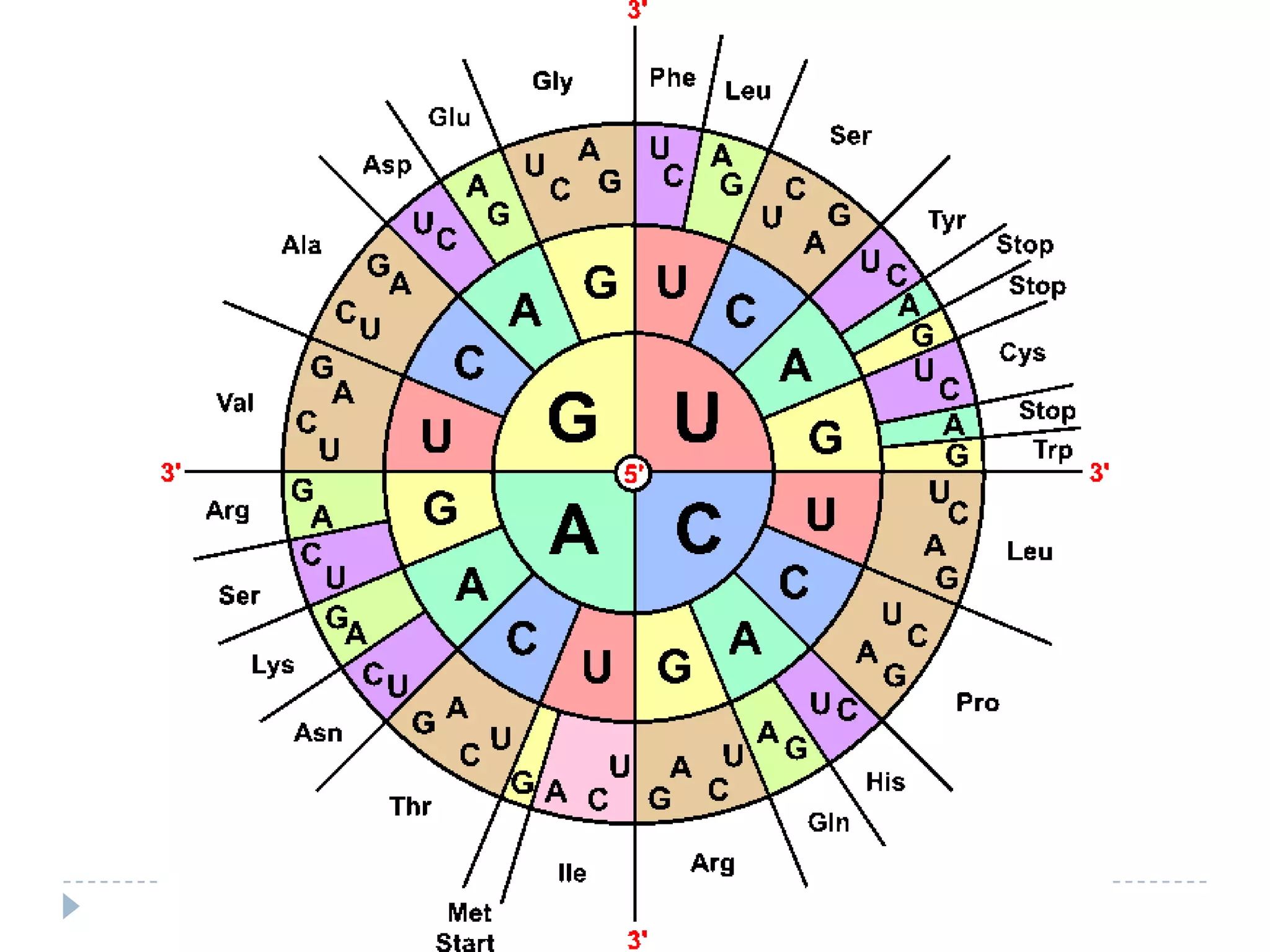
A group of 3 bases code for 1 amino acid





Each group is called a codon
64 combinations are possible when a sequence of 3
bases is used, therefore there are 64 different mRNA
codons
Not all codons code for proteins.





UAA = stop
AUG = start

More than one codon can code for the same amino
acid, but for any one codon, there can only be one amino
acid
Translation: mRNA to Protein
Mutations
Answer this question:


How does DNA encode the characteristics of an
organism?



Each codon in DNA codes for an amino acid (or start/stop) used
to build protein which shapes an organism's characteristics
DNA  mRNA  Protein  Characteristics



A mutation is any change in the genetic code
(nucleotide sequence)



Mutations are random
The Causes of Mutations


DNA fails to copy accurately



External influences can create mutations



Chemicals or radiation break down DNA
When the cell repairs the DNA, it might not do a perfect
job of the repair
Types of Mutations


Substitution



One base is exchanged for another
This will change the codon which could…






Code for a different amino acid and change the protein
Code for the same amino acid and do nothing (silent mutation)
Change the code to ‘stop’ and make an incomplete protein that
will probably not function

Insertion


Extra base pairs are inserted into a new place in the DNA
Types of Mutations


Deletion




A section of DNA is lost, or deleted

Frameshift


Since protein-coding DNA is divided into codons three
bases long, insertions and deletions can ‘shift’ the code
The Effects of Mutations



All cells contain DNA = lots of places for a mutation
to occur
Somatic mutations occur in non-reproductive cells
and won't be passed onto offspring
The Effects of Mutations


Germ line mutations occur in reproductive cells like
sperm and eggs and can be passed to offspring and
has large scale effects on evolution


The mutation could do nothing
The mutation could do something small…



The mutation could have large consequences…





http://evolution.berkeley.edu/evolibrary/article/0_0_0/mutations_
06

08 transcription, translation and mutation

  • 1.
    Transcription, Translation and Mutation • FromDNA to Protein (11.2) • Genetic Changes (11.3)
  • 2.
    Answer these questions:  Whatis coded for in DNA? How is it coded?    What is the primary structure of a protein?   Proteins The sequence of A, T, G, C Sequence of amino acids What are proteins used for?   Structure Controlling the biochemistry of an organism  Enzymes, antibodies
  • 3.
    From DNA toProtein  DNA cannot leave the nucleus  Protein is made at the ribosomes in the cytoplasm and attached to the rough endoplasmic reticulum  Therefore, a message must be sent from the DNA to the ribosome
  • 4.
    From DNA toProtein  The messenger is RNA (mRNA)  DNA  Protein: occurs in 2 steps  Transcription   Making the coded message (mRNA) Translation  Reading the coded message
  • 5.
    How is RNAdifferent from DNA? RNA DNA  Single-stranded  Double-stranded  Sugar = ribose  Sugar = deoxyribose  A, U, G, C  A, T, G C
  • 7.
    3 types ofRibonucleic Acid (RNA)  mRNA    rRNA    Messenger RNA Brings instructions from DNA in the nucleus to the cytoplasm (where ribosomes are found) Ribosomal RNA Part of the ribosome that binds to the mRNA and uses the instructions to assemble the amino acids in the correct order tRNA   Transfer RNA Delivers the amino acids to the ribosome to be assembled into a protein
  • 8.
    Transcription: DNA tomRNA DNA is unzipped mRNA is formed, complementary to one of the strands of DNA 1. 2.  RNA polymerase (enzyme) joins the nucleotides of RNA together
  • 9.
    Transcription The mRNA isprocessed 3. Not all nucleotides in DNA code for making protein    Introns – noncoding sequences Exons– coding sequences Introns are removed and exonsare spliced together For protection from enzymes in the cytoplasm, the ends of the RNA strand are ‘covered’     5’ GTP cap 3’ poly-A tail
  • 10.
    Translation: mRNA toProtein  ~20 amino acids and 4 nitrogenous bases (A, U, G, C)   How can 4 bases form a code for all possible proteins? A group of 3 bases code for 1 amino acid    Each group is called a codon 64 combinations are possible when a sequence of 3 bases is used, therefore there are 64 different mRNA codons Not all codons code for proteins.    UAA = stop AUG = start More than one codon can code for the same amino acid, but for any one codon, there can only be one amino acid
  • 13.
  • 14.
    Mutations Answer this question:  Howdoes DNA encode the characteristics of an organism?   Each codon in DNA codes for an amino acid (or start/stop) used to build protein which shapes an organism's characteristics DNA  mRNA  Protein  Characteristics  A mutation is any change in the genetic code (nucleotide sequence)  Mutations are random
  • 15.
    The Causes ofMutations  DNA fails to copy accurately  External influences can create mutations   Chemicals or radiation break down DNA When the cell repairs the DNA, it might not do a perfect job of the repair
  • 16.
    Types of Mutations  Substitution   Onebase is exchanged for another This will change the codon which could…     Code for a different amino acid and change the protein Code for the same amino acid and do nothing (silent mutation) Change the code to ‘stop’ and make an incomplete protein that will probably not function Insertion  Extra base pairs are inserted into a new place in the DNA
  • 17.
    Types of Mutations  Deletion   Asection of DNA is lost, or deleted Frameshift  Since protein-coding DNA is divided into codons three bases long, insertions and deletions can ‘shift’ the code
  • 18.
    The Effects ofMutations   All cells contain DNA = lots of places for a mutation to occur Somatic mutations occur in non-reproductive cells and won't be passed onto offspring
  • 19.
    The Effects ofMutations  Germ line mutations occur in reproductive cells like sperm and eggs and can be passed to offspring and has large scale effects on evolution  The mutation could do nothing The mutation could do something small…  The mutation could have large consequences…   http://evolution.berkeley.edu/evolibrary/article/0_0_0/mutations_ 06