DNA, mRNA, and Protein SynthesisTAKS Review
DNA stands for Deoxyribonucleic acidFunctions:Store and transmit genetic infoContains the blueprint for making proteinsWhat is DNA?
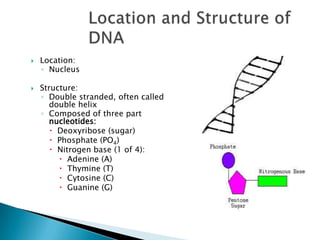
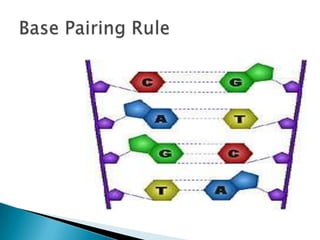
Location and Structure of DNA	Location:Nucleus	Structure:Double stranded, often called double helixComposed of three part nucleotides:Deoxyribose (sugar)Phosphate (PO4)Nitrogen base (1 of 4):Adenine (A)Thymine (T)Cytosine (C)Guanine (G)
Base Pairing Rule
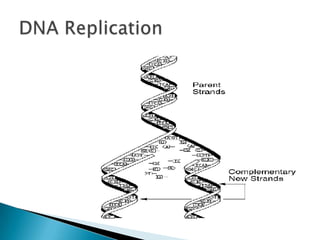
During cell reproduction an exact copy of the parent cell is madeDNA unzips to make two new strands of DNALocation: NucleusDNA Replication
DNA Replication
DNA contains the instructions for building proteinsProteins are made at the ribosomesDNA cannot leave the nucleusHow does DNA’s information get to the ribosome?Making Proteins
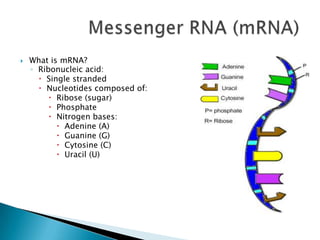
Messenger RNA (mRNA)What is mRNA?Ribonucleic acid:Single strandedNucleotides composed of:Ribose (sugar)PhosphateNitrogen bases:Adenine (A)Guanine (G)Cytosine (C)Uracil (U)
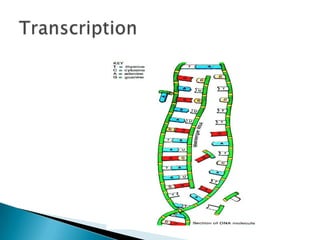
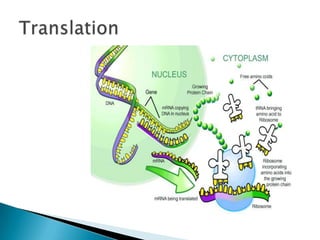
Transcription:  RNA is made from a strand of DNALocation:nucleusmRNA leaves the nucleus and takes the information to the RIBOSOME where a protein will be madeHow does mRNA take DNA’s information to the ribosome?
Transcription
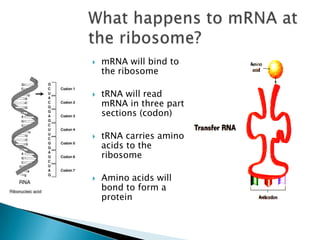
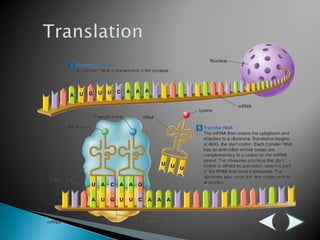
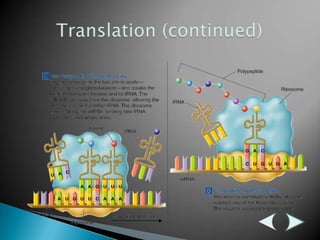
What happens to mRNA at the ribosome?mRNA will bind to the ribosometRNA will read mRNA in three part sections (codon)tRNA carries amino acids to the ribosomeAmino acids will bond to form a protein
Translation
Translation
Translation (continued)
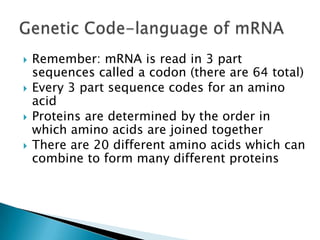
Remember: mRNA is read in 3 part sequences called a codon(there are 64 total)Every 3 part sequence codes for an amino acidProteins are determined by the order in which amino acids are joined togetherThere are 20 different amino acids which can combine to form many different proteinsGenetic Code-language of mRNA
Mutations – are changes in the genetic material.2 Kinds:Gene mutationsChromosomal mutationsMutations
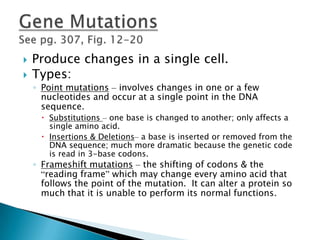
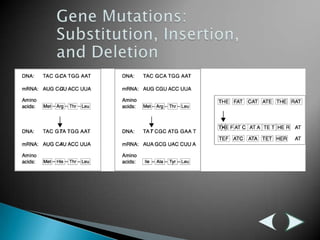
Produce changes in a single cell.Types:Point mutations– involves changes in one or a few nucleotides and occur at a single point in the DNA sequence.Substitutions – one base is changed to another; only affects a single amino acid.Insertions & Deletions– a base is inserted or removed from the DNA sequence; much more dramatic because the genetic code is read in 3-base codons.Frameshift mutations– the shifting of codons & the “reading frame” which may change every amino acid that follows the point of the mutation.  It can alter a protein so much that it is unable to perform its normal functions.Gene MutationsSee pg. 307, Fig. 12-20
Gene Mutations: Substitution, Insertion, and DeletionDeletionInsertionSubstitution

TAKS review BIO 6A 6B 6C

  • 1.
    DNA, mRNA, andProtein SynthesisTAKS Review
  • 2.
    DNA stands forDeoxyribonucleic acidFunctions:Store and transmit genetic infoContains the blueprint for making proteinsWhat is DNA?
  • 3.
    Location and Structureof DNA Location:Nucleus Structure:Double stranded, often called double helixComposed of three part nucleotides:Deoxyribose (sugar)Phosphate (PO4)Nitrogen base (1 of 4):Adenine (A)Thymine (T)Cytosine (C)Guanine (G)
  • 4.
  • 5.
    During cell reproductionan exact copy of the parent cell is madeDNA unzips to make two new strands of DNALocation: NucleusDNA Replication
  • 6.
  • 7.
    DNA contains theinstructions for building proteinsProteins are made at the ribosomesDNA cannot leave the nucleusHow does DNA’s information get to the ribosome?Making Proteins
  • 8.
    Messenger RNA (mRNA)Whatis mRNA?Ribonucleic acid:Single strandedNucleotides composed of:Ribose (sugar)PhosphateNitrogen bases:Adenine (A)Guanine (G)Cytosine (C)Uracil (U)
  • 9.
    Transcription: RNAis made from a strand of DNALocation:nucleusmRNA leaves the nucleus and takes the information to the RIBOSOME where a protein will be madeHow does mRNA take DNA’s information to the ribosome?
  • 10.
  • 11.
    What happens tomRNA at the ribosome?mRNA will bind to the ribosometRNA will read mRNA in three part sections (codon)tRNA carries amino acids to the ribosomeAmino acids will bond to form a protein
  • 12.
  • 13.
  • 14.
  • 15.
    Remember: mRNA isread in 3 part sequences called a codon(there are 64 total)Every 3 part sequence codes for an amino acidProteins are determined by the order in which amino acids are joined togetherThere are 20 different amino acids which can combine to form many different proteinsGenetic Code-language of mRNA
  • 16.
    Mutations – arechanges in the genetic material.2 Kinds:Gene mutationsChromosomal mutationsMutations
  • 17.
    Produce changes ina single cell.Types:Point mutations– involves changes in one or a few nucleotides and occur at a single point in the DNA sequence.Substitutions – one base is changed to another; only affects a single amino acid.Insertions & Deletions– a base is inserted or removed from the DNA sequence; much more dramatic because the genetic code is read in 3-base codons.Frameshift mutations– the shifting of codons & the “reading frame” which may change every amino acid that follows the point of the mutation. It can alter a protein so much that it is unable to perform its normal functions.Gene MutationsSee pg. 307, Fig. 12-20
  • 18.
    Gene Mutations: Substitution,Insertion, and DeletionDeletionInsertionSubstitution