Composition and Specialization of Cell Membrane
Cell Membrane
Cell Membrane
Objectives
ā— What is Cell Membrane
ā— Composition of Cell Membrane
ā— Function of Cell Membrane
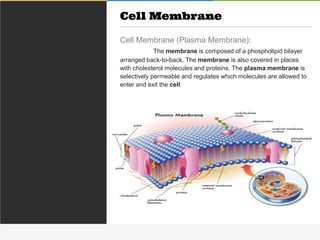
Cell Membrane (Plasma Membrane):
The membrane is composed of a phospholipid bilayer
arranged back-to-back. The membrane is also covered in places
with cholesterol molecules and proteins. The plasma membrane is
selectively permeable and regulates which molecules are allowed to
enter and exit the cell.
Cell Membrane
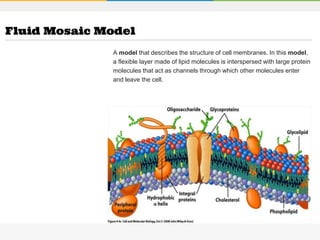
A model that describes the structure of cell membranes. In this model,
a flexible layer made of lipid molecules is interspersed with large protein
molecules that act as channels through which other molecules enter
and leave the cell.
Fluid Mosaic Model
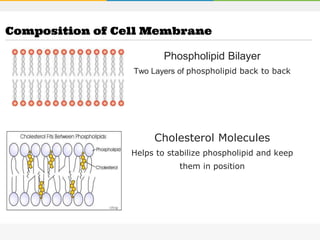
Phospholipid Bilayer
Two Layers of phospholipid back to back
Cholesterol Molecules
Helps to stabilize phospholipid and keep
them in position
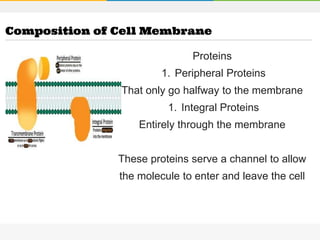
Composition of Cell Membrane
Proteins
1. Peripheral Proteins
That only go halfway to the membrane
1. Integral Proteins
Entirely through the membrane
These proteins serve a channel to allow
the molecule to enter and leave the cell
Composition of Cell Membrane
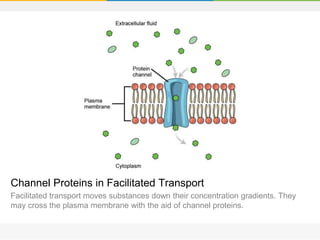
Channel Proteins in Facilitated Transport
Facilitated transport moves substances down their concentration gradients. They
may cross the plasma membrane with the aid of channel proteins.
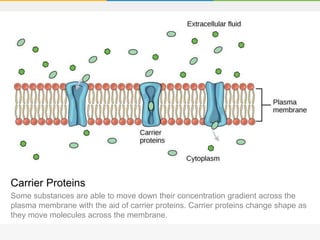
Carrier Proteins
Some substances are able to move down their concentration gradient across the
plasma membrane with the aid of carrier proteins. Carrier proteins change shape as
they move molecules across the membrane.
Main Function
ā— to maintain the physical integrity of the cell - that is
to mechanically enclose the contents of the cell,
and also
ā— to control the movement of particles e.g. ions or
molecules, into and out of the cell
Protection
• The cell membrane protects the cell from some
harmful chemicals in its external environment.
• It also protects the cell from loss of useful
biological macromolecules held within the cell by
its plasma membrane.
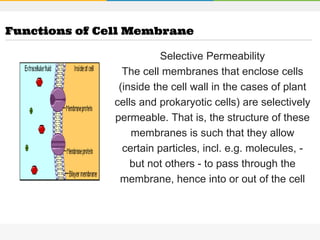
Functions of Cell Membrane
Selective Permeability
The cell membranes that enclose cells
(inside the cell wall in the cases of plant
cells and prokaryotic cells) are selectively
permeable. That is, the structure of these
membranes is such that they allow
certain particles, incl. e.g. molecules, -
but not others - to pass through the
membrane, hence into or out of the cell
Functions of Cell Membrane
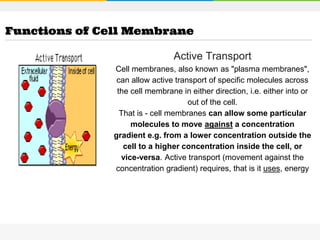
Active Transport
Cell membranes, also known as "plasma membranes",
can allow active transport of specific molecules across
the cell membrane in either direction, i.e. either into or
out of the cell.
That is - cell membranes can allow some particular
molecules to move against a concentration
gradient e.g. from a lower concentration outside the
cell to a higher concentration inside the cell, or
vice-versa. Active transport (movement against the
concentration gradient) requires, that is it uses, energy
Functions of Cell Membrane
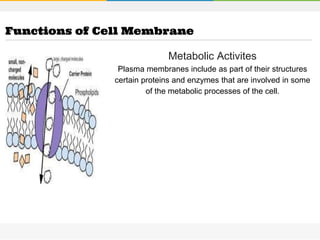
Metabolic Activites
Plasma membranes include as part of their structures
certain proteins and enzymes that are involved in some
of the metabolic processes of the cell.
Functions of Cell Membrane
Any Questions ?
Thanks for listening ;)

Cell membrane

  • 1.
    Composition and Specializationof Cell Membrane Cell Membrane
  • 2.
    Cell Membrane Objectives ā— Whatis Cell Membrane ā— Composition of Cell Membrane ā— Function of Cell Membrane
  • 3.
    Cell Membrane (PlasmaMembrane): The membrane is composed of a phospholipid bilayer arranged back-to-back. The membrane is also covered in places with cholesterol molecules and proteins. The plasma membrane is selectively permeable and regulates which molecules are allowed to enter and exit the cell. Cell Membrane
  • 4.
    A model thatdescribes the structure of cell membranes. In this model, a flexible layer made of lipid molecules is interspersed with large protein molecules that act as channels through which other molecules enter and leave the cell. Fluid Mosaic Model
  • 5.
    Phospholipid Bilayer Two Layersof phospholipid back to back Cholesterol Molecules Helps to stabilize phospholipid and keep them in position Composition of Cell Membrane
  • 6.
    Proteins 1. Peripheral Proteins Thatonly go halfway to the membrane 1. Integral Proteins Entirely through the membrane These proteins serve a channel to allow the molecule to enter and leave the cell Composition of Cell Membrane
  • 7.
    Channel Proteins inFacilitated Transport Facilitated transport moves substances down their concentration gradients. They may cross the plasma membrane with the aid of channel proteins.
  • 8.
    Carrier Proteins Some substancesare able to move down their concentration gradient across the plasma membrane with the aid of carrier proteins. Carrier proteins change shape as they move molecules across the membrane.
  • 9.
    Main Function ā— tomaintain the physical integrity of the cell - that is to mechanically enclose the contents of the cell, and also ā— to control the movement of particles e.g. ions or molecules, into and out of the cell Protection • The cell membrane protects the cell from some harmful chemicals in its external environment. • It also protects the cell from loss of useful biological macromolecules held within the cell by its plasma membrane. Functions of Cell Membrane
  • 10.
    Selective Permeability The cellmembranes that enclose cells (inside the cell wall in the cases of plant cells and prokaryotic cells) are selectively permeable. That is, the structure of these membranes is such that they allow certain particles, incl. e.g. molecules, - but not others - to pass through the membrane, hence into or out of the cell Functions of Cell Membrane
  • 11.
    Active Transport Cell membranes,also known as "plasma membranes", can allow active transport of specific molecules across the cell membrane in either direction, i.e. either into or out of the cell. That is - cell membranes can allow some particular molecules to move against a concentration gradient e.g. from a lower concentration outside the cell to a higher concentration inside the cell, or vice-versa. Active transport (movement against the concentration gradient) requires, that is it uses, energy Functions of Cell Membrane
  • 12.
    Metabolic Activites Plasma membranesinclude as part of their structures certain proteins and enzymes that are involved in some of the metabolic processes of the cell. Functions of Cell Membrane
  • 13.
    Any Questions ? Thanksfor listening ;)