Engineering
Graphics
Course No. ME 193
Projections
of
SECTIONAL VIEWS
CONTENTS
2. TYPES OF SECTIONING
3. FULL SECTIONAL VIEWS
4. H A L F S E C T I O N A L V I E W S
5. O F F S E T S E C T I O N A L V I E W S
6. PARTS NOT SECTIONED
7. H A T C H I N G
1. SECTIONED VIEWS
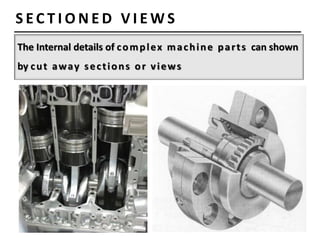
S E C T I O N E D V I E W S
The Internal details of complex machine parts can shown
by cut away sections or views
S E C T I O N A L V I E W S
• The external features of an object can be
shown fully in Orthographic Views.
• However, the internal details can not be shown
clearly by means of hidden lines.
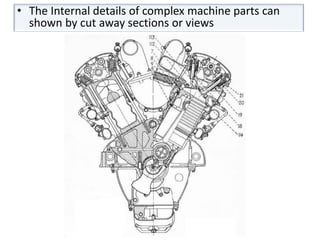
• The Internal details of complex machine parts
can shown by cut away sections or views
• The Internal details of complex machine parts can
shown by cut away sections or views
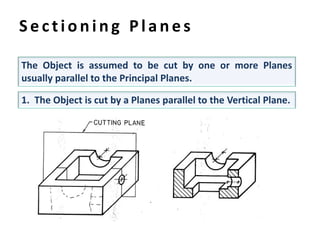
Se ction in g Plan e s
The Object is assumed to be cut by one or more Planes
usually parallel to the Principal Planes.
1. The Object is cut by a Planes parallel to the Vertical Plane.
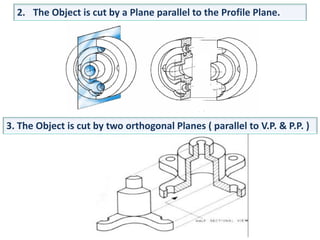
2. The Object is cut by a Plane parallel to the Profile Plane.
3. The Object is cut by two orthogonal Planes ( parallel to V.P. & P.P. )
TYPES OF SEC TIONS
1. Full Sectional Views
2. Half Sectional Views
3. Offset sectional Views
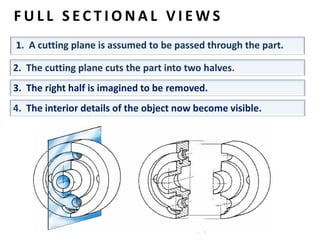
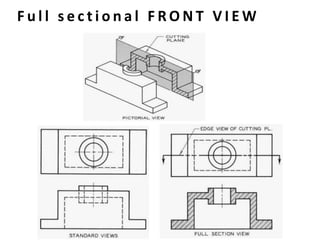
1. A cutting plane is assumed to be passed through the part.
3. The right half is imagined to be removed.
4. The interior details of the object now become visible.
2. The cutting plane cuts the part into two halves.
F U L L S E C T I O N A L V I E W S
F u l l S e c t i o n a l E N D V I E W
The interior details of the object become visible in
sectioned views.
F u l l s e c t i o n a l F R O N T V I E W
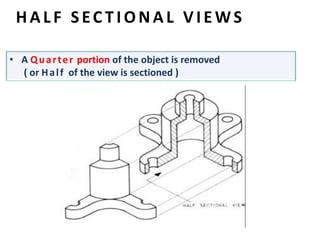
HA L F SEC TIONA L VIEWS
• A Quarter portion of the object is removed
( or Half of the view is sectioned )
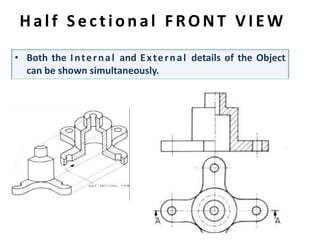
Half Sectional FRONT VIEW
• Both the Internal and External details of the Object
can be shown simultaneously.
H a l f S e c t i o n a l E N D V I E W / TO P
V I E W
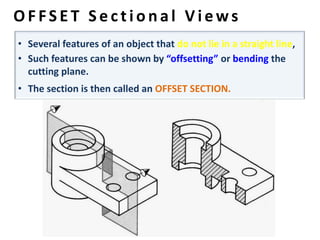
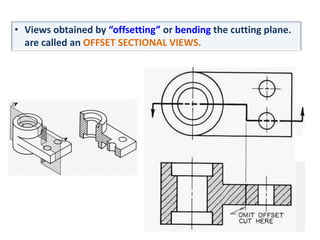
• Several features of an object that do not lie in a straight line,
• Such features can be shown by offsetting or bending the
cutting plane.
• The section is then called an OFFSET SECTION.
O F FS E T S e c t i o n a l V i ews
• Views obtained by offsetting or bending the cutting plane.
are called an OFFSET SECTIONAL VIEWS.
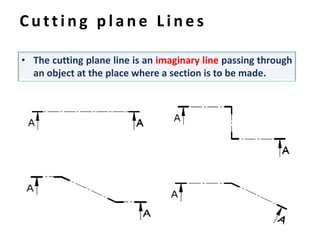
C u tt i n g p l a n e L i n e s
• The cutting plane line is an imaginary line passing through
an object at the place where a section is to be made.
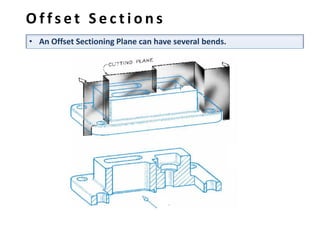
O f f s e t S e c t i o n s
• An Offset Sectioning Plane can have several bends.
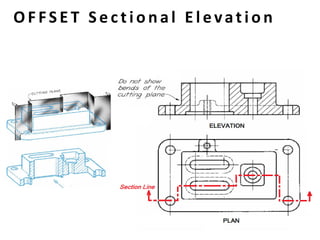
O F FS E T S e c t i o n a l E l evat i o n
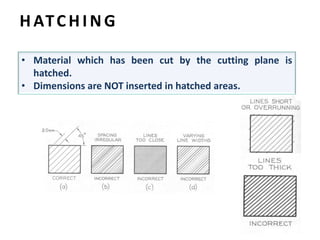
HATCHING
• Material which has been cut by the cutting plane is
hatched.
• Dimensions are NOT inserted in hatched areas.
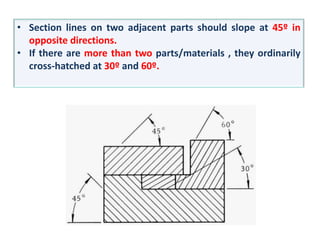
• Section lines on two adjacent parts should slope at 45º in
opposite directions.
• If there are more than two parts/materials , they ordinarily
cross-hatched at 30º and 60º.
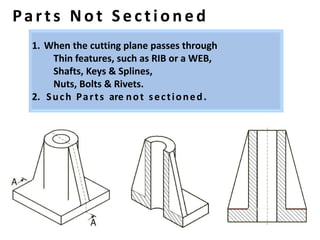
Parts Not Sectioned
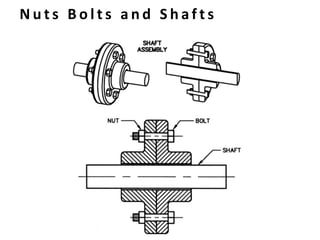
1. When the cutting plane passes through
Thin features, such as RIB or a WEB,
Shafts, Keys & Splines,
Nuts, Bolts & Rivets.
2. Such Parts are not sectioned.
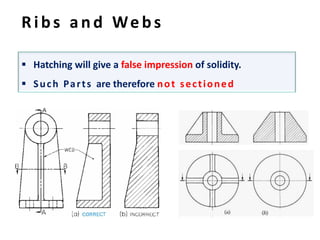
Ribs an d We bs
 Hatching will give a false impression of solidity.
 Such Parts are therefore not sectioned
N u t s B o l t s a n d S h a f t s
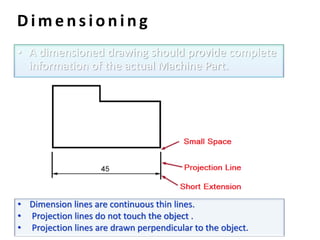
D im e n s ion in g
• A dimensioned drawing should provide complete
information of the actual Machine Part.
• Dimension lines are continuous thin lines.
• Projection lines do not touch the object .
• Projection lines are drawn perpendicular to the object.
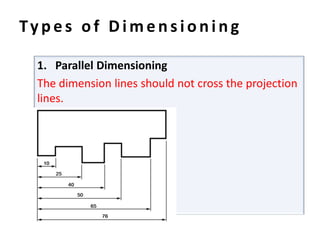
Typ e s of D im e n s ion in g
1. Parallel Dimensioning
The dimension lines should not cross the projection
lines.
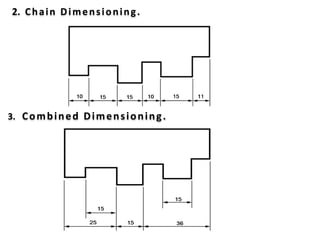
2. Chain Dimensioning.
3. Combined Dimensioning.
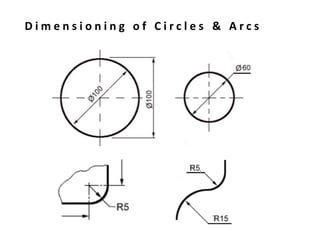
D i m e n s i o n i n g o f C i r c l e s & A r c s

projection of Sectional view-engineering drawing b.tech

  • 1.
    Engineering Graphics Course No. ME193 Projections of SECTIONAL VIEWS
  • 2.
    CONTENTS 2. TYPES OFSECTIONING 3. FULL SECTIONAL VIEWS 4. H A L F S E C T I O N A L V I E W S 5. O F F S E T S E C T I O N A L V I E W S 6. PARTS NOT SECTIONED 7. H A T C H I N G 1. SECTIONED VIEWS
  • 3.
    S E CT I O N E D V I E W S The Internal details of complex machine parts can shown by cut away sections or views
  • 4.
    S E CT I O N A L V I E W S • The external features of an object can be shown fully in Orthographic Views. • However, the internal details can not be shown clearly by means of hidden lines. • The Internal details of complex machine parts can shown by cut away sections or views
  • 5.
    • The Internaldetails of complex machine parts can shown by cut away sections or views
  • 6.
    Se ction ing Plan e s The Object is assumed to be cut by one or more Planes usually parallel to the Principal Planes. 1. The Object is cut by a Planes parallel to the Vertical Plane.
  • 7.
    2. The Objectis cut by a Plane parallel to the Profile Plane. 3. The Object is cut by two orthogonal Planes ( parallel to V.P. & P.P. )
  • 8.
    TYPES OF SECTIONS 1. Full Sectional Views 2. Half Sectional Views 3. Offset sectional Views
  • 9.
    1. A cuttingplane is assumed to be passed through the part. 3. The right half is imagined to be removed. 4. The interior details of the object now become visible. 2. The cutting plane cuts the part into two halves. F U L L S E C T I O N A L V I E W S
  • 10.
    F u ll S e c t i o n a l E N D V I E W The interior details of the object become visible in sectioned views.
  • 11.
    F u ll s e c t i o n a l F R O N T V I E W
  • 12.
    HA L FSEC TIONA L VIEWS • A Quarter portion of the object is removed ( or Half of the view is sectioned )
  • 13.
    Half Sectional FRONTVIEW • Both the Internal and External details of the Object can be shown simultaneously.
  • 14.
    H a lf S e c t i o n a l E N D V I E W / TO P V I E W
  • 15.
    • Several featuresof an object that do not lie in a straight line, • Such features can be shown by offsetting or bending the cutting plane. • The section is then called an OFFSET SECTION. O F FS E T S e c t i o n a l V i ews
  • 16.
    • Views obtainedby offsetting or bending the cutting plane. are called an OFFSET SECTIONAL VIEWS.
  • 17.
    C u tti n g p l a n e L i n e s • The cutting plane line is an imaginary line passing through an object at the place where a section is to be made.
  • 18.
    O f fs e t S e c t i o n s • An Offset Sectioning Plane can have several bends.
  • 19.
    O F FSE T S e c t i o n a l E l evat i o n
  • 20.
    HATCHING • Material whichhas been cut by the cutting plane is hatched. • Dimensions are NOT inserted in hatched areas.
  • 21.
    • Section lineson two adjacent parts should slope at 45º in opposite directions. • If there are more than two parts/materials , they ordinarily cross-hatched at 30º and 60º.
  • 22.
    Parts Not Sectioned 1.When the cutting plane passes through Thin features, such as RIB or a WEB, Shafts, Keys & Splines, Nuts, Bolts & Rivets. 2. Such Parts are not sectioned.
  • 23.
    Ribs an dWe bs  Hatching will give a false impression of solidity.  Such Parts are therefore not sectioned
  • 24.
    N u ts B o l t s a n d S h a f t s
  • 25.
    D im en s ion in g • A dimensioned drawing should provide complete information of the actual Machine Part. • Dimension lines are continuous thin lines. • Projection lines do not touch the object . • Projection lines are drawn perpendicular to the object.
  • 26.
    Typ e sof D im e n s ion in g 1. Parallel Dimensioning The dimension lines should not cross the projection lines.
  • 27.
    2. Chain Dimensioning. 3.Combined Dimensioning.
  • 28.
    D i me n s i o n i n g o f C i r c l e s & A r c s