Types of Sectioning
M/C Drawing and CAD
Rahul M. Chanmanwar
Mechanical Department
WCE, Sangli.
Sectioning
Summary
Sectional Views
Types of Sections
⮚ Full section
⮚ Half section
⮚ Offset section
⮚ Aligned section
⮚ Rib and web sections
⮚ Broken section
⮚ Removed section
⮚ Revolved section
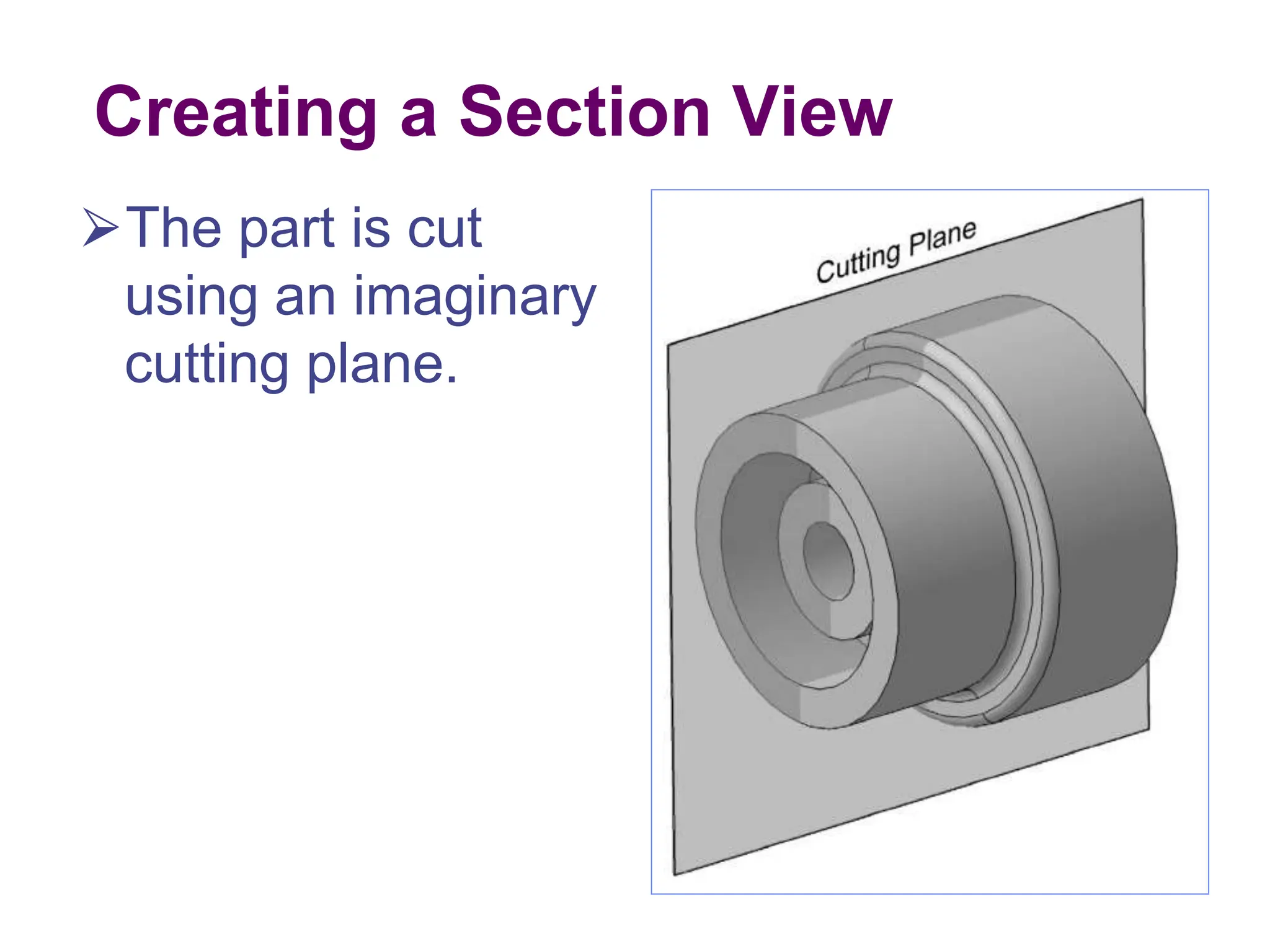
Creating a Section View
⮚The part is cut
using an imaginary
cutting plane.
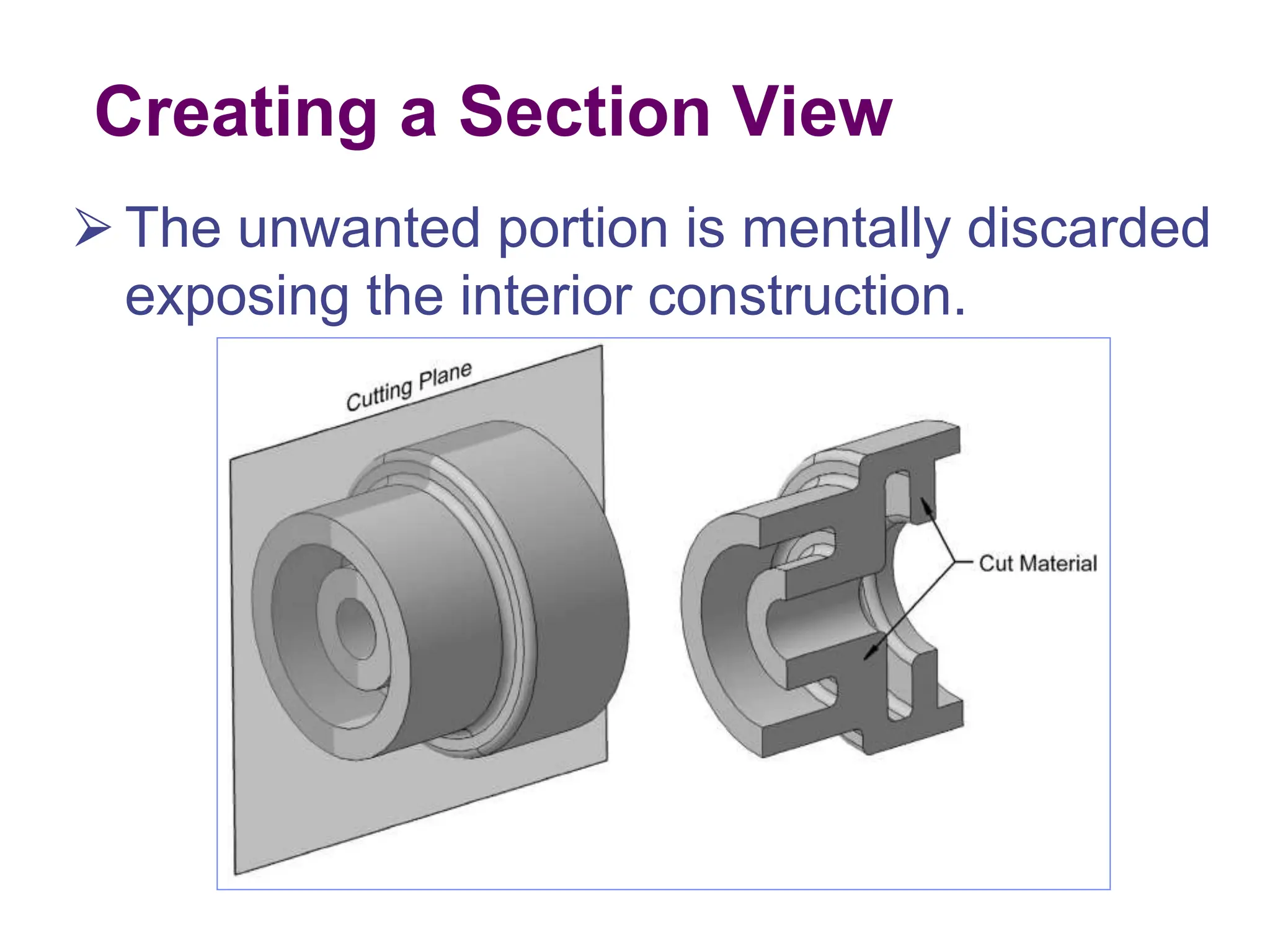
Creating a Section View
⮚The unwanted portion is mentally discarded
exposing the interior construction.
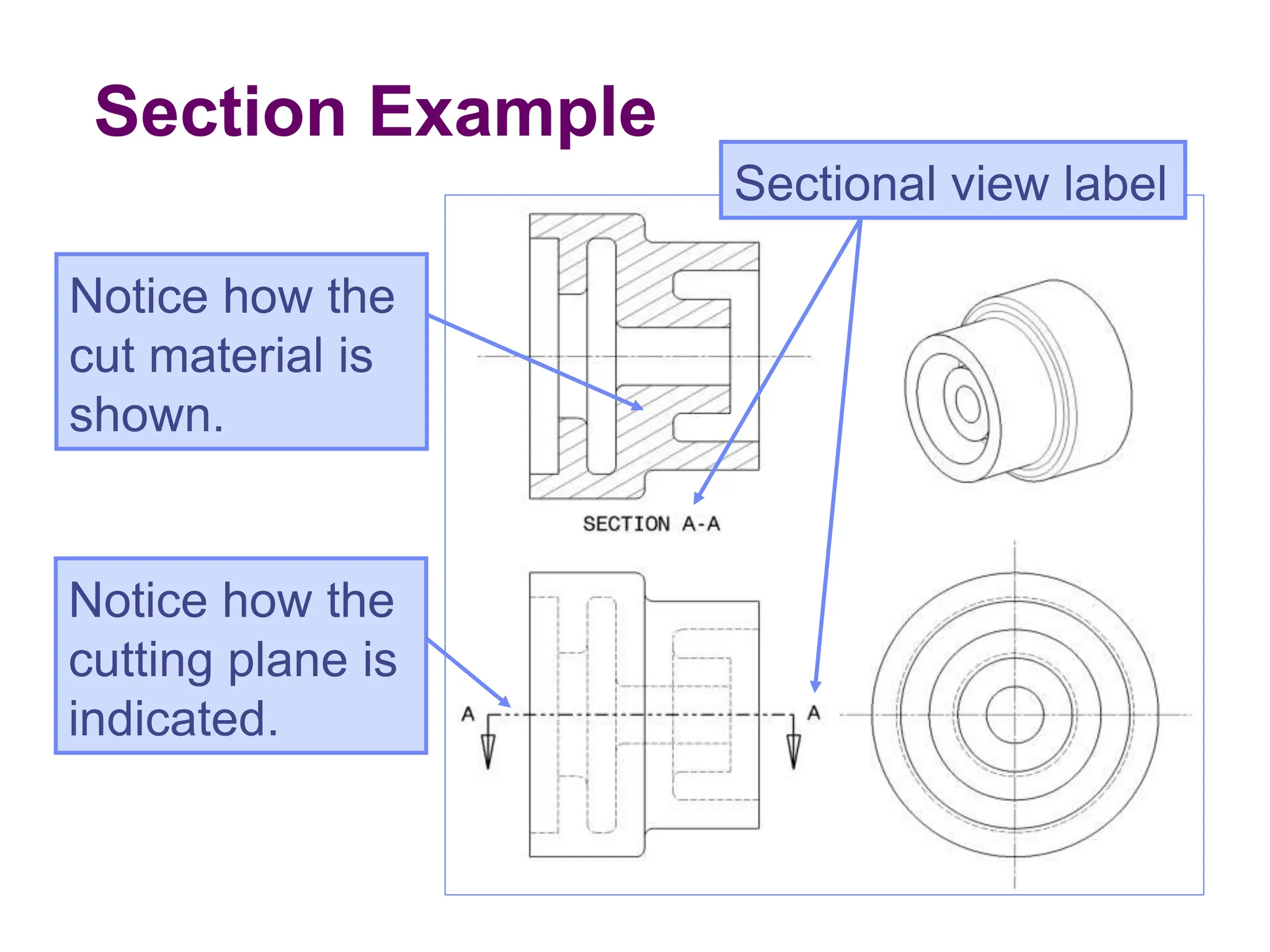
Section Example
Notice how the
cutting plane is
indicated.
Notice how the
cut material is
shown.
Sectional view label
Lines Used in Section Views
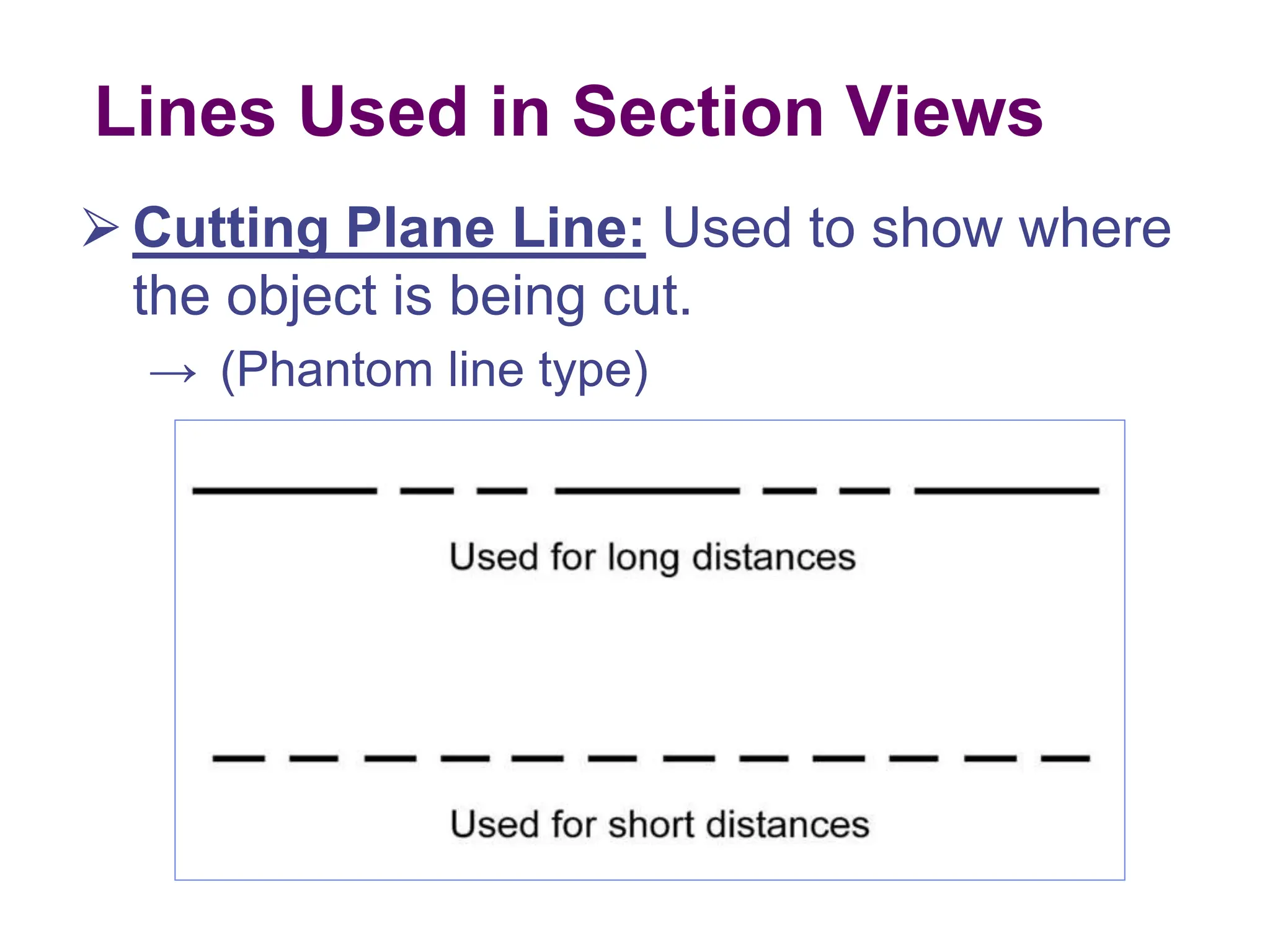
⮚Cutting Plane Line: Used to show where
the object is being cut.
→ (Phantom line type)
Lines Used in Section Views
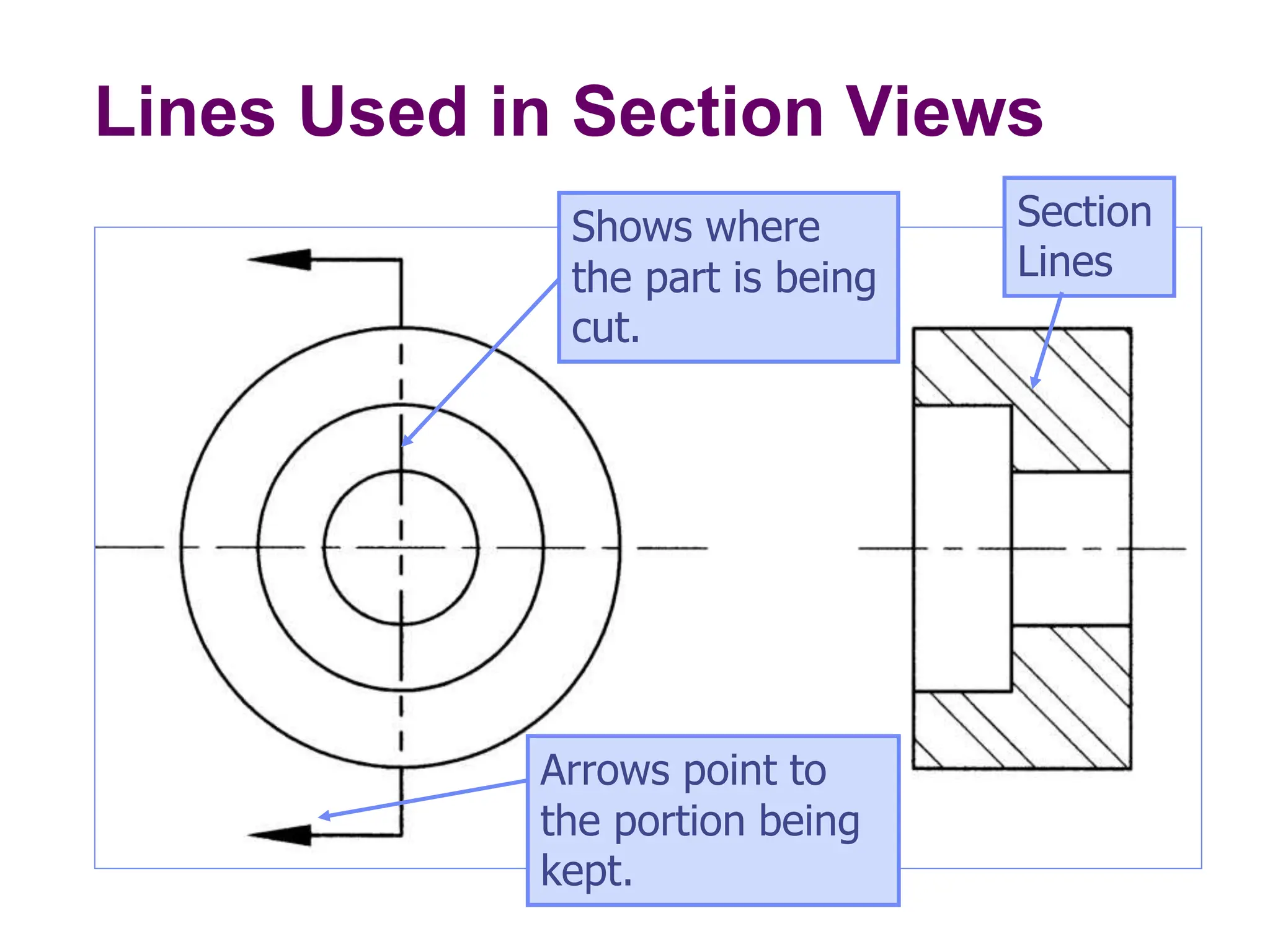
Shows where
the part is being
cut.
Arrows point to
the portion being
kept.
Section
Lines
Lines Used in Section Views
⮚Section Lines: Section lines are used to
indicate where the cutting plane cuts the
material.
→ Section lines are thin lines.
→ Section line symbols are chosen according
to the material of the object
→ Section lines are generally drawn at a 45°
angle.
Lines Used in Section Views
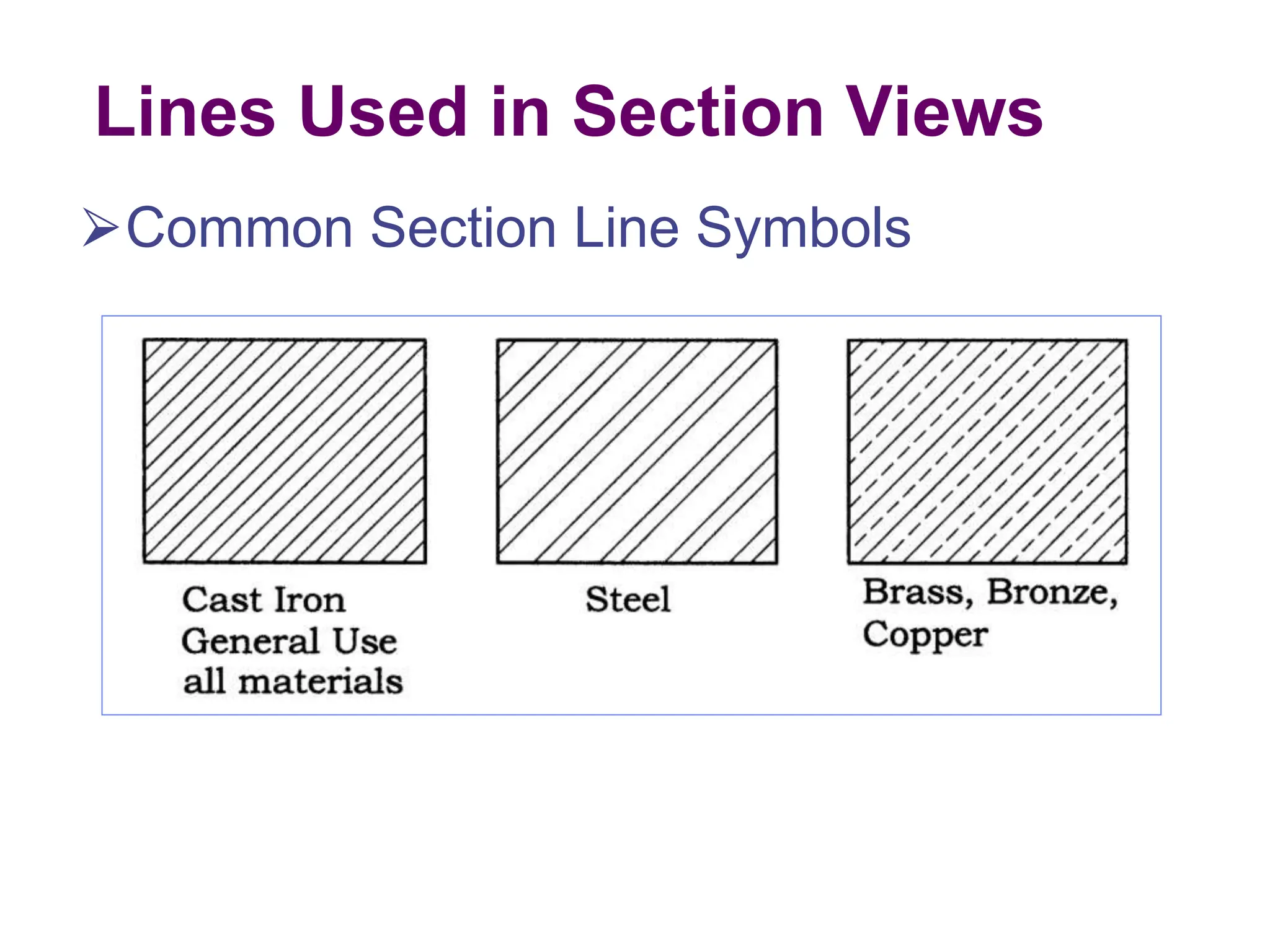
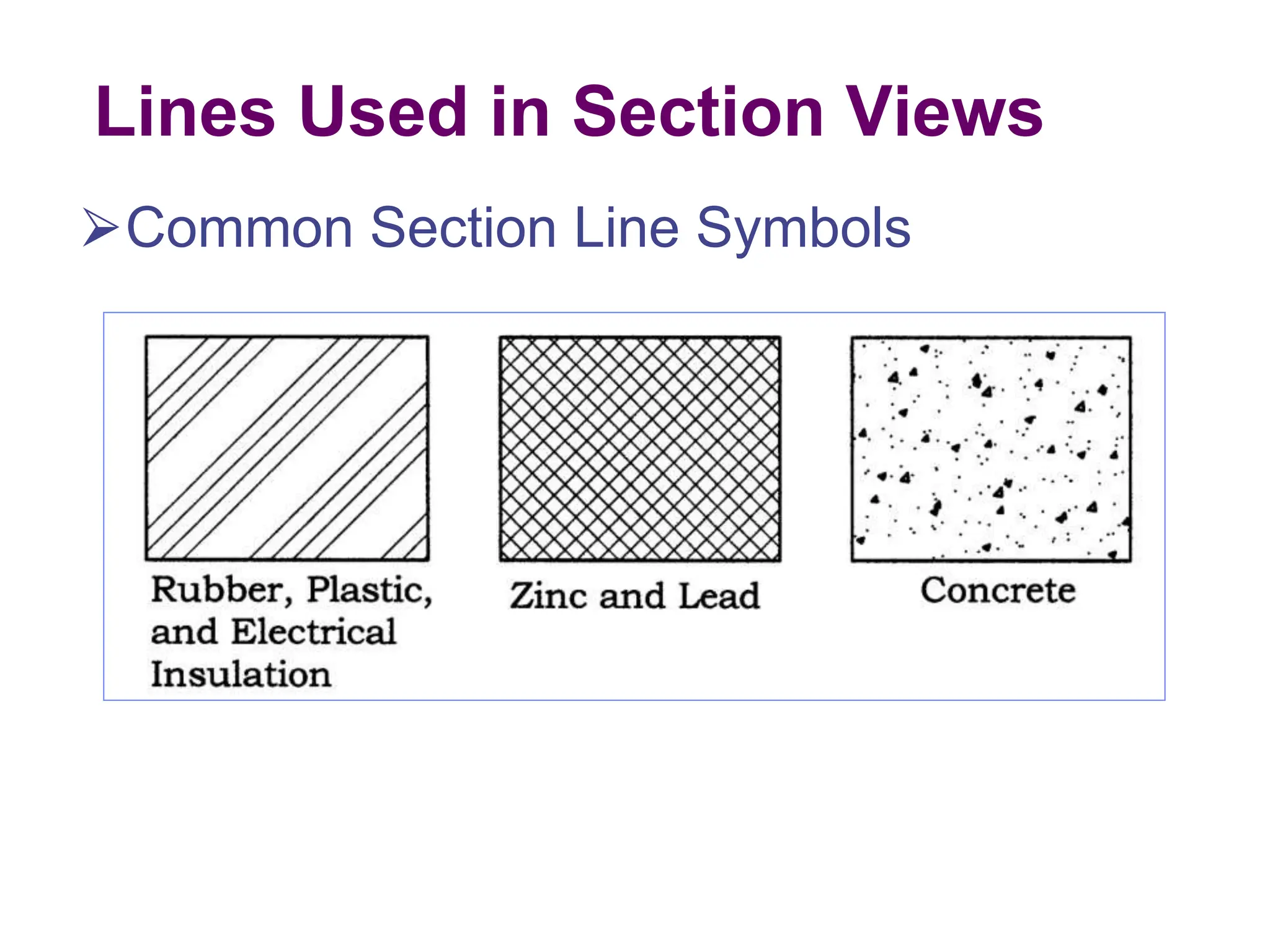
⮚Common Section Line Symbols
Lines Used in Section Views
⮚Common Section Line Symbols
Rules of Sectioning
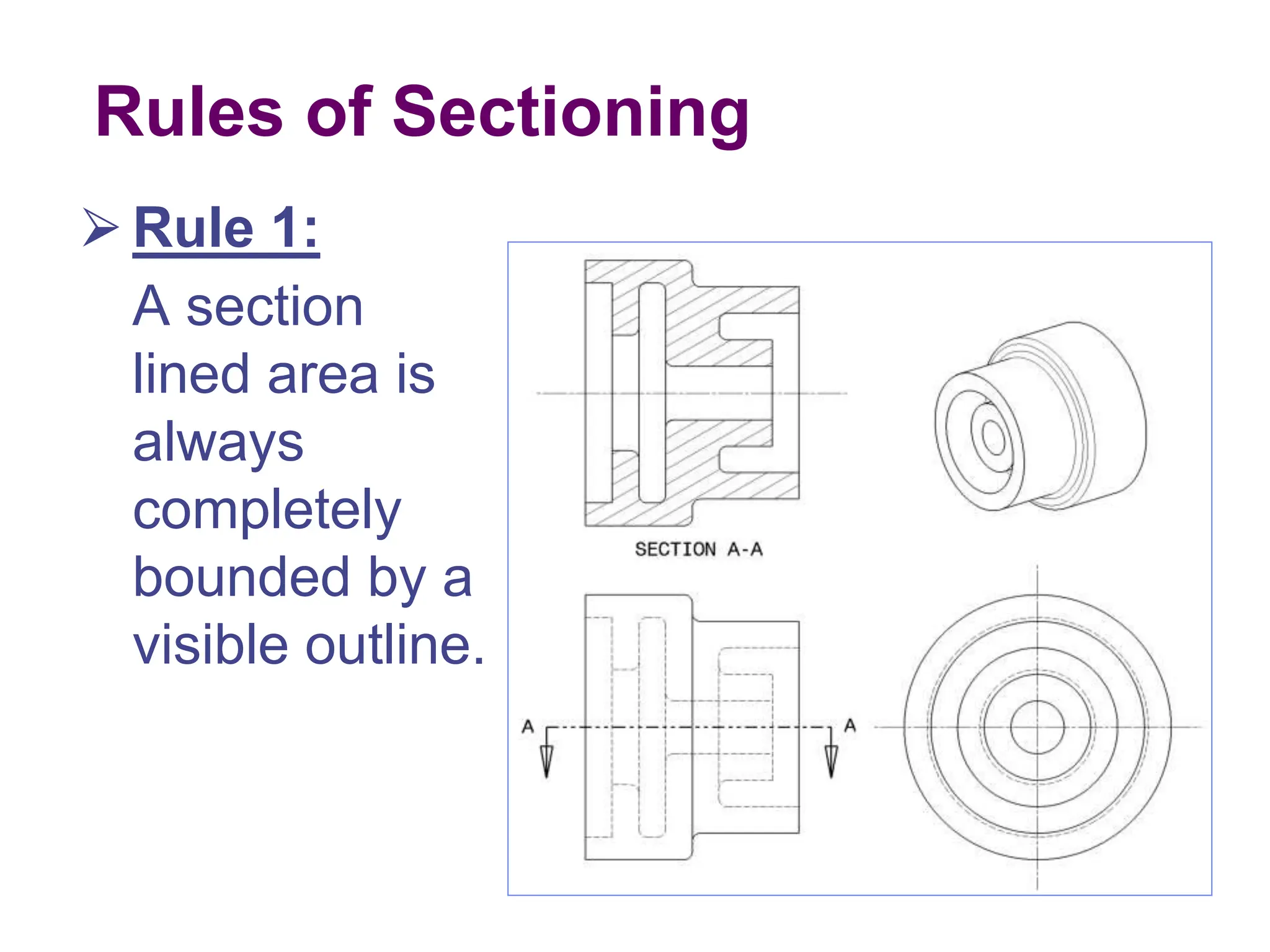
⮚Rule 1:
A section
lined area is
always
completely
bounded by a
visible outline.
Rules of Sectioning
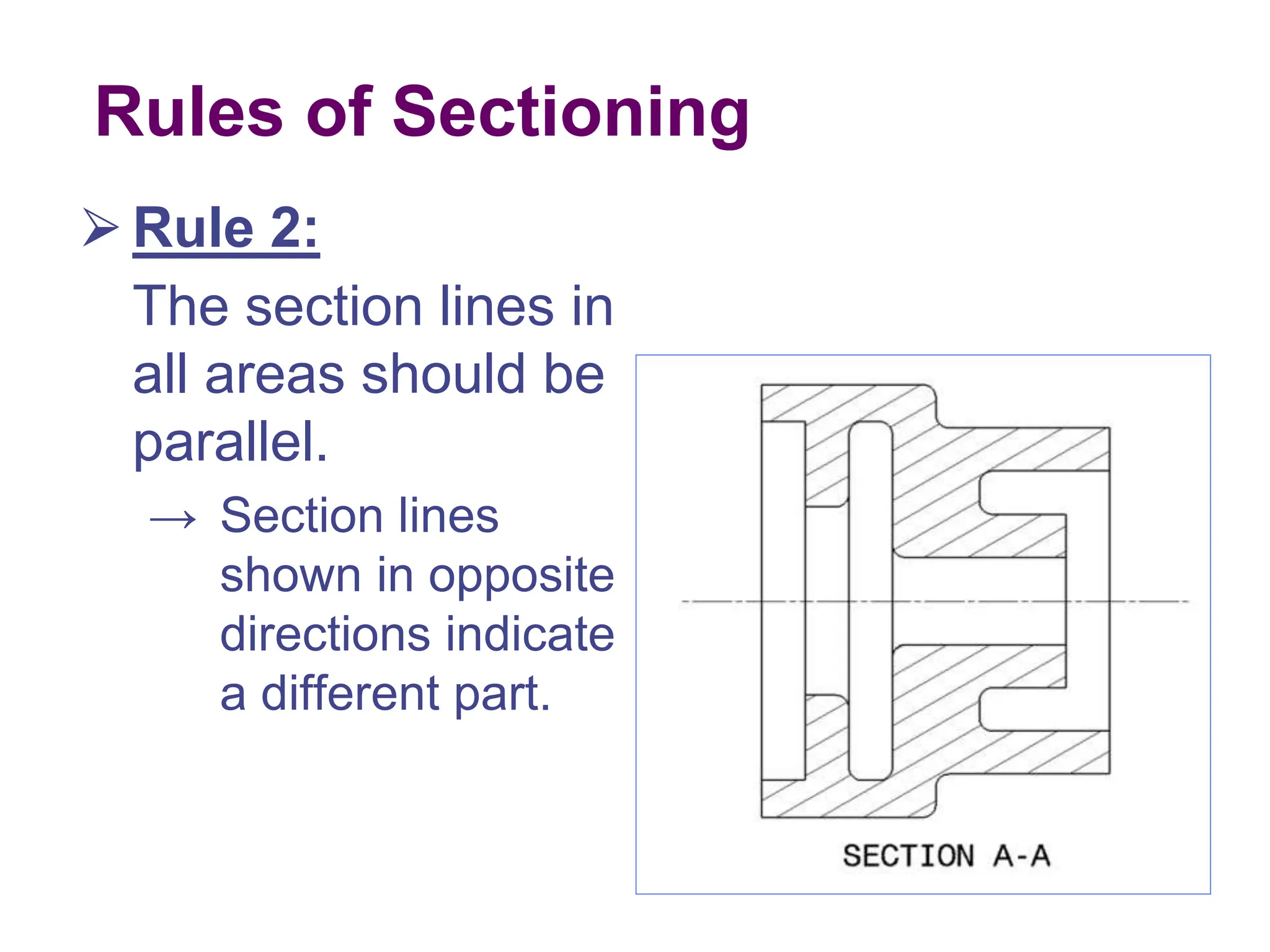
⮚Rule 2:
The section lines in
all areas should be
parallel.
→ Section lines
shown in opposite
directions indicate
a different part.
Rules of Sectioning
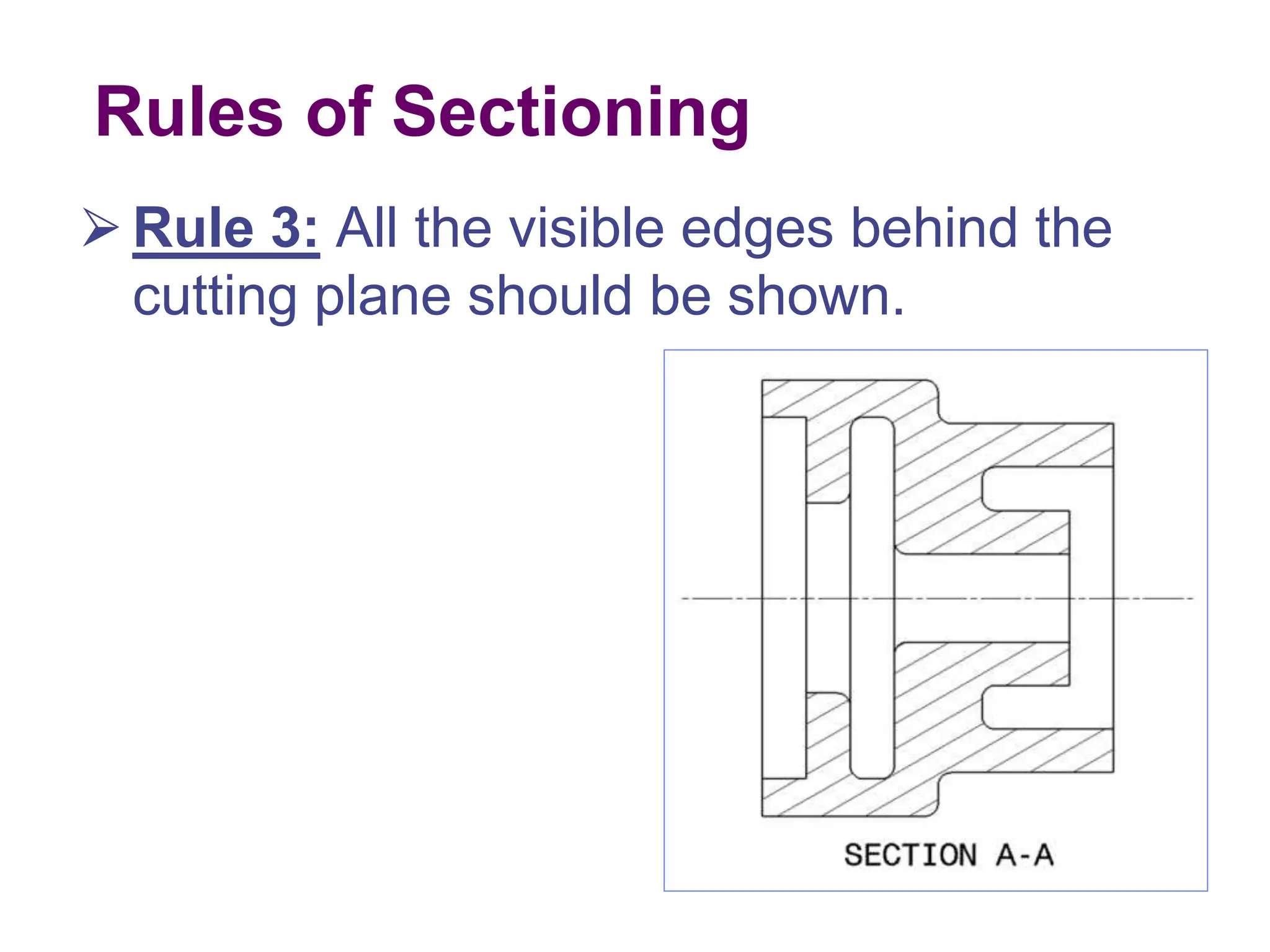
⮚Rule 3: All the visible edges behind the
cutting plane should be shown.
Rules of Sectioning
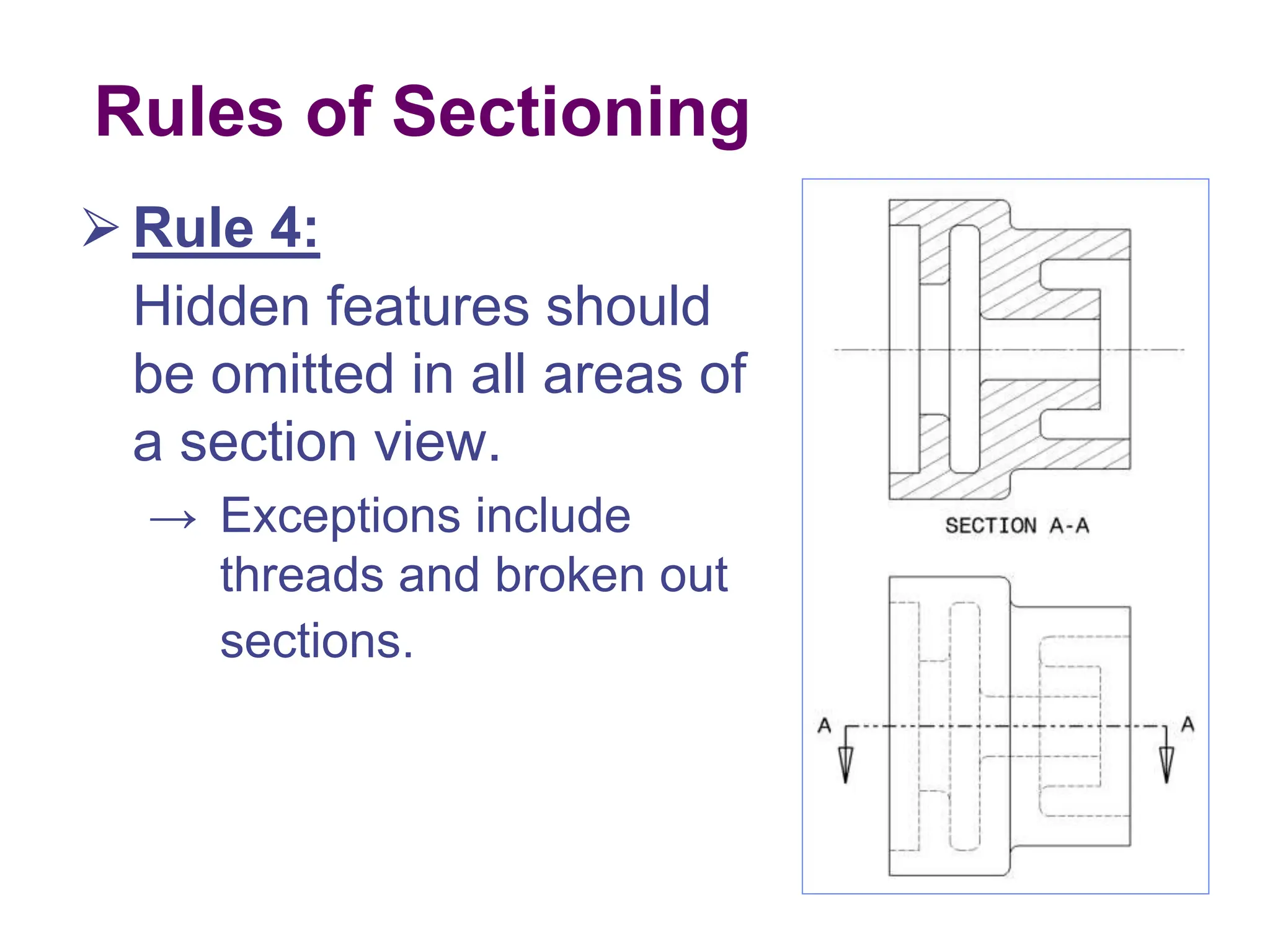
⮚Rule 4:
Hidden features should
be omitted in all areas of
a section view.
→ Exceptions include
threads and broken out
sections.
Types of Sections
⮚The type of section used depends on
the situation and what information
needs to be conveyed.
⮚Types of sections
→Full Section
→Half Section
→Offset Section
→etc …
Full Section
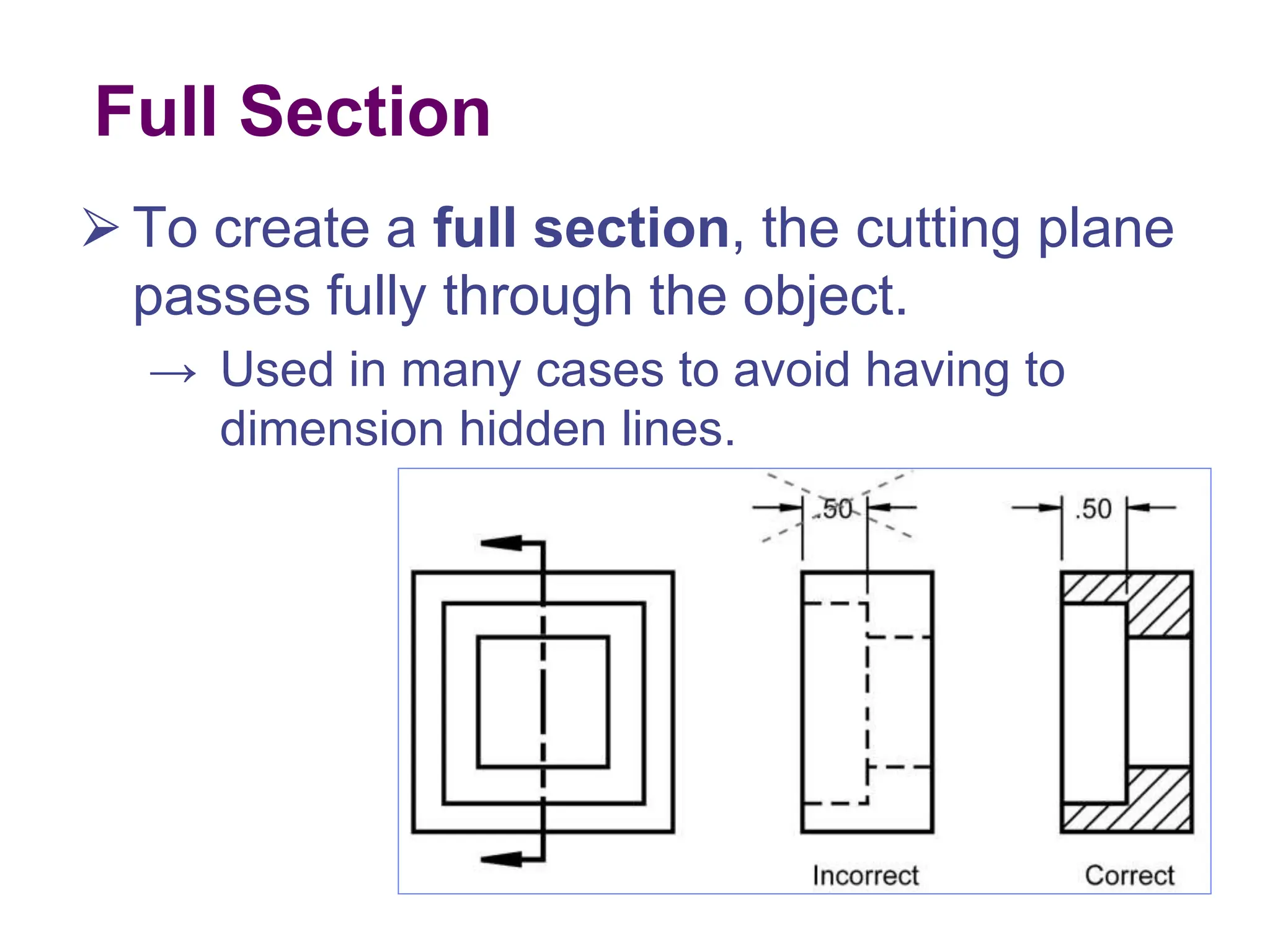
⮚To create a full section, the cutting plane
passes fully through the object.
→ Used in many cases to avoid having to
dimension hidden lines.
Half Section
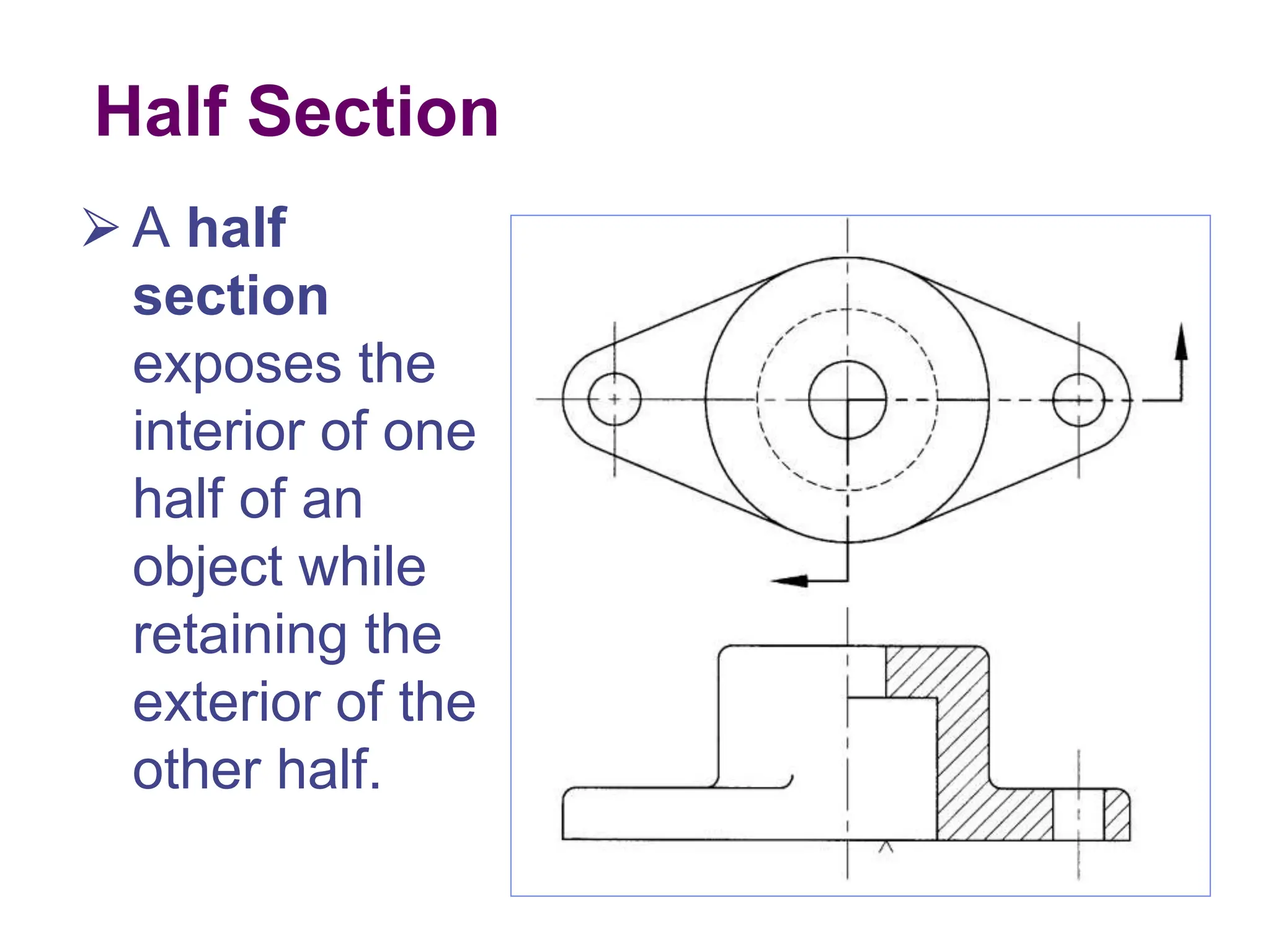
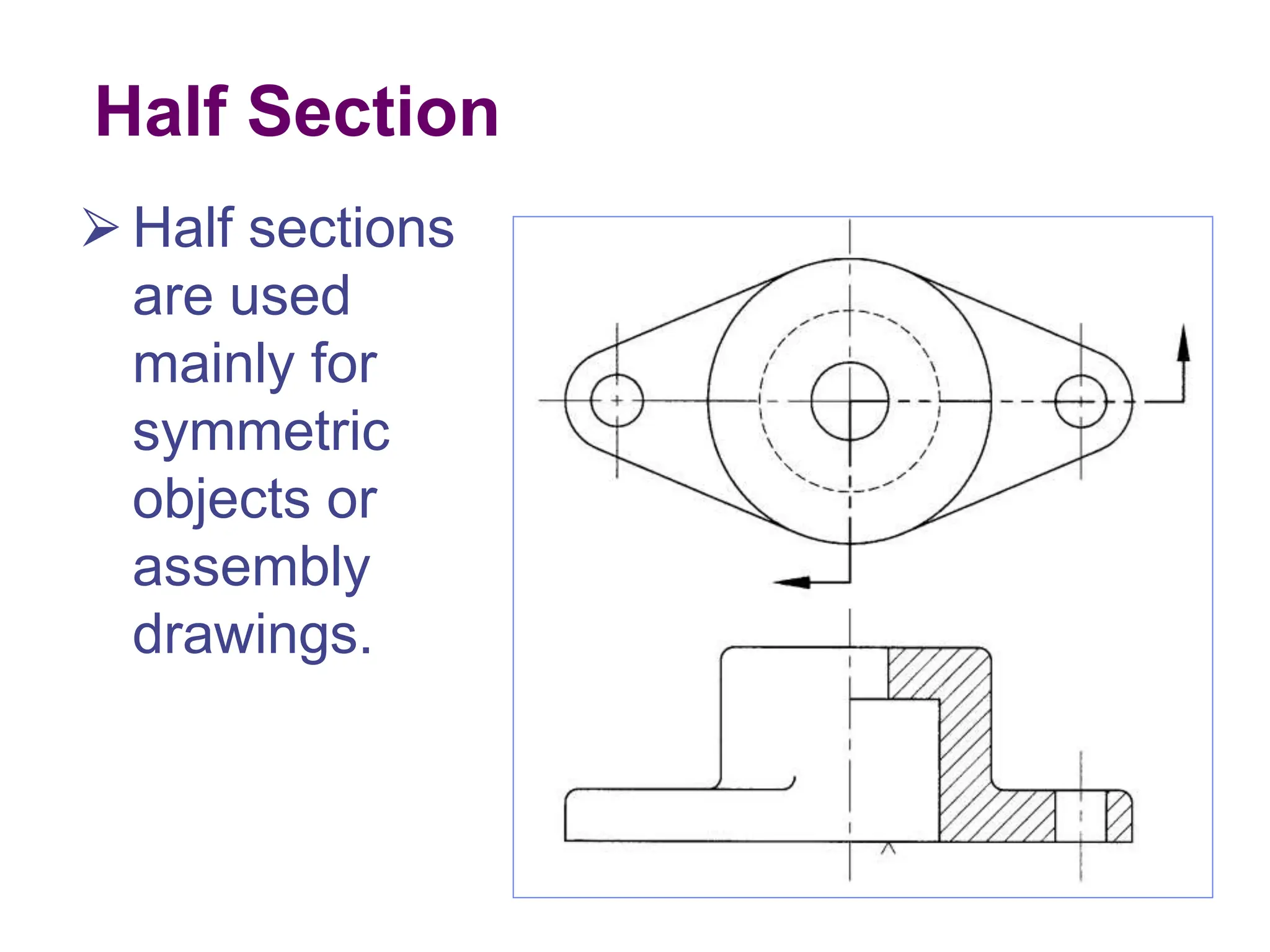
⮚A half
section
exposes the
interior of one
half of an
object while
retaining the
exterior of the
other half.
Half Section
⮚Half sections
are used
mainly for
symmetric
objects or
assembly
drawings.
Half Section
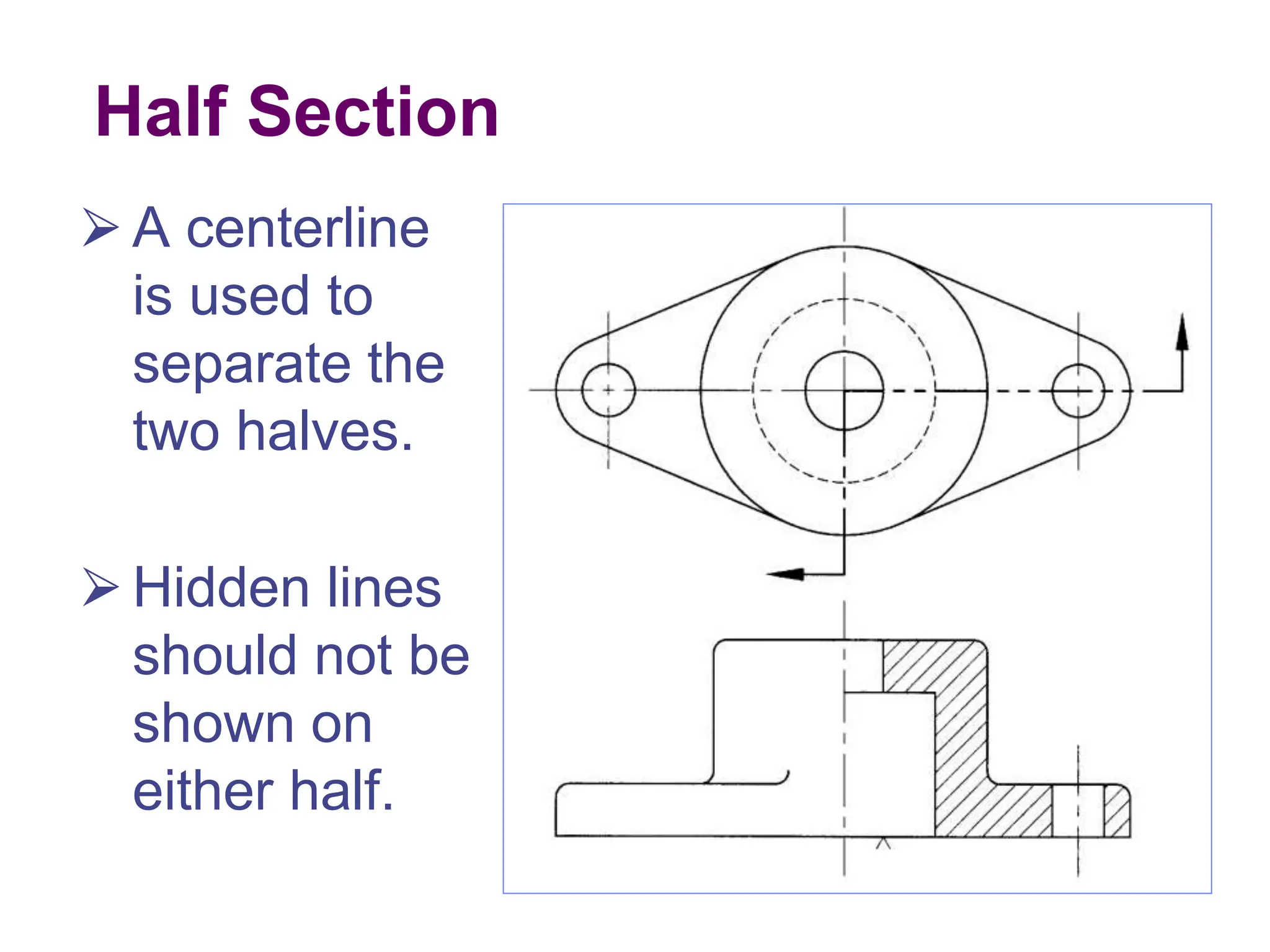
⮚A centerline
is used to
separate the
two halves.
⮚Hidden lines
should not be
shown on
either half.
Offset Section
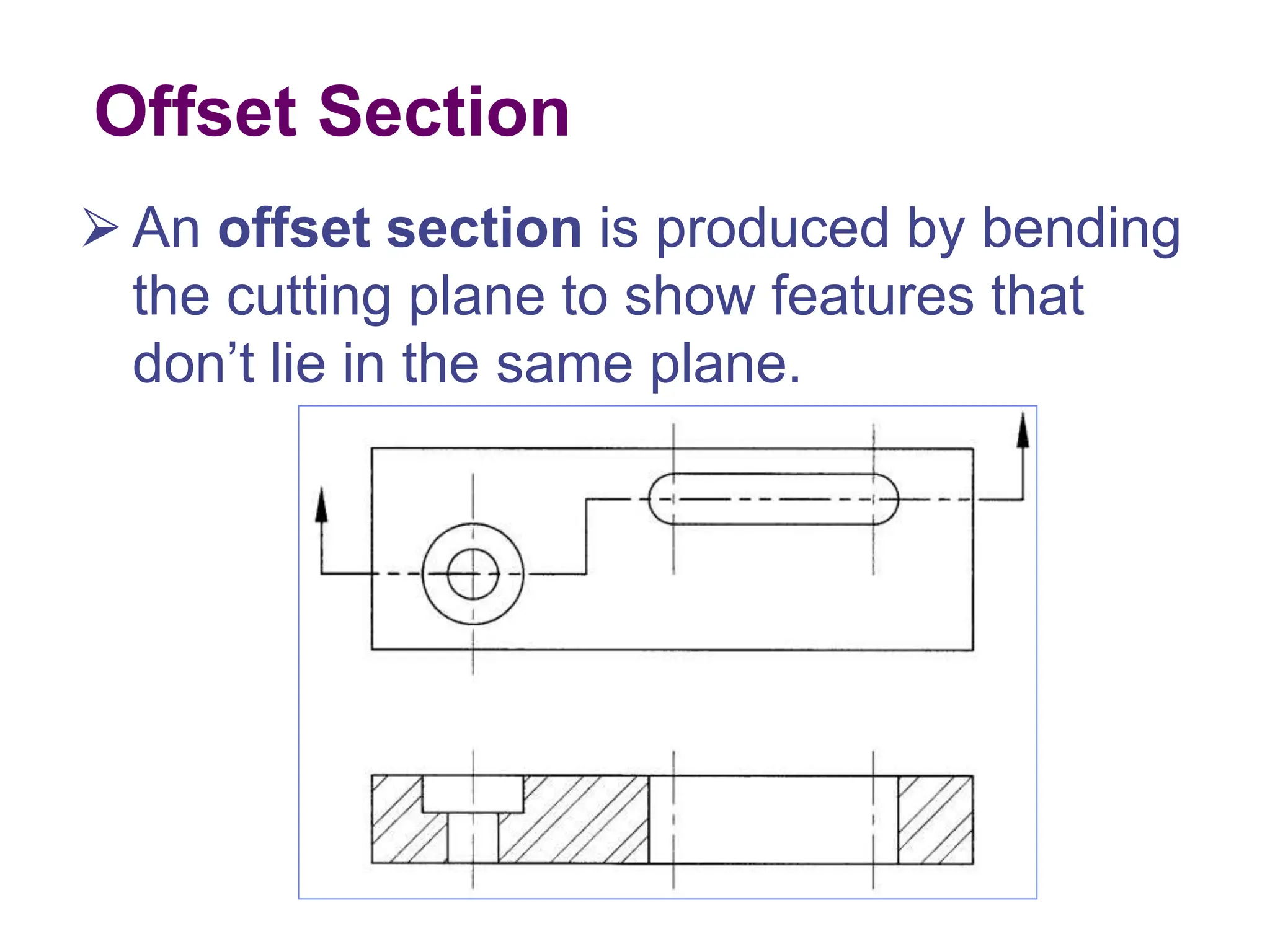
⮚An offset section is produced by bending
the cutting plane to show features that
don’t lie in the same plane.
Aligned Section
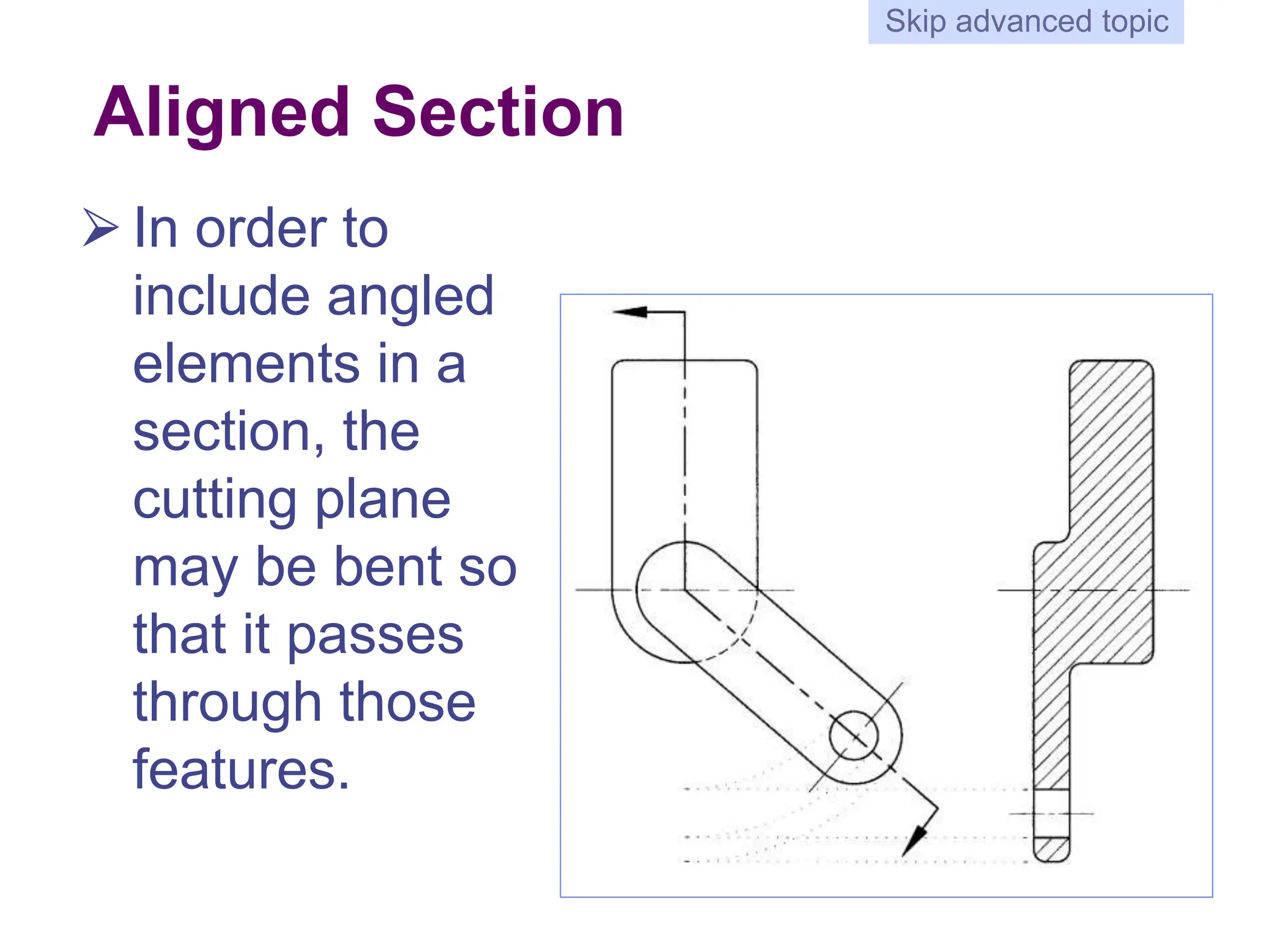
⮚In order to
include angled
elements in a
section, the
cutting plane
may be bent so
that it passes
through those
features.
Skip advanced topic
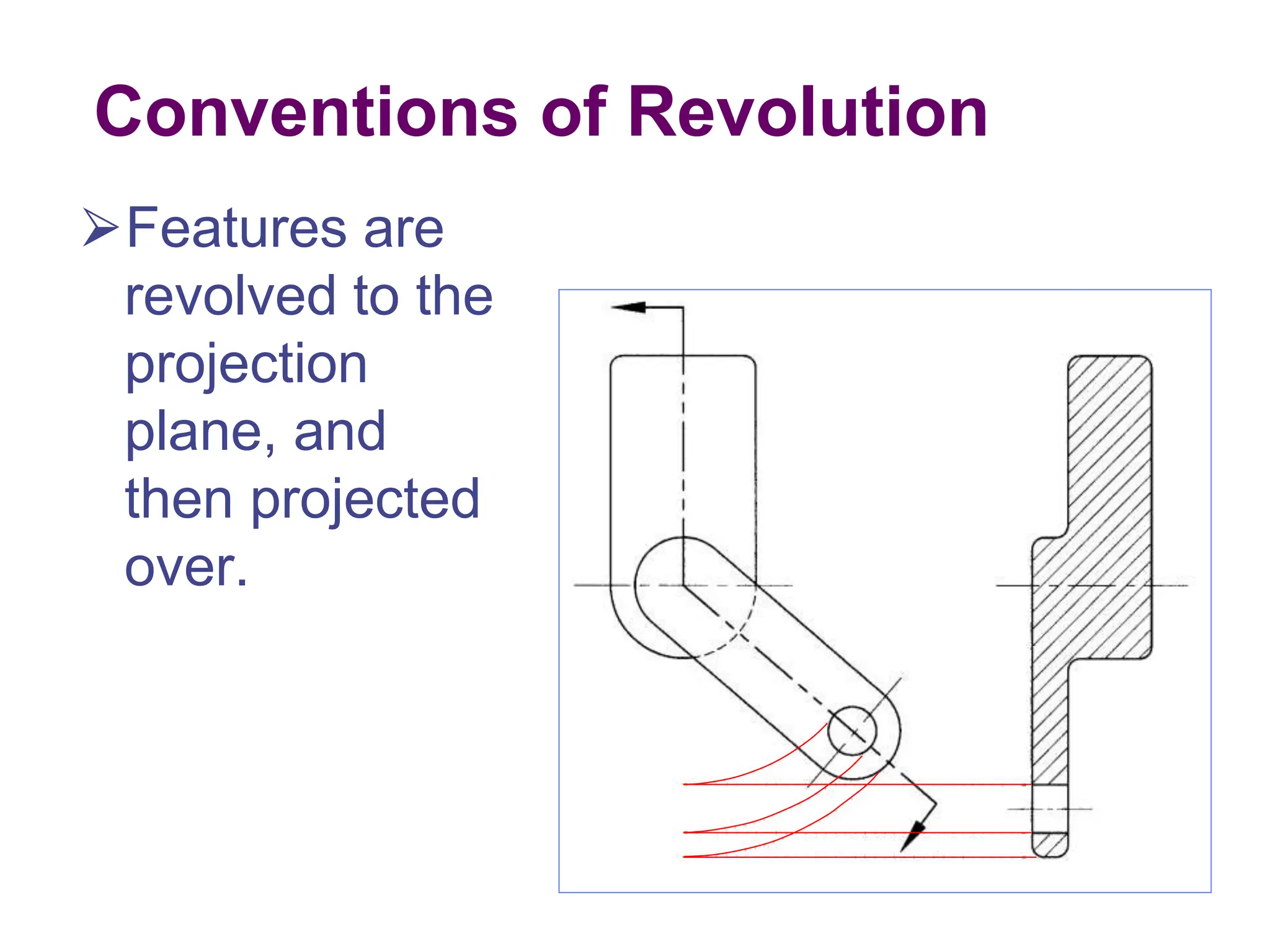
Conventions of Revolution
⮚Features are
revolved to the
projection
plane, and
then projected
over.
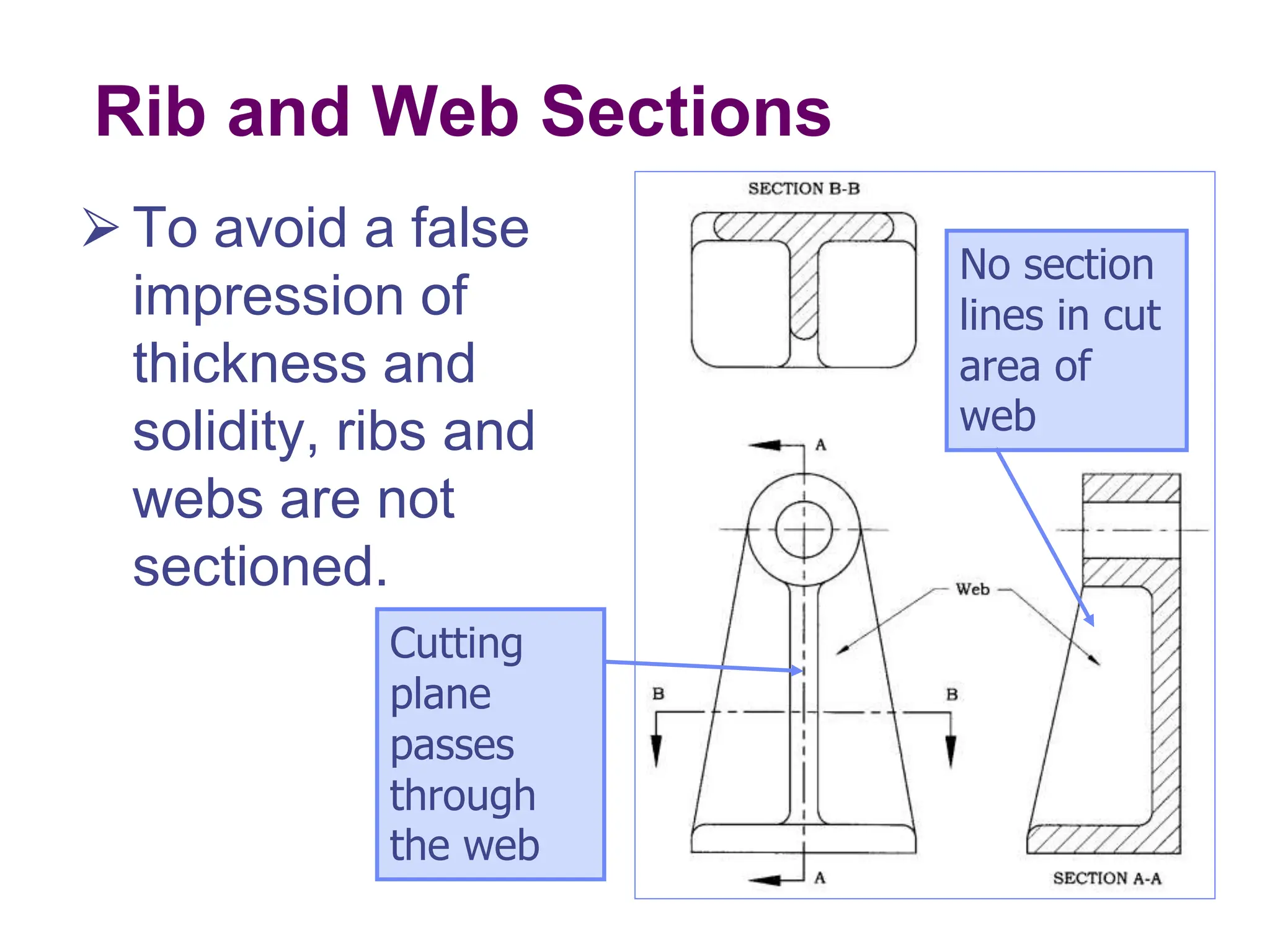
Rib and Web Sections
⮚To avoid a false
impression of
thickness and
solidity, ribs and
webs are not
sectioned.
Cutting
plane
passes
through
the web
No section
lines in cut
area of
web
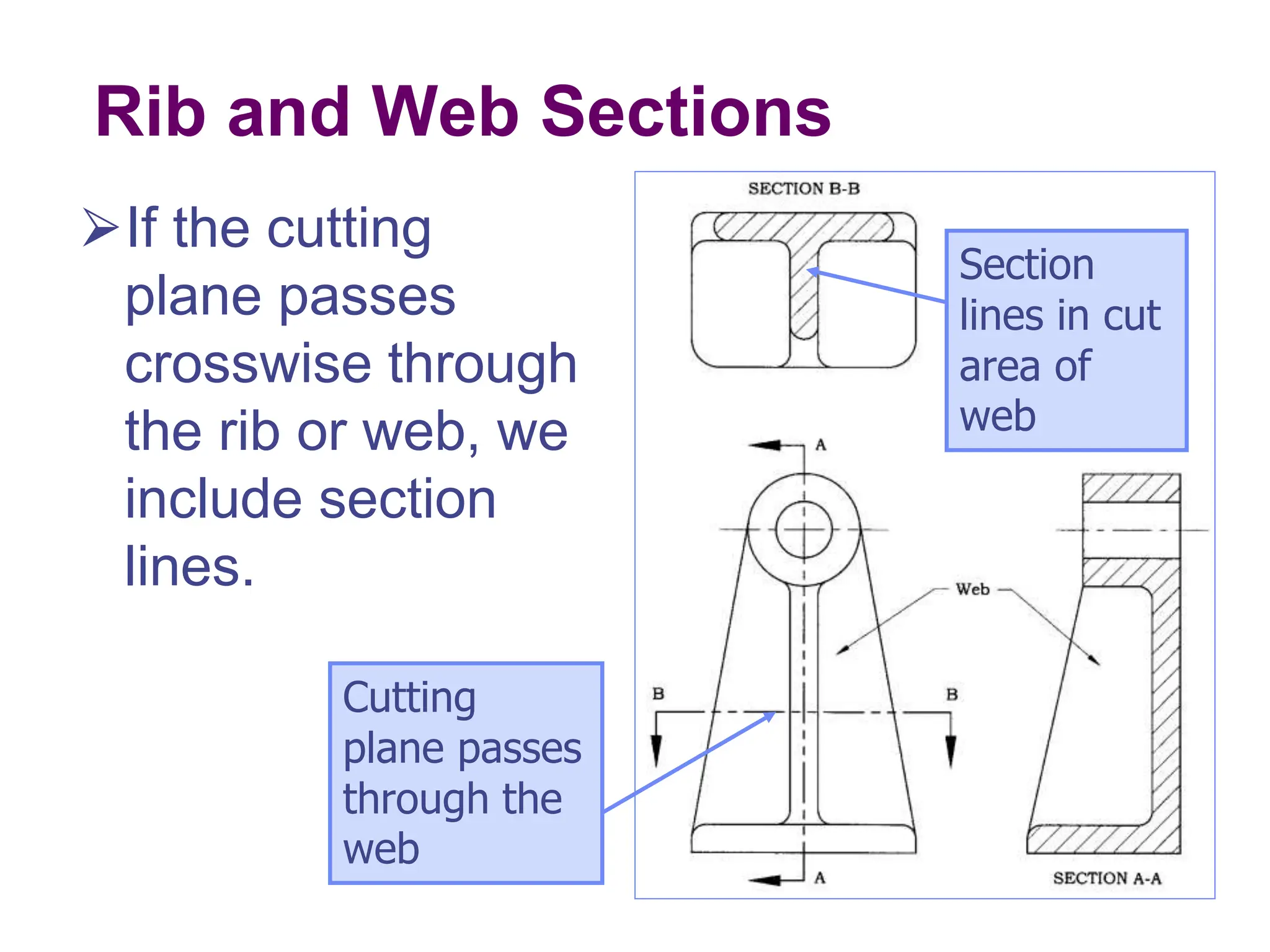
Rib and Web Sections
⮚If the cutting
plane passes
crosswise through
the rib or web, we
include section
lines.
Cutting
plane passes
through the
web
Section
lines in cut
area of
web
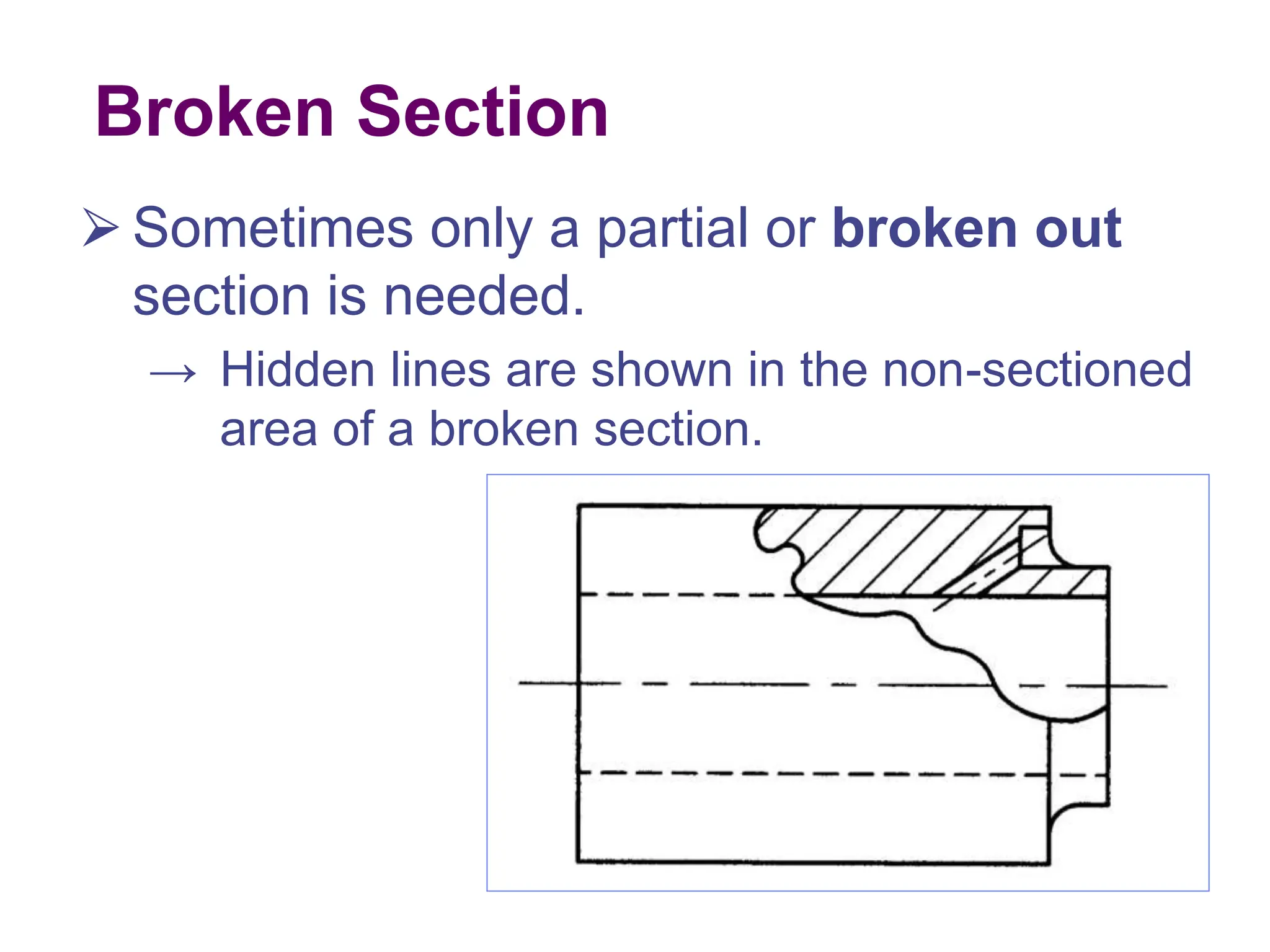
Broken Section
⮚Sometimes only a partial or broken out
section is needed.
→ Hidden lines are shown in the non-sectioned
area of a broken section.
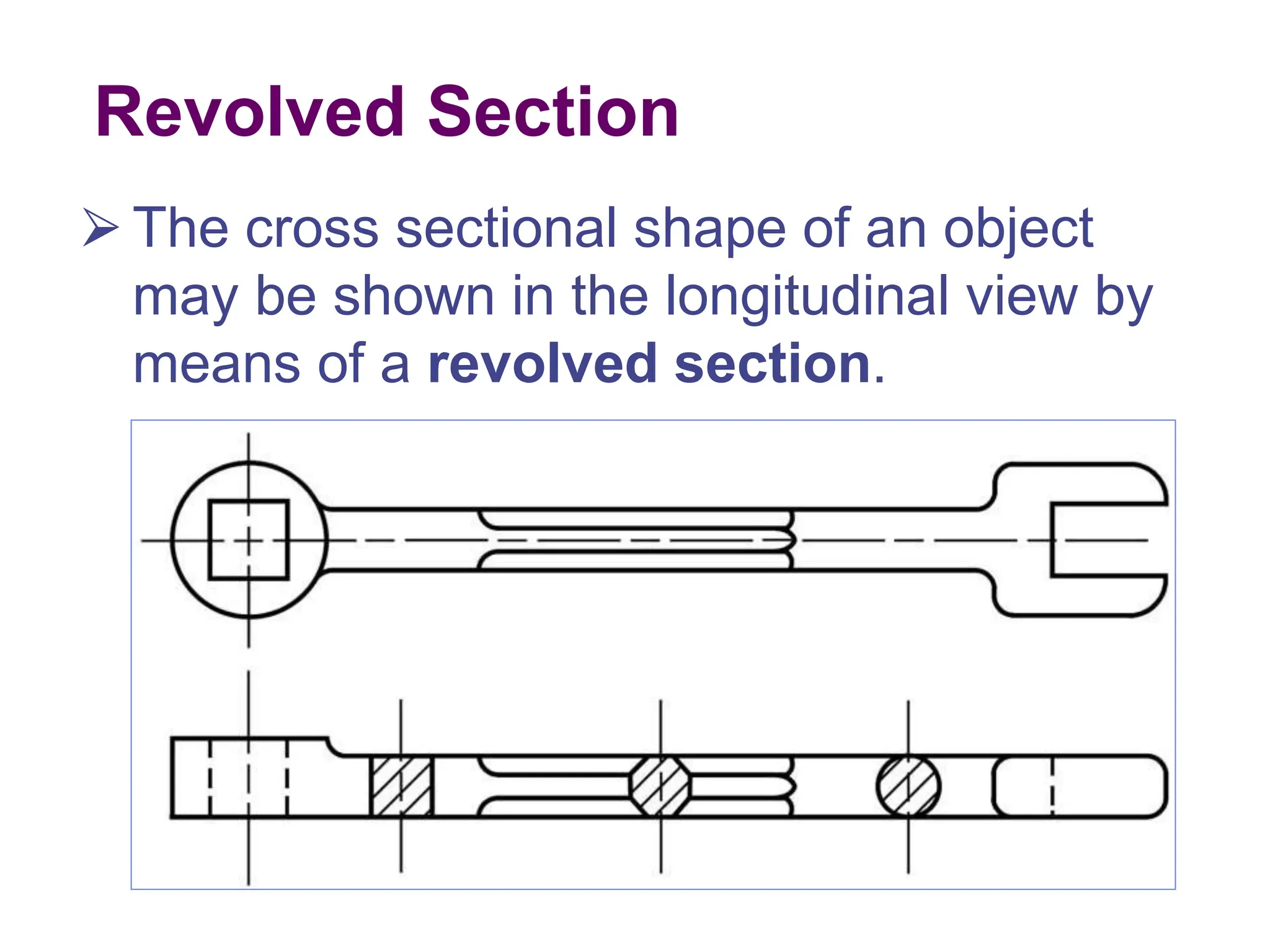
Revolved Section
⮚The cross sectional shape of an object
may be shown in the longitudinal view by
means of a revolved section.

4. Types of Sectioning.pptx

  • 1.
    Types of Sectioning M/CDrawing and CAD Rahul M. Chanmanwar Mechanical Department WCE, Sangli.
  • 2.
    Sectioning Summary Sectional Views Types ofSections ⮚ Full section ⮚ Half section ⮚ Offset section ⮚ Aligned section ⮚ Rib and web sections ⮚ Broken section ⮚ Removed section ⮚ Revolved section
  • 3.
    Creating a SectionView ⮚The part is cut using an imaginary cutting plane.
  • 4.
    Creating a SectionView ⮚The unwanted portion is mentally discarded exposing the interior construction.
  • 5.
    Section Example Notice howthe cutting plane is indicated. Notice how the cut material is shown. Sectional view label
  • 6.
    Lines Used inSection Views ⮚Cutting Plane Line: Used to show where the object is being cut. → (Phantom line type)
  • 7.
    Lines Used inSection Views Shows where the part is being cut. Arrows point to the portion being kept. Section Lines
  • 8.
    Lines Used inSection Views ⮚Section Lines: Section lines are used to indicate where the cutting plane cuts the material. → Section lines are thin lines. → Section line symbols are chosen according to the material of the object → Section lines are generally drawn at a 45° angle.
  • 9.
    Lines Used inSection Views ⮚Common Section Line Symbols
  • 10.
    Lines Used inSection Views ⮚Common Section Line Symbols
  • 11.
    Rules of Sectioning ⮚Rule1: A section lined area is always completely bounded by a visible outline.
  • 12.
    Rules of Sectioning ⮚Rule2: The section lines in all areas should be parallel. → Section lines shown in opposite directions indicate a different part.
  • 13.
    Rules of Sectioning ⮚Rule3: All the visible edges behind the cutting plane should be shown.
  • 14.
    Rules of Sectioning ⮚Rule4: Hidden features should be omitted in all areas of a section view. → Exceptions include threads and broken out sections.
  • 15.
    Types of Sections ⮚Thetype of section used depends on the situation and what information needs to be conveyed. ⮚Types of sections →Full Section →Half Section →Offset Section →etc …
  • 16.
    Full Section ⮚To createa full section, the cutting plane passes fully through the object. → Used in many cases to avoid having to dimension hidden lines.
  • 17.
    Half Section ⮚A half section exposesthe interior of one half of an object while retaining the exterior of the other half.
  • 18.
    Half Section ⮚Half sections areused mainly for symmetric objects or assembly drawings.
  • 19.
    Half Section ⮚A centerline isused to separate the two halves. ⮚Hidden lines should not be shown on either half.
  • 20.
    Offset Section ⮚An offsetsection is produced by bending the cutting plane to show features that don’t lie in the same plane.
  • 21.
    Aligned Section ⮚In orderto include angled elements in a section, the cutting plane may be bent so that it passes through those features. Skip advanced topic
  • 22.
    Conventions of Revolution ⮚Featuresare revolved to the projection plane, and then projected over.
  • 23.
    Rib and WebSections ⮚To avoid a false impression of thickness and solidity, ribs and webs are not sectioned. Cutting plane passes through the web No section lines in cut area of web
  • 24.
    Rib and WebSections ⮚If the cutting plane passes crosswise through the rib or web, we include section lines. Cutting plane passes through the web Section lines in cut area of web
  • 25.
    Broken Section ⮚Sometimes onlya partial or broken out section is needed. → Hidden lines are shown in the non-sectioned area of a broken section.
  • 26.
    Revolved Section ⮚The crosssectional shape of an object may be shown in the longitudinal view by means of a revolved section.