ADAMA SCIENCE AND TECHNOLOGY UNIVERSITY
SCHOOL OF MECHANICAL, CHEMICAL AND MATERIAL
ENGINEERING
DEPARTMENT OF MECHANICAL ENGINEERING
ENGINEERING DRAWING ; MEng1102
CHAPTER-6
SECTIONAL VIEWS
Date, Jun 2024
05/07/25
Learning Outcomes
At the end of the lesson the students will be
able to:
•Define Sections and Identify the Necessity of
sectional views
•List the types of sectioning and differentiate
between them
•Practice the convention in sectioning
•Make practical exercise on both sectional view and
pictorial section.
6.1. Introduction
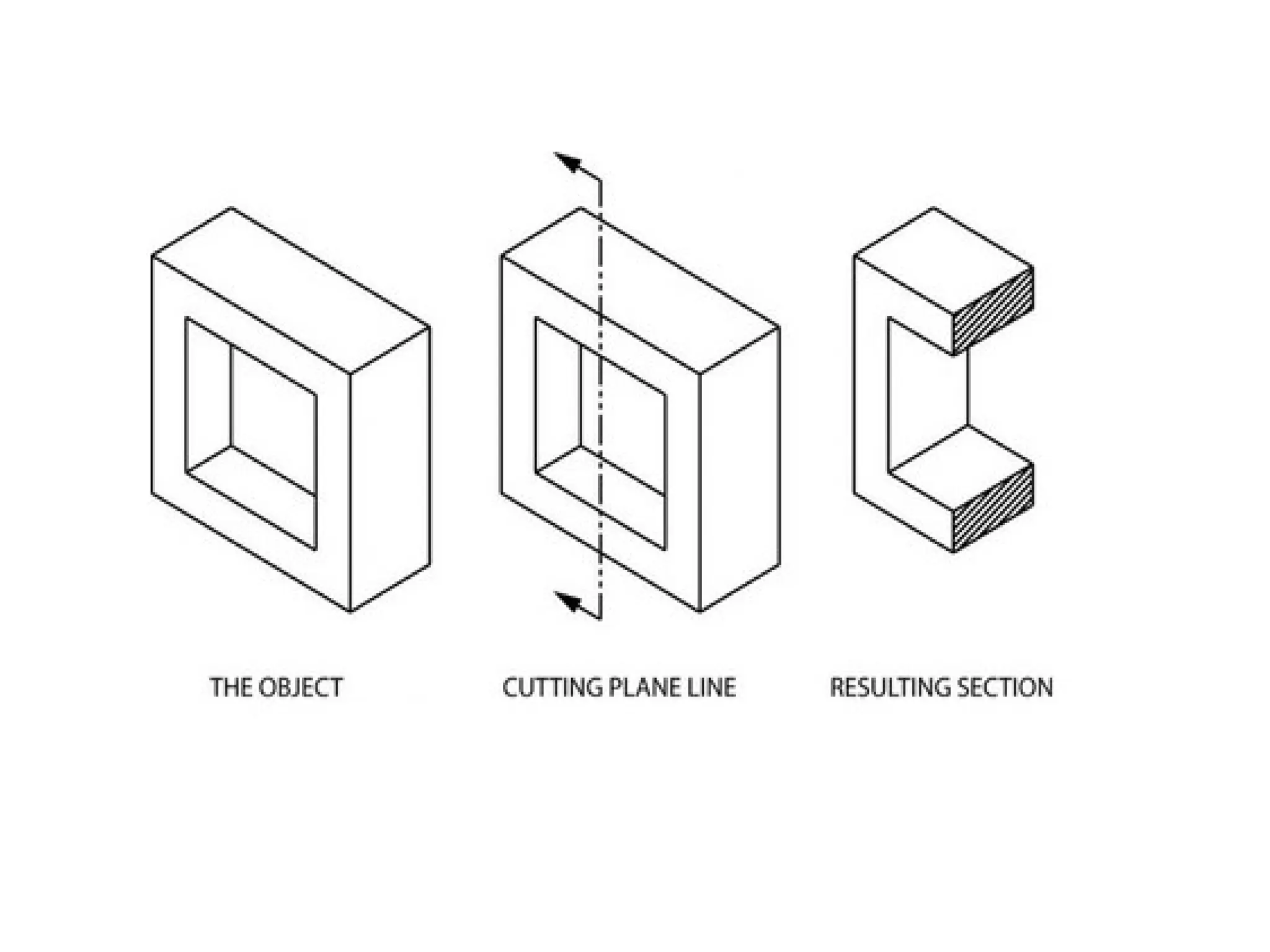
 Sections are used to clarify the interior construction
of a part that can not be clearly described by hidden
lines in exterior views.
 By taking an imaginary cut through the object and
removing a portion, the inside features may be seen
more clearly.
6.2.Necessity of sectional views
 To see clearly interior features of the object.
 To clarify the interior details of an object that can
not be clearly described by hidden lines.
 To reduce confusion.
6.3.Terminology & common practices
Basic Terminologies in sectional views
 Cutting Plane
 Cutting Plane Line
 Section Lines
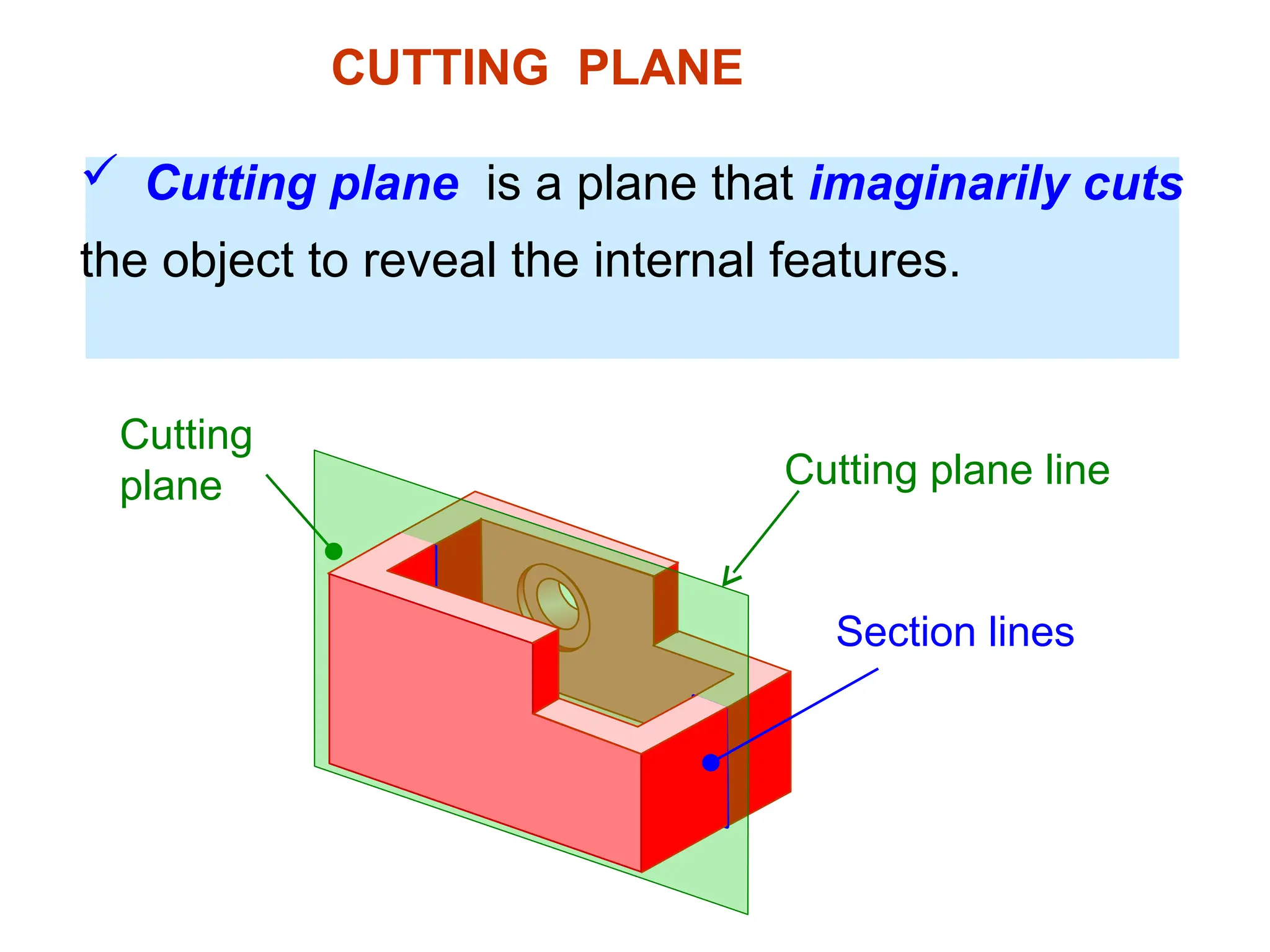
Cutting
plane
CUTTING PLANE
Cutting plane line
 Cutting plane is a plane that imaginarily cuts
the object to reveal the internal features.
Section lines
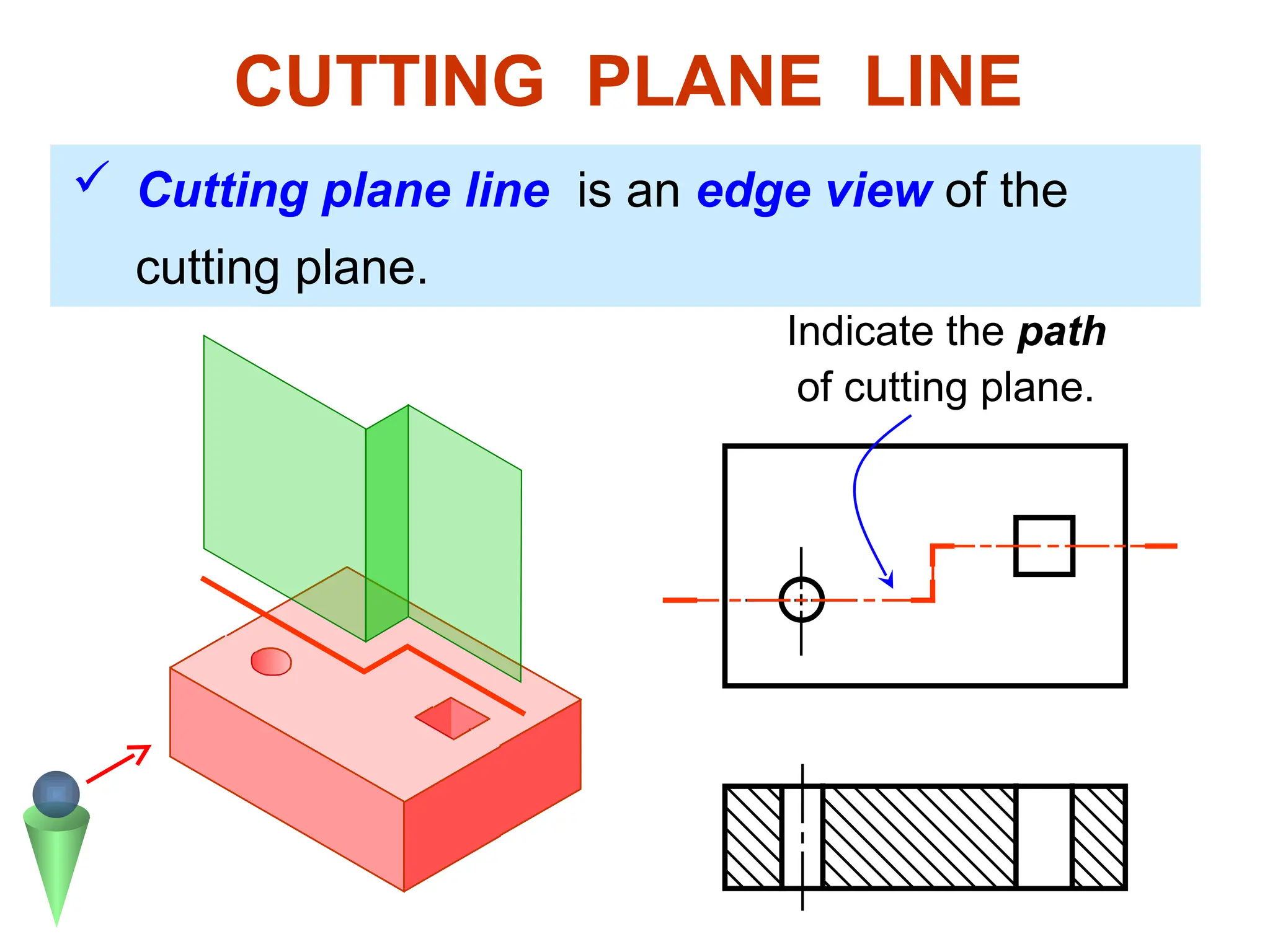
 Cutting plane line is an edge view of the
cutting plane.
CUTTING PLANE LINE
Indicate the path
of cutting plane.
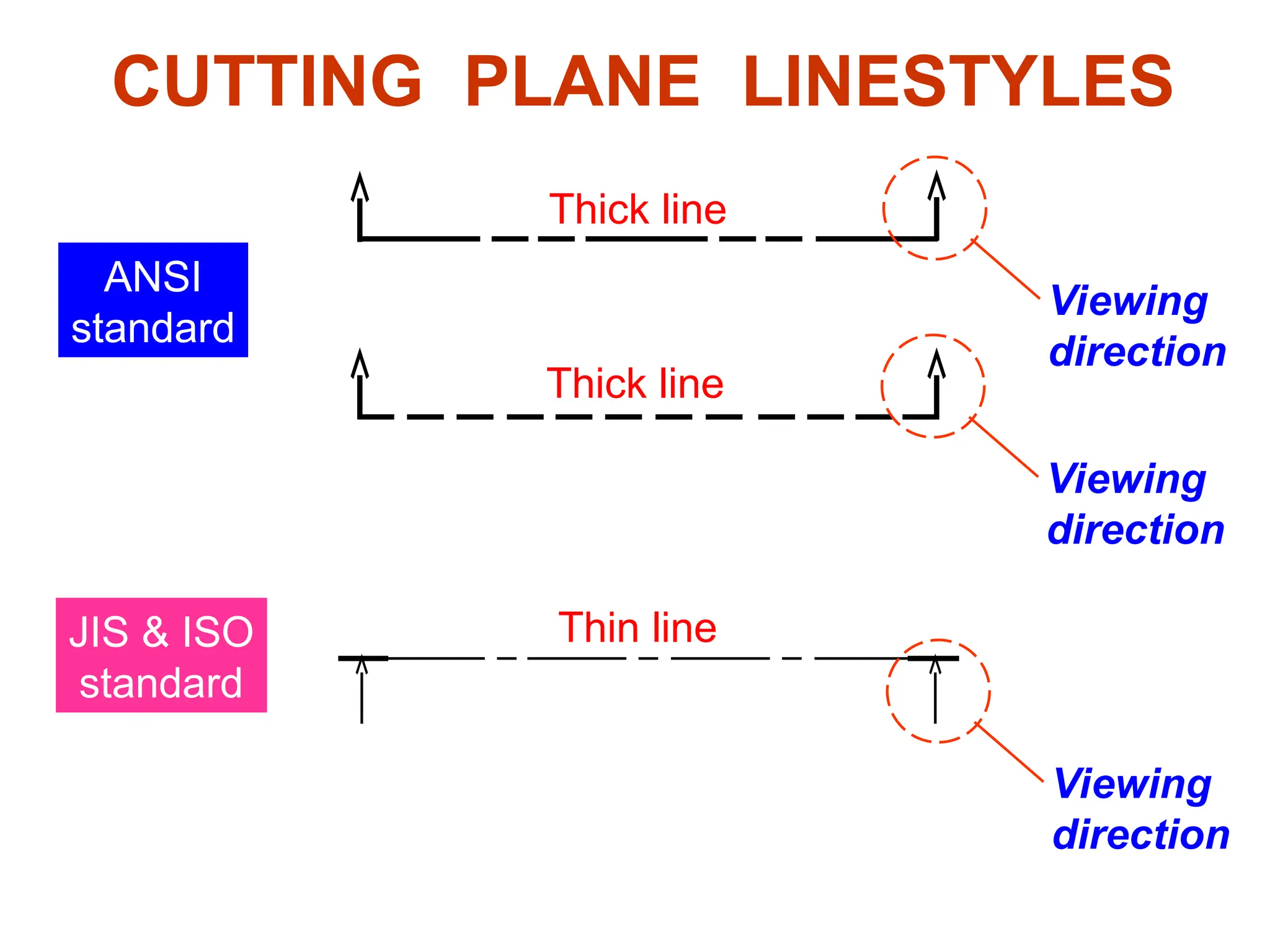
ANSI
standard
Thick line
Thick line
JIS & ISO
standard
Thin line
CUTTING PLANE LINESTYLES
Viewing
direction
Viewing
direction
Viewing
direction
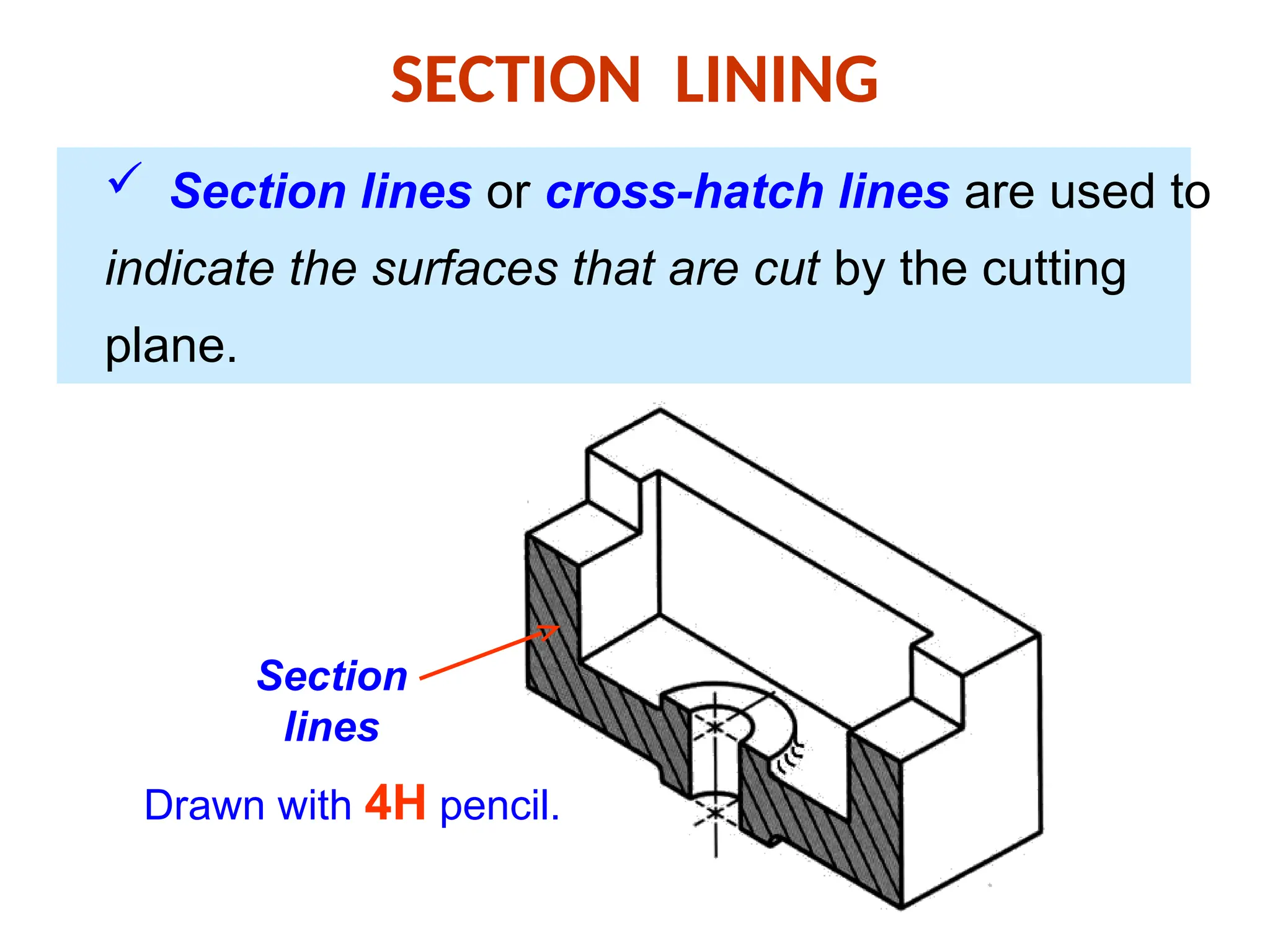
SECTION LINING
 Section lines or cross-hatch lines are used to
indicate the surfaces that are cut by the cutting
plane.
Section
lines
Drawn with 4H pencil.
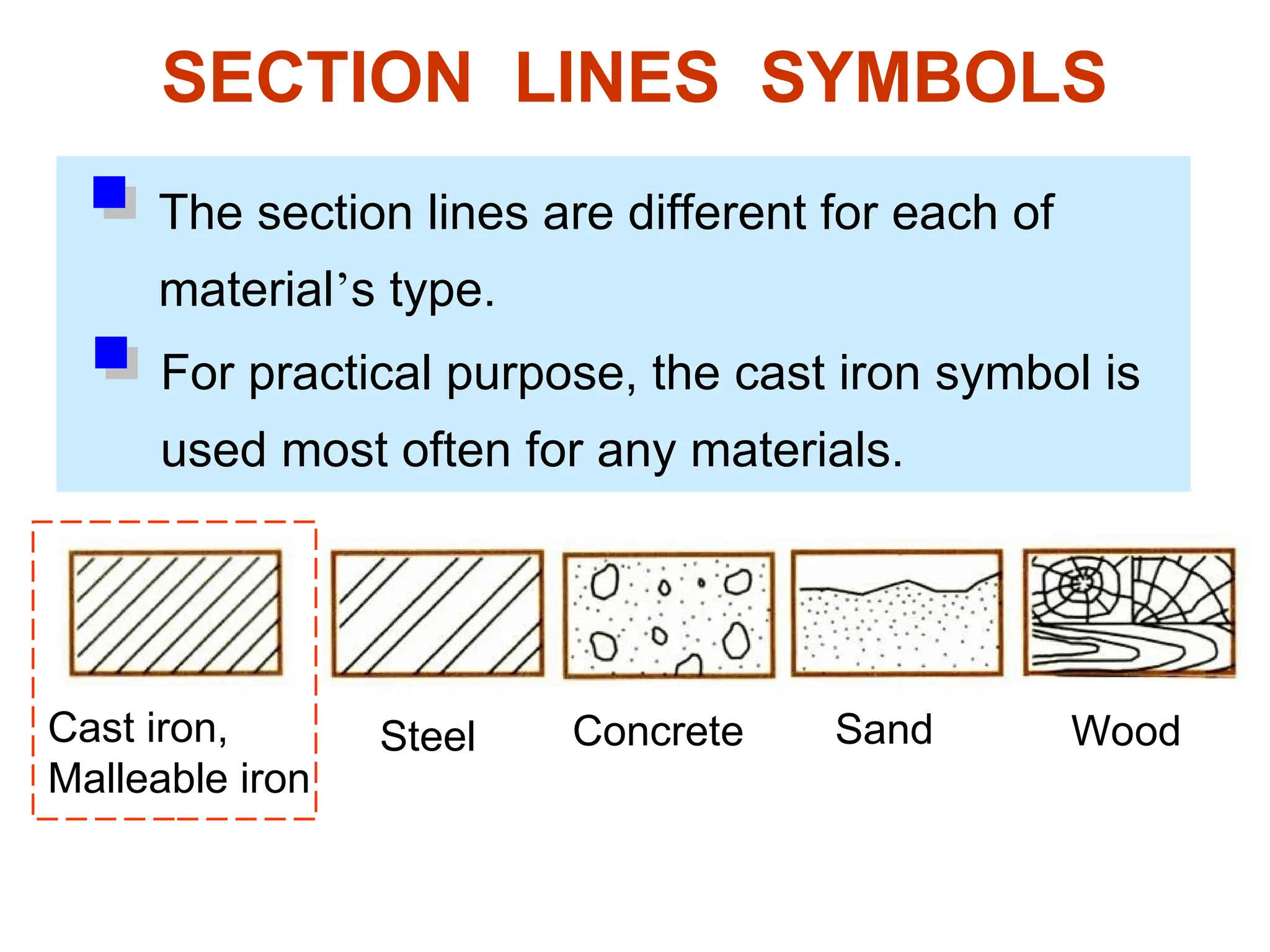
SECTION LINES SYMBOLS
The section lines are different for each of
material’s type.
Cast iron,
Malleable iron
Steel Concrete Sand Wood
For practical purpose, the cast iron symbol is
used most often for any materials.
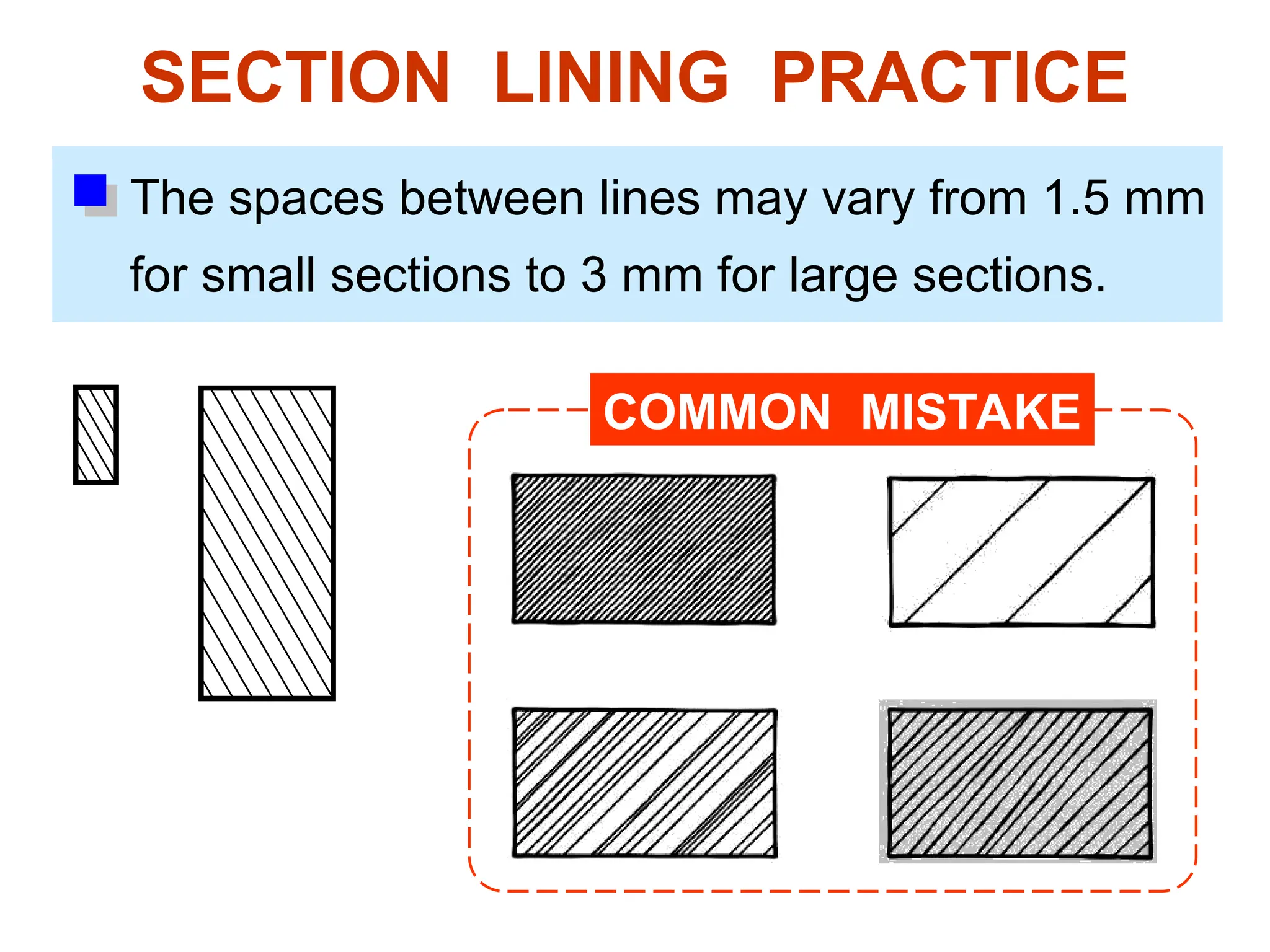
SECTION LINING PRACTICE
The spaces between lines may vary from 1.5 mm
for small sections to 3 mm for large sections.
COMMON MISTAKE
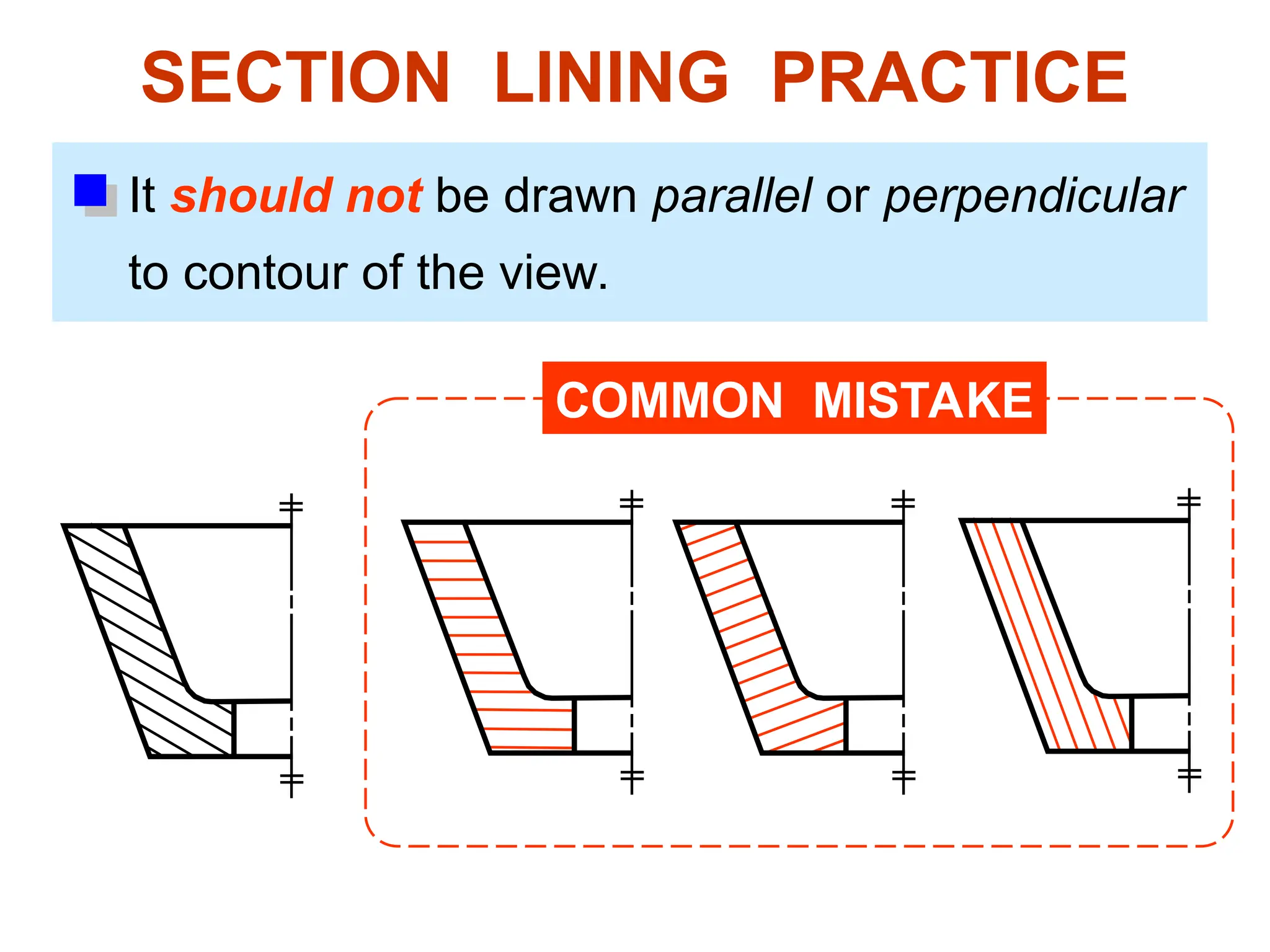
SECTION LINING PRACTICE
It should not be drawn parallel or perpendicular
to contour of the view.
COMMON MISTAKE
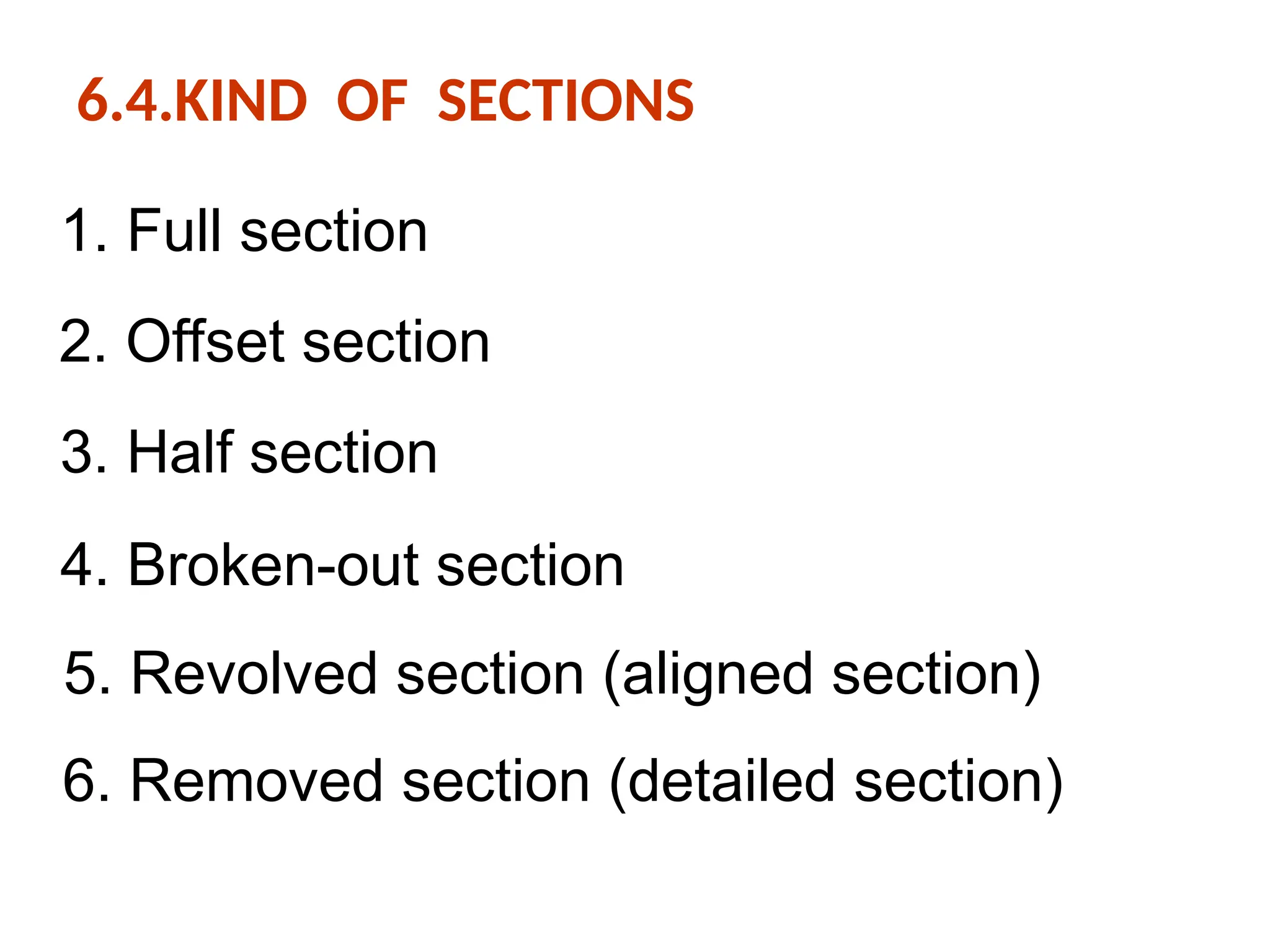
6.4.KIND OF SECTIONS
1. Full section
2. Offset section
3. Half section
4. Broken-out section
5. Revolved section (aligned section)
6. Removed section (detailed section)
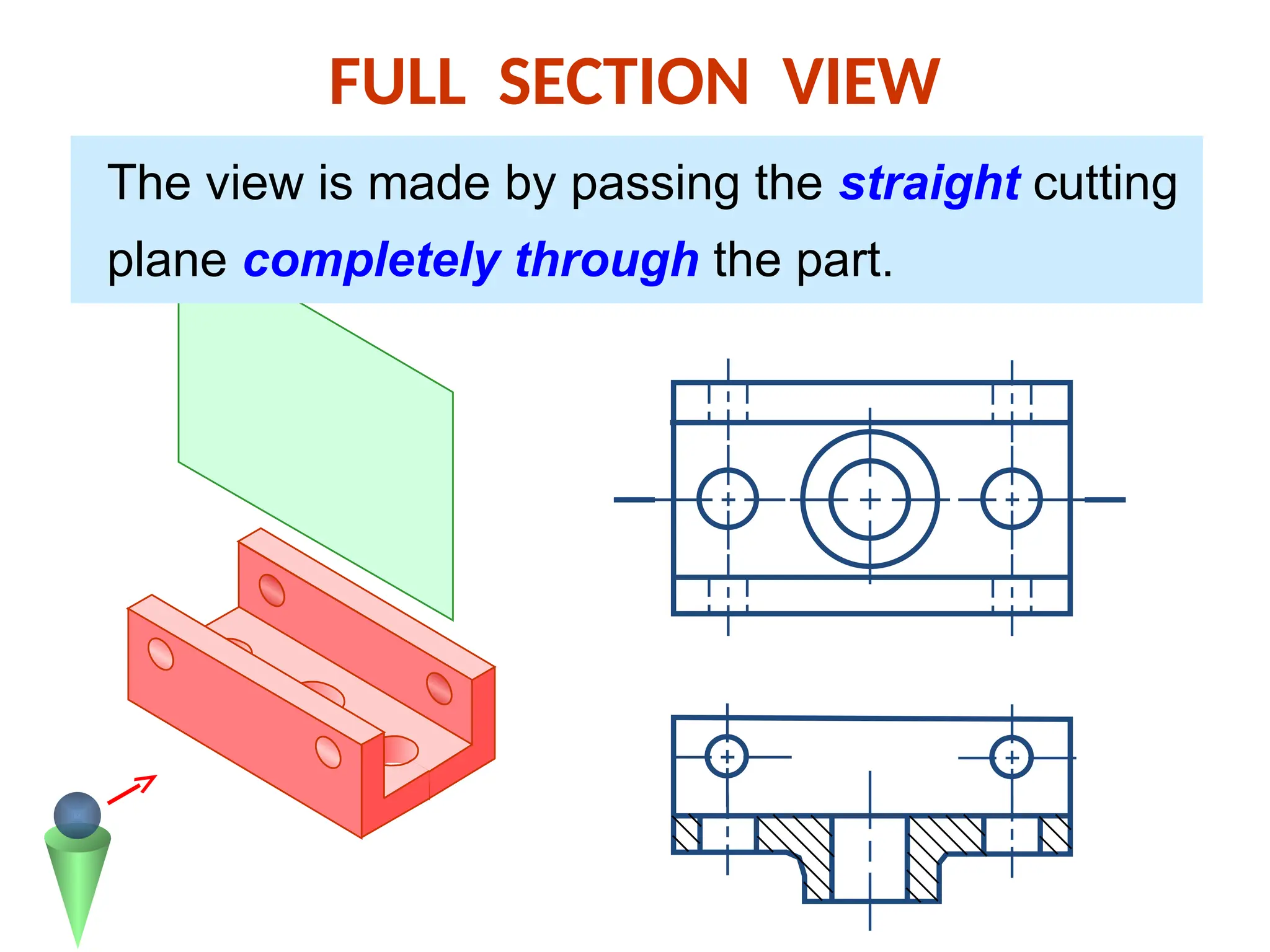
FULL SECTION VIEW
The view is made by passing the straight cutting
plane completely through the part.
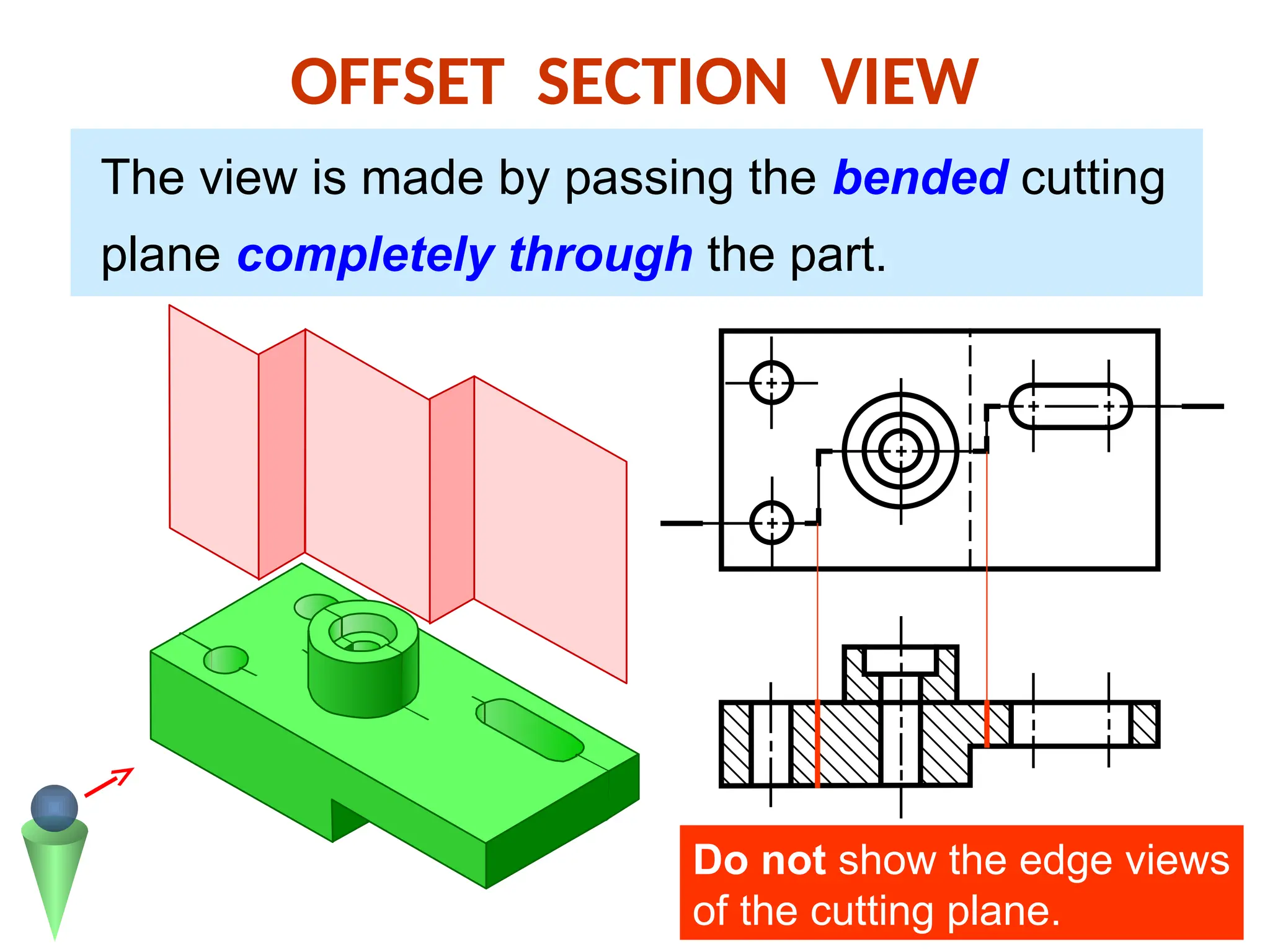
OFFSET SECTION VIEW
The view is made by passing the bended cutting
plane completely through the part.
Do not show the edge views
of the cutting plane.
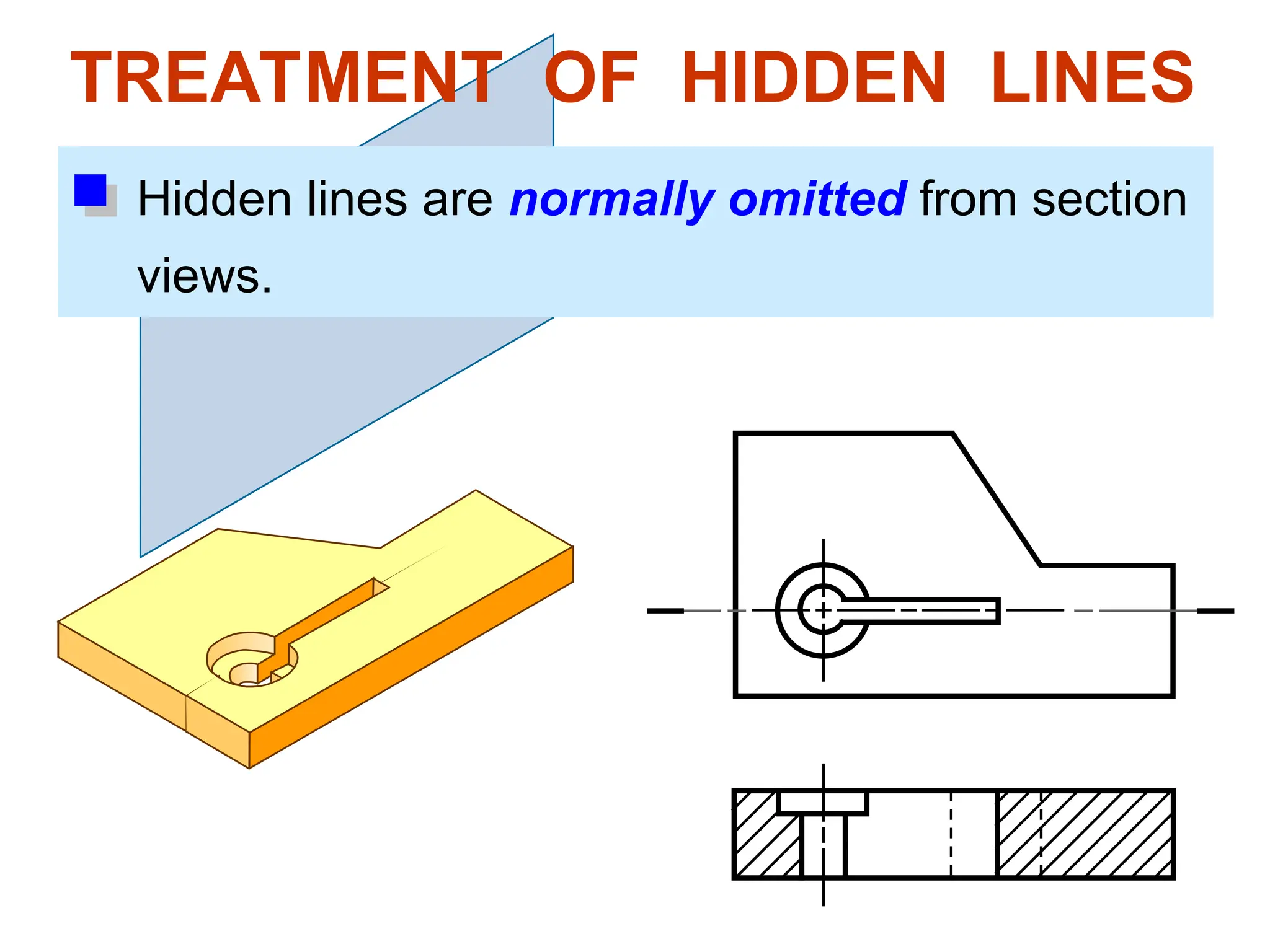
TREATMENT OF HIDDEN LINES
Hidden lines are normally omitted from section
views.
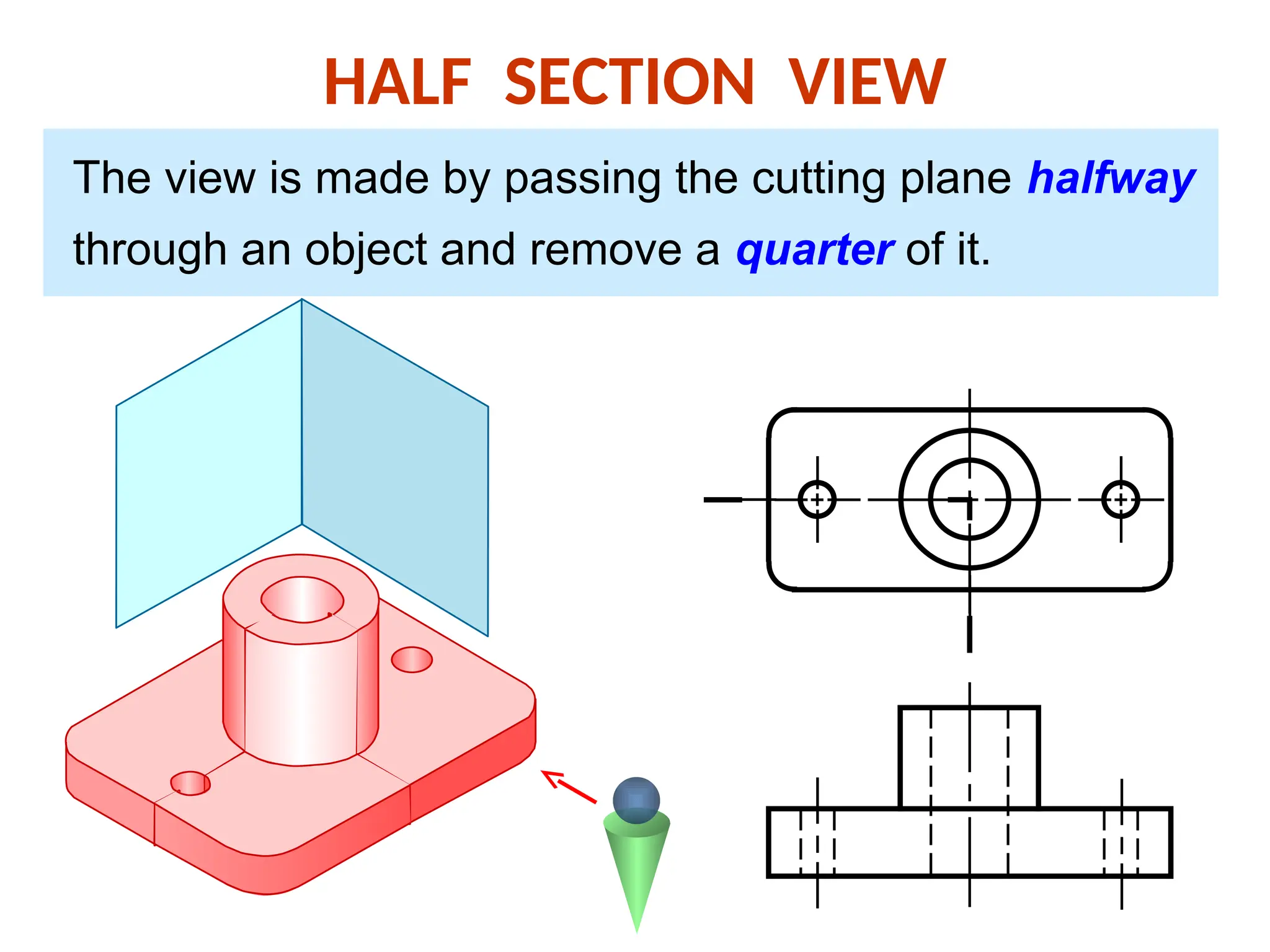
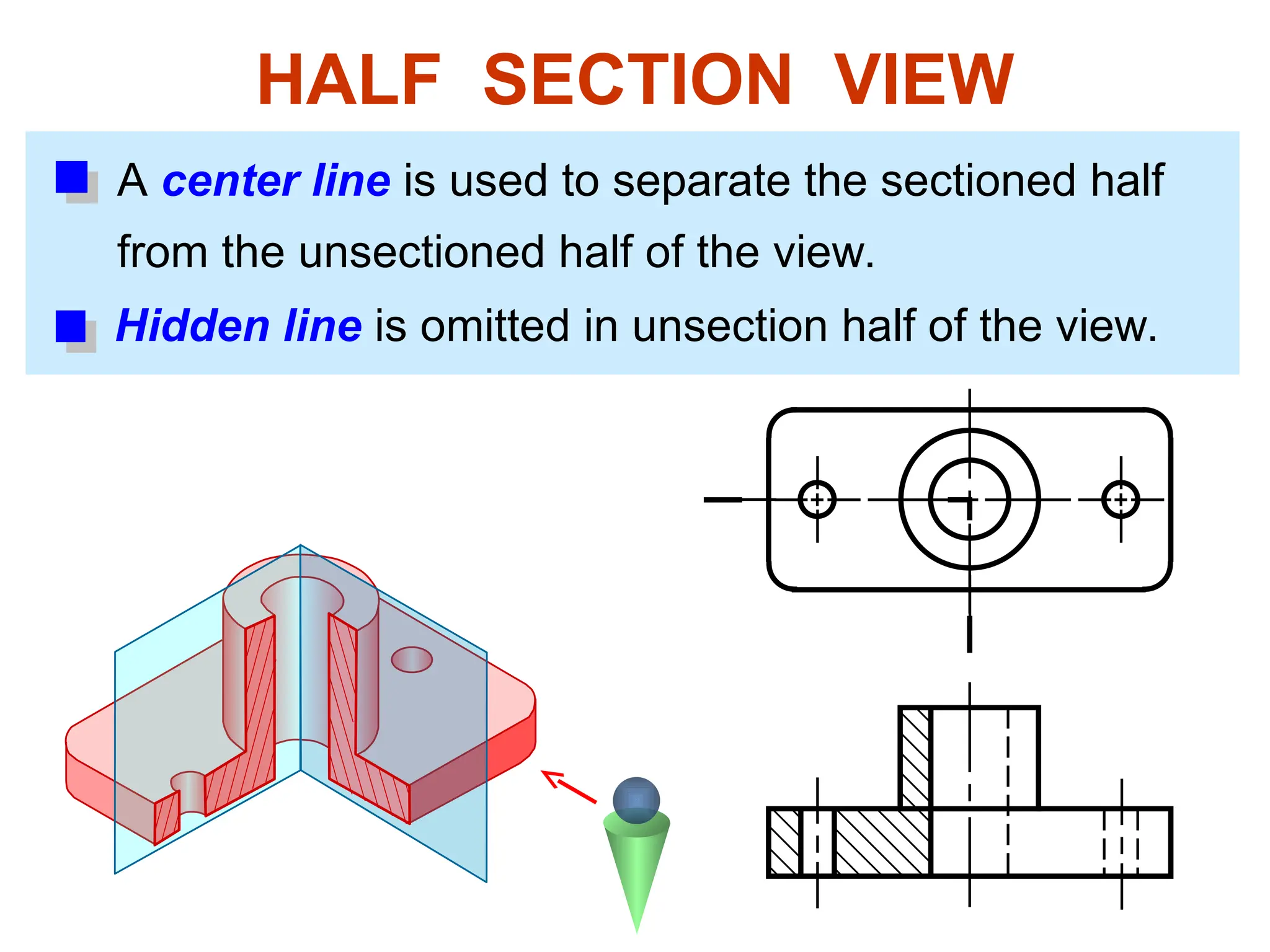
HALF SECTION VIEW
The view is made by passing the cutting plane halfway
through an object and remove a quarter of it.
HALF SECTION VIEW
A center line is used to separate the sectioned half
from the unsectioned half of the view.
Hidden line is omitted in unsection half of the view.
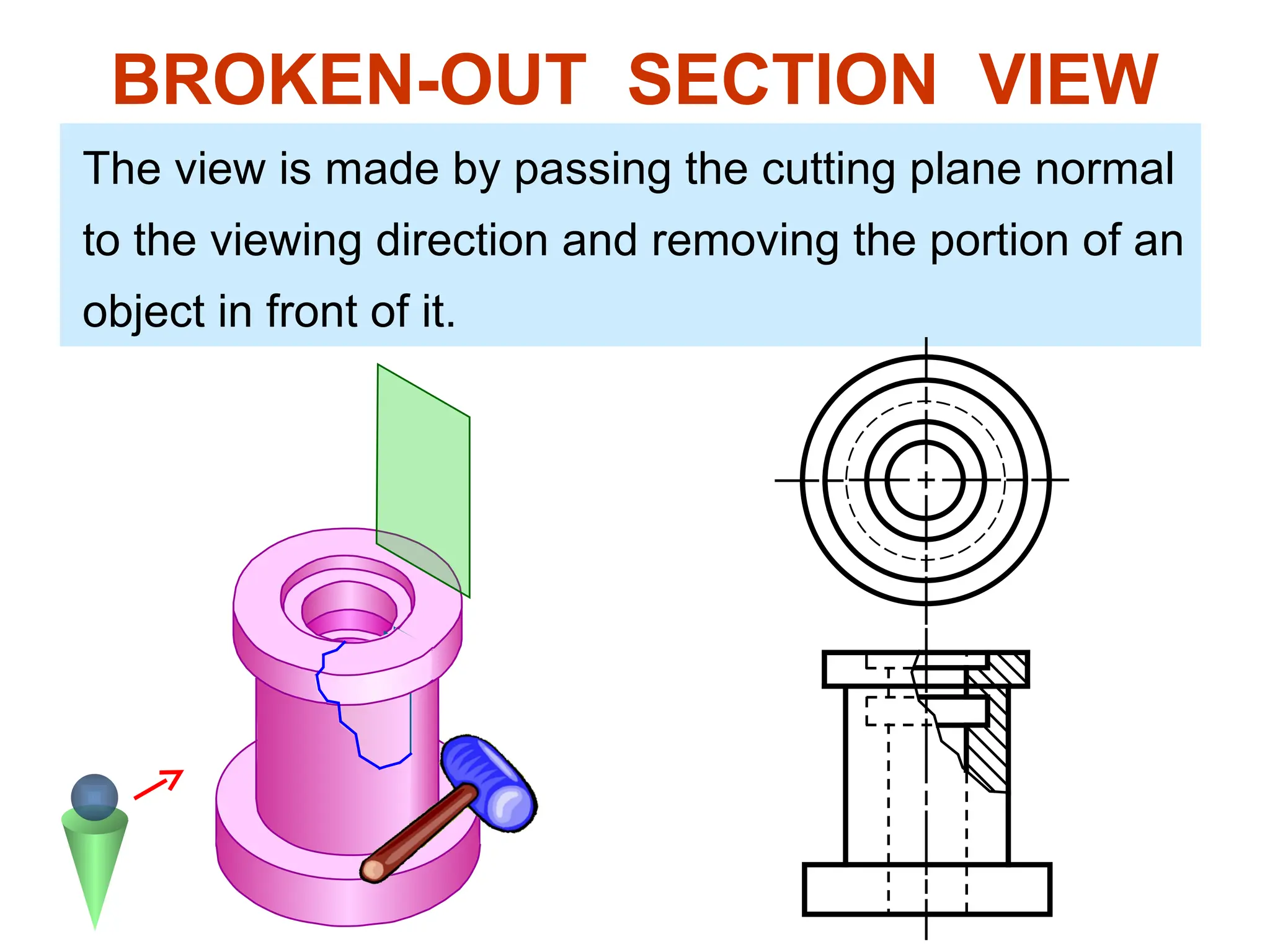
The view is made by passing the cutting plane normal
to the viewing direction and removing the portion of an
object in front of it.
BROKEN-OUT SECTION VIEW
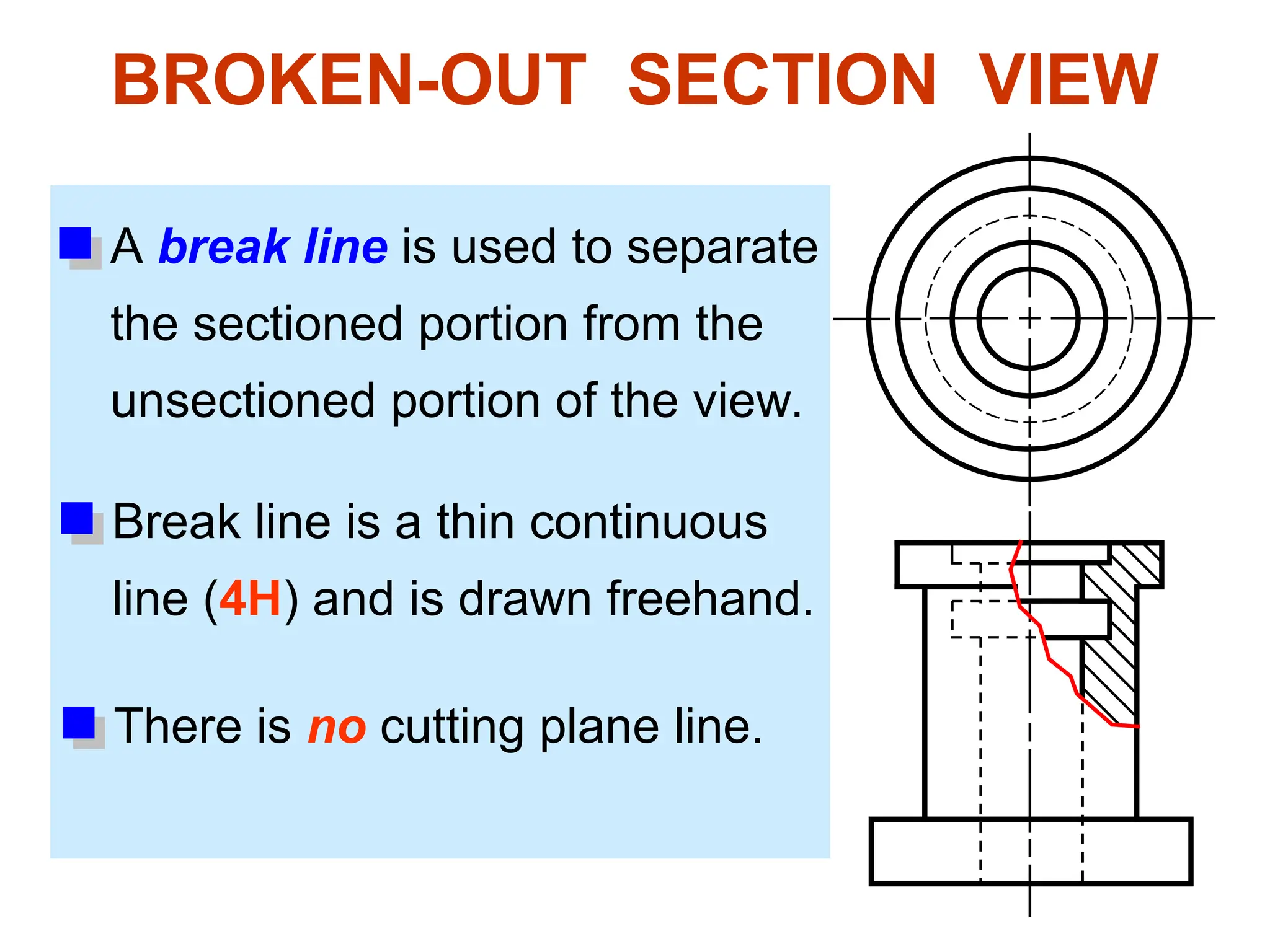
A break line is used to separate
the sectioned portion from the
unsectioned portion of the view.
BROKEN-OUT SECTION VIEW
There is no cutting plane line.
Break line is a thin continuous
line (4H) and is drawn freehand.
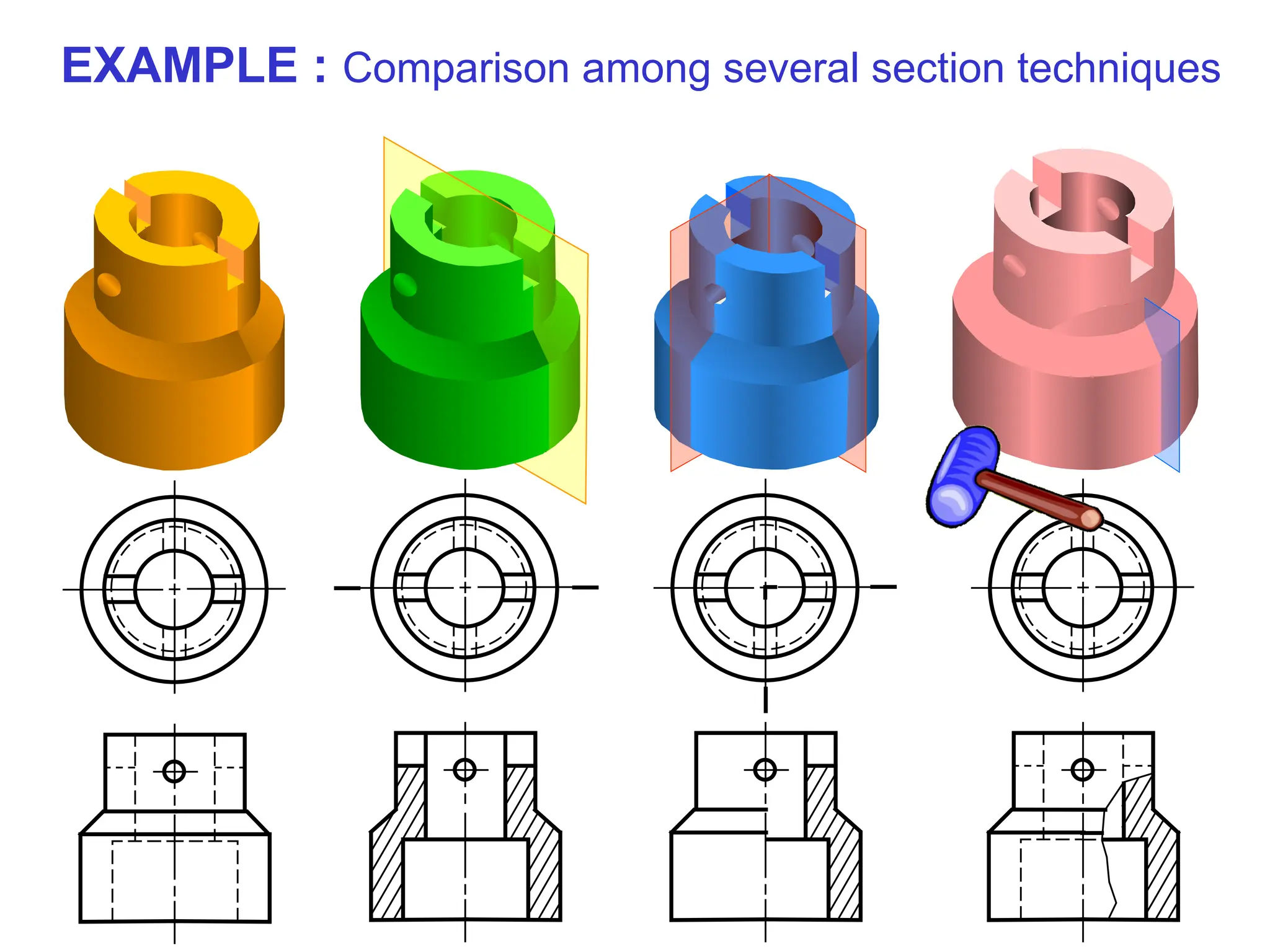
EXAMPLE : Comparison among several section techniques
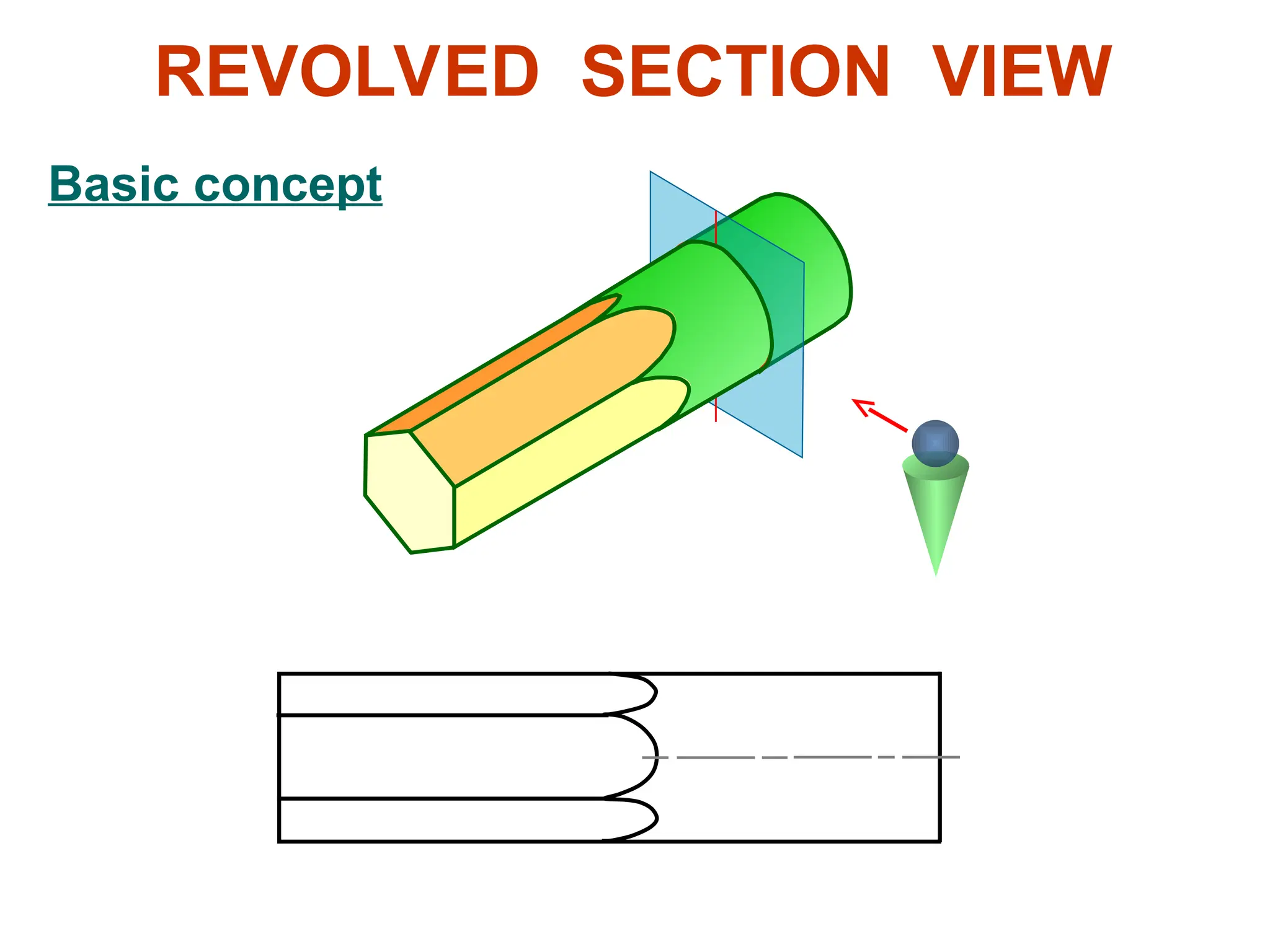
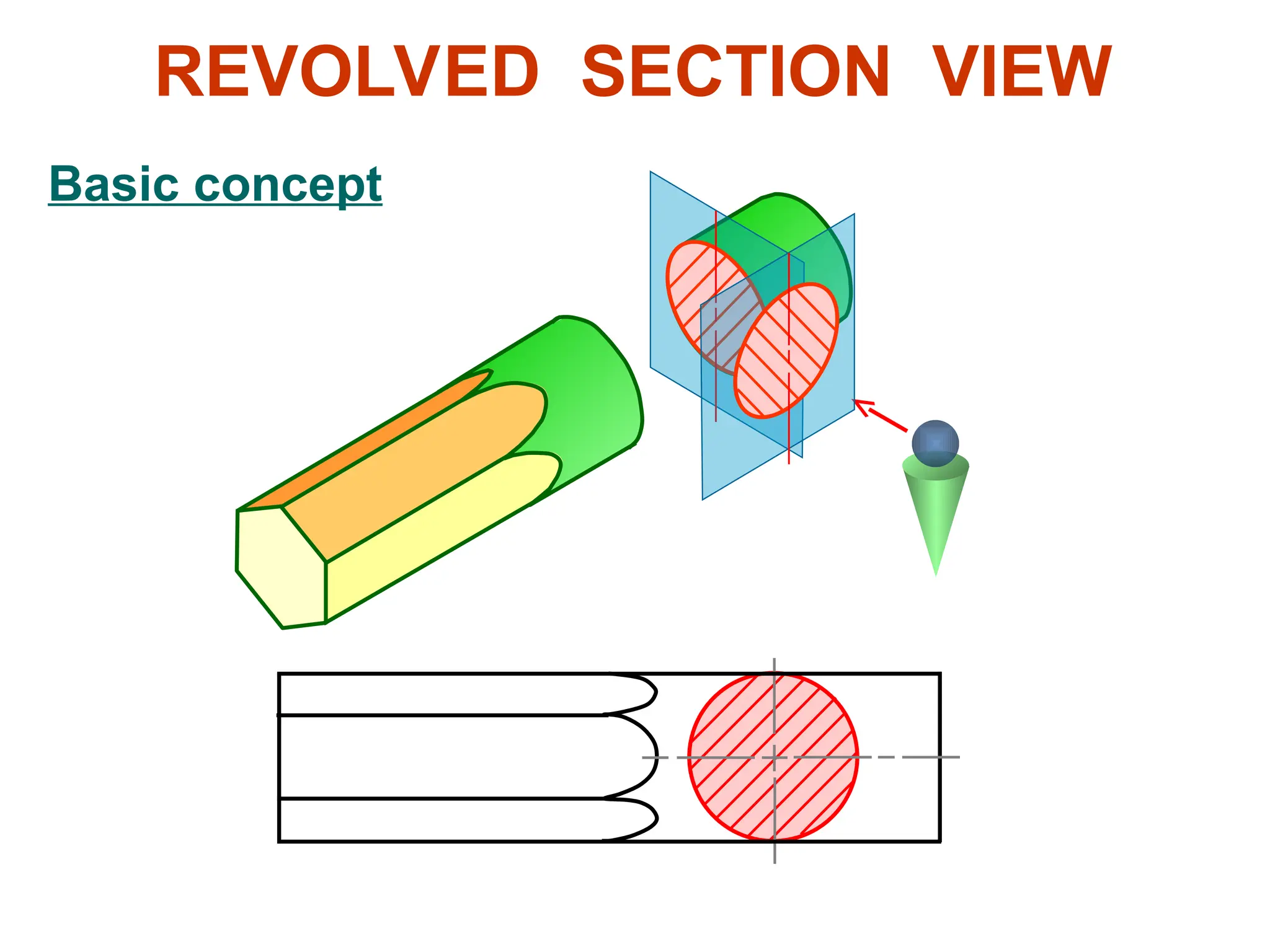
Revolved sections show cross-sectional
features of a part.
No need for additional orthographic views.
This section is especially helpful when a
cross-section varies.
REVOLVED SECTION VIEW
Basic concept
REVOLVED SECTION VIEW
Basic concept
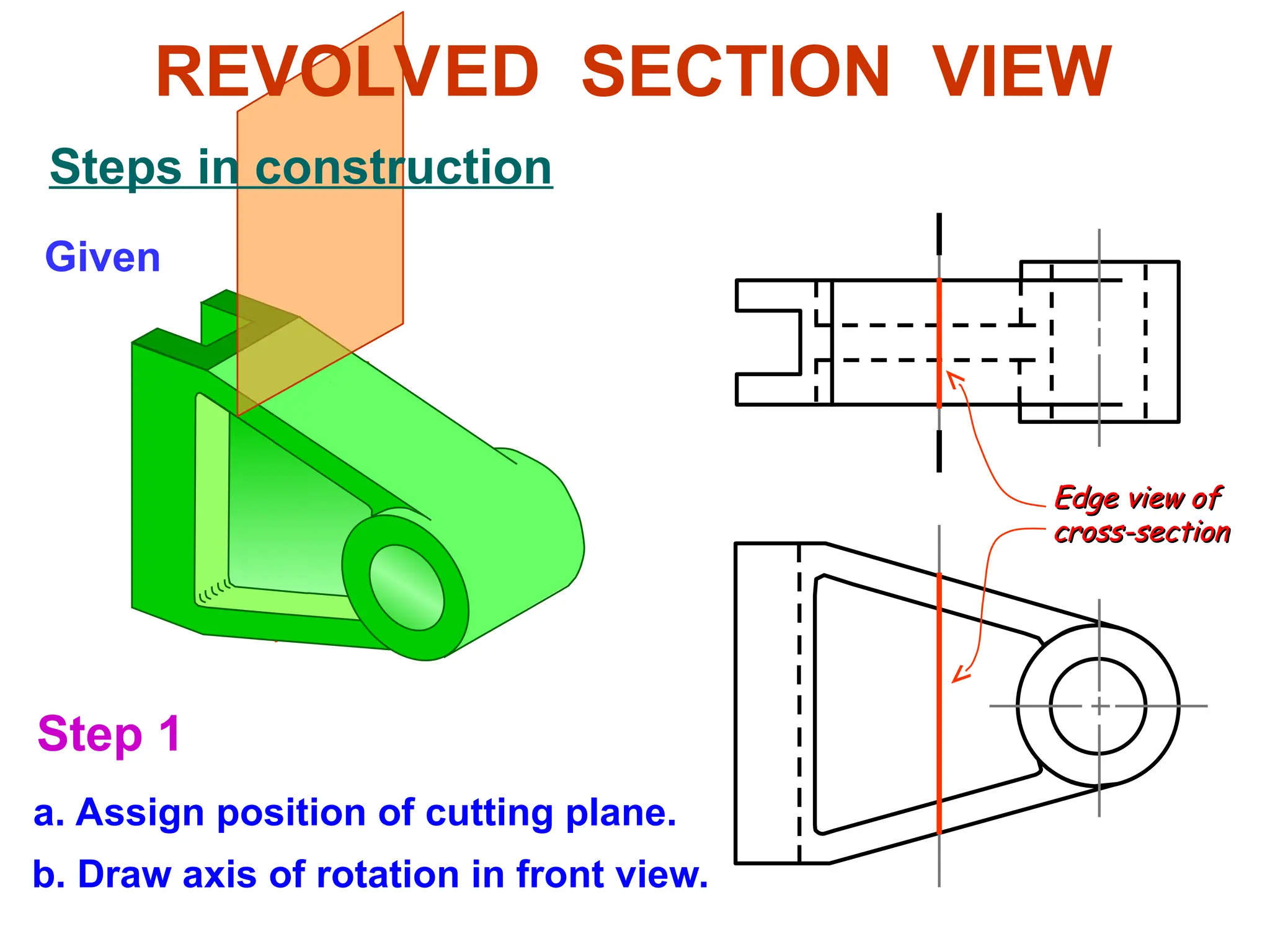
Given
Step 1
a. Assign position of cutting plane.
b. Draw axis of rotation in front view.
Steps in construction
REVOLVED SECTION VIEW
Edge view of
Edge view of
cross-section
cross-section
Steps in construction
Given
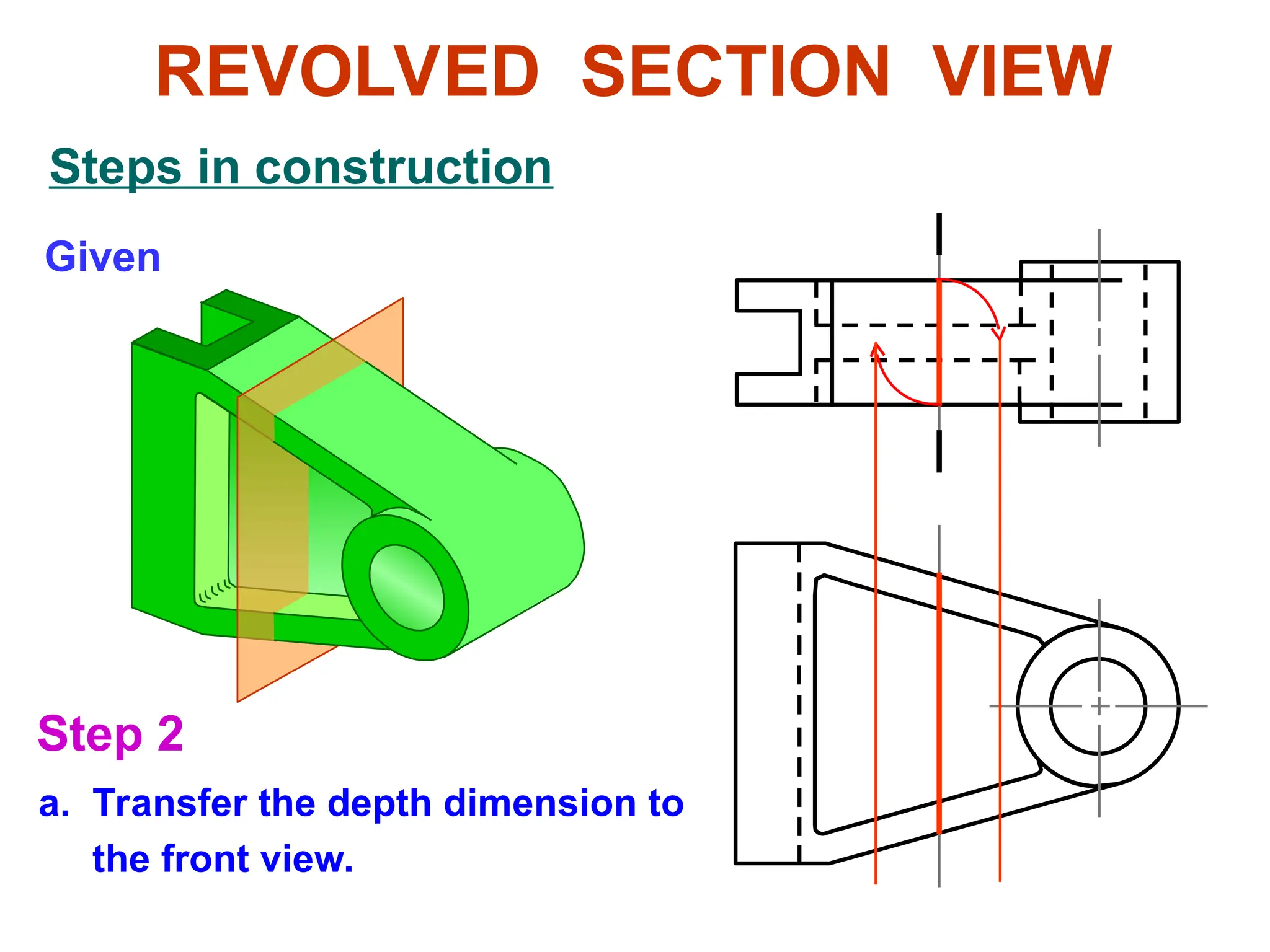
a. Transfer the depth dimension to
the front view.
REVOLVED SECTION VIEW
Step 2
Steps in construction
Given
REVOLVED SECTION VIEW
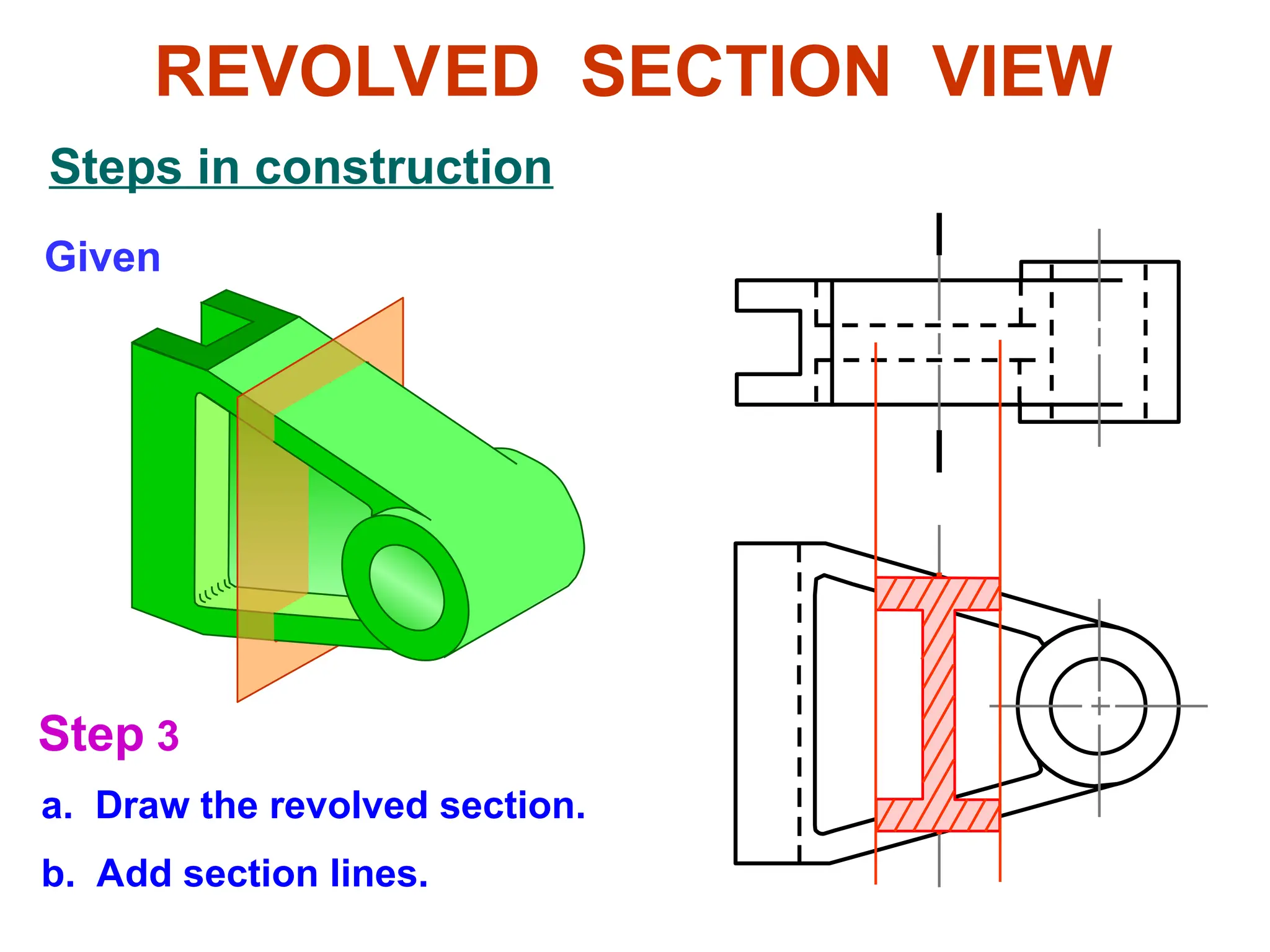
a. Draw the revolved section.
Step 3
b. Add section lines.
Steps in construction
Given
REVOLVED SECTION VIEW
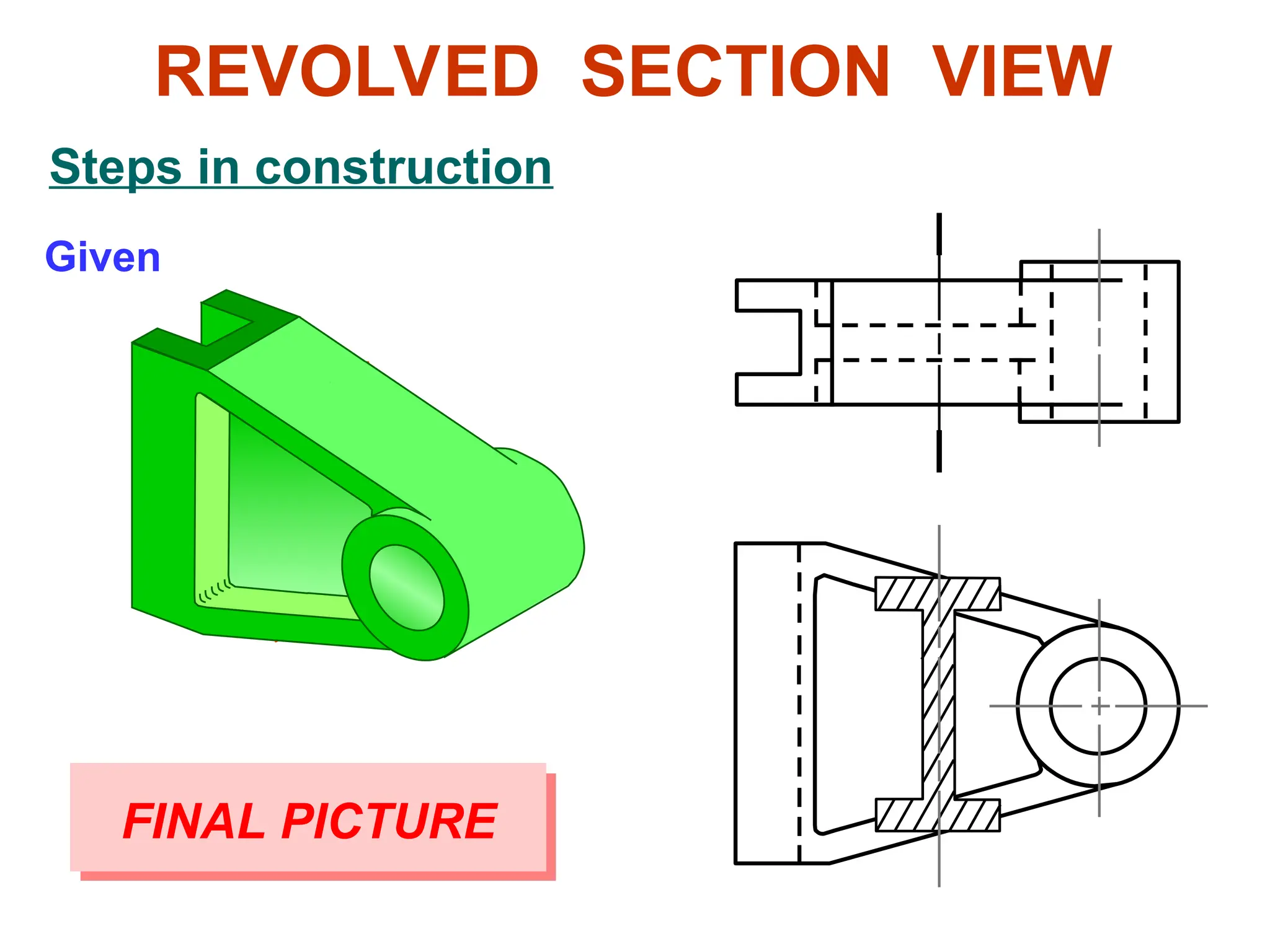
FINAL PICTURE
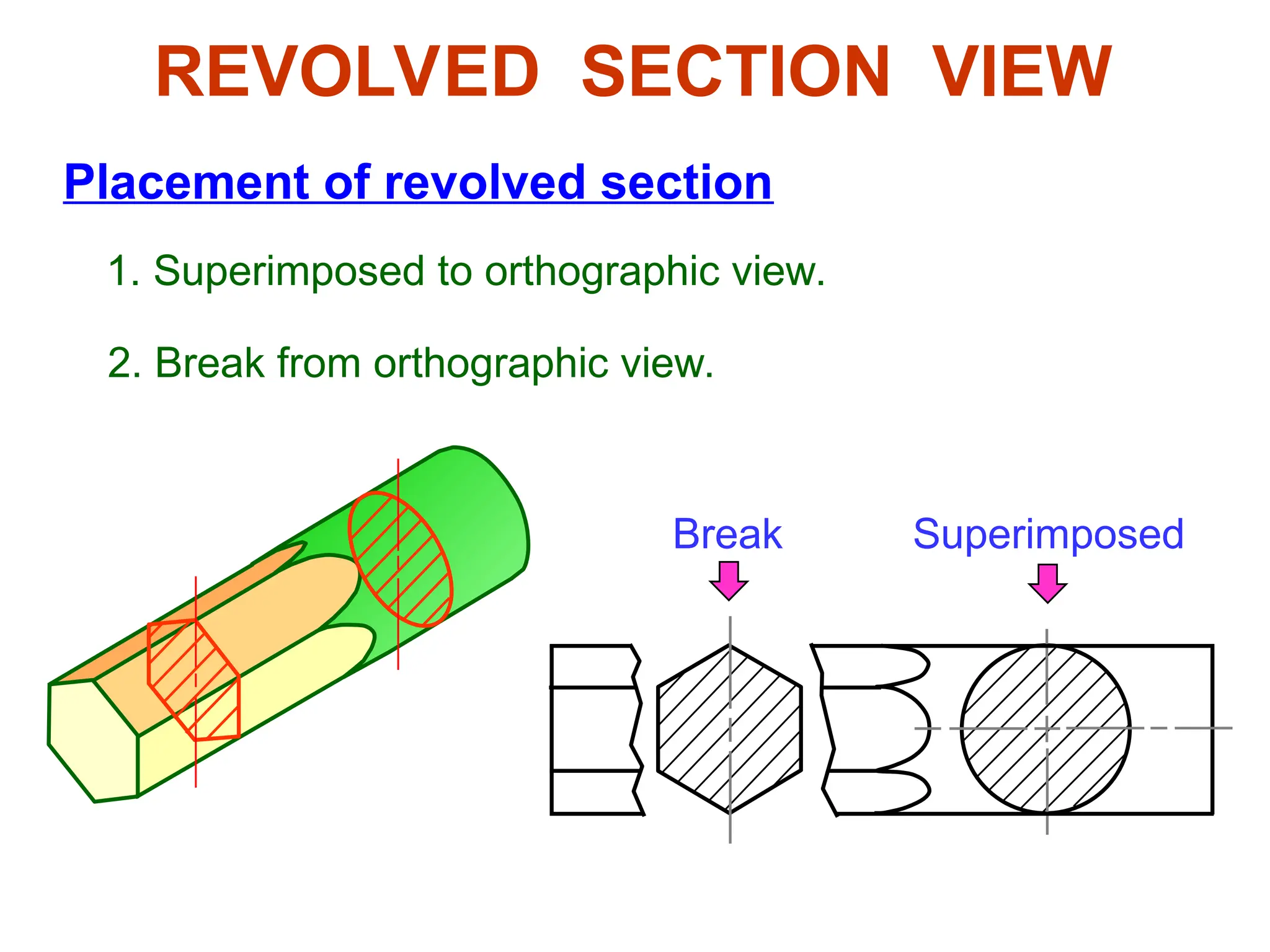
Placement of revolved section
1. Superimposed to orthographic view.
Superimposed
Break
2. Break from orthographic view.
REVOLVED SECTION VIEW
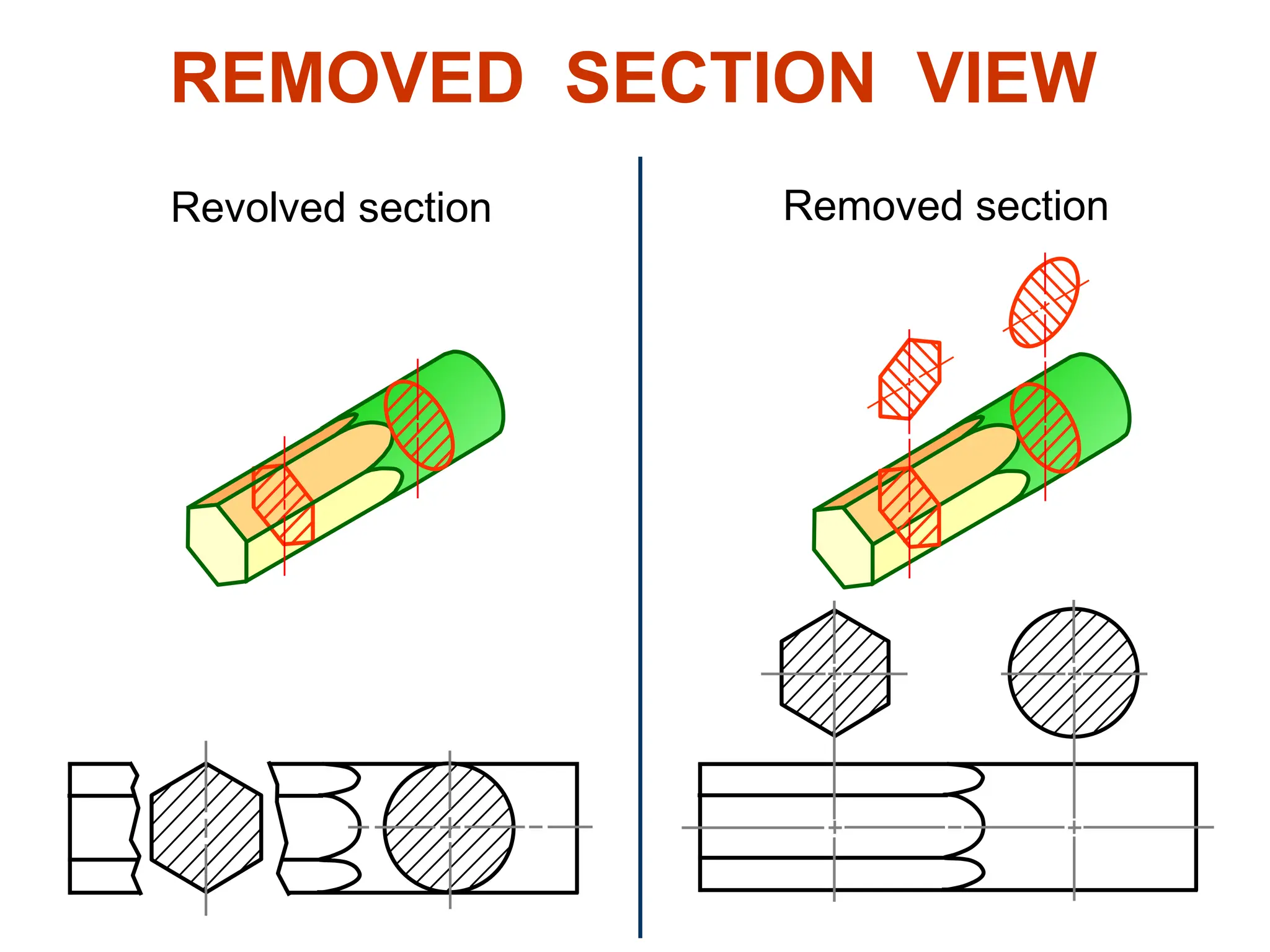
6. Removed section
Removed section is revolved section.
Used where space does not enough for
revolved section
Can be located elsewhere on a drawing
with properly labeled
REMOVED SECTION VIEW
Section view is shown outside the view.
Example : Revolved vs. removed sections.
Revolved section Removed section
REMOVED SECTION VIEW
6.5.CONVENTIONAL PRACTICE
Omit the section lines on the section view of
 Rib
 Web
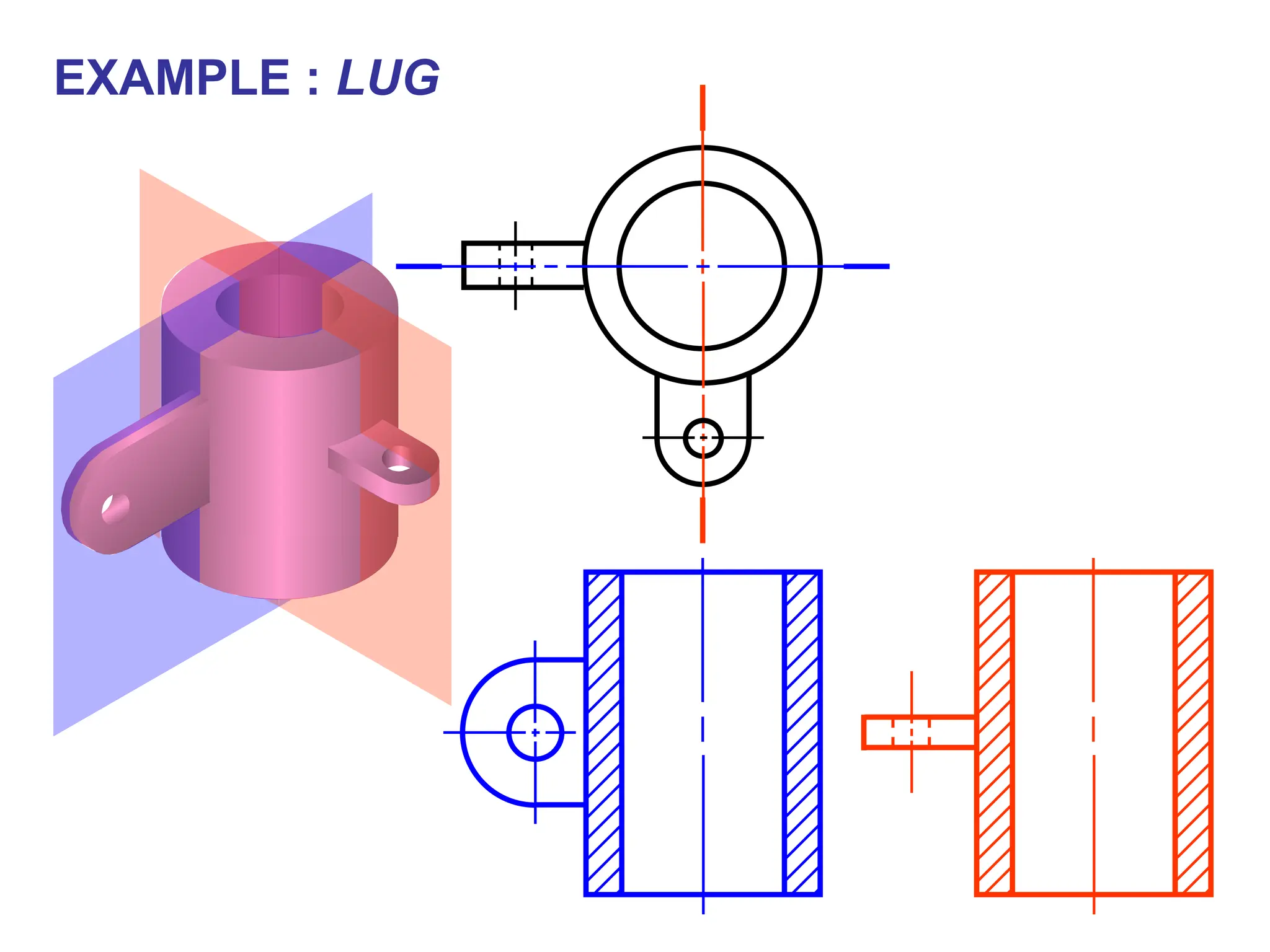
 Lug if the cutting plane is
passed flatwise through.
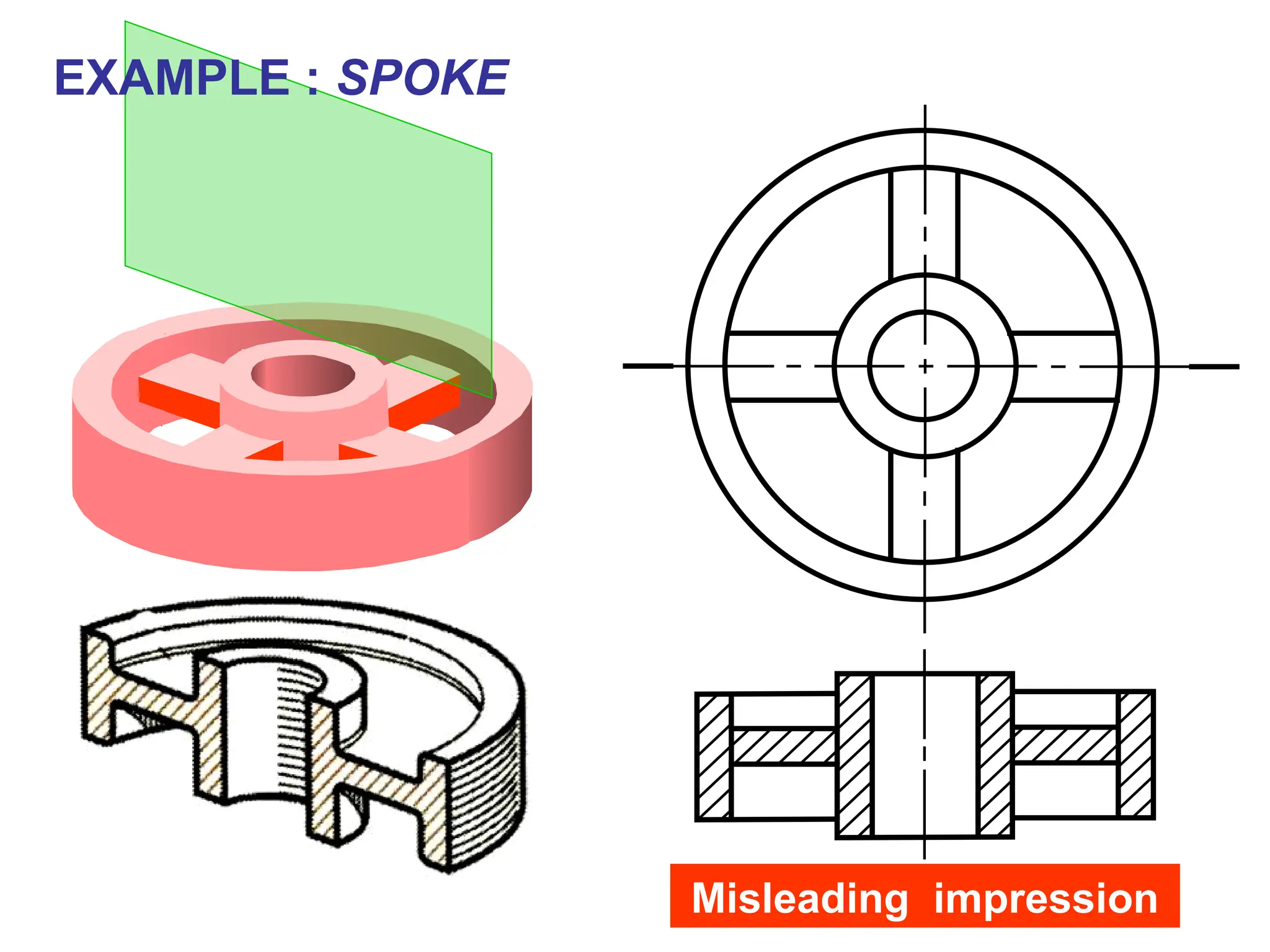
 Spoke, if the cutting plane is passed
longwise
through.
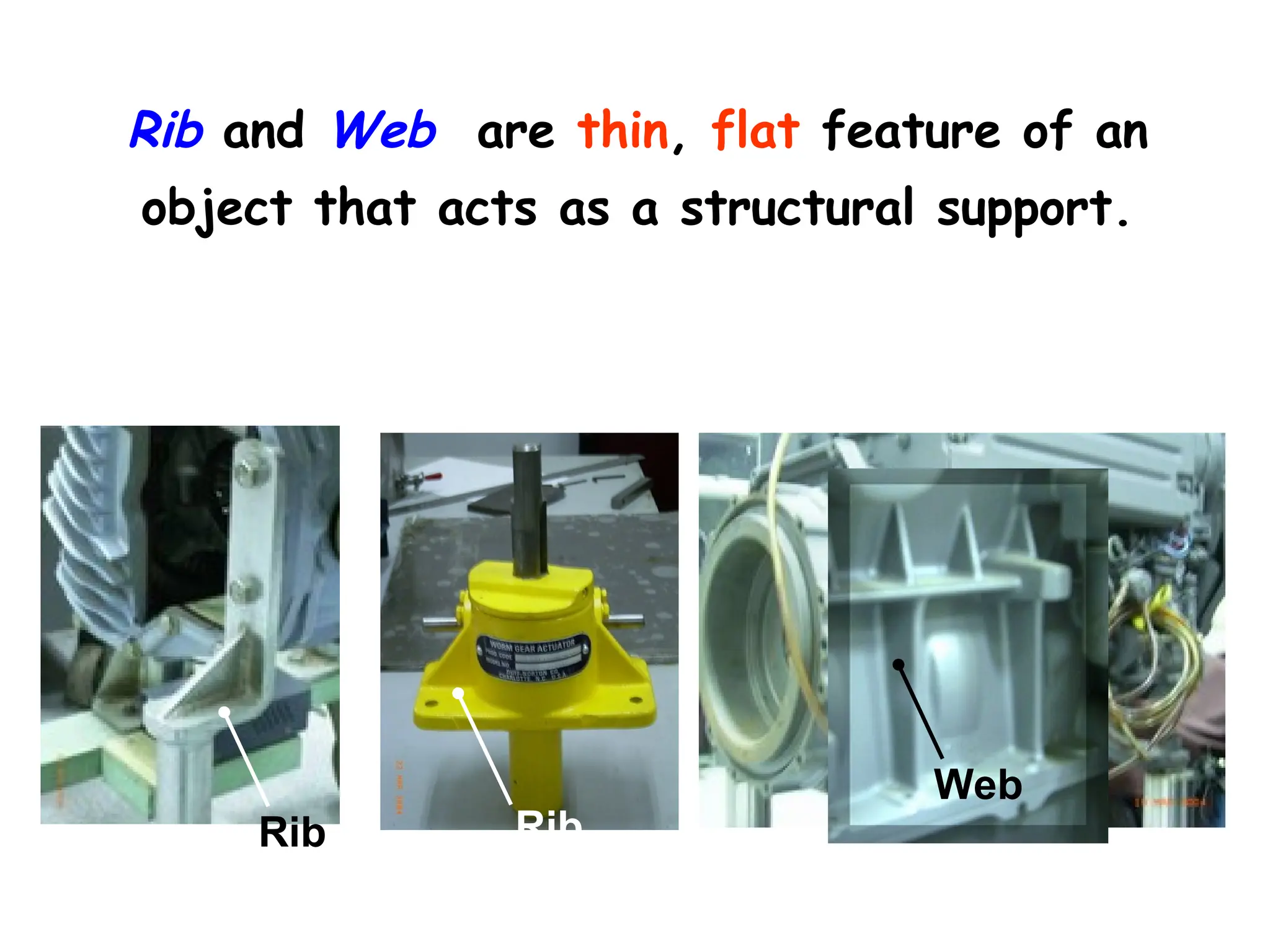
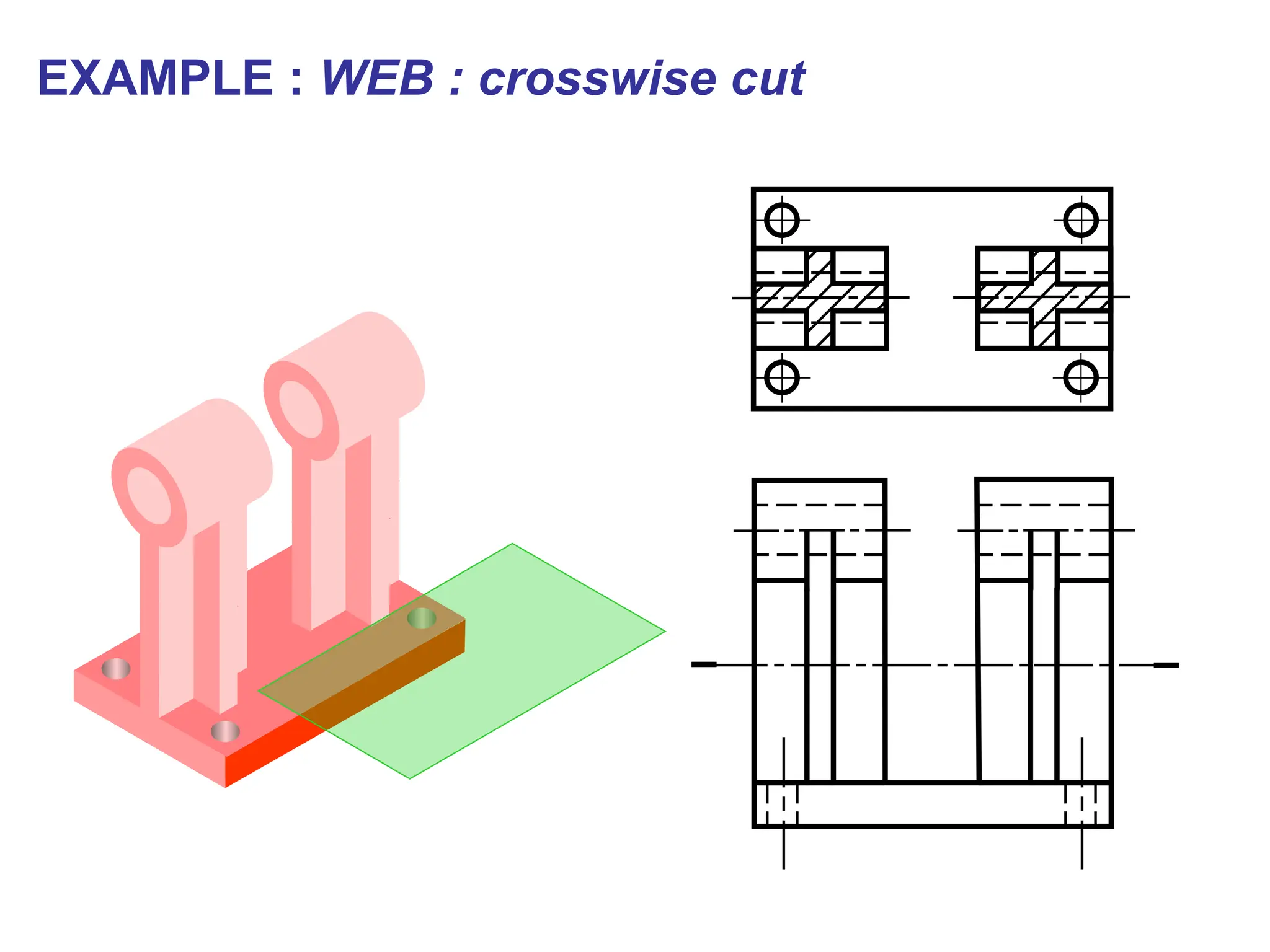
Rib and Web are thin, flat feature of an
object that acts as a structural support.
Rib Rib
Web
Rim
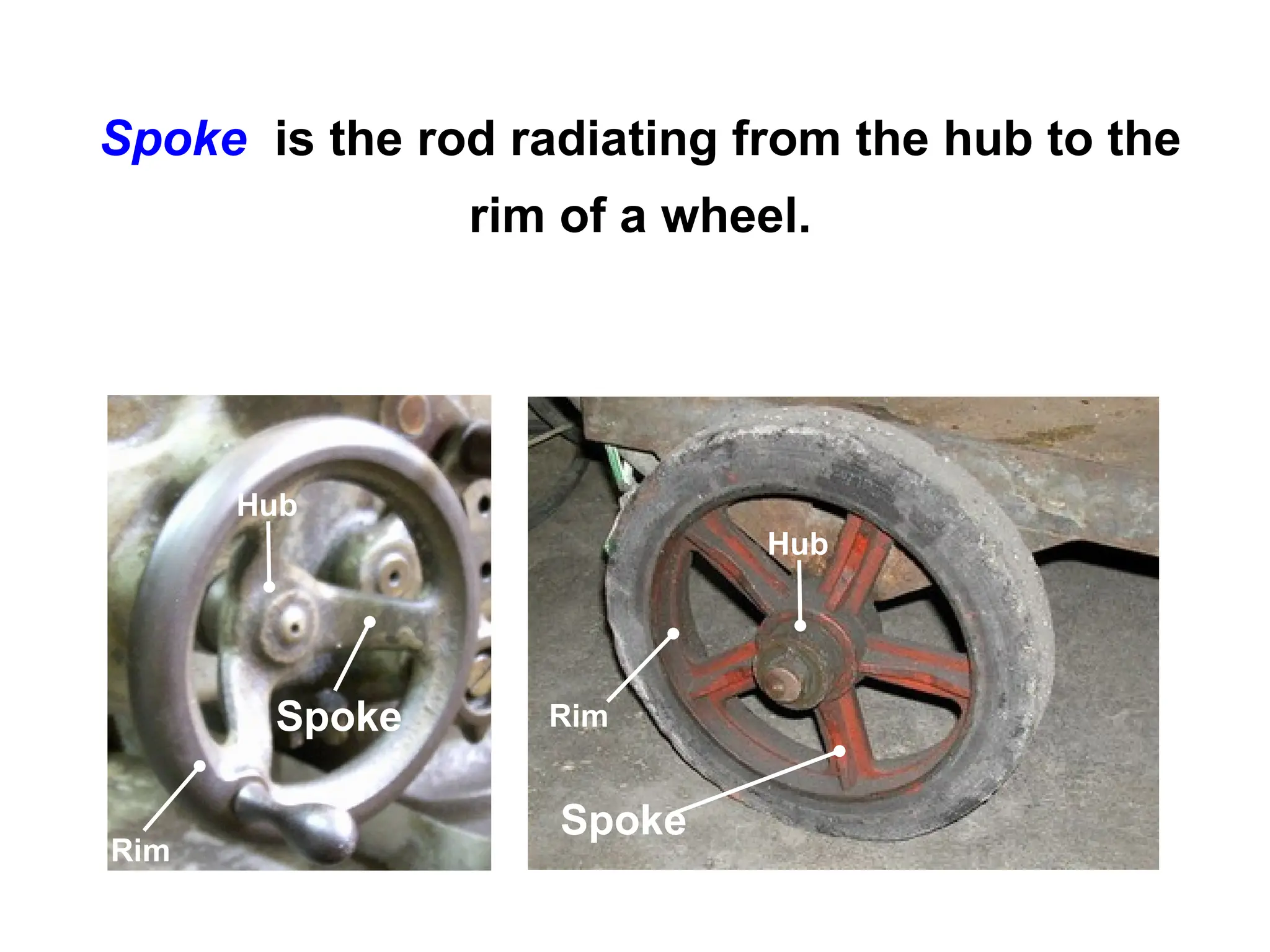
Spoke is the rod radiating from the hub to the
rim of a wheel.
Spoke
Spoke
Rim
Hub
Hub
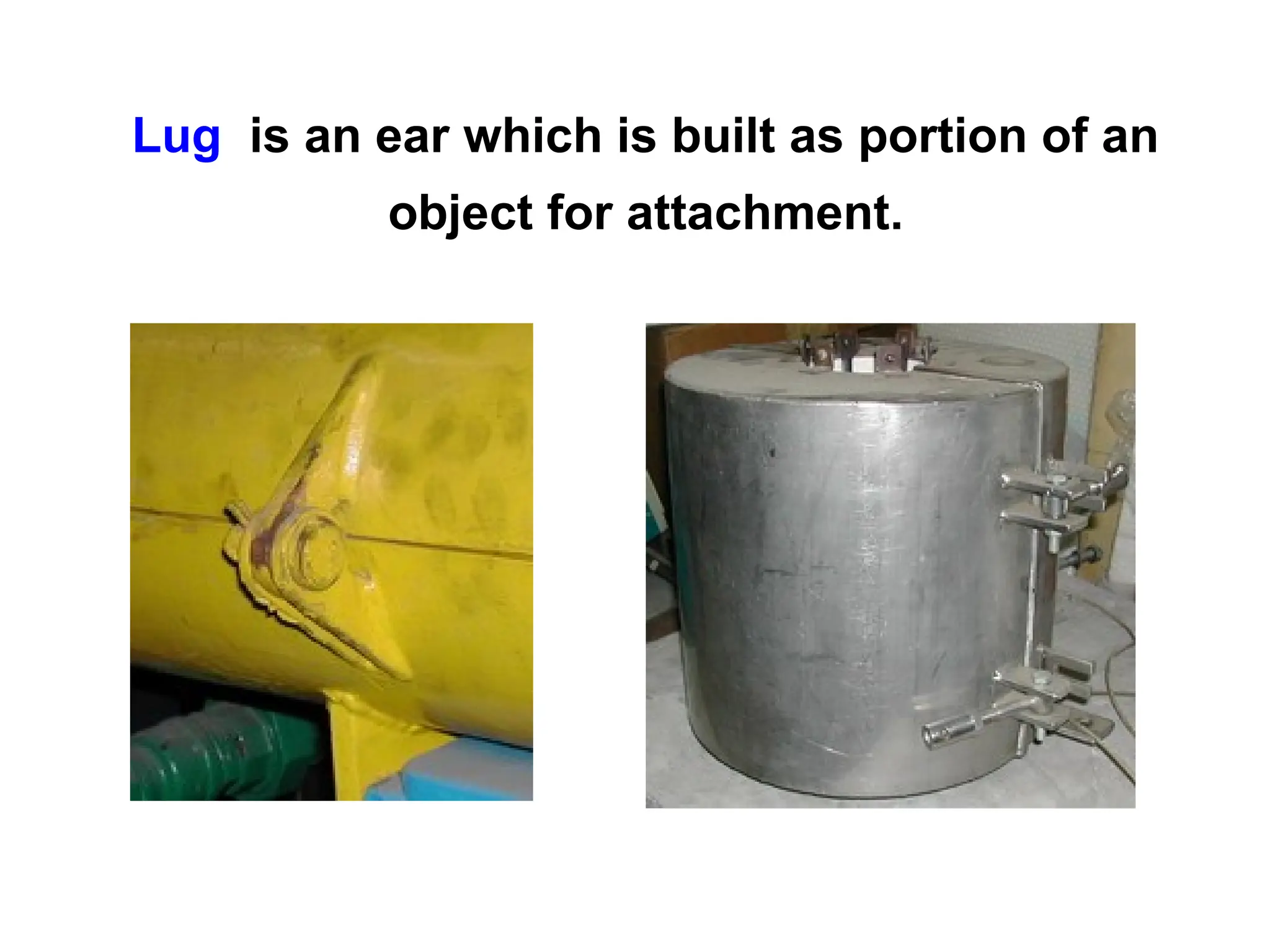
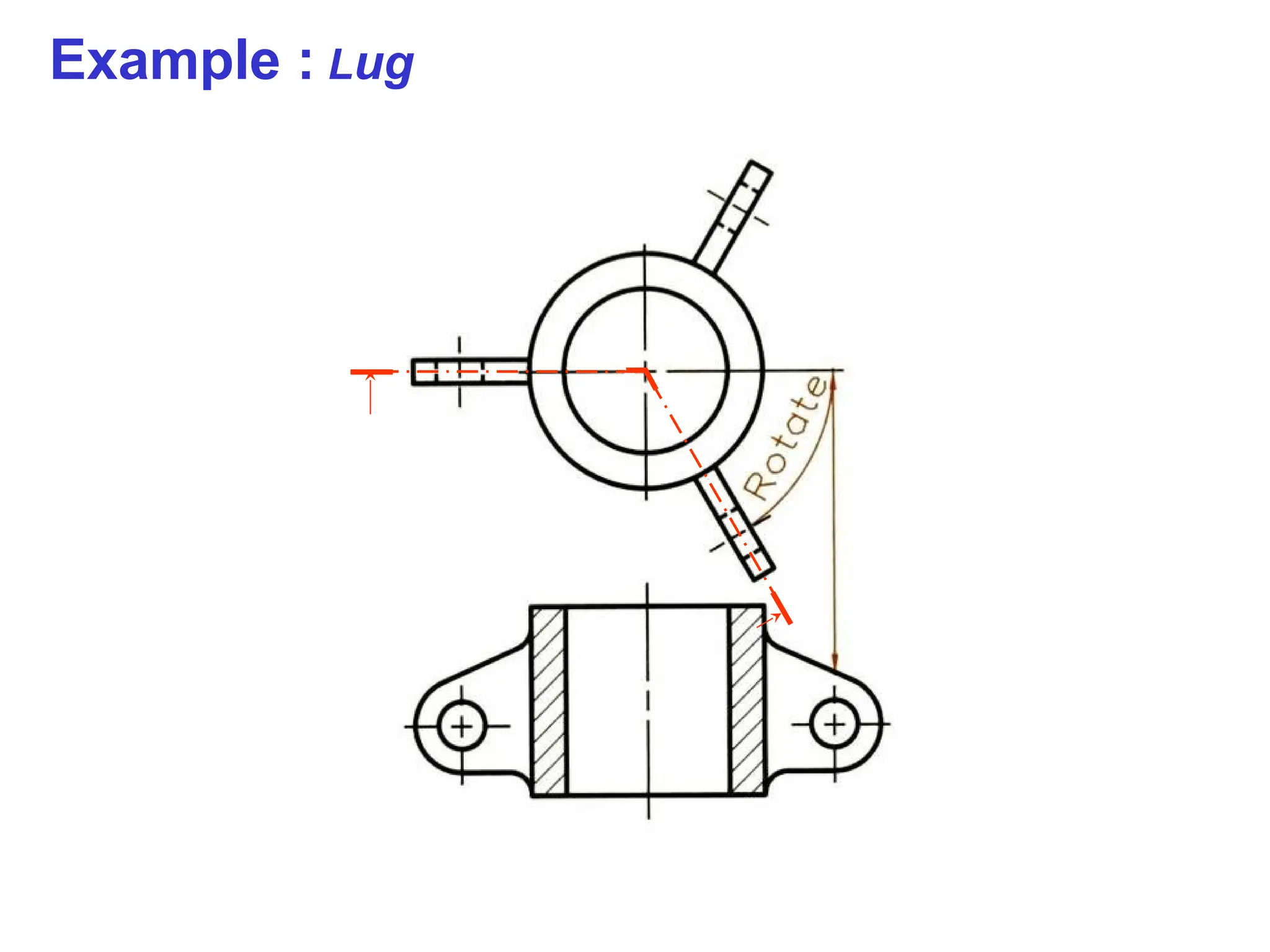
Lug is an ear which is built as portion of an
object for attachment.
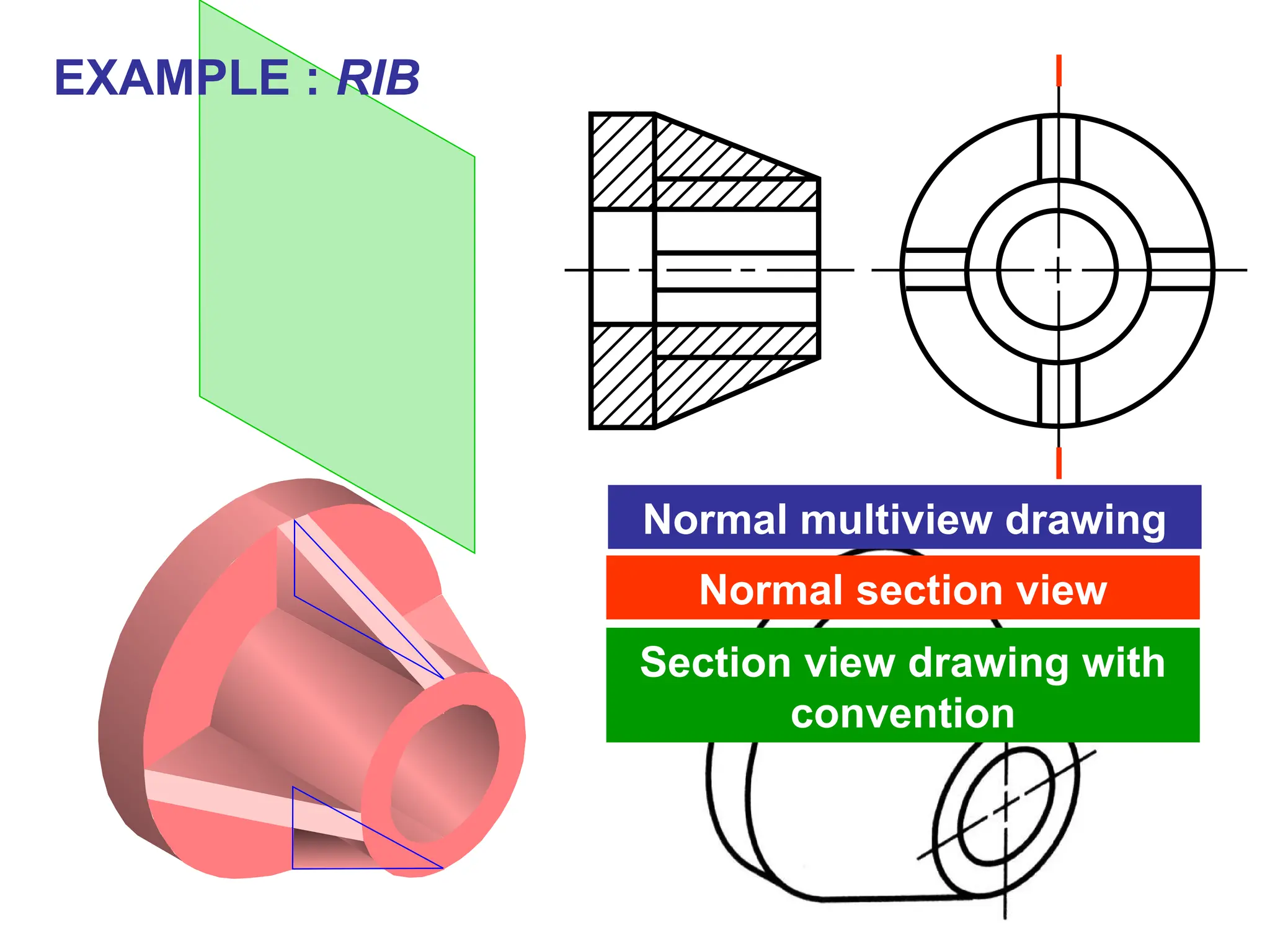
EXAMPLE : RIB
Normal multiview drawing
Normal section view
Section view drawing with
convention
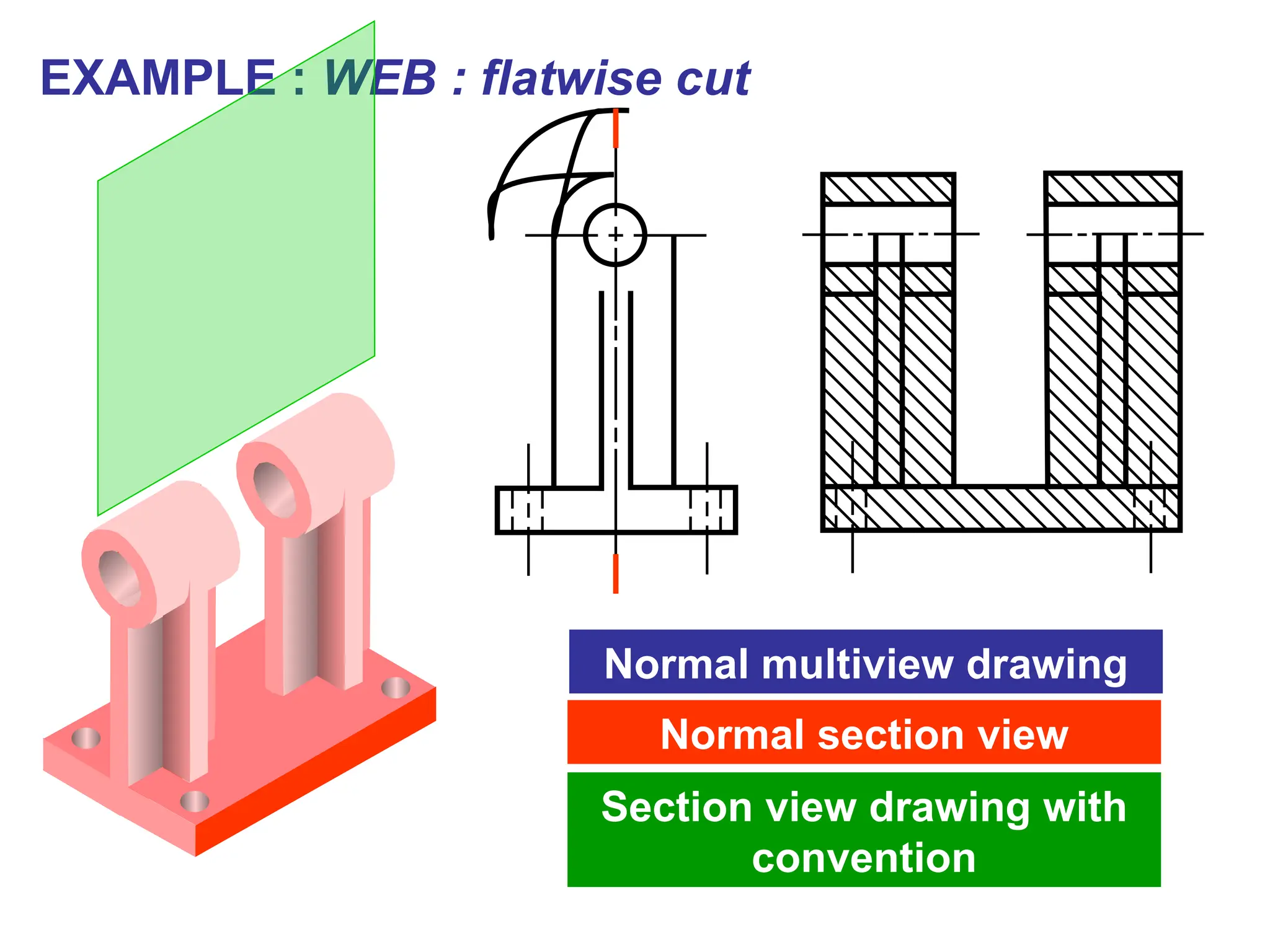
EXAMPLE : WEB : flatwise cut
Normal multiview drawing
Normal section view
Section view drawing with
convention
EXAMPLE : WEB : crosswise cut
EXAMPLE : SPOKE
Misleading impression
EXAMPLE : LUG
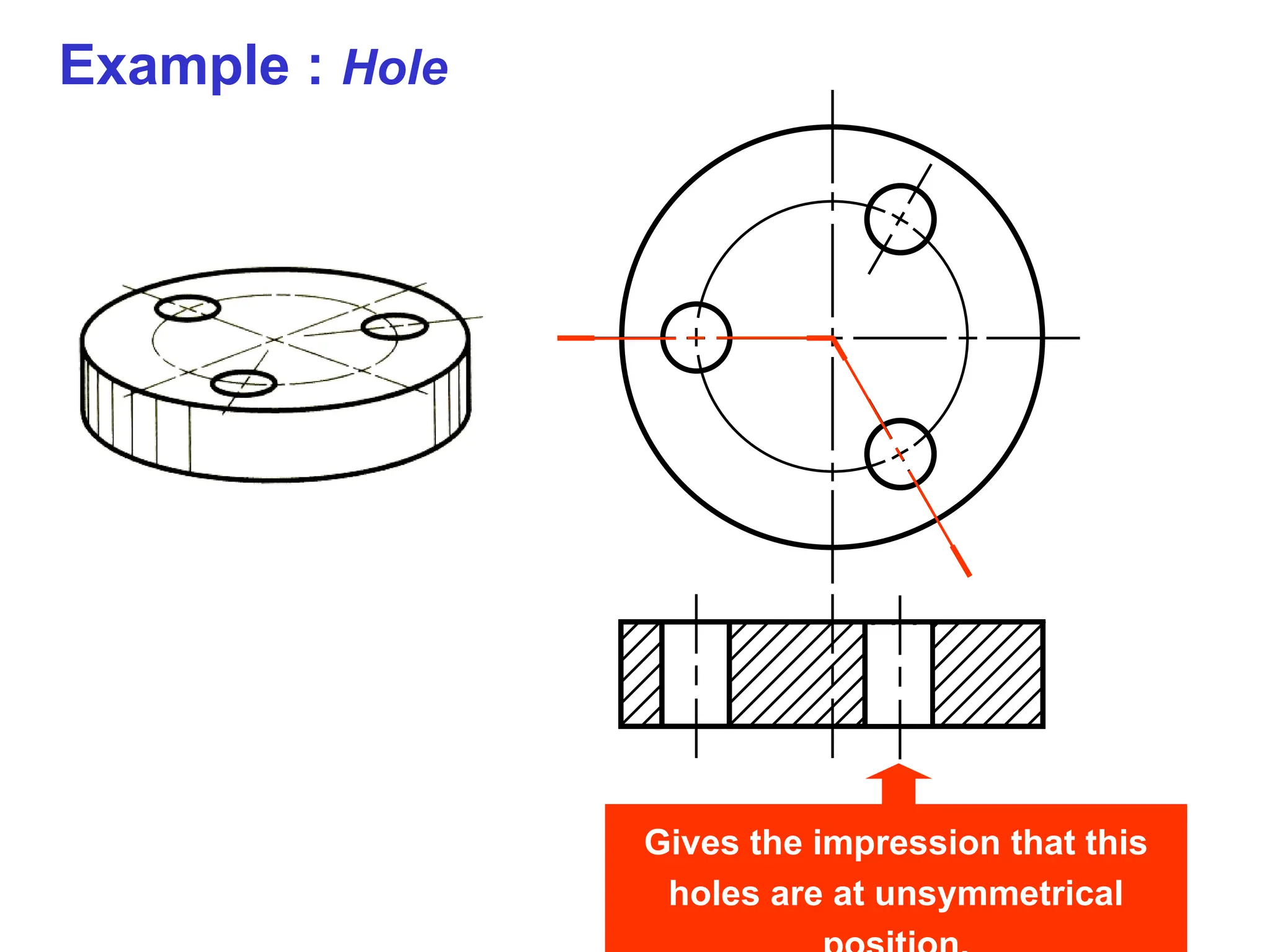
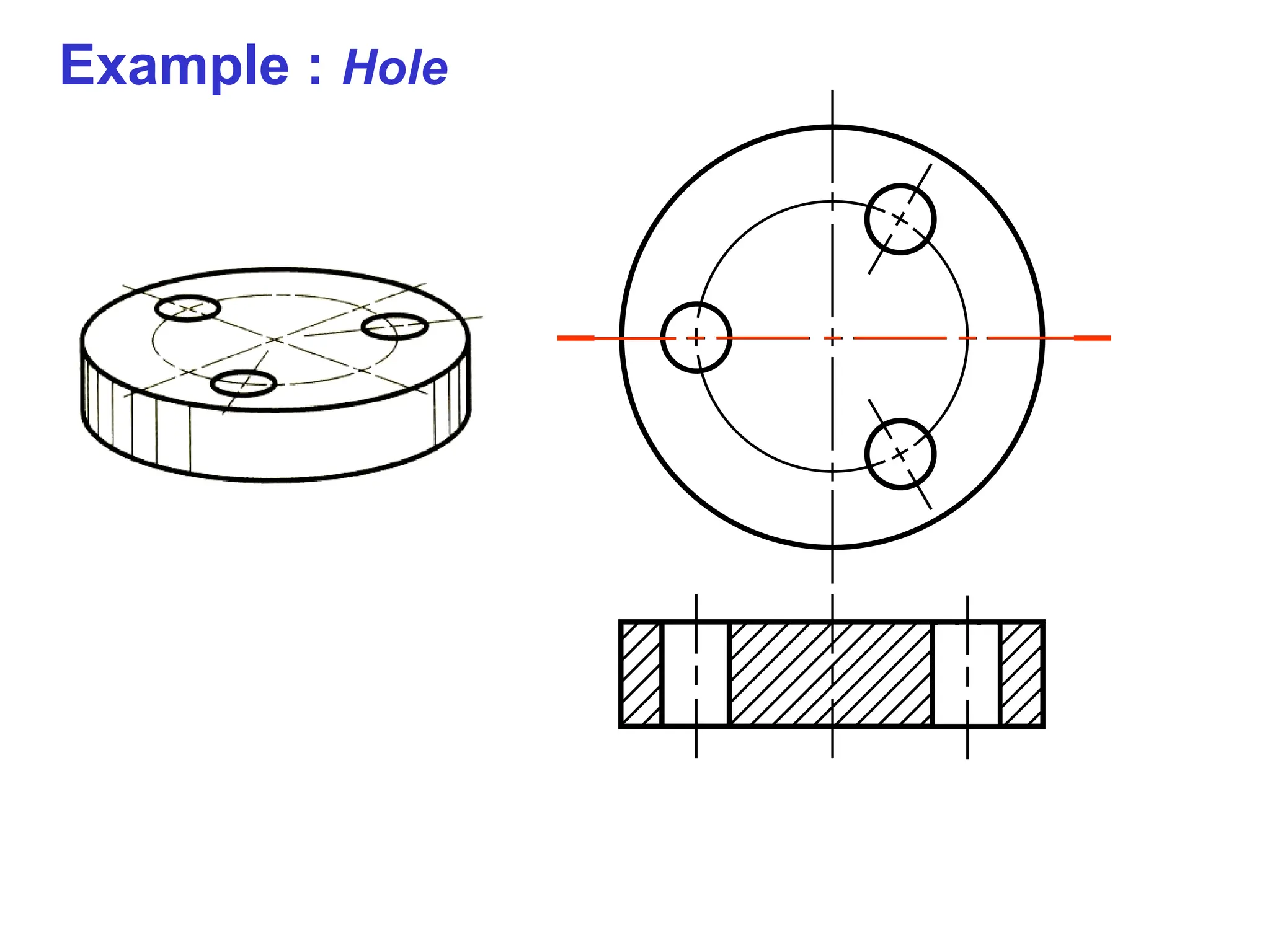
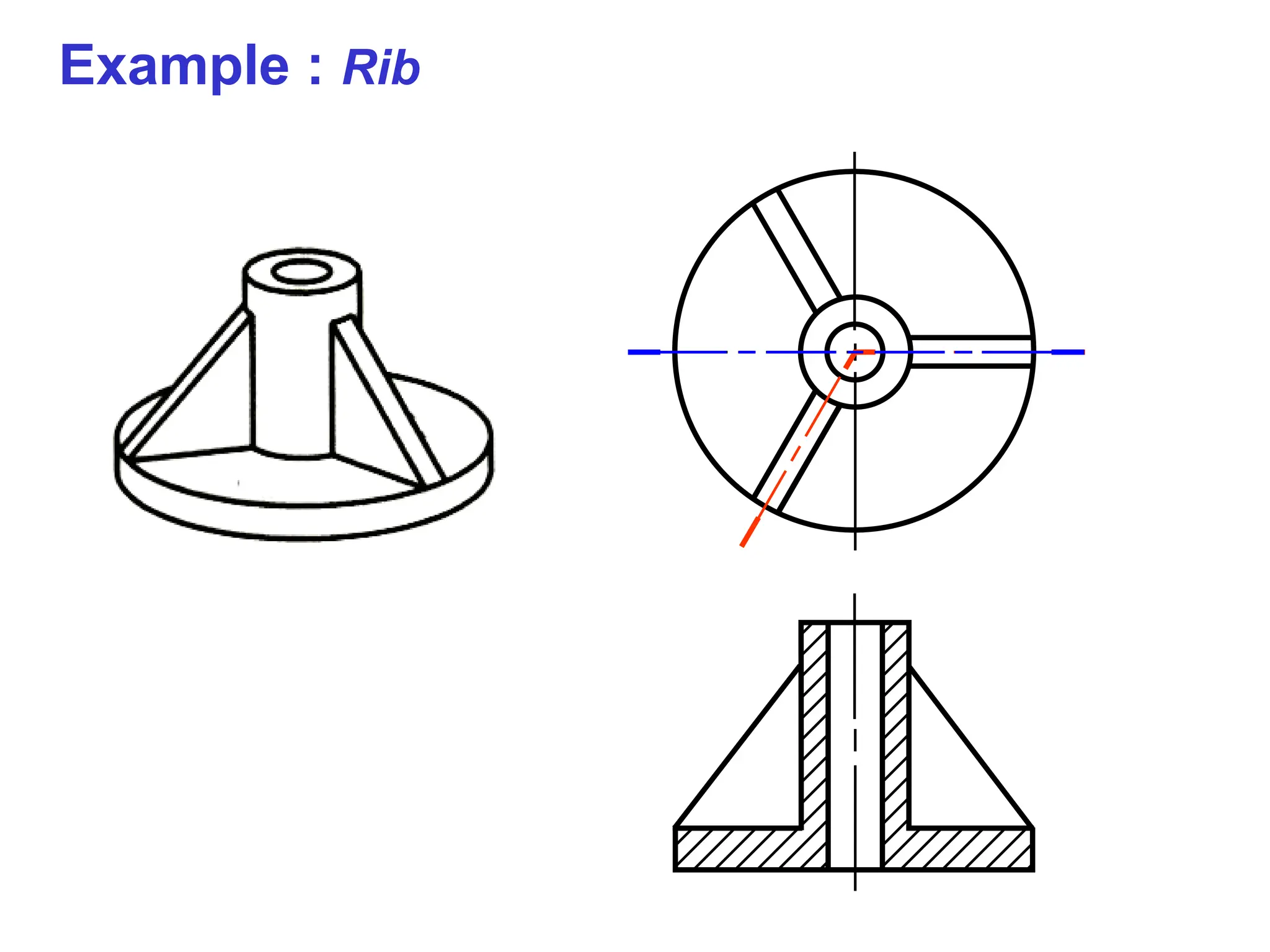
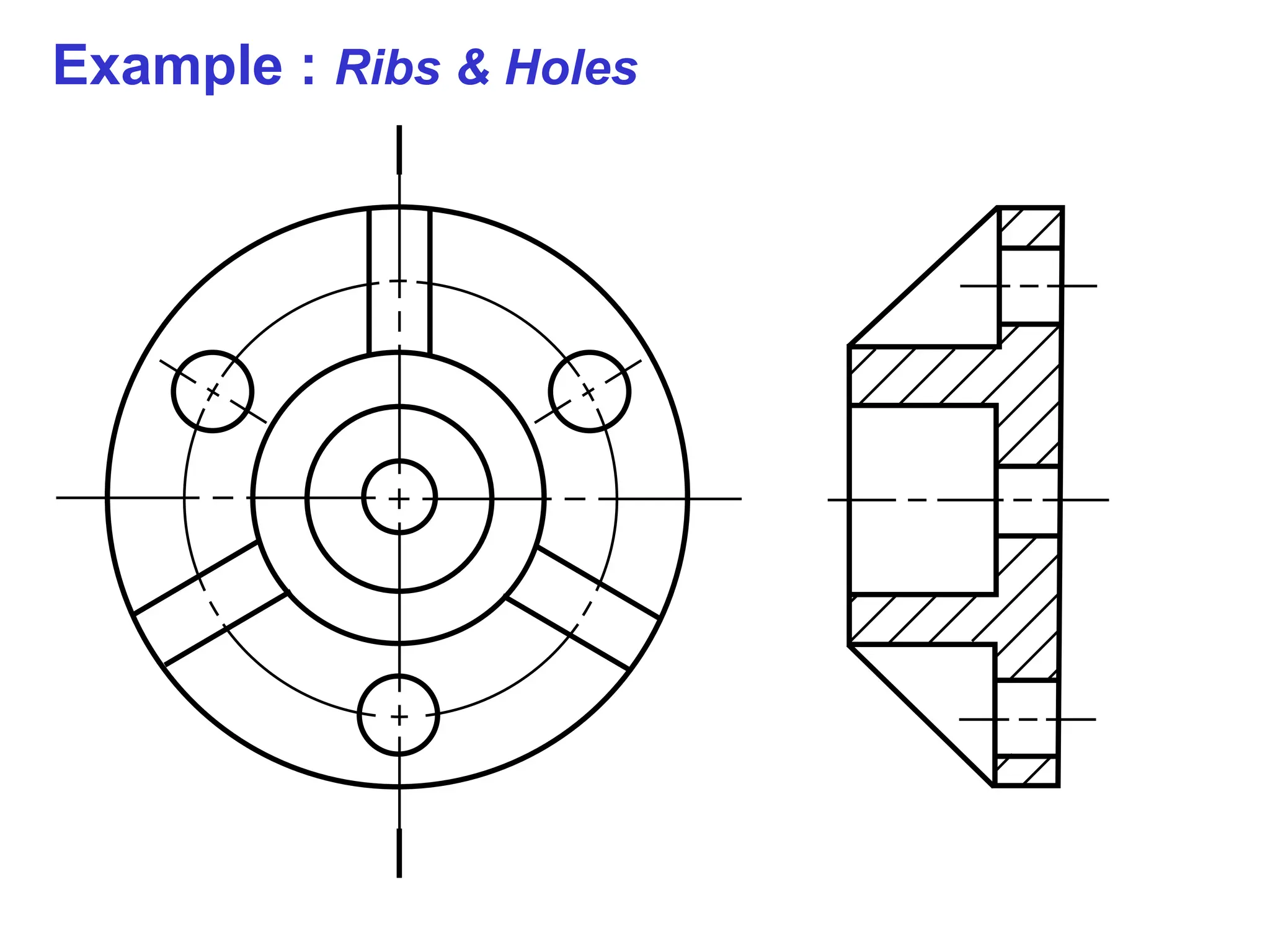
6.6. Aligned Section
Aligned section is a section view that is drawn
by imaginary rotating the object’s features
appeared in a principal view about symmetry
Axis.
Example : Hole
Gives the impression that this
holes are at unsymmetrical
Example : Hole
Example : Rib
Example : Ribs & Holes
Example : Lug
END

Engineering drawing Chapter 6 Section.ppt

  • 1.
    ADAMA SCIENCE ANDTECHNOLOGY UNIVERSITY SCHOOL OF MECHANICAL, CHEMICAL AND MATERIAL ENGINEERING DEPARTMENT OF MECHANICAL ENGINEERING ENGINEERING DRAWING ; MEng1102 CHAPTER-6 SECTIONAL VIEWS Date, Jun 2024 05/07/25
  • 2.
    Learning Outcomes At theend of the lesson the students will be able to: •Define Sections and Identify the Necessity of sectional views •List the types of sectioning and differentiate between them •Practice the convention in sectioning •Make practical exercise on both sectional view and pictorial section.
  • 3.
    6.1. Introduction  Sectionsare used to clarify the interior construction of a part that can not be clearly described by hidden lines in exterior views.  By taking an imaginary cut through the object and removing a portion, the inside features may be seen more clearly.
  • 4.
    6.2.Necessity of sectionalviews  To see clearly interior features of the object.  To clarify the interior details of an object that can not be clearly described by hidden lines.  To reduce confusion.
  • 5.
    6.3.Terminology & commonpractices Basic Terminologies in sectional views  Cutting Plane  Cutting Plane Line  Section Lines
  • 6.
    Cutting plane CUTTING PLANE Cutting planeline  Cutting plane is a plane that imaginarily cuts the object to reveal the internal features. Section lines
  • 7.
     Cutting planeline is an edge view of the cutting plane. CUTTING PLANE LINE Indicate the path of cutting plane.
  • 8.
    ANSI standard Thick line Thick line JIS& ISO standard Thin line CUTTING PLANE LINESTYLES Viewing direction Viewing direction Viewing direction
  • 9.
    SECTION LINING  Sectionlines or cross-hatch lines are used to indicate the surfaces that are cut by the cutting plane. Section lines Drawn with 4H pencil.
  • 11.
    SECTION LINES SYMBOLS Thesection lines are different for each of material’s type. Cast iron, Malleable iron Steel Concrete Sand Wood For practical purpose, the cast iron symbol is used most often for any materials.
  • 12.
    SECTION LINING PRACTICE Thespaces between lines may vary from 1.5 mm for small sections to 3 mm for large sections. COMMON MISTAKE
  • 13.
    SECTION LINING PRACTICE Itshould not be drawn parallel or perpendicular to contour of the view. COMMON MISTAKE
  • 14.
    6.4.KIND OF SECTIONS 1.Full section 2. Offset section 3. Half section 4. Broken-out section 5. Revolved section (aligned section) 6. Removed section (detailed section)
  • 15.
    FULL SECTION VIEW Theview is made by passing the straight cutting plane completely through the part.
  • 16.
    OFFSET SECTION VIEW Theview is made by passing the bended cutting plane completely through the part. Do not show the edge views of the cutting plane.
  • 17.
    TREATMENT OF HIDDENLINES Hidden lines are normally omitted from section views.
  • 18.
    HALF SECTION VIEW Theview is made by passing the cutting plane halfway through an object and remove a quarter of it.
  • 19.
    HALF SECTION VIEW Acenter line is used to separate the sectioned half from the unsectioned half of the view. Hidden line is omitted in unsection half of the view.
  • 20.
    The view ismade by passing the cutting plane normal to the viewing direction and removing the portion of an object in front of it. BROKEN-OUT SECTION VIEW
  • 21.
    A break lineis used to separate the sectioned portion from the unsectioned portion of the view. BROKEN-OUT SECTION VIEW There is no cutting plane line. Break line is a thin continuous line (4H) and is drawn freehand.
  • 22.
    EXAMPLE : Comparisonamong several section techniques
  • 23.
    Revolved sections showcross-sectional features of a part. No need for additional orthographic views. This section is especially helpful when a cross-section varies. REVOLVED SECTION VIEW
  • 24.
  • 25.
  • 26.
    Given Step 1 a. Assignposition of cutting plane. b. Draw axis of rotation in front view. Steps in construction REVOLVED SECTION VIEW Edge view of Edge view of cross-section cross-section
  • 27.
    Steps in construction Given a.Transfer the depth dimension to the front view. REVOLVED SECTION VIEW Step 2
  • 28.
    Steps in construction Given REVOLVEDSECTION VIEW a. Draw the revolved section. Step 3 b. Add section lines.
  • 29.
    Steps in construction Given REVOLVEDSECTION VIEW FINAL PICTURE
  • 30.
    Placement of revolvedsection 1. Superimposed to orthographic view. Superimposed Break 2. Break from orthographic view. REVOLVED SECTION VIEW
  • 31.
    6. Removed section Removedsection is revolved section. Used where space does not enough for revolved section Can be located elsewhere on a drawing with properly labeled REMOVED SECTION VIEW Section view is shown outside the view.
  • 32.
    Example : Revolvedvs. removed sections. Revolved section Removed section REMOVED SECTION VIEW
  • 33.
    6.5.CONVENTIONAL PRACTICE Omit thesection lines on the section view of  Rib  Web  Lug if the cutting plane is passed flatwise through.  Spoke, if the cutting plane is passed longwise through.
  • 34.
    Rib and Webare thin, flat feature of an object that acts as a structural support. Rib Rib Web
  • 35.
    Rim Spoke is therod radiating from the hub to the rim of a wheel. Spoke Spoke Rim Hub Hub
  • 36.
    Lug is anear which is built as portion of an object for attachment.
  • 37.
    EXAMPLE : RIB Normalmultiview drawing Normal section view Section view drawing with convention
  • 38.
    EXAMPLE : WEB: flatwise cut Normal multiview drawing Normal section view Section view drawing with convention
  • 39.
    EXAMPLE : WEB: crosswise cut
  • 40.
  • 41.
  • 42.
    6.6. Aligned Section Alignedsection is a section view that is drawn by imaginary rotating the object’s features appeared in a principal view about symmetry Axis.
  • 43.
    Example : Hole Givesthe impression that this holes are at unsymmetrical
  • 44.
  • 45.
  • 46.
  • 47.
  • 48.