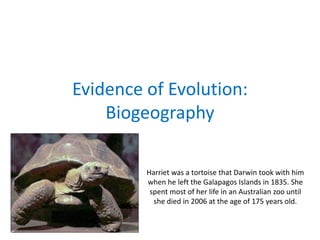
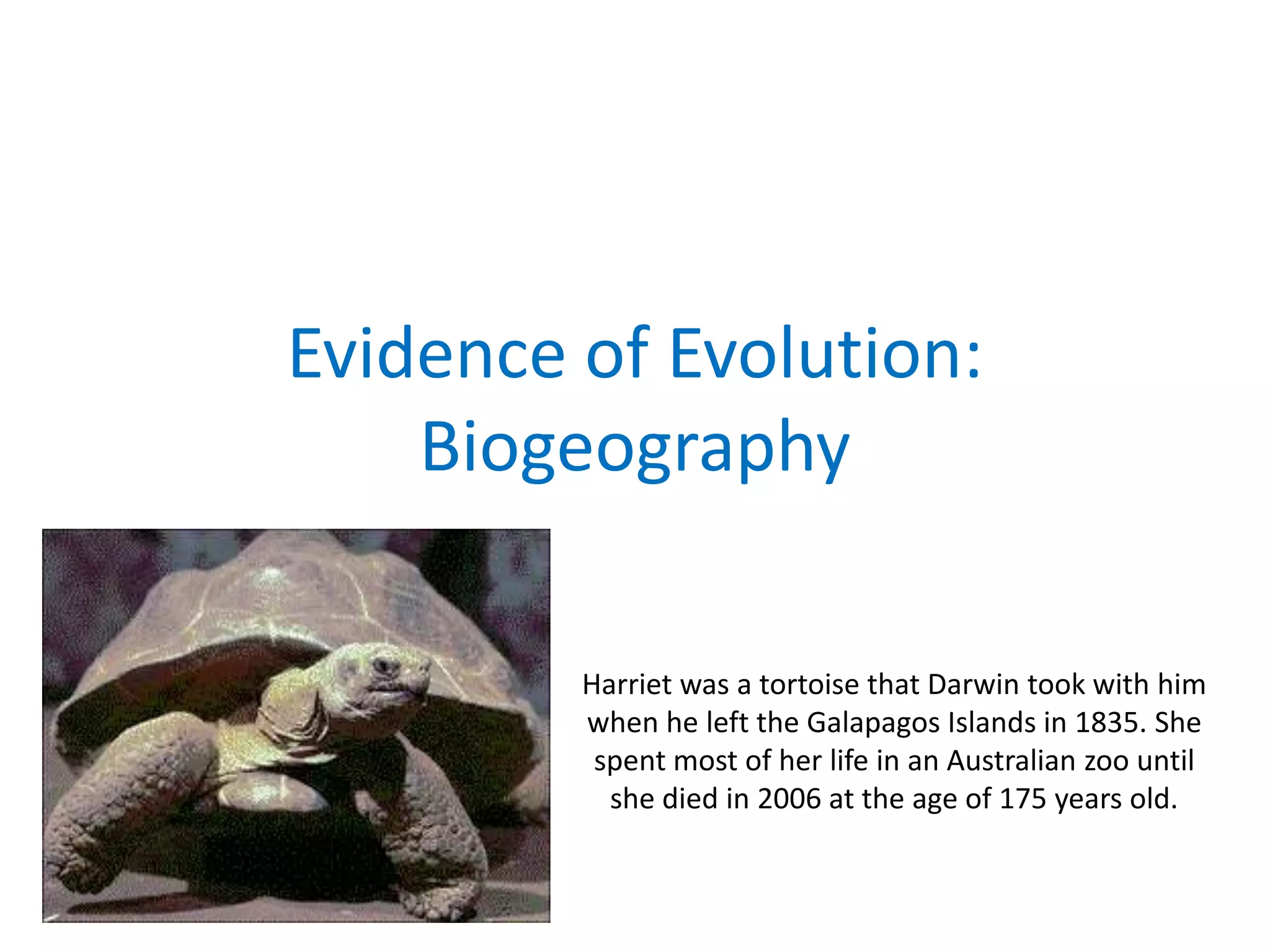
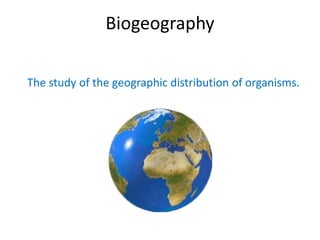
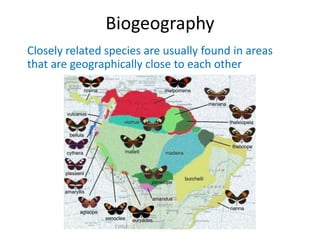
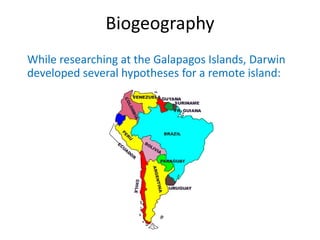
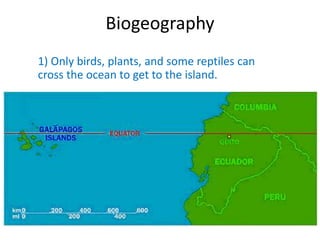
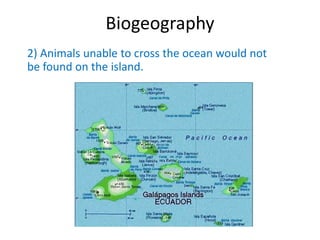
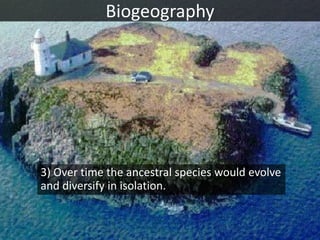
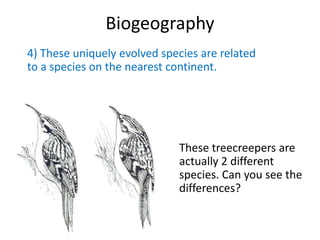
The document discusses biogeography as evidence of evolution. It describes how Darwin observed that species on remote islands like the Galapagos evolved uniquely from ancestral species on the nearest continents over time in isolation. Different related species found on islands geographically close to each other provide evidence that ancestral species diversified after crossing oceans to colonize new lands.



![Evolution+and+natural+selection pvms[1]](https://cdn.slidesharecdn.com/ss_thumbnails/evolutionandnaturalselectionpvms1-141015100918-conversion-gate02-thumbnail.jpg?width=640&height=640&fit=bounds)


