Classification copyright cmassengale
There are  13 billion  known species of organisms This is  only 5% of all  organisms that ever lived!!!!! New organisms  are still being found and identified Species of Organisms copyright cmassengale
What is Classification? Classification  is the arrangement of organisms into orderly  groups  based on their  similarities Classification is also known as  taxonomy Taxonomists  are scientists that identify & name organisms copyright cmassengale
Benefits of Classifying Accurately & uniformly  names organisms  Prevents  misnomers  such as starfish & jellyfish that aren't really fish  Uses  same language (Latin or some Greek)  for all names  Sea”horse”?? copyright cmassengale
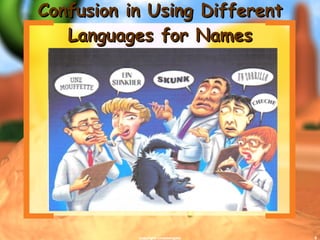
Confusion in Using Different Languages for Names copyright cmassengale
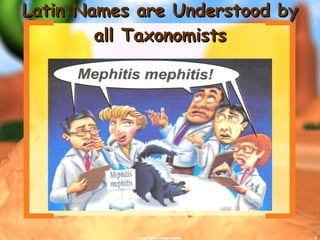
Latin Names are Understood by all Taxonomists copyright cmassengale
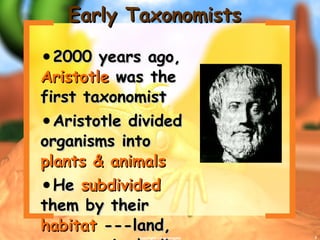
Early Taxonomists 2000 years ago,  Aristotle  was the first taxonomist Aristotle divided organisms into  plants & animals He  subdivided  them by their  habitat  ---land, sea, or air dwellers  copyright cmassengale
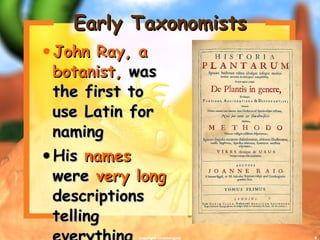
Early Taxonomists John Ray, a botanist,  was the first to use Latin for naming His  names  were  very long  descriptions telling everything about the plant copyright cmassengale
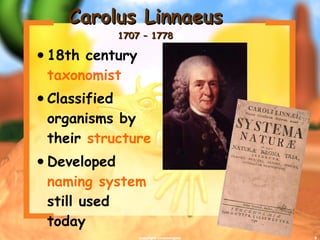
Carolus Linnaeus 1707 – 1778 18th century  taxonomist Classified organisms by their  structure Developed  naming system  still used today copyright cmassengale
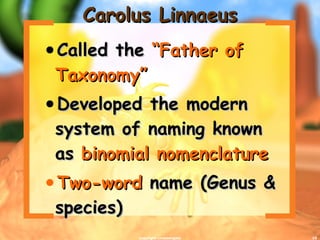
Carolus Linnaeus Called the  “Father of Taxonomy” Developed the modern system of naming known as  binomial nomenclature Two-word  name (Genus & species) copyright cmassengale
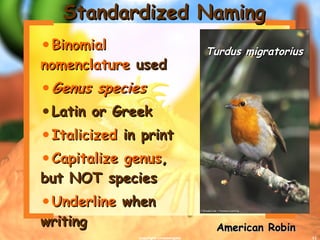
Standardized Naming Binomial nomenclature  used Genus species Latin or Greek Italicized  in print Capitalize genus , but NOT species Underline  when writing Turdus migratorius American Robin copyright cmassengale
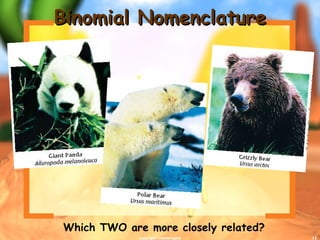
Binomial Nomenclature Which TWO are more closely related? copyright cmassengale
Rules for Naming Organisms The  International Code for Binomial Nomenclature  contains the rules for naming organisms All names must be approved by  International Naming Congresses  (International Zoological Congress) This  prevents duplicated  names copyright cmassengale
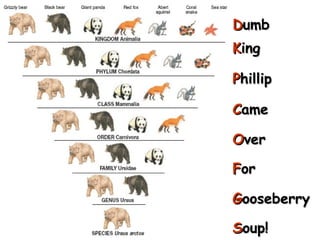
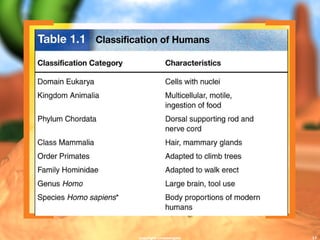
Classification Groups Taxon  (  taxa -plural) is a category into which related organisms are placed There is a  hierarchy  of groups (taxa) from broadest to most specific Domain, Kingdom, Phylum, Class, Order, Family,  Genus, species copyright cmassengale
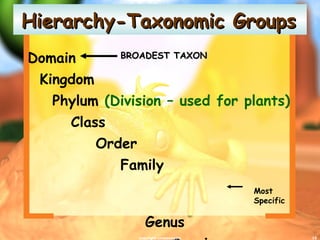
Hierarchy-Taxonomic Groups   Domain Kingdom Phylum  (Division – used for plants) Class Order Family  Genus   Species  BROADEST TAXON Most Specific copyright cmassengale
D umb K ing P hillip C ame O ver F or G ooseberry S oup! copyright cmassengale
copyright cmassengale
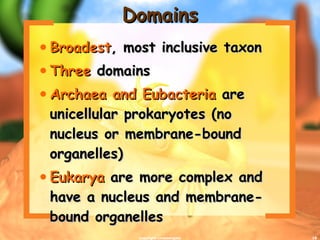
Broadest , most inclusive taxon Three  domains Archaea and Eubacteria  are unicellular prokaryotes (no nucleus or membrane-bound organelles) Eukarya  are more complex and have a nucleus and membrane-bound organelles Domains copyright cmassengale
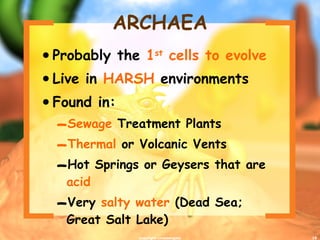
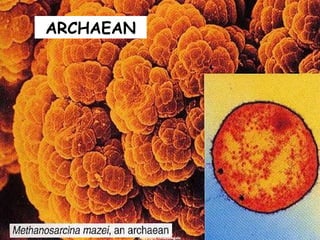
ARCHAEA Probably the  1 st  cells to evolve Live in  HARSH  environments Found in: Sewage  Treatment Plants Thermal  or Volcanic Vents Hot Springs or Geysers that are  acid Very  salty water  (Dead Sea; Great Salt Lake) copyright cmassengale
ARCHAEAN copyright cmassengale
EUBACTERIA Some may cause  DISEASE Found in  ALL HABITATS  except harsh ones Important  decomposers  for environment Commercially  important in making cottage cheese, yogurt, buttermilk, etc. copyright cmassengale
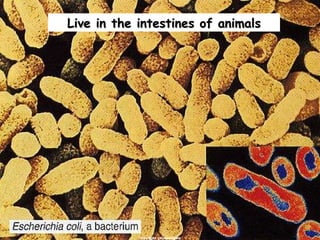
Live in the intestines of animals copyright cmassengale
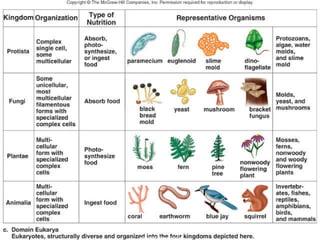
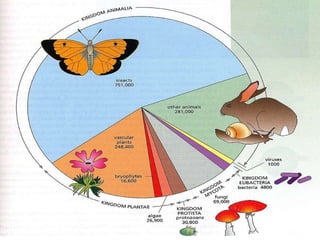
Domain Eukarya is Divided into Kingdoms Protista  (protozoans, algae…) Fungi  (mushrooms, yeasts …) Plantae  (multicellular plants) Animalia  (multicellular animals)  copyright cmassengale
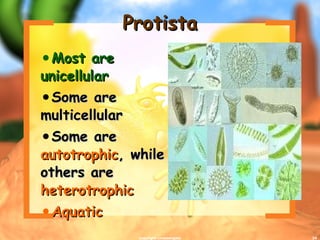
Protista Most are unicellular Some are multicellular Some are  autotrophic , while others are  heterotrophic Aquatic copyright cmassengale
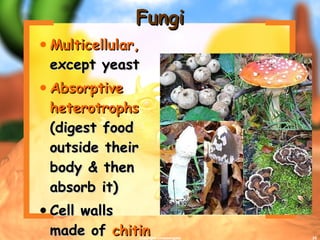
Fungi Multicellular,  except yeast Absorptive heterotrophs  (digest food outside their body & then absorb it) Cell walls made of  chitin copyright cmassengale
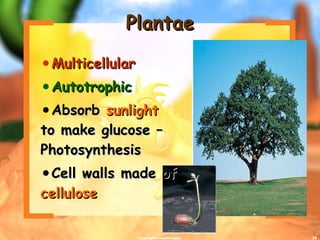
Plantae Multicellular Autotrophic Absorb  sunlight  to make glucose – Photosynthesis Cell walls made of  cellulose copyright cmassengale
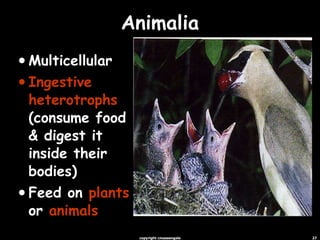
Animalia Multicellular Ingestive heterotrophs  (consume food & digest it inside their bodies) Feed on  plants  or  animals copyright cmassengale
copyright cmassengale
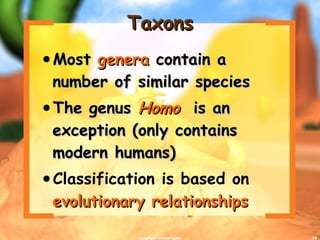
Taxons Most  genera  contain a number of similar species The genus  Homo   is an exception (only contains modern humans) Classification is based on  evolutionary relationships copyright cmassengale
copyright cmassengale
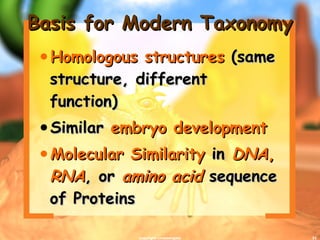
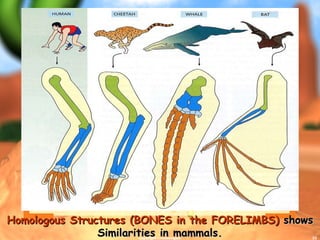
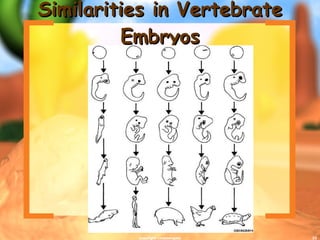
Basis for Modern Taxonomy Homologous structures  (same structure, different function) Similar  embryo   development Molecular Similarity  in  DNA ,  RNA , or  amino acid  sequence of Proteins copyright cmassengale
Homologous Structures (BONES in the FORELIMBS)  shows Similarities in mammals. copyright cmassengale
Similarities in Vertebrate Embryos copyright cmassengale
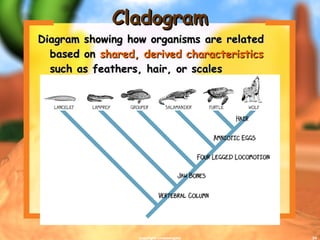
Cladogram Diagram showing how organisms are related based on  shared, derived characteristics  such as feathers, hair, or scales copyright cmassengale
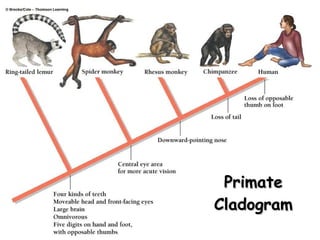
Primate Cladogram copyright cmassengale
Dichotomous Keying Used to identify organisms Characteristics given in  pairs Read both characteristics  and either go to another set of characteristics  OR  identify the organism copyright cmassengale
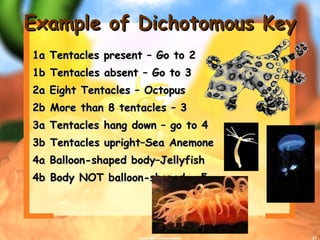
Example of Dichotomous Key 1a Tentacles present – Go to 2 1b Tentacles absent – Go to 3 2a Eight Tentacles – Octopus 2b More than 8 tentacles – 3 3a Tentacles hang down – go to 4 3b Tentacles upright–Sea Anemone 4a Balloon-shaped body–Jellyfish 4b Body NOT balloon-shaped - 5 copyright cmassengale
copyright cmassengale

Classification of life taxonomy

  • 1.

  • 2.
    There are 13 billion known species of organisms This is only 5% of all organisms that ever lived!!!!! New organisms are still being found and identified Species of Organisms copyright cmassengale
  • 3.
    What is Classification?Classification is the arrangement of organisms into orderly groups based on their similarities Classification is also known as taxonomy Taxonomists are scientists that identify & name organisms copyright cmassengale
  • 4.
    Benefits of ClassifyingAccurately & uniformly names organisms Prevents misnomers such as starfish & jellyfish that aren't really fish Uses same language (Latin or some Greek) for all names Sea”horse”?? copyright cmassengale
  • 5.
    Confusion in UsingDifferent Languages for Names copyright cmassengale
  • 6.
    Latin Names areUnderstood by all Taxonomists copyright cmassengale
  • 7.
    Early Taxonomists 2000years ago, Aristotle was the first taxonomist Aristotle divided organisms into plants & animals He subdivided them by their habitat ---land, sea, or air dwellers copyright cmassengale
  • 8.
    Early Taxonomists JohnRay, a botanist, was the first to use Latin for naming His names were very long descriptions telling everything about the plant copyright cmassengale
  • 9.
    Carolus Linnaeus 1707– 1778 18th century taxonomist Classified organisms by their structure Developed naming system still used today copyright cmassengale
  • 10.
    Carolus Linnaeus Calledthe “Father of Taxonomy” Developed the modern system of naming known as binomial nomenclature Two-word name (Genus & species) copyright cmassengale
  • 11.
    Standardized Naming Binomialnomenclature used Genus species Latin or Greek Italicized in print Capitalize genus , but NOT species Underline when writing Turdus migratorius American Robin copyright cmassengale
  • 12.
    Binomial Nomenclature WhichTWO are more closely related? copyright cmassengale
  • 13.
    Rules for NamingOrganisms The International Code for Binomial Nomenclature contains the rules for naming organisms All names must be approved by International Naming Congresses (International Zoological Congress) This prevents duplicated names copyright cmassengale
  • 14.
    Classification Groups Taxon ( taxa -plural) is a category into which related organisms are placed There is a hierarchy of groups (taxa) from broadest to most specific Domain, Kingdom, Phylum, Class, Order, Family, Genus, species copyright cmassengale
  • 15.
    Hierarchy-Taxonomic Groups Domain Kingdom Phylum (Division – used for plants) Class Order Family Genus Species BROADEST TAXON Most Specific copyright cmassengale
  • 16.
    D umb King P hillip C ame O ver F or G ooseberry S oup! copyright cmassengale
  • 17.
  • 18.
    Broadest , mostinclusive taxon Three domains Archaea and Eubacteria are unicellular prokaryotes (no nucleus or membrane-bound organelles) Eukarya are more complex and have a nucleus and membrane-bound organelles Domains copyright cmassengale
  • 19.
    ARCHAEA Probably the 1 st cells to evolve Live in HARSH environments Found in: Sewage Treatment Plants Thermal or Volcanic Vents Hot Springs or Geysers that are acid Very salty water (Dead Sea; Great Salt Lake) copyright cmassengale
  • 20.
  • 21.
    EUBACTERIA Some maycause DISEASE Found in ALL HABITATS except harsh ones Important decomposers for environment Commercially important in making cottage cheese, yogurt, buttermilk, etc. copyright cmassengale
  • 22.
    Live in theintestines of animals copyright cmassengale
  • 23.
    Domain Eukarya isDivided into Kingdoms Protista (protozoans, algae…) Fungi (mushrooms, yeasts …) Plantae (multicellular plants) Animalia (multicellular animals) copyright cmassengale
  • 24.
    Protista Most areunicellular Some are multicellular Some are autotrophic , while others are heterotrophic Aquatic copyright cmassengale
  • 25.
    Fungi Multicellular, except yeast Absorptive heterotrophs (digest food outside their body & then absorb it) Cell walls made of chitin copyright cmassengale
  • 26.
    Plantae Multicellular AutotrophicAbsorb sunlight to make glucose – Photosynthesis Cell walls made of cellulose copyright cmassengale
  • 27.
    Animalia Multicellular Ingestiveheterotrophs (consume food & digest it inside their bodies) Feed on plants or animals copyright cmassengale
  • 28.
  • 29.
    Taxons Most genera contain a number of similar species The genus Homo is an exception (only contains modern humans) Classification is based on evolutionary relationships copyright cmassengale
  • 30.
  • 31.
    Basis for ModernTaxonomy Homologous structures (same structure, different function) Similar embryo development Molecular Similarity in DNA , RNA , or amino acid sequence of Proteins copyright cmassengale
  • 32.
    Homologous Structures (BONESin the FORELIMBS) shows Similarities in mammals. copyright cmassengale
  • 33.
    Similarities in VertebrateEmbryos copyright cmassengale
  • 34.
    Cladogram Diagram showinghow organisms are related based on shared, derived characteristics such as feathers, hair, or scales copyright cmassengale
  • 35.
  • 36.
    Dichotomous Keying Usedto identify organisms Characteristics given in pairs Read both characteristics and either go to another set of characteristics OR identify the organism copyright cmassengale
  • 37.
    Example of DichotomousKey 1a Tentacles present – Go to 2 1b Tentacles absent – Go to 3 2a Eight Tentacles – Octopus 2b More than 8 tentacles – 3 3a Tentacles hang down – go to 4 3b Tentacles upright–Sea Anemone 4a Balloon-shaped body–Jellyfish 4b Body NOT balloon-shaped - 5 copyright cmassengale
  • 38.

Editor's Notes

  • #16 Genus and species are the two names used to identify specific organisms in the binomial system of classification. Division is used for plants.
  • #27 Growth, with increases in size and number of cells, is part of development. Development involves many stages from conception until death.