I. EnvironmentA. Organism Needs1. Food2. Water3. Shelter4. ReproduceB. Habitat (place to provide above)1. Biotic Factorsi. Life influences
2. Abiotic Factors (non-living)i. Waterii. Sunlightiii. Oxygeniv. Temperaturev. Soil
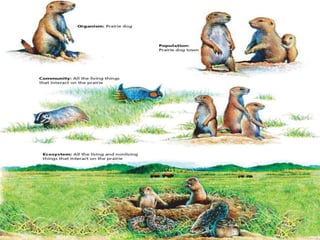
C. Levels of Organization1. Species: Group that can reproduce2. Population: All of one species in an area3. Community: all populations in an area4. Ecosystem: Community + Non-living surroundingsi. Ecologist
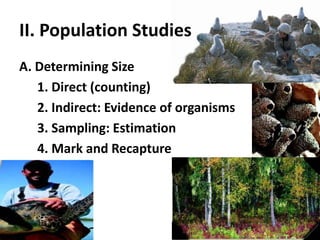
II. Population StudiesA. Determining Size	1. Direct (counting)2. Indirect: Evidence of organisms3. Sampling: Estimation4. Mark and Recapture
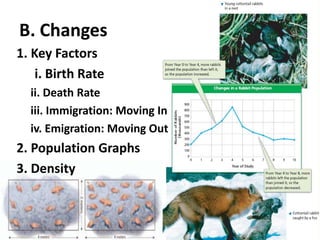
B. Changes1. Key Factorsi. Birth Rateii. Death Rateiii. Immigration: Moving Iniv. Emigration: Moving Out2. Population Graphs3. Density
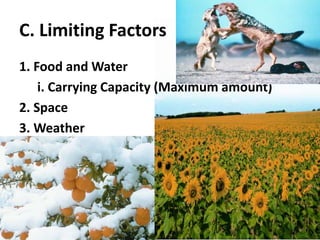
C. Limiting Factors1. Food and Wateri. Carrying Capacity (Maximum amount)2. Space3. Weather
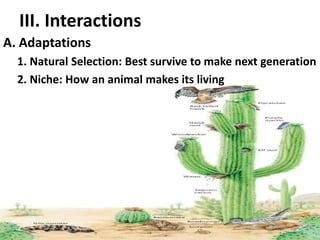
III. InteractionsA. Adaptations1. Natural Selection: Best survive to make next generation2. Niche: How an animal makes its living
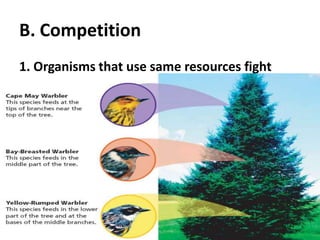
B. Competition1. Organisms that use same resources fight
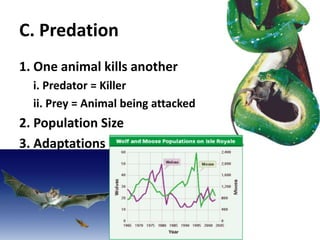
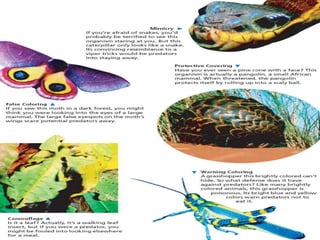
C. Predation1. One animal kills anotheri. Predator = Killerii. Prey = Animal being attacked2. Population Size3. Adaptations
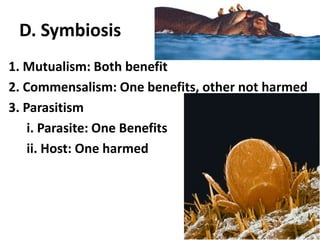
D. Symbiosis1. Mutualism: Both benefit2. Commensalism: One benefits, other not harmed3. Parasitismi. Parasite: One Benefitsii. Host: One harmed
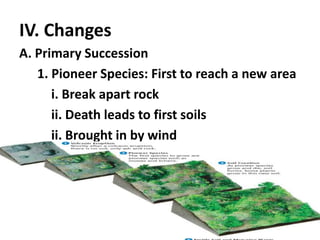
IV. ChangesA. Primary Succession	1. Pioneer Species: First to reach a new areai. Break apart rock	ii. Death leads to first soils	ii. Brought in by wind
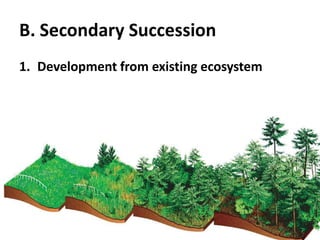
B. Secondary SuccessionDevelopment from existing ecosystem
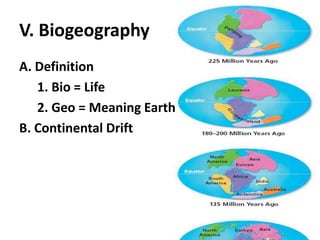
V. BiogeographyA. Definition1. Bio = Life2. Geo = Meaning EarthB. Continental Drift
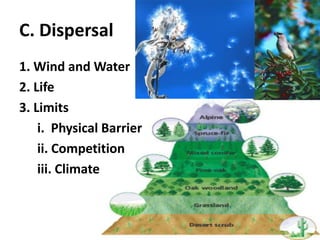
C. Dispersal1. Wind and Water2. Life3. Limitsi.  Physical Barrierii. Competitioniii. Climate
Quiz

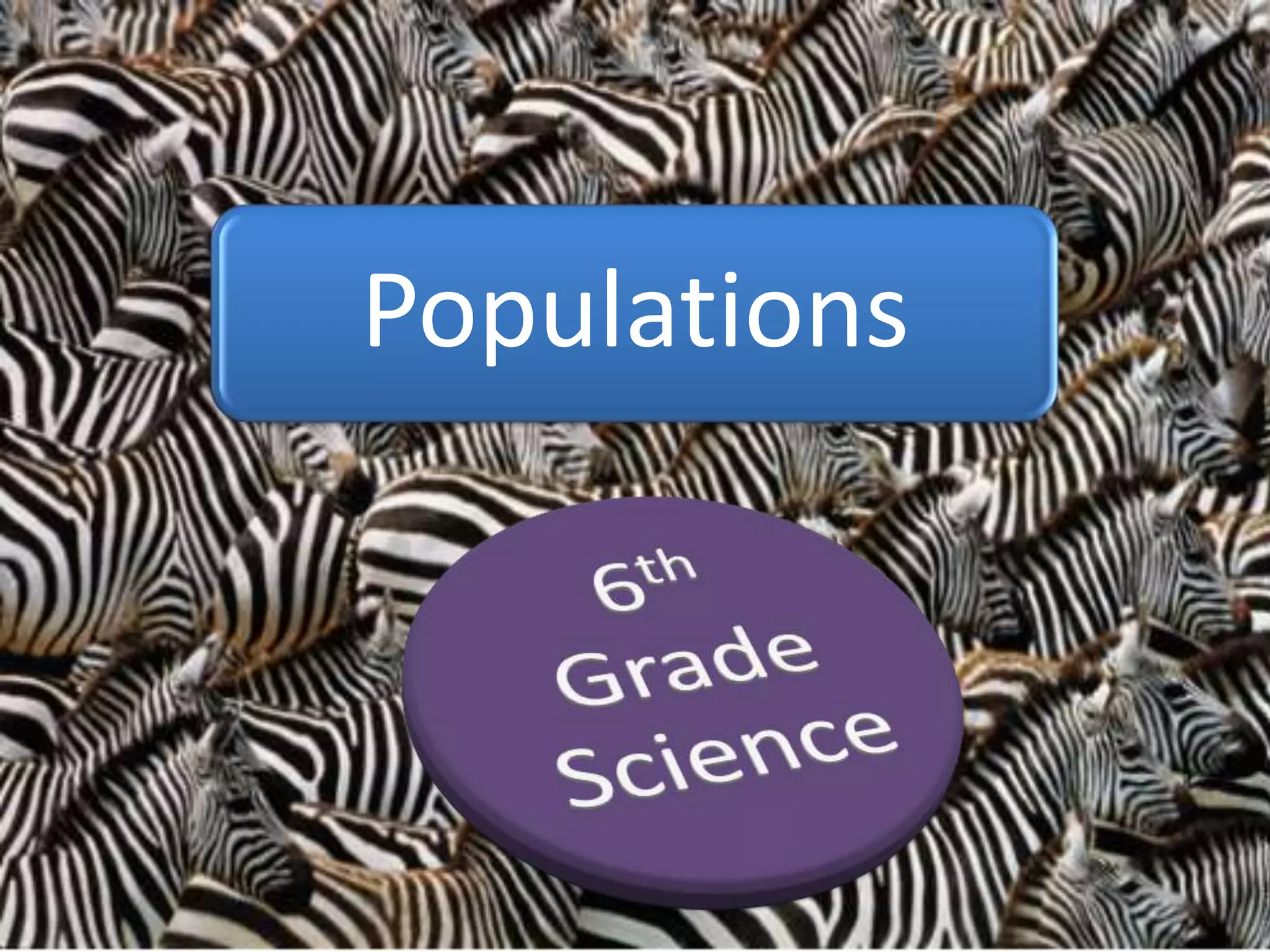
Populations

  • 2.
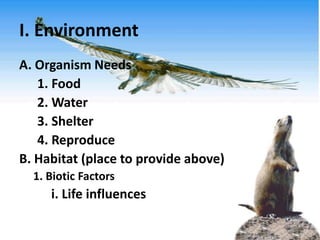
    I. EnvironmentA. OrganismNeeds1. Food2. Water3. Shelter4. ReproduceB. Habitat (place to provide above)1. Biotic Factorsi. Life influences
  • 3.
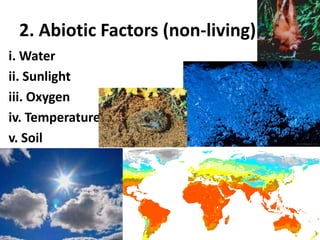
    2. Abiotic Factors(non-living)i. Waterii. Sunlightiii. Oxygeniv. Temperaturev. Soil
  • 4.
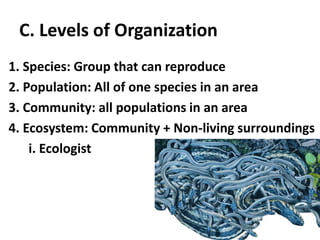
    C. Levels ofOrganization1. Species: Group that can reproduce2. Population: All of one species in an area3. Community: all populations in an area4. Ecosystem: Community + Non-living surroundingsi. Ecologist
  • 6.
    II. Population StudiesA.Determining Size 1. Direct (counting)2. Indirect: Evidence of organisms3. Sampling: Estimation4. Mark and Recapture
  • 7.
    B. Changes1. KeyFactorsi. Birth Rateii. Death Rateiii. Immigration: Moving Iniv. Emigration: Moving Out2. Population Graphs3. Density
  • 8.
    C. Limiting Factors1.Food and Wateri. Carrying Capacity (Maximum amount)2. Space3. Weather
  • 9.
    III. InteractionsA. Adaptations1.Natural Selection: Best survive to make next generation2. Niche: How an animal makes its living
  • 10.
    B. Competition1. Organismsthat use same resources fight
  • 11.
    C. Predation1. Oneanimal kills anotheri. Predator = Killerii. Prey = Animal being attacked2. Population Size3. Adaptations
  • 13.
    D. Symbiosis1. Mutualism:Both benefit2. Commensalism: One benefits, other not harmed3. Parasitismi. Parasite: One Benefitsii. Host: One harmed
  • 14.
    IV. ChangesA. PrimarySuccession 1. Pioneer Species: First to reach a new areai. Break apart rock ii. Death leads to first soils ii. Brought in by wind
  • 15.
    B. Secondary SuccessionDevelopmentfrom existing ecosystem
  • 16.
    V. BiogeographyA. Definition1.Bio = Life2. Geo = Meaning EarthB. Continental Drift
  • 17.
    C. Dispersal1. Windand Water2. Life3. Limitsi. Physical Barrierii. Competitioniii. Climate
  • 18.