A History of Life on Earth

Chapter 5
Presented by
Amith Reddy
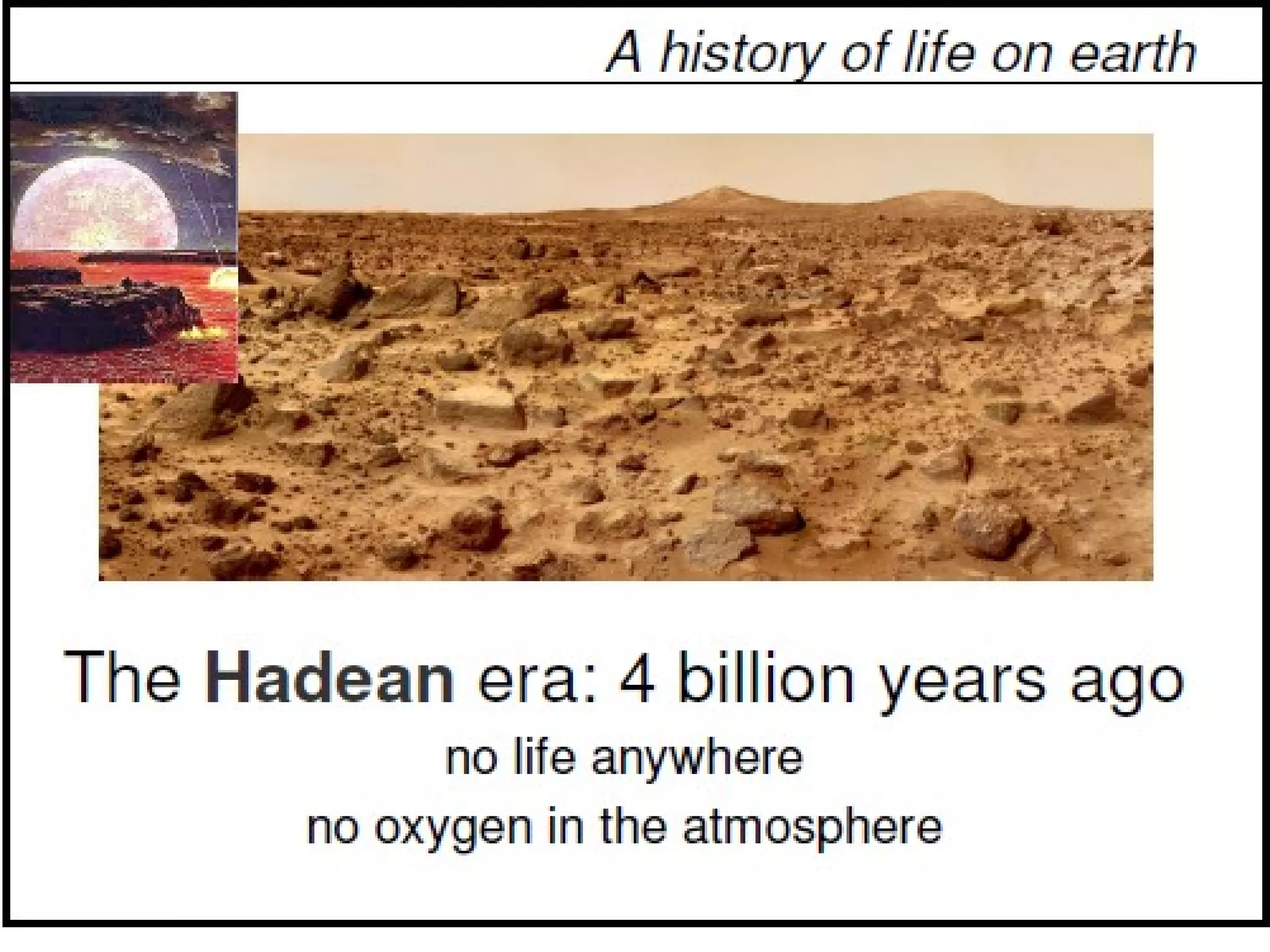
Before Life Began
• How old is the Earth ?

4.5 billion years

• Big Bang - gravity causes dust particles to condense
• Meteors for millions of years- how hot would the earth be?
• Earth has to cool down - steam escapes and rain allows
collection of water - earth now has……

• Atmosphere of Ammonia, Methane, water vapor,
Co2, and Nitrogen
• what is missing?
WHAT EVIDENCE DO SCIENTISTS USE?

• Fossils!
– trace
– mold
– cast
– amber
– imprint
– petrified

Images courtesy of the UC Museum of Paleontology Understanding Evolution: http://evolution.berkeley.edu."

Life Sciences-HHMI Outreach.
Copyright 2006 President and
Fellows of Harvard College.
Outline
Before Life Began
The Emergence of Life
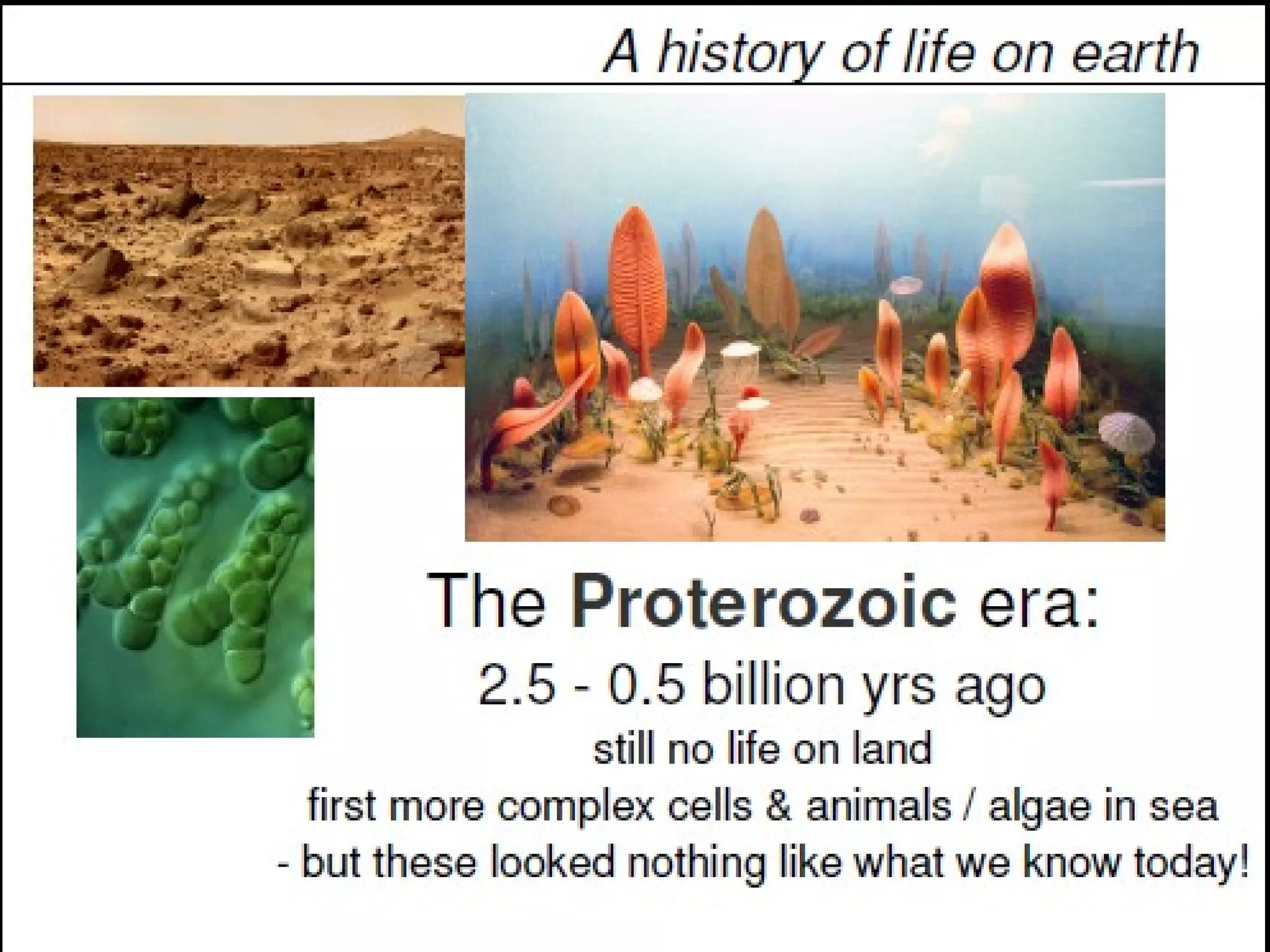
Precambrian Life
Paleozoic Life: The Cambrian Explosion
Paleozoic Life: Ordovician to Devonian

Mesozoic Life

Marine life

Marine life

Terrestrial life

Terrestrial plants and arthropods
Vertebrates

Paleozoic Life: Carboniferous and Permian

The Cenozoic Era

Terrestrial life

Terrestrial life

Aquatic life

Aquatic life
The adaptive radiation of mammals
Pleistocene events
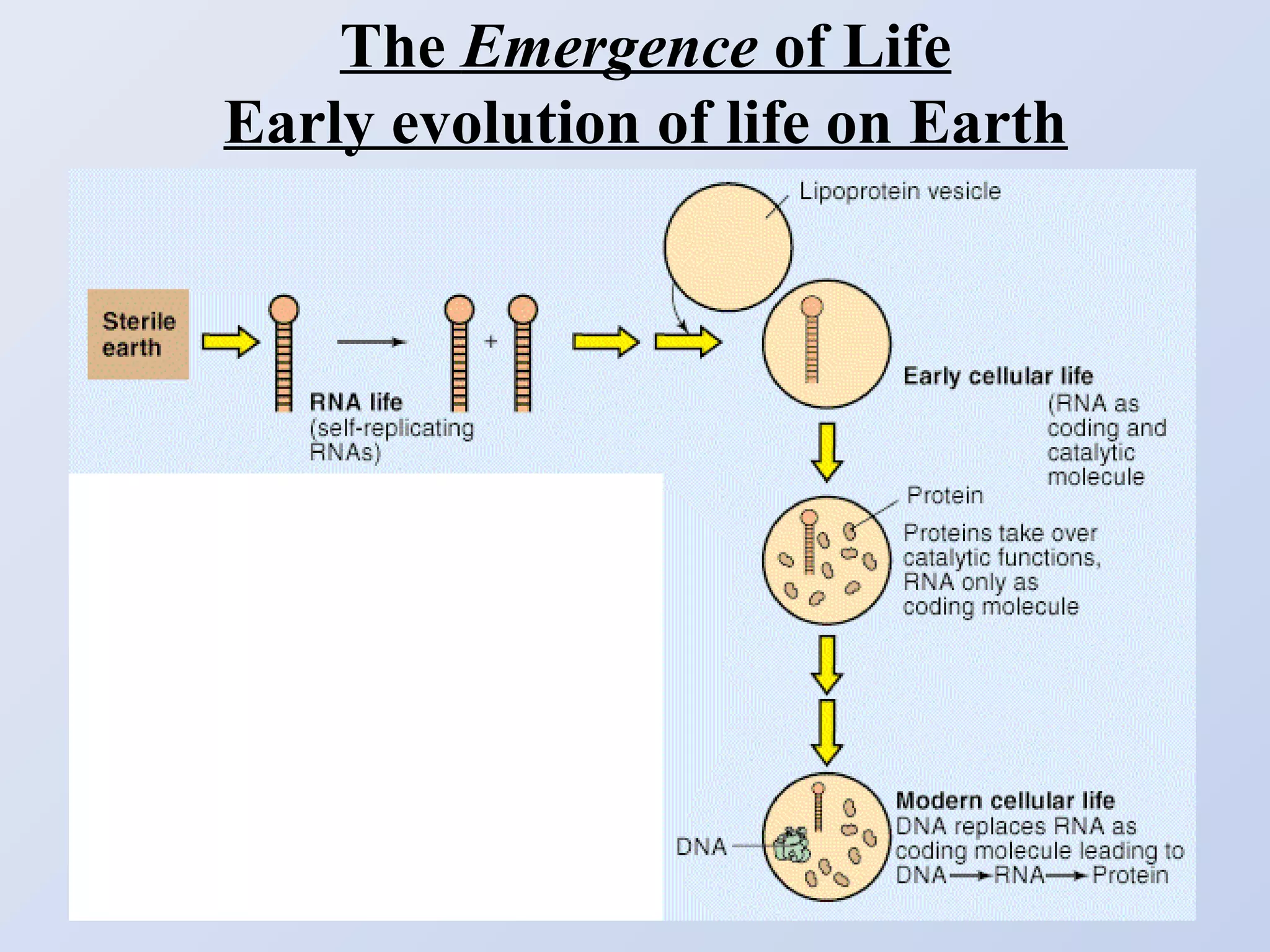
The Emergence of Life
Early evolution of life on Earth
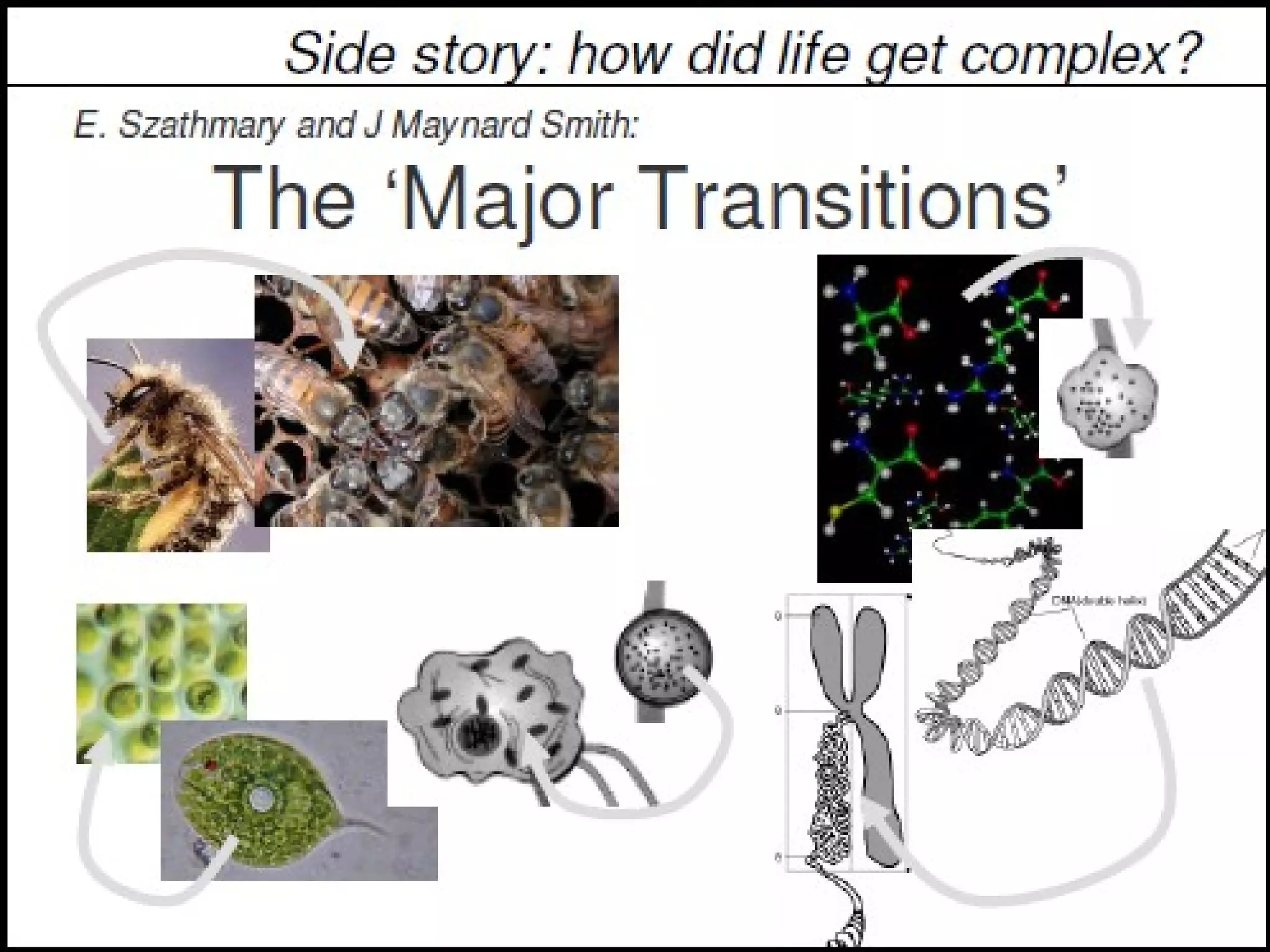
Endosymbiosis
Evolution of cell types
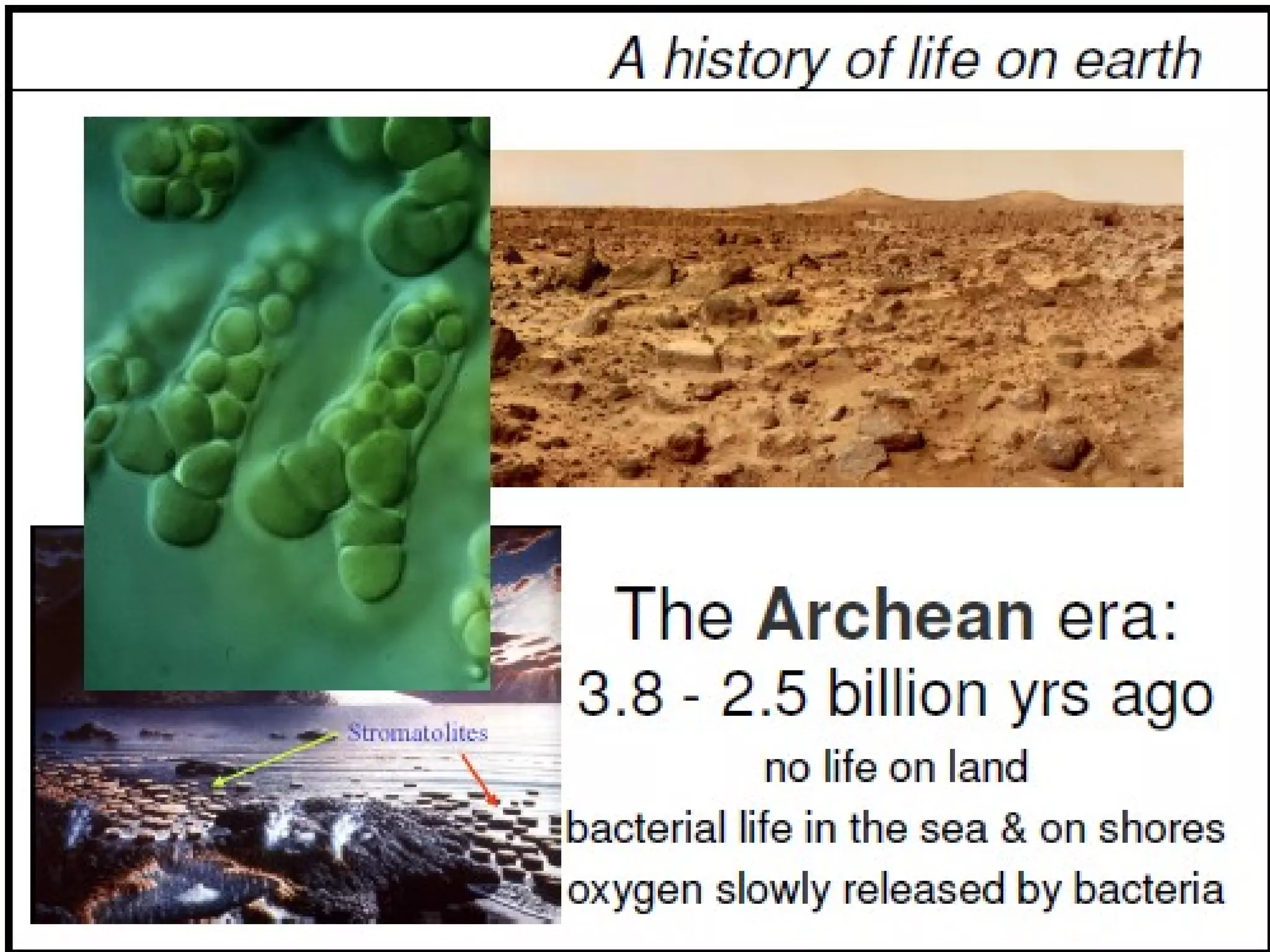
Precambrian Life
• What do scientists think was alive way back then??
• Bacteria
• This era lasted for billions of years until more living
organisms evolved

Dr Tom Tregenza © Tom Tregenza
Dr Gordon Beakes © University of Newcastle upon
Tynelicensed
IMAGES for use through the Centre for Bioscience
ImageBank,http://www.bioscience.heacademy.ac.uk/imagebank/"

Life Sciences-HHMI Outreach.
Copyright 2006 President and
Fellows of Harvard College.
Stomatolites : Complex communities of (mostly) cyanobacteria produce all the atmospheric oxygen.
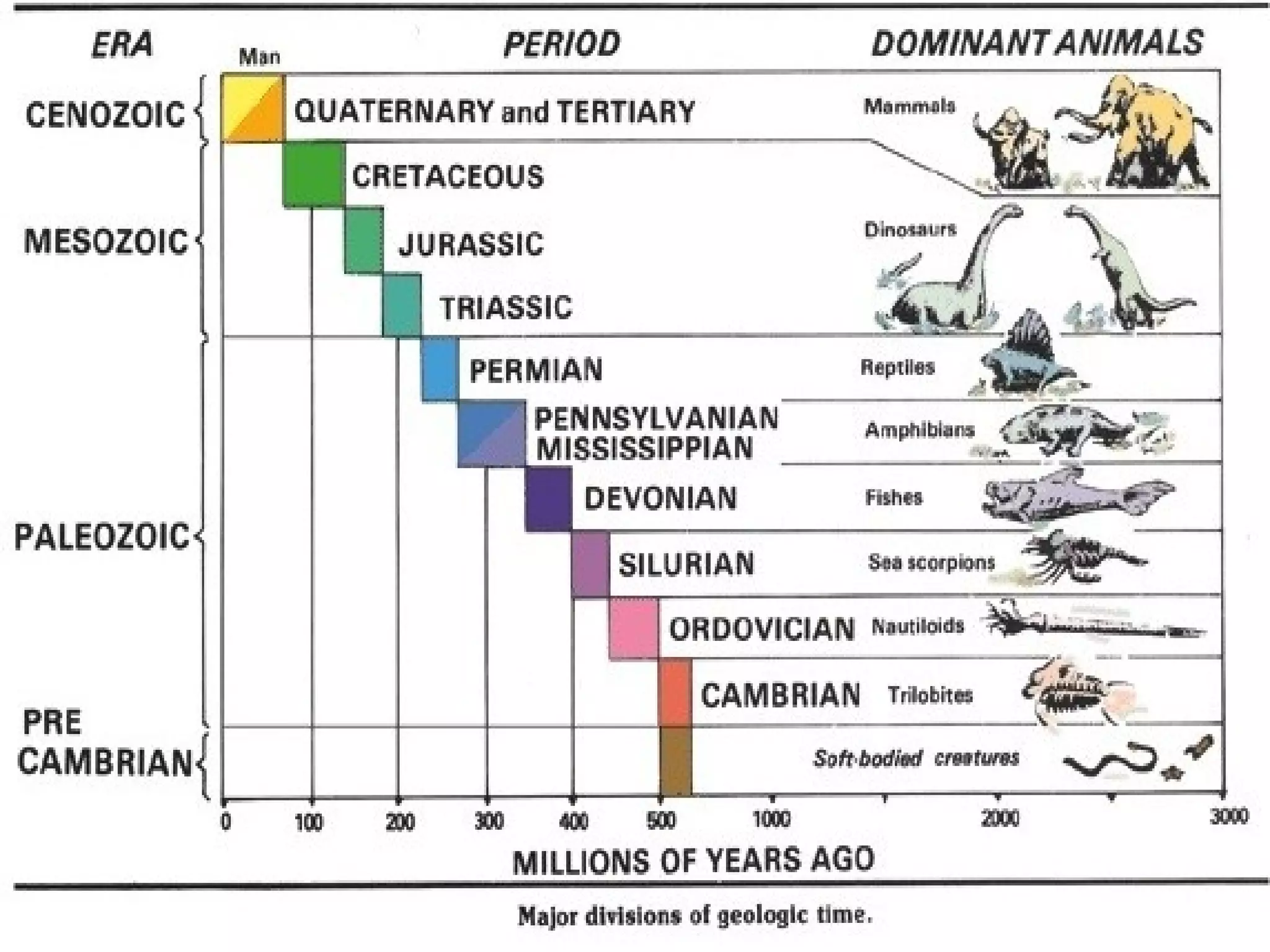
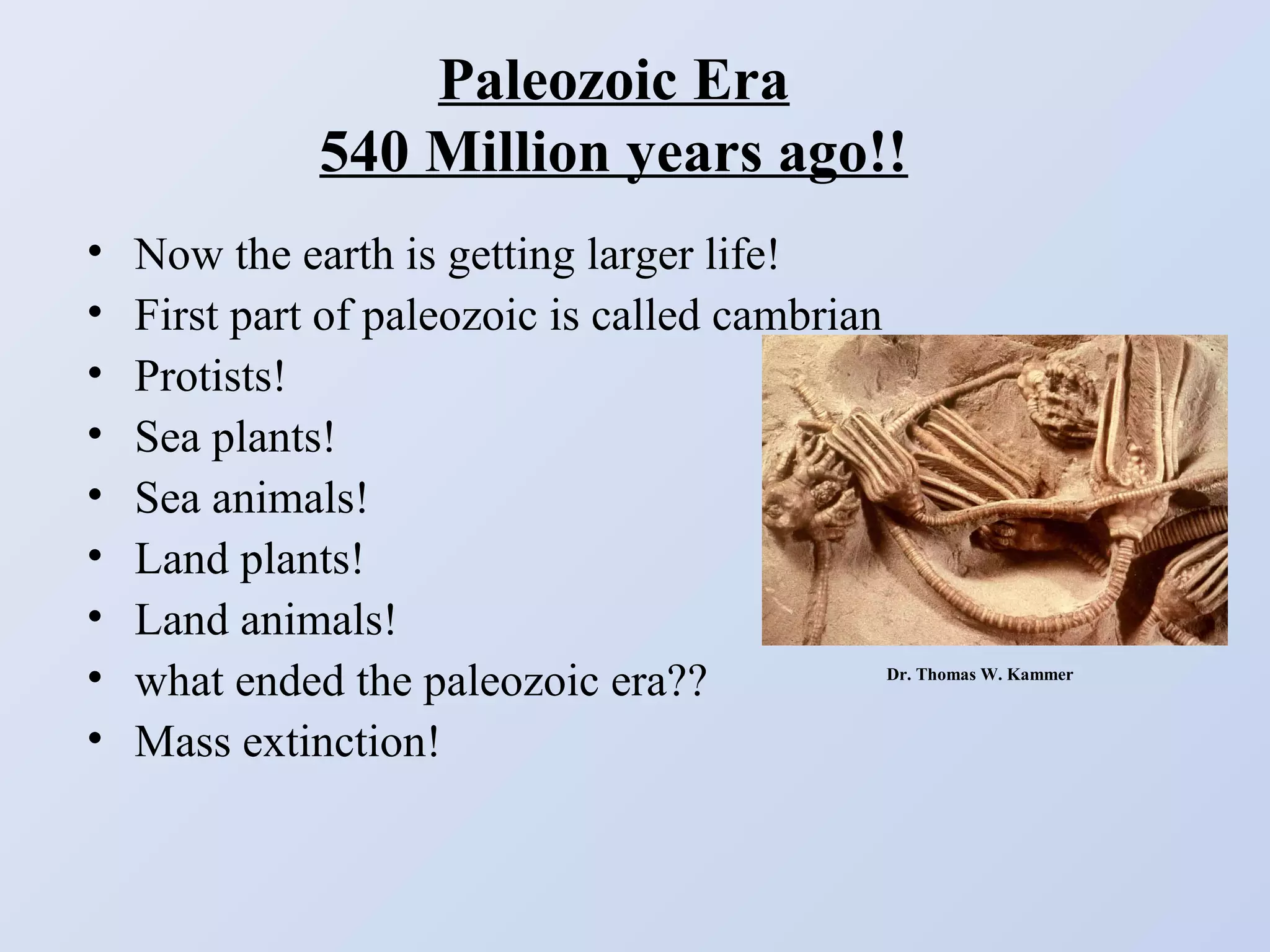
Paleozoic Era
540 Million years ago!!
•
•
•
•
•
•
•
•
•

Now the earth is getting larger life!
First part of paleozoic is called cambrian
Protists!
Sea plants!
Sea animals!
Land plants!
Land animals!
what ended the paleozoic era??
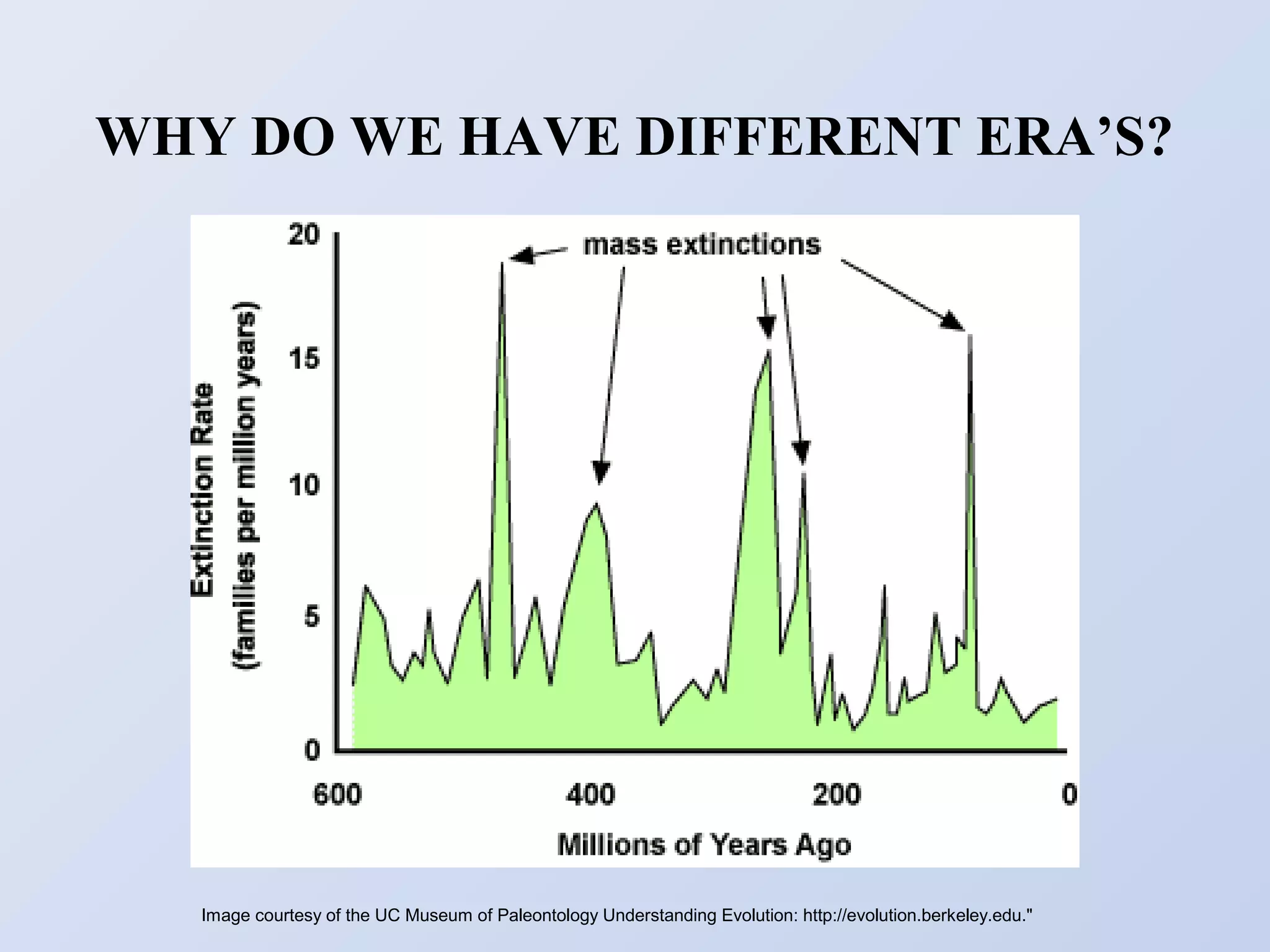
Mass extinction!

Dr. Thomas W. Kammer
Cretaceous – Tertiary Extension
65.5 mill years ago

Permian – Triassic Extension
(Great Dying)
251.4 mill years ago

Ordovician – Silurian Extension
443.7 mill years ago
Species Extension in various periods of History
WHY DO WE HAVE DIFFERENT ERA’S?

Image courtesy of the UC Museum of Paleontology Understanding Evolution: http://evolution.berkeley.edu."
Why Mass extinction ? How did they survive???
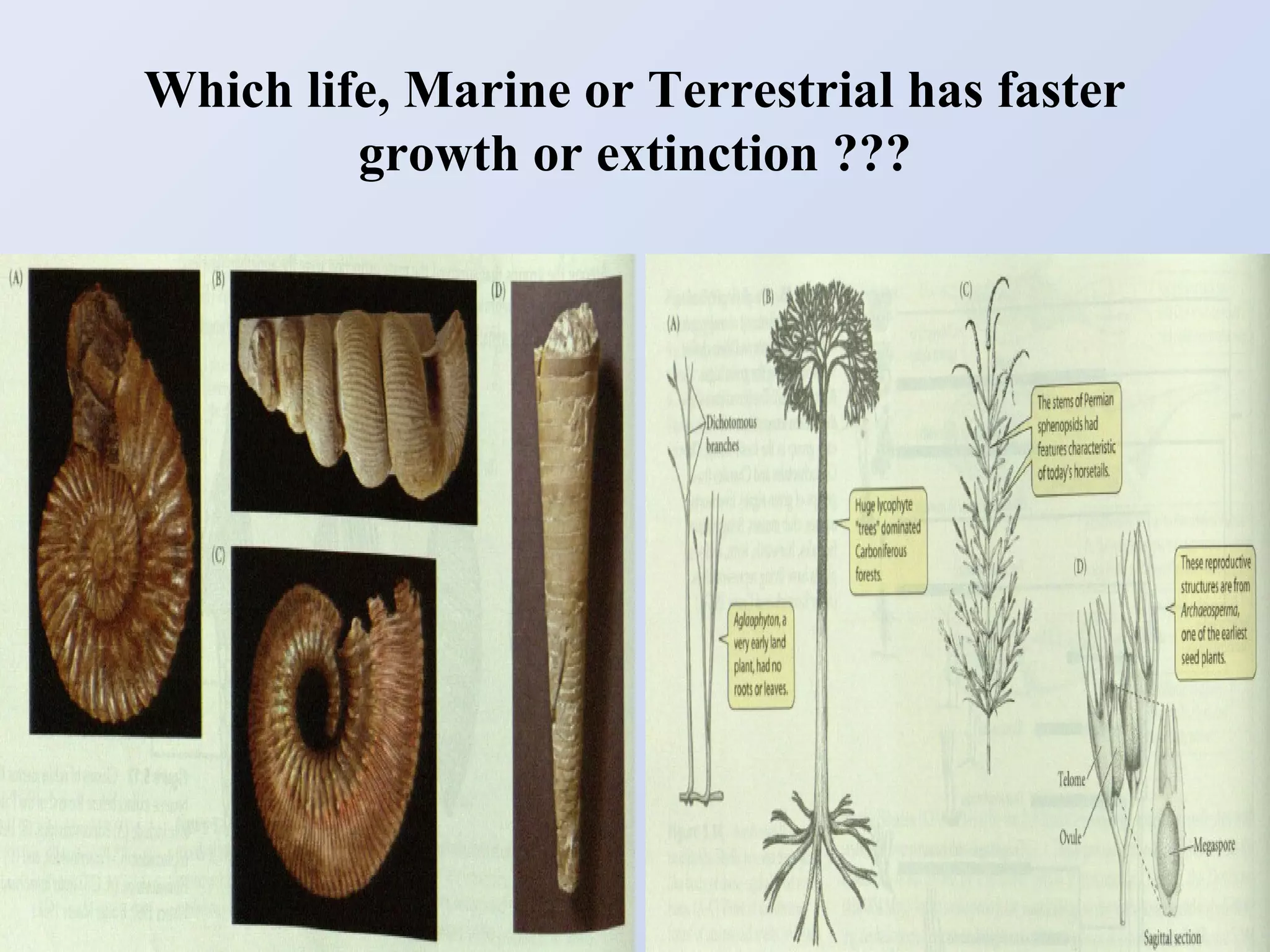
Which life, Marine or Terrestrial has faster
growth or extinction ???
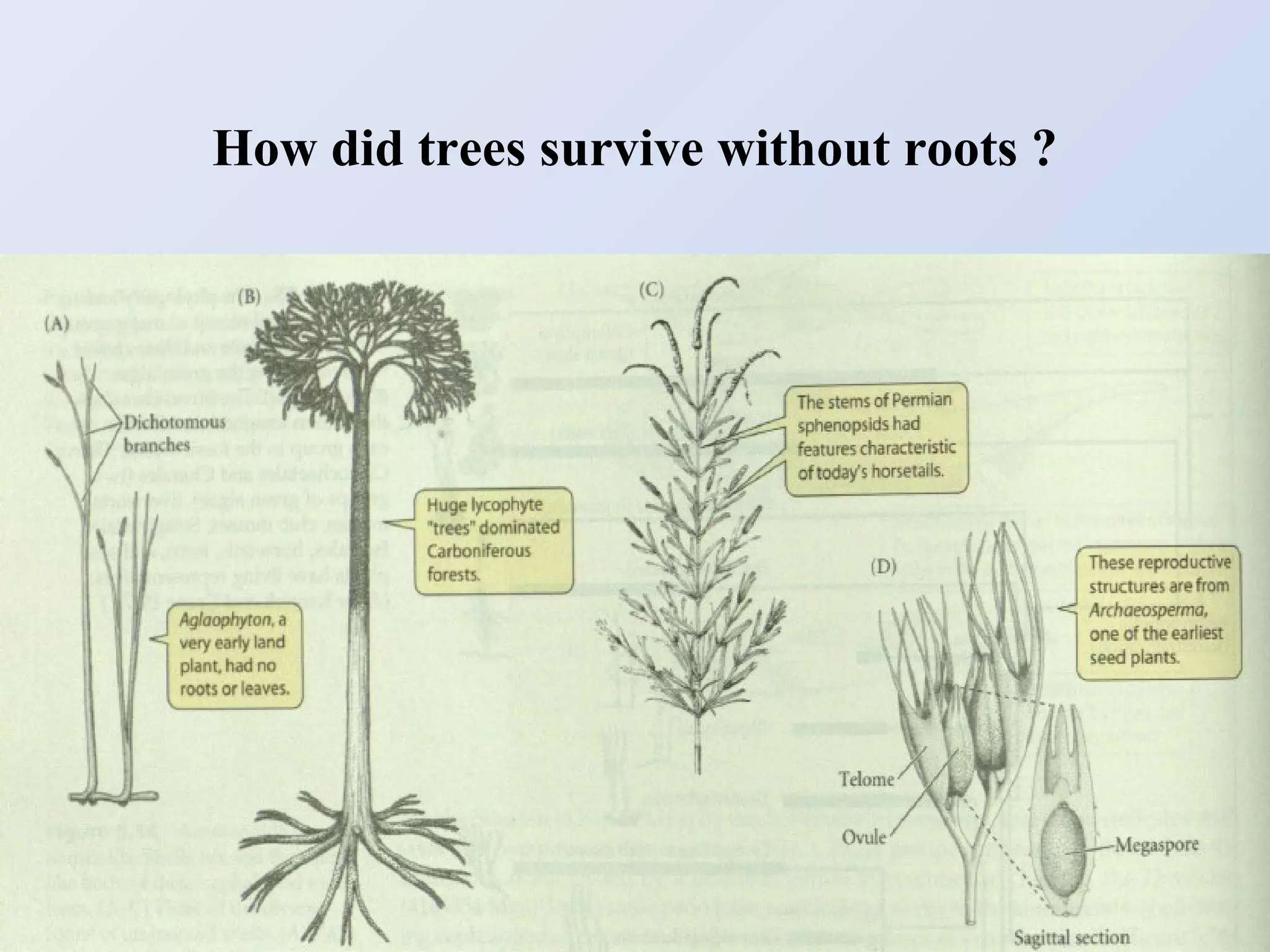
How did trees survive without roots ?
Formation of Earth
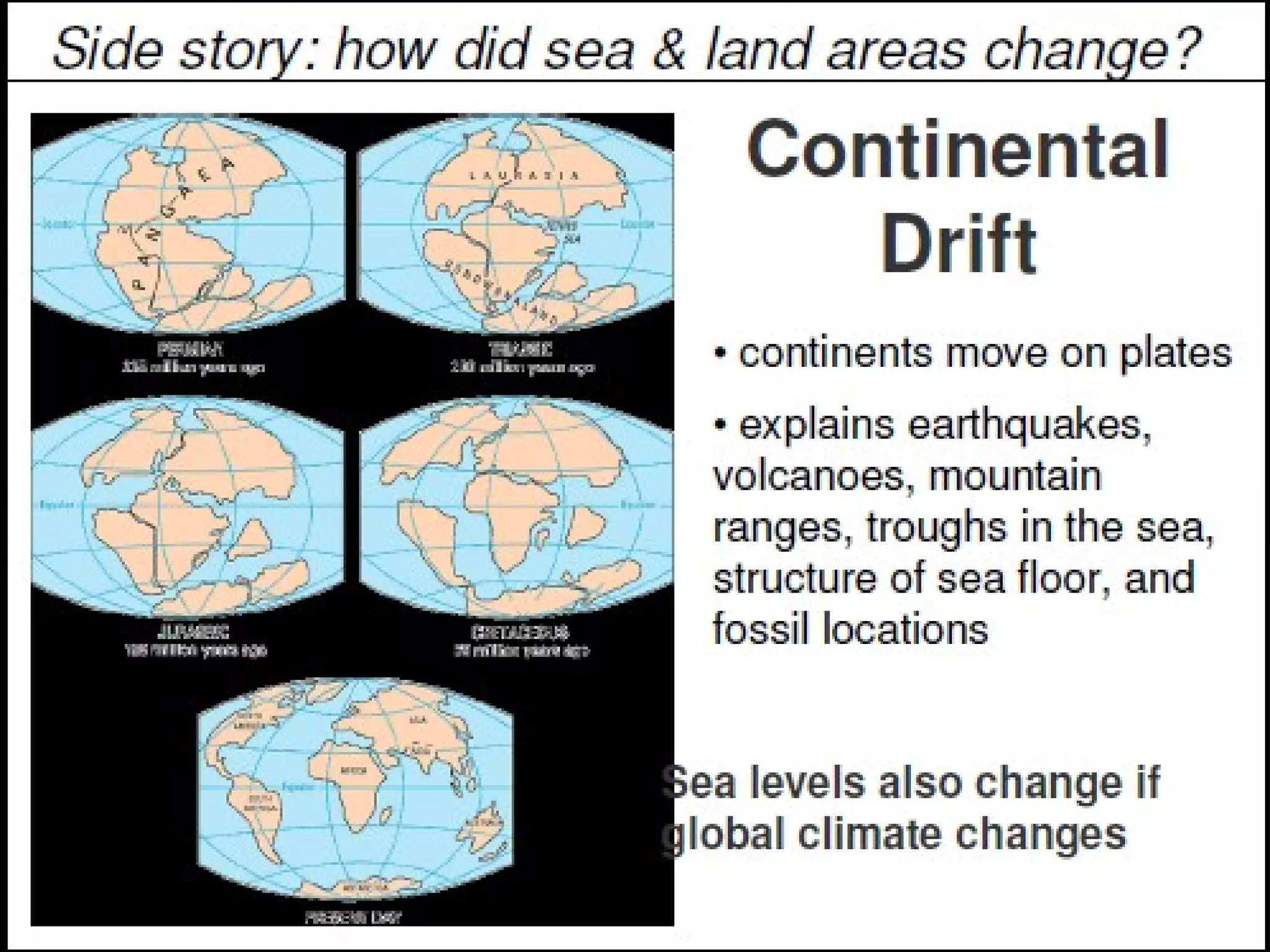
Why land moved or changed in Mesozoic life ??
Why they separate at different rate ? Why not all at once ??
What was the climate of the earth at this time ?
How/Why did only Gymnosperms first appeared
than Angiosperms ???
How are they different ???
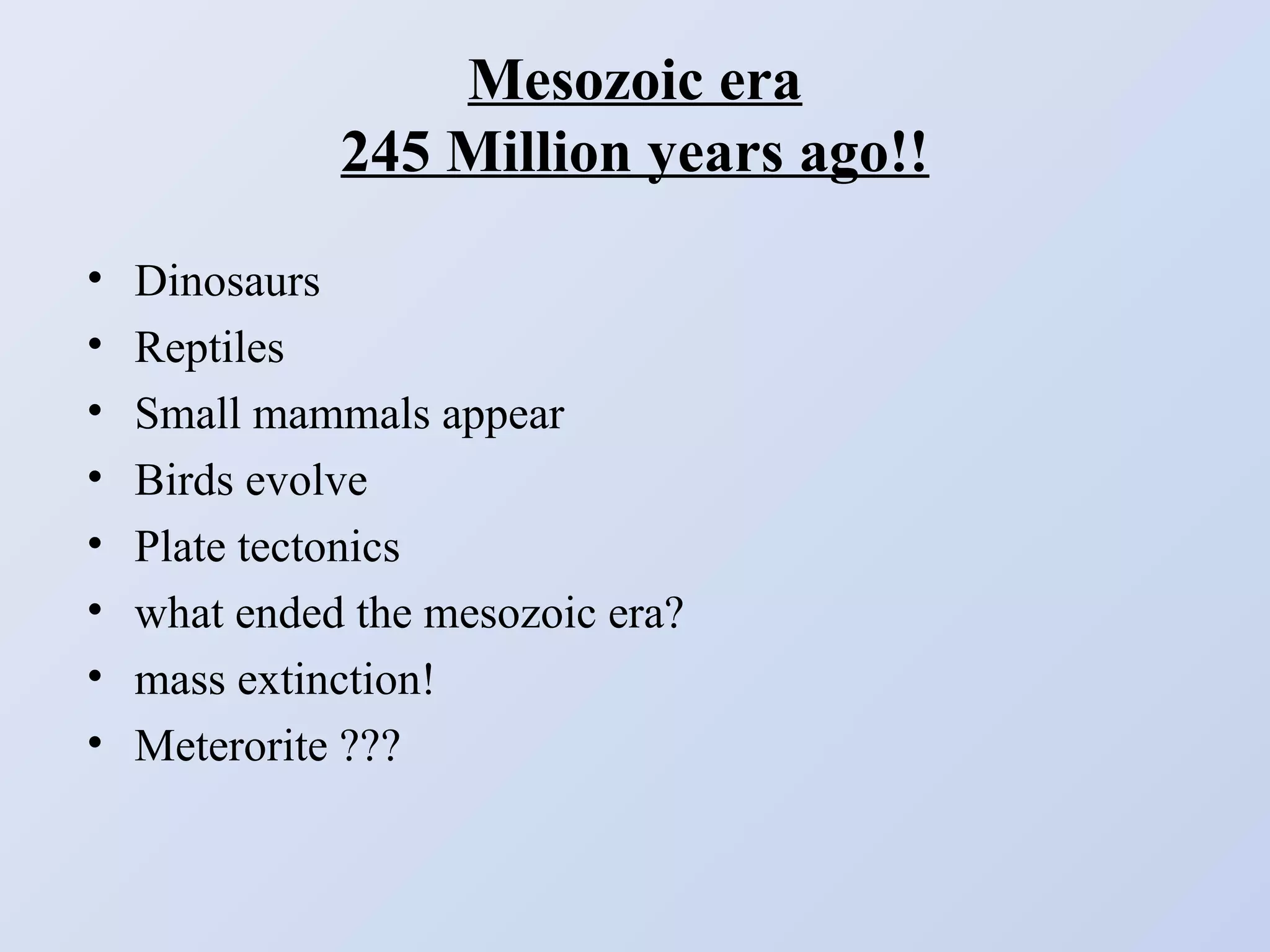
Mesozoic era
245 Million years ago!!
•
•
•
•
•
•
•
•

Dinosaurs
Reptiles
Small mammals appear
Birds evolve
Plate tectonics
what ended the mesozoic era?
mass extinction!
Meterorite ???
Image courtesy of the UC Museum of Paleontology Understanding Evolution: http://evolution.berkeley.edu."
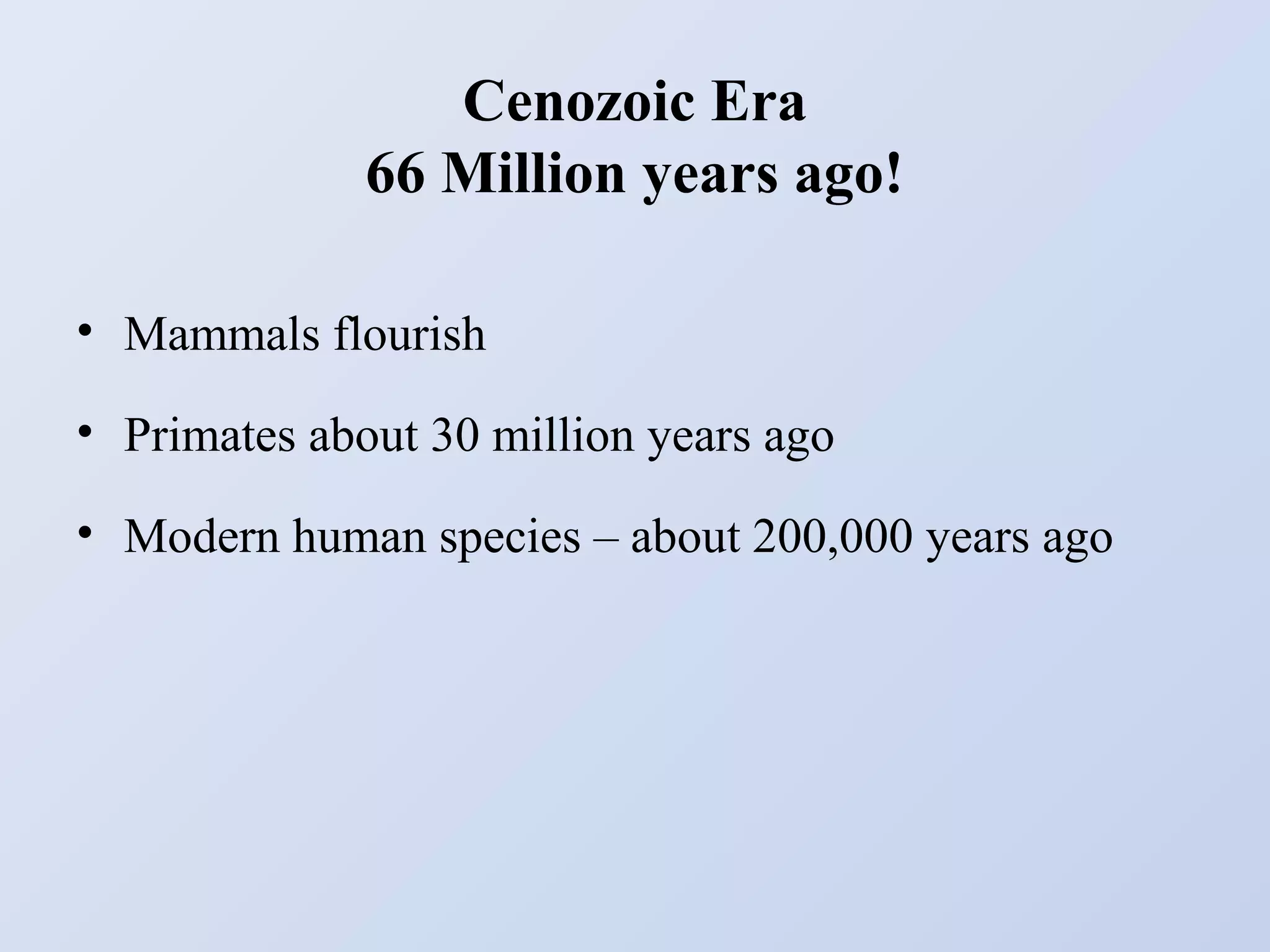
Cenozoic Era
66 Million years ago!
• Mammals flourish
• Primates about 30 million years ago
• Modern human species – about 200,000 years ago
licensed for use through the Centre for Bioscience ImageBank,http://www.bioscience.heacademy.ac.uk/imagebank/"
• Where are fossils usually found?
• Who studies these?
• How do scientists determine the age of something billions of
years old?
– Relative dating
– Radiometric dating

Life Sciences-HHMI Outreach.
Copyright 2006 President and
Fellows of Harvard College.

Understanding Evolution: http://evolution.berkeley.edu."
Evolution of life on land
Q. Were animals or plants first?
• Animals were first! Land-plants (not algae) only appeared about 450
million years ago.
Q. When did the first flowering plants appear?
• Only about 120 million years ago! Before that, ferns, mosses, and
algae (incl. kelps etc.)
Q. When did mammals appear first?
• Before dinosaurs! ~220 million years ago.
Questions
Thank You
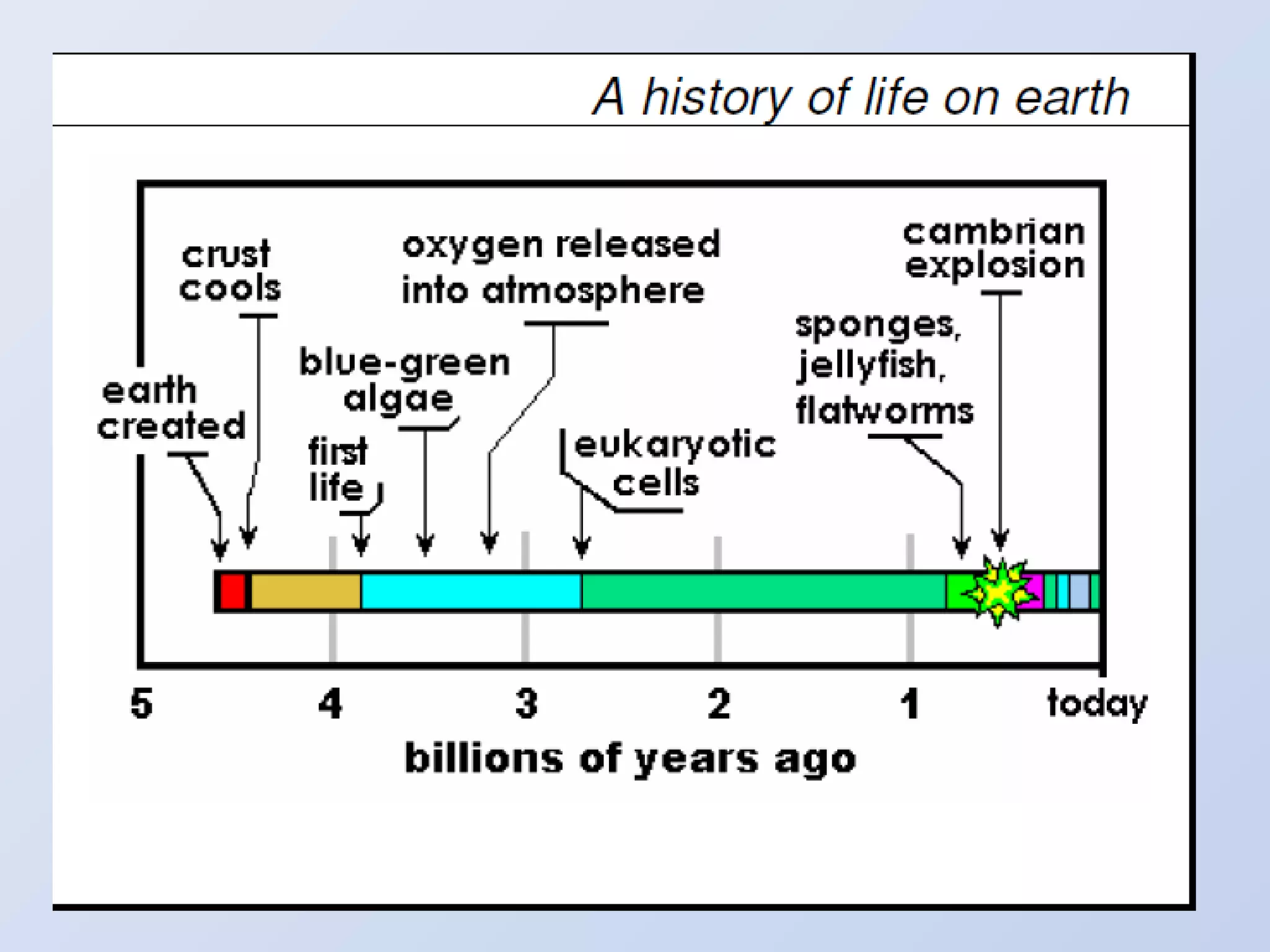
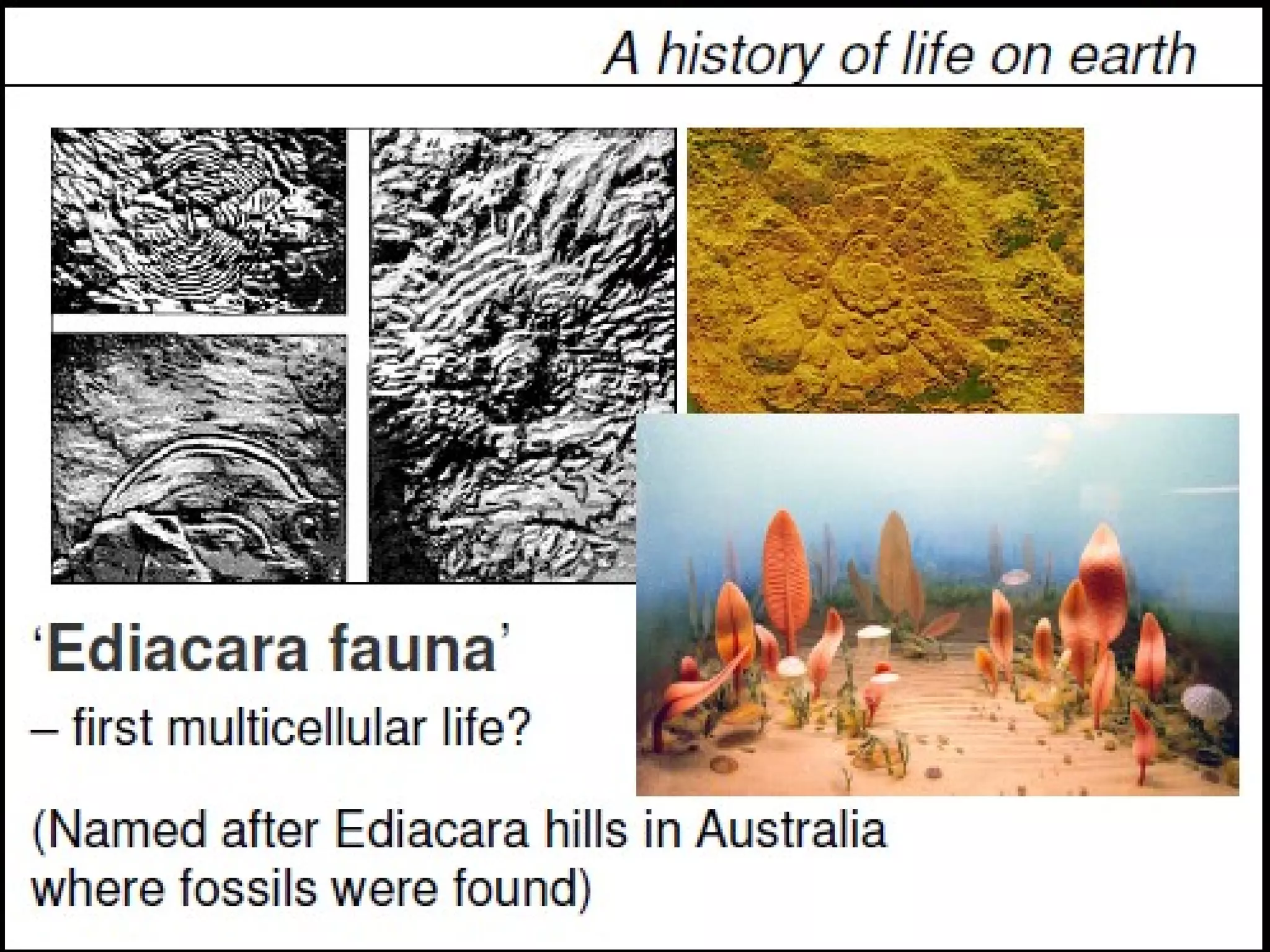
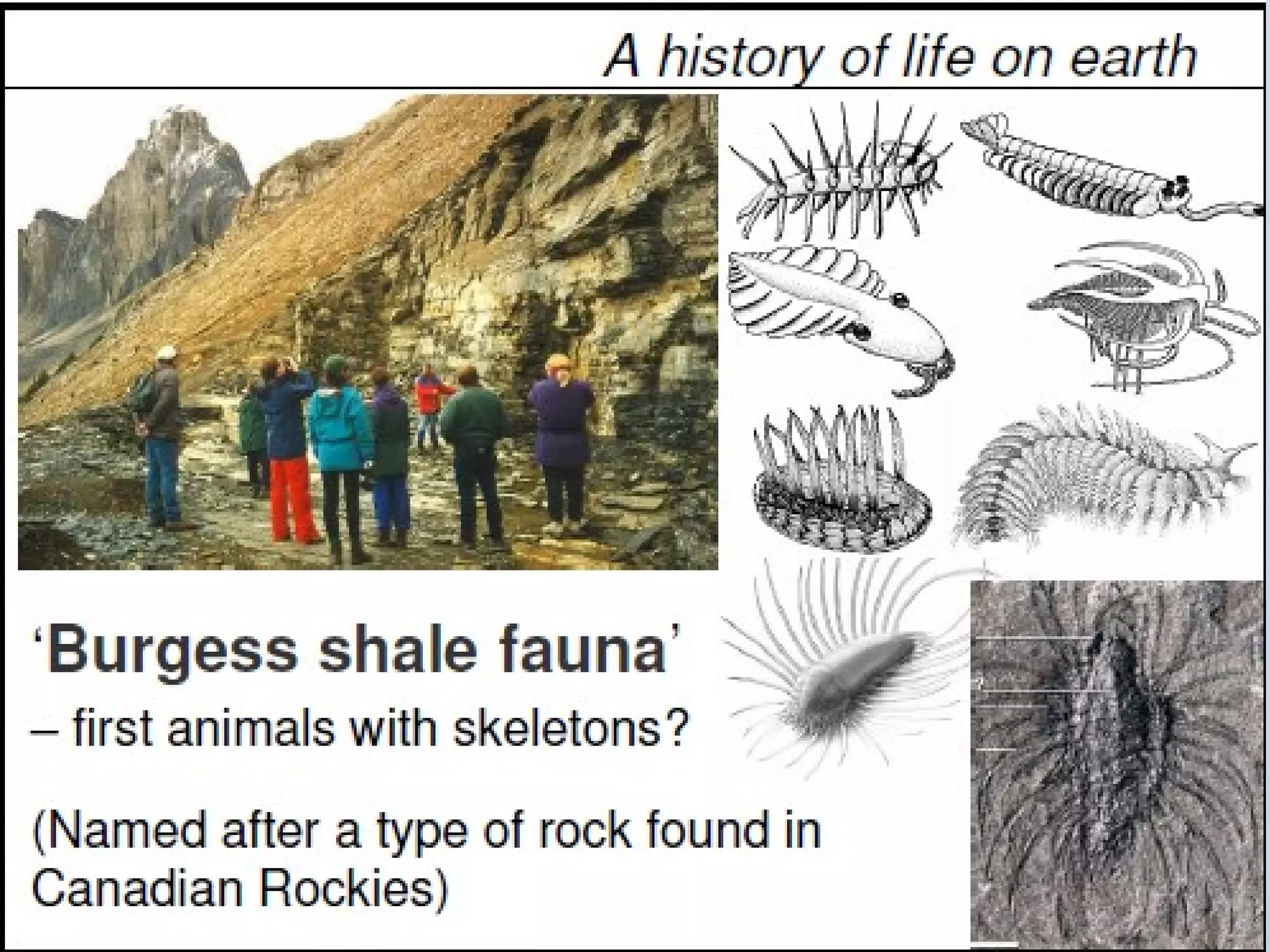
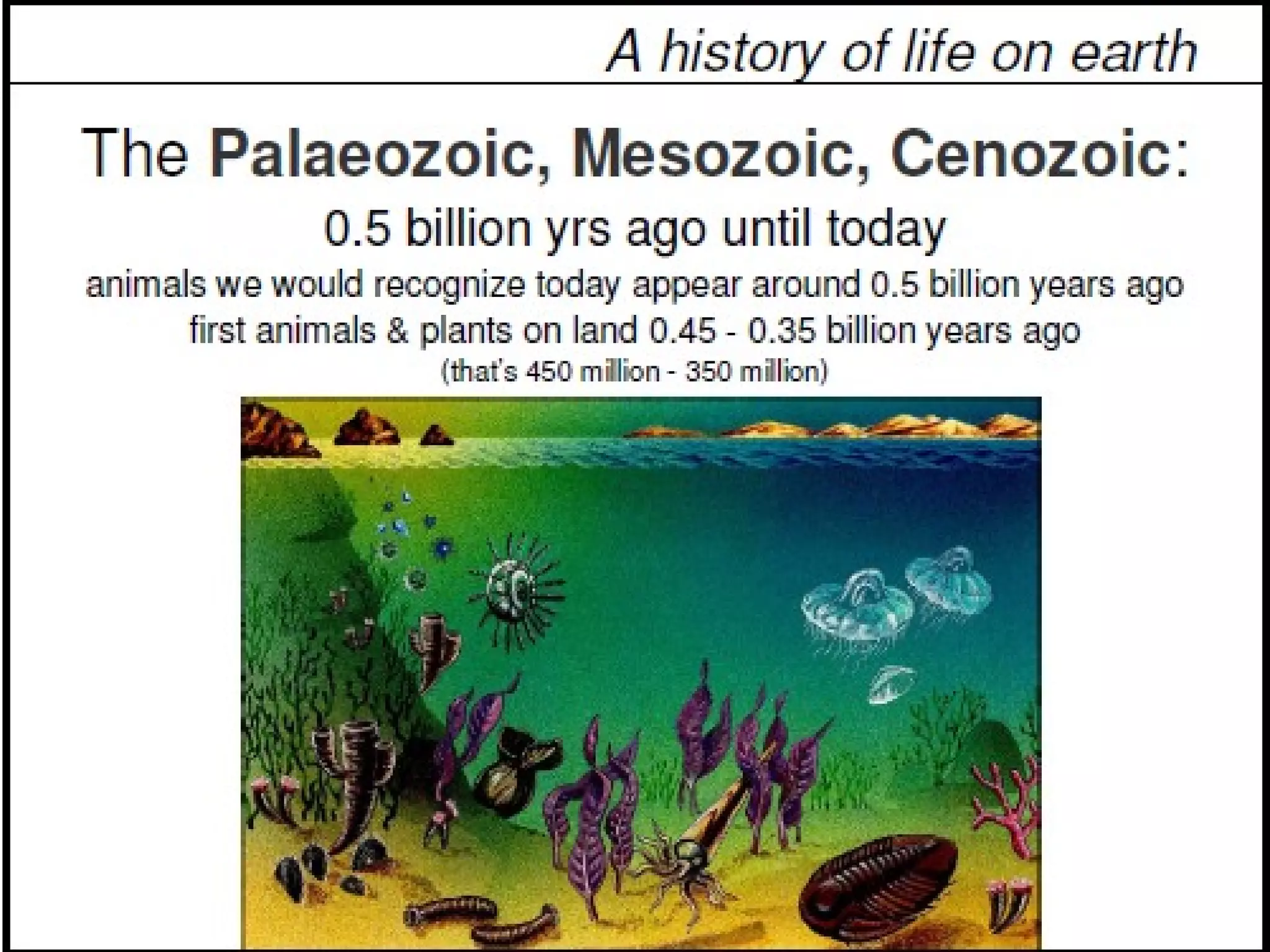
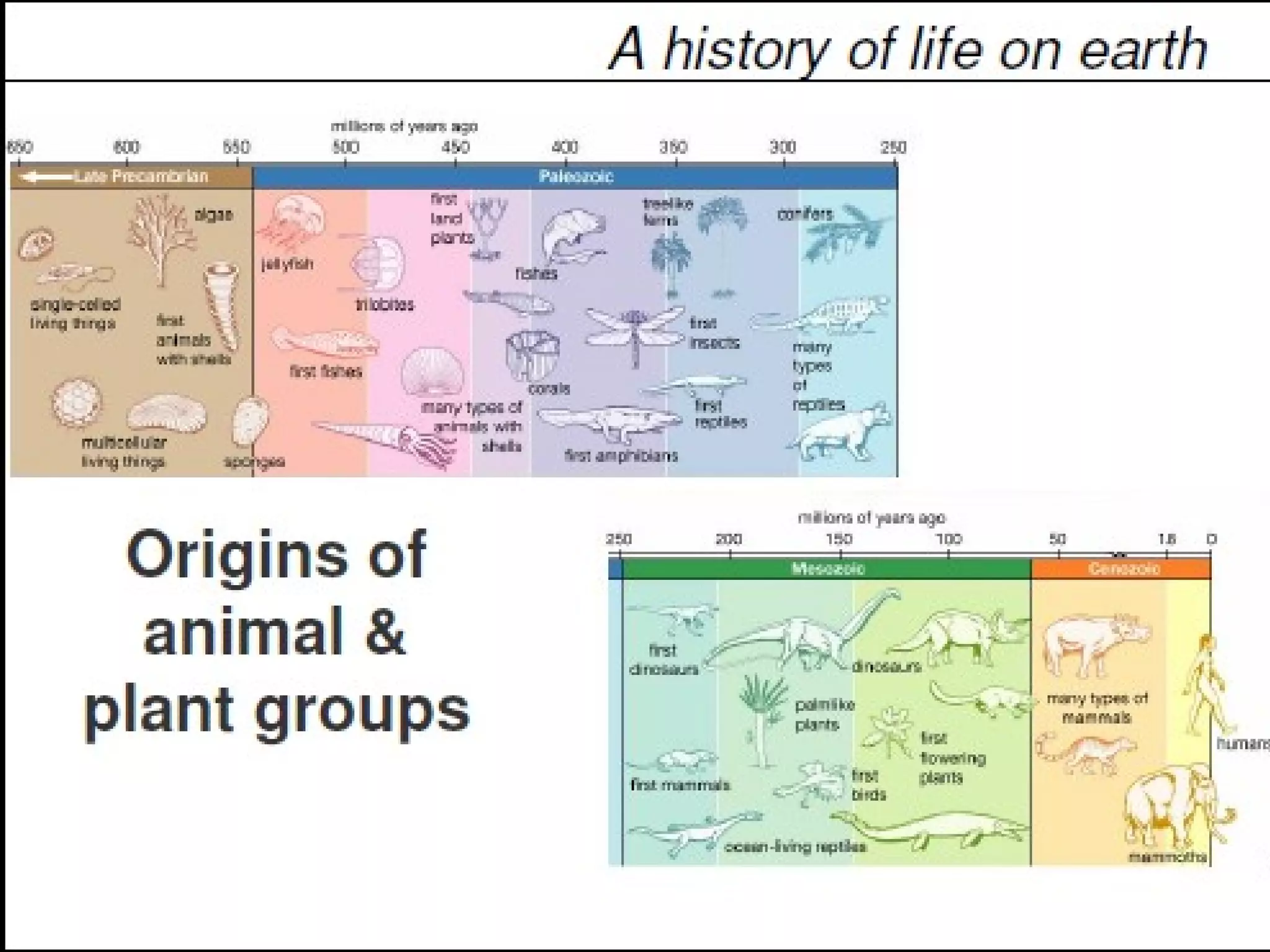
History of life on earth

History of life on earth

  • 1.
    A History ofLife on Earth Chapter 5 Presented by Amith Reddy
  • 2.
    Before Life Began •How old is the Earth ? 4.5 billion years • Big Bang - gravity causes dust particles to condense • Meteors for millions of years- how hot would the earth be? • Earth has to cool down - steam escapes and rain allows collection of water - earth now has…… • Atmosphere of Ammonia, Methane, water vapor, Co2, and Nitrogen • what is missing?
  • 3.
    WHAT EVIDENCE DOSCIENTISTS USE? • Fossils! – trace – mold – cast – amber – imprint – petrified Images courtesy of the UC Museum of Paleontology Understanding Evolution: http://evolution.berkeley.edu." Life Sciences-HHMI Outreach. Copyright 2006 President and Fellows of Harvard College.
  • 4.
    Outline Before Life Began TheEmergence of Life Precambrian Life Paleozoic Life: The Cambrian Explosion Paleozoic Life: Ordovician to Devonian Mesozoic Life Marine life Marine life Terrestrial life Terrestrial plants and arthropods Vertebrates Paleozoic Life: Carboniferous and Permian The Cenozoic Era Terrestrial life Terrestrial life Aquatic life Aquatic life The adaptive radiation of mammals Pleistocene events
  • 6.
    The Emergence ofLife Early evolution of life on Earth
  • 7.
  • 10.
  • 11.
    Precambrian Life • Whatdo scientists think was alive way back then?? • Bacteria • This era lasted for billions of years until more living organisms evolved Dr Tom Tregenza © Tom Tregenza Dr Gordon Beakes © University of Newcastle upon Tynelicensed IMAGES for use through the Centre for Bioscience ImageBank,http://www.bioscience.heacademy.ac.uk/imagebank/" Life Sciences-HHMI Outreach. Copyright 2006 President and Fellows of Harvard College.
  • 14.
    Stomatolites : Complexcommunities of (mostly) cyanobacteria produce all the atmospheric oxygen.
  • 19.
    Paleozoic Era 540 Millionyears ago!! • • • • • • • • • Now the earth is getting larger life! First part of paleozoic is called cambrian Protists! Sea plants! Sea animals! Land plants! Land animals! what ended the paleozoic era?? Mass extinction! Dr. Thomas W. Kammer
  • 20.
    Cretaceous – TertiaryExtension 65.5 mill years ago Permian – Triassic Extension (Great Dying) 251.4 mill years ago Ordovician – Silurian Extension 443.7 mill years ago
  • 21.
    Species Extension invarious periods of History
  • 22.
    WHY DO WEHAVE DIFFERENT ERA’S? Image courtesy of the UC Museum of Paleontology Understanding Evolution: http://evolution.berkeley.edu."
  • 23.
    Why Mass extinction? How did they survive???
  • 24.
    Which life, Marineor Terrestrial has faster growth or extinction ???
  • 25.
    How did treessurvive without roots ?
  • 27.
  • 28.
    Why land movedor changed in Mesozoic life ?? Why they separate at different rate ? Why not all at once ?? What was the climate of the earth at this time ?
  • 29.
    How/Why did onlyGymnosperms first appeared than Angiosperms ???
  • 30.
    How are theydifferent ???
  • 32.
    Mesozoic era 245 Millionyears ago!! • • • • • • • • Dinosaurs Reptiles Small mammals appear Birds evolve Plate tectonics what ended the mesozoic era? mass extinction! Meterorite ???
  • 33.
    Image courtesy ofthe UC Museum of Paleontology Understanding Evolution: http://evolution.berkeley.edu."
  • 34.
    Cenozoic Era 66 Millionyears ago! • Mammals flourish • Primates about 30 million years ago • Modern human species – about 200,000 years ago
  • 35.
    licensed for usethrough the Centre for Bioscience ImageBank,http://www.bioscience.heacademy.ac.uk/imagebank/"
  • 40.
    • Where arefossils usually found? • Who studies these? • How do scientists determine the age of something billions of years old? – Relative dating – Radiometric dating Life Sciences-HHMI Outreach. Copyright 2006 President and Fellows of Harvard College. Understanding Evolution: http://evolution.berkeley.edu."
  • 43.
    Evolution of lifeon land Q. Were animals or plants first? • Animals were first! Land-plants (not algae) only appeared about 450 million years ago. Q. When did the first flowering plants appear? • Only about 120 million years ago! Before that, ferns, mosses, and algae (incl. kelps etc.) Q. When did mammals appear first? • Before dinosaurs! ~220 million years ago.
  • 44.
  • 45.