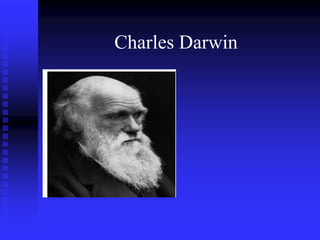
Charles Darwin
Darwin’s Theory of Evolution
 Evolution, or change over time, is the process by which
modern organisms have descended from ancient organisms.
 A scientific theory is a well-supported testable explanation
of phenomena that have occurred in the natural world.
How do you think Darwin came up with his
theory?
Voyage of the Beagle
Voyage of Beagle
 Dates: February 12th, 1831
 Captain: Charles Darwin
 Ship: H.M.S. Beagle
 Destination: Voyage around the world.
 Findings: evidence to propose a revolutionary
hypothesis about how life changes over time
Patterns of Diversity
 Darwin visited Argentina and Australia which had
similar grassland ecosystems.
 those grasslands were inhabited by very different
animals.
 neither Argentina nor Australia was home to the
sorts of animals that lived in European grasslands.
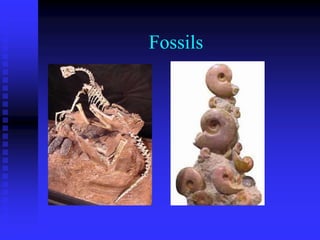
 Darwin collected fossils.
 Some of those fossils resembled organisms that were
still alive today.
Living Organisms and Fossils
Fossils
The Galapagos Island
 The smallest, lowest islands were hot, dry, and nearly
barren-Hood Island-sparse vegetation
 The higher islands had greater rainfall and a different
assortment of plants and animals-Isabela- Island had rich
vegetation.
 Darwin was fascinated in particular by the land tortoises
and marine iguanas in the Galápagos.
 Giant tortoises varied in predictable ways from one island
to another.
 The shape of a tortoise's shell could be used to identify
which island a particular tortoise inhabited.
Animals found in the Galapagos
 Land Tortoises
 Darwin Finches
 Blue-Footed Booby
 Marine Iguanas
Ideas that shaped Darwin’s
Thinking
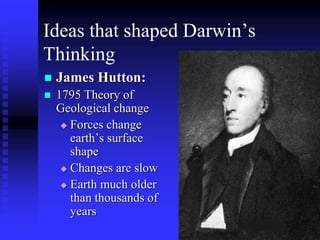
 James Hutton:
 1795 Theory of
Geological change
 Forces change
earth’s surface
shape
 Changes are slow
 Earth much older
than thousands of
years
Lamarck’s Theory of Evolution
 Tendency toward Perfection(Giraffe
necks)
 Use and Disuse (bird’s using forearms)
 Inheritance of Acquired Traits
Evolution by Natural Selection
 The Struggle for Existence-members of each species have to
compete for food, shelter, other life necessities
 Survival of the Fittest-Some individuals better suited for the
environment
Descent
 Descent with Modification-Each living organism has
descended, with changes from other species over time
 Common Descent- were derived from common ancestors
Evidence of Evolution
 The Fossil Record
 Geographic Distribution of Living Things
 Homologous Body Structures
 Similarities in Early Development
Evidence for Evolution
Darwin evolution ppt (yna fabros)

Darwin evolution ppt (yna fabros)

  • 1.
  • 2.
    Darwin’s Theory ofEvolution  Evolution, or change over time, is the process by which modern organisms have descended from ancient organisms.  A scientific theory is a well-supported testable explanation of phenomena that have occurred in the natural world. How do you think Darwin came up with his theory?
  • 3.
  • 4.
    Voyage of Beagle Dates: February 12th, 1831  Captain: Charles Darwin  Ship: H.M.S. Beagle  Destination: Voyage around the world.  Findings: evidence to propose a revolutionary hypothesis about how life changes over time
  • 6.
    Patterns of Diversity Darwin visited Argentina and Australia which had similar grassland ecosystems.  those grasslands were inhabited by very different animals.  neither Argentina nor Australia was home to the sorts of animals that lived in European grasslands.  Darwin collected fossils.  Some of those fossils resembled organisms that were still alive today. Living Organisms and Fossils
  • 7.
  • 8.
    The Galapagos Island The smallest, lowest islands were hot, dry, and nearly barren-Hood Island-sparse vegetation  The higher islands had greater rainfall and a different assortment of plants and animals-Isabela- Island had rich vegetation.  Darwin was fascinated in particular by the land tortoises and marine iguanas in the Galápagos.  Giant tortoises varied in predictable ways from one island to another.  The shape of a tortoise's shell could be used to identify which island a particular tortoise inhabited.
  • 10.
    Animals found inthe Galapagos  Land Tortoises  Darwin Finches  Blue-Footed Booby  Marine Iguanas
  • 11.
    Ideas that shapedDarwin’s Thinking  James Hutton:  1795 Theory of Geological change  Forces change earth’s surface shape  Changes are slow  Earth much older than thousands of years
  • 12.
    Lamarck’s Theory ofEvolution  Tendency toward Perfection(Giraffe necks)  Use and Disuse (bird’s using forearms)  Inheritance of Acquired Traits
  • 15.
    Evolution by NaturalSelection  The Struggle for Existence-members of each species have to compete for food, shelter, other life necessities  Survival of the Fittest-Some individuals better suited for the environment Descent  Descent with Modification-Each living organism has descended, with changes from other species over time  Common Descent- were derived from common ancestors
  • 17.
    Evidence of Evolution The Fossil Record  Geographic Distribution of Living Things  Homologous Body Structures  Similarities in Early Development
  • 18.