
PUPIL’S
LEARNING
GOAL
LEONY C. ESPIN-TENDERO
Objectives
Differentiate learning
objectives from learning
outcomes and learning goals
Identify the kinds of learning
outcomes
Identify the three main
components of learning
outcomes
State the elements of a writing
Effective learning objectives
? What do you want pupils to
know by the time they finish
a lesson?
What do you want pupils to
be able to do with what they
know?
Creating Learning Goals
Learning objectives are brief, clear statements
of learning outcomes of instruction
that are related to and flow from the program
goals.
-focus on pupils
Learning goals express intended outcomes in
broad, global language
-focus on curriculum
Learning outcomes are statements that describe
significant and essential learning that learners
have achieved, and can reliably demonstrate at
the end of the course or program.
It identifies what the learner will know and be able
to do by the end of a course or program- the
essential and enduring knowledge, abilities
(skills), and attitudes (values, dispositions) that
constitute the integrated learning needed by a
graduate,.
Three Main Components of Learning Outcome
1. Action-word that identifies the performance to be
demonstrated.
2. Learning Statement-specifies what learning will
be demonstrated in the performance
3. Criterion or standard for acceptable performance
ACTION
WORD
LEARNING
STATEMENT
CRITERION
Produces Documents Using word
processing
equipment
Analyzes Global and
environmental
factors
In terms of
their effects
on people
Examples of Goals, Objectives and Outcomes
GOAL OBJECTIVE LEARNING OUTCOME
To develop
knowledge,
understanding,
and skills
related to the
recognition
and
interpretation
of igneous and
metamorphic
rocks
To explain the
different magma
derived from
partial melting
of the mantle in
different
tectonic regime.
Students should
be able to
demonstrate
how magma ….
GOAL OBJECTIVE LEARNING
OUTCOME
Recognize
rising and
falling
intonation and
meanings they
signal
• yes-no
questions
• wh- questions
• statement
Use the correct
intonation
Yes -No
questions
Questions
introduced by
interrogatives
Pupils should
be able to use
in a
conversation
the correct
intonation
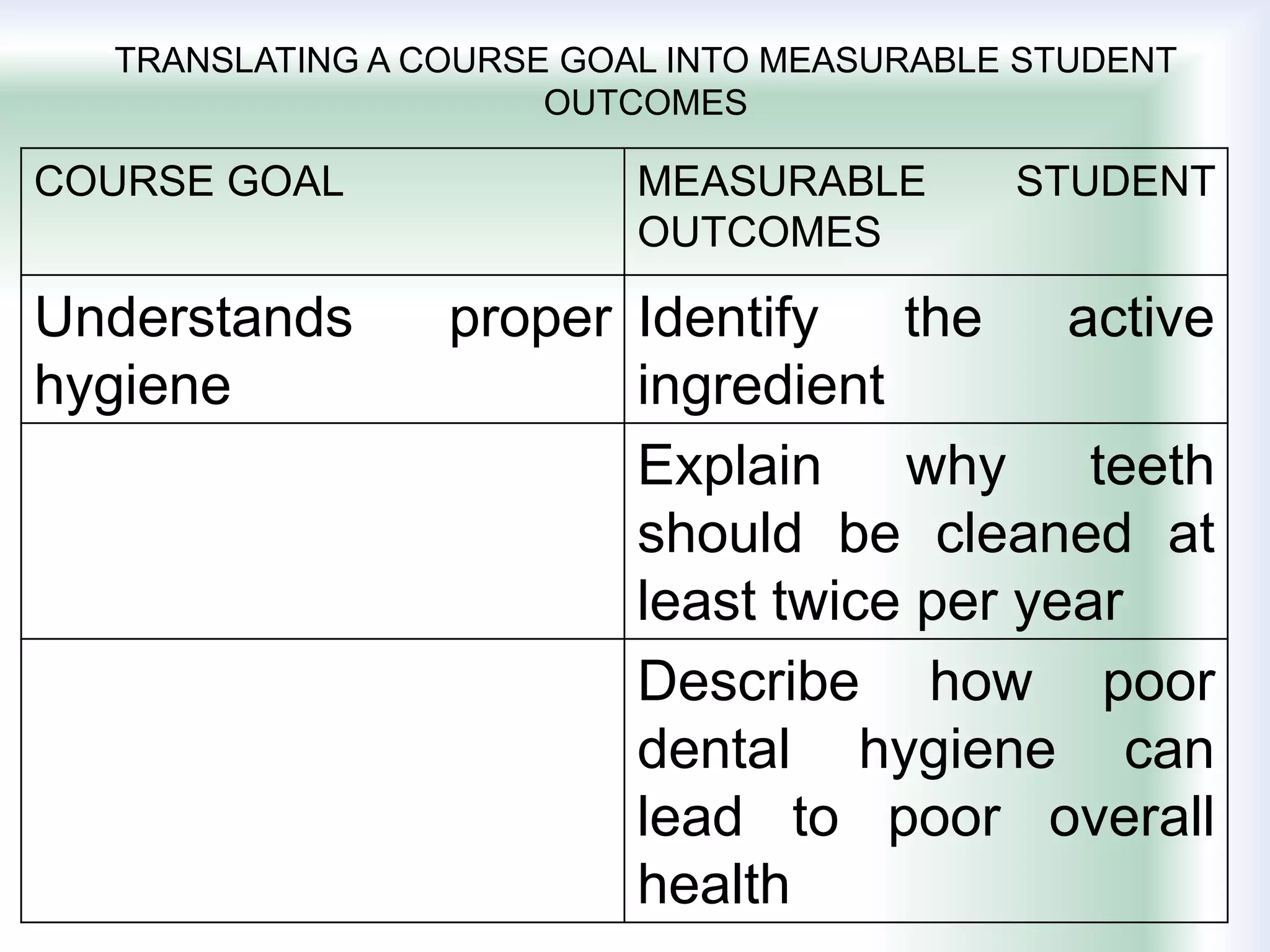
TRANSLATING A COURSE GOAL INTO MEASURABLE STUDENT
OUTCOMES
COURSE GOAL MEASURABLE STUDENT
OUTCOMES
Understands proper
hygiene
Identify the active
ingredient
Explain why teeth
should be cleaned at
least twice per year
Describe how poor
dental hygiene can
lead to poor overall
health
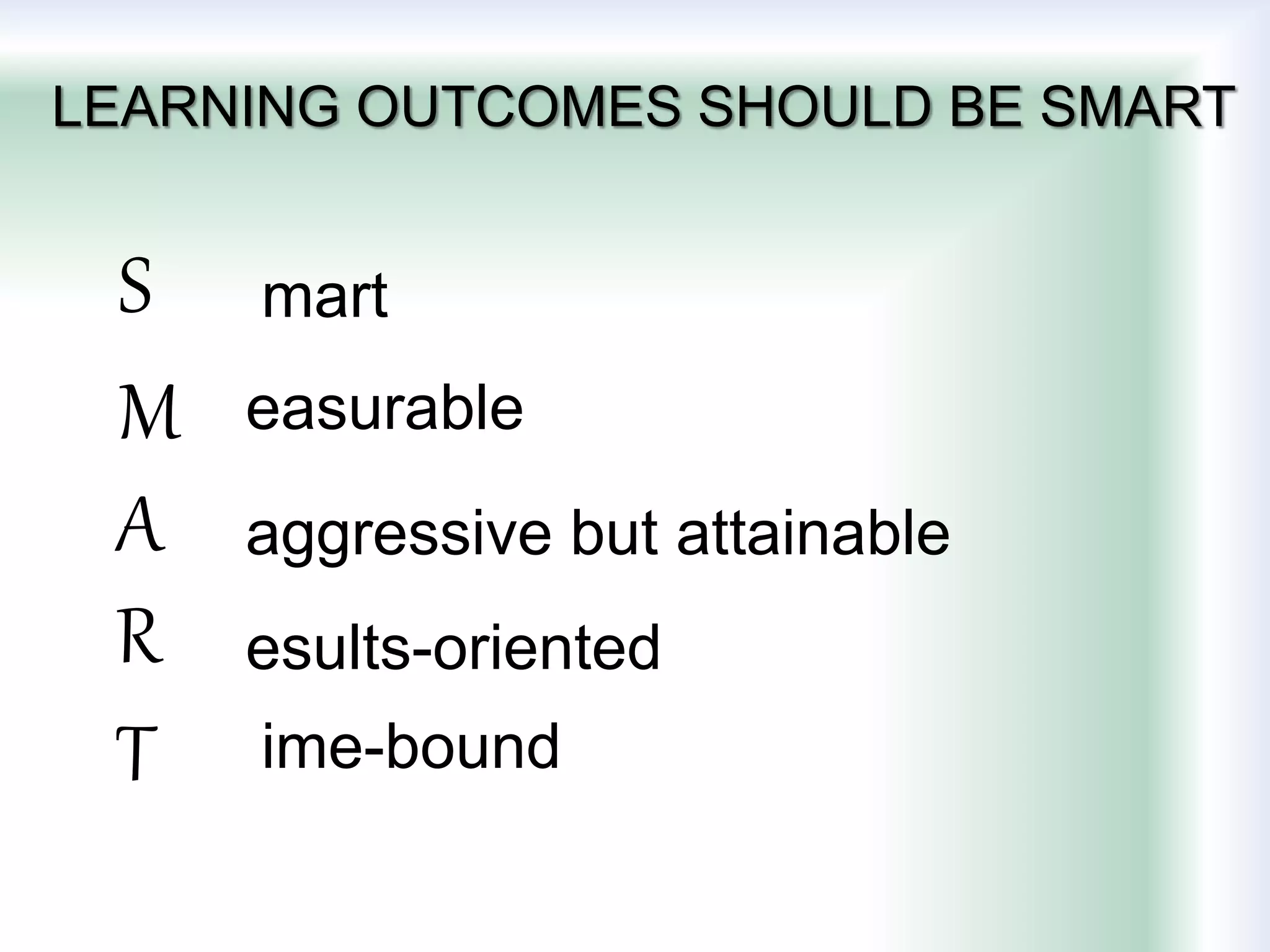
LEARNING OUTCOMES SHOULD BE SMART
S
M
A
R
T
mart
easurable
aggressive but attainable
esults-oriented
ime-bound
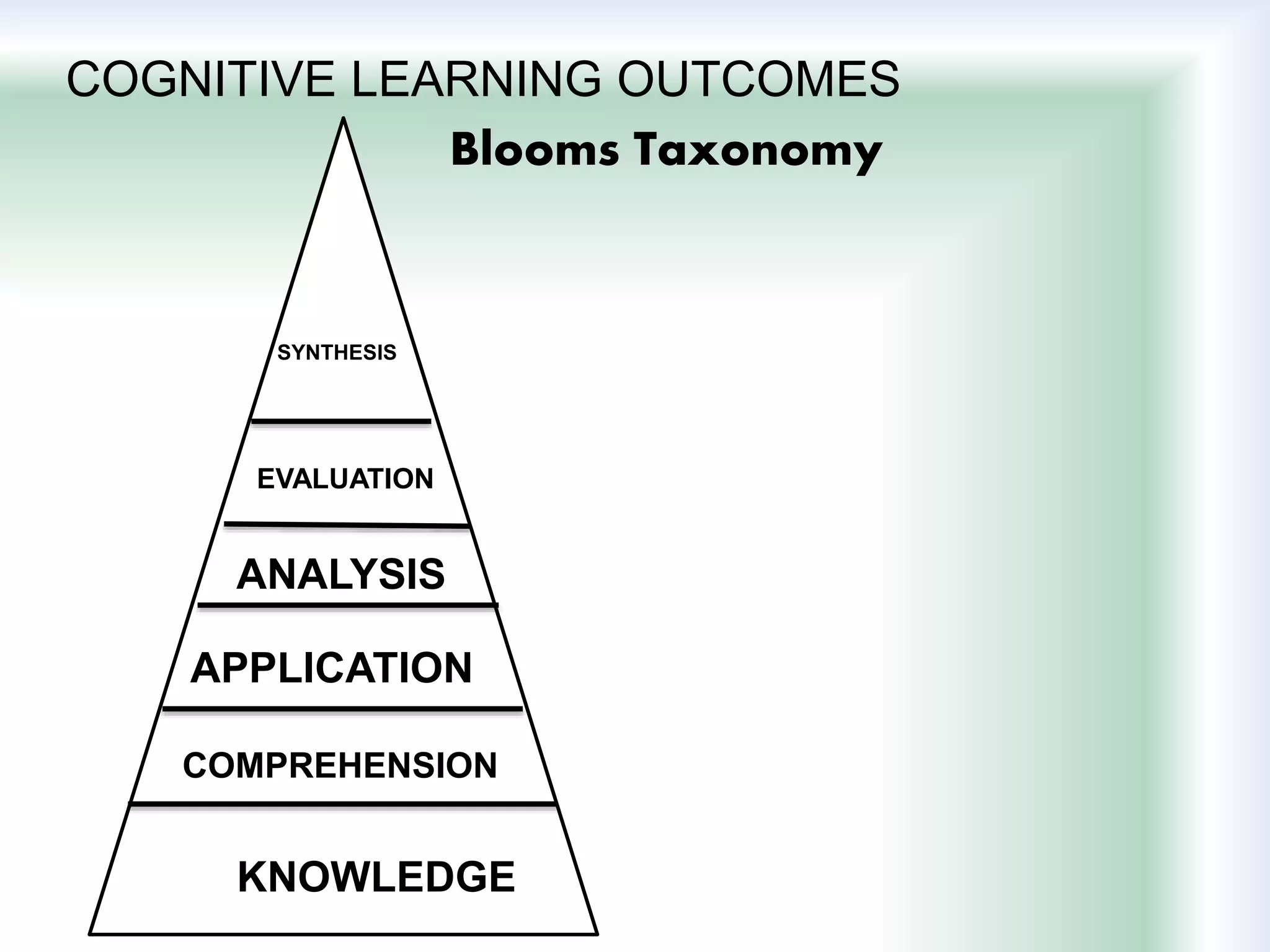
COGNITIVE LEARNING OUTCOMES
KNOWLEDGE
COMPREHENSION
ANALYSIS
APPLICATION
EVALUATION
SYNTHESIS
Blooms Taxonomy
KNOWLEDGE
To know specific facts, terms,
concepts, principles, or theories
COMPREHENSION
To understand, interpret, compare,
contrast, or explain
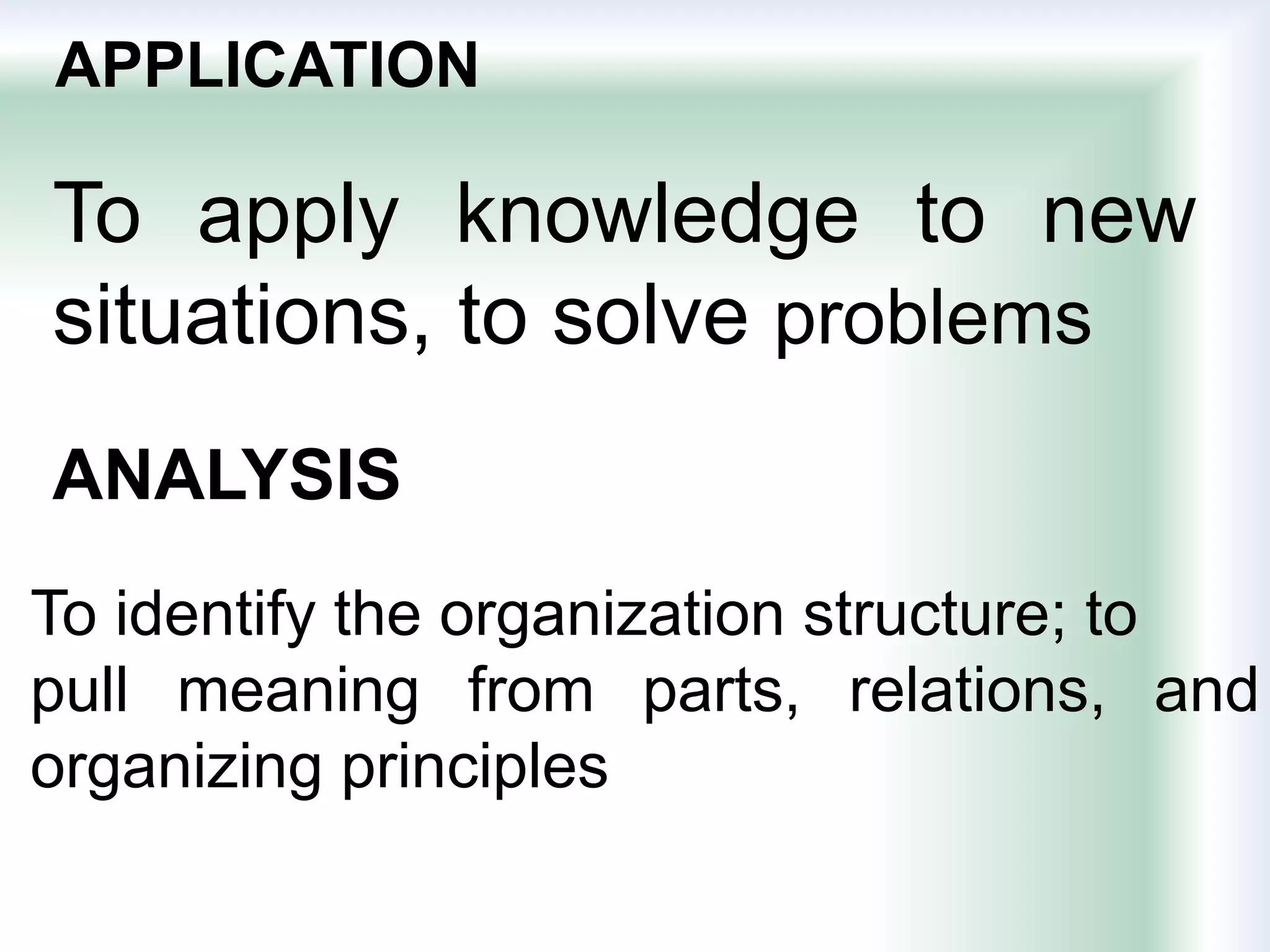
APPLICATION
To apply knowledge to new
situations, to solve problems
ANALYSIS
To identify the organization structure; to
pull meaning from parts, relations, and
organizing principles
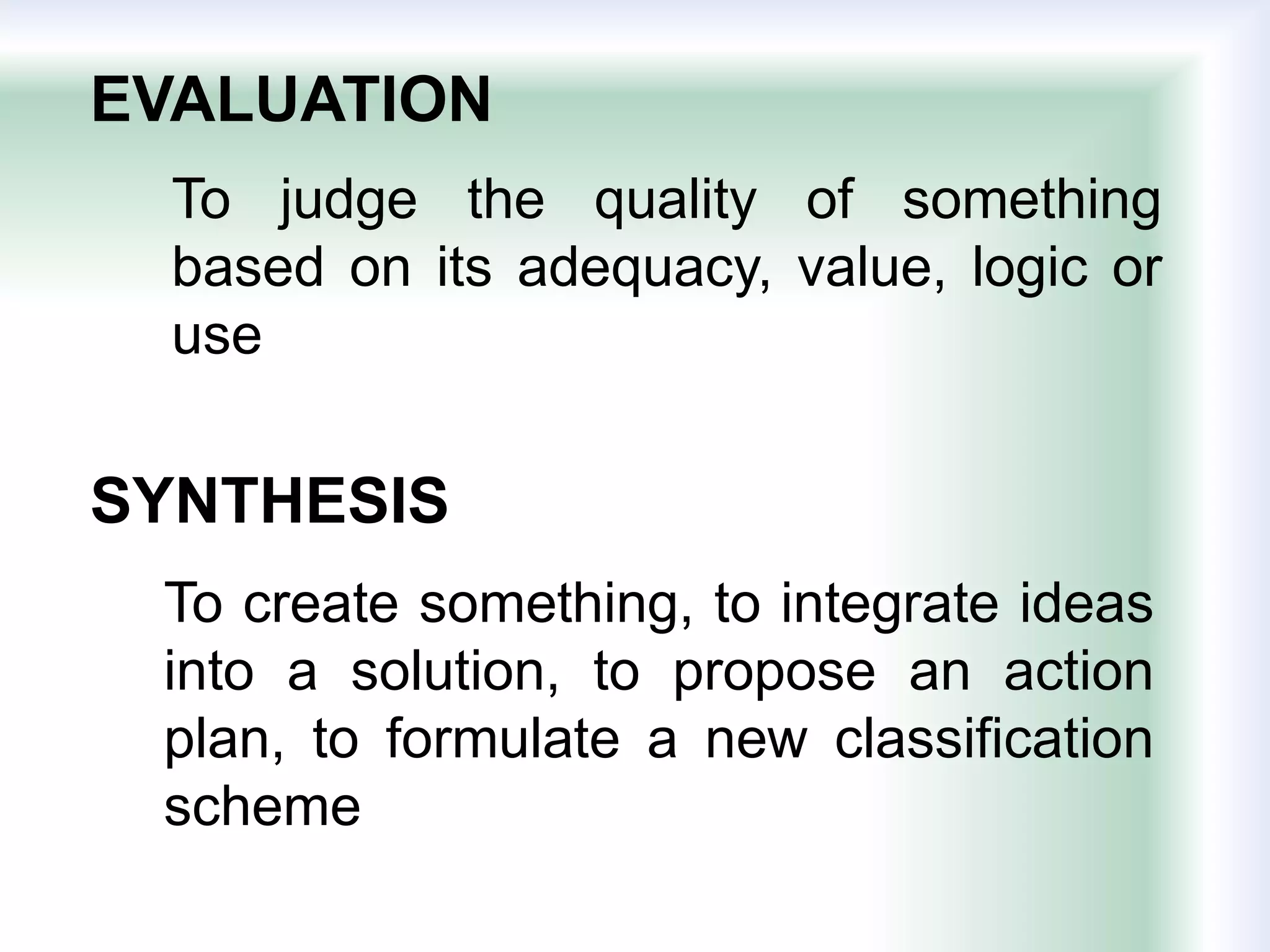
EVALUATION
To judge the quality of something
based on its adequacy, value, logic or
use
SYNTHESIS
To create something, to integrate ideas
into a solution, to propose an action
plan, to formulate a new classification
scheme
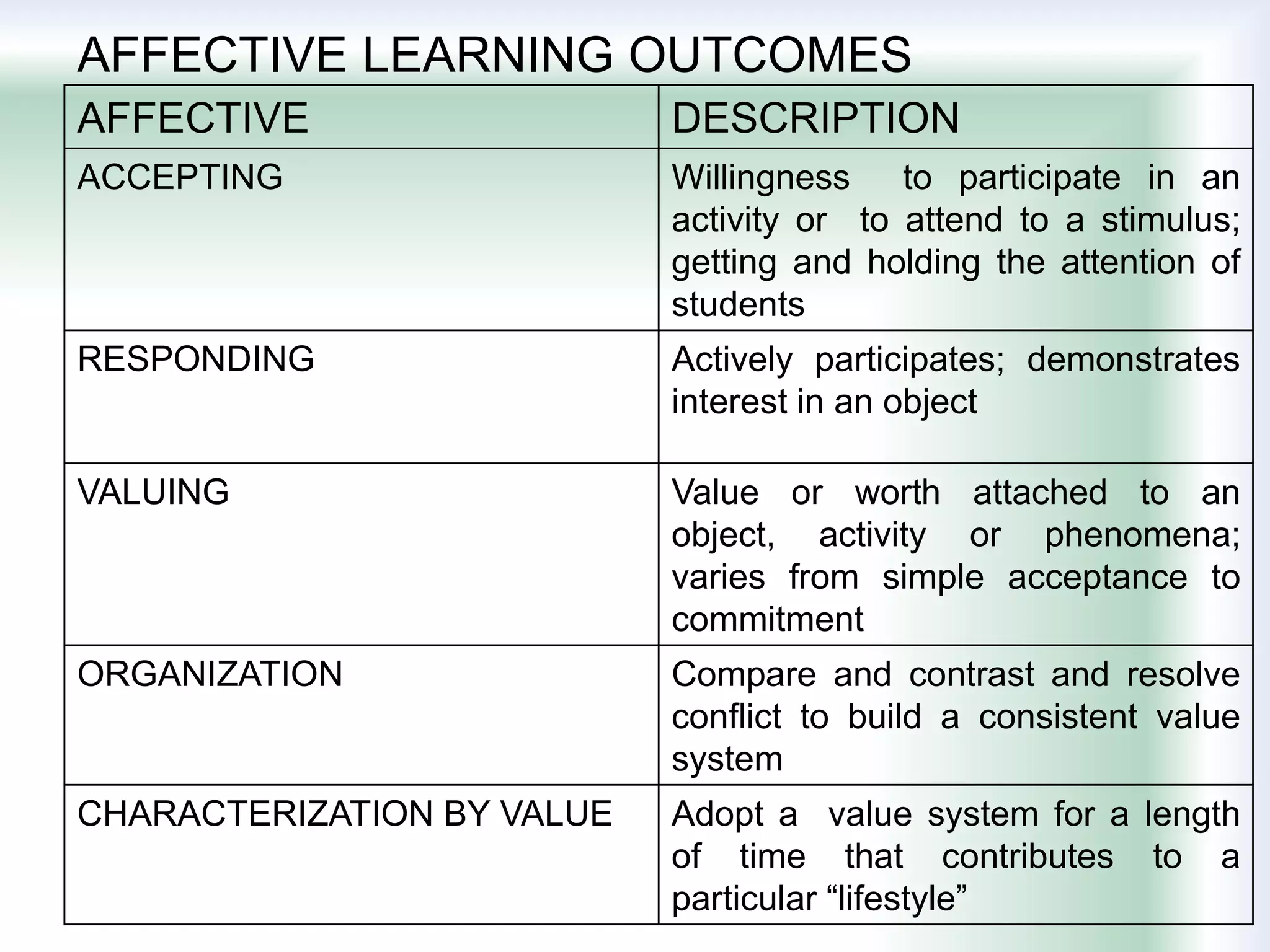
AFFECTIVE LEARNING OUTCOMES
AFFECTIVE DESCRIPTION
ACCEPTING Willingness to participate in an
activity or to attend to a stimulus;
getting and holding the attention of
students
RESPONDING Actively participates; demonstrates
interest in an object
VALUING Value or worth attached to an
object, activity or phenomena;
varies from simple acceptance to
commitment
ORGANIZATION Compare and contrast and resolve
conflict to build a consistent value
system
CHARACTERIZATION BY VALUE Adopt a value system for a length
of time that contributes to a
particular “lifestyle”
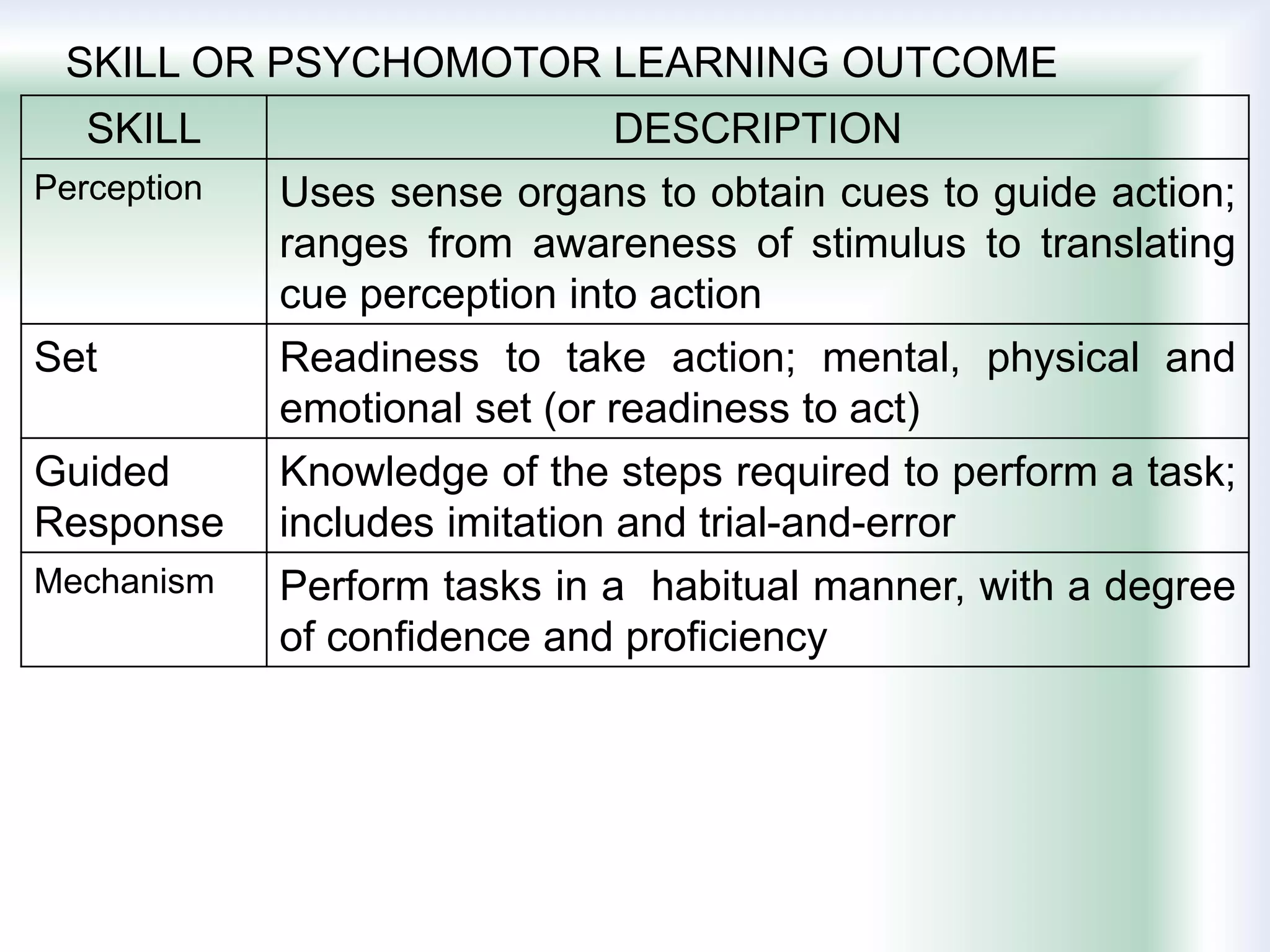
SKILL OR PSYCHOMOTOR LEARNING OUTCOME
SKILL DESCRIPTION
Perception Uses sense organs to obtain cues to guide action;
ranges from awareness of stimulus to translating
cue perception into action
Set Readiness to take action; mental, physical and
emotional set (or readiness to act)
Guided
Response
Knowledge of the steps required to perform a task;
includes imitation and trial-and-error
Mechanism Perform tasks in a habitual manner, with a degree
of confidence and proficiency
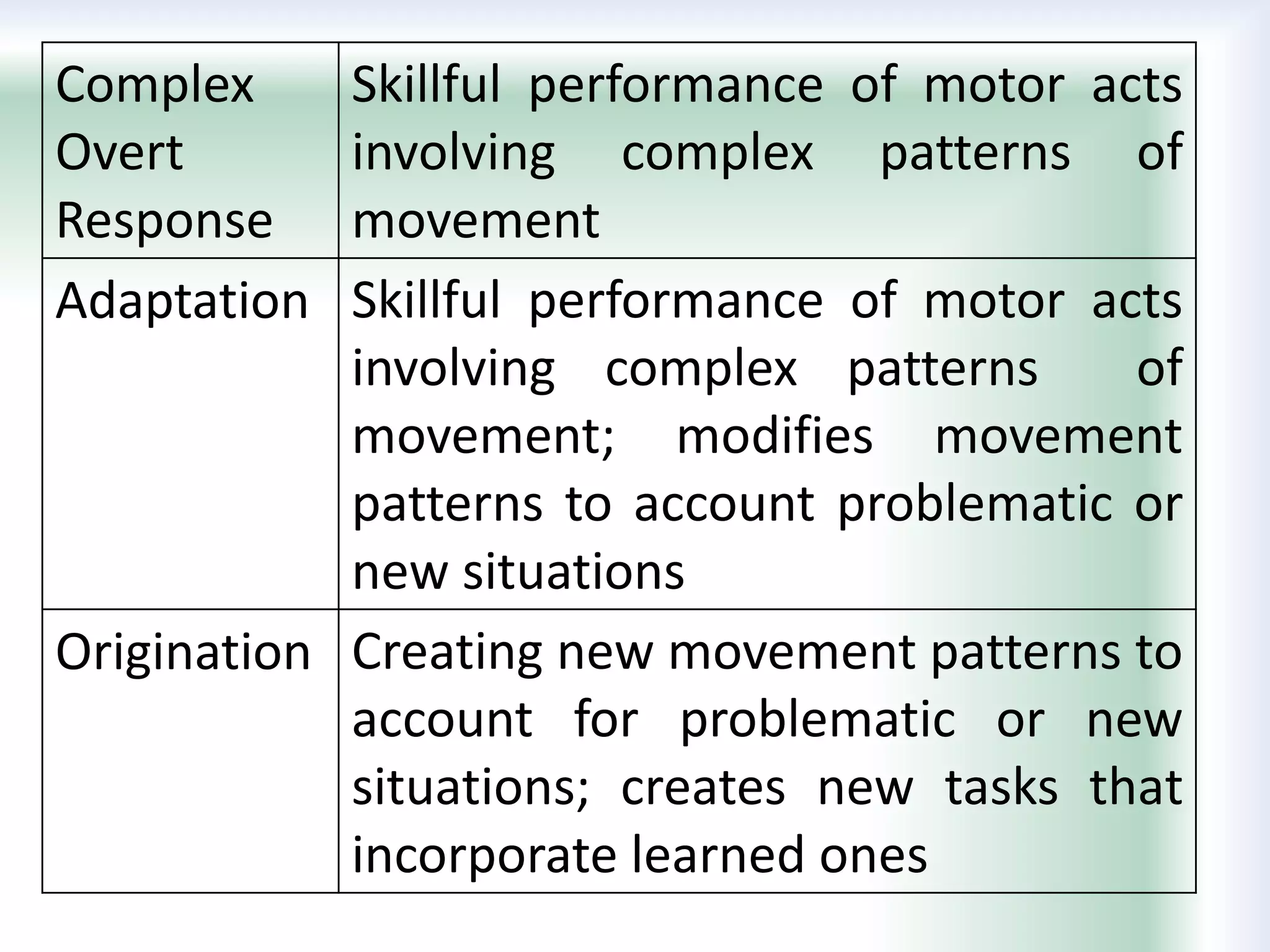
Complex
Overt
Response
Skillful performance of motor acts
involving complex patterns of
movement
Adaptation Skillful performance of motor acts
involving complex patterns of
movement; modifies movement
patterns to account problematic or
new situations
Origination Creating new movement patterns to
account for problematic or new
situations; creates new tasks that
incorporate learned ones
Identify
Student
Learning
Goals for
Courses/Maj
ors
Design
Course/Major
Curriculum to
Meet Goals
Assess Student
Learning to
Identify Needed
Revisions to
Course/Major
Use Assessment Results to
Revise Goals, Teaching
Methodologies, Curriculum,
and Budgeting Priorities
In order for us to reach the outcome of what we want
our children to demonstrate we should know how to
write learning objectives
Understanding and
clearly stating what your
program is trying to
accomplish serves as a
foundation for a
successful assessment
plan. University of Central
Florida
THANK YOU
    

Student learning goals

  • 1.
  • 2.
    Objectives Differentiate learning objectives fromlearning outcomes and learning goals Identify the kinds of learning outcomes
  • 3.
    Identify the threemain components of learning outcomes State the elements of a writing Effective learning objectives
  • 4.
    ? What doyou want pupils to know by the time they finish a lesson? What do you want pupils to be able to do with what they know?
  • 5.
    Creating Learning Goals Learningobjectives are brief, clear statements of learning outcomes of instruction that are related to and flow from the program goals. -focus on pupils Learning goals express intended outcomes in broad, global language -focus on curriculum
  • 6.
    Learning outcomes arestatements that describe significant and essential learning that learners have achieved, and can reliably demonstrate at the end of the course or program. It identifies what the learner will know and be able to do by the end of a course or program- the essential and enduring knowledge, abilities (skills), and attitudes (values, dispositions) that constitute the integrated learning needed by a graduate,.
  • 7.
    Three Main Componentsof Learning Outcome 1. Action-word that identifies the performance to be demonstrated. 2. Learning Statement-specifies what learning will be demonstrated in the performance 3. Criterion or standard for acceptable performance
  • 8.
    ACTION WORD LEARNING STATEMENT CRITERION Produces Documents Usingword processing equipment Analyzes Global and environmental factors In terms of their effects on people
  • 9.
    Examples of Goals,Objectives and Outcomes GOAL OBJECTIVE LEARNING OUTCOME To develop knowledge, understanding, and skills related to the recognition and interpretation of igneous and metamorphic rocks To explain the different magma derived from partial melting of the mantle in different tectonic regime. Students should be able to demonstrate how magma ….
  • 10.
    GOAL OBJECTIVE LEARNING OUTCOME Recognize risingand falling intonation and meanings they signal • yes-no questions • wh- questions • statement Use the correct intonation Yes -No questions Questions introduced by interrogatives Pupils should be able to use in a conversation the correct intonation
  • 11.
    TRANSLATING A COURSEGOAL INTO MEASURABLE STUDENT OUTCOMES COURSE GOAL MEASURABLE STUDENT OUTCOMES Understands proper hygiene Identify the active ingredient Explain why teeth should be cleaned at least twice per year Describe how poor dental hygiene can lead to poor overall health
  • 12.
    LEARNING OUTCOMES SHOULDBE SMART S M A R T mart easurable aggressive but attainable esults-oriented ime-bound
  • 13.
  • 14.
    KNOWLEDGE To know specificfacts, terms, concepts, principles, or theories COMPREHENSION To understand, interpret, compare, contrast, or explain
  • 15.
    APPLICATION To apply knowledgeto new situations, to solve problems ANALYSIS To identify the organization structure; to pull meaning from parts, relations, and organizing principles
  • 16.
    EVALUATION To judge thequality of something based on its adequacy, value, logic or use SYNTHESIS To create something, to integrate ideas into a solution, to propose an action plan, to formulate a new classification scheme
  • 17.
    AFFECTIVE LEARNING OUTCOMES AFFECTIVEDESCRIPTION ACCEPTING Willingness to participate in an activity or to attend to a stimulus; getting and holding the attention of students RESPONDING Actively participates; demonstrates interest in an object VALUING Value or worth attached to an object, activity or phenomena; varies from simple acceptance to commitment ORGANIZATION Compare and contrast and resolve conflict to build a consistent value system CHARACTERIZATION BY VALUE Adopt a value system for a length of time that contributes to a particular “lifestyle”
  • 18.
    SKILL OR PSYCHOMOTORLEARNING OUTCOME SKILL DESCRIPTION Perception Uses sense organs to obtain cues to guide action; ranges from awareness of stimulus to translating cue perception into action Set Readiness to take action; mental, physical and emotional set (or readiness to act) Guided Response Knowledge of the steps required to perform a task; includes imitation and trial-and-error Mechanism Perform tasks in a habitual manner, with a degree of confidence and proficiency
  • 19.
    Complex Overt Response Skillful performance ofmotor acts involving complex patterns of movement Adaptation Skillful performance of motor acts involving complex patterns of movement; modifies movement patterns to account problematic or new situations Origination Creating new movement patterns to account for problematic or new situations; creates new tasks that incorporate learned ones
  • 20.
    Identify Student Learning Goals for Courses/Maj ors Design Course/Major Curriculum to MeetGoals Assess Student Learning to Identify Needed Revisions to Course/Major Use Assessment Results to Revise Goals, Teaching Methodologies, Curriculum, and Budgeting Priorities
  • 21.
    In order forus to reach the outcome of what we want our children to demonstrate we should know how to write learning objectives
  • 22.
    Understanding and clearly statingwhat your program is trying to accomplish serves as a foundation for a successful assessment plan. University of Central Florida
  • 23.
    THANK YOU    