New Taxonomy of
Educational Objectives
             Marzano& Kendall, 2007


           Prepared by:
           Amber Garrison Duncan, 2012
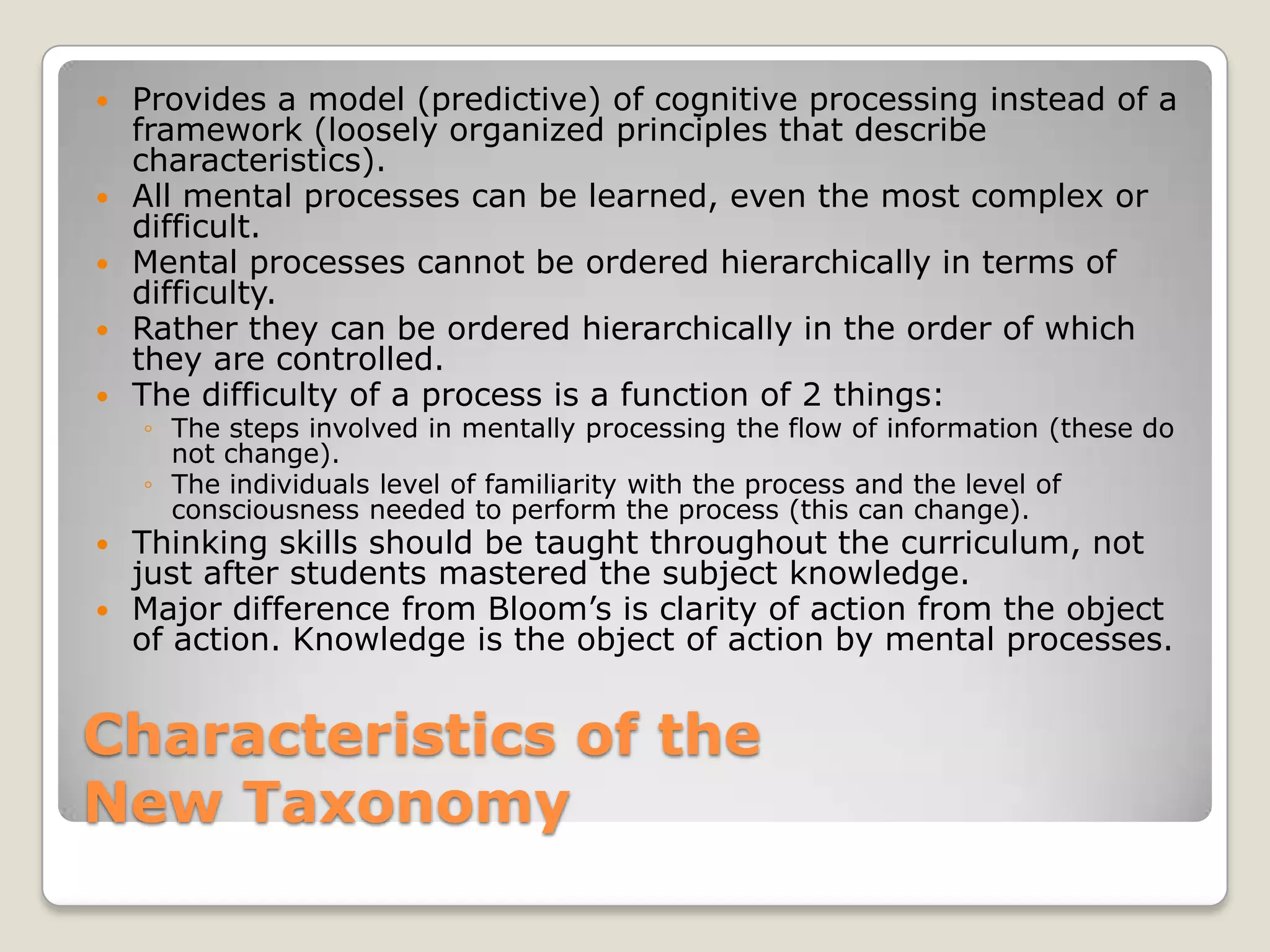
 Provides a model (predictive) of cognitive processing instead of a
  framework (loosely organized principles that describe
  characteristics).
 All mental processes can be learned, even the most complex or
  difficult.
 Mental processes cannot be ordered hierarchically in terms of
  difficulty.
 Rather they can be ordered hierarchically in the order of which
  they are controlled.
 The difficulty of a process is a function of 2 things:
    ◦ The steps involved in mentally processing the flow of information (these do
      not change).
    ◦ The individuals level of familiarity with the process and the level of
      consciousness needed to perform the process (this can change).
   Thinking skills should be taught throughout the curriculum, not
    just after students mastered the subject knowledge.
   Major difference from Bloom’s is clarity of action from the object
    of action. Knowledge is the object of action by mental processes.


Characteristics of the
New Taxonomy
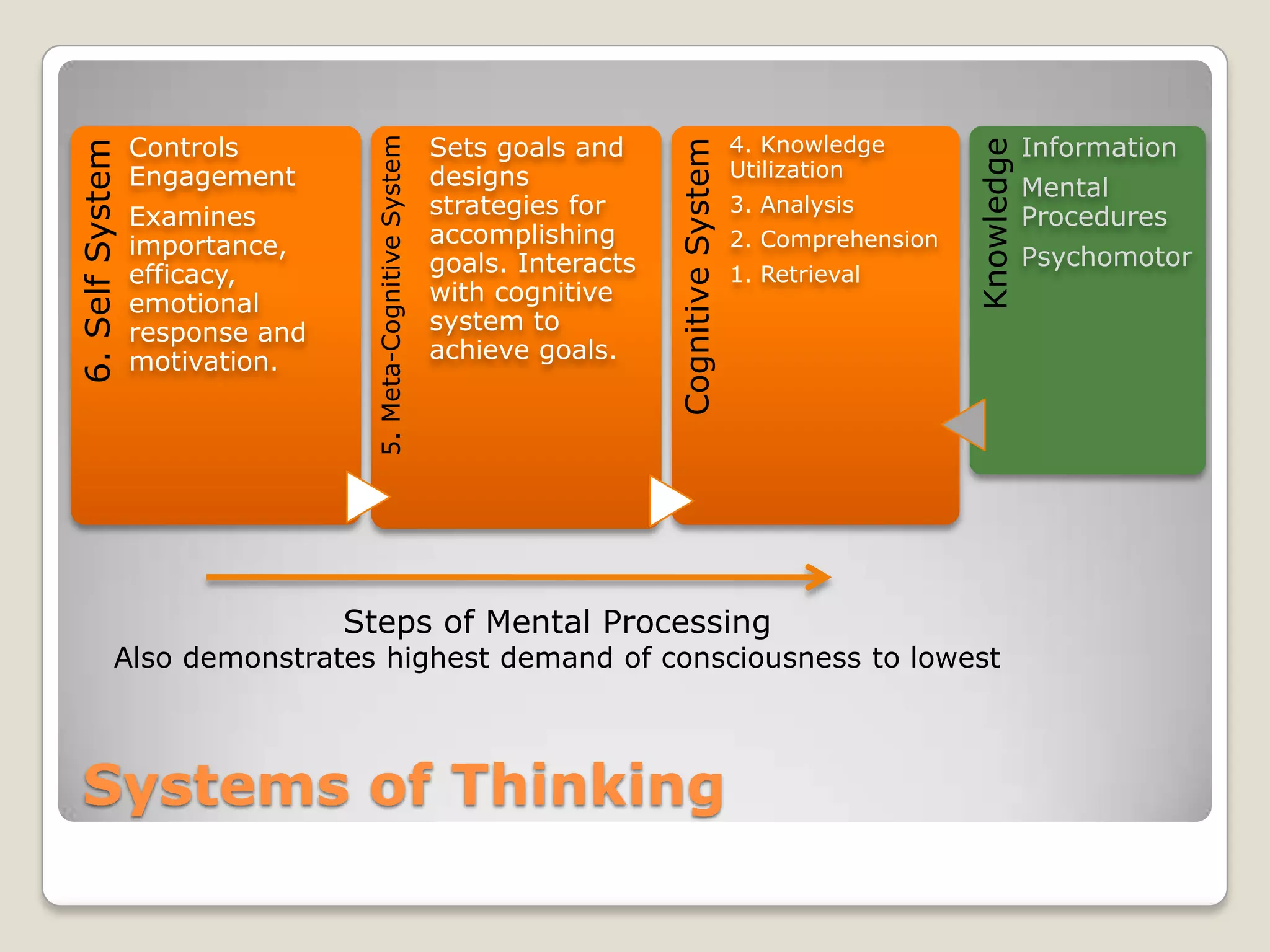
Controls                                   Sets goals and                        4. Knowledge                   Information


                                 5. Meta-Cognitive System


                                                                                                                     Knowledge
                                                                               Cognitive System
6. Self System

                 Engagement                                 designs                               Utilization
                                                                                                                                 Mental
                 Examines                                   strategies for                        3. Analysis
                                                                                                                                 Procedures
                 importance,                                accomplishing                         2. Comprehension
                                                            goals. Interacts                                                     Psychomotor
                 efficacy,                                                                        1. Retrieval
                 emotional                                  with cognitive
                 response and                               system to
                 motivation.                                achieve goals.


                                Steps of Mental Processing
             Also demonstrates highest demand of consciousness to lowest


  Systems of Thinking
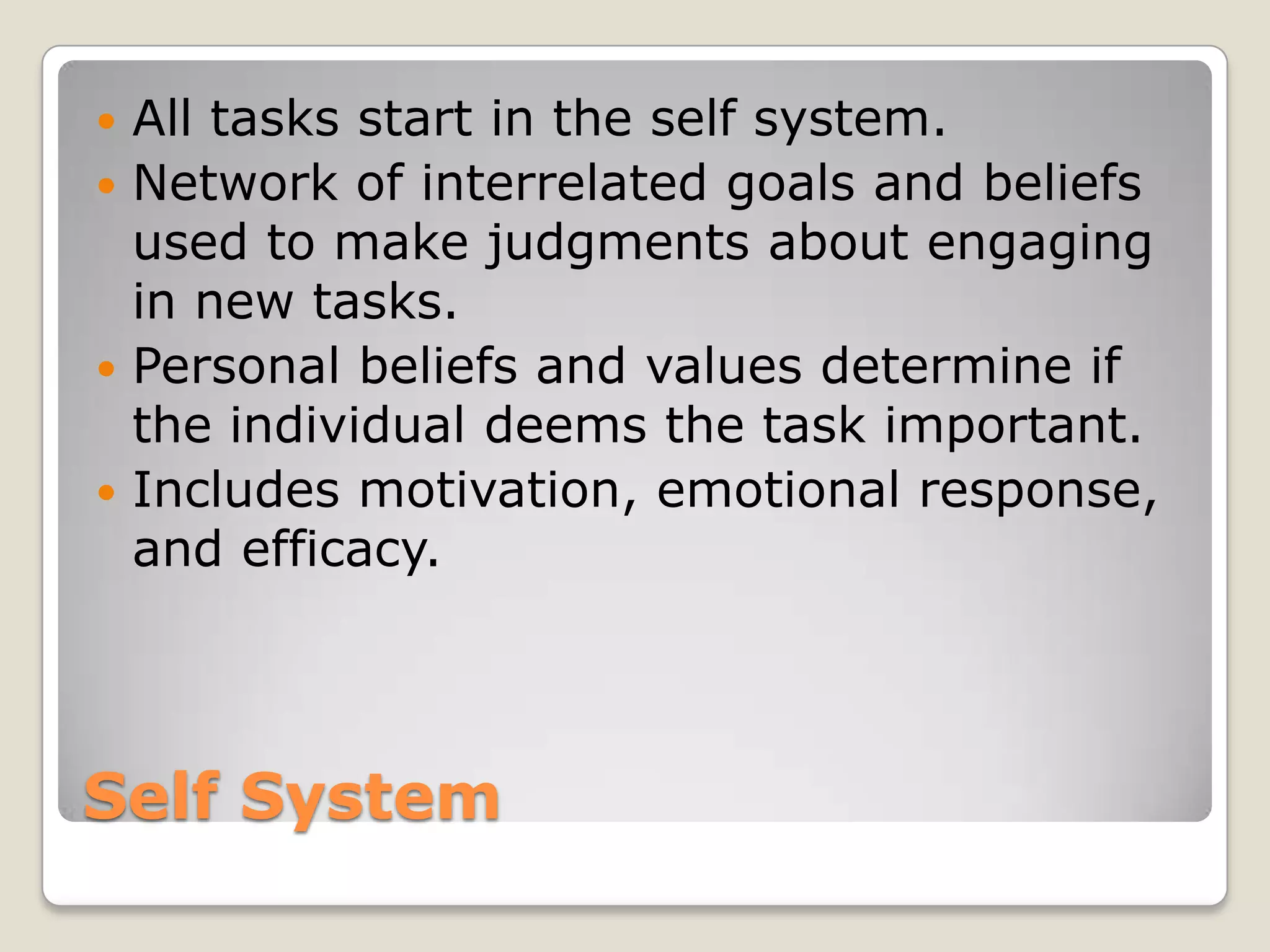
 All tasks start in the self system.
 Network of interrelated goals and beliefs
  used to make judgments about engaging
  in new tasks.
 Personal beliefs and values determine if
  the individual deems the task important.
 Includes motivation, emotional response,
  and efficacy.


Self System
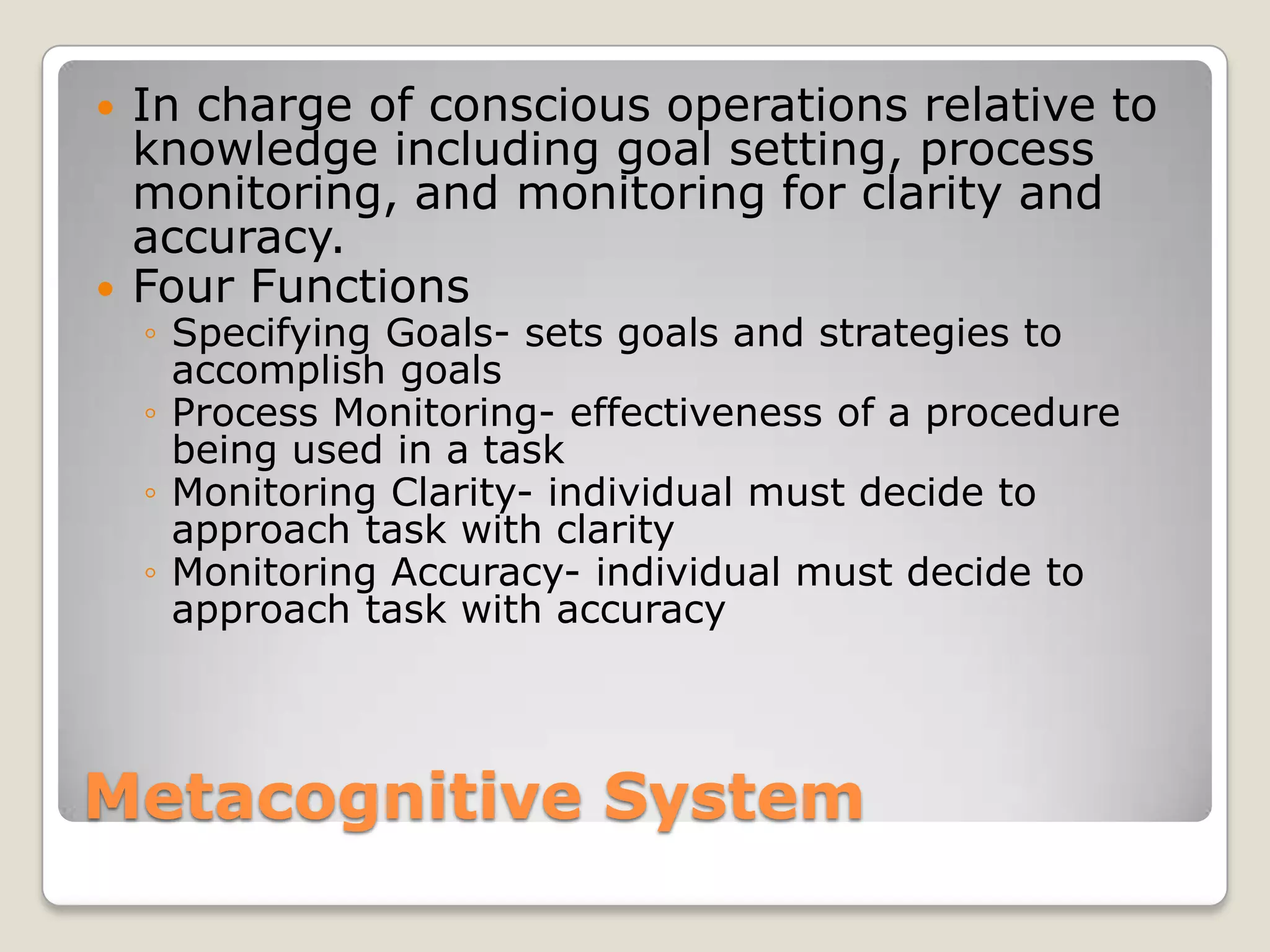
   In charge of conscious operations relative to
    knowledge including goal setting, process
    monitoring, and monitoring for clarity and
    accuracy.
   Four Functions
    ◦ Specifying Goals- sets goals and strategies to
      accomplish goals
    ◦ Process Monitoring- effectiveness of a procedure
      being used in a task
    ◦ Monitoring Clarity- individual must decide to
      approach task with clarity
    ◦ Monitoring Accuracy- individual must decide to
      approach task with accuracy


Metacognitive System
 Responsible for the processing of the
  information needed to complete the task.
 Responsible for analytic operations such
  as making inferences, comparing, and
  classifying.
 Four Processes
    ◦   Retrieval
    ◦   Comprehension
    ◦   Analysis
    ◦   Knowledge Utilization


Cognitive System
 The object of action for the three
  systems.
 Plays a key role in ability to successfully
  engage in a new task.
 Three Categories
    ◦ Information or declarative knowledge
      (vocabulary, terms, facts, principles, concepts)
    ◦ Mental Procedures or procedural knowledge
      (the “how-to” procedures)
    ◦ Psychomotor Procedures (physical action)


Knowledge
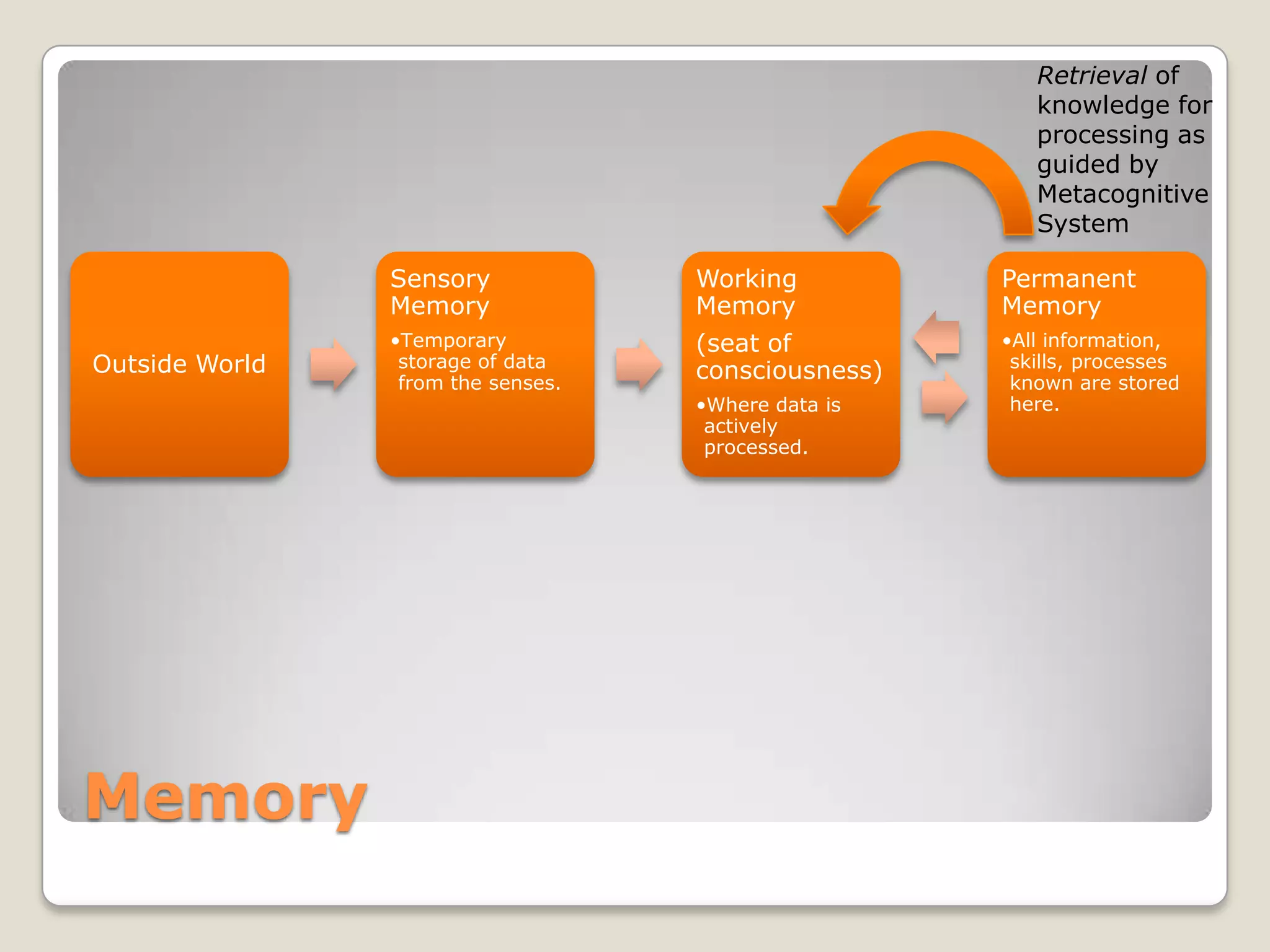
Retrieval of
                                                        knowledge for
                                                        processing as
                                                        guided by
                                                        Metacognitive
                                                        System

                Sensory             Working          Permanent
                Memory              Memory           Memory
                •Temporary          (seat of         •All information,
Outside World    storage of data
                                    consciousness)    skills, processes
                 from the senses.                     known are stored
                                    •Where data is    here.
                                     actively
                                     processed.


Memory
   Innate process, generally done without
    conscious awareness.
   Is a matter of the type of knowledge
    ◦ Information
      Recognition- matching of stimulus with information in
       permanent memory
      Recall-transfer of details from permanent memory into
       working memory to be consciously processed
    ◦ Procedural knowledge
      Can be recognized and recalled as it has information
       embedded.
      Procedural knowledge is executed in this process.


Cognitive System: Retrieval
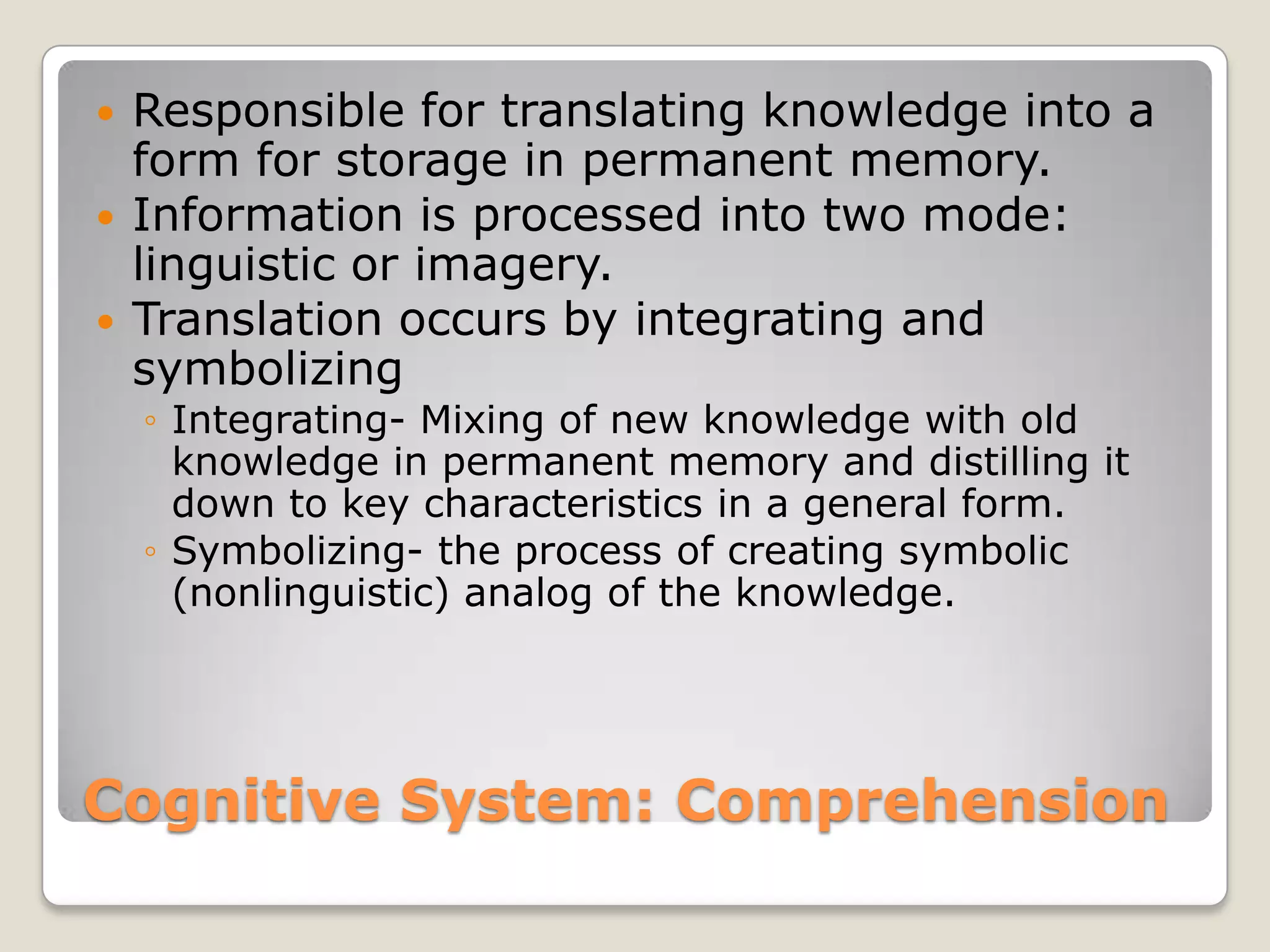
   Responsible for translating knowledge into a
    form for storage in permanent memory.
   Information is processed into two mode:
    linguistic or imagery.
   Translation occurs by integrating and
    symbolizing
    ◦ Integrating- Mixing of new knowledge with old
      knowledge in permanent memory and distilling it
      down to key characteristics in a general form.
    ◦ Symbolizing- the process of creating symbolic
      (nonlinguistic) analog of the knowledge.


Cognitive System: Comprehension
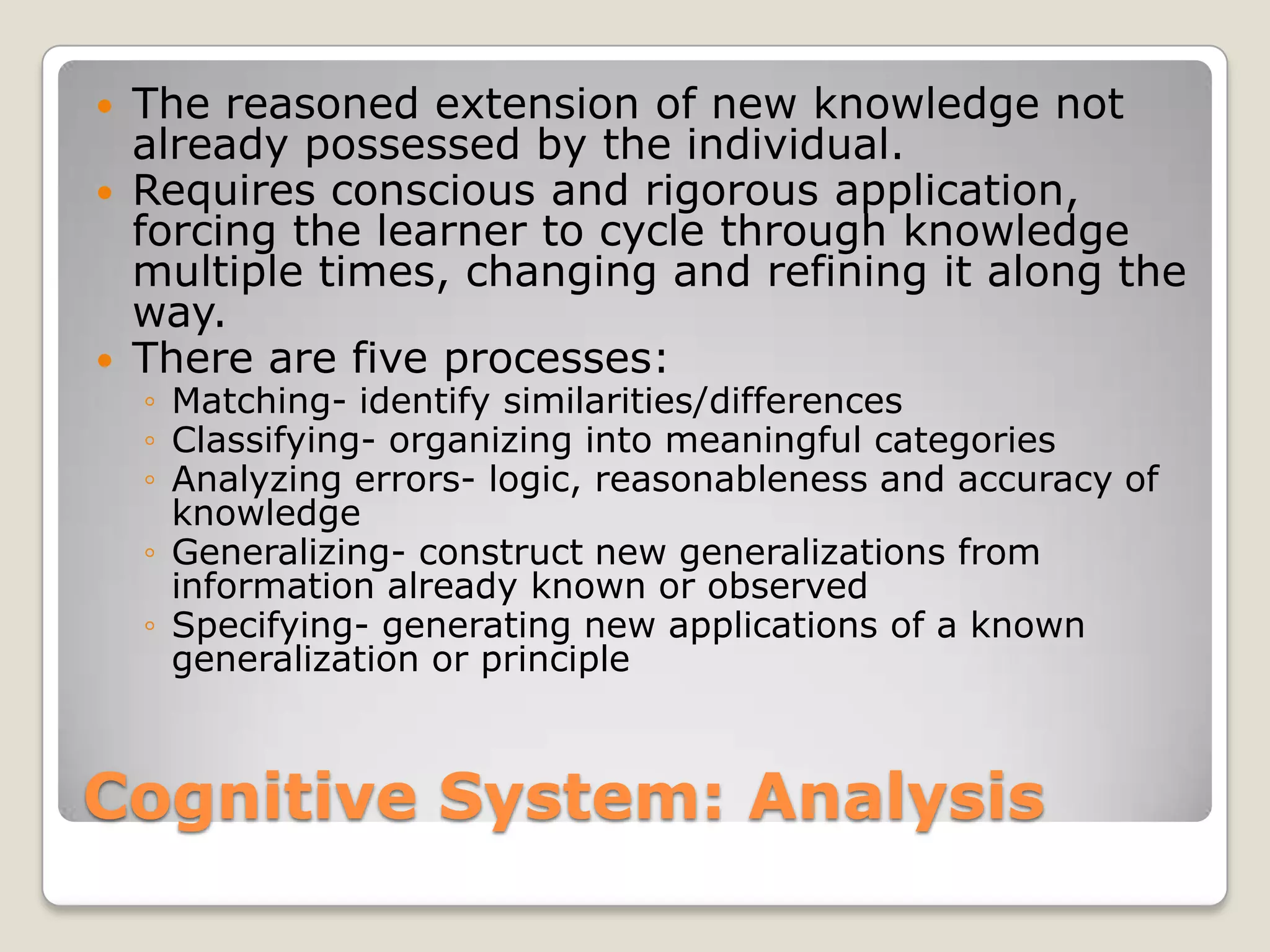
   The reasoned extension of new knowledge not
    already possessed by the individual.
   Requires conscious and rigorous application,
    forcing the learner to cycle through knowledge
    multiple times, changing and refining it along the
    way.
   There are five processes:
    ◦ Matching- identify similarities/differences
    ◦ Classifying- organizing into meaningful categories
    ◦ Analyzing errors- logic, reasonableness and accuracy of
      knowledge
    ◦ Generalizing- construct new generalizations from
      information already known or observed
    ◦ Specifying- generating new applications of a known
      generalization or principle


Cognitive System: Analysis
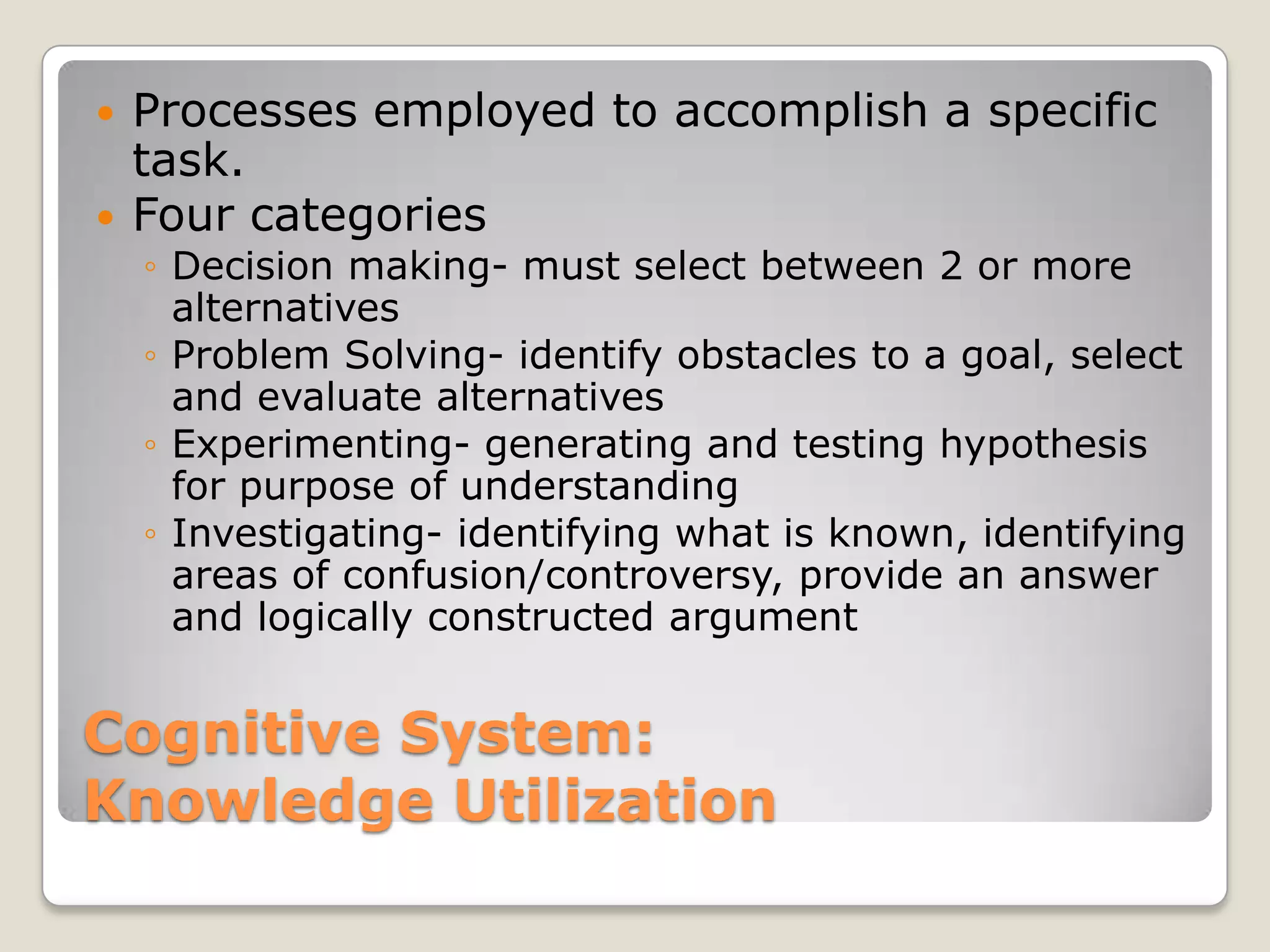
   Processes employed to accomplish a specific
    task.
   Four categories
    ◦ Decision making- must select between 2 or more
      alternatives
    ◦ Problem Solving- identify obstacles to a goal, select
      and evaluate alternatives
    ◦ Experimenting- generating and testing hypothesis
      for purpose of understanding
    ◦ Investigating- identifying what is known, identifying
      areas of confusion/controversy, provide an answer
      and logically constructed argument


Cognitive System:
Knowledge Utilization
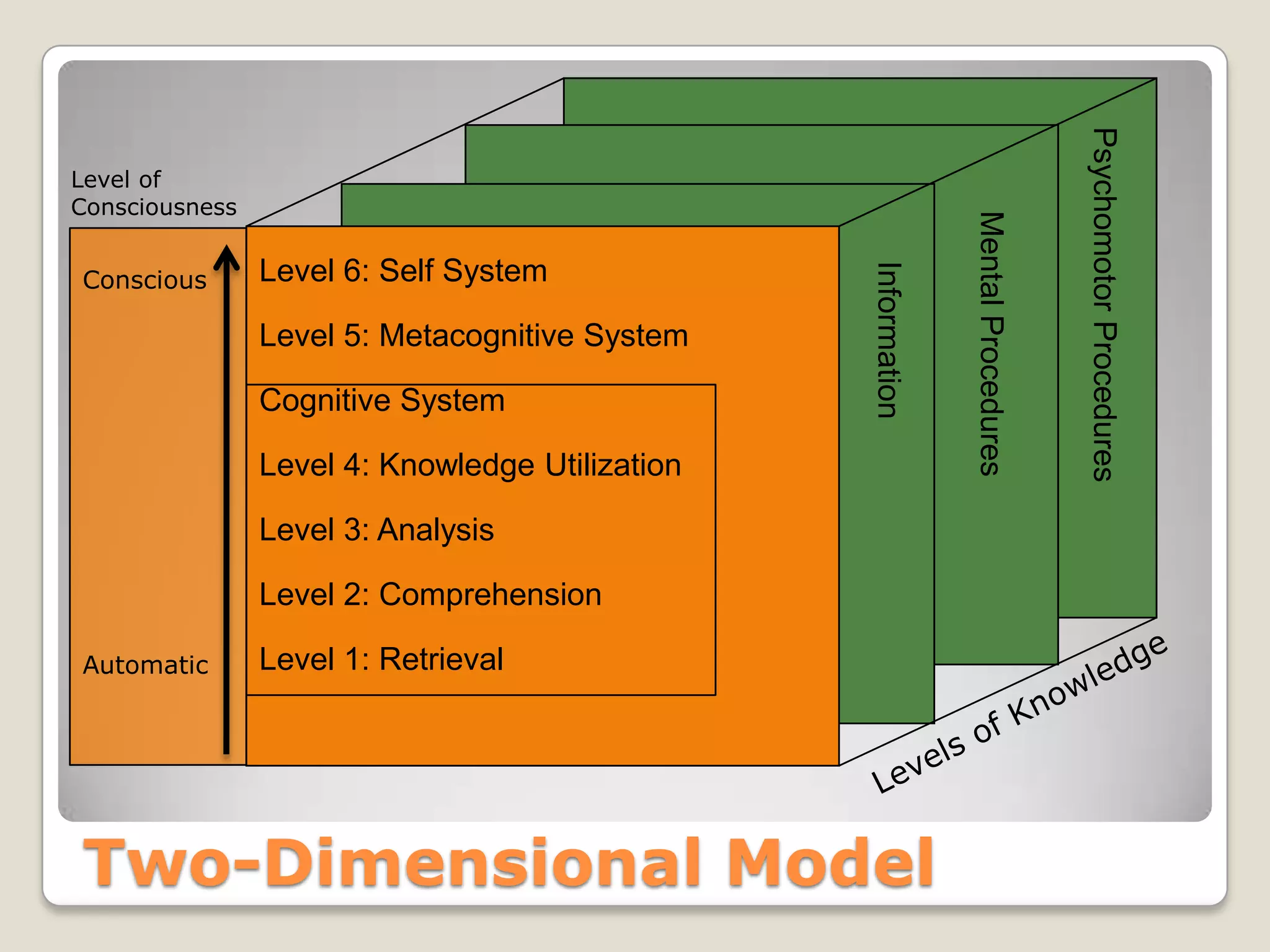
Psychomotor Procedures
Level of
Consciousness


                                                               Mental Procedures
                Level 6: Self System


                                                 Information
Conscious

                Level 5: Metacognitive System

                Cognitive System

                Level 4: Knowledge Utilization

                Level 3: Analysis

                Level 2: Comprehension

Automatic       Level 1: Retrieval


Two-Dimensional Model

New Taxonomy of Educational Objectives

  • 1.
    New Taxonomy of EducationalObjectives Marzano& Kendall, 2007 Prepared by: Amber Garrison Duncan, 2012
  • 2.
     Provides amodel (predictive) of cognitive processing instead of a framework (loosely organized principles that describe characteristics).  All mental processes can be learned, even the most complex or difficult.  Mental processes cannot be ordered hierarchically in terms of difficulty.  Rather they can be ordered hierarchically in the order of which they are controlled.  The difficulty of a process is a function of 2 things: ◦ The steps involved in mentally processing the flow of information (these do not change). ◦ The individuals level of familiarity with the process and the level of consciousness needed to perform the process (this can change).  Thinking skills should be taught throughout the curriculum, not just after students mastered the subject knowledge.  Major difference from Bloom’s is clarity of action from the object of action. Knowledge is the object of action by mental processes. Characteristics of the New Taxonomy
  • 3.
    Controls Sets goals and 4. Knowledge Information 5. Meta-Cognitive System Knowledge Cognitive System 6. Self System Engagement designs Utilization Mental Examines strategies for 3. Analysis Procedures importance, accomplishing 2. Comprehension goals. Interacts Psychomotor efficacy, 1. Retrieval emotional with cognitive response and system to motivation. achieve goals. Steps of Mental Processing Also demonstrates highest demand of consciousness to lowest Systems of Thinking
  • 4.
     All tasksstart in the self system.  Network of interrelated goals and beliefs used to make judgments about engaging in new tasks.  Personal beliefs and values determine if the individual deems the task important.  Includes motivation, emotional response, and efficacy. Self System
  • 5.
    In charge of conscious operations relative to knowledge including goal setting, process monitoring, and monitoring for clarity and accuracy.  Four Functions ◦ Specifying Goals- sets goals and strategies to accomplish goals ◦ Process Monitoring- effectiveness of a procedure being used in a task ◦ Monitoring Clarity- individual must decide to approach task with clarity ◦ Monitoring Accuracy- individual must decide to approach task with accuracy Metacognitive System
  • 6.
     Responsible forthe processing of the information needed to complete the task.  Responsible for analytic operations such as making inferences, comparing, and classifying.  Four Processes ◦ Retrieval ◦ Comprehension ◦ Analysis ◦ Knowledge Utilization Cognitive System
  • 7.
     The objectof action for the three systems.  Plays a key role in ability to successfully engage in a new task.  Three Categories ◦ Information or declarative knowledge (vocabulary, terms, facts, principles, concepts) ◦ Mental Procedures or procedural knowledge (the “how-to” procedures) ◦ Psychomotor Procedures (physical action) Knowledge
  • 8.
    Retrieval of knowledge for processing as guided by Metacognitive System Sensory Working Permanent Memory Memory Memory •Temporary (seat of •All information, Outside World storage of data consciousness) skills, processes from the senses. known are stored •Where data is here. actively processed. Memory
  • 9.
    Innate process, generally done without conscious awareness.  Is a matter of the type of knowledge ◦ Information  Recognition- matching of stimulus with information in permanent memory  Recall-transfer of details from permanent memory into working memory to be consciously processed ◦ Procedural knowledge  Can be recognized and recalled as it has information embedded.  Procedural knowledge is executed in this process. Cognitive System: Retrieval
  • 10.
    Responsible for translating knowledge into a form for storage in permanent memory.  Information is processed into two mode: linguistic or imagery.  Translation occurs by integrating and symbolizing ◦ Integrating- Mixing of new knowledge with old knowledge in permanent memory and distilling it down to key characteristics in a general form. ◦ Symbolizing- the process of creating symbolic (nonlinguistic) analog of the knowledge. Cognitive System: Comprehension
  • 11.
    The reasoned extension of new knowledge not already possessed by the individual.  Requires conscious and rigorous application, forcing the learner to cycle through knowledge multiple times, changing and refining it along the way.  There are five processes: ◦ Matching- identify similarities/differences ◦ Classifying- organizing into meaningful categories ◦ Analyzing errors- logic, reasonableness and accuracy of knowledge ◦ Generalizing- construct new generalizations from information already known or observed ◦ Specifying- generating new applications of a known generalization or principle Cognitive System: Analysis
  • 12.
    Processes employed to accomplish a specific task.  Four categories ◦ Decision making- must select between 2 or more alternatives ◦ Problem Solving- identify obstacles to a goal, select and evaluate alternatives ◦ Experimenting- generating and testing hypothesis for purpose of understanding ◦ Investigating- identifying what is known, identifying areas of confusion/controversy, provide an answer and logically constructed argument Cognitive System: Knowledge Utilization
  • 13.
    Psychomotor Procedures Level of Consciousness Mental Procedures Level 6: Self System Information Conscious Level 5: Metacognitive System Cognitive System Level 4: Knowledge Utilization Level 3: Analysis Level 2: Comprehension Automatic Level 1: Retrieval Two-Dimensional Model