Four Major Components
or Elements of
Curriculum
• Aims goals and
objectives
• Subject matter/content
• Learning experiences
• Evaluation approaches
Component 1:
• Curriculum
Aims, Goals and
Objectives
• Curriculum Aims, Goals and
Objectives
What is to be
done?
The Philippine educational
system is divided in three
educational levels:
Primary;
Secondary; and
Tertiary
Component 2:
•Curriculum
Content or
Subject Matter
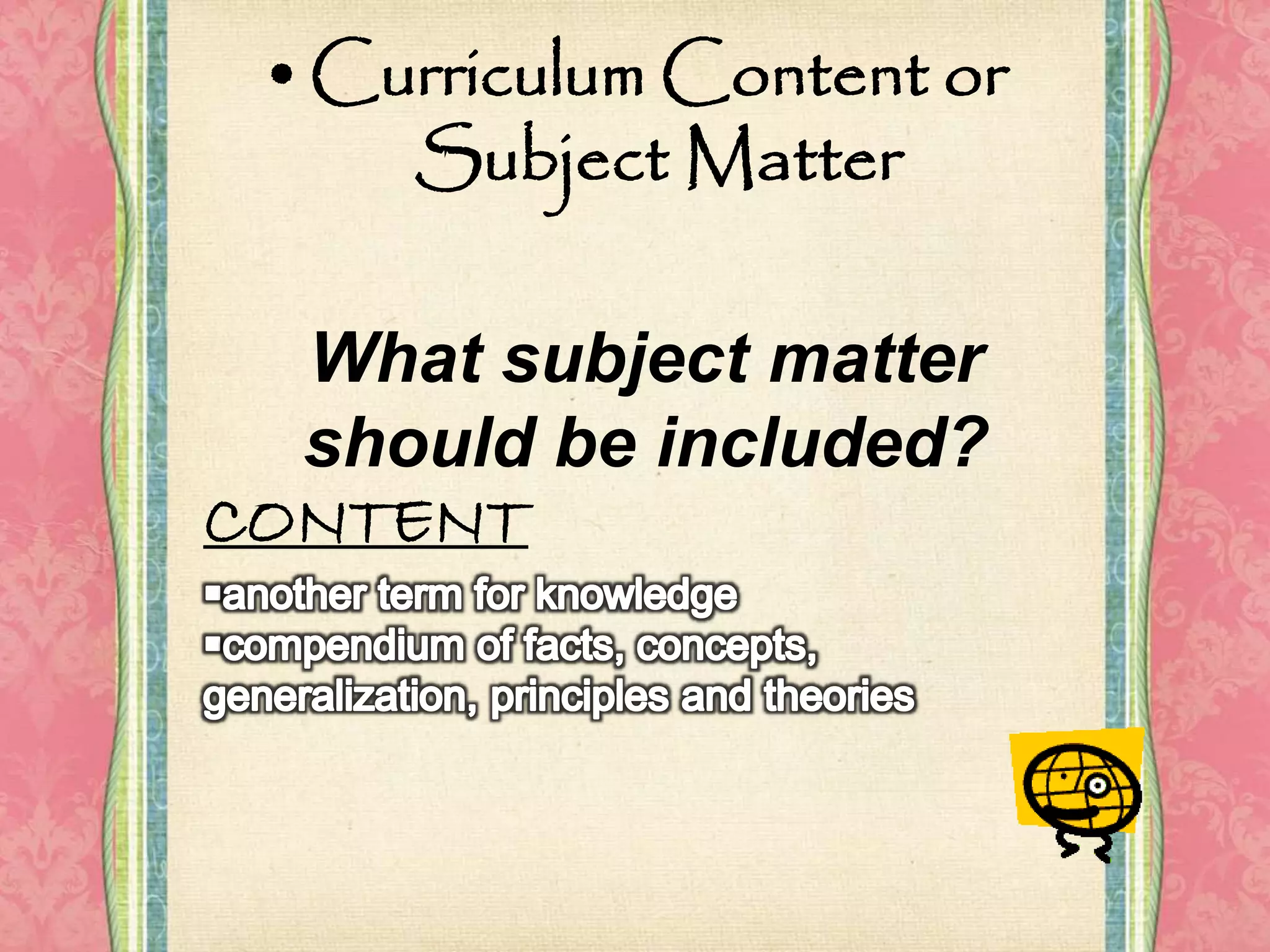
•Curriculum Content or
Subject Matter
What subject matter
should be included?
CONTENT
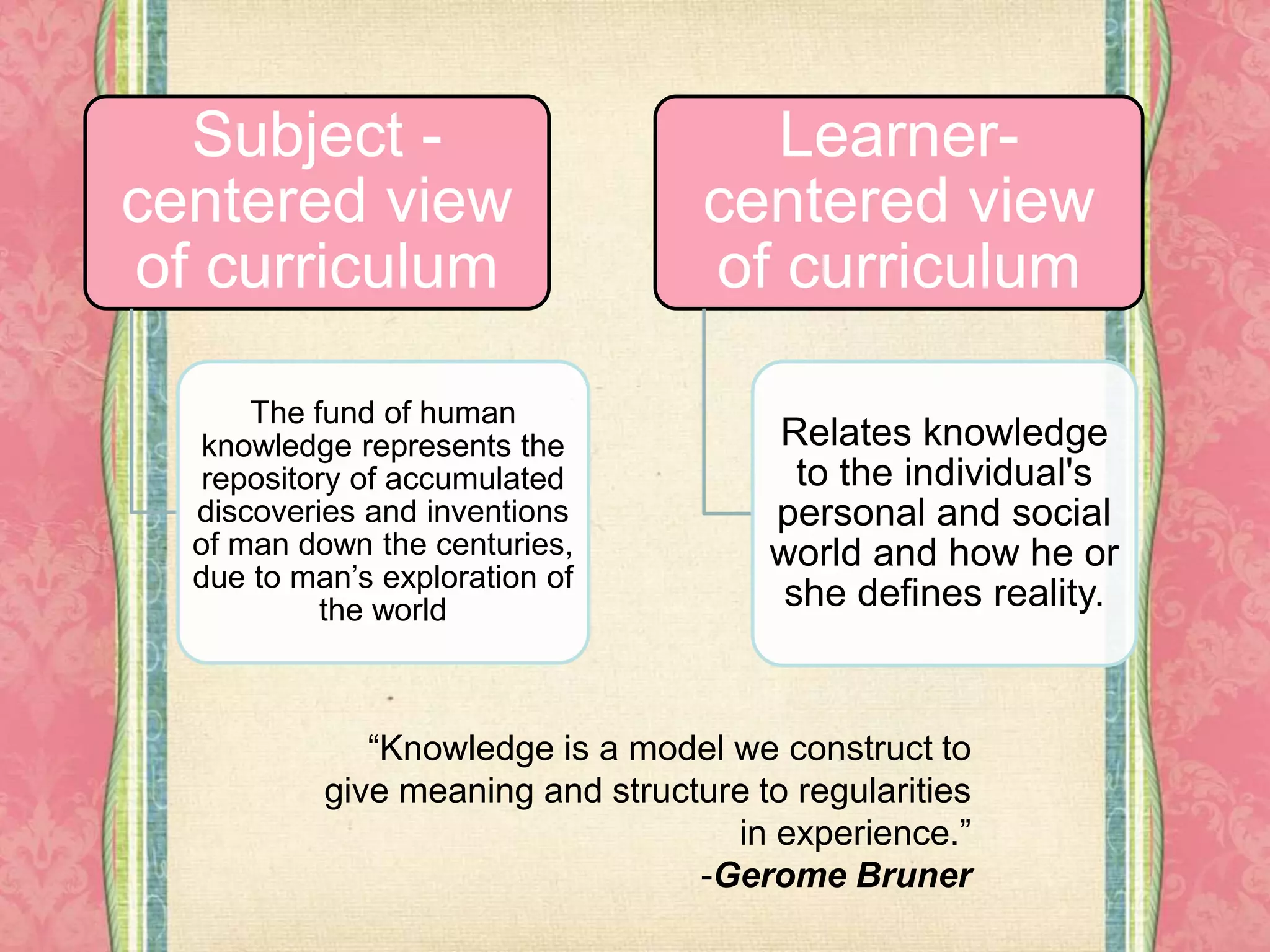
Subject -
centered view
of curriculum
The fund of human
knowledge represents the
repository of accumulated
discoveries and inventions
of man down the centuries,
due to man’s exploration of
the world
Learner-
centered view
of curriculum
Relates knowledge
to the individual's
personal and social
world and how he or
she defines reality.
“Knowledge is a model we construct to
give meaning and structure to regularities
in experience.”
-Gerome Bruner
Component 3:
Curriculum
Experience
• Instructional strategies and
methods will link to
curriculum experiences, the
core and heart of the
curriculum. The instructional
strategies and methods will put
into action the goals and use of
the content in order to produce
an outcome.
Component 4:
Curriculum
Evaluation
• To be effective, all curricula must have
an element of evaluation. Curriculum
evaluation refer to the formal
determination of the quality,
effectiveness or value of the program,
process and product of the curriculum.
Several methods of evaluation came
up. The most widely used is
Stufflebeam’s CIPP Model. The
process in CIPP model is continuous
and very important to curriculum
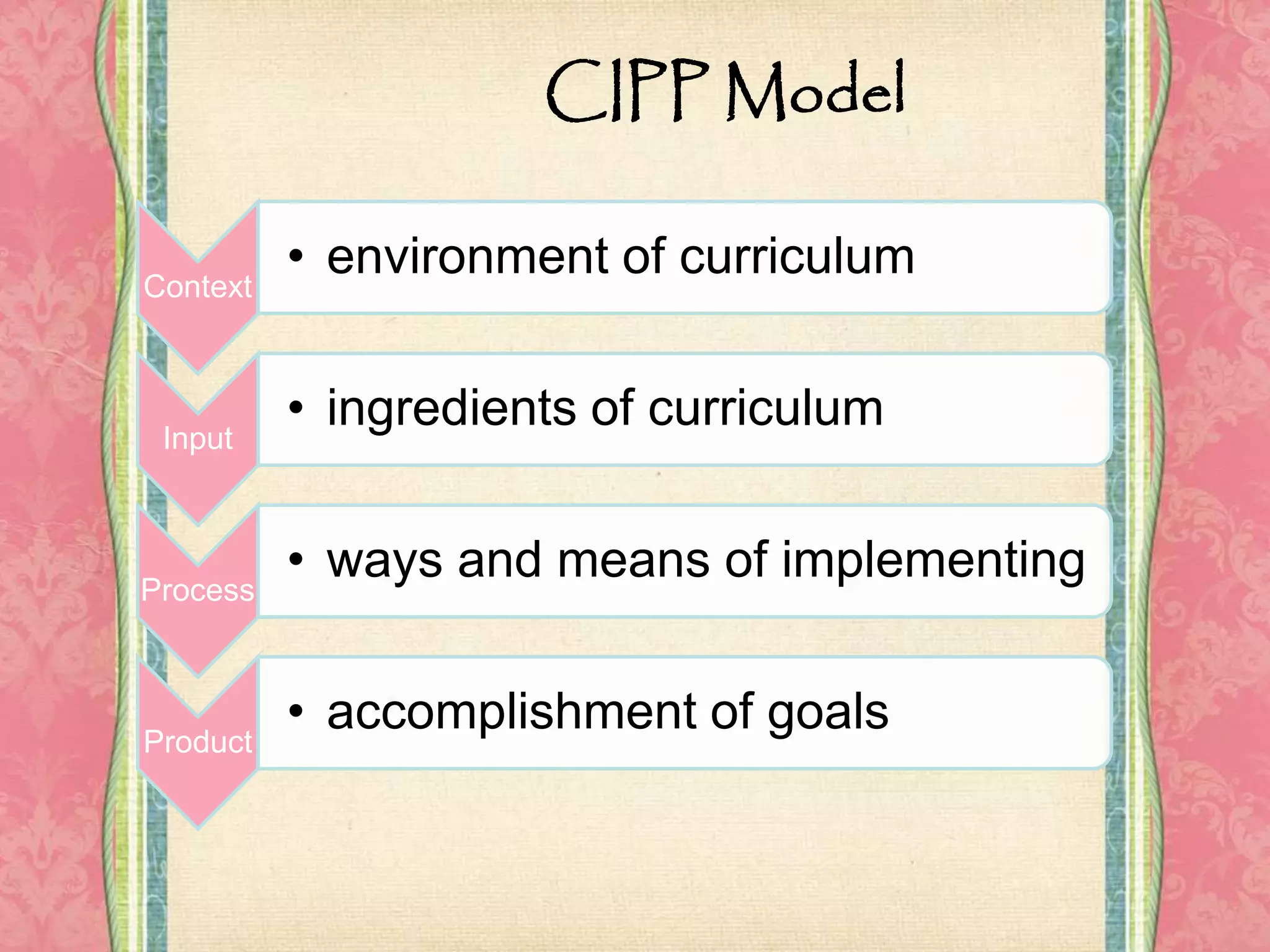
CIPP Model
Context
• environment of curriculum
Input
• ingredients of curriculum
Process
• ways and means of implementing
Product
• accomplishment of goals
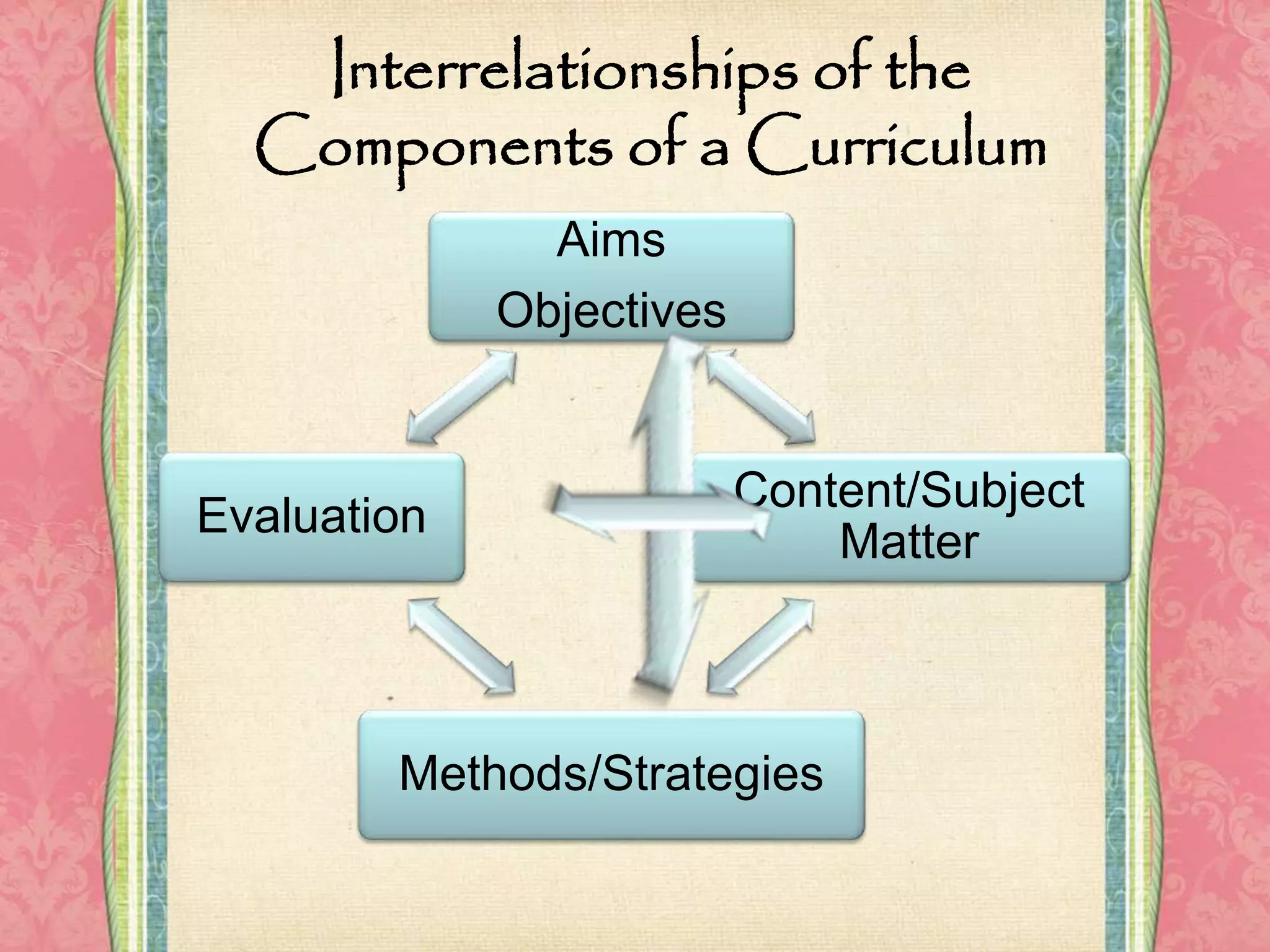
Interrelationships of the
Components of a Curriculum
Aims
Objectives
Content/Subject
Matter
Methods/Strategies
Evaluation

Components of Curriculum

  • 2.
    Four Major Components orElements of Curriculum • Aims goals and objectives • Subject matter/content • Learning experiences • Evaluation approaches
  • 3.
  • 4.
    • Curriculum Aims,Goals and Objectives What is to be done? The Philippine educational system is divided in three educational levels: Primary; Secondary; and Tertiary
  • 5.
  • 6.
    •Curriculum Content or SubjectMatter What subject matter should be included? CONTENT
  • 7.
    Subject - centered view ofcurriculum The fund of human knowledge represents the repository of accumulated discoveries and inventions of man down the centuries, due to man’s exploration of the world Learner- centered view of curriculum Relates knowledge to the individual's personal and social world and how he or she defines reality. “Knowledge is a model we construct to give meaning and structure to regularities in experience.” -Gerome Bruner
  • 8.
  • 9.
    • Instructional strategiesand methods will link to curriculum experiences, the core and heart of the curriculum. The instructional strategies and methods will put into action the goals and use of the content in order to produce an outcome.
  • 10.
  • 11.
    • To beeffective, all curricula must have an element of evaluation. Curriculum evaluation refer to the formal determination of the quality, effectiveness or value of the program, process and product of the curriculum. Several methods of evaluation came up. The most widely used is Stufflebeam’s CIPP Model. The process in CIPP model is continuous and very important to curriculum
  • 12.
    CIPP Model Context • environmentof curriculum Input • ingredients of curriculum Process • ways and means of implementing Product • accomplishment of goals
  • 13.
    Interrelationships of the Componentsof a Curriculum Aims Objectives Content/Subject Matter Methods/Strategies Evaluation